Cuba, So Close, Yet So Far Away

We wanted to travel to Cuba before the Americans started flooding in, so along with our pals Charlotte and James we embarked on a 10-day educational trip.
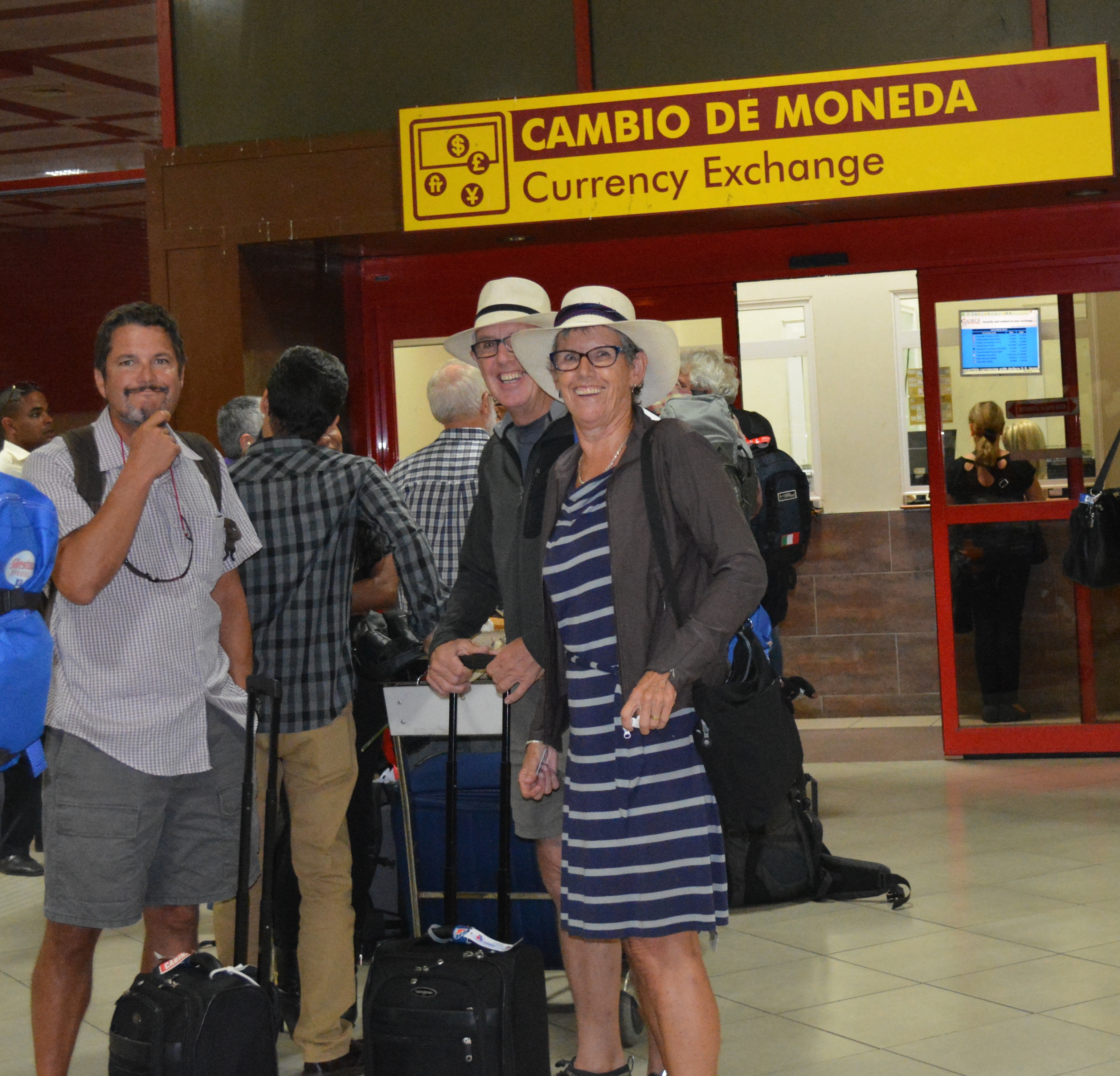
Bienvenido a Cuba Pedro, Jaime y Carlota.

We know that America-Cuba relations can be a hot button topic, so we used this trip to educate and not debate. The key for us was to take a cue from the Cuban people who separate politics from people.
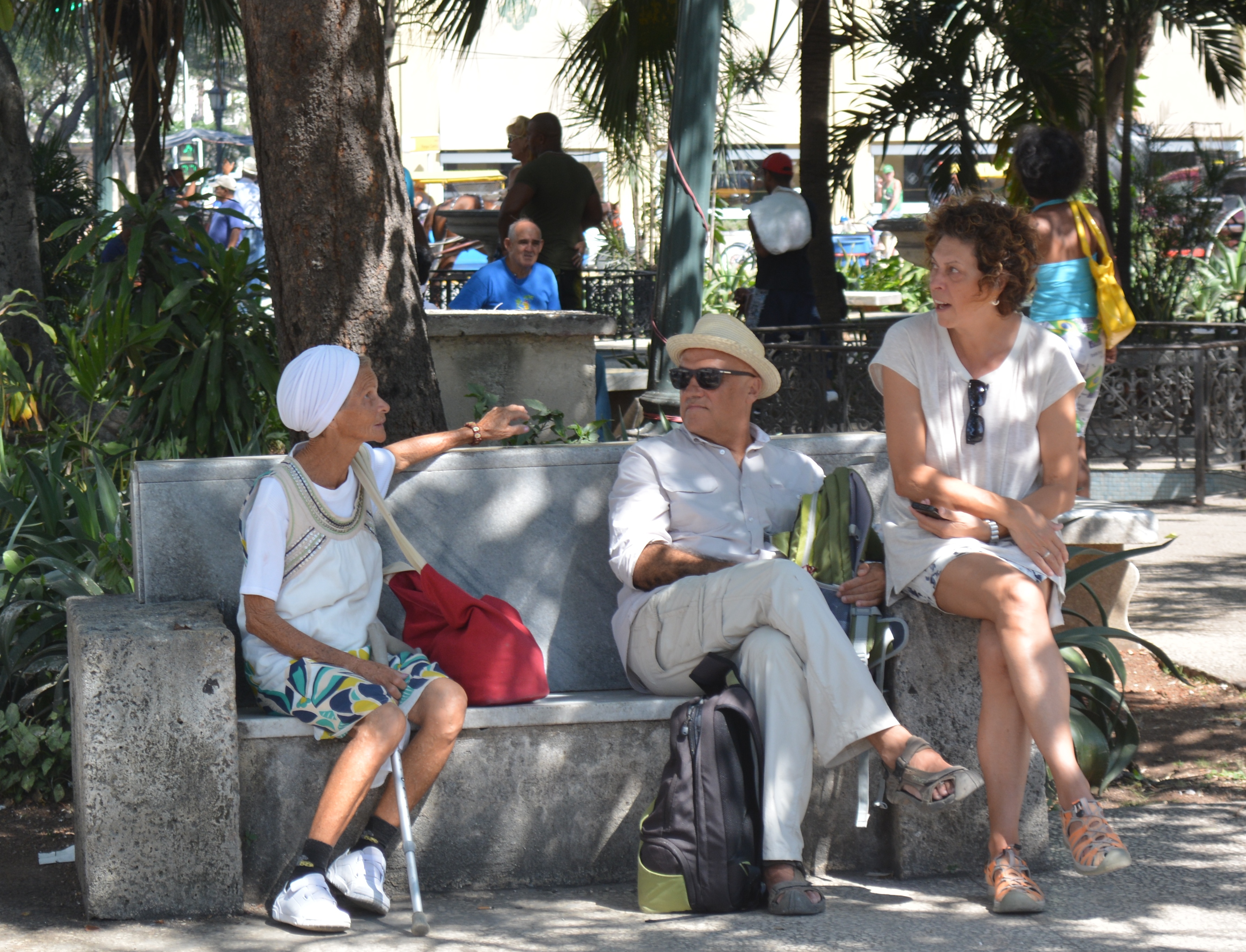
I just love this lady enjoying the day in the park with her amigos

Anyone who can rock a turban is aces with me.
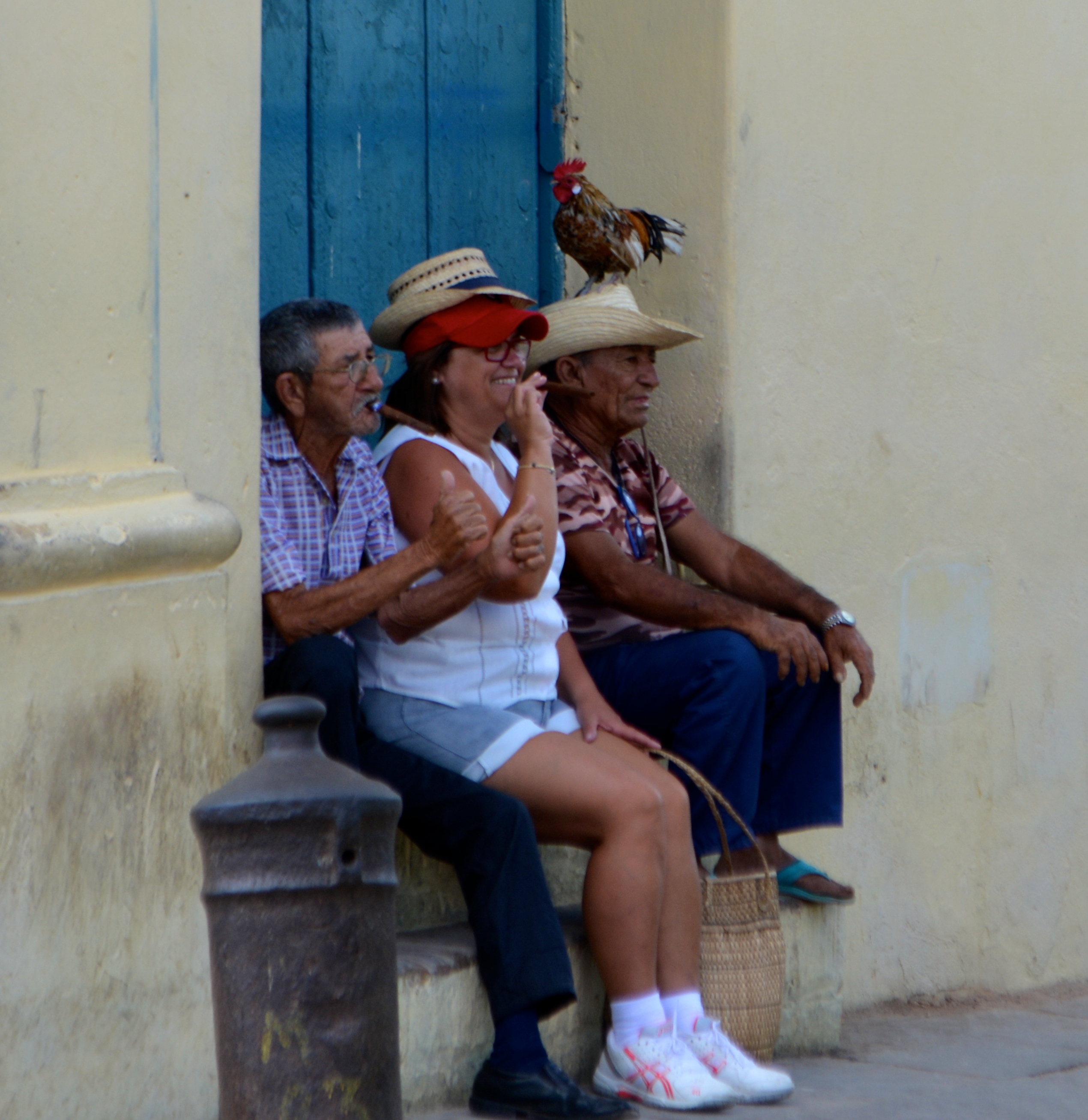
Excuse me, there is a chicken on your head.

Excuse me, there is a chicken on your head.

Initial Impressions.  Cubans love Americans and readily put politics aside to get to know you as a person.  In fact, politics does not even enter into a personal interaction with Cubans.  What a refreshing attitude.  And if indeed some political issues were discussed they were not met with the vitriol that always seems to bubble up in the States.  The people of Cuba are the heart and soul of the country.  They are warm and welcoming, intelligent, funny and delightful.
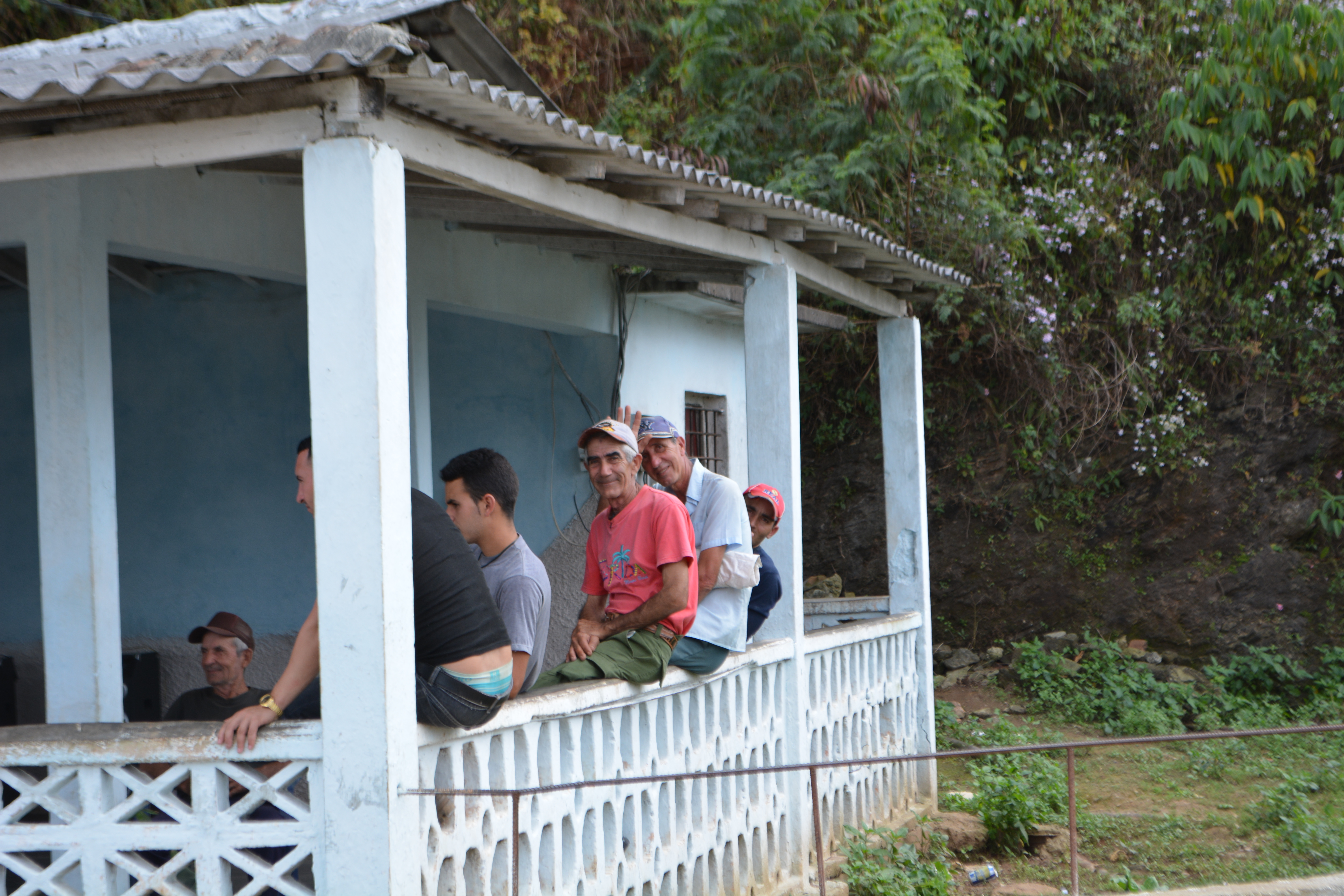
men waving

Always greeted by waves and smiles.

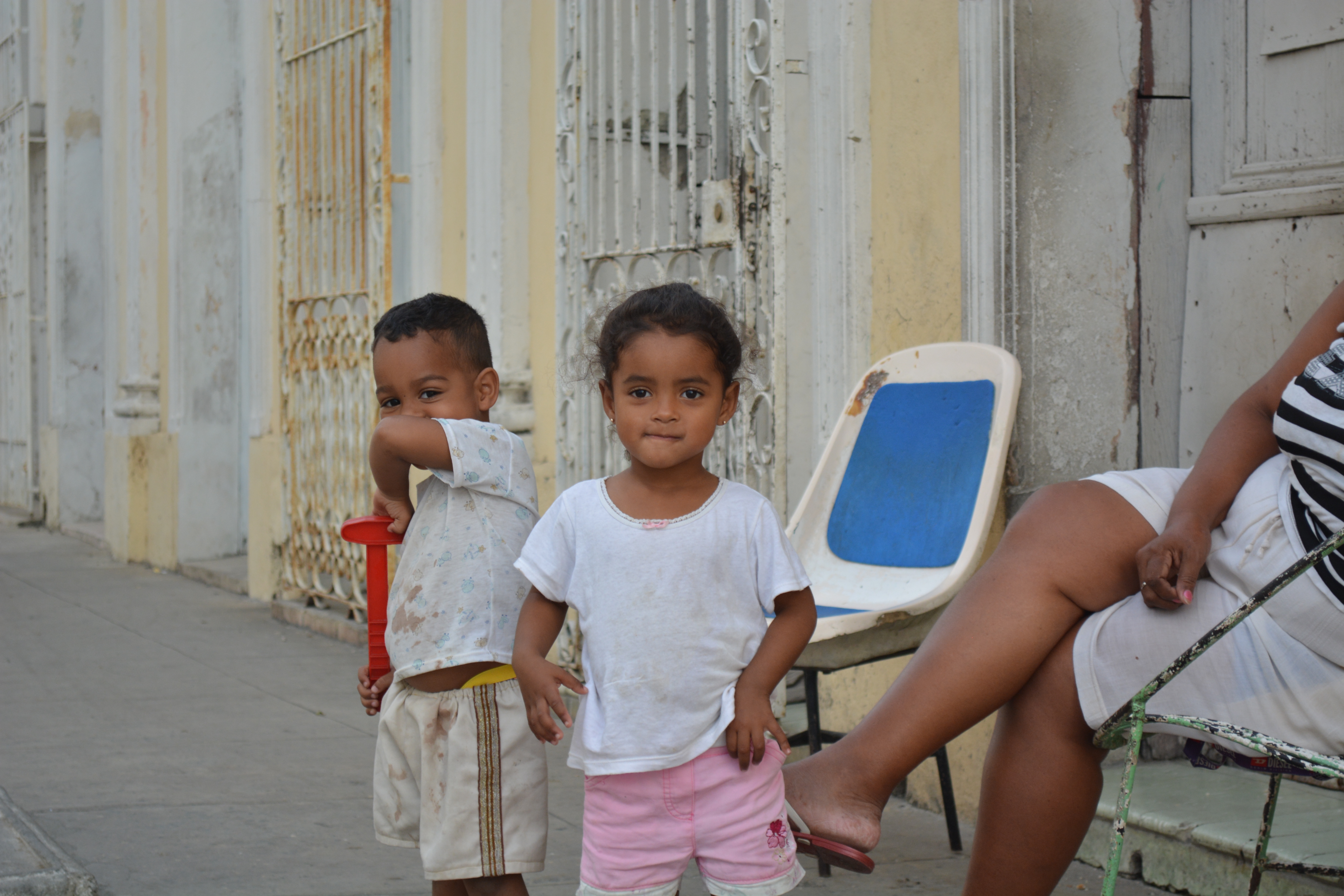
kids

All the children were friendly, curious and full of giggles.

Hemingway house dog welcoming Mary and Charlotte.

Hemingway house dog welcoming Mary and Charlotte.

Honestly, we were not sure what to expect from a country that mainly has been presented to us as either the romanticized playground of the 1950s jet set or a repressed society full of people willing to risk their lives to achieve freedom.
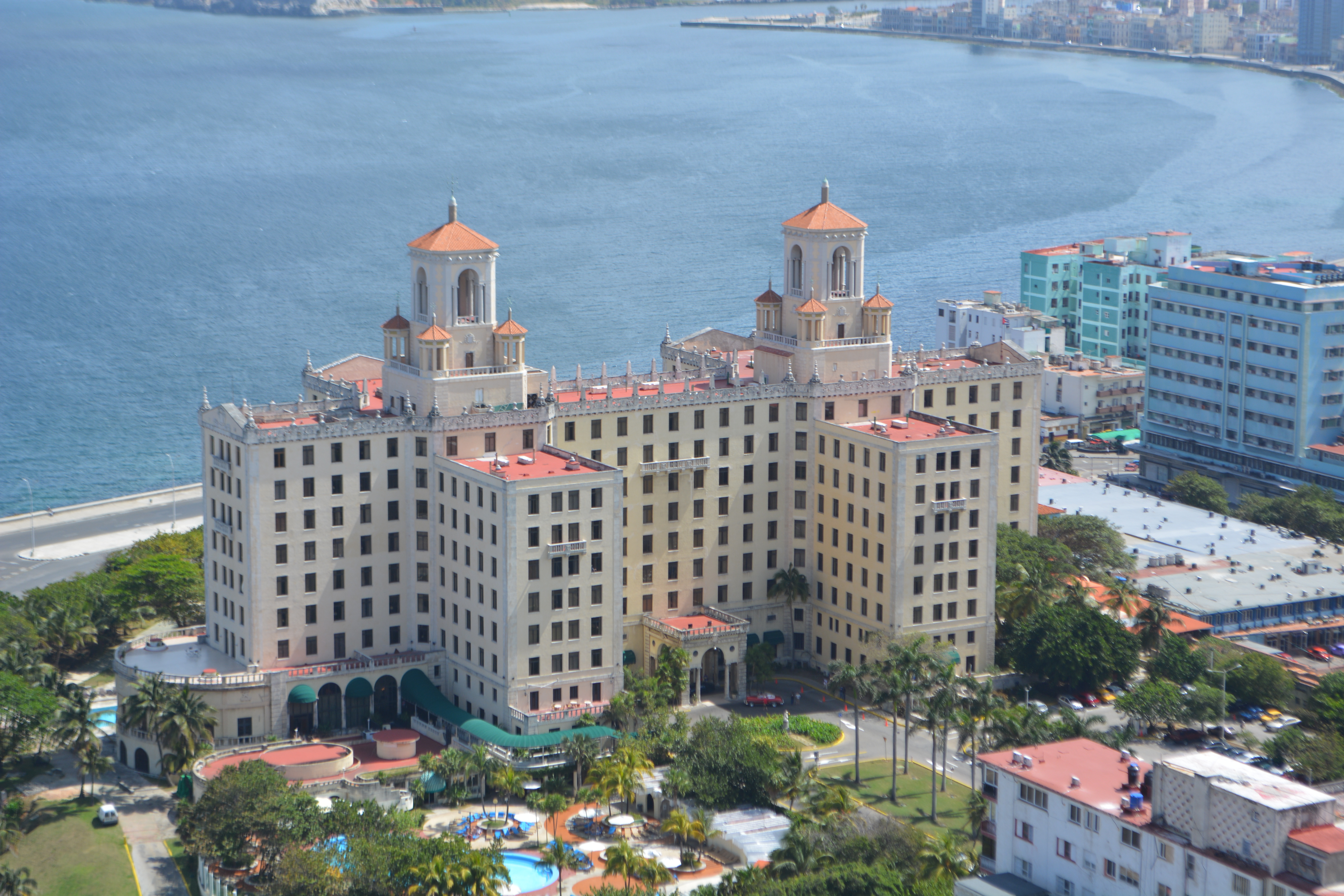
Hotel National

Hotel Nacional De Cuba, host to everyone from Winston Churchill to Frank Sinatra, Eartha Kitt and Lucky Luciano.

Would people speak to us, were they allowed to speak to us, did they have toilet paper?You laugh, but so many people told us to bring our own, so we did.  And then our Cuban friend laughed at us because they have TP.   LOL.
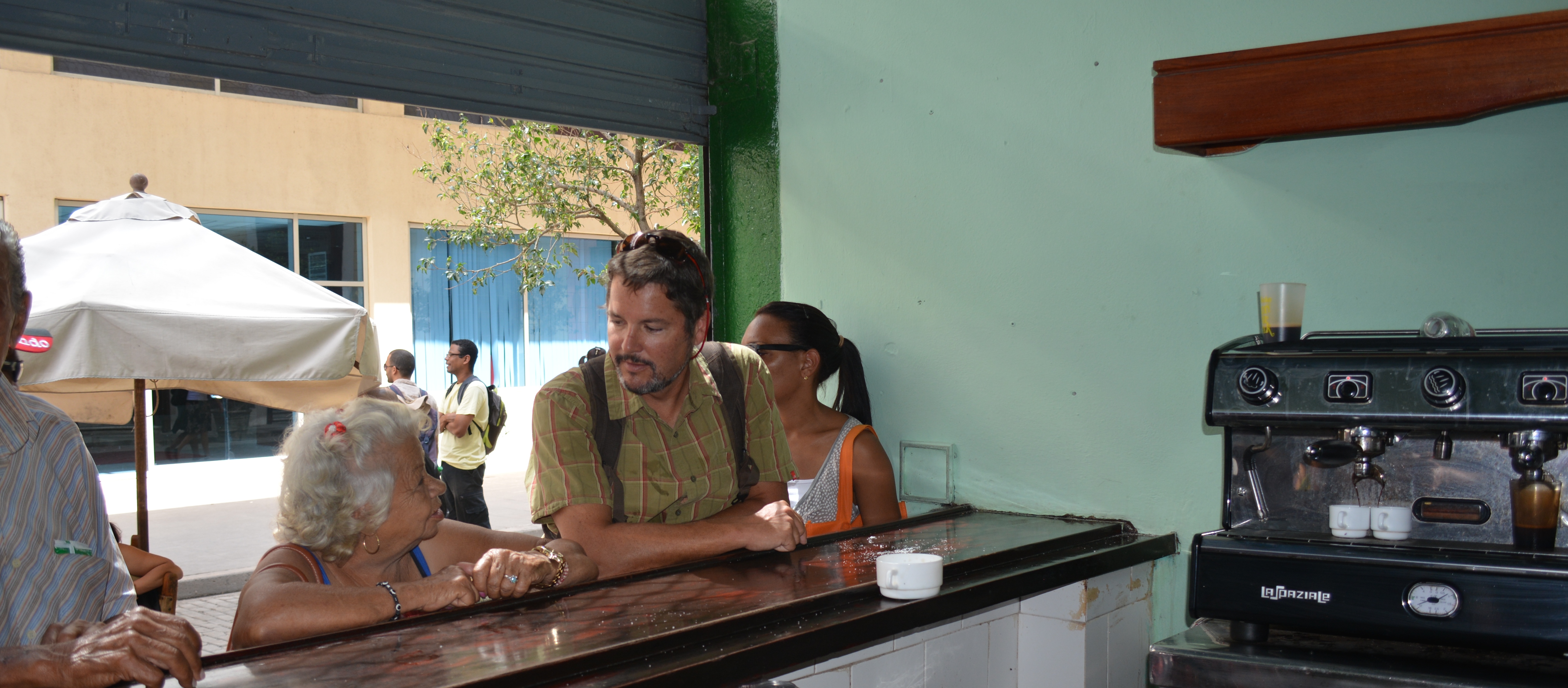
Pete and his new friend enjoying a Cuban coffee

Pete and Señora enjoying a Cuban coffee. No need to worry, everyone spoke to us and were patient with our Spanish and practiced their English.
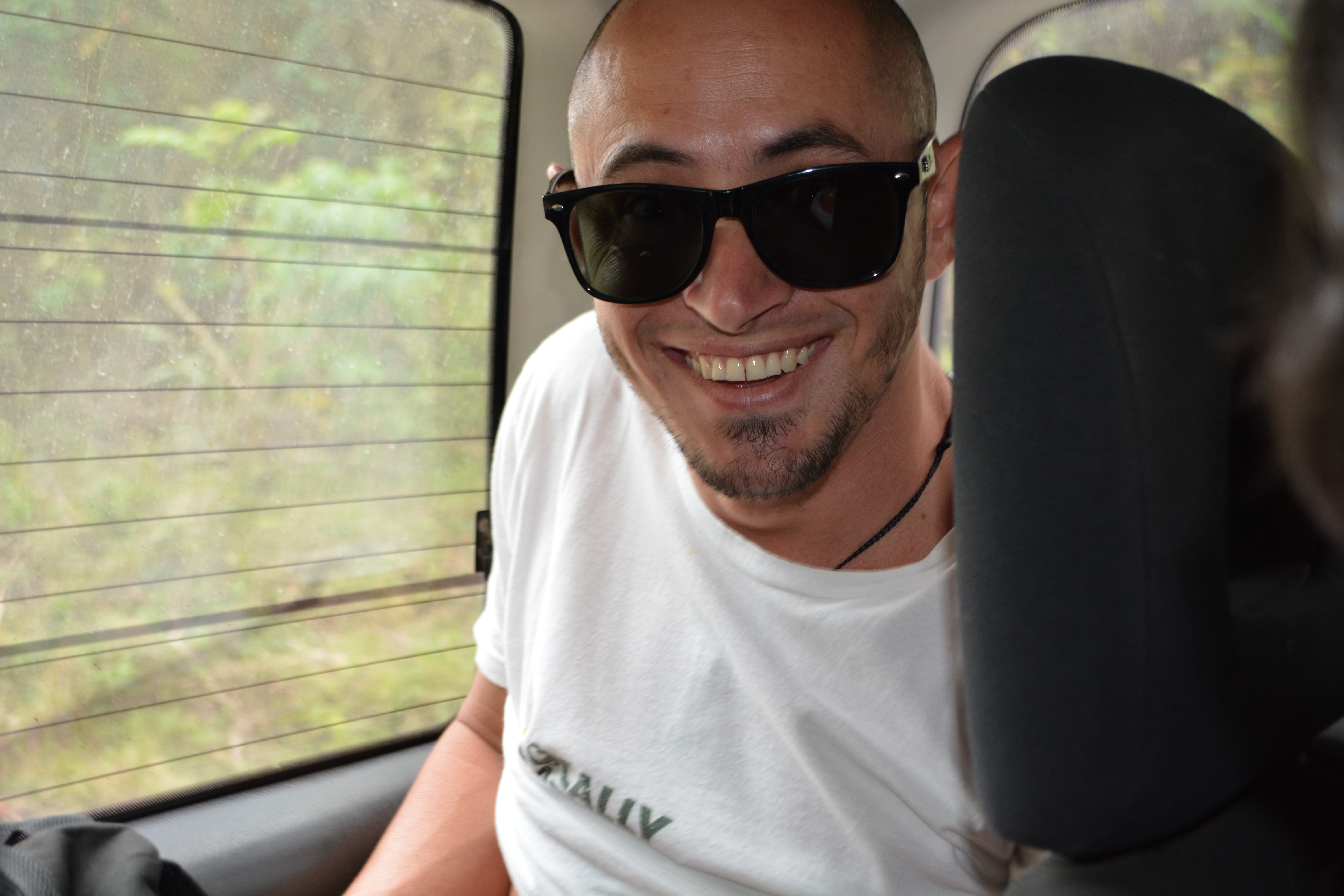
Our new amigo Olexis.  Always happy to answer all our questions and laugh at us for bringing our own toilet paper

Our new amigo Olexis. Always happy to answer all our questions and laugh at us for bringing our own toilet paper.

So many of our preconceived notions were way off, while many were confirmed and some things never quite explained. We just took it all in, which is easy to do because everywhere you look the colors, the architecture, the people always are interesting.  Click here for even more photos.
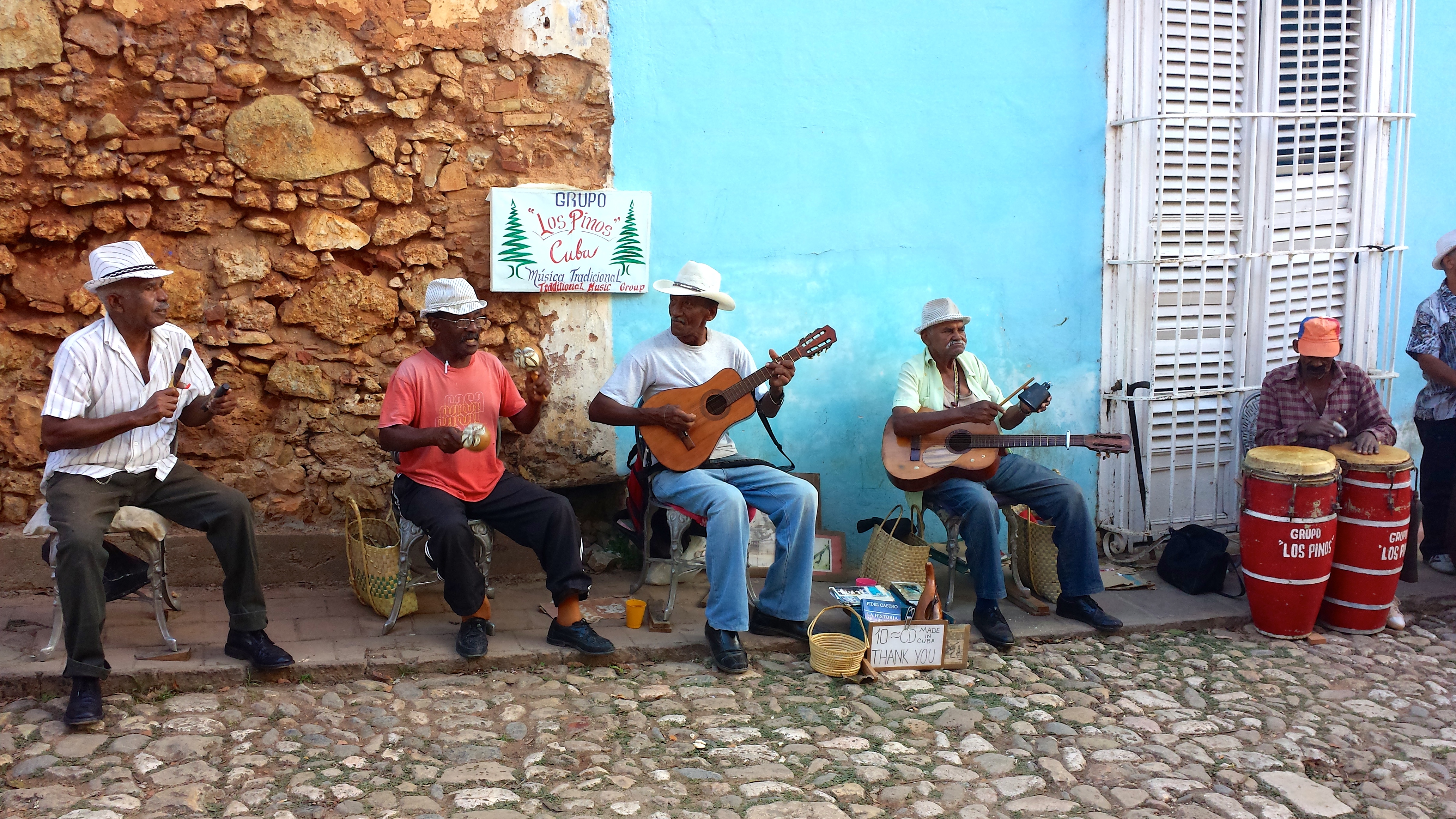
Musicians on the streets of Trinidad

Musicians on the streets of the historic city of Trinidad. We must have heard the song “Guantanamera” a million times from every band, street musician and radio. But we did learn the song is about a girl from Guantánamo. Seems so obvious now.
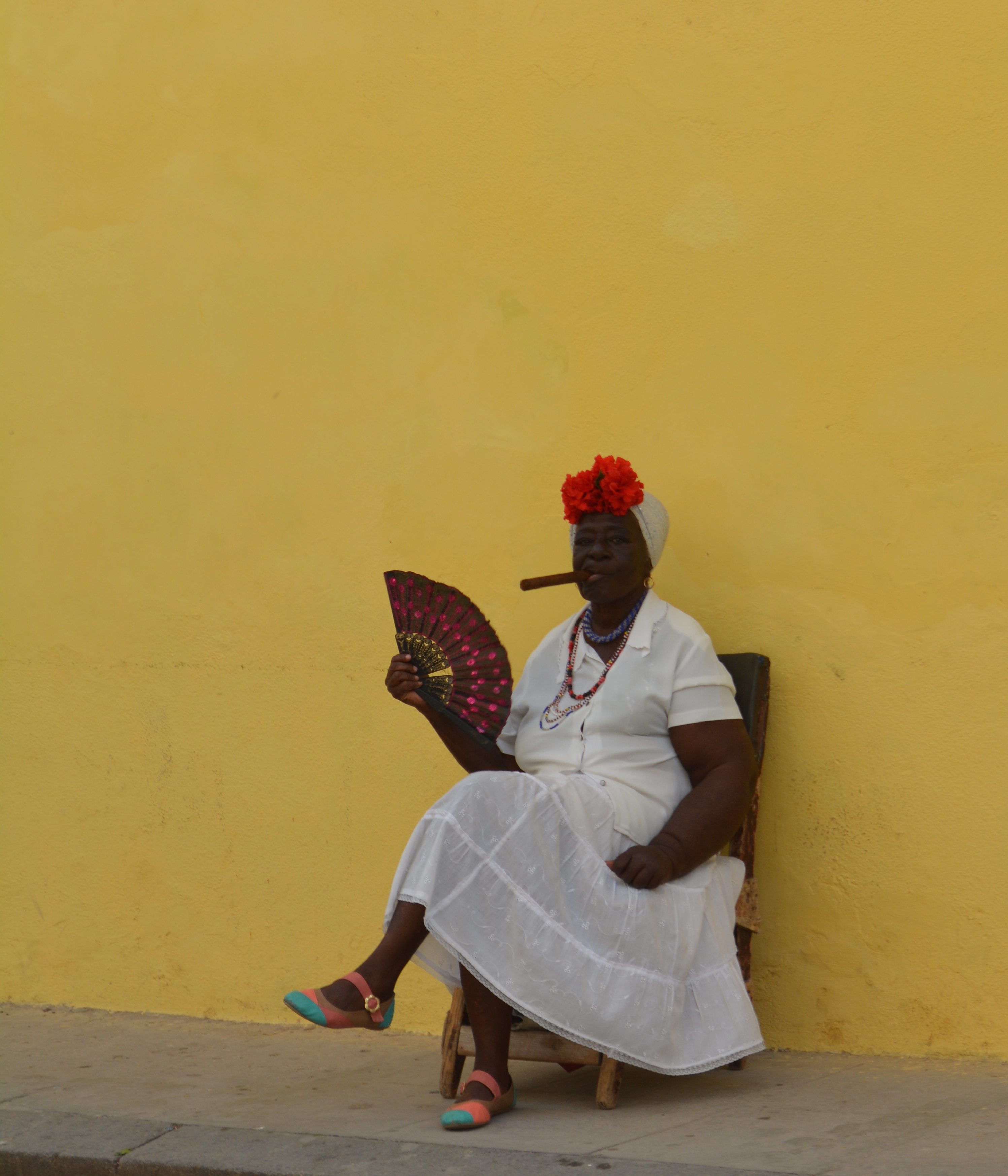
Cigar lady

Who says ladies don’t smoke cigars.

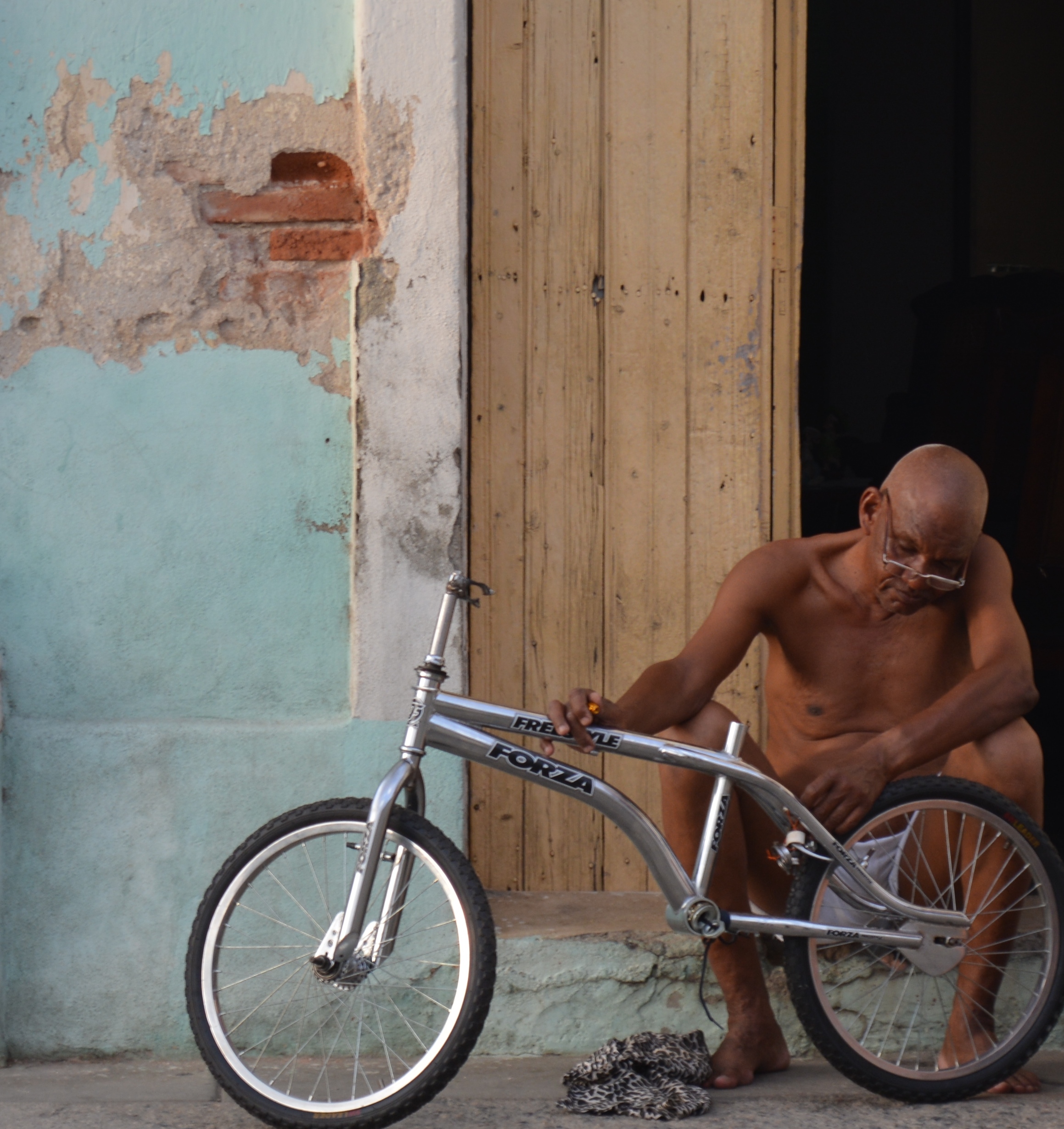
Man and bike

Recycle, refurbish or restore is the name of the game.
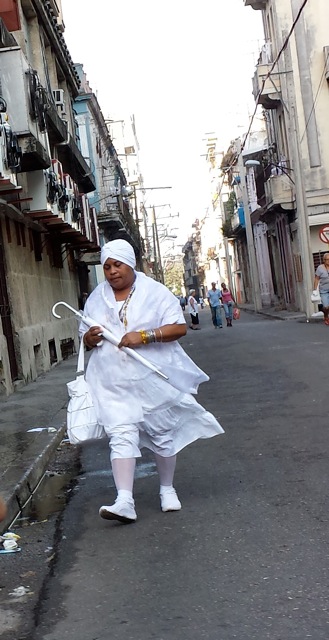
Initiates in the Santería religion are required to wear white clothing for a year, and they always carry a white umbrella.
Initiates in the Santería religion are required to wear white clothing for a year, and they always carry a white umbrella.

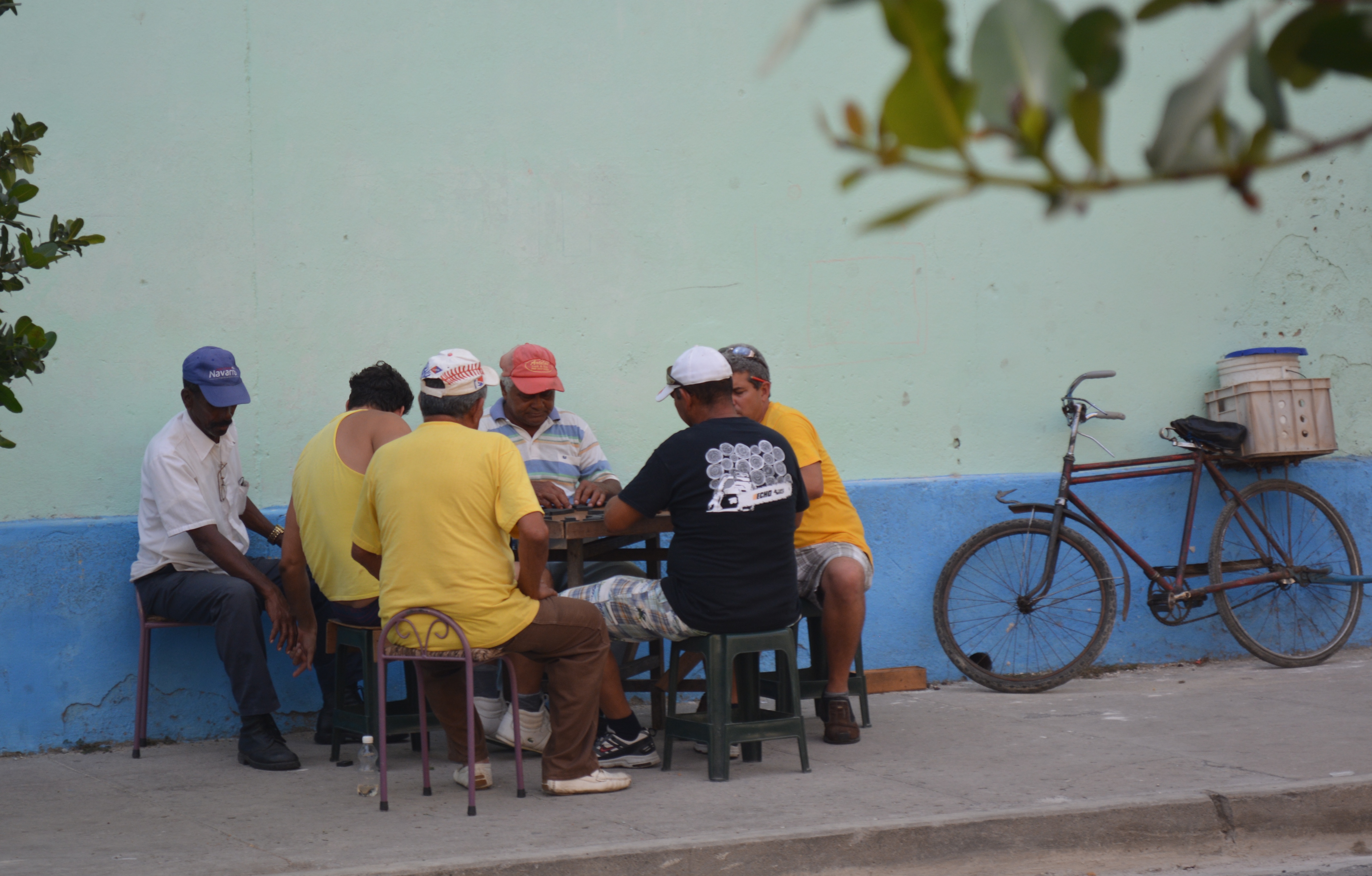
dominoes

Dominoes is a way of life.

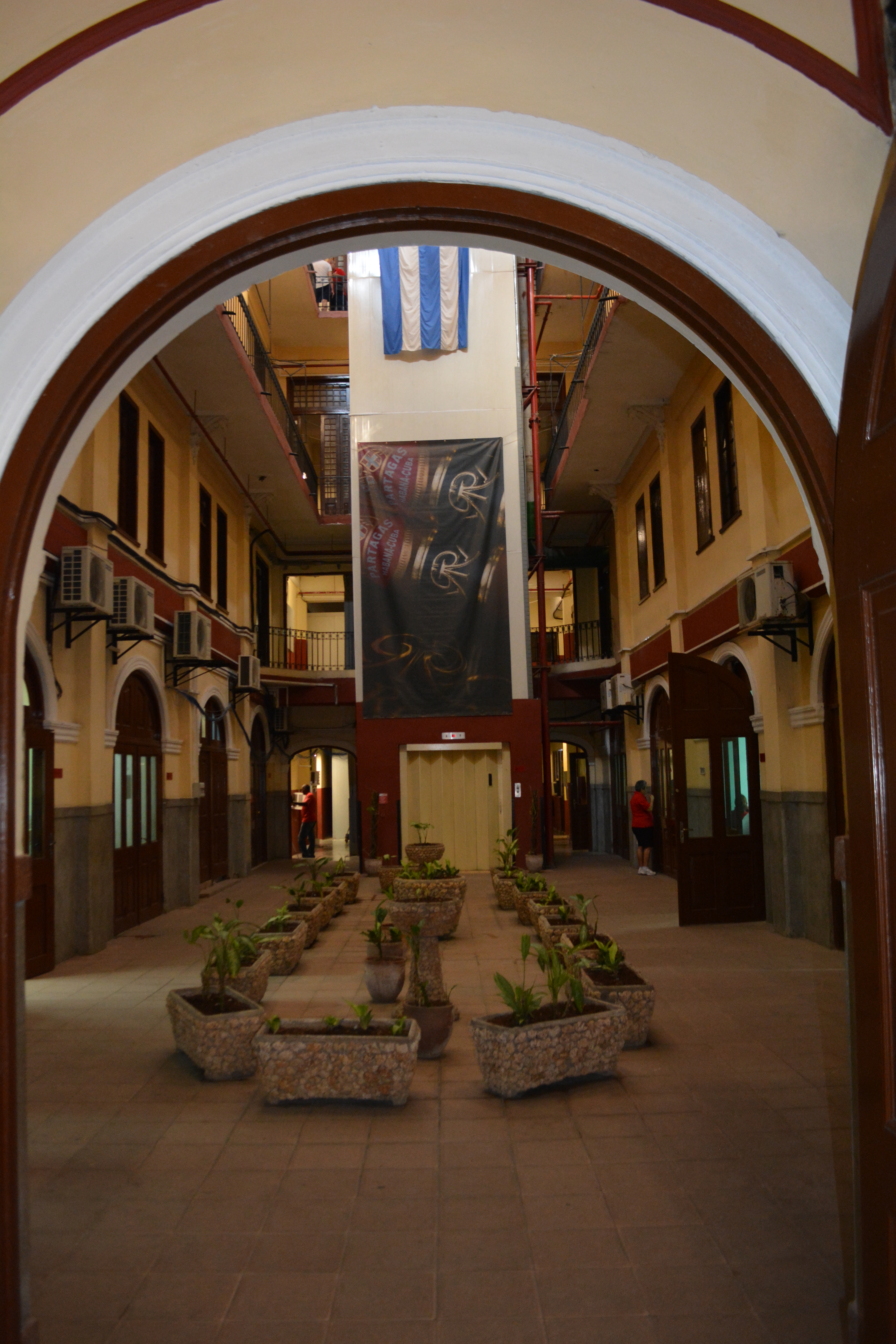
DSC_0469

You are not allowed to take photos of the cigar workers, but this is the lobby of one of the many working cigar factories in Havana. Workers train for 9 months to learn how to roll the perfect cigar. Most workers were in their twenties and thirties as older workers develop carpal tunnel from the repetitive motions.
DSC_0361

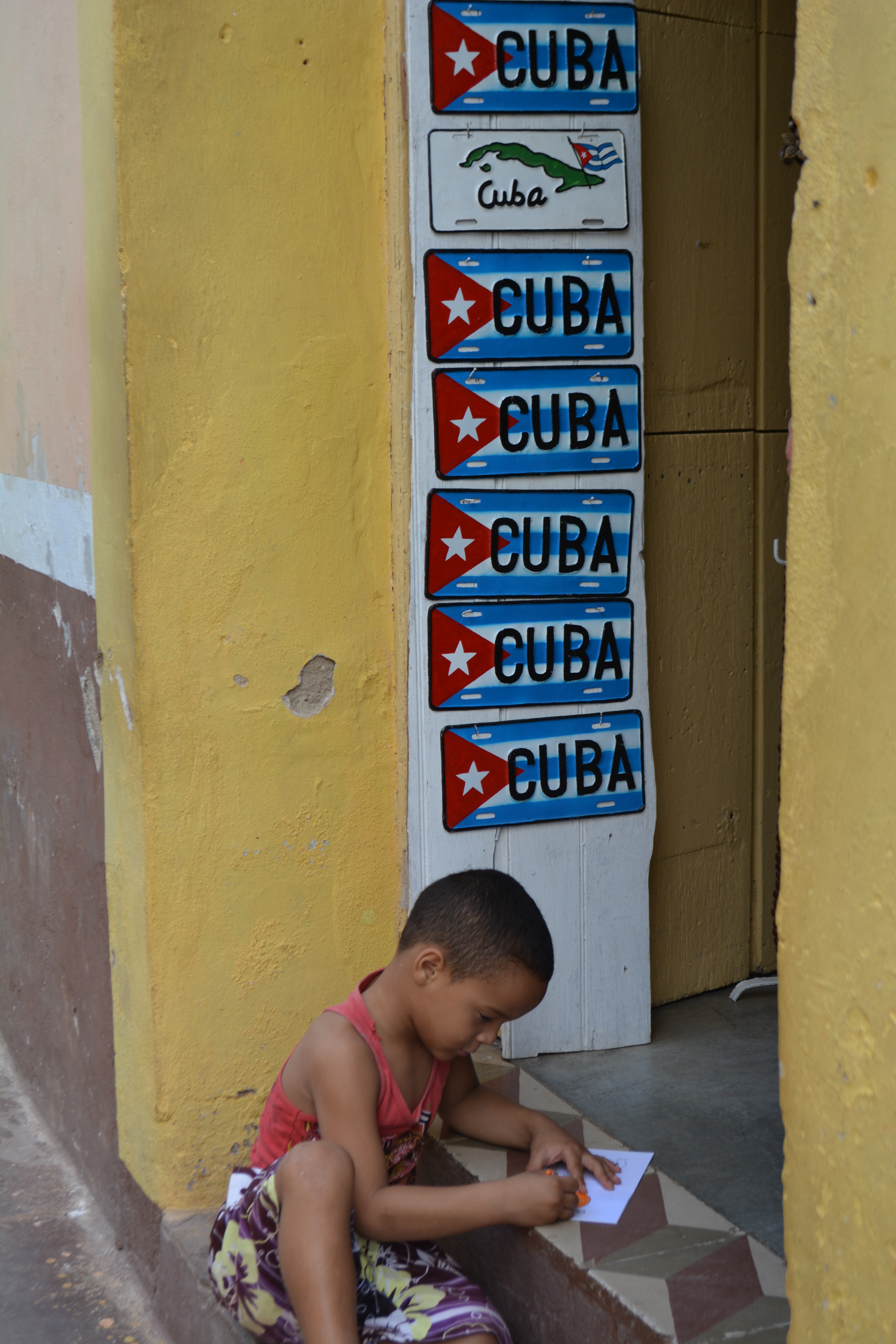
Souvenir shops with pro-Cuba items and images of Che abound.
20150305_162359

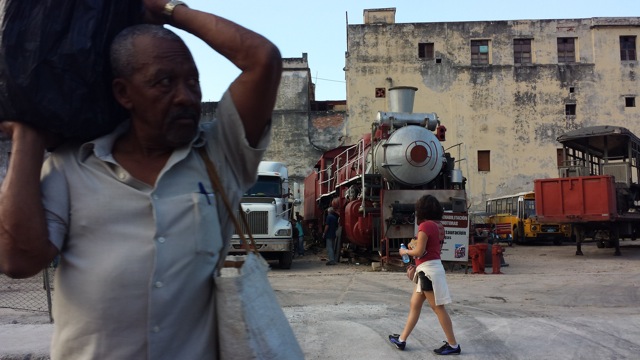
Just an interesting shot.

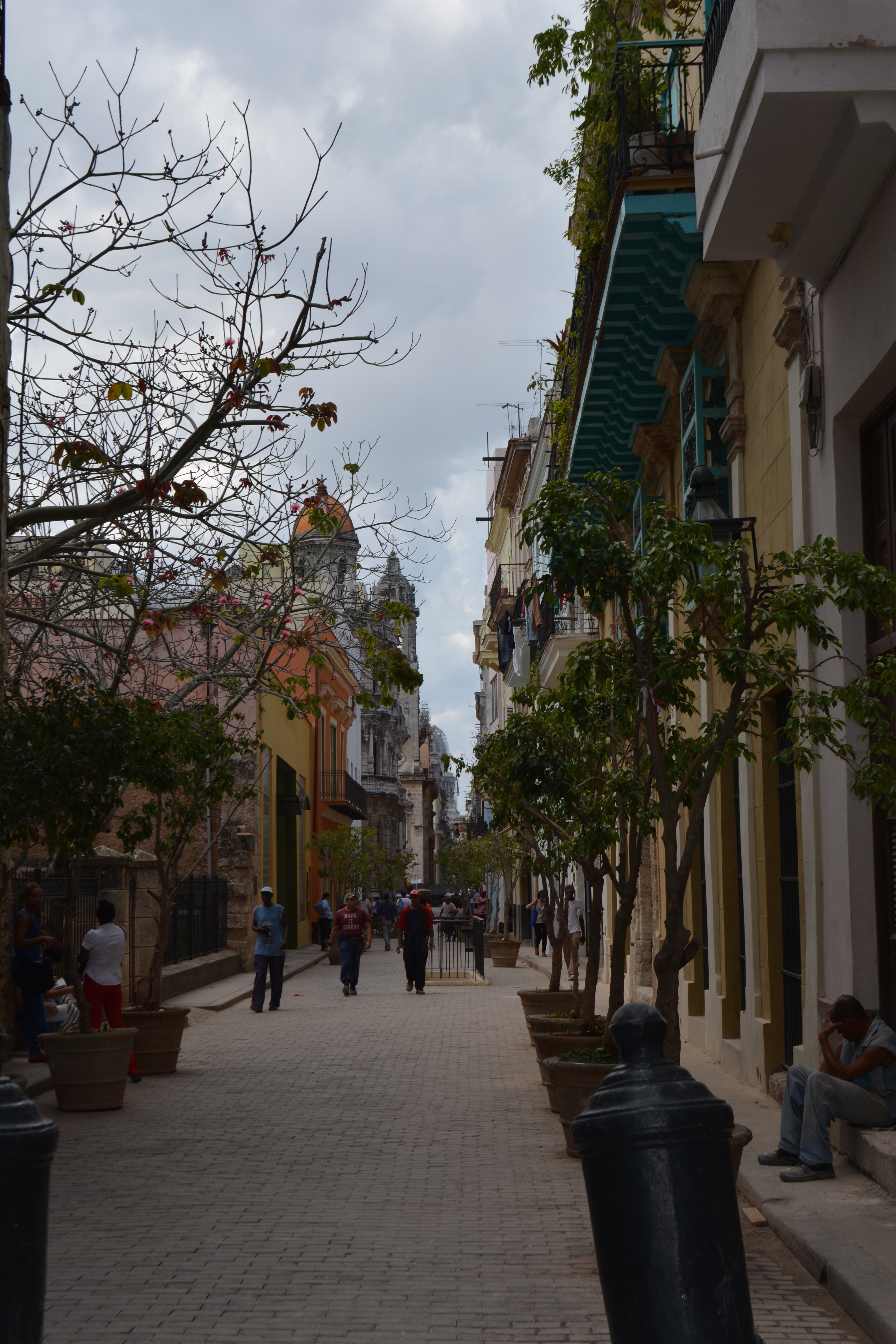
pedestrian walkway

Lovely pedestrian walkway in Havana.

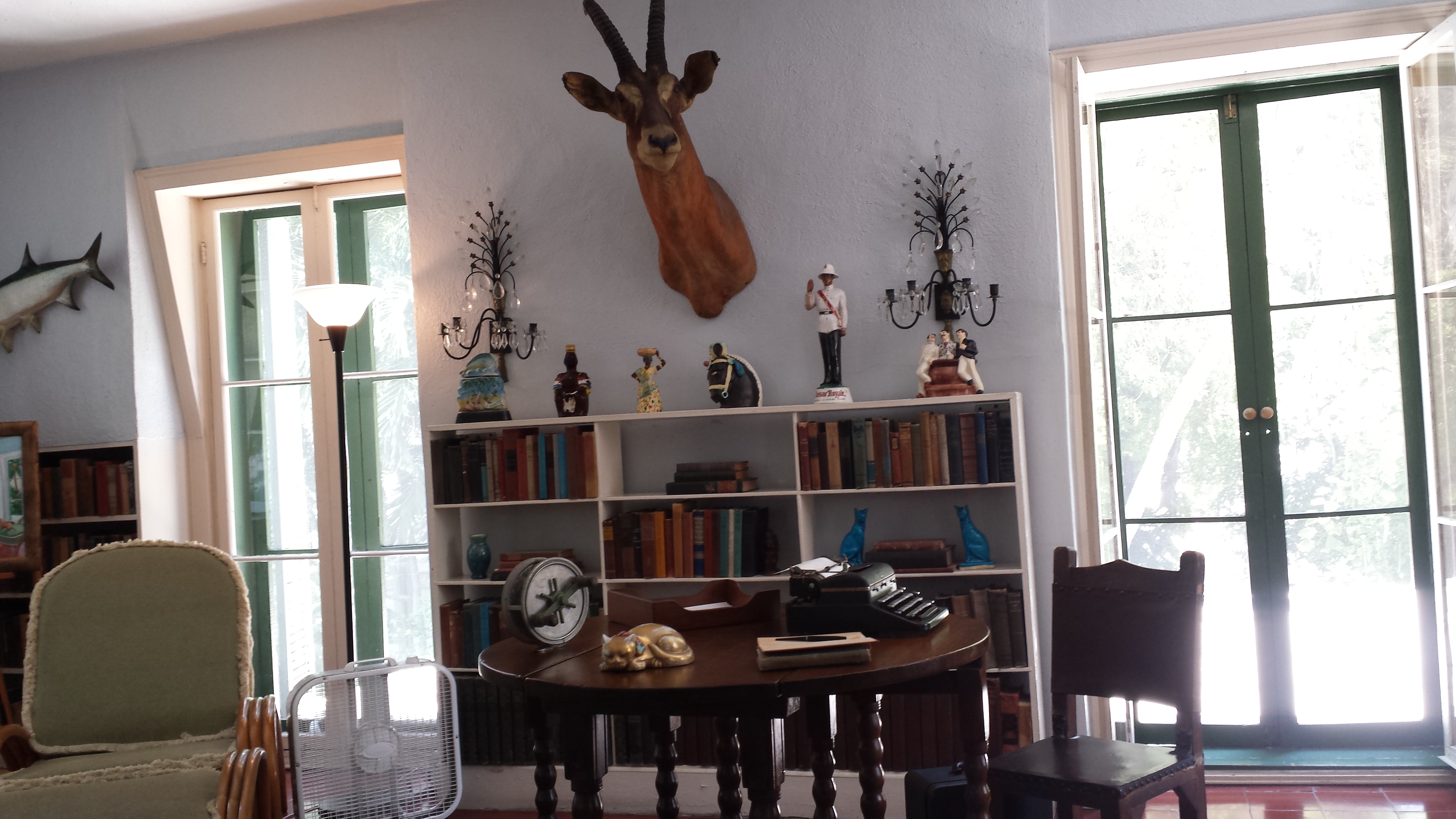
If there is one thing the world seems to agree upon and that is Earnest Hemingway.  His home stays as is the day he left Havana.

If there is one personality the world seems to admire, that is Earnest Hemingway. His home is as the day he left Havana.

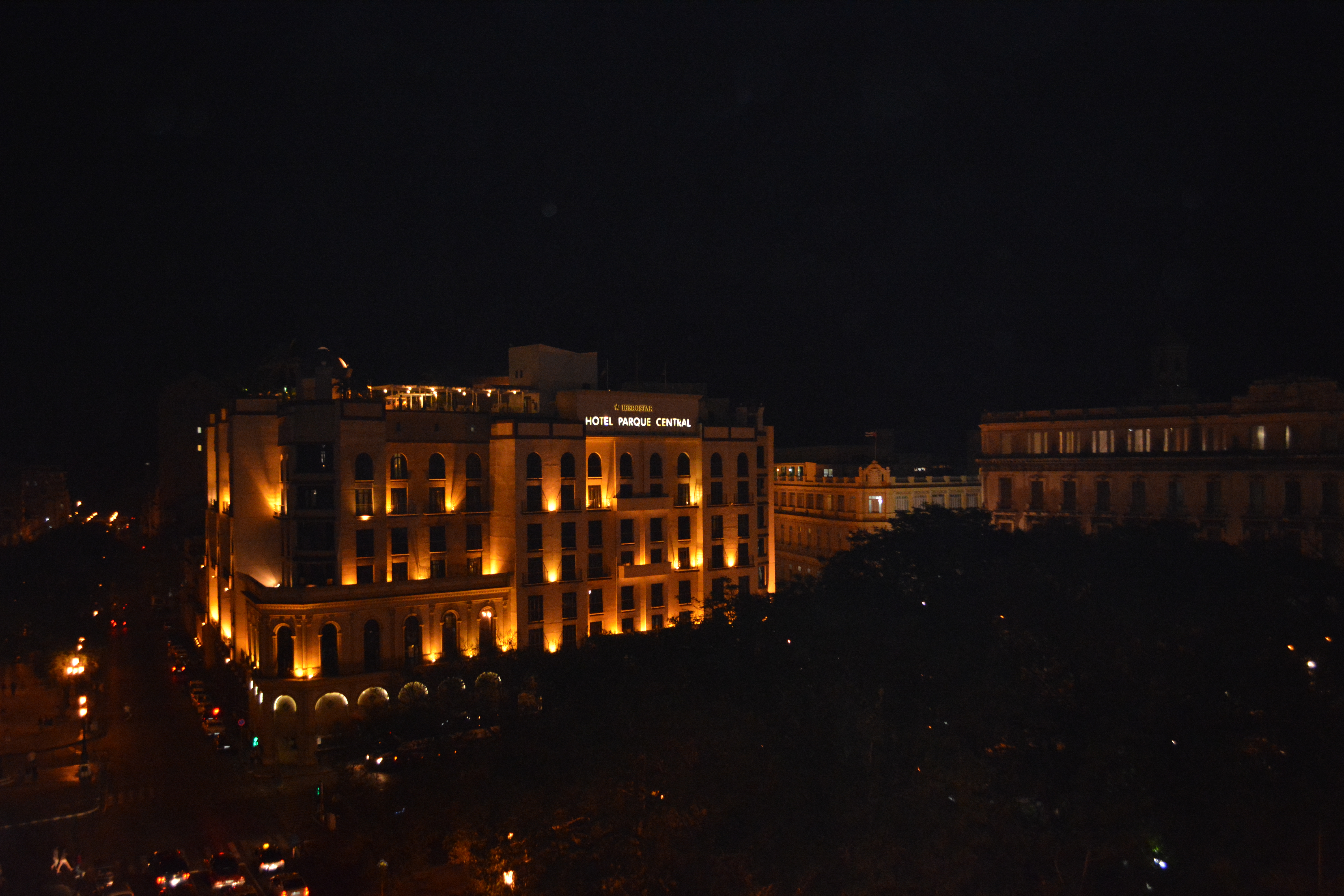
There are some 4 star hotels in Cuba’s larger cities that have the same luxuries as those you’d find anywhere else.  But they are completely disconnected from everyday life on the island.  Rich little tourist islands in a sea of poverty.
Iberostar Hotel

Iberostar Hotel

For example, we stayed in an Iberostar hotel our first two nights in Havana to acclimate a bit.  They had cable TV, including CNN, BBC, HBO and the other usual channels.  This caused us to be surprised that media consumption in Cuba was not that much different from our own.  Is there anywhere in the world that doesn’t have “The Big Bang Theory” on constantly?   It was only later we learned that these TV channels are limited to international hotels.  For everyday Cubans, the country offers two local TV news channels – both government owned – and one international news channel. Guess where that one is from? … Venezuela.
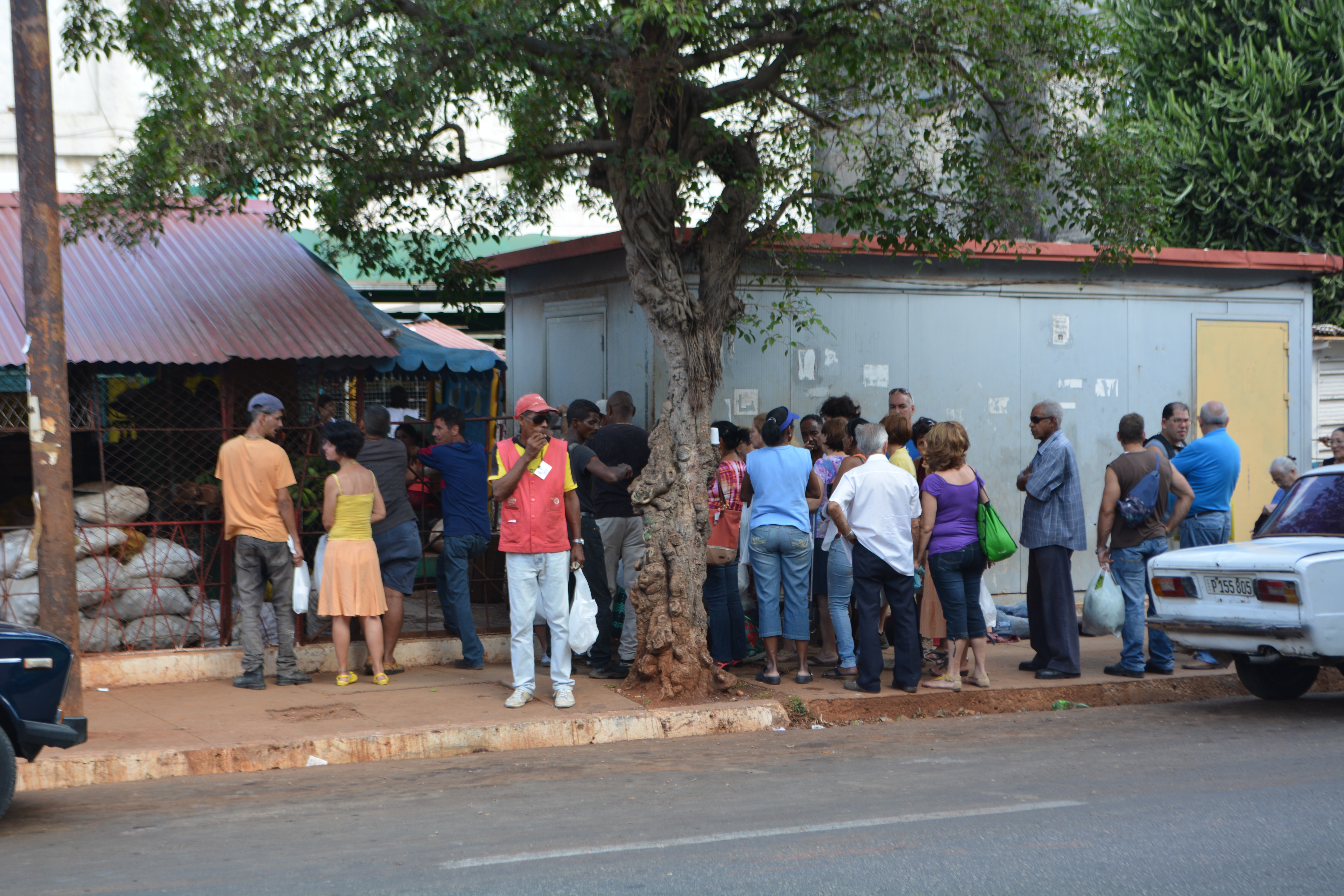
On line for media?  Food? To pay a bill?  Folks waiting on line is commonplace.

On line for media? Food? To pay a bill? Folks waiting on lines is commonplace.

Internet access is virtually non-existent. It exists in a few college areas and certain other designated spots, and is censored, expensive and slow.   But the people are resourceful. They know all the international pop culture references. We found out that this is due to one of the many ingenious black market practices that exist here. There is a service they call “The Package” or “The Terrabyte”. On a weekly basis copies of current popular TV shows, movies, magazines, etc. that have been accessed via satellite are made available to locals in kiosks around the country. Memory sticks and drives are filled a la carte with whatever media the customer desires.   So people in both the cities and countryside knew about “Breaking Bad”, “Game of Thrones” and those ubiquitous Kardashians.
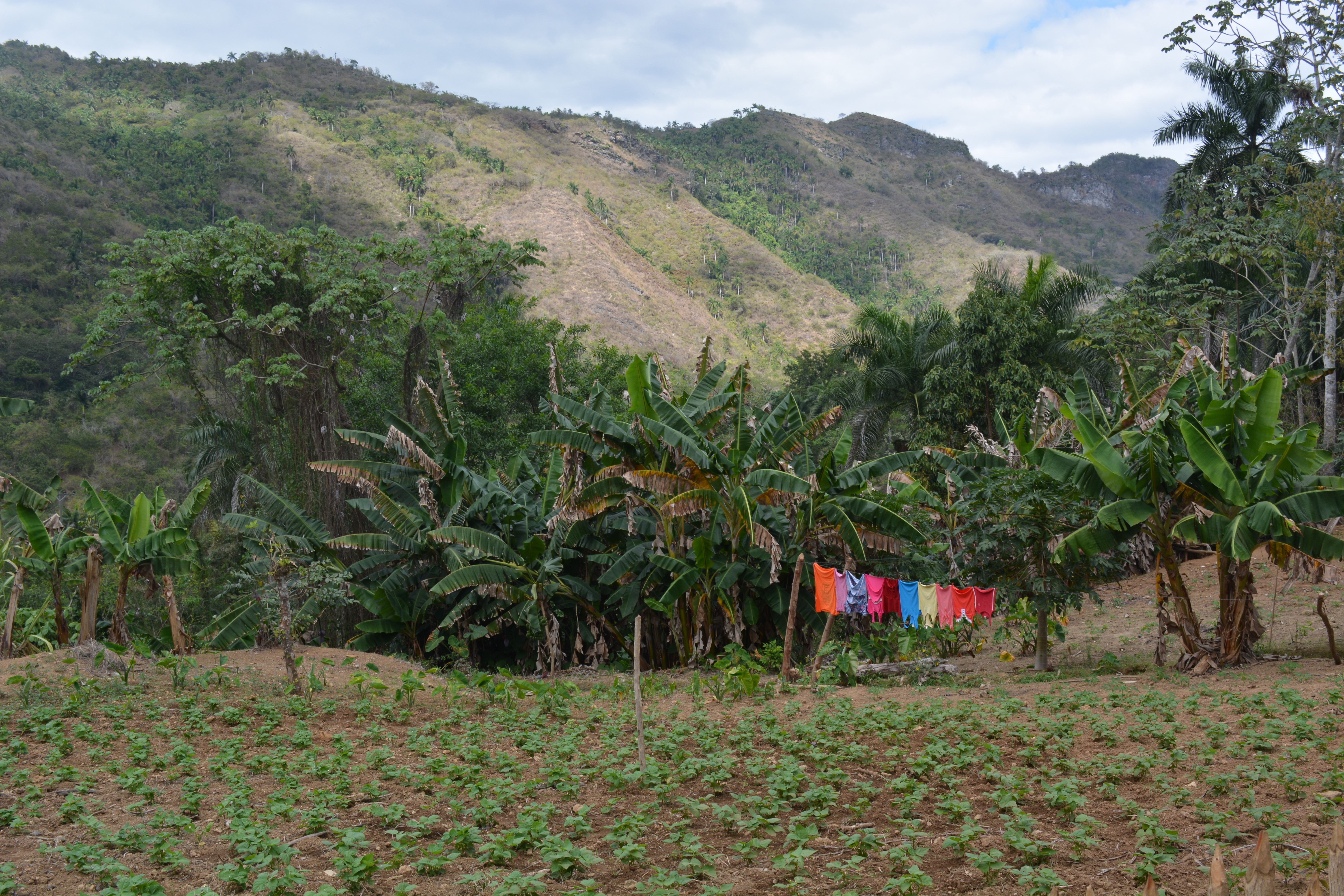
Cuban countryside
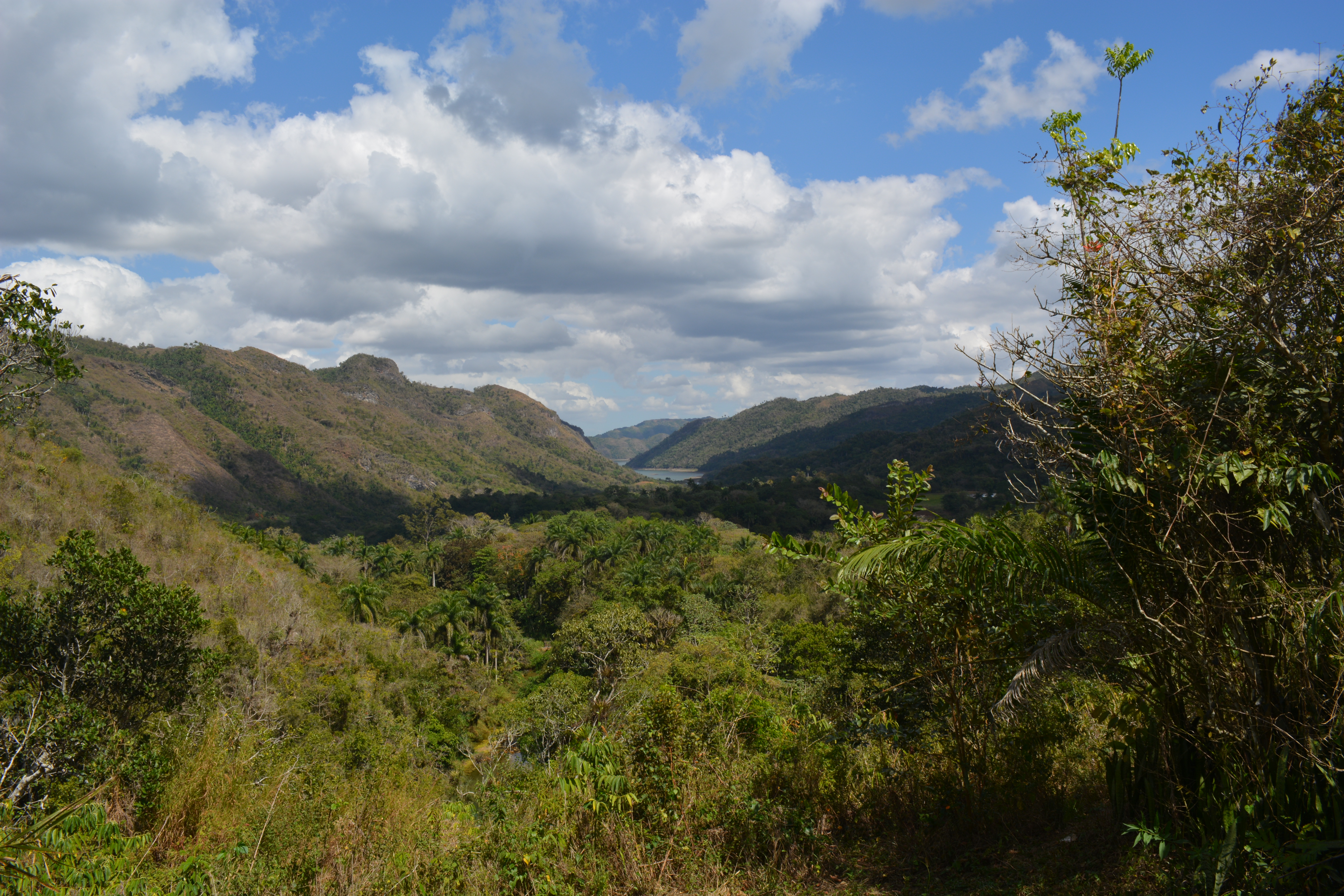
Cuban countryside

Sierra del Escambray mountains

Sierra del Escambray mountains

Cuba is a country of contradictions.  The countryside is beautiful and largely undeveloped. But this is mainly due to the lack of investment funds available and red tape for development anywhere.  Refreshingly there is almost no litter along the roads, but we learned this is because everything that can be recycled is recycled.
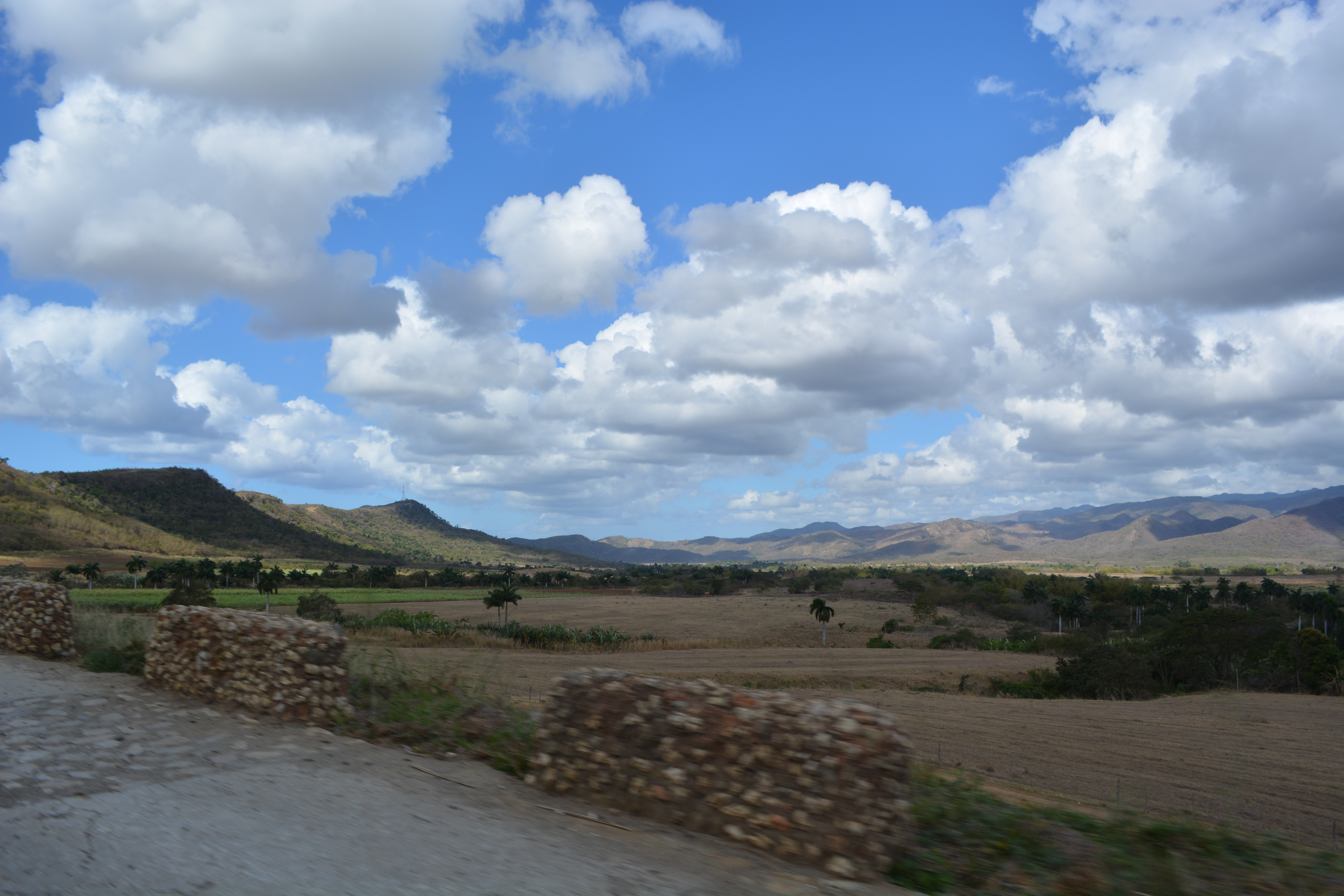
Wide open undeveloped land.

Wide open undeveloped land.

Due to its expense there is very little disposable plastic waste.  Many items are still sold in glass and metal containers.
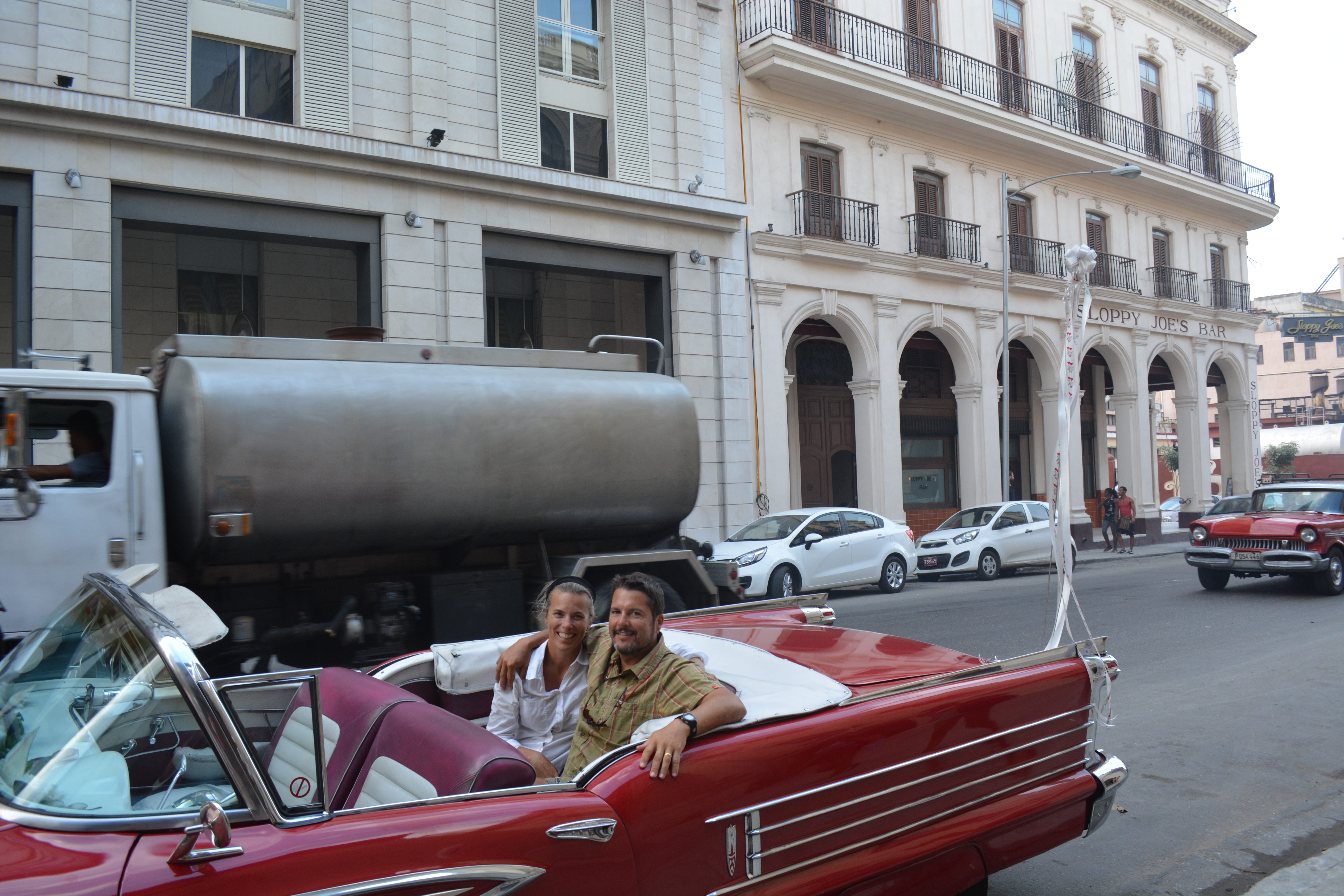
1950s car

Touring Havana in 1950’s convertible

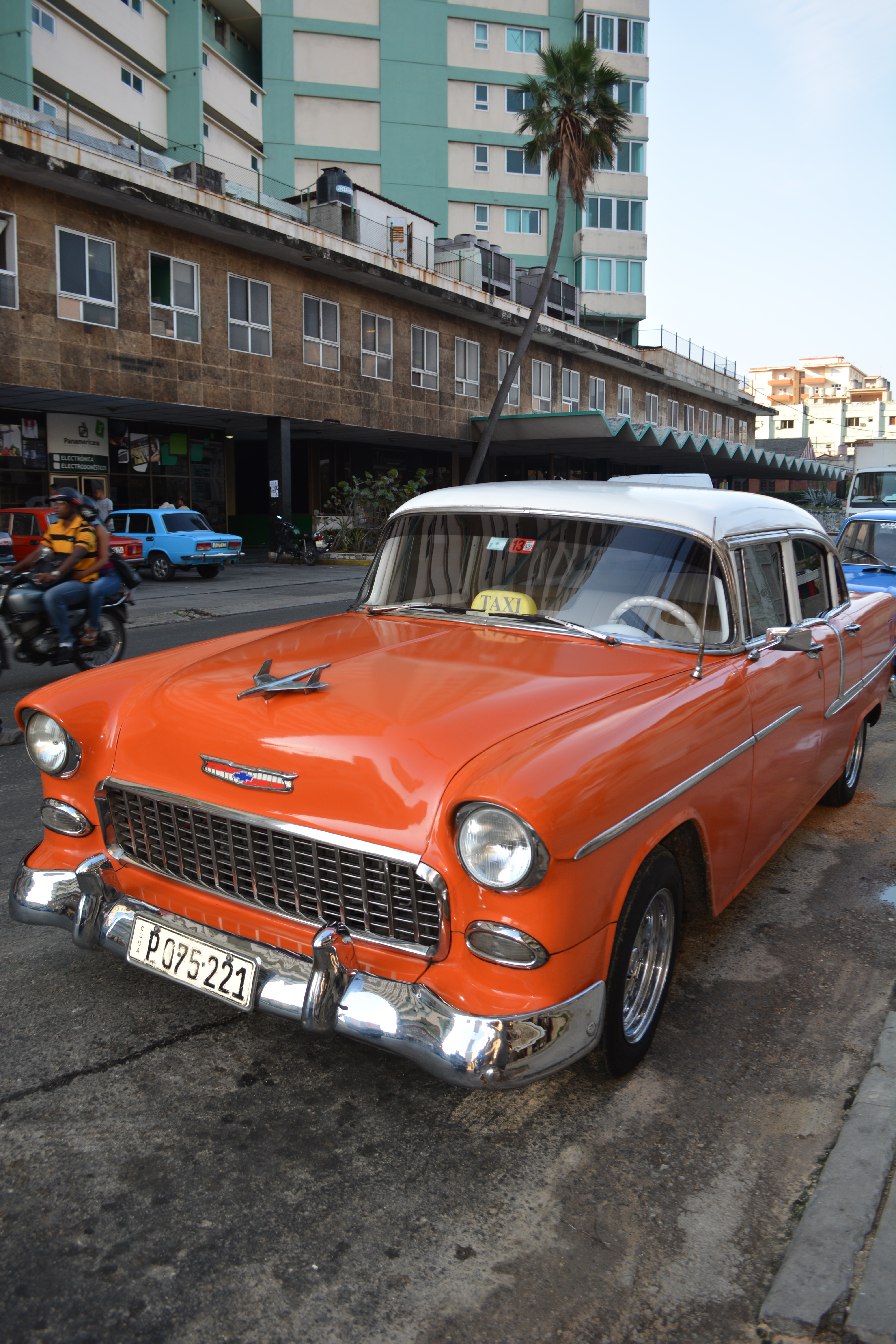
Cubans are pros at making the best of what they have.  Just look at all those old American cars.  Yeah, they are here – lots of them.  They’ve kept these cars running and passed them down from generation to generation for 50 or 60 years.  We assumed they were kind of a tourist gimmick, preserved for some propaganda reason. But there are TONS of them all over the island in varying states of repair, from glistening perfection to hideous, smoking beasts with more bondo than sheet metal.
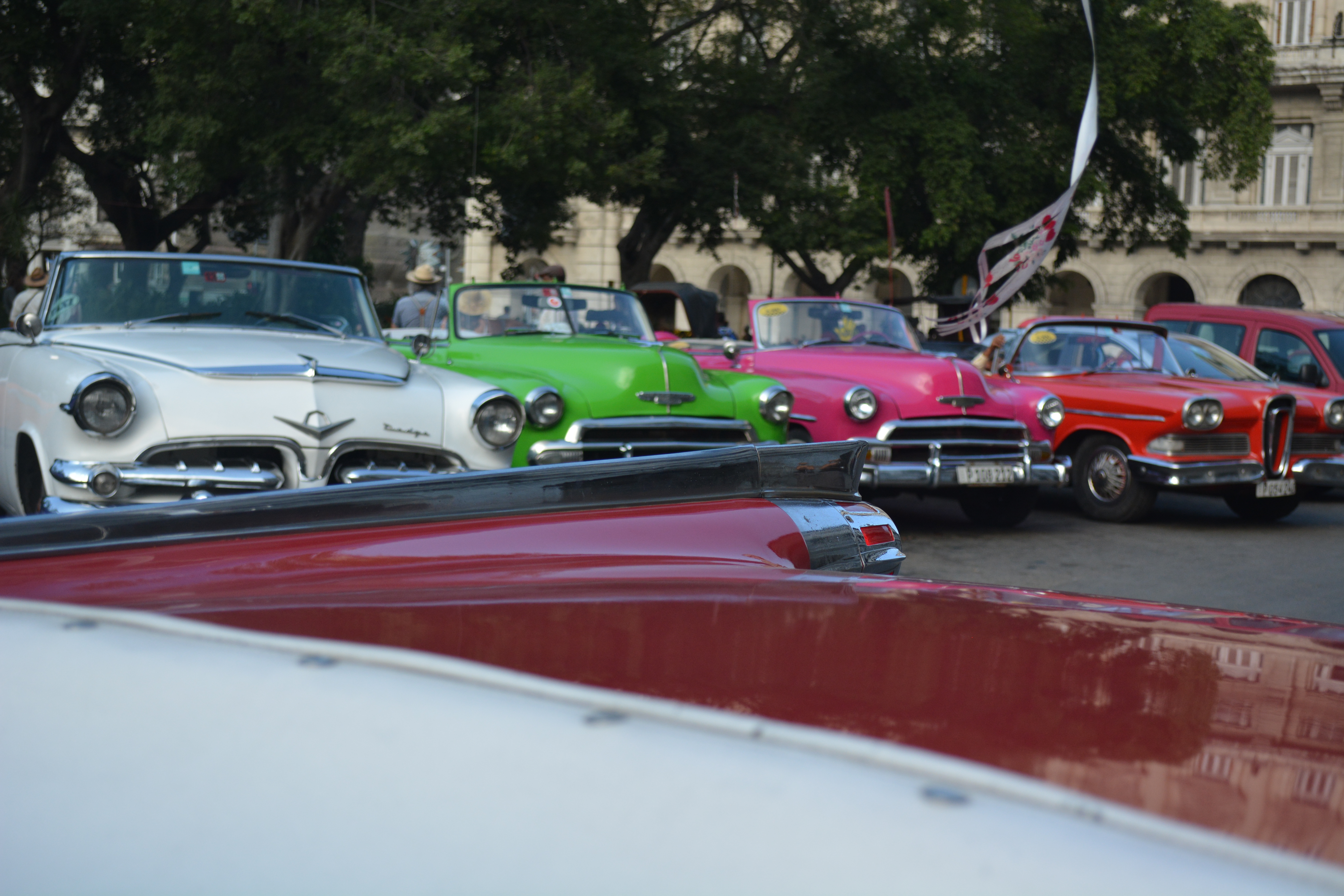
colorful cars

Taxis lined up.

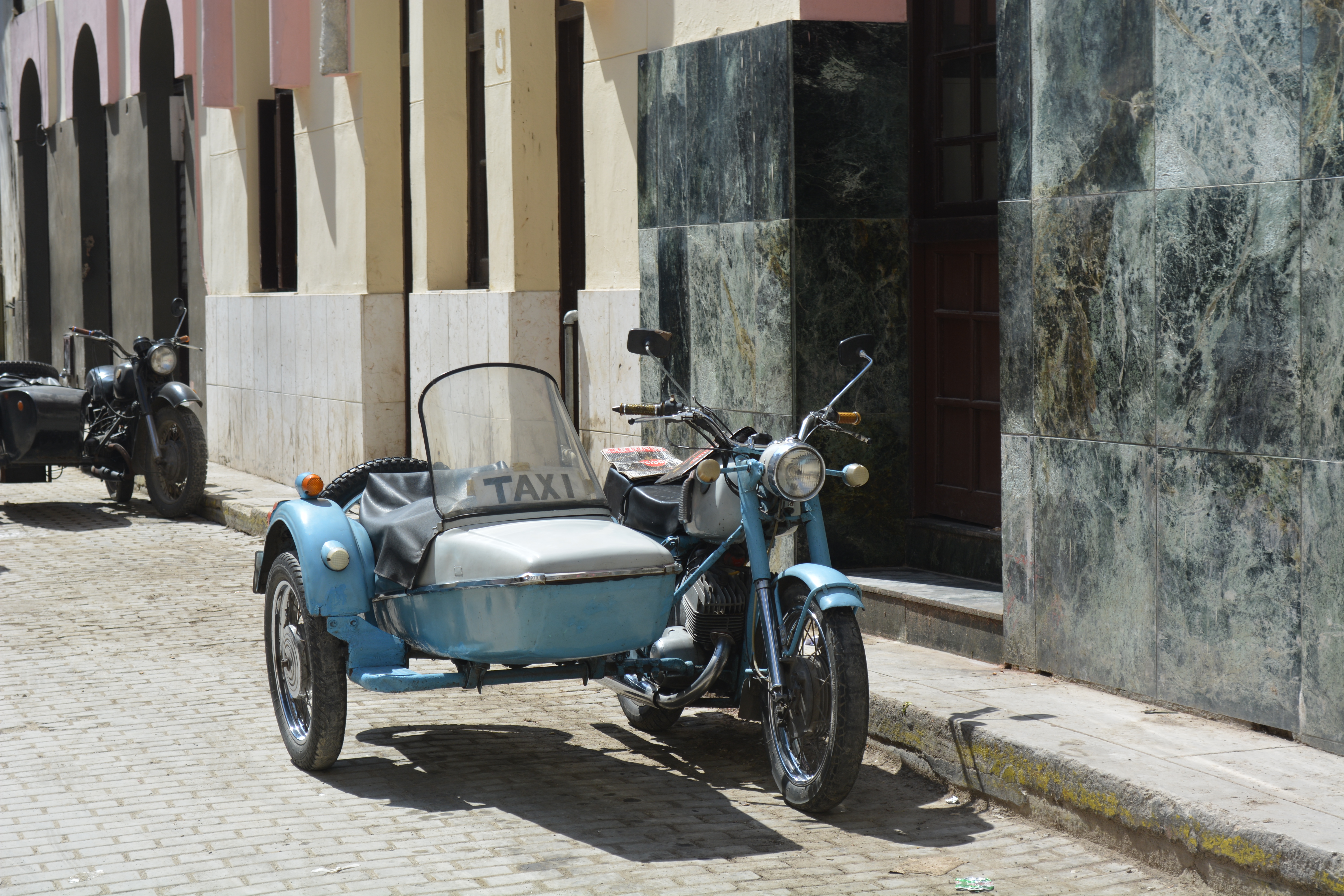
Along with all the classic 1950s American cars are lots of 19? motorcycles with sidecars

Along with all the classic 1950s American cars are lots of old motorcycles, most with sidecars.
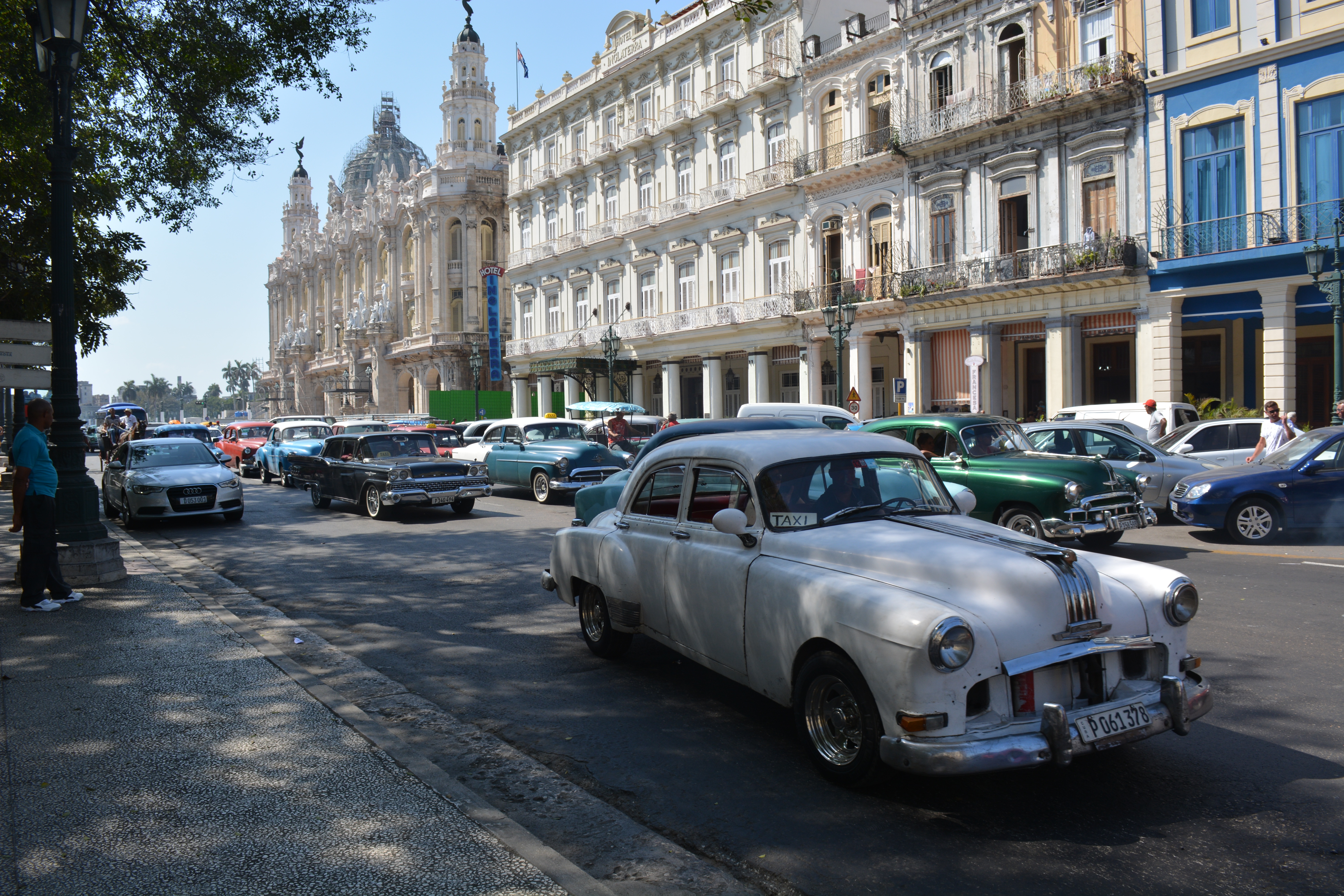
cars in Havana

Cars on Paseo de Marti.

DSC_0460

Old Chevy now a taxi. The driver installed his own homebrew air conditioning.

Interestingly, the cars trace the historical ups and downs of Cuba. All those old American cars from the 50’s (none from the 60’s as the revolution happened in ’59 and that is the last model year present) represent the heyday of American involvement with Cuba and their abrupt end in 1959 tracks the end of the US presence here.
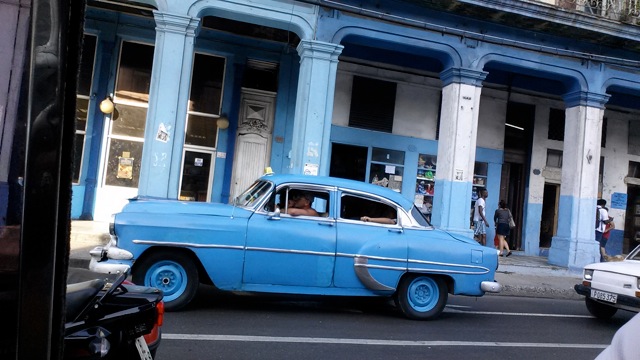
Blue Car

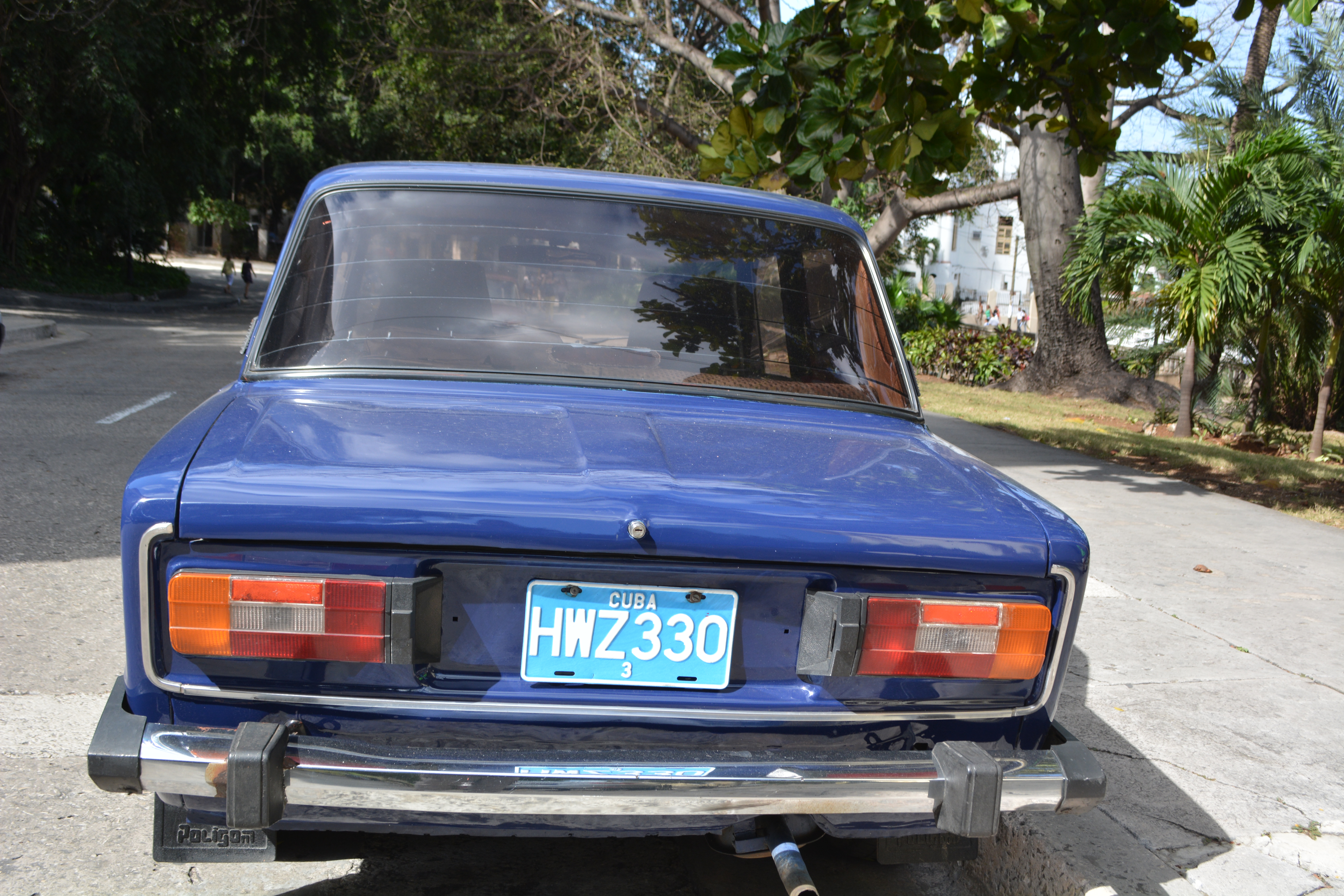
Then there are Russian cars, mostly Ladas; these are from the ‘70’ and ‘80s but they also abruptly disappear in the mid-1980’s when the fall of the Soviet Union caused Russia to drop Cuba like a hot potato.  They did not hold up as well as the old American cars, probably because the Cubans do not value them like those old US warhorses.  The Russian cars are taxis or just old beaters now.
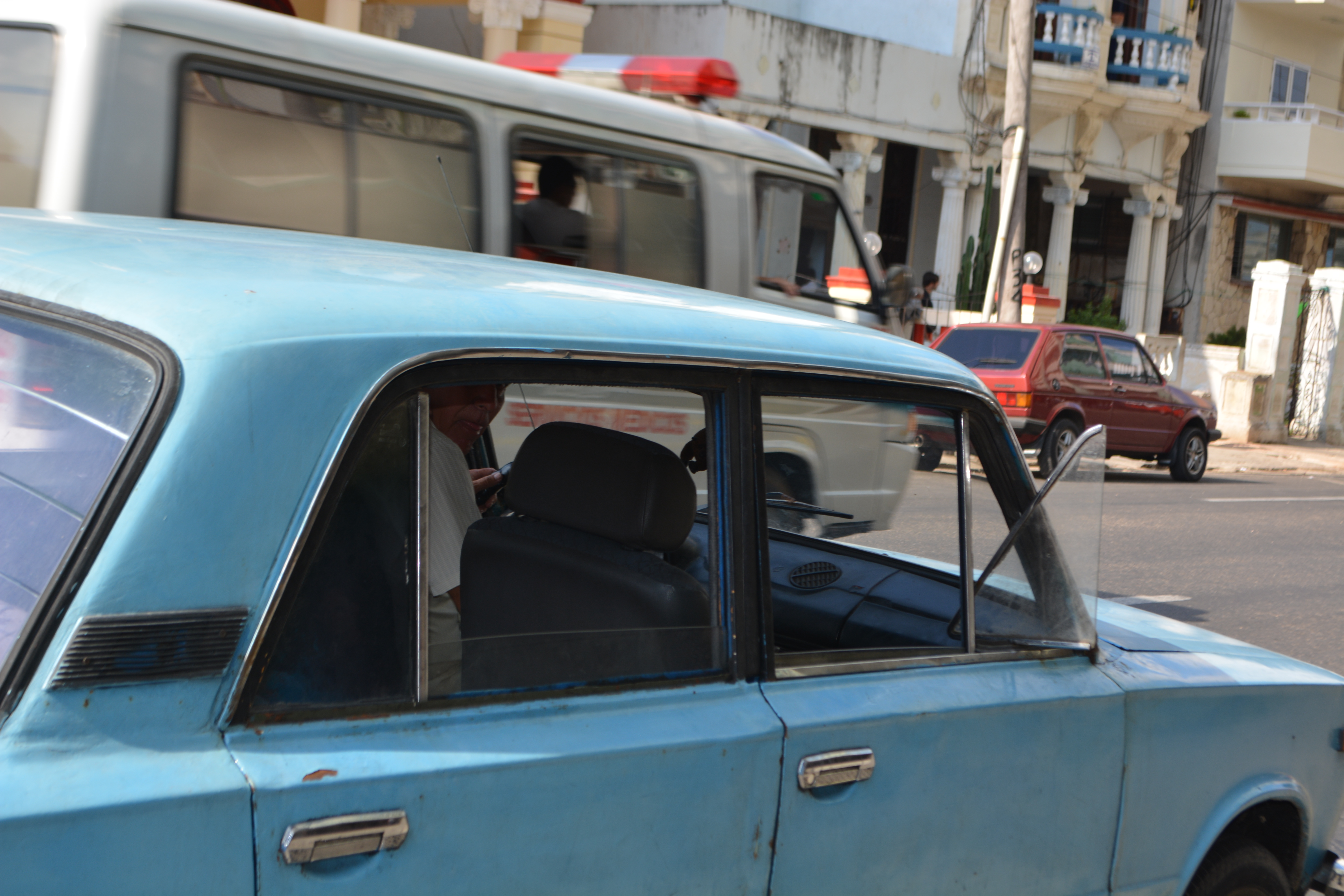
DSC_0457

This is a Lada.

DSC_0555

Ladas look like they are from the 60’s but are really from the 80’s.
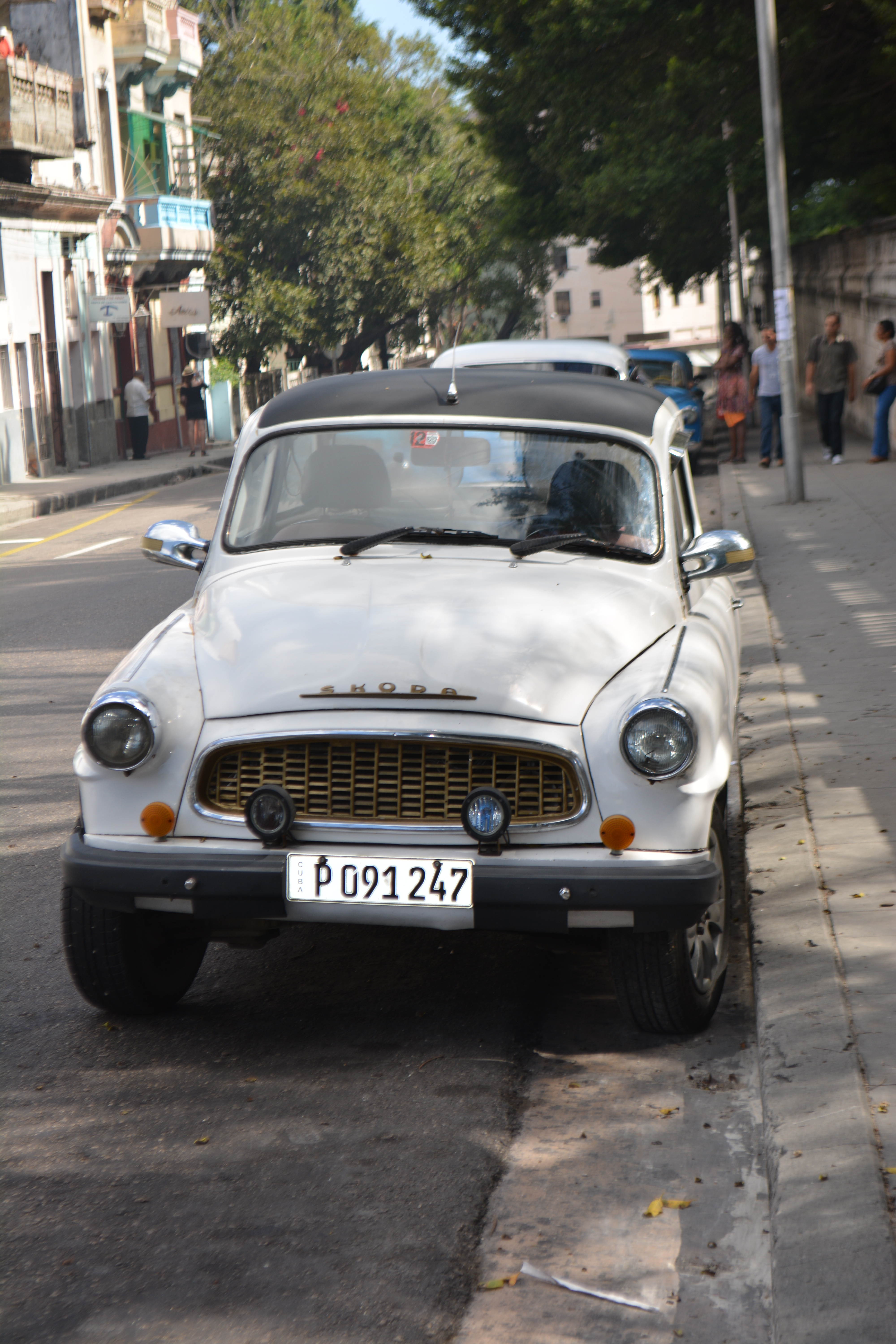
DSC_0558

Cool looking Skoda – from Czechoslovakia, when there was a Czechoslovakia.

The exit of the Russians ushered in a decade of extreme hardship for the Cuban people.  We were told horrible stories about people eating potatoes for breakfast, lunch and dinner; going without shoes for an entire year, and other tales of desperation.  And that, too, is evidenced in the Cuban cars – there are generally none from the ’90s to be found anywhere in the country.   Now, there is a steady trickle of unfamiliar Chinese and Korean cars showing up in Cuba, as those countries seek a toehold in this potentially lucrative market.

The people are poor.  I mean, we saw these kids in the city of Cienfuegos playing baseball in the street with a stick as a bat and a rock wrapped in a sock as the ball. This is right out of a Hollywood script.  How we wish we had a bag of baseballs to hand them.

Cienfuegos baseball game.

Cienfuegos baseball game – he missed; that thing behind him is the ball – a rock wrapped in a sock.

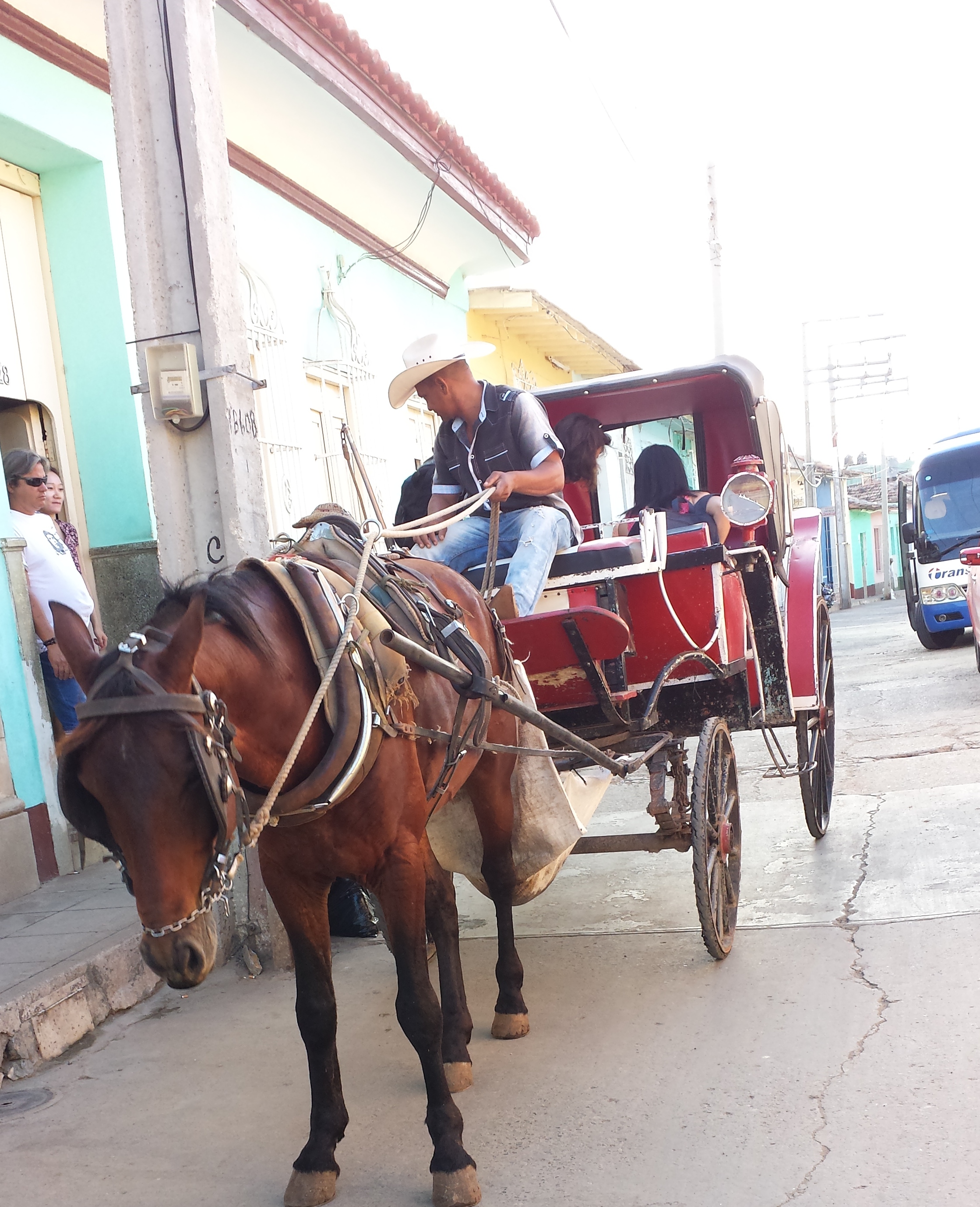
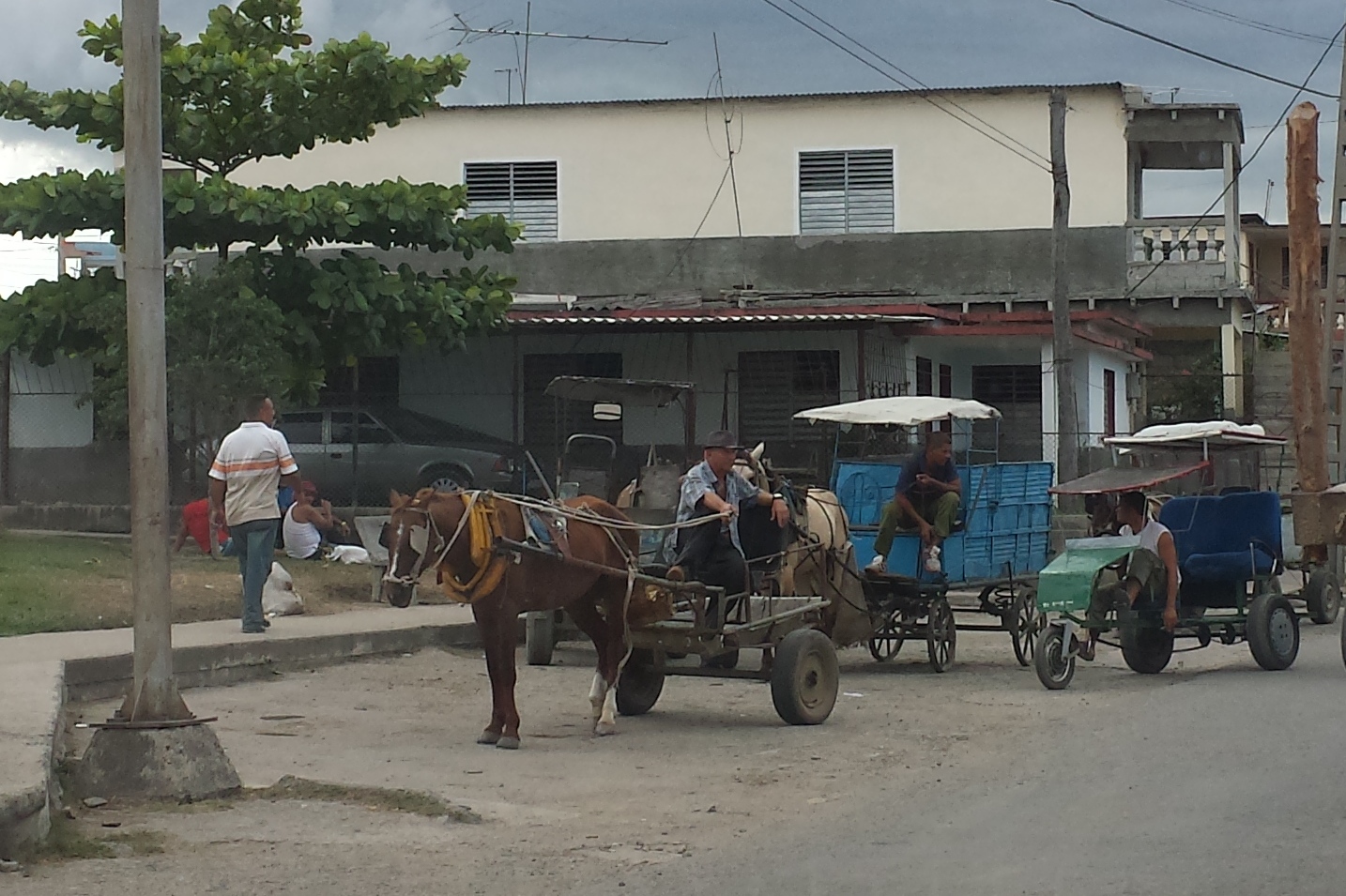
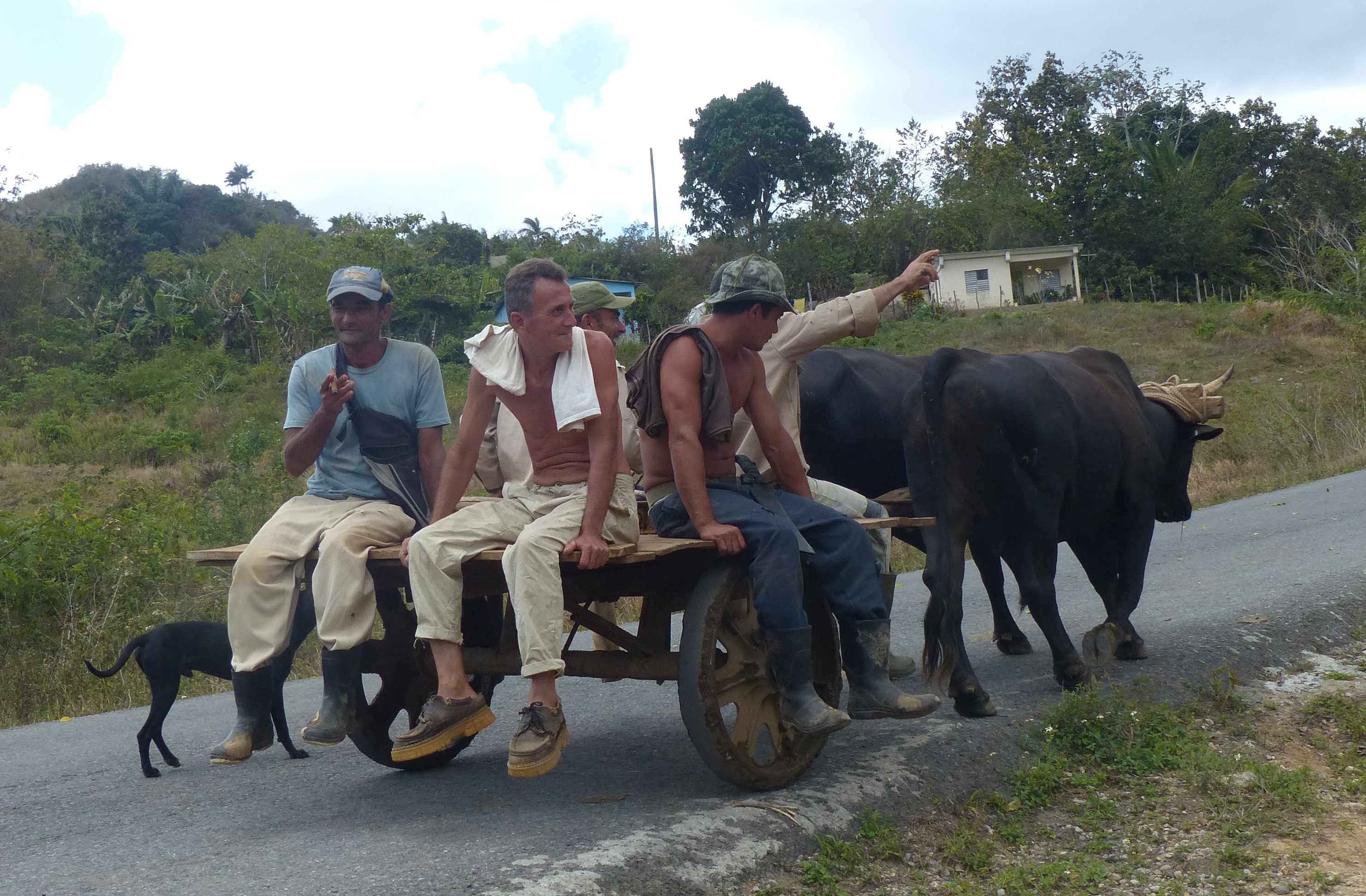
They had to call timeout whenever the “ball” unraveled. But they were having a grand time. In most of the rural villages there were more people getting around by horse and cart or just horse and saddle than by cars or trucks.  Yet you sensed no resentment, envy or covetousness.
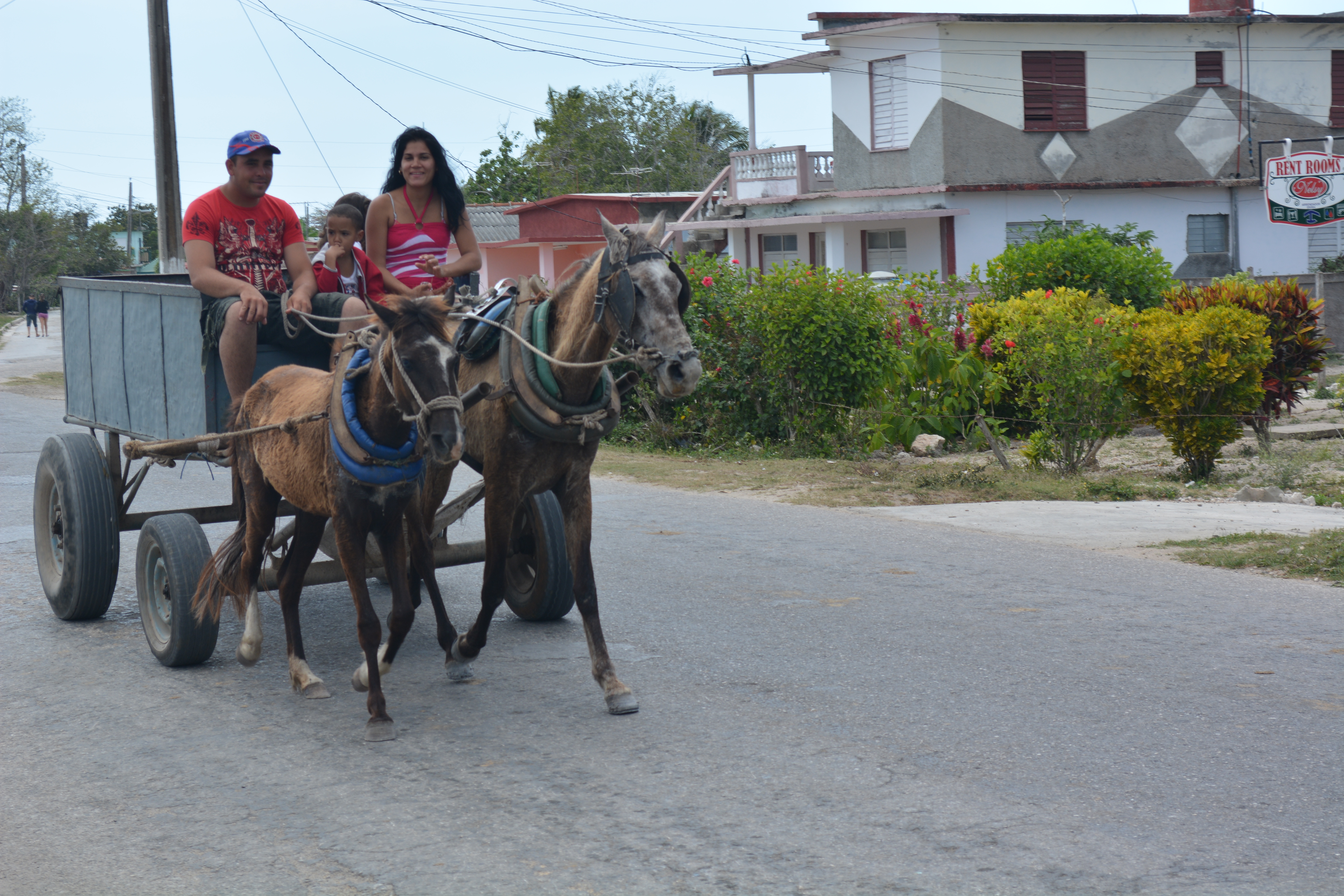
Family on horse and cart

Family on horse and cart.

Man on horse and cart

Man on horse and cart.

horse and carts

Parking lot.

old cuban man

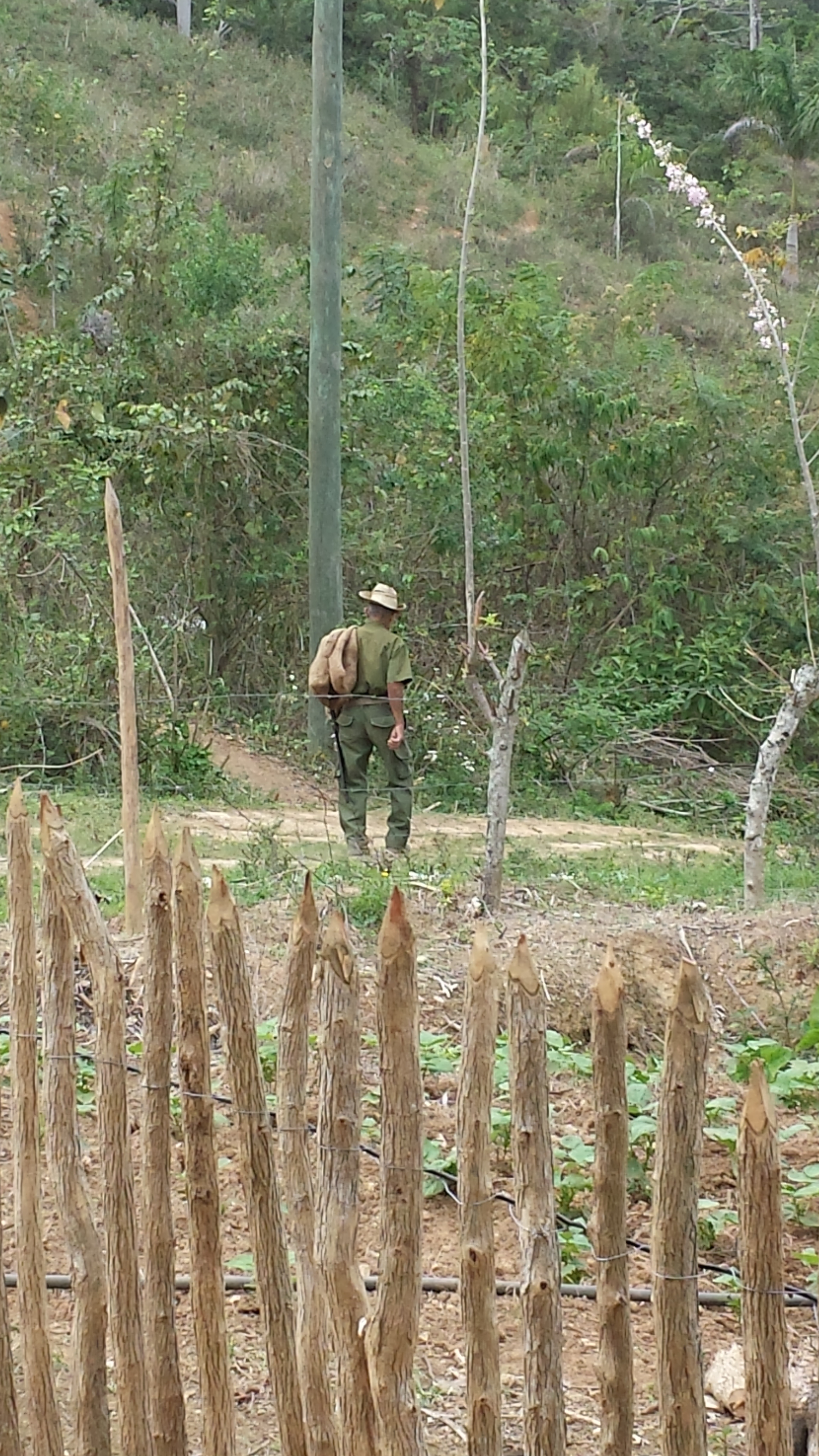
No horse, so he walks.

men on cartDespite the hardships caused by US government policies, the people unanimously welcome Americans and are eagerly looking forward to renewed relations. Even though Cuba was a Soviet client state for decades, most people will scoff at Russians and readily align themselves with the US. When Barack Obama first announced thawing relations with Cuba, we, and I think a lot of Americans, thought – “Oh, well that’s a surprise. OK, the sanctions regime didn’t seem to work so lets give this a shot” and then went about our day. In Cuba, despite the government’s cool negotiations with the Americans, it is a day of national celebration for ordinary people, sort of an unsanctioned holiday.   It’s so prominent that it has its own nickname – D17, for December 17 – the day of Obama’s announcement.

One has to admit that the communist regime in some respects has performed well for its citizens. Free education for all has resulted in an astoundingly high literacy rate. Subsidized healthcare means people are healthy and treated well.   And racism seems to be non-existent.  Although skin shades are as diverse as in the US, it never seems to make the slightest difference.
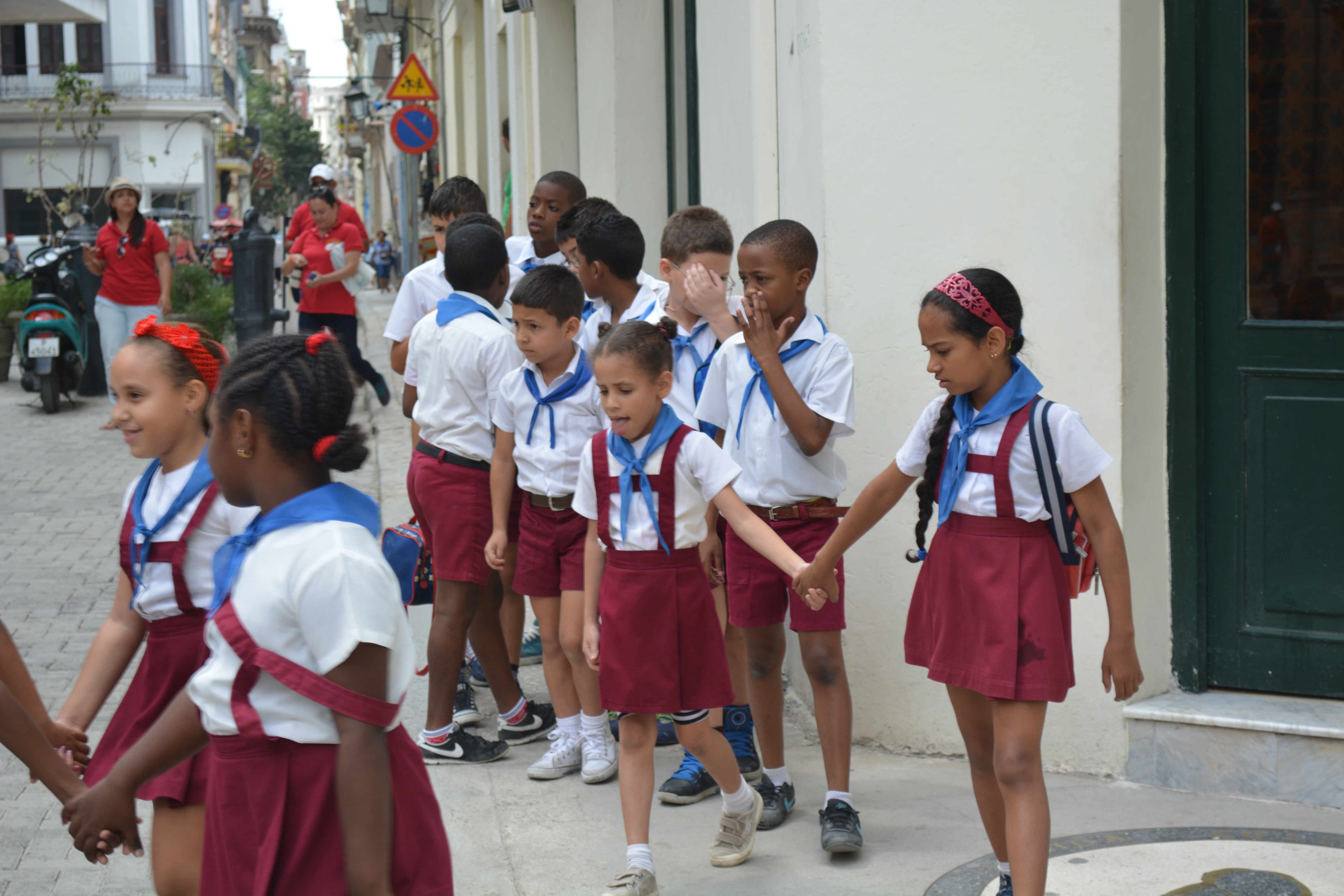
All school children wear uniforms

Everyone is given a free education pre-school to university.
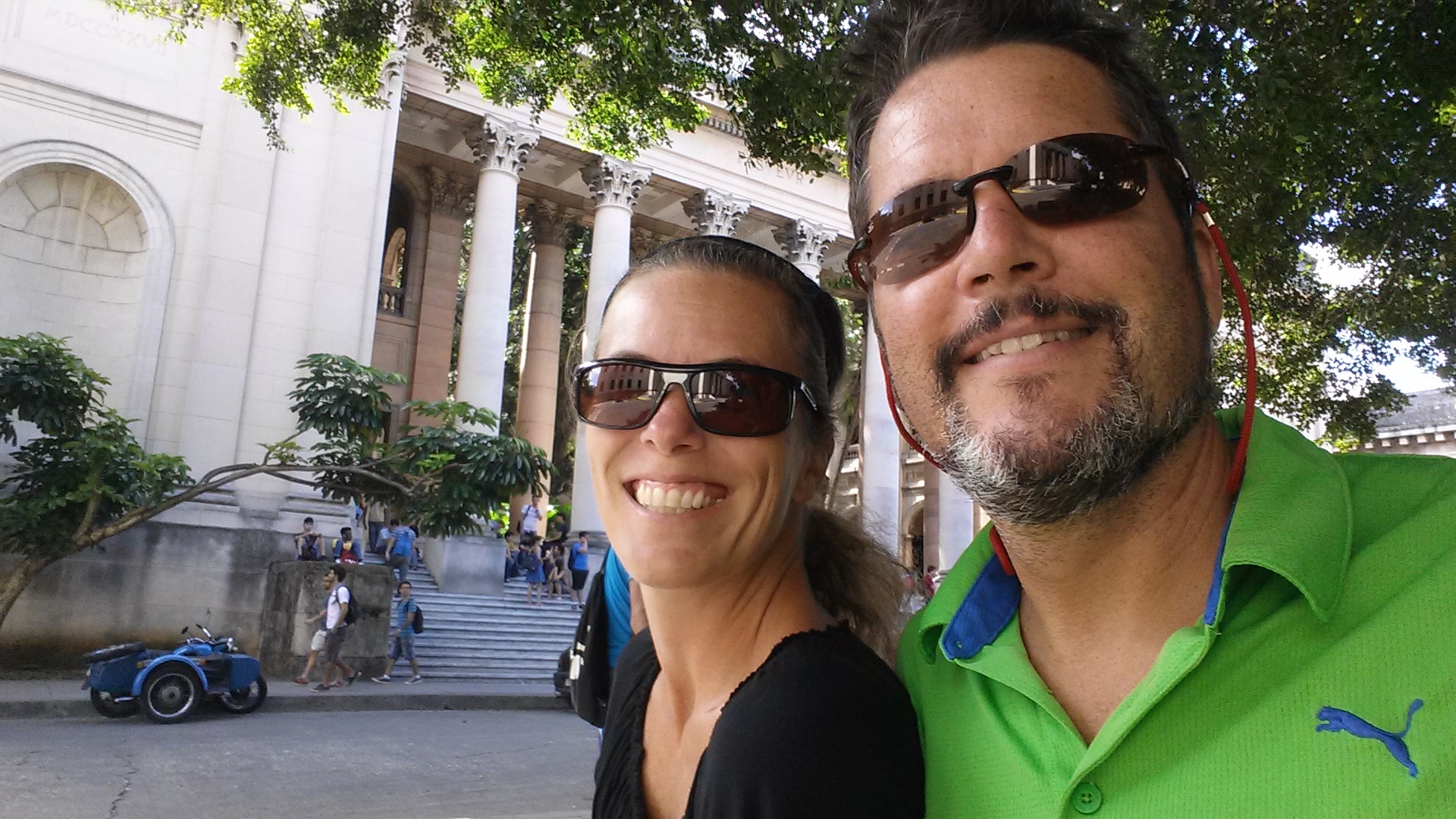
Campus of the University of Havana

Campus of the University of Havana – stunningly beautiful grounds and buildings.

As mentioned above, somehow the population seems in general to be a happy lot despite the fact that they are well aware of their poverty.
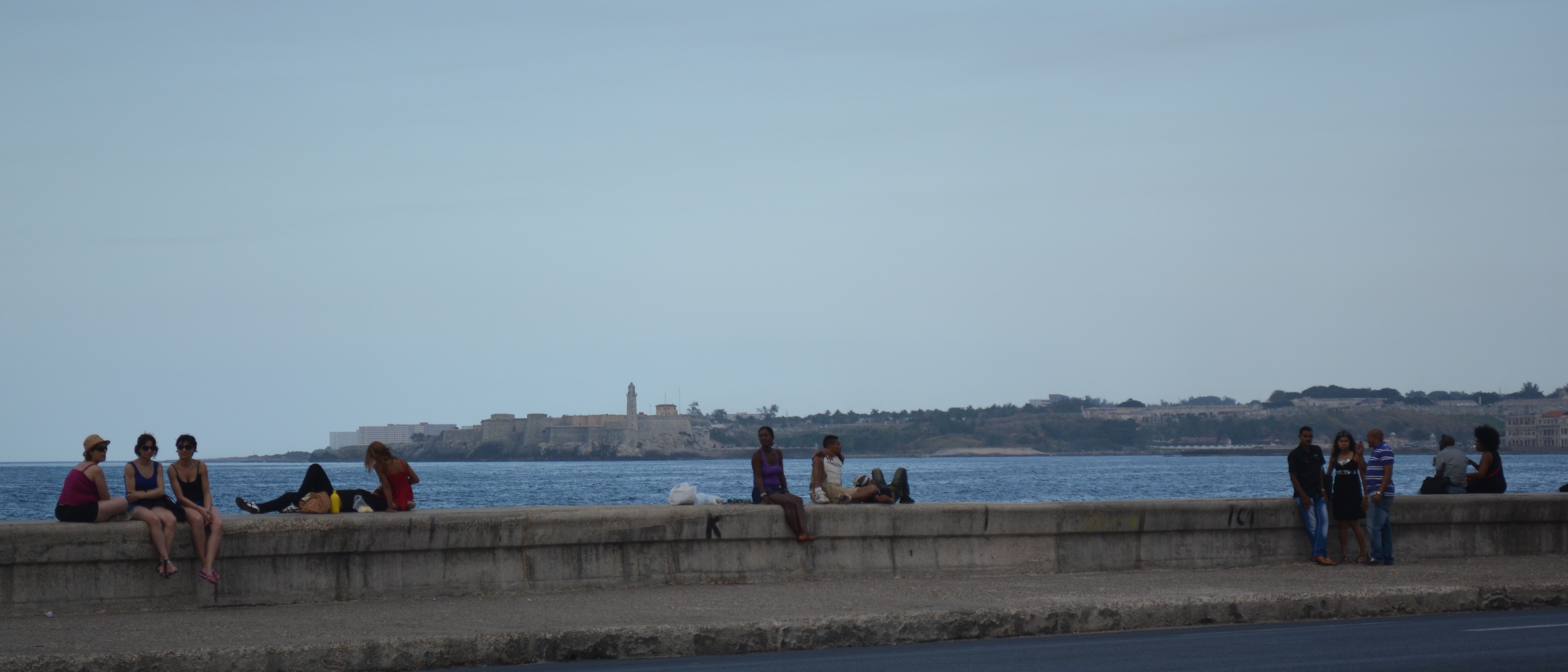
Havana's Malecón is a hang out place for all.

Havana’s Malecón is a free hang out place for all.

Cubans love to dance.

Cubans love to dance and always welcome everyone to bust a move.

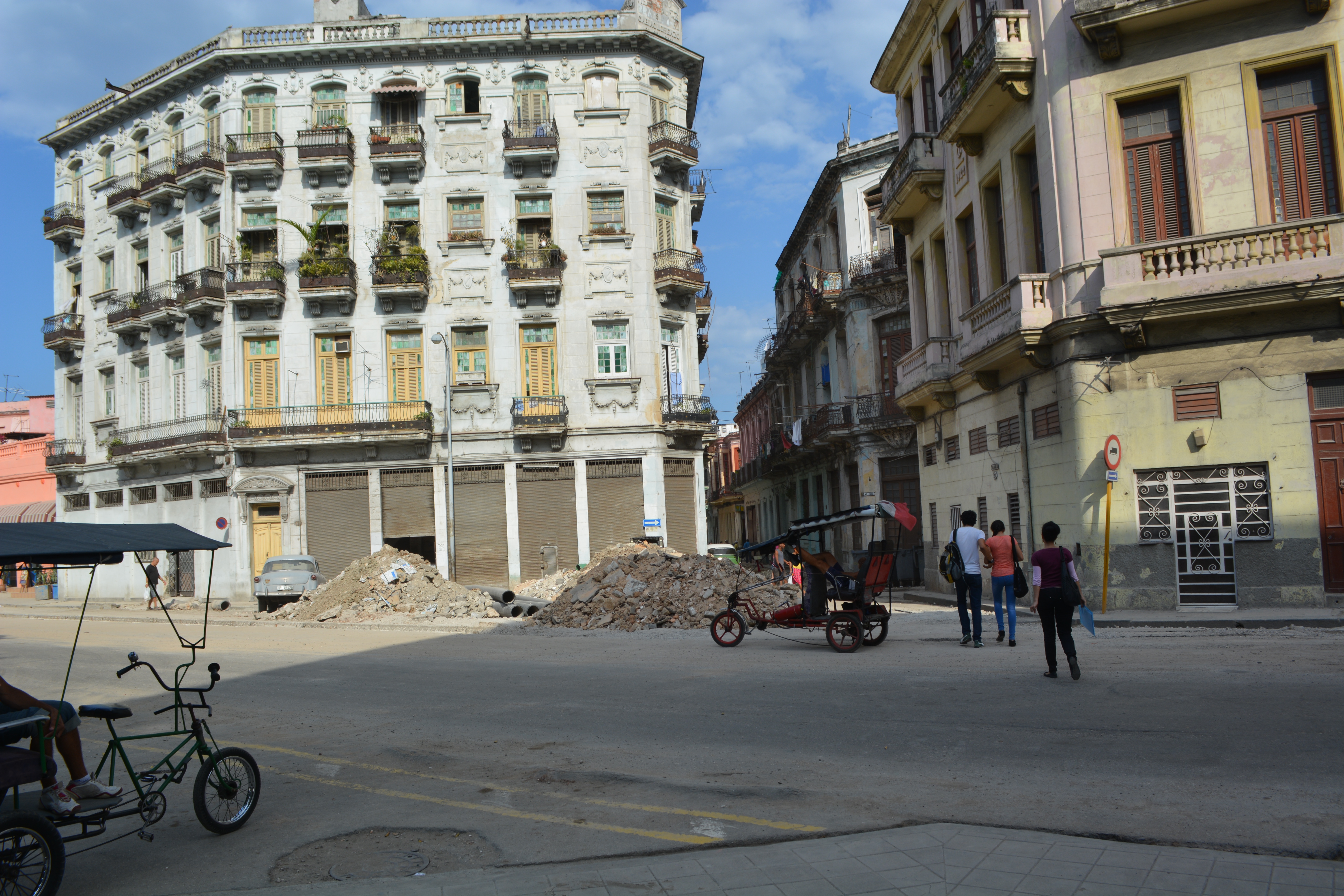
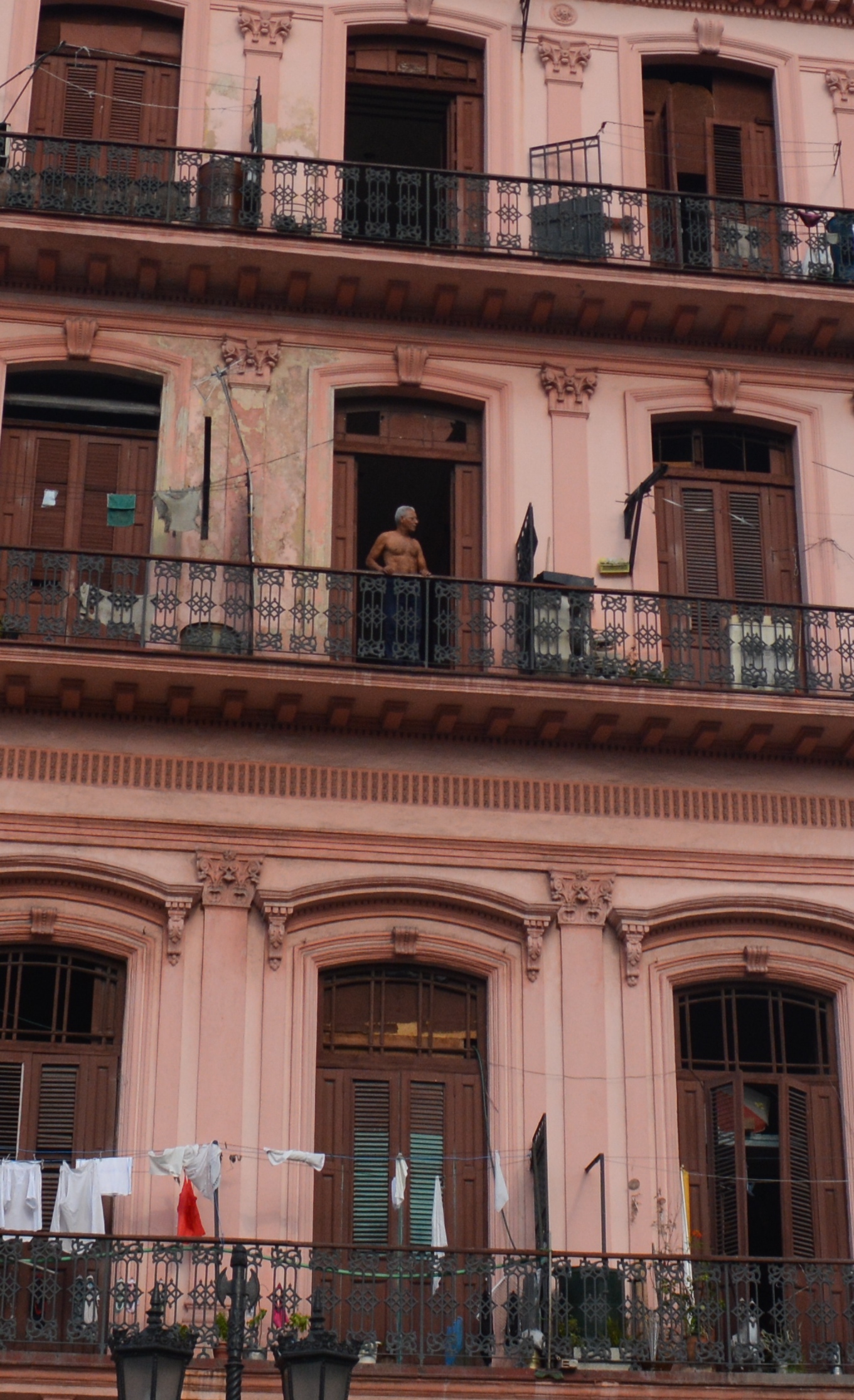
It’s very unlike some other Caribbean countries where tourists seem envied and can be treated badly. Cubans greet each other with hellos and jokes all day long, whether they know each other or not.   However, in other regards, communism has clearly failed its people. man in windowCuba has lagged far behind the rest of the developed world in the past 50 years. This is plain from the obvious longing of the everyday Cubans for some of the comforts of life in the more developed world. Cuba was clearly a thriving country in the first half of the 20th century, evidenced by gorgeous architecture all over Havana and other cities.
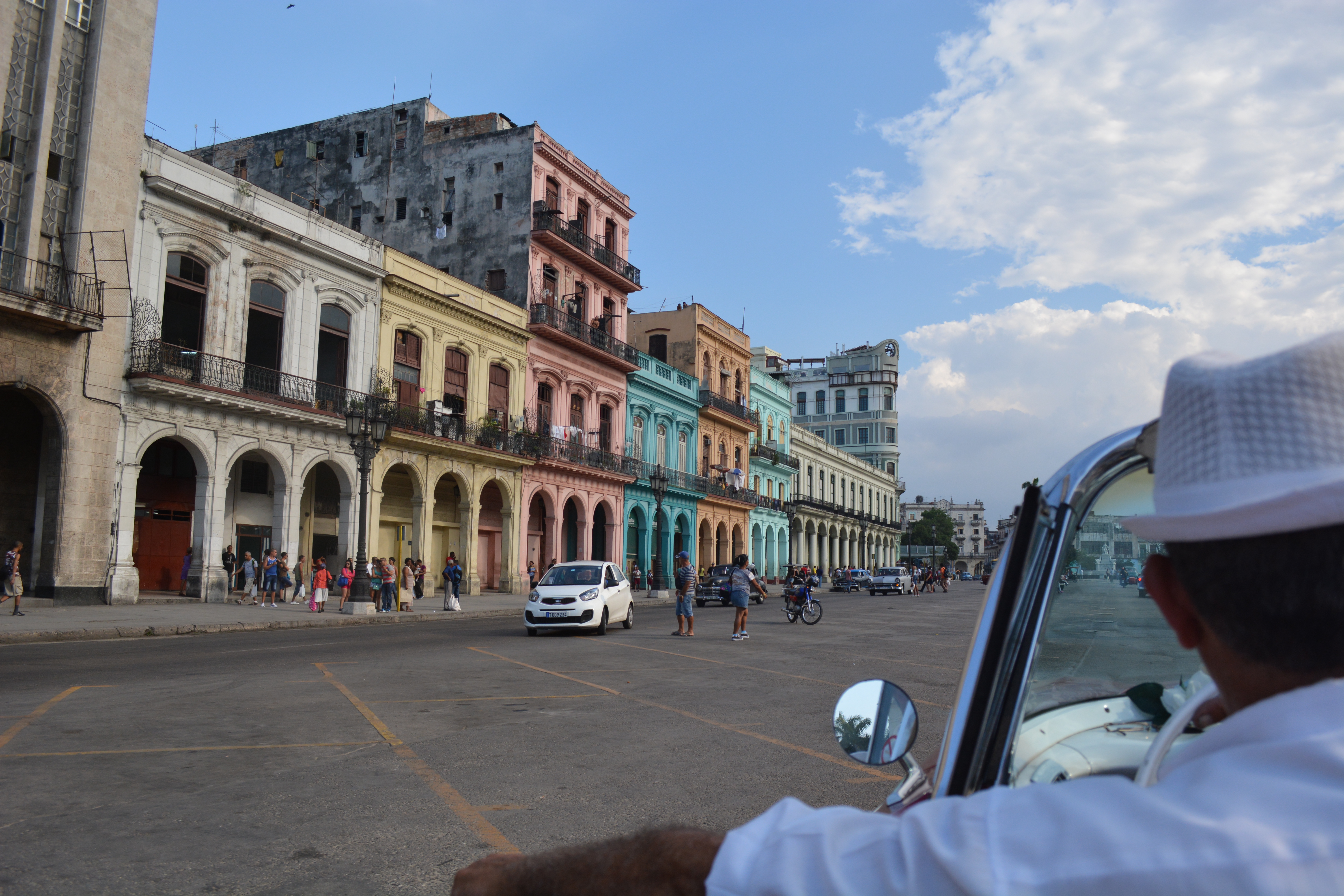
Cruising the streets of Havana

Cruising the streets of Havana.

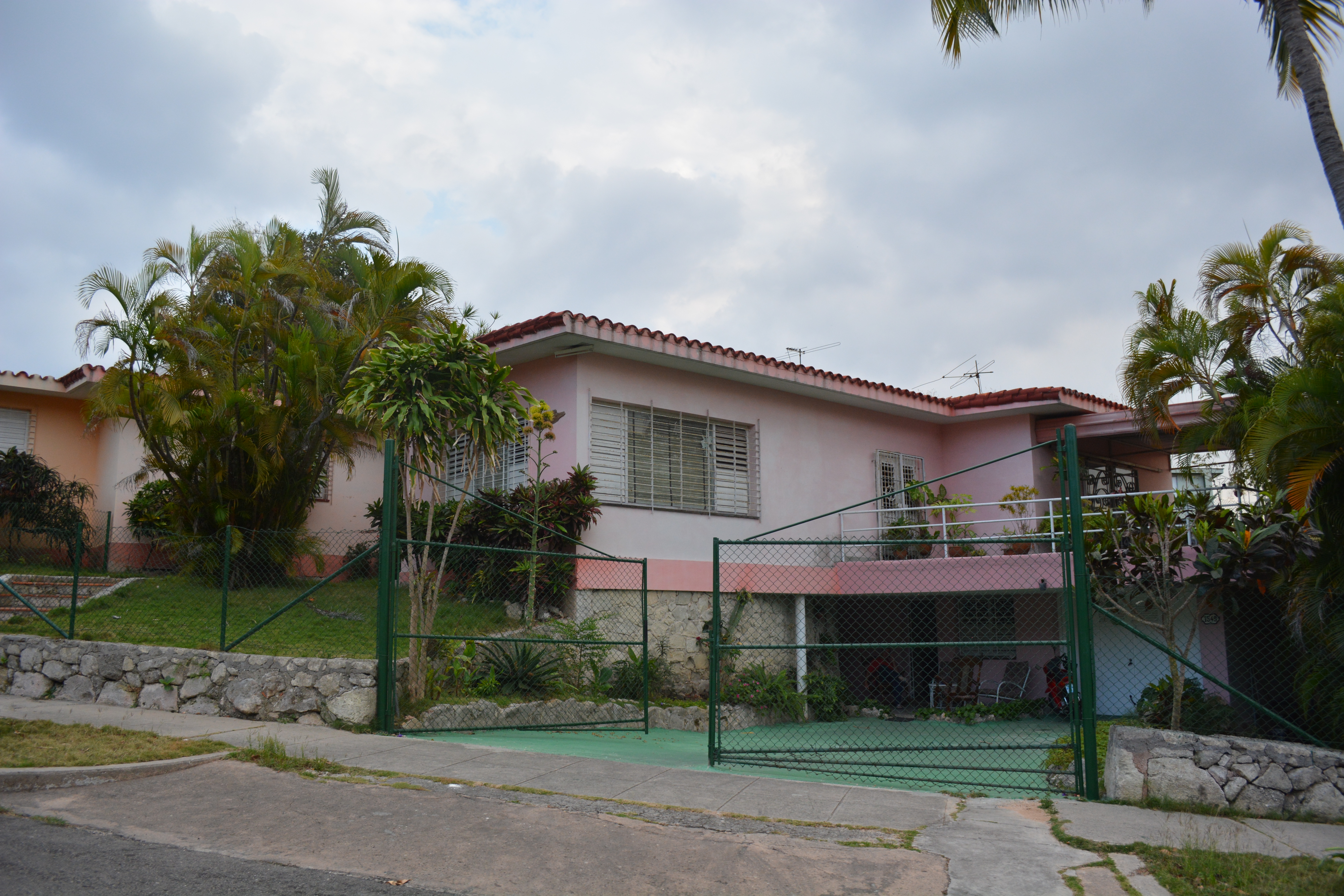
Some homes look like they could be in Miami

Some homes look like they could be in Miami.

Others look like New Orleans

Others look like New Orleans.

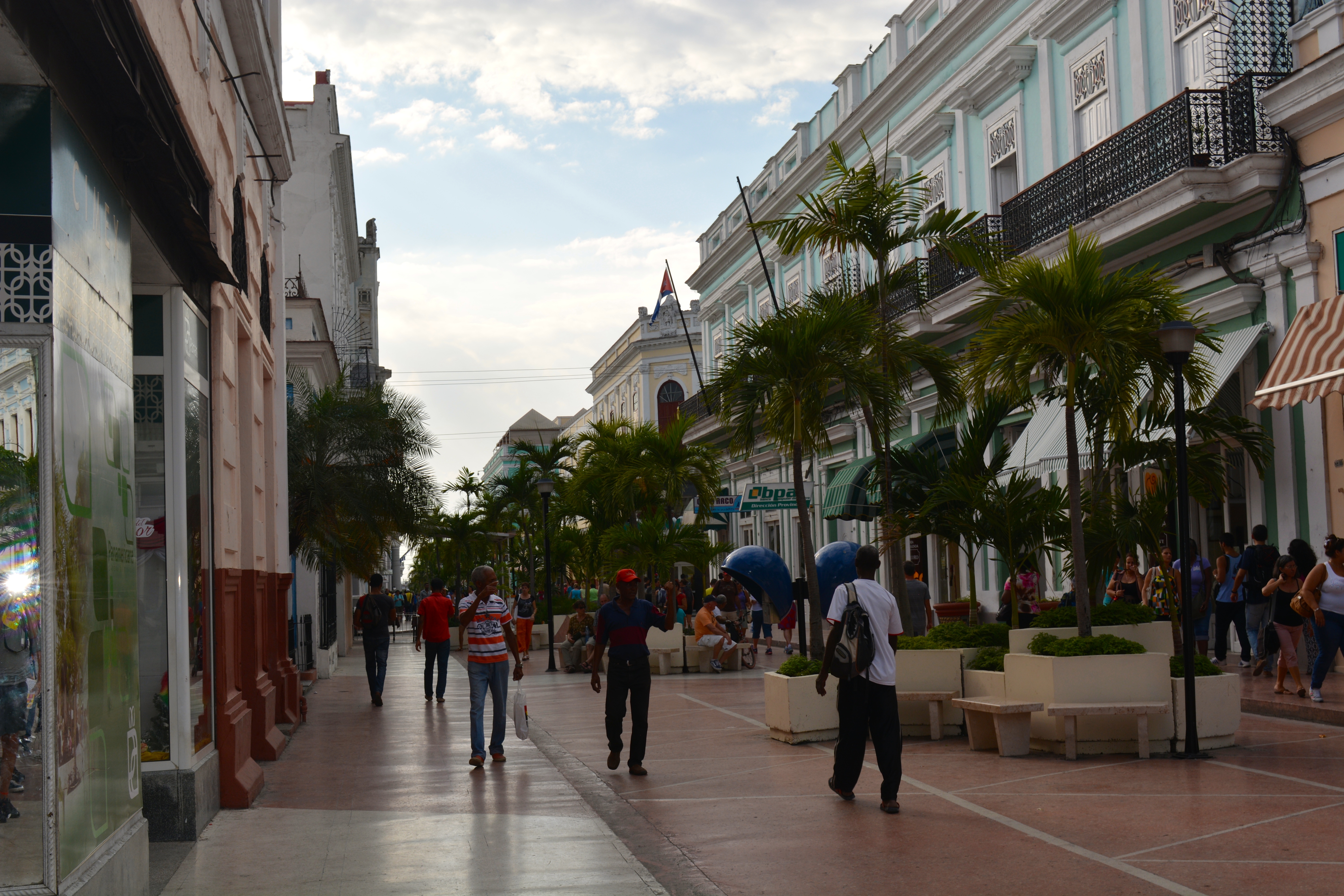
Cienfuegos shopping promenade

Cienfuegos shopping promenade, said to be the Paris of Cuba.
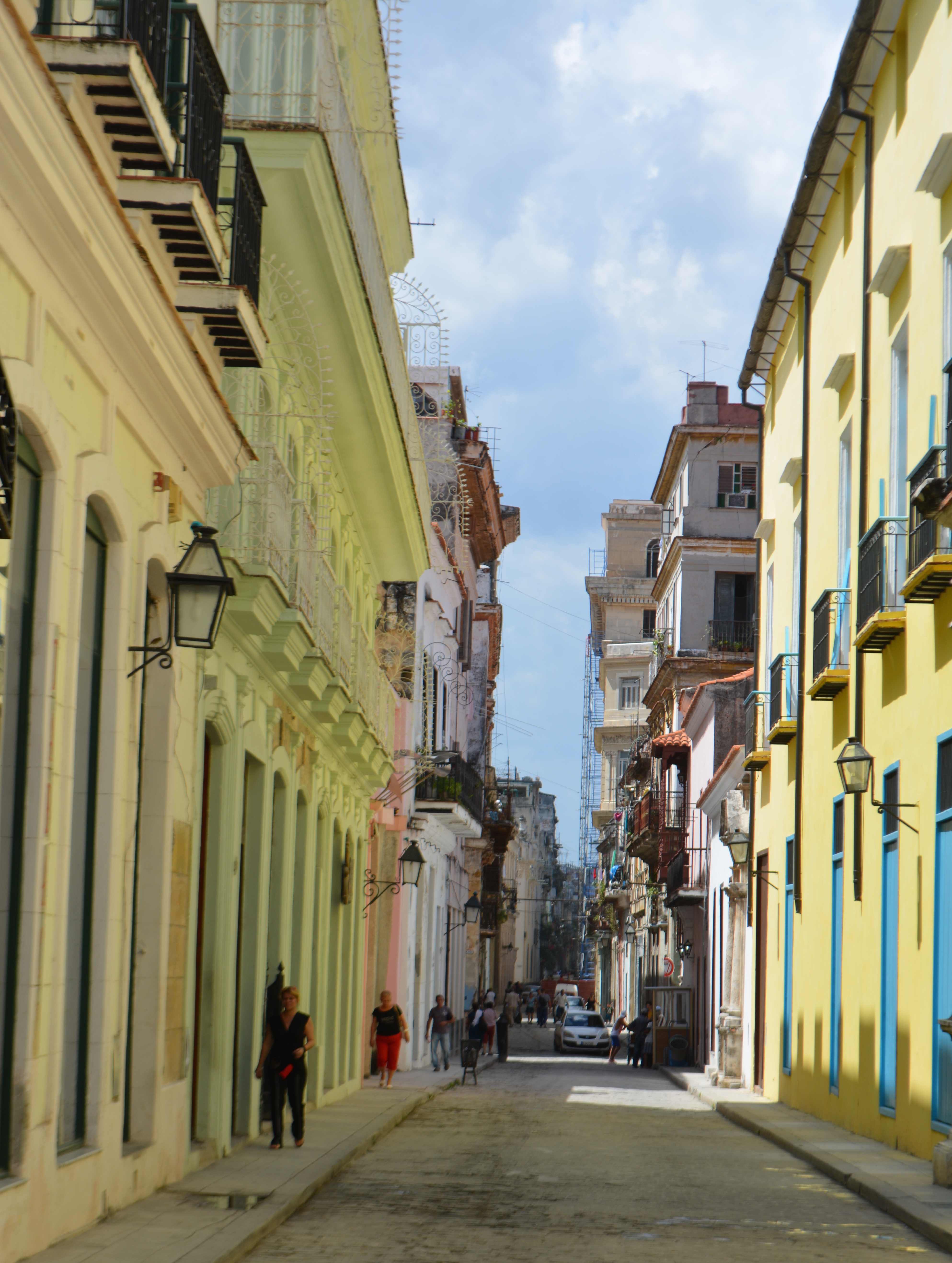
colorful sidestreet

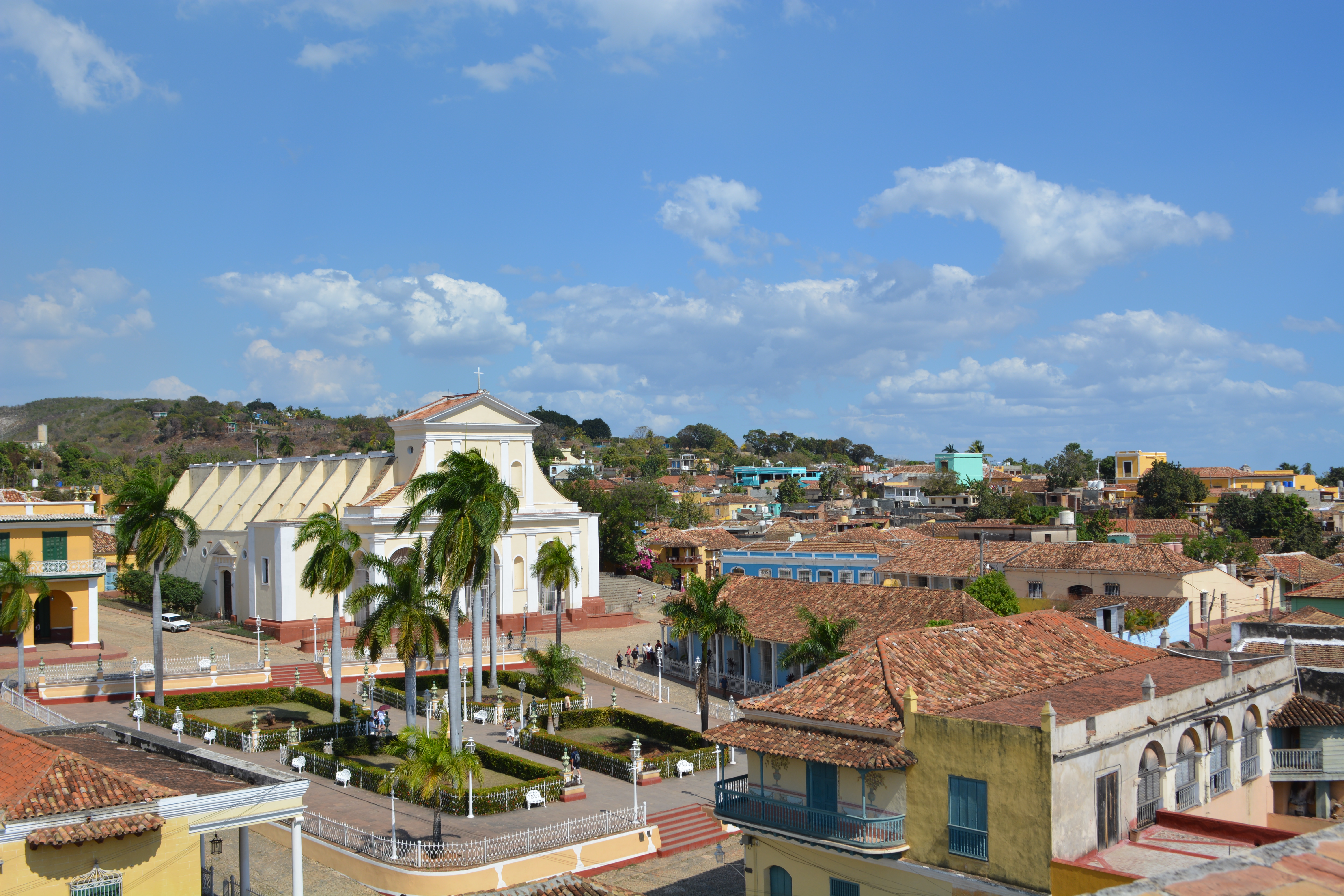
Rooftops of Trinidad

Rooftops of Trinidad

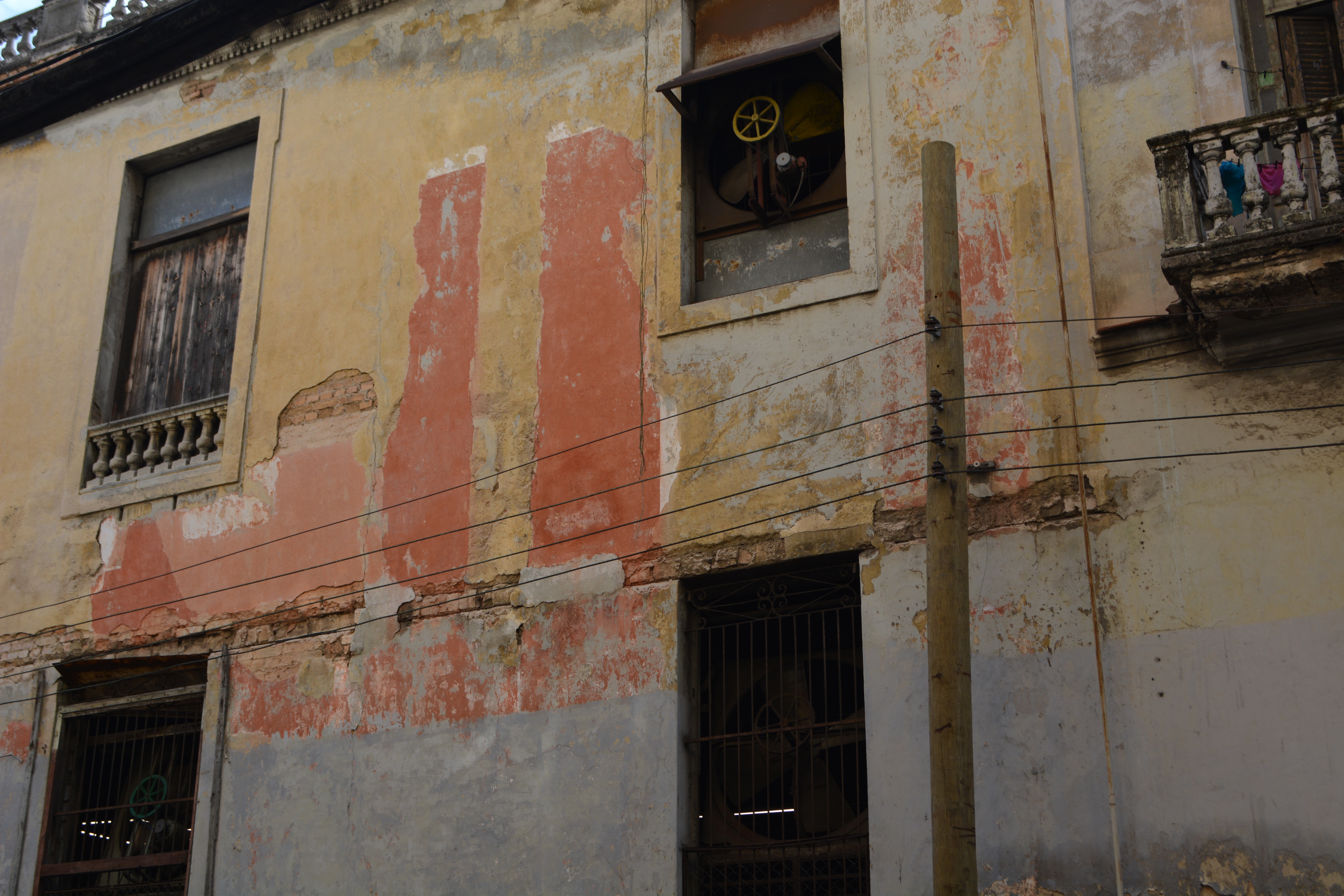
Yet many of these buildings are now crumbling ruins due to neglect from a lack of money to preserve them. And architecture from the period after the revolution (what little there is) is stark, forbidding and cheerless – it reminds one of Soviet buildings from the Cold War era.  There seems to be very little economic progress that occurred after 1959.  Food items are still rationed.  Commerce is tightly controlled and anemic.  The nonchalant acceptance of the lack of basic freedoms, like free speech, freedom of religion, travel and association surprises the Westerner.  Yet there are signs that slow progress is being made.
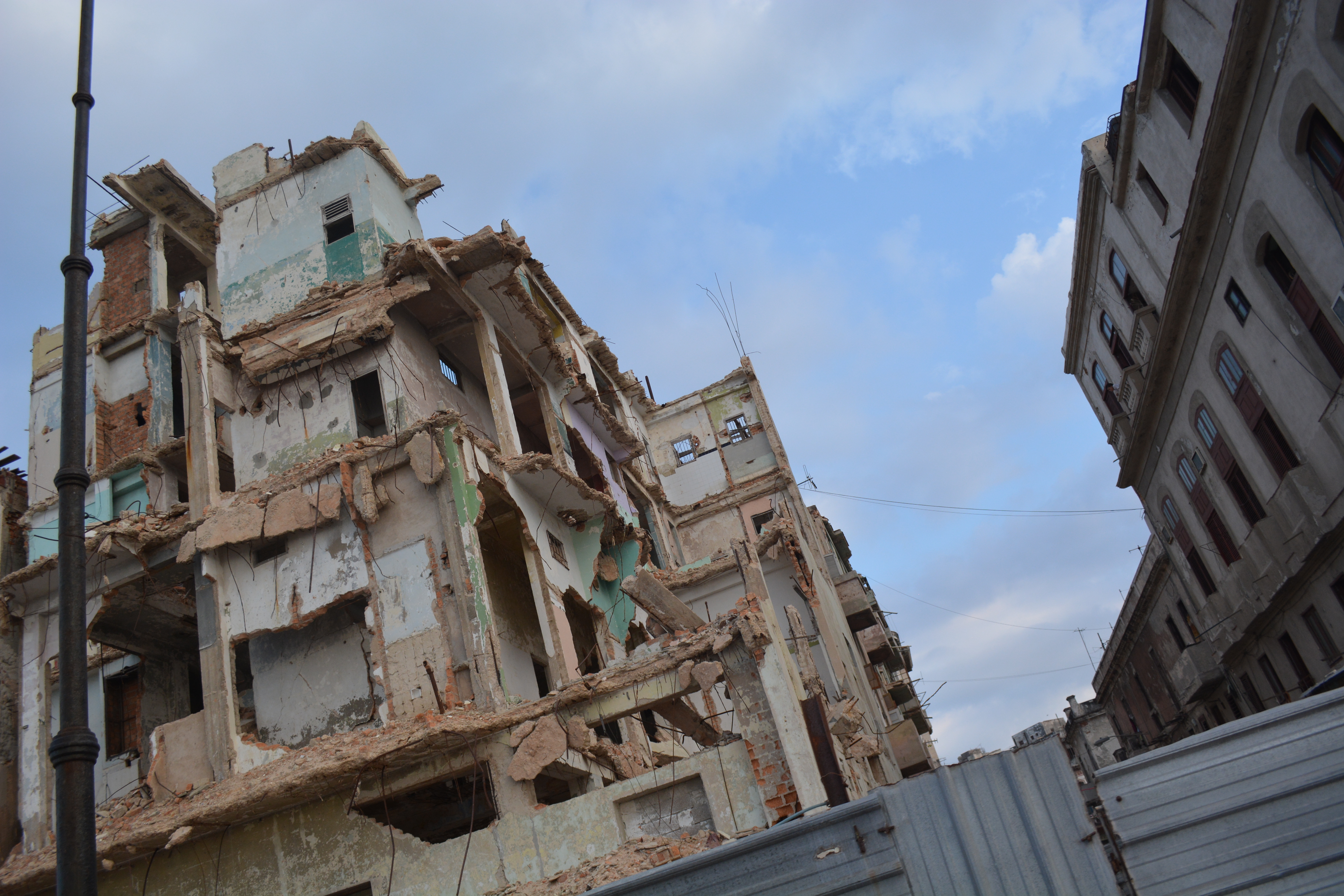
DSC_0169

People live in these crumbling buildings
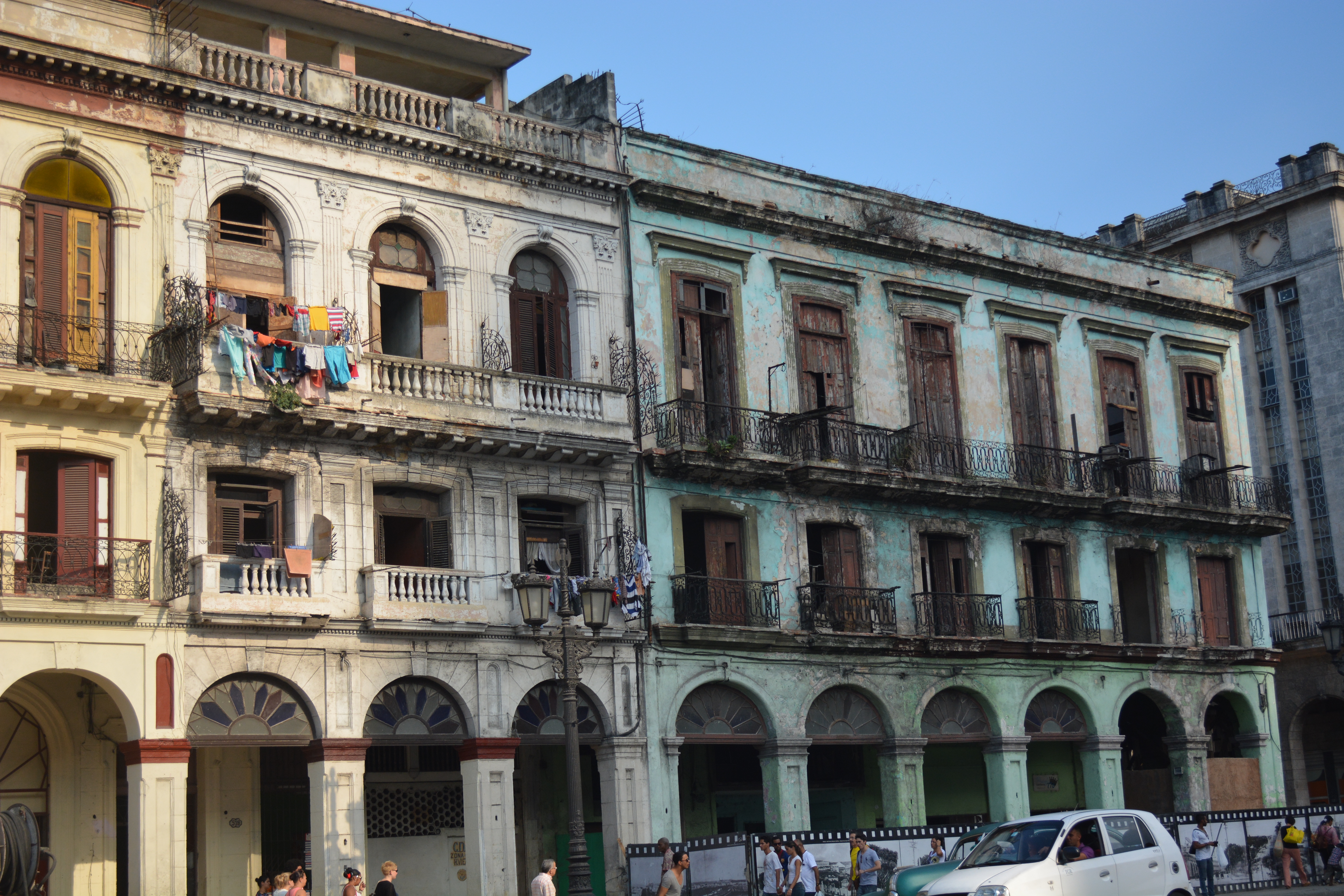
DSC_0103

patched house torn up street

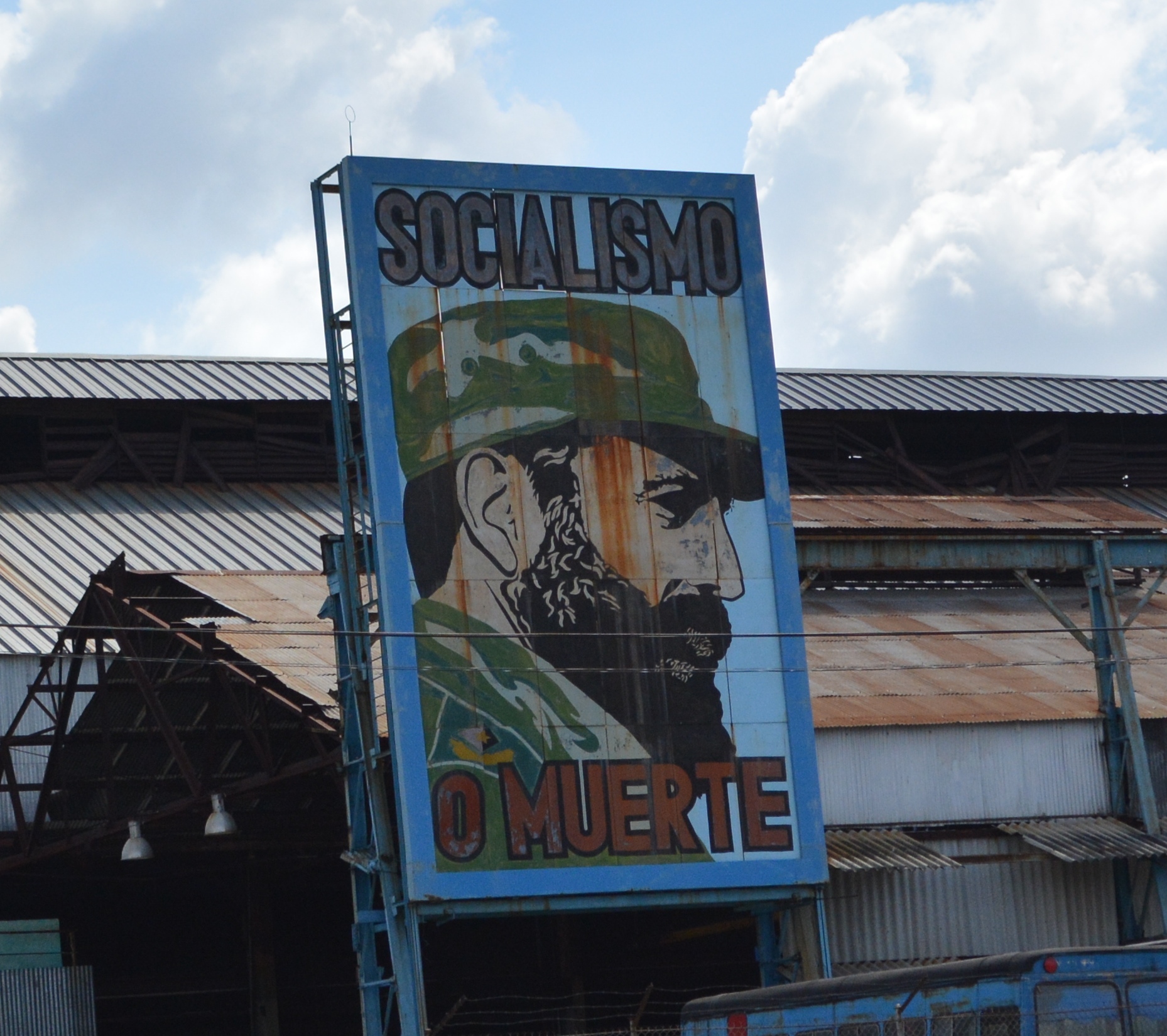
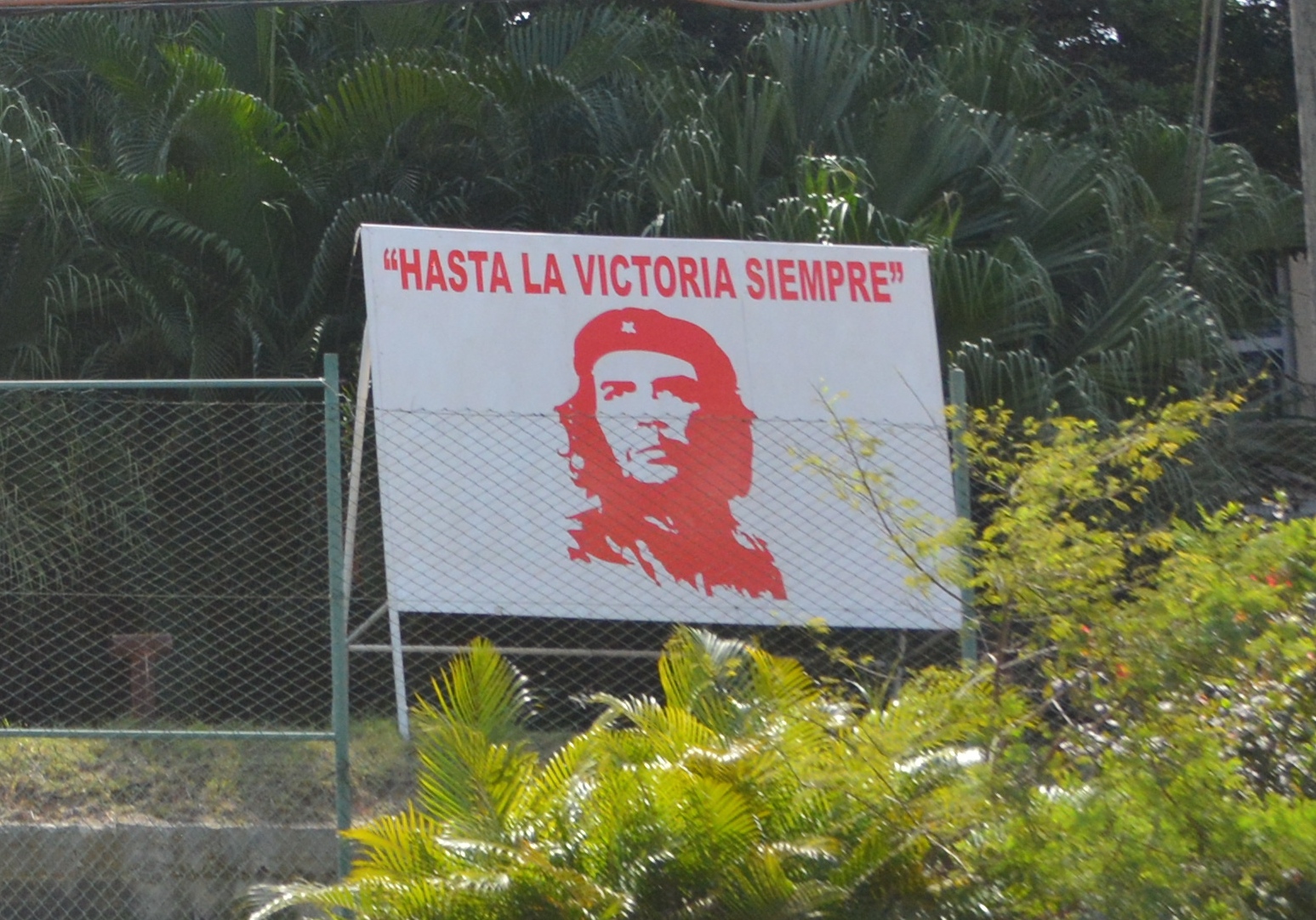
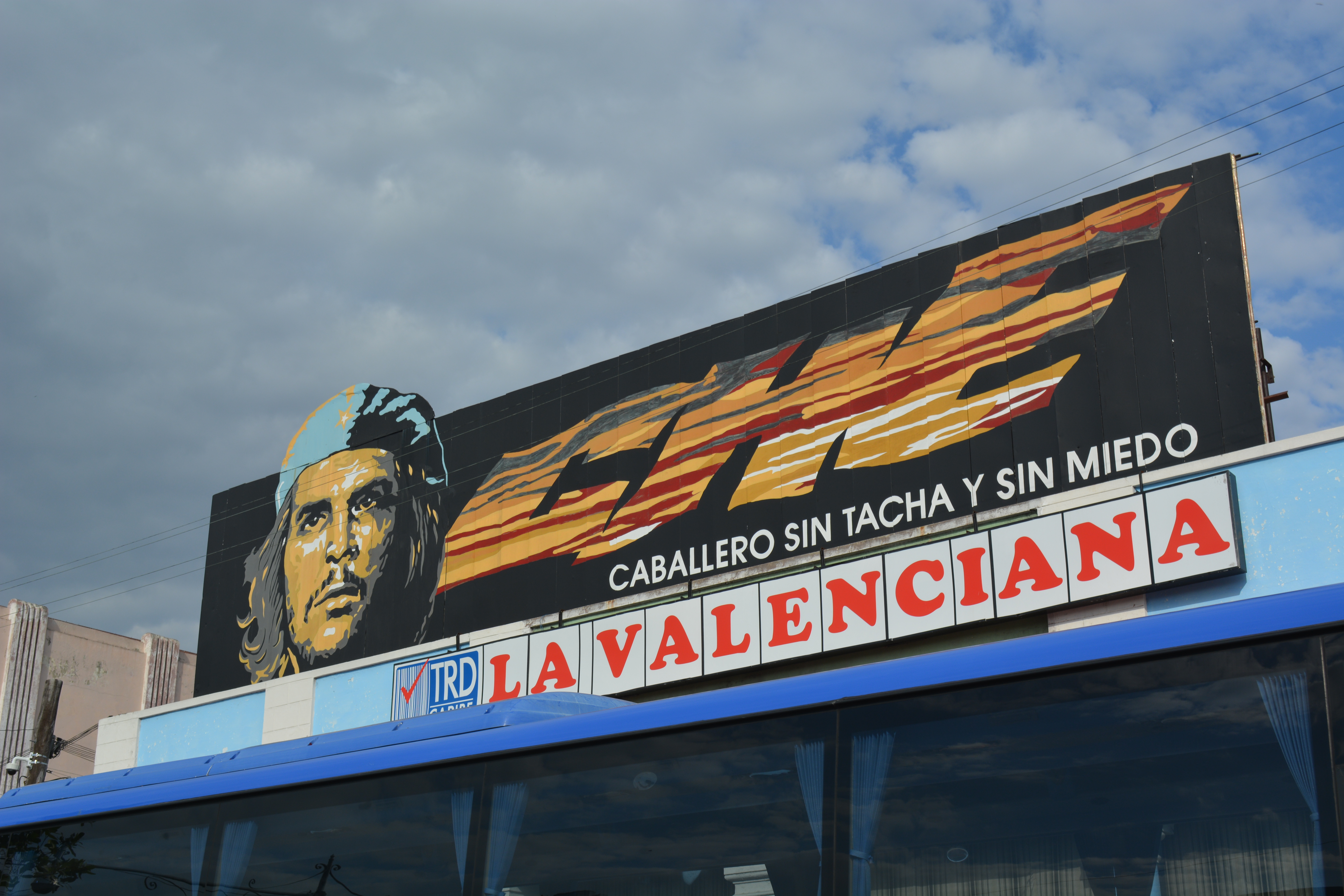
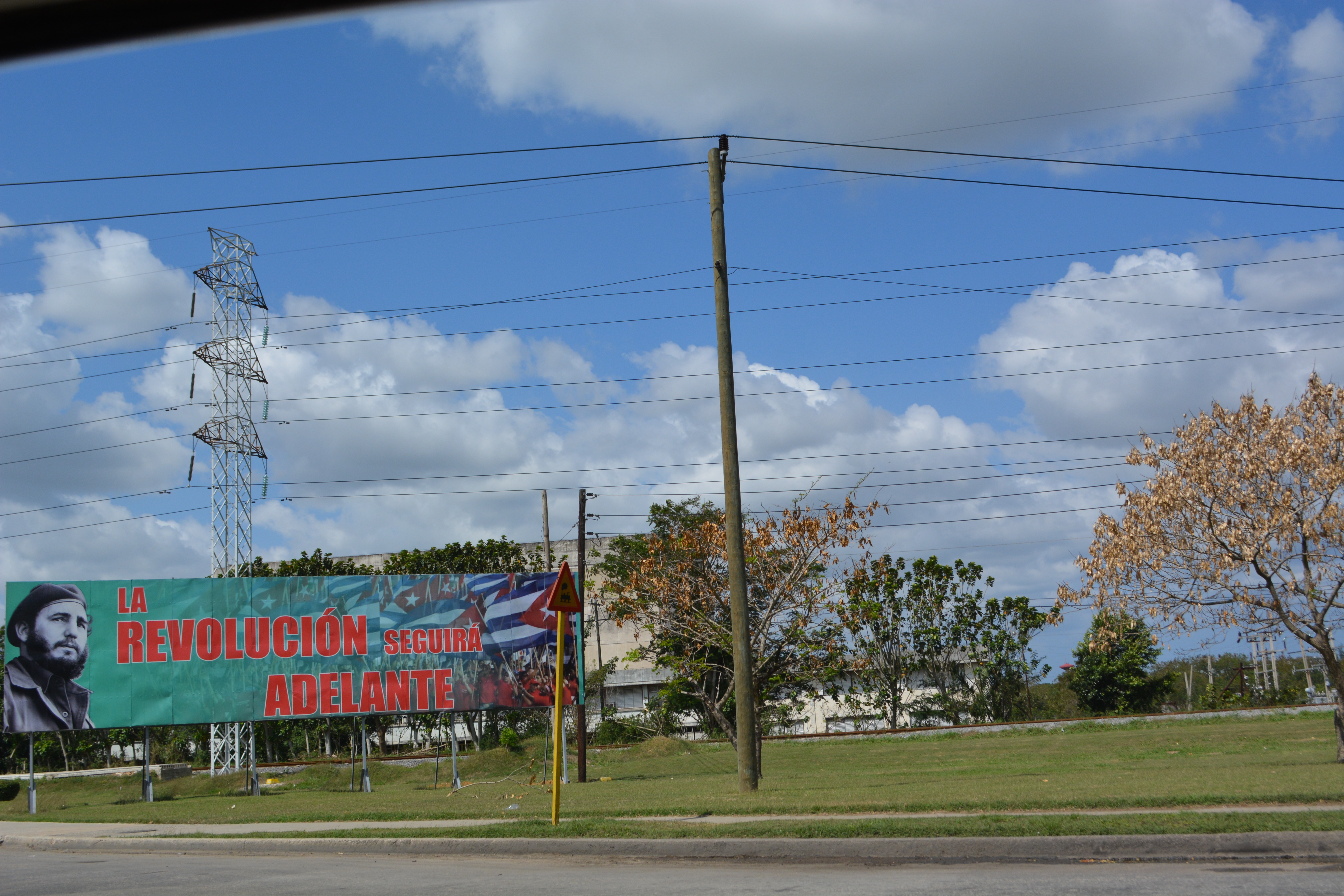
Propaganda.  One of the interesting things about communist countries is the prevalence of propaganda.  It seems so foreign to those of us steeped in commercial advertising (although it is becoming more prevalent at home these days).  There are few if any billboards on the roads of Cuba, but this is only because they are not allowed. The billboards you do see are typically government propaganda praising the heroism of Che Guevara, Fidel Castro, Camilo Cienfuegos and Raoul Castro (in that order – Che is much more popular than Fidel, I guess it is true what they say, “Live fast, die young and leave a good-looking corpse!”).
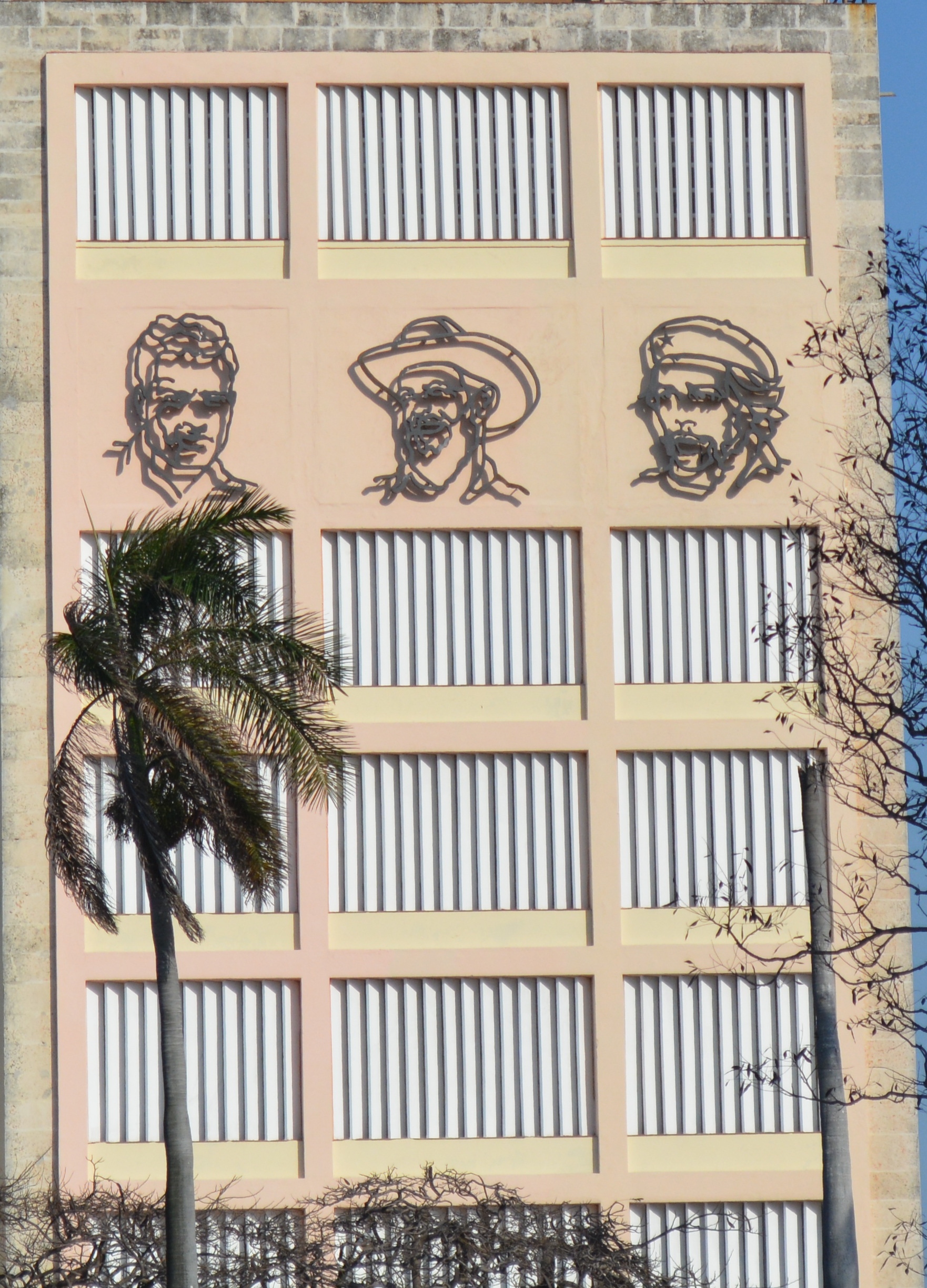
Cienfuegos, Fidel and Che
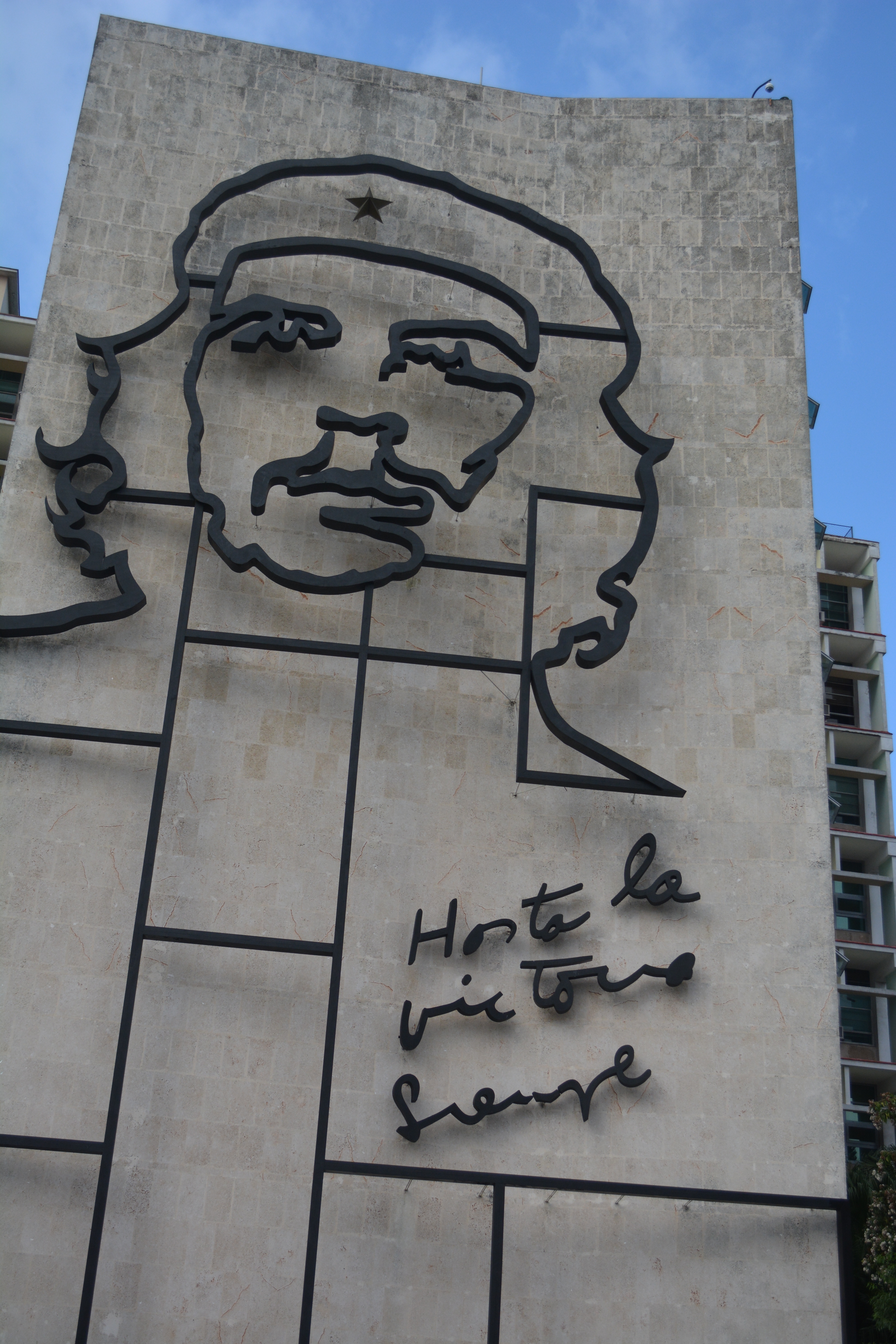
Cienfuegos, Fidel and Che

Che monument
Che monument

Che billboard

Roughly translated, “Knight without reproach and without fear”.
DSC_0705

“The Revolution will move ahead”

DSC_0696

“Socialism or death”

DSC_0698

“Until Victory, Always!”

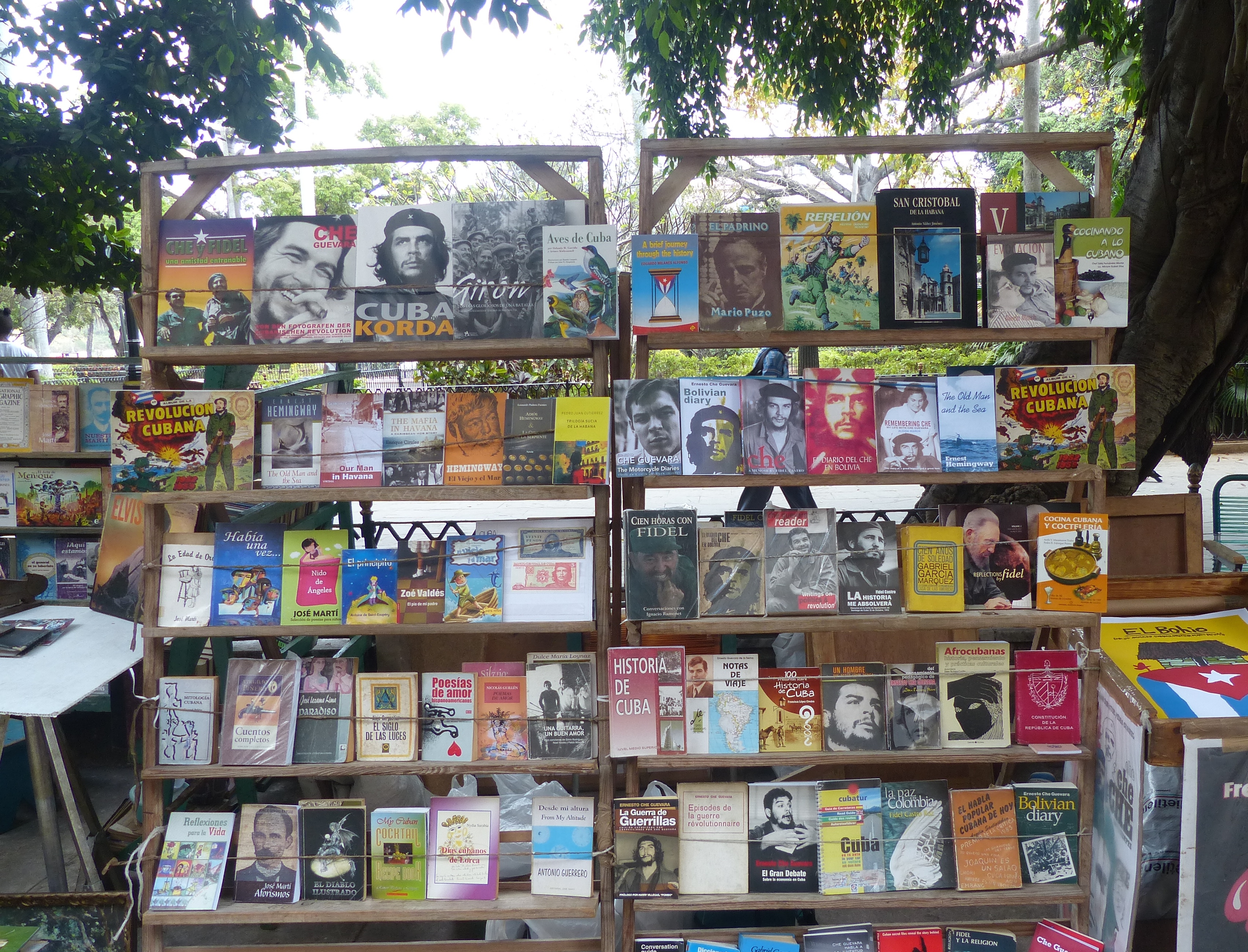
Endless supply of books on Che and the revolution

Endless supply of books on Che and the revolution

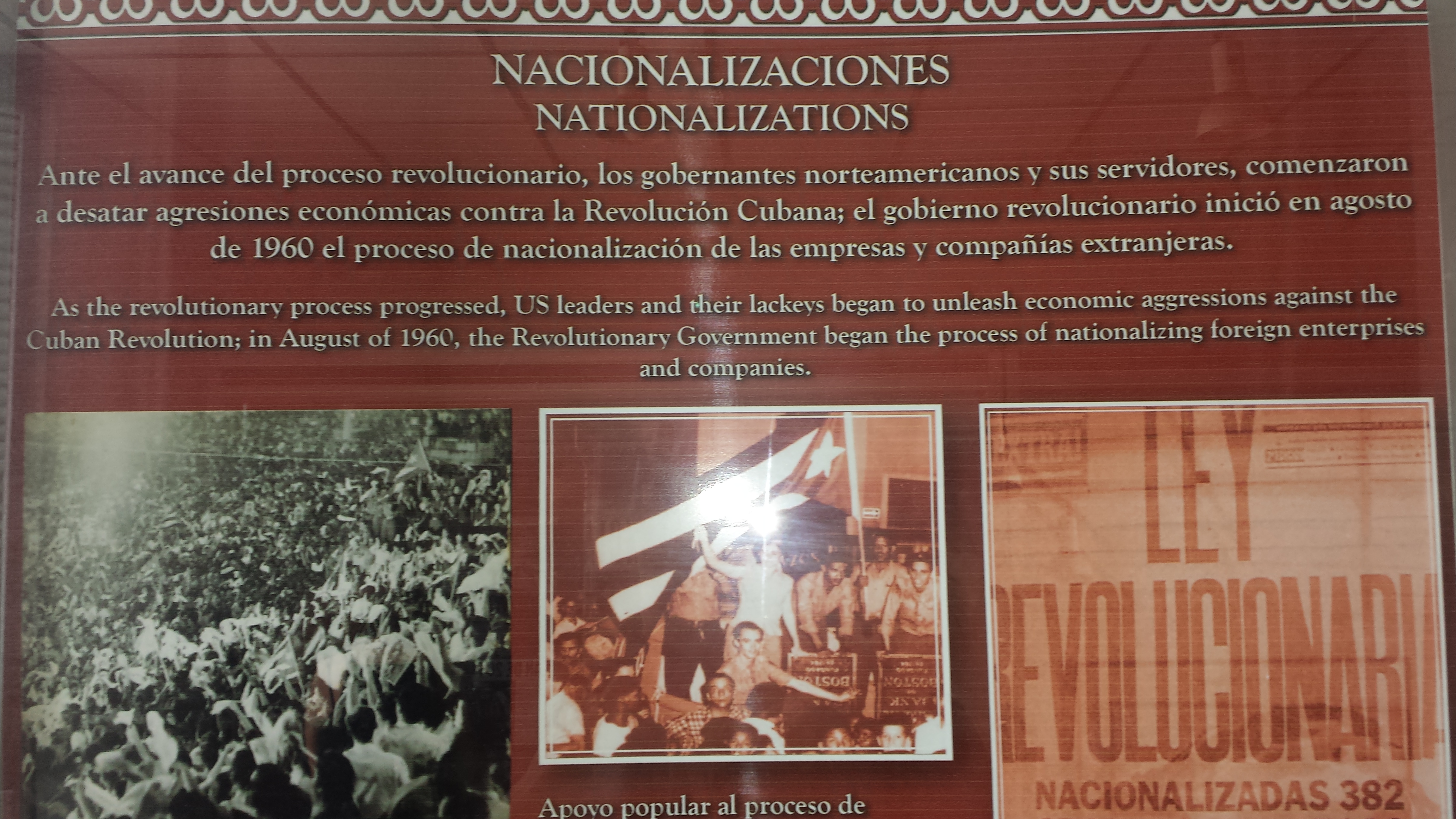
The Museum of the Revolution is a striking example of this.  Its a fascinating collection of artifacts and information about the revolution.  We weren’t aware just how long and hard Fidel and his cohorts toiled to bring about change. Peter Cuban flag
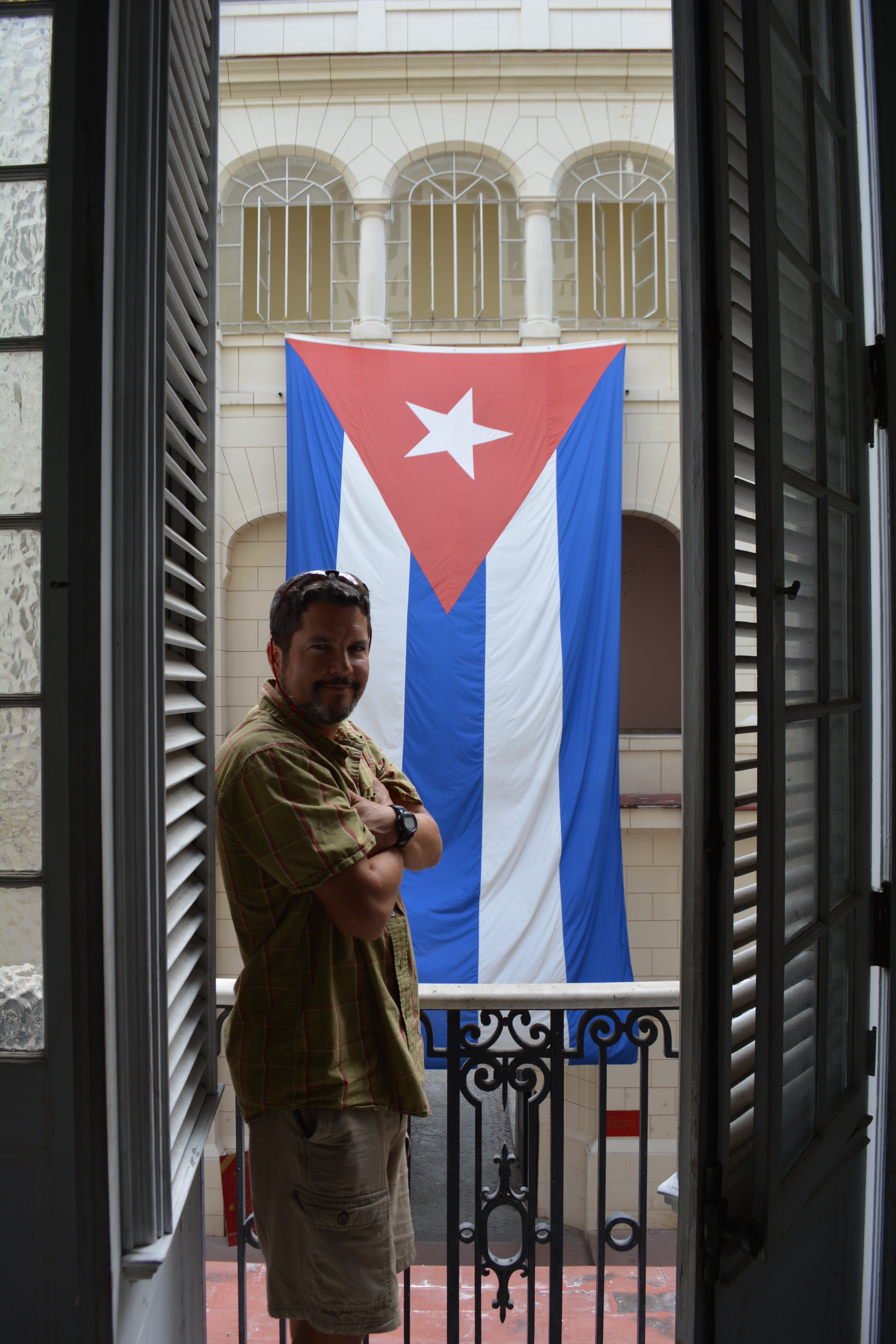
“US leaders and their lackeys” LOL

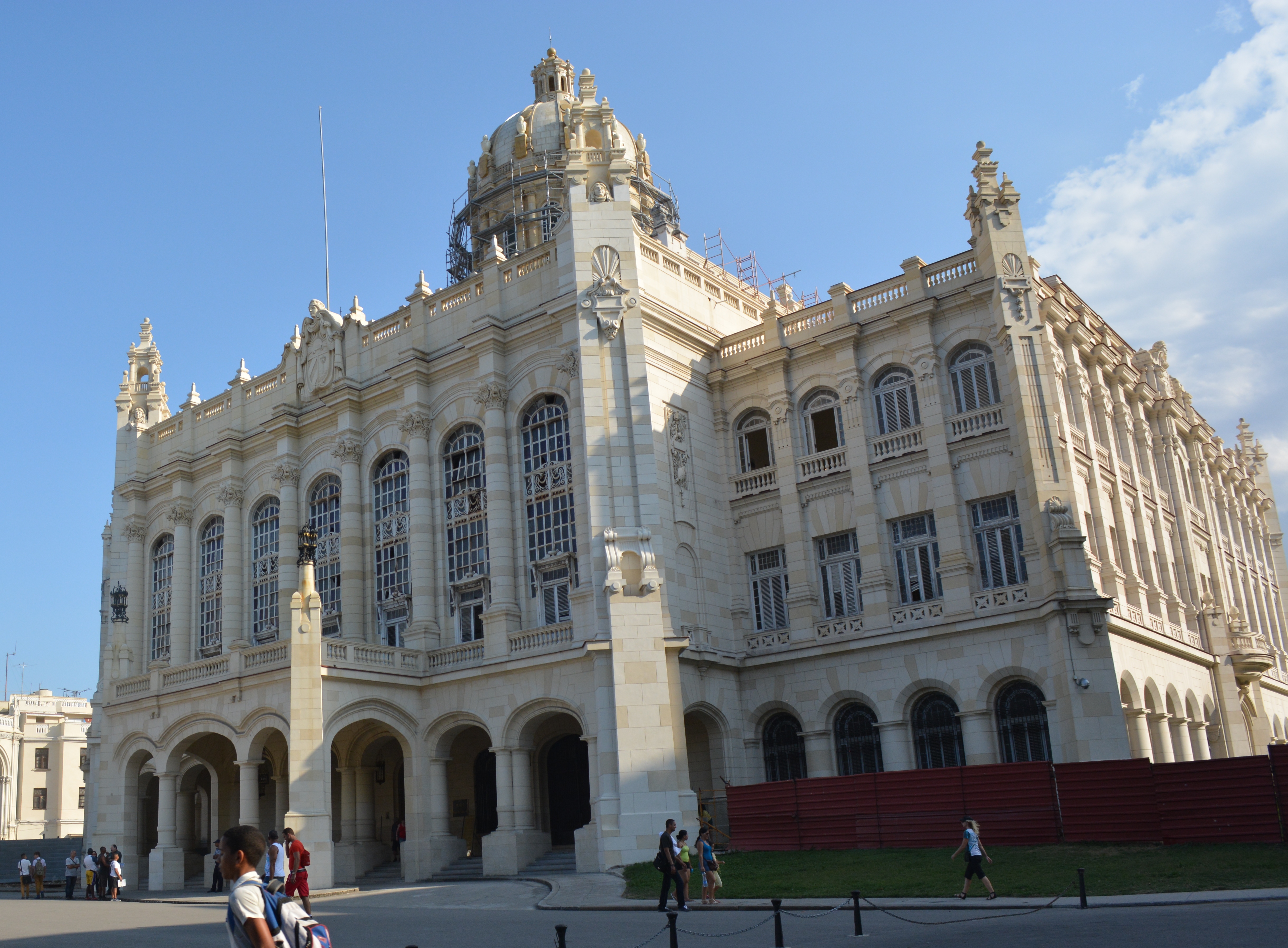
Revolution Museum

Revolution Museum appropriately housed in the former presidential palace.

However, the museum is not sparing in its condemnation of “imperialists aggressors” who conspired to stunt the heroic revolution.
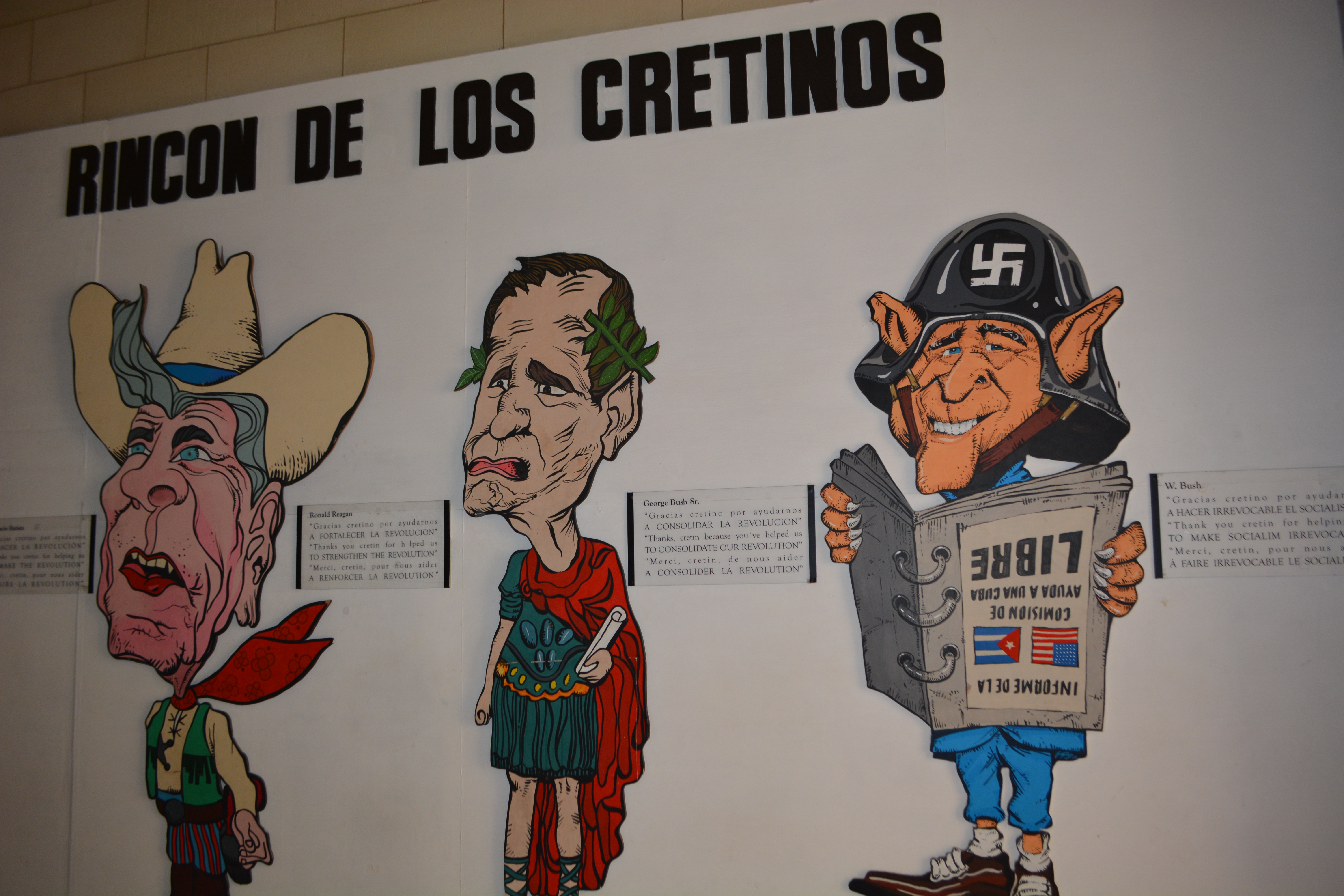
Rincón de los cretinos

Rincón de los cretinos “cretin corner”.

Propaganda is not limited to the players of the revolution though.  Jose Marti, who was a writer and symbol for Cuba’s independence from Spain in the 19th century, is always referred to by the honorific “Our National Hero Jose Marti”, never just Jose Marti.
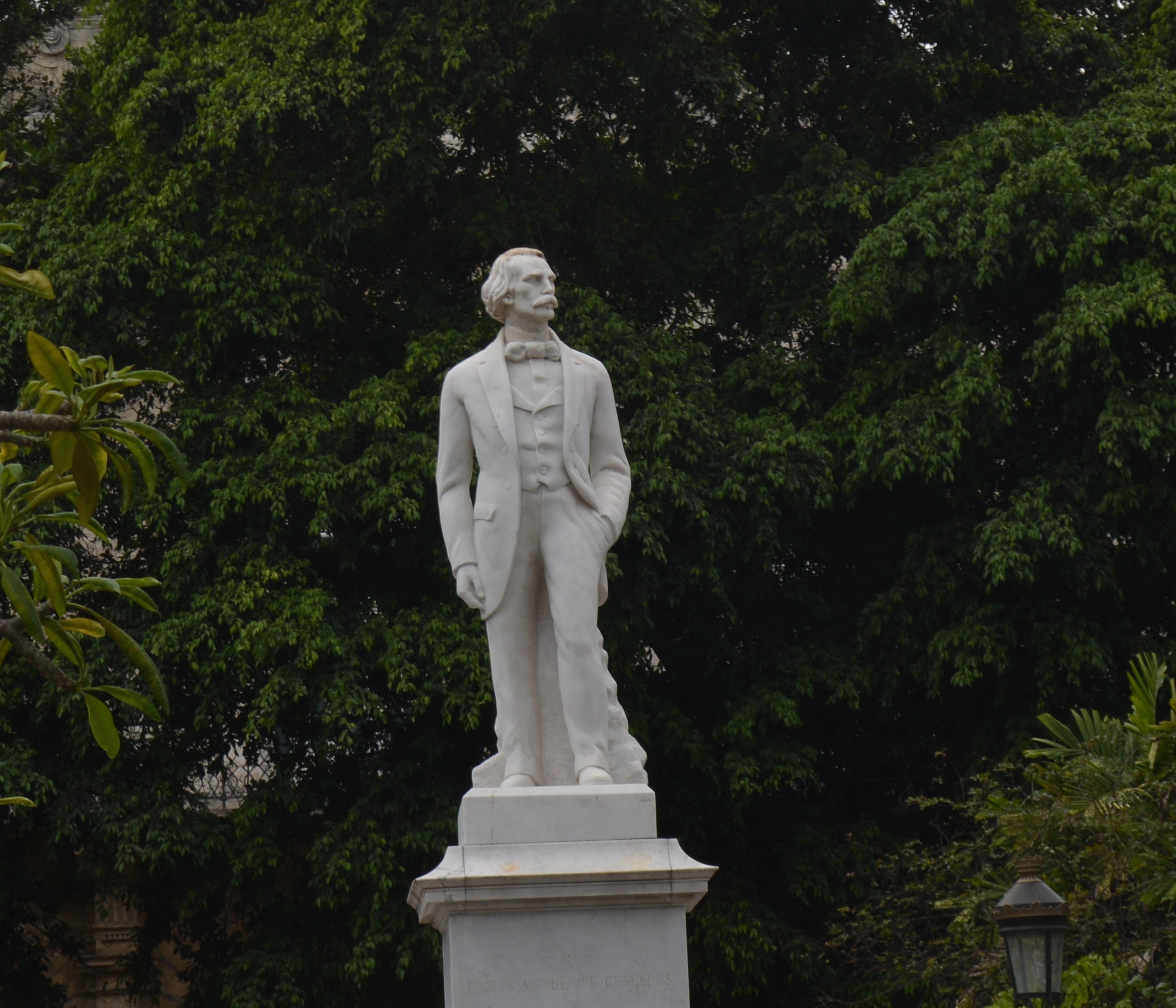
Jose Marti

Cuban National Hero Jose Marti

It sounds so odd but flows so easily from Cubans that you guess it had to be drilled into everyone during schooling.  Anyway, the propaganda is all very amusing but of little importance to Cubans, who seem to want to look forward instead of dwell on the past.  It seems that with the government’s slow weakening, people express their opinions fairly freely (although there is the odd, suspicious look around for eavesdroppers before criticisms are delivered) and the general outlook is to get on with life.  Cubans don’t want to condemn the revolution; they seem to want it to just slide quietly into history.

Don’t they all want to defect?  Not anymore. We would say that the majority of people we spoke to would want to immigrate to the US, but the desire to do so is not so desperate anymore. Most would prefer more economic opportunities in Cuba so they could live a more comfortable life at home.  Cuba has softened its travel restrictions a bit lately and some people are able to go abroad.  However, due to historical restrictions, there are nearly no boats on the water and Cubans have generally lost their maritime heritage.

Derelict fishing boat in Cienfuegos harbor

Derelict fishing boat in Cienfuegos harbor.

It’s odd to look out over a beautiful bay and not see boats zipping around because Cubans are still not allowed to own, or even go on, a boat.
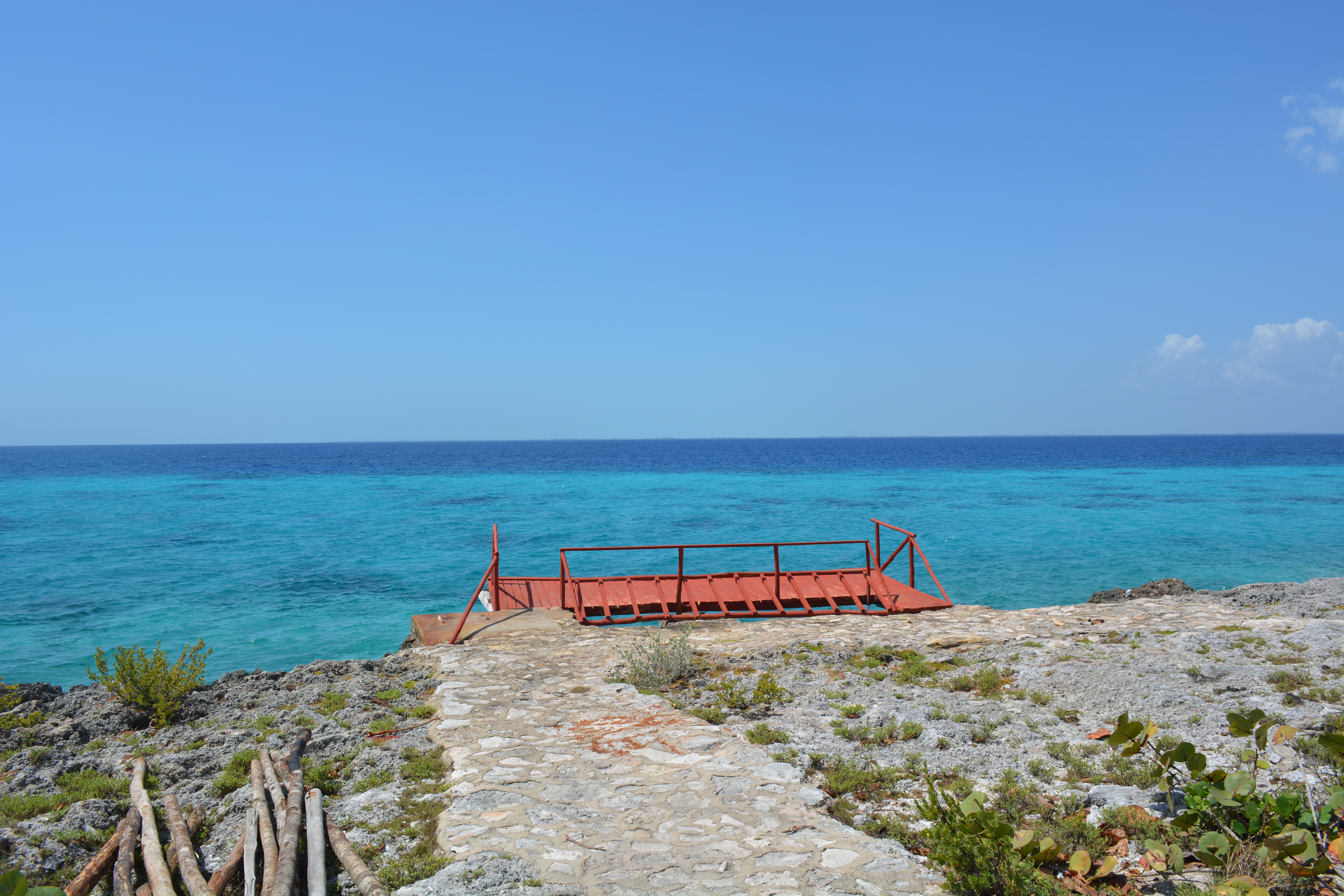
We went diving in the Bay of Pigs,  no dive boats here, just stepped off the end of this dock.

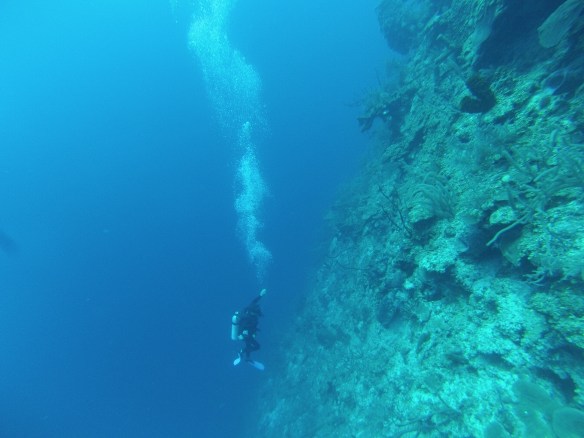
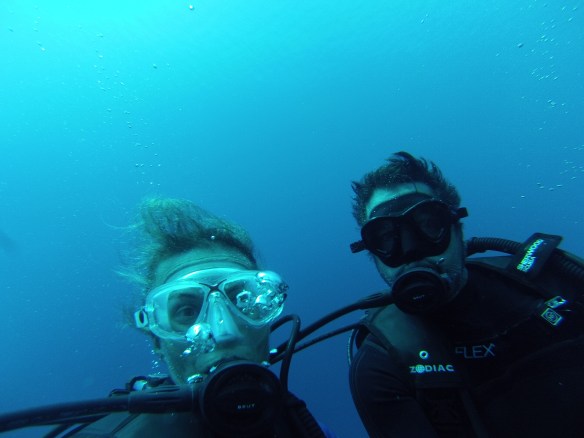
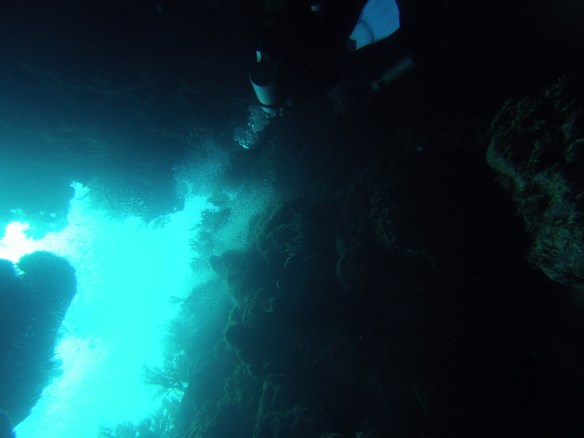
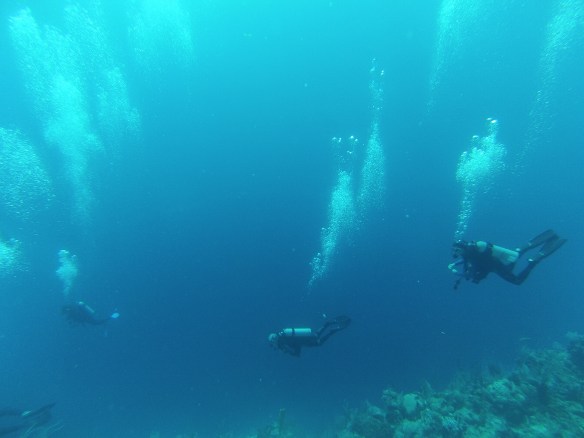
We went diving in “Bahía de Cochinos” or Bay of Pigs, yes that Bay of Pigs. No dive boats here, just stepped off the end of this dock and were met by thousand of fish and pristine coral reef. The most fish we have seen in all the Caribbean.
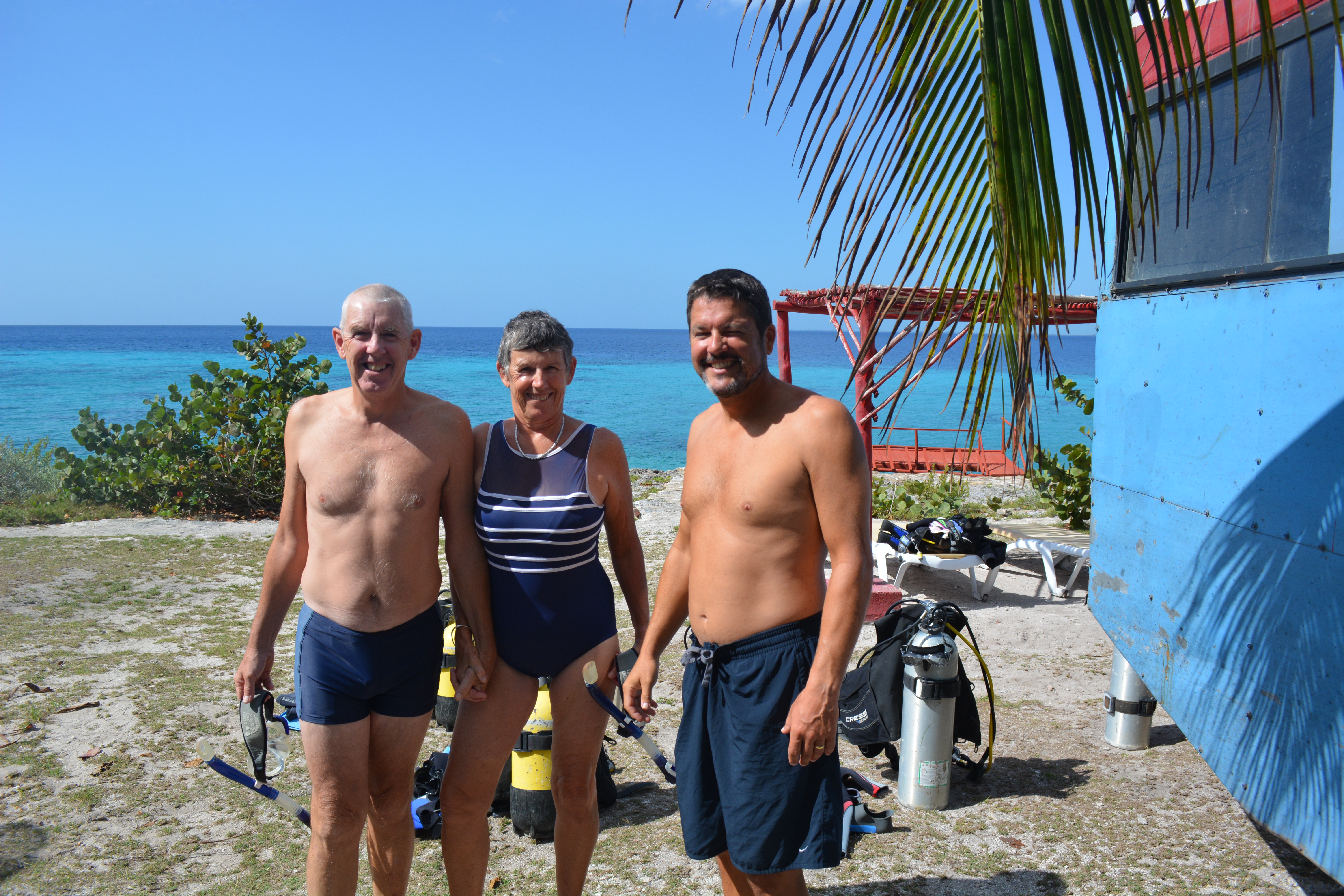
Diving

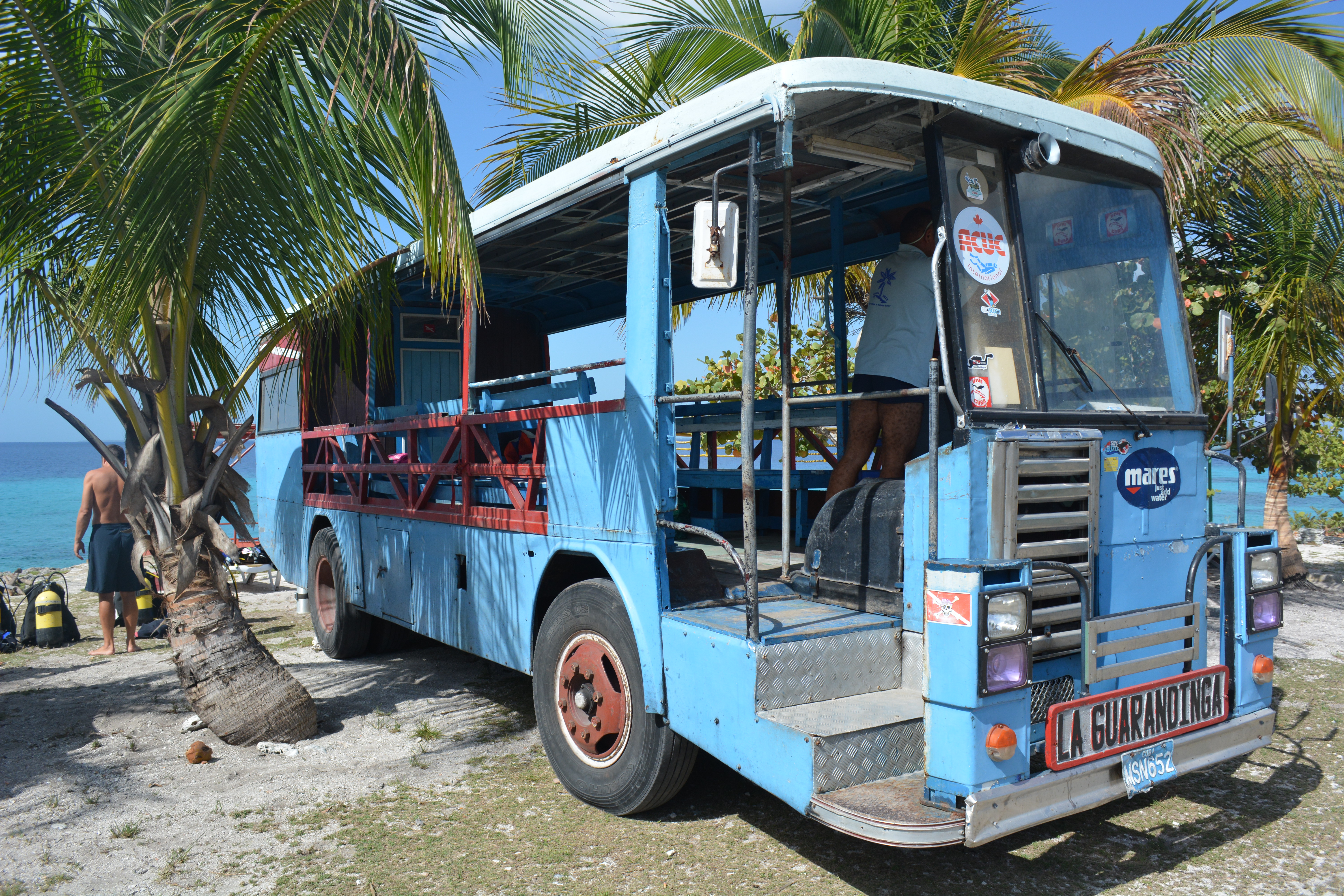
Dive center was a repurposed bus.  Our dive guide was a Cuban special forces commando and one of the best guides we've ever had

Dive center was a repurposed bus. Our dive guide was a Cuban special forces commando and one of the best guides we’ve ever had

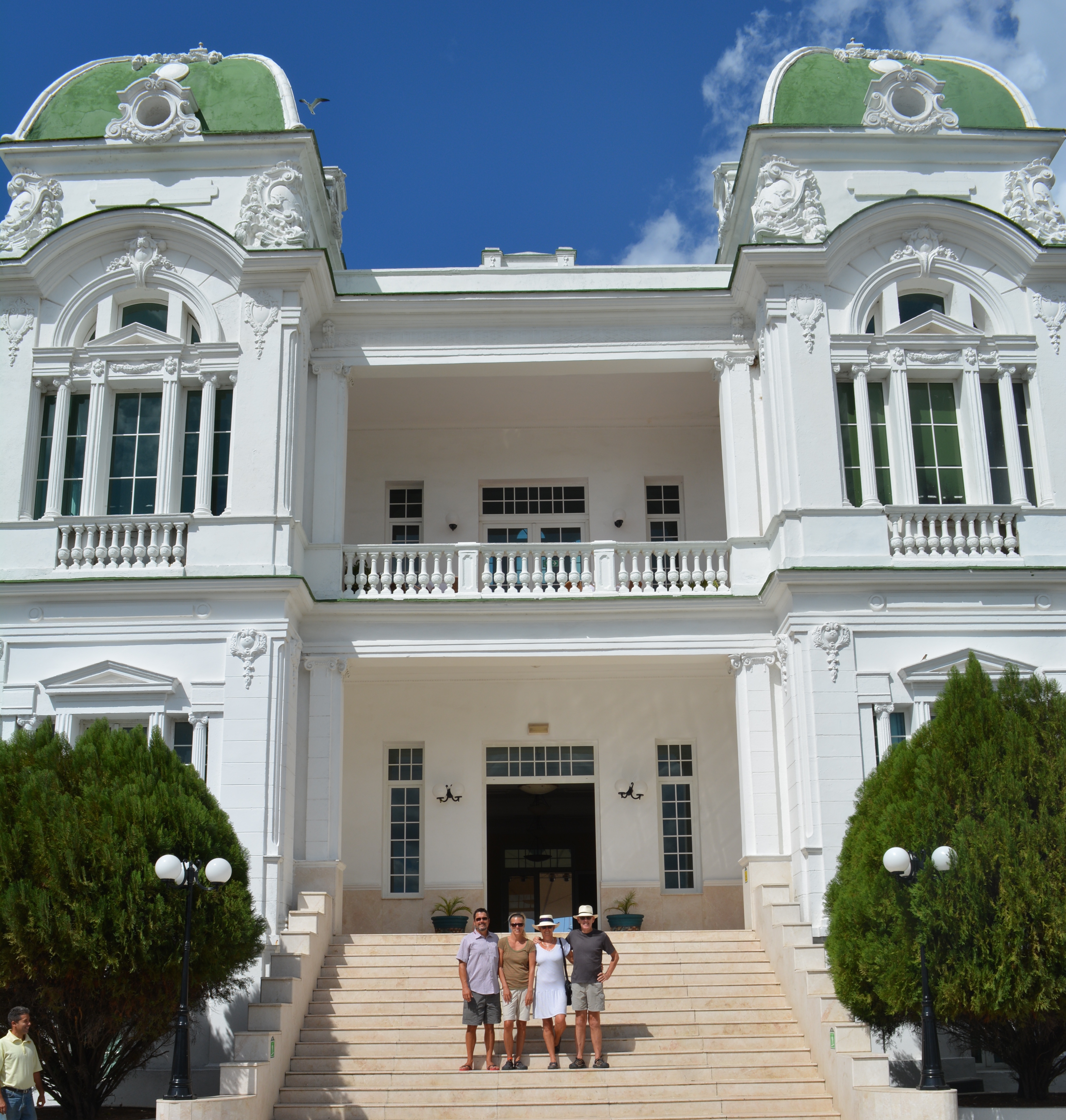
When we visited an old yacht club with foreign boats moored at the dock, our guide stopped at the edge of the dock and said he could go no further. He is not allowed to go anywhere near boats. In fact he said this was the closest he had ever been to a boat in his life.
Old Yacht Club

Old Yacht Club

Charter boats for foreign visitors

Charter boats for foreign visitors

CUCs and CUPs, Paladars and Casa Particulars. They have a strange monetary system where locals use CUP (cuban peso)  and foreigners use CUC (convertible peso). A CUC is worth about 24 CUPs, yet this is not reflected in prices. Cubans pay a lot less for items than a foreigner does.  For example, we went to a baseball game (they are just as fanatic about it as the most die-hard fans in the US), and we paid 3 CUCs for a ticket while our Cuban friend paid 3 CUPs – 24 times less.  (So that is $3 for us and 13¢ for locals – for a playoff game non the less).
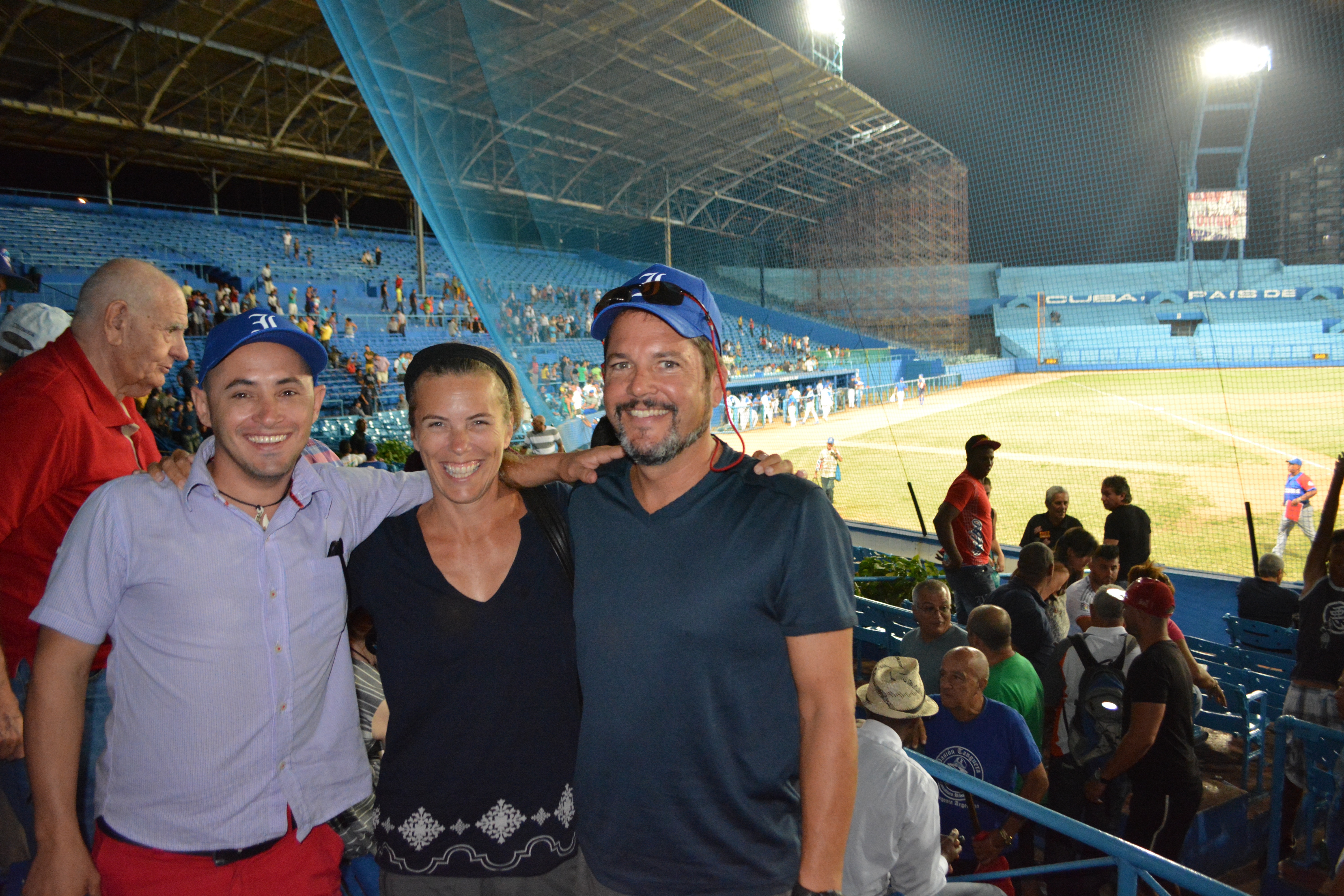
We were thrilled to take Olexis' to his first professional baseball game.  The  Havana Industrials  in the playoffs (they lost)

We were thrilled to take Olexis to his first professional baseball game. The Havana Industriales in the playoffs (they lost).

Not everything is priced as 1 CUP to 1 CUC, however, and sometimes there does not seem to be any relationship between the two prices for the same good.

One day we decided to go to Coppelia, Cuba’s famous ice cream parlor.
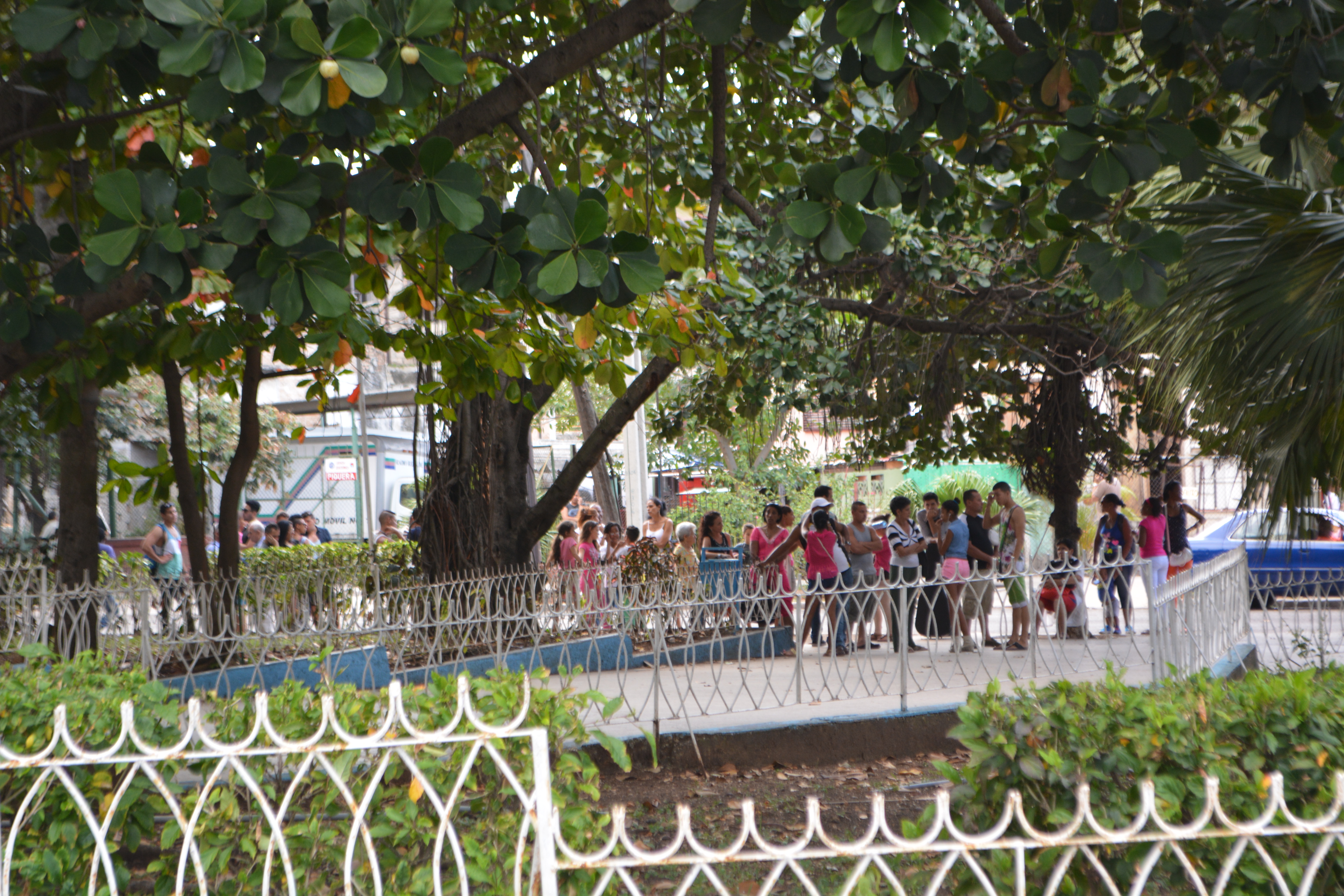
Locals waiting on line for ice cream at Coppelia.

Locals waiting on line for ice cream at Coppelia.

We were told that the lines could be long and were prepared to wait. However, when we got on the line, people from the ice cream store rushed over to us, confirmed that we were not Cubans and immediately took us to a special room for foreigners. We were the only ones in the room and were quickly served while many locals continued to wait on line.
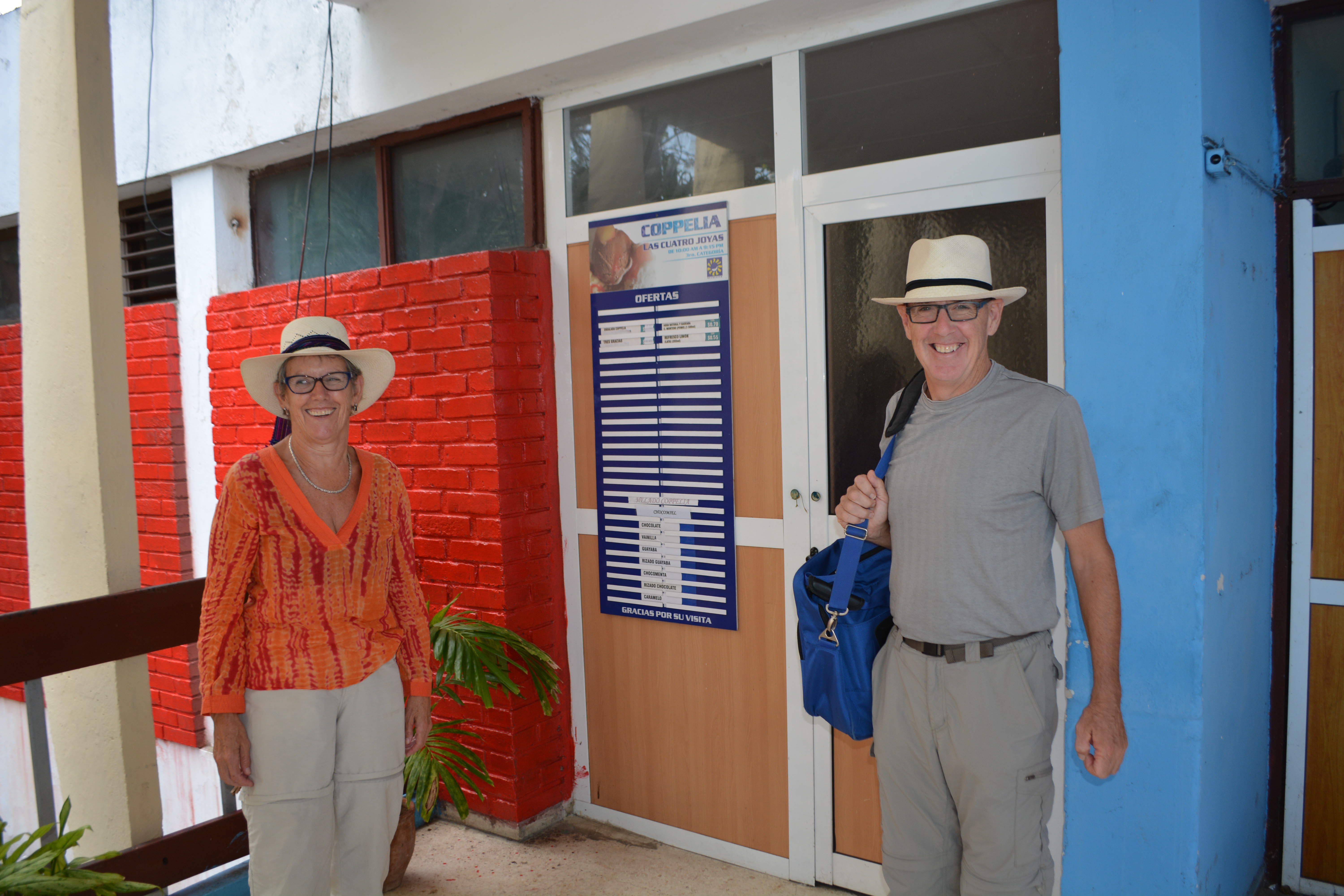
DSC_0525

Getting ready for ice cream in exile.
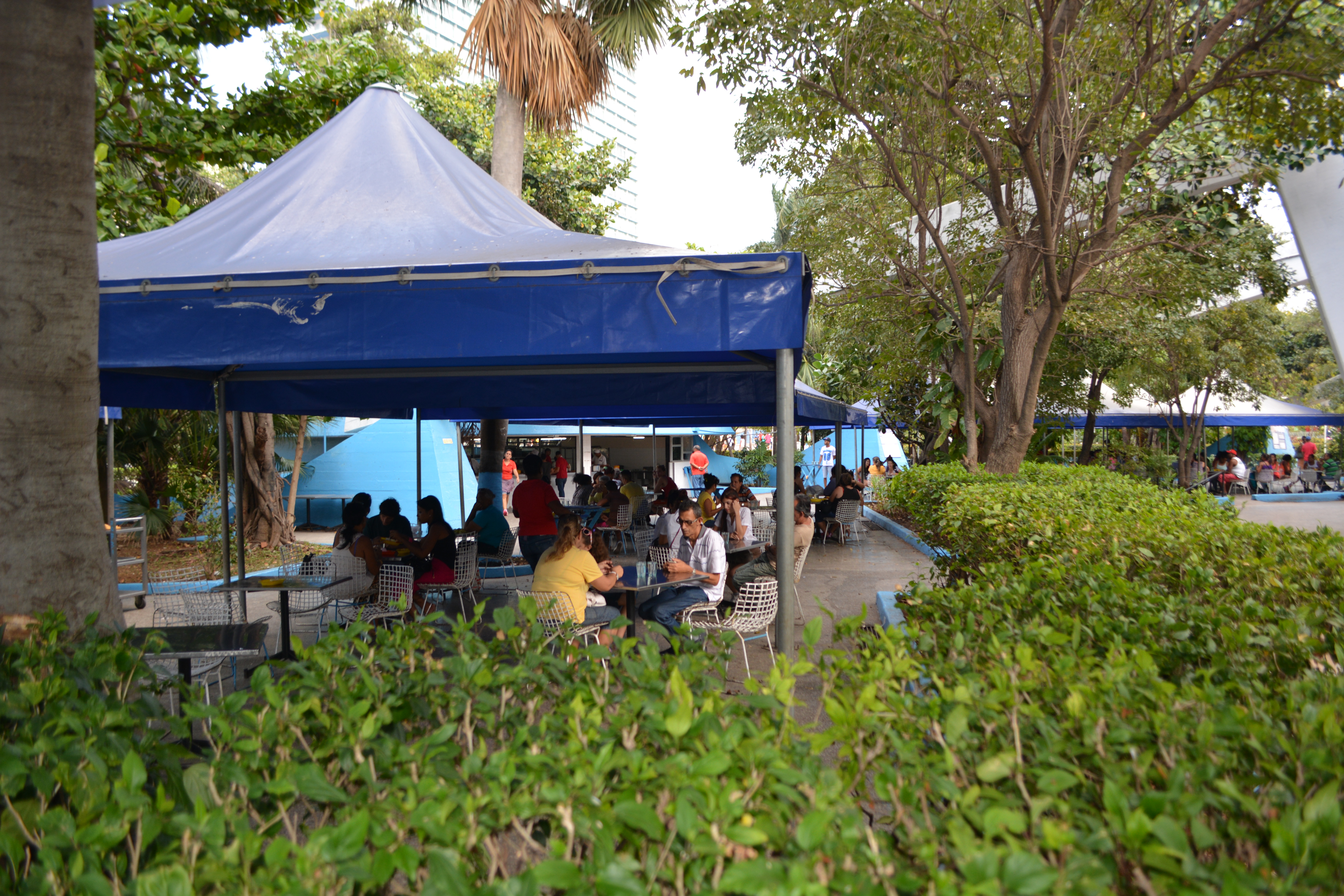
DSC_0530

Coppelia was opened by the Cuban government in 1966 so Cubans could enjoy an ice cream treat.

I am sure our prices were a multiple of what the Cubans paid, but we didn’t care about that. We regretted not being able to enjoy the ice cream among the local crowd.  It was odd to be sequestered in a private room and treated differently than everyone else.
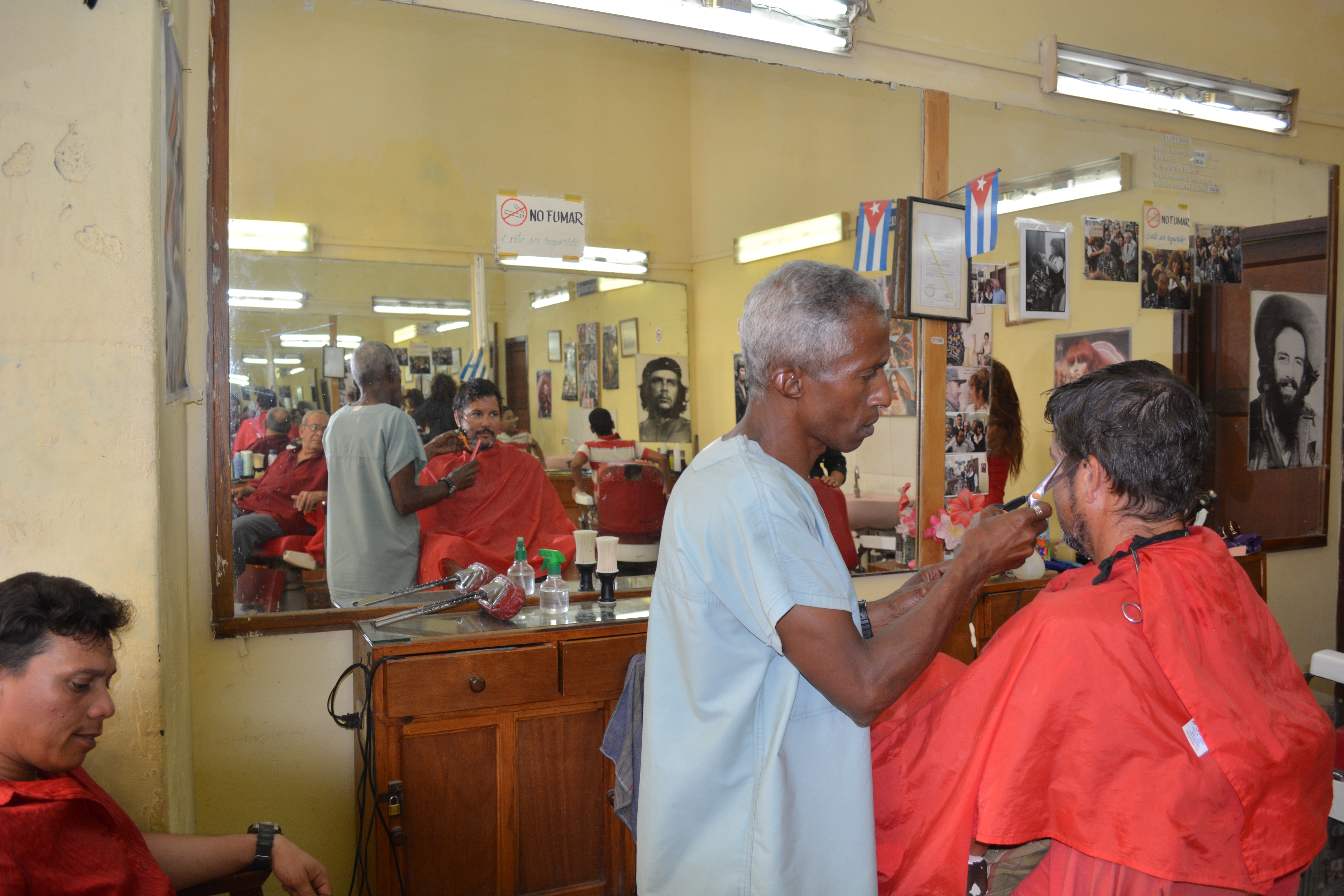
Pete thought he was getting a bargain $8 haircut, but as he walked out noticed the price list for locals as 83¢   LOL

Pete paid $8 for this haircut, but as he walked out noticed the price for locals was 83¢. LOL

Like their money, commercial life in Cuba runs on two tracks.  There are government run hotels, restaurants and shops.  These are usually clean, poorly stocked and bereft of customers.  Then there are private versions of the same (even private businesses have to give 51% profit to the government, except private shops, because those are not legal yet). Casa Particulars are private hotels and inns that started as black market places to stay and have recently been permitted by the government.
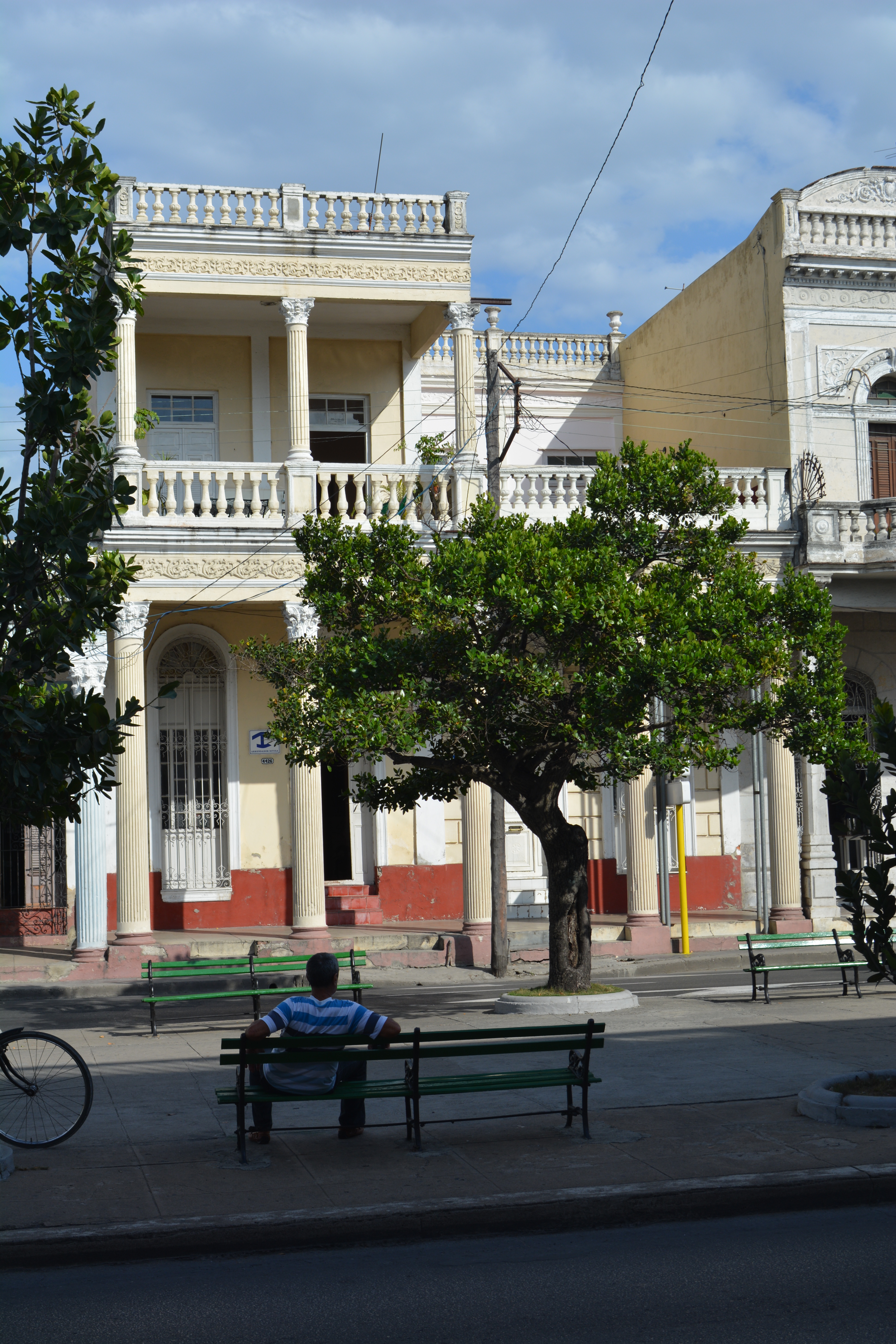
Exterior of Cienfuegos casa particular

Exterior of Cienfuegos casa particular.
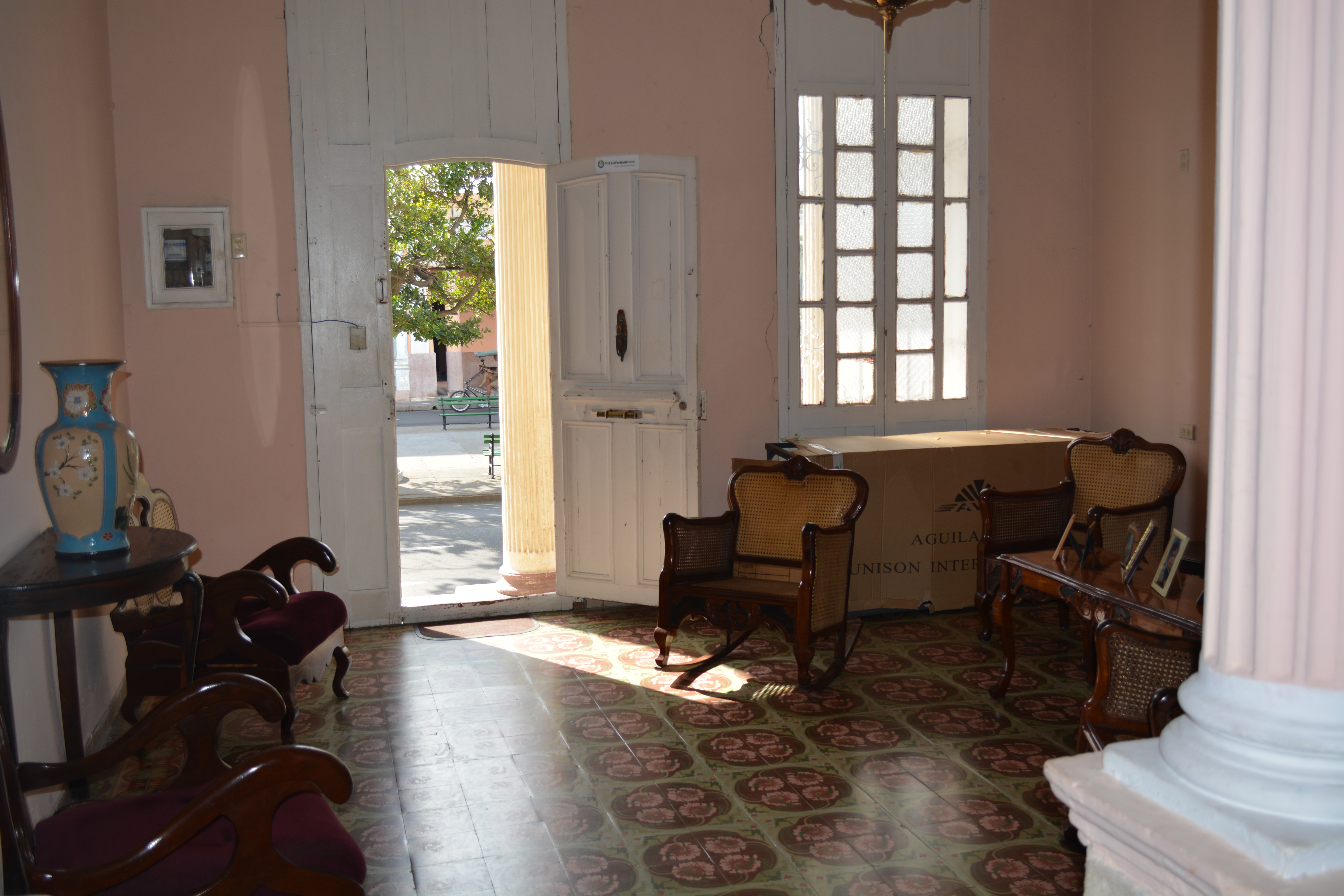
Interior common room of  Cienfuegos casa particular

Interior common room of Cienfuegos casa particular.
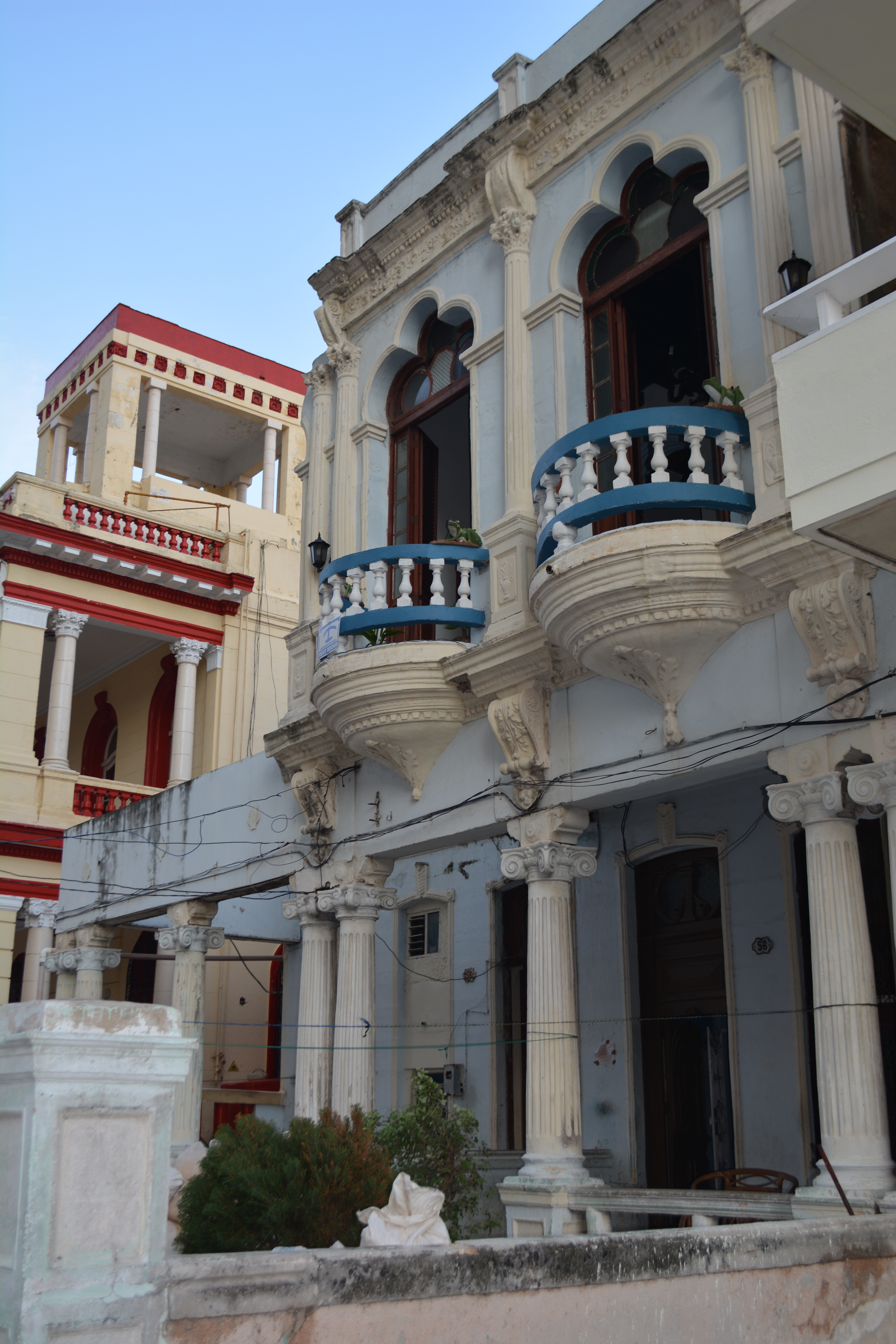
Exterior of Havana casa particular

Exterior of Havana casa particular.

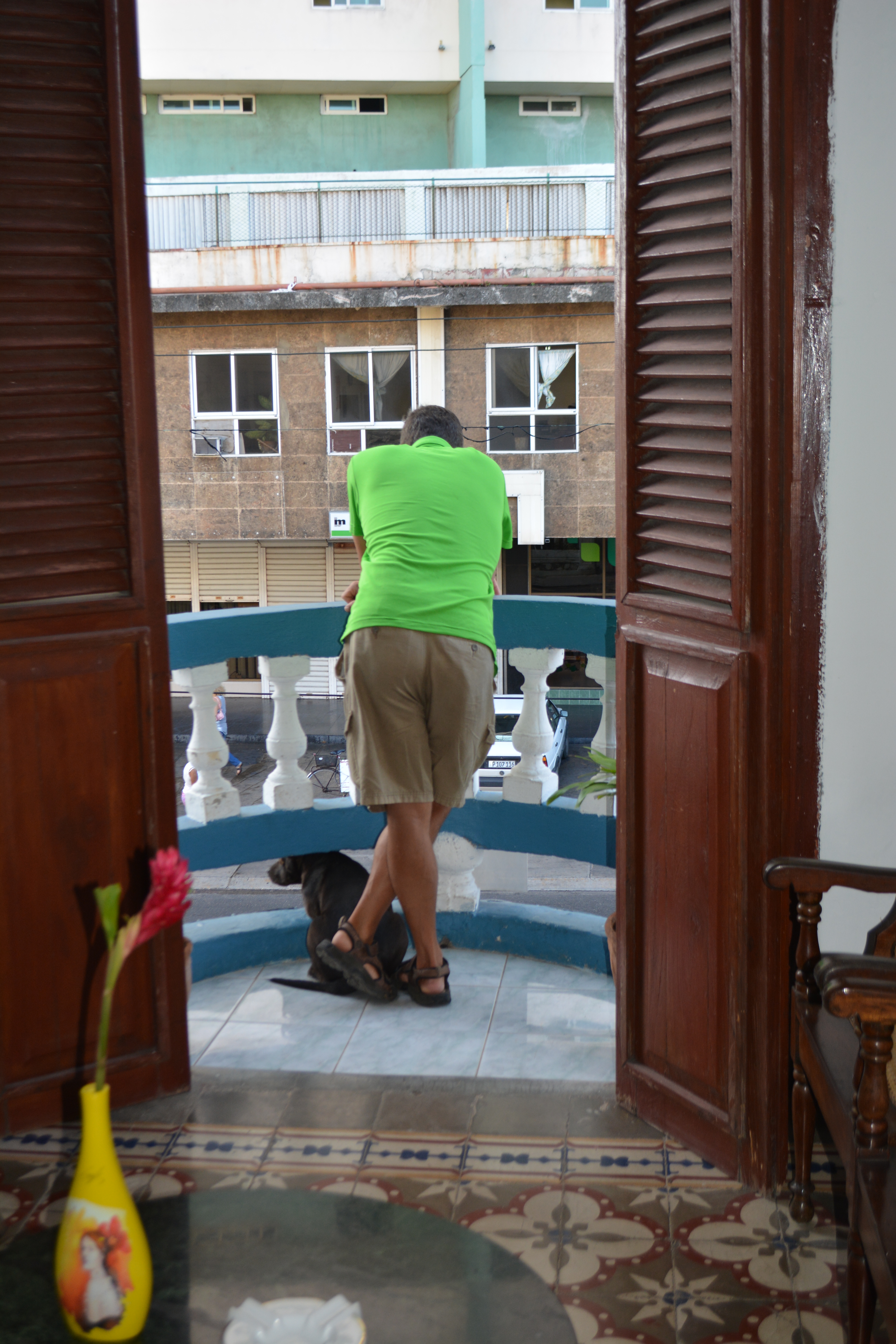
Pete enjoying the view with our casa particular host Skylar

Pete enjoying the view with our casa particular host Skylar.
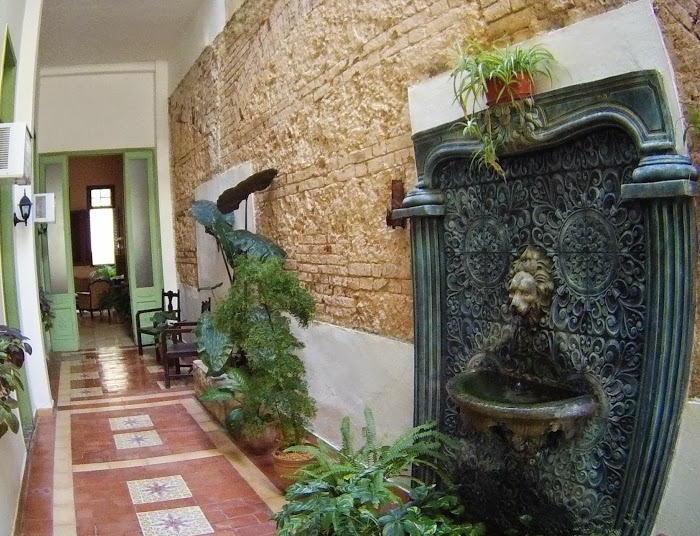
Beautiful corridor to the rooms of Casa Habana

Beautiful corridor to the rooms of Casa Habana.
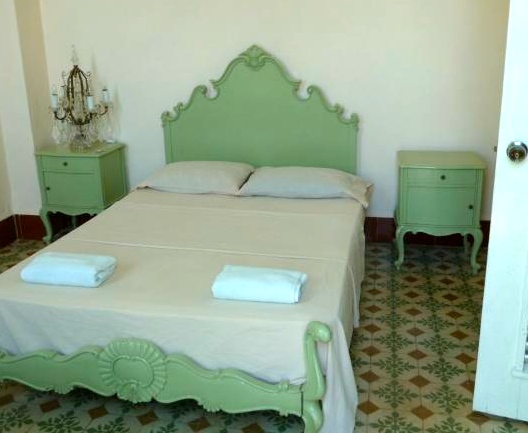
Room at  Casa Habana, just love that old tile

Room at Casa Habana, just love that old tile.
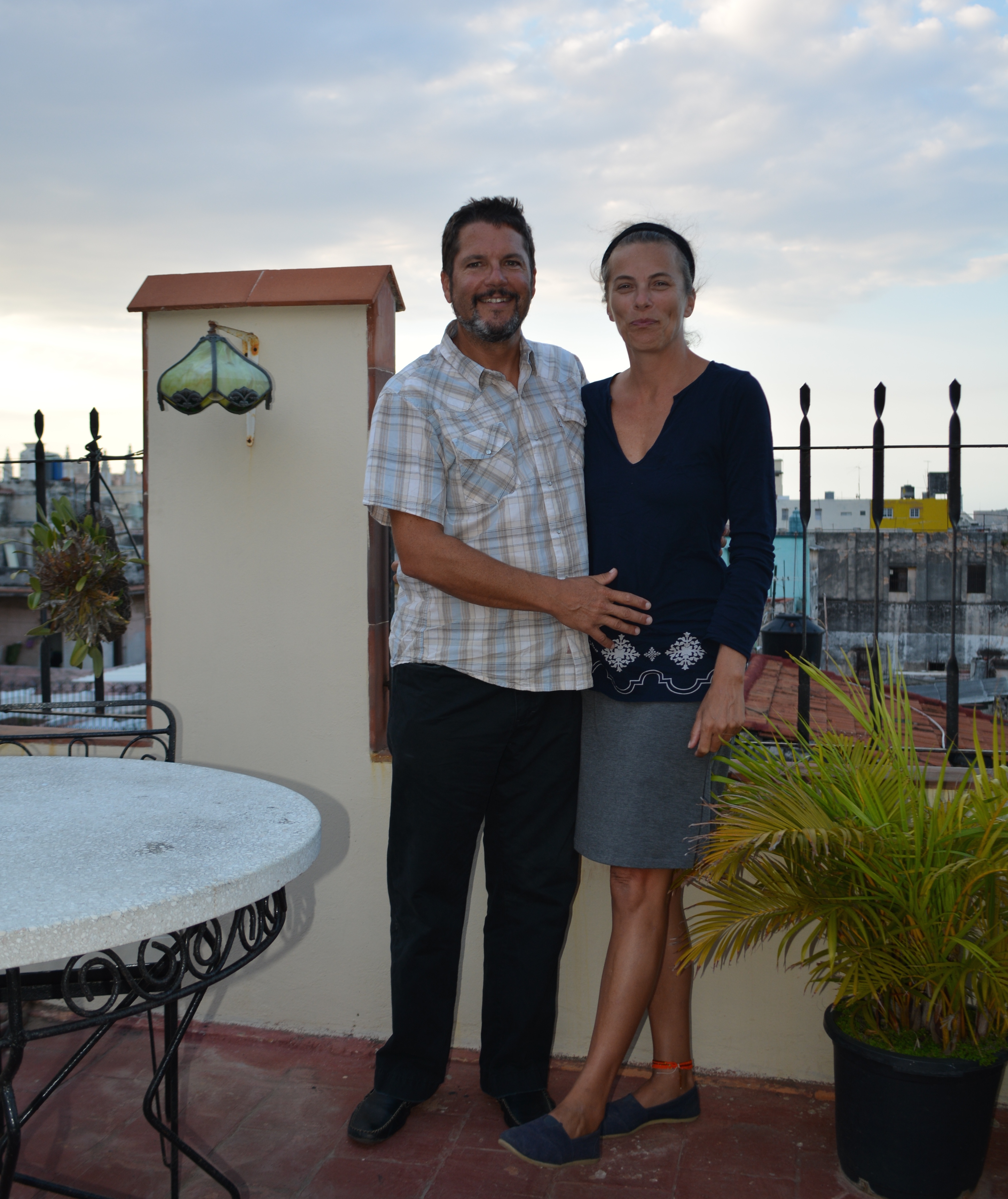
Roof deck

Roof deck “secret bar” at Casa Habana one of our casa particulars.

They run the gamut from Grandma Luisa’s old room in the back of the house to clean, well-run multiple room inns.  They all come with breakfast – oddly always the same breakfast no matter where you are. And can range from luxurious to bring-your-own-toilet-seat.  Its the same with restaurants.
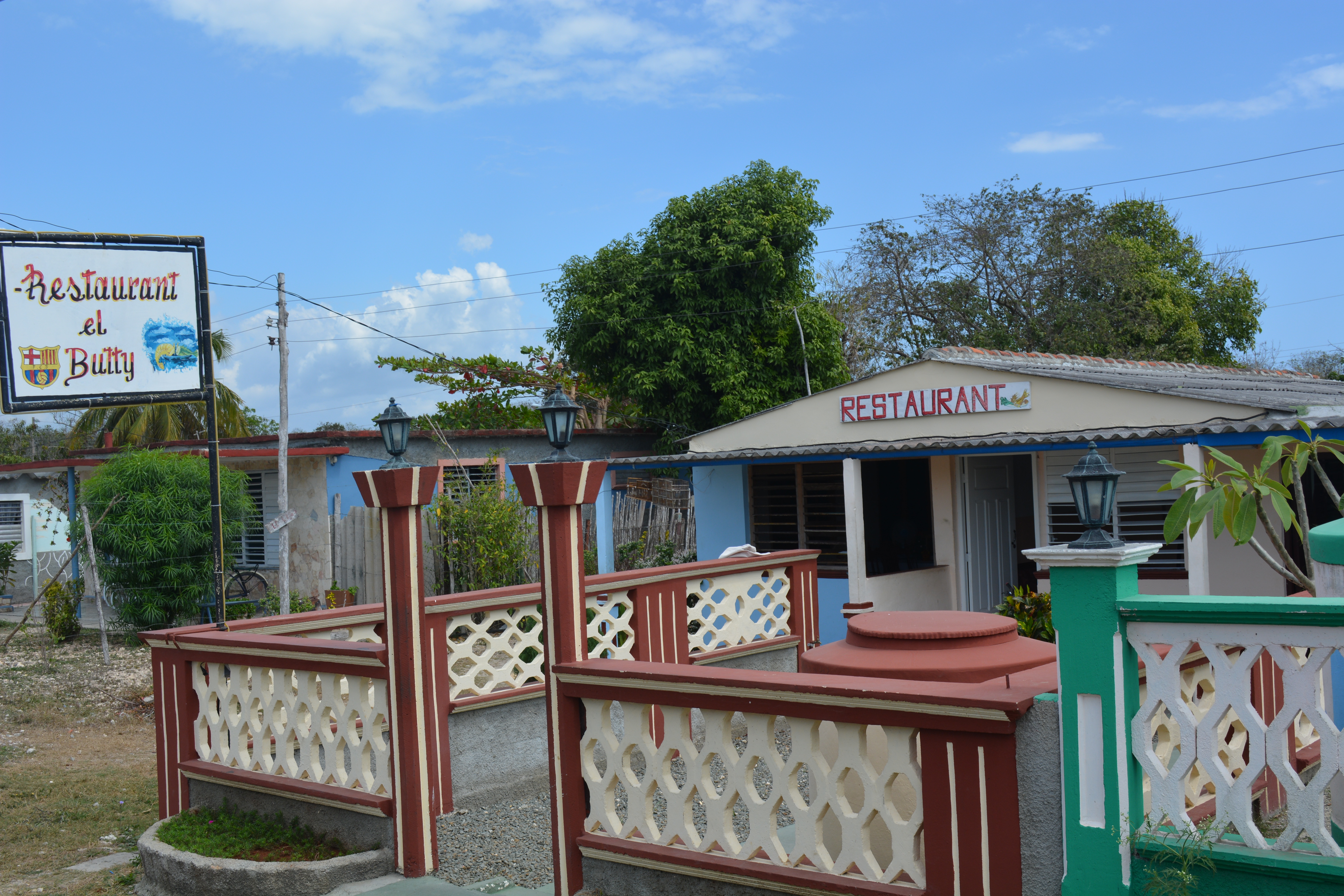
Private restaurant in back of owner's home

Private restaurant in back of owner’s home
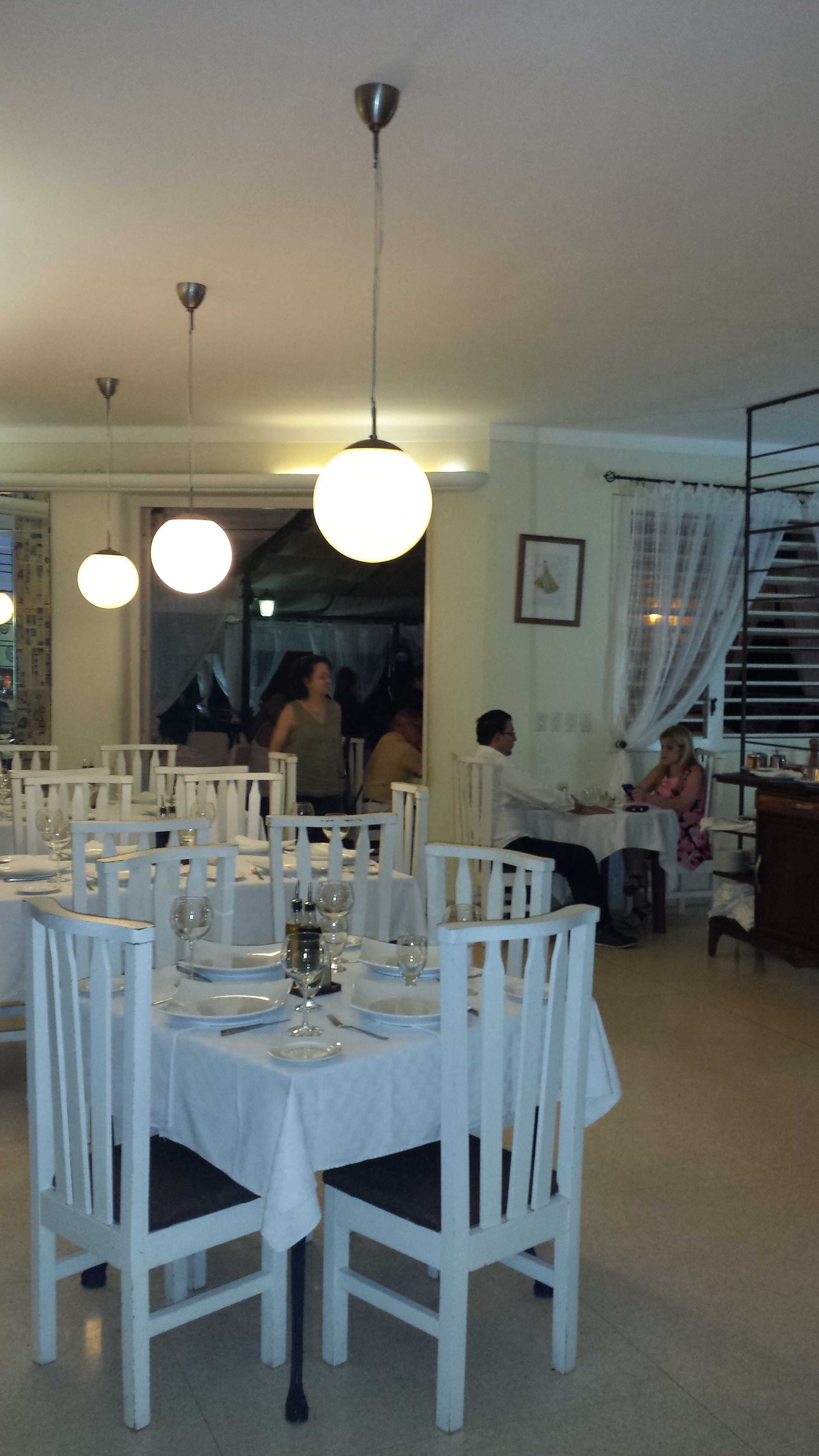
Cafe Laurent

Cafe Laurent in the Vedado neighborhood of Havana

countryside restaurant

countryside paladar

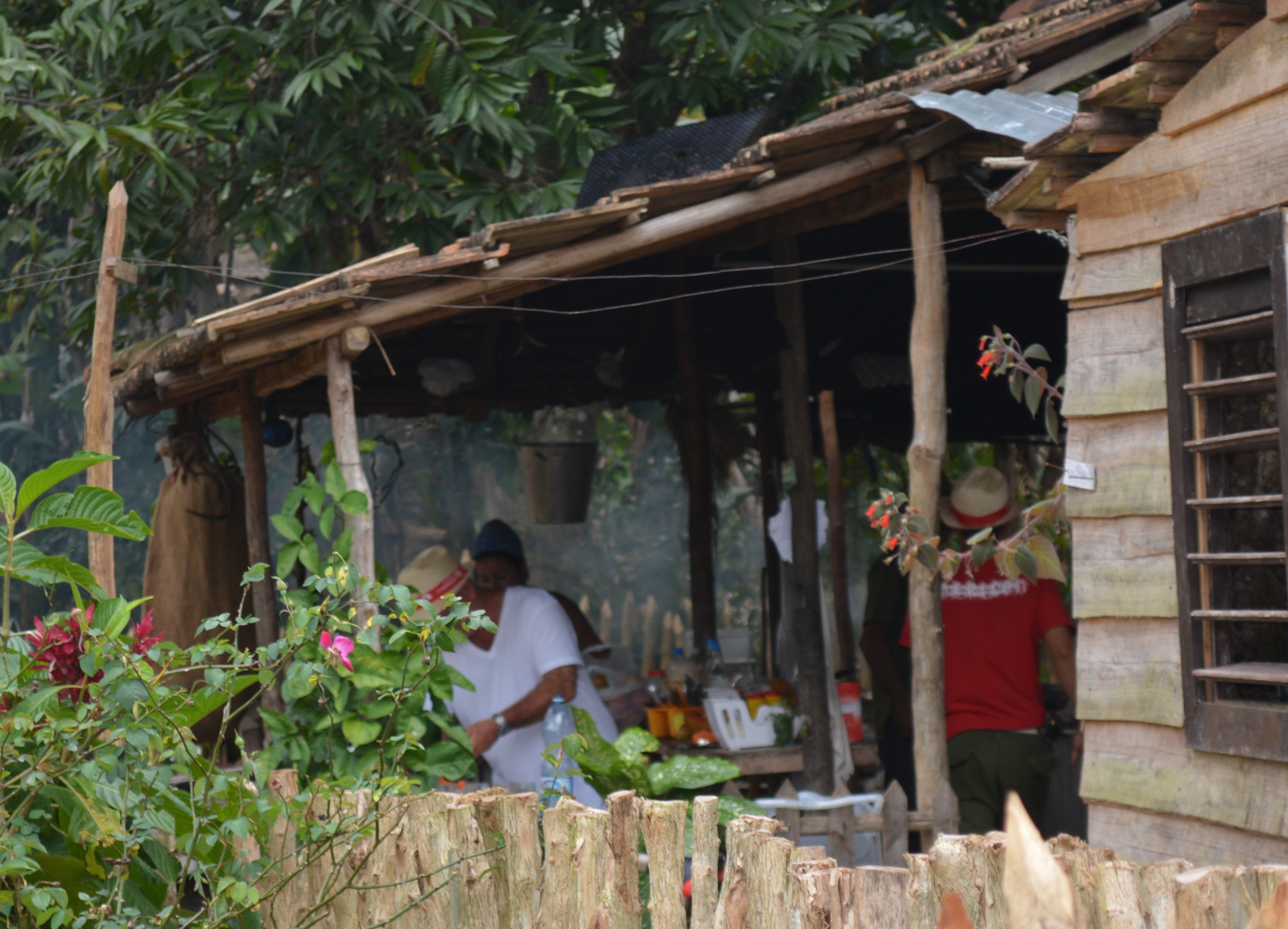
Outdoor kitchen

Outdoor kitchen

Paladars started as secret private places to buy a meal.  Now they are permitted, and regulated of course, and can be found everywhere.  They range from home cooking in someone’s house to trendy eateries with Cuba’s version of hipsters running around.
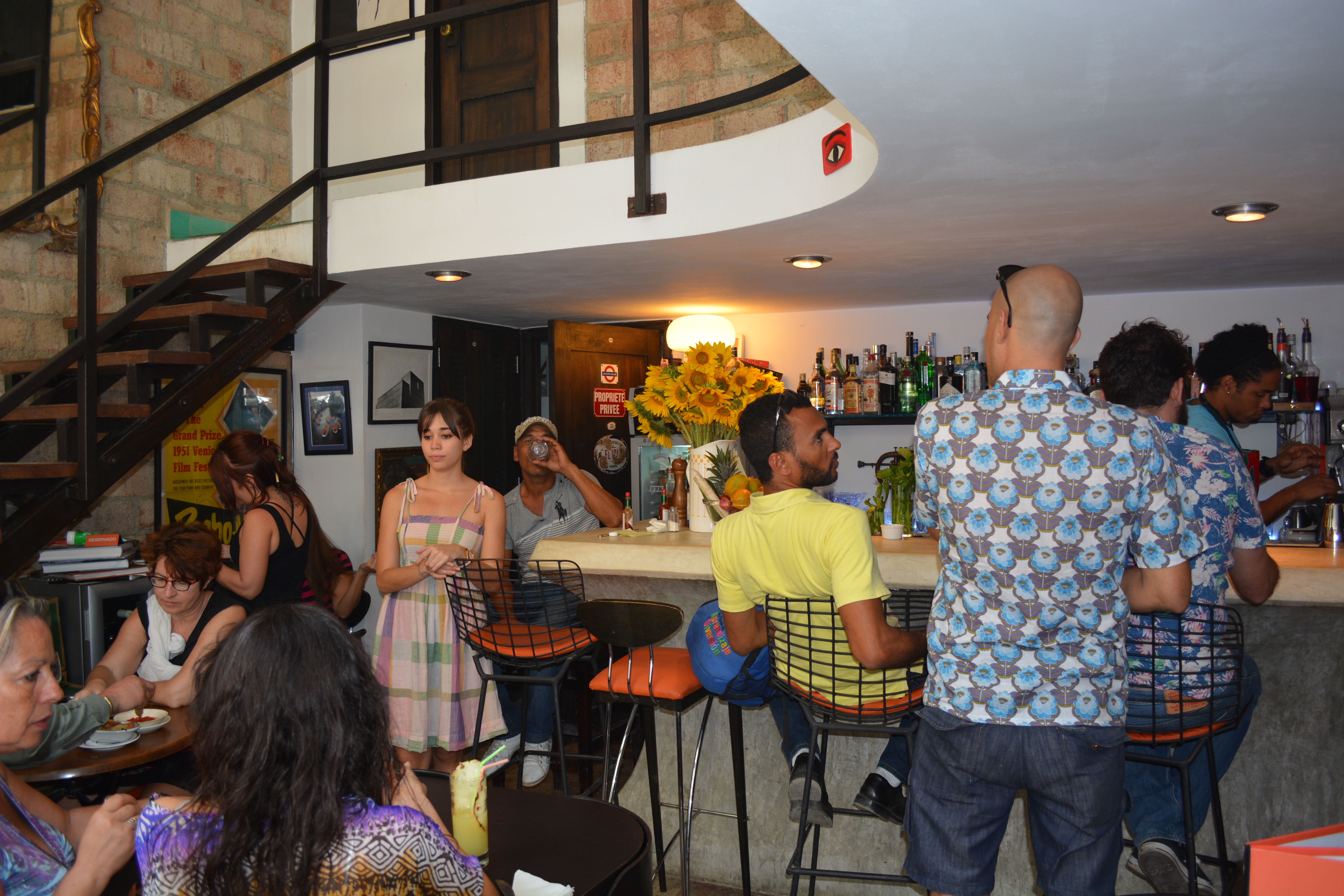
O'Reilly 304 (street address) could easily be in San Francisco

“O’Reilly 304” paladar could easily be in San Francisco

For restaurants, think of the government-run versions as old, expensive big-city eateries that are resting on their laurels and paladars as the new little restaurant that everyone is talking about.  We went to the paladars the majority of the time.  For shops its a little different.  From what we could learn, private shops are not yet permitted and, indeed, are still cracked down upon.  However, there are ration shops where things are quite cheap and people can buy their ration of subsidized egg, milk, bread, etc.  Then there are government-run shops that are not ration shops where people can spend their excess cash for other things.
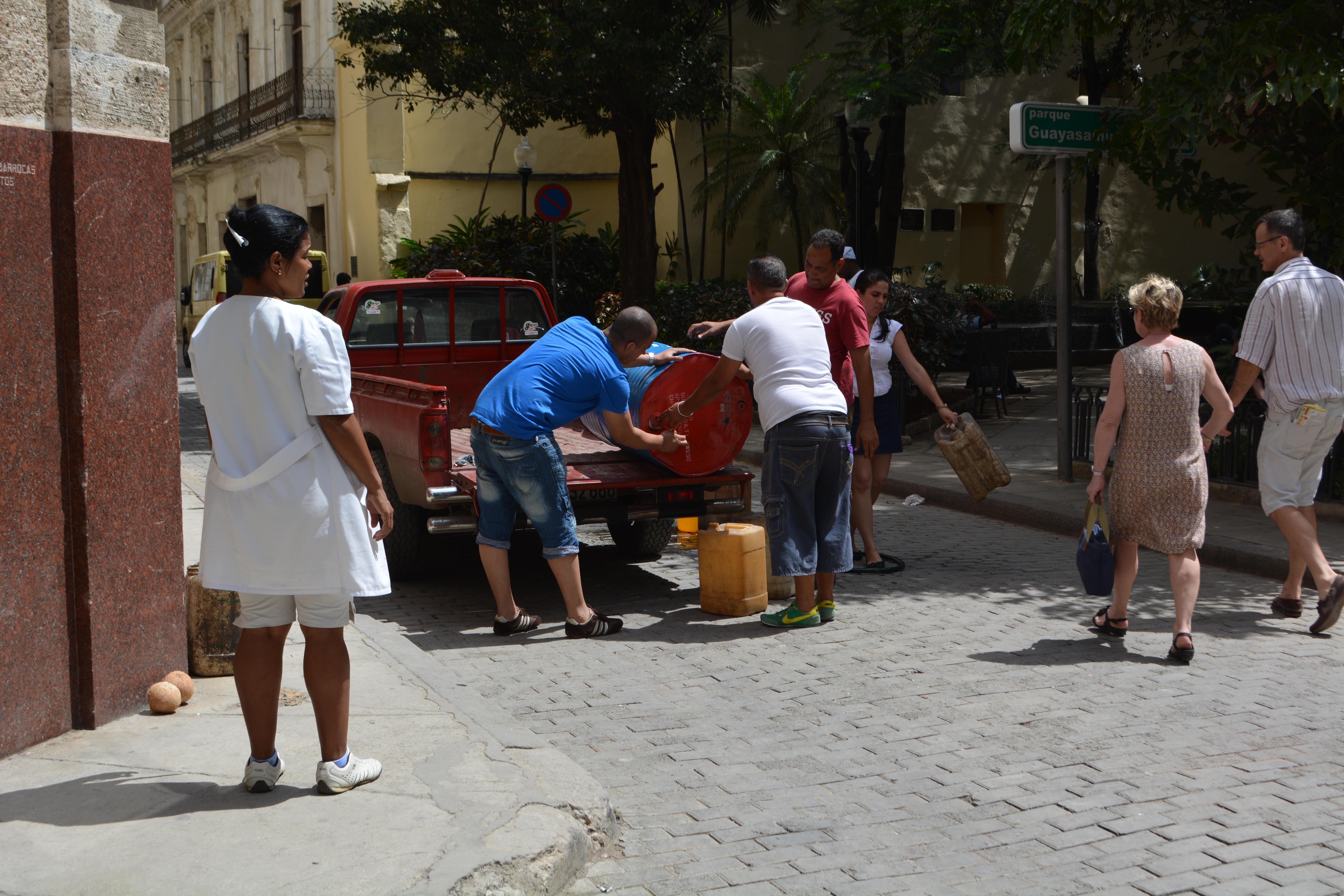
Ummm, I don't think this is a government run gas station

Ummm, I don’t think this is a government run gas station

Finally, there are clandestine shops and black markets where you can get some things that you just must have.  Pete was ushered through a family’s living room, a bedroom, the kitchen where a daughter was peeling beets, and finally to another bedroom to be shown a duffel bag of cigars for sale.  Its all very confusing but shows how ingenuity squeezes through somehow no matter what the government does.
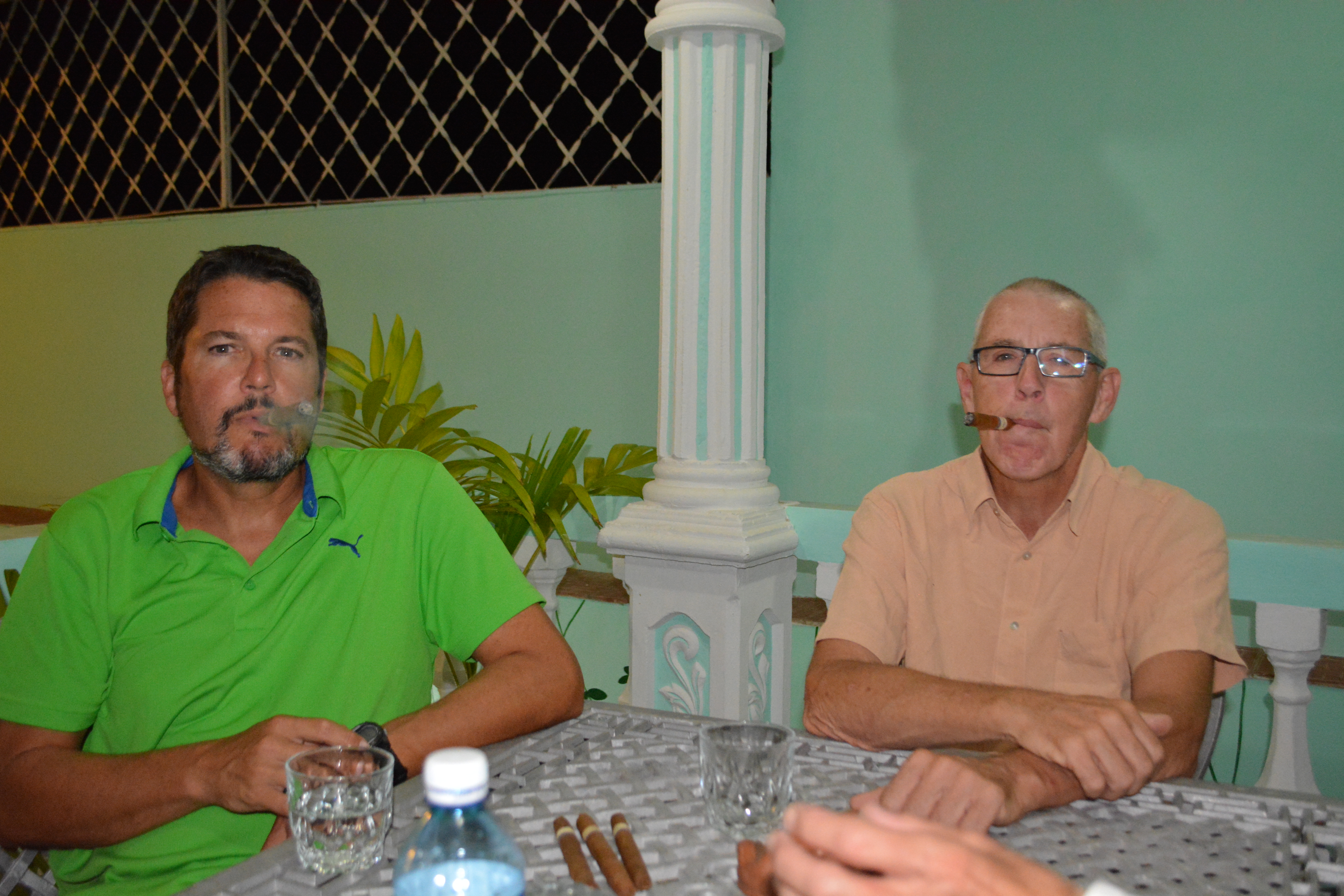
Pete and James enjoying their Cuban cigars

Pete and James enjoying their Cuban cigars

That’s it.  CUBA, we loved it!  With relations with the US thawing at a rapid rate, Cubans have a real task on their hands to grasp the benefits of an improved economy without spoiling the unique and timeless beauty that 50 years of communism have, inadvertently or not, preserved.  Note there is not a single KFC, McDonalds or CVS in any of the pictures we posted.  We hope the country can manage the coming change in a manner that allows people improved lives but that also keeps it that way.  They have a delicate and graceful culture that we can all benefit from.  We have so many photos from our trip. If you’d like to see more click here.

aerial Havana

Here is to a bright future for Cuba.

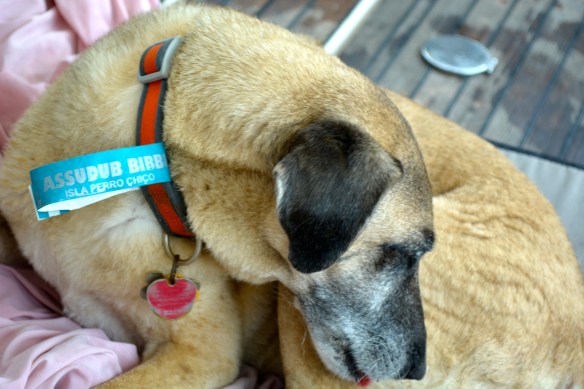
You say you haven’t seen enough Cuban dog photos? Ok, ok, click here for more.     And thanks Charlotte and James for sharing some of your photos.
Mexico Part Dos

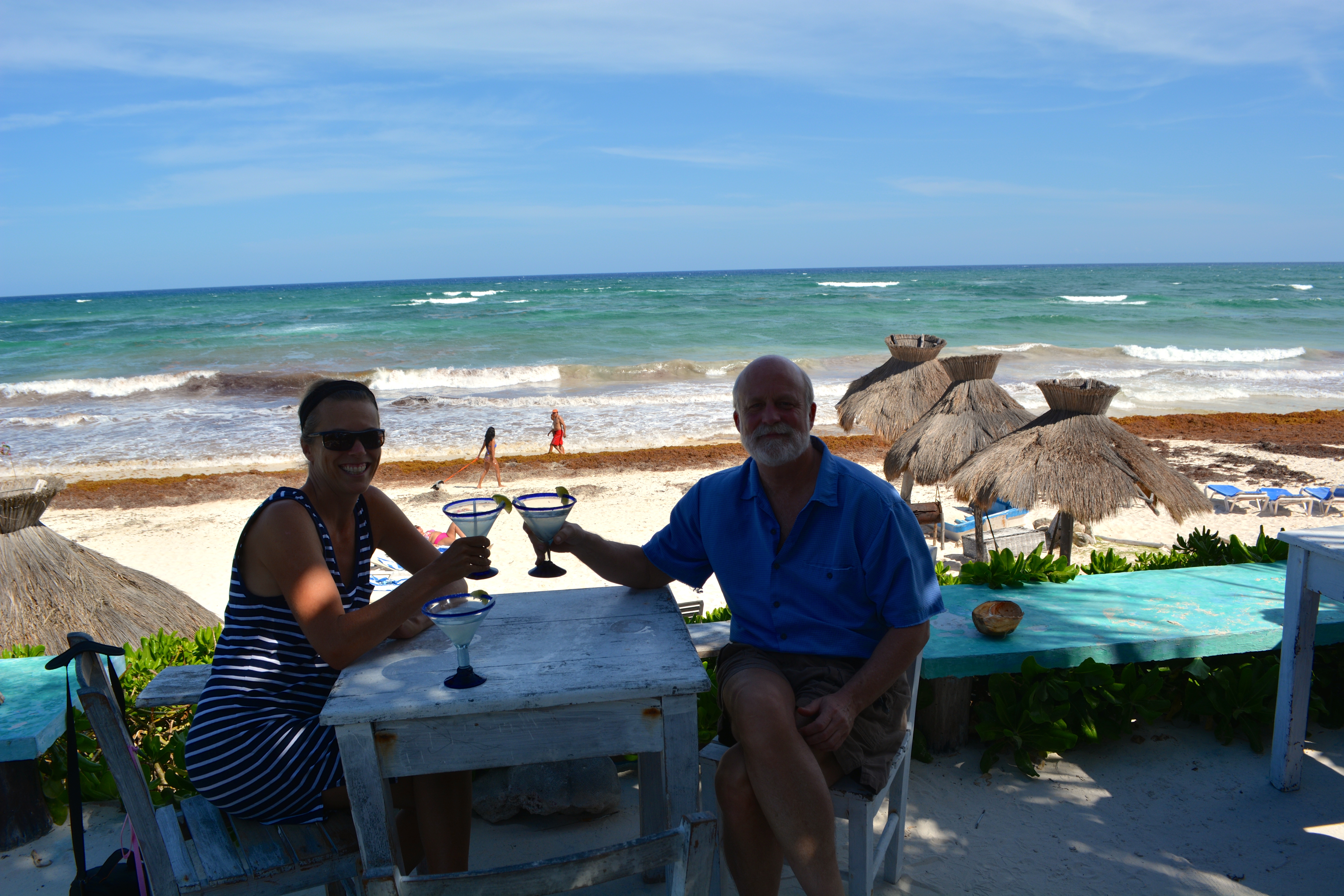
We returned to Mexico, this time to the Caribbean side for a quick stop to see our dear friend Randy at his beautiful casa in Tulum.

Randy's casa es Lucy's casa

Randy’s casa es Lucy’s casa

You know Randy has had a few too many if he isn't checking out the bikini babe on the beach.

You know Randy has had a few if he isn’t checking out the bikini babe on the beach.

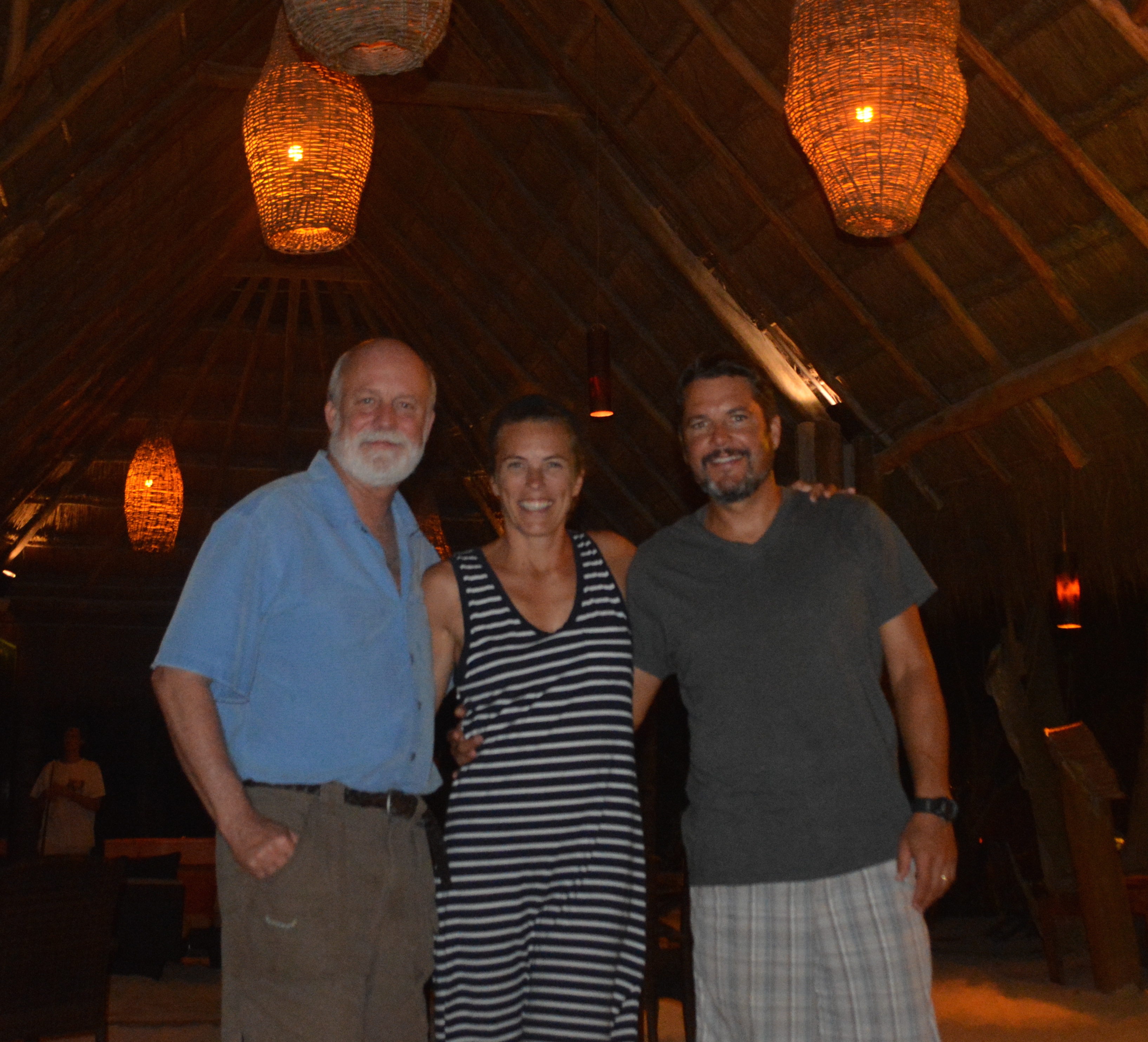
Randy, Mary ,Pete in TulumTulum is on the Yucatan Peninsula along a stretch of ocean they call the “Mayan Riviera.”  It’s essentially miles and miles of all-inclusive beach resorts behind huge gated walls, kind of bland and unnatural.  Tulum is the hipsters’ answer to the Riviera Maya.  If Cancun’s frat boy-filled non-stop party or the Riviera Maya’s all inclusive mega-resorts aren’t your thing (and you know they aren’t ours) then head to Tulum for a yoga retreat, eco-chic chill out.  Even the  Mayan ruins there (the only one built on the coast) are low key and easy to navigate in a few hours, then you can cool off in one of Tulum’s many cenotes (freshwater sinkholes).

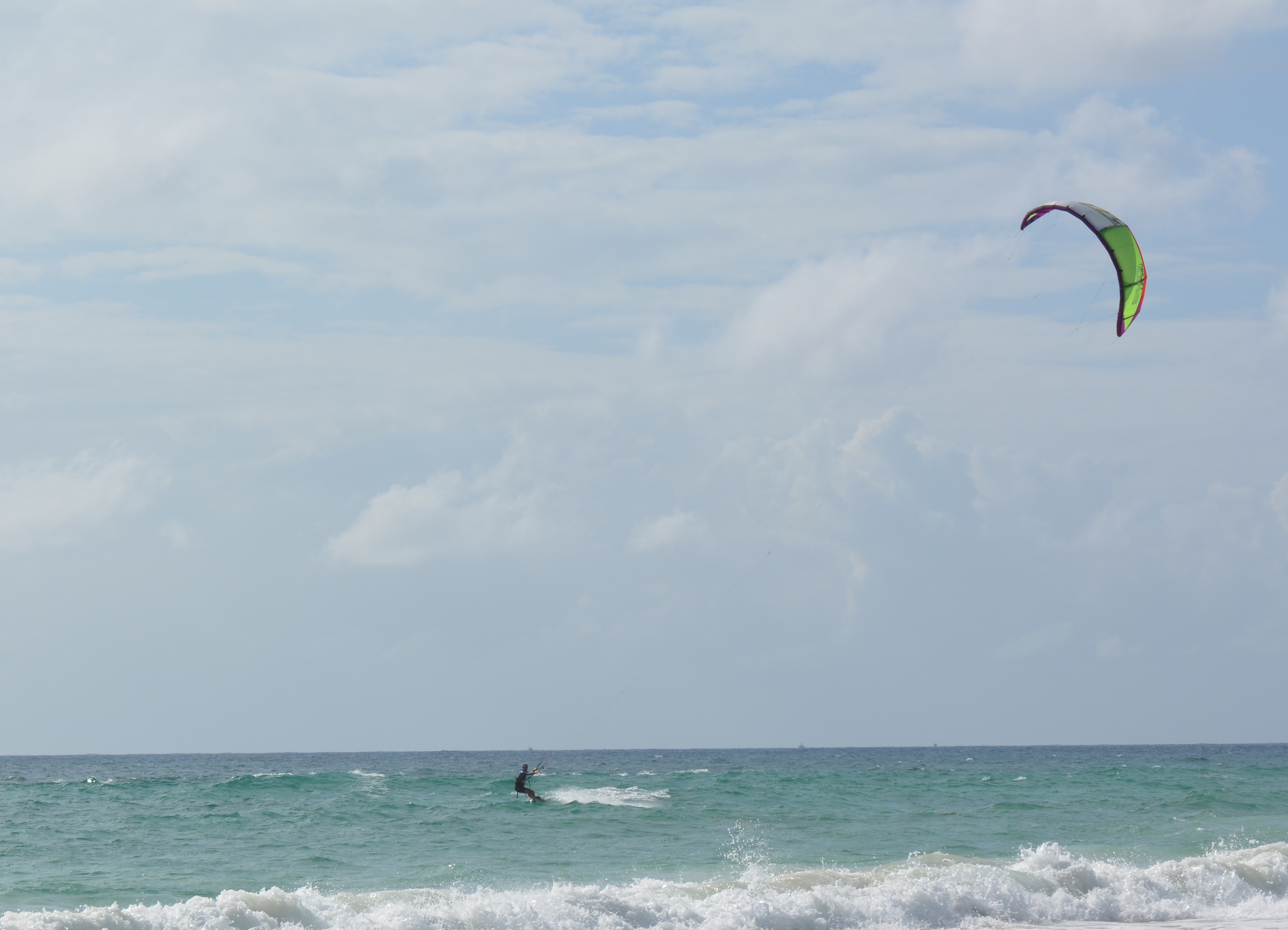
Time for a quick morning of kiting for Pete

Time for a quick morning of kiting for Pete

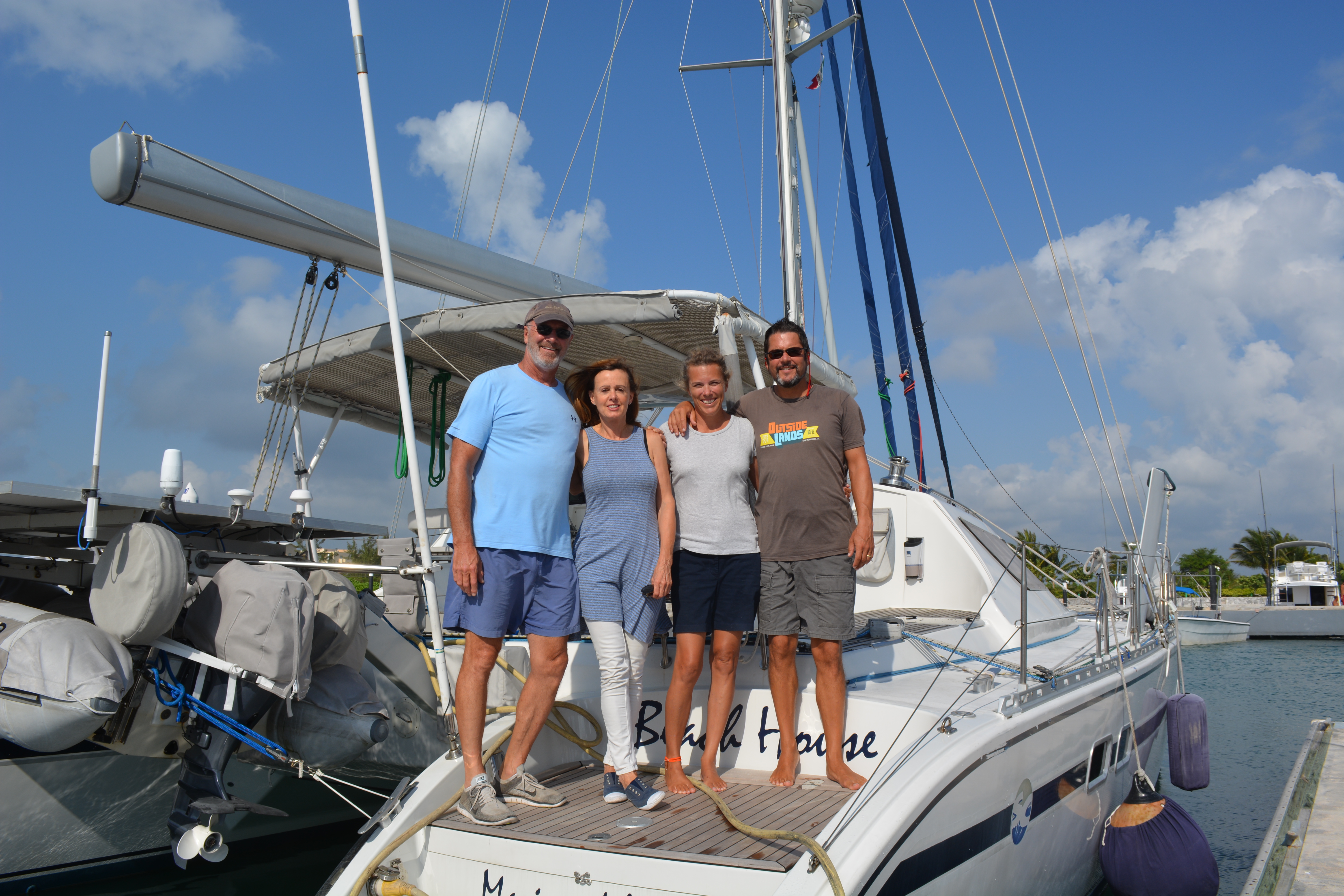
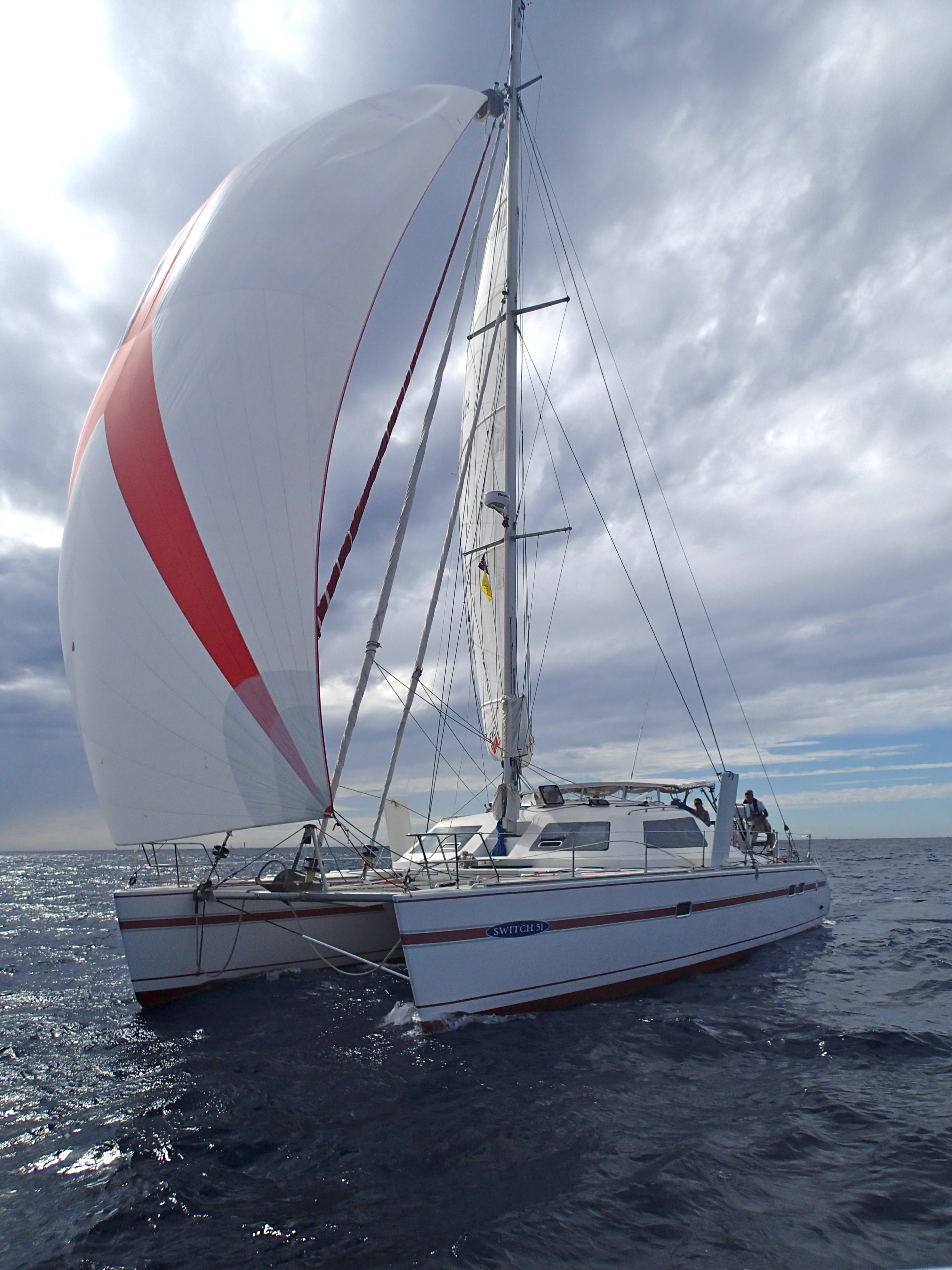
We also ducked into El Cid marina in Puerto Morelos for a safe haven for Neko while we did some land travel (more on that in the next post).  When we pulled into our slip I looked over and to my delight saw one of our sister ships, “Beach House”.   You have to realize there were only 13 (Neko is #12) Switch 51’s made and I’ve never seen another.  Pete is active online in the Switch owners’ group and they all “know” one another in the virtual world, so it was a kick to meet Scott and Nikki in person and check out each others’ boats.

Scott and Nikki for our sister ship "Beach House"

Scott and Nikki from our sister ship “Beach House”

Lovely beaches of Puerto Morelos, Mexico

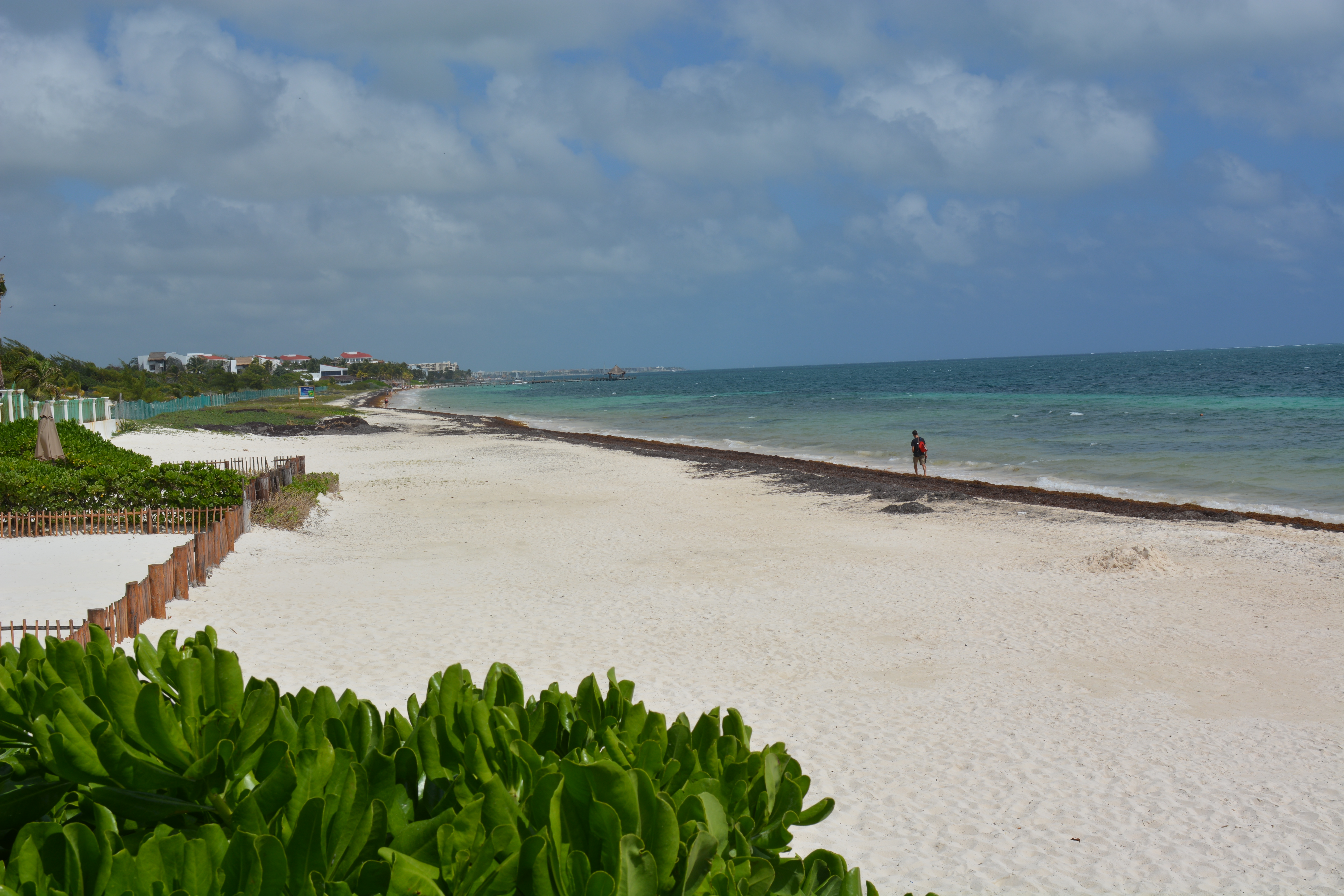
Lovely beaches of Puerto Morelos, Mexico

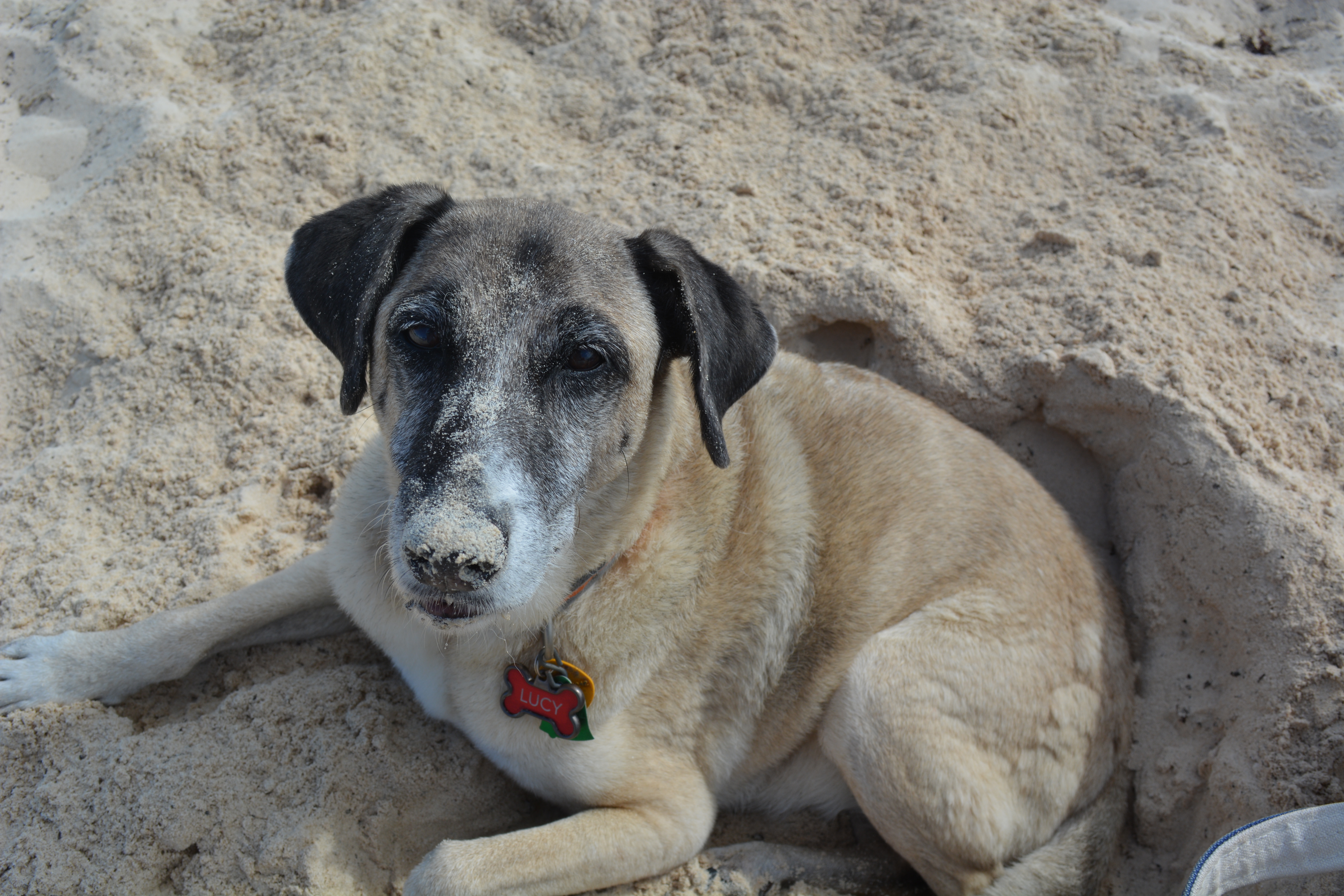
Lucy enjoying digging in the sand.

Who me?  No, I wasn’t digging.

Happy to be back in the land of delicious Mexican food

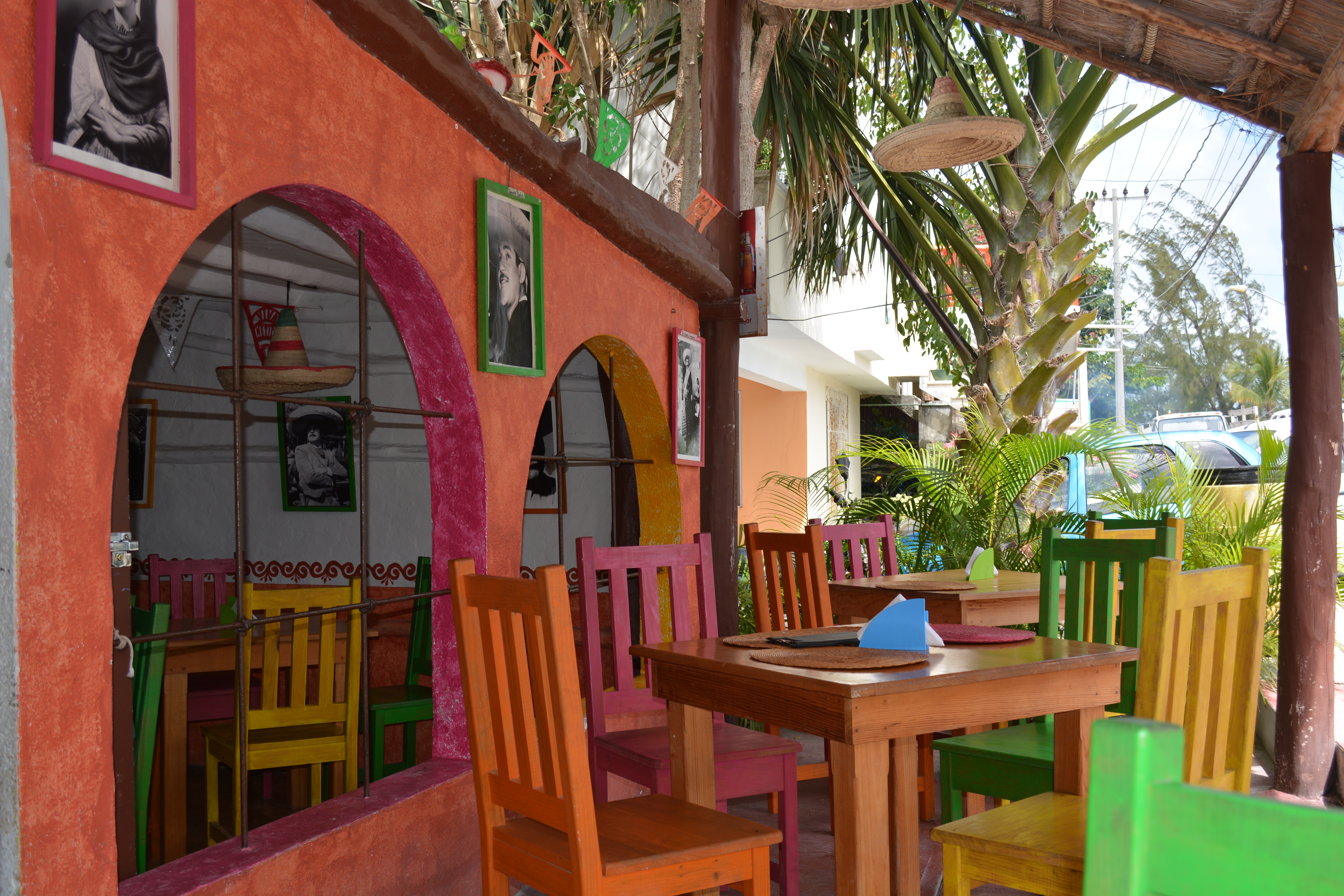
Happy to be back in the land of delicious Mexican food

We headed over to Isla Mujeres to wait for our weather window and to enjoy a few last days in Mexico. Like Cabo on the Pacific side, Isla Mujeres was a bit too touristy, but the folks were friendly and for our fellow boaters the anchorage is well protected – apart from the wakes from the giant over-packed party excursion boats.  And clearing out of the country was a breeze.

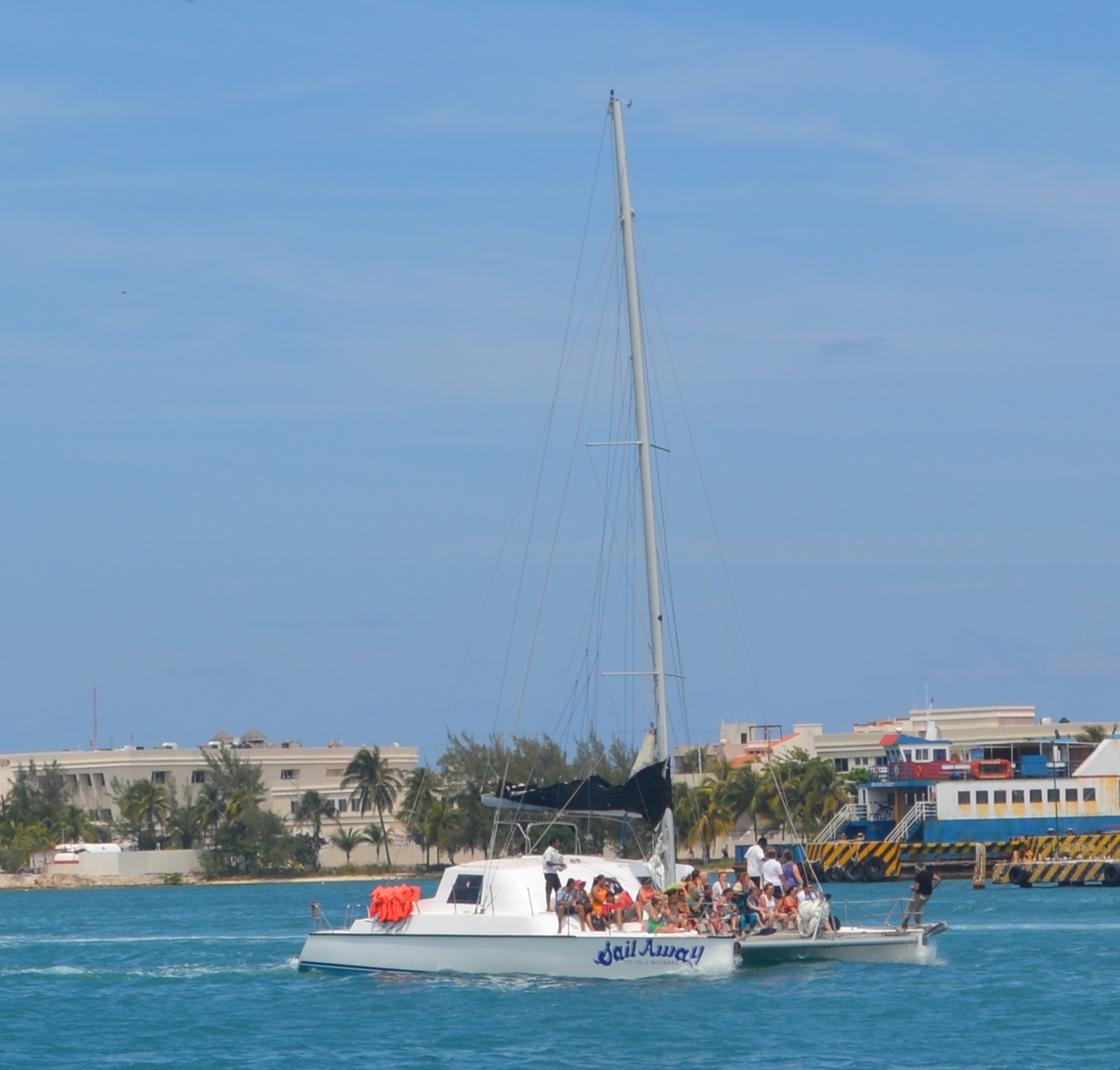
Room for more

Room for more

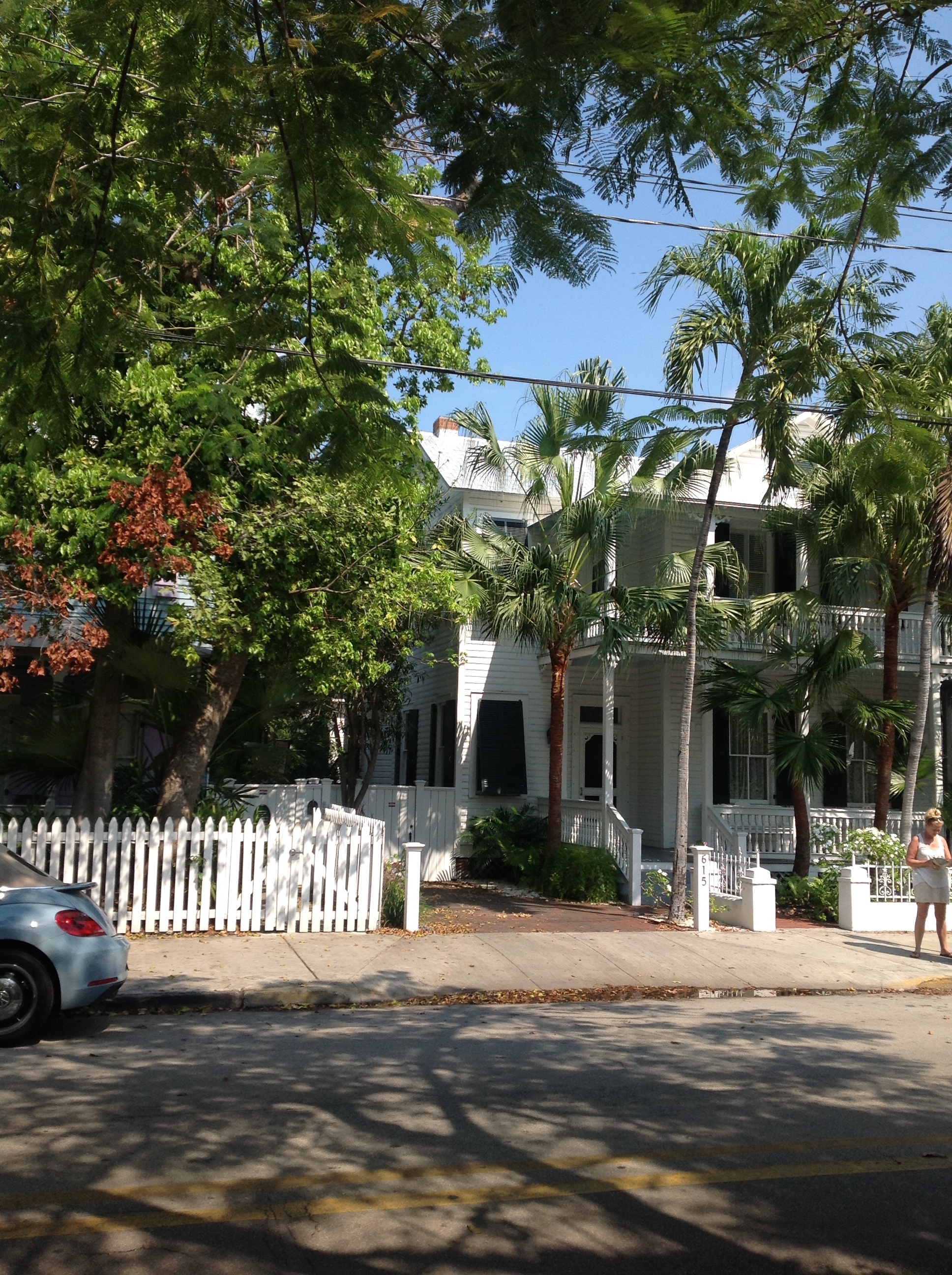
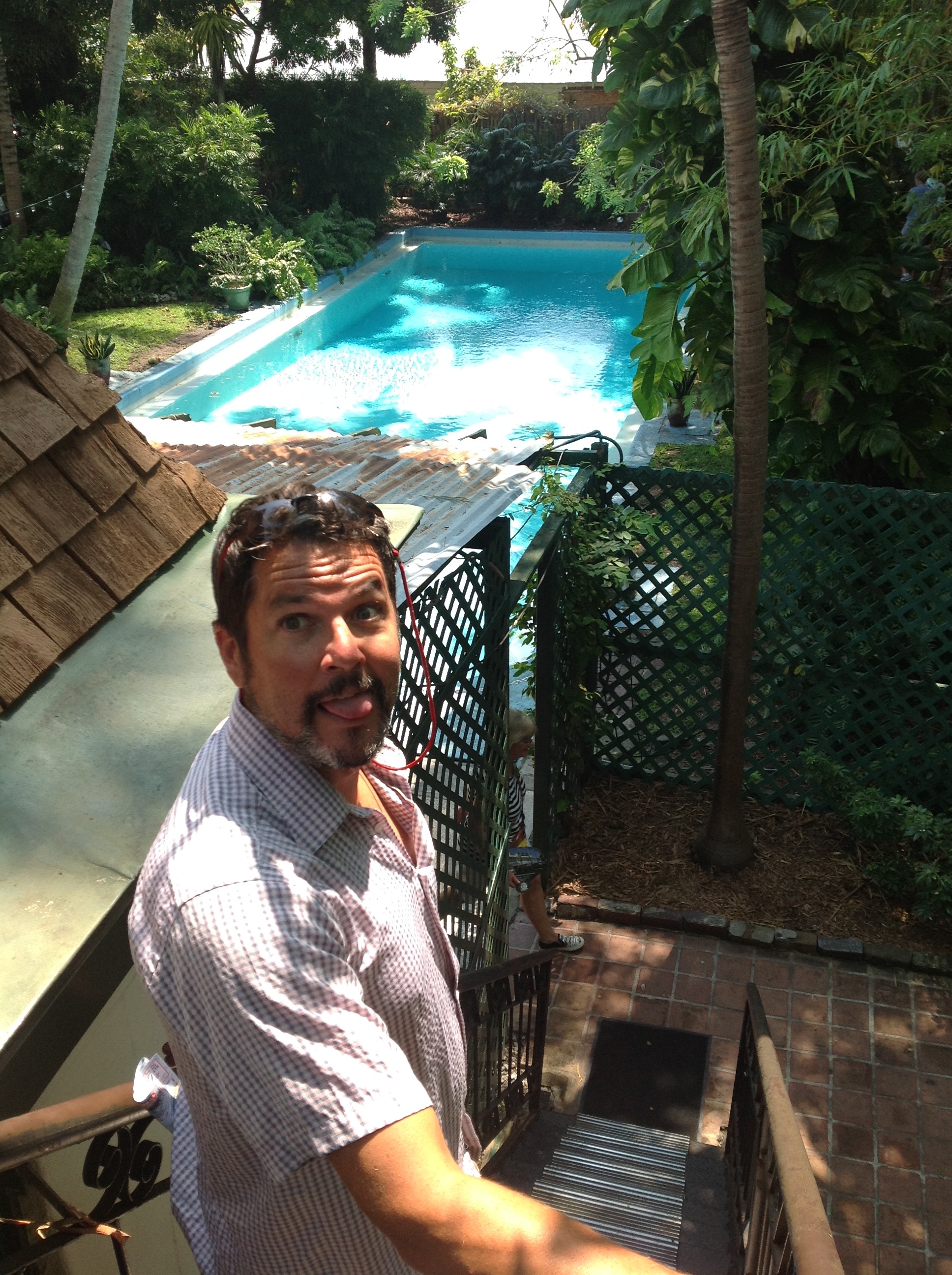
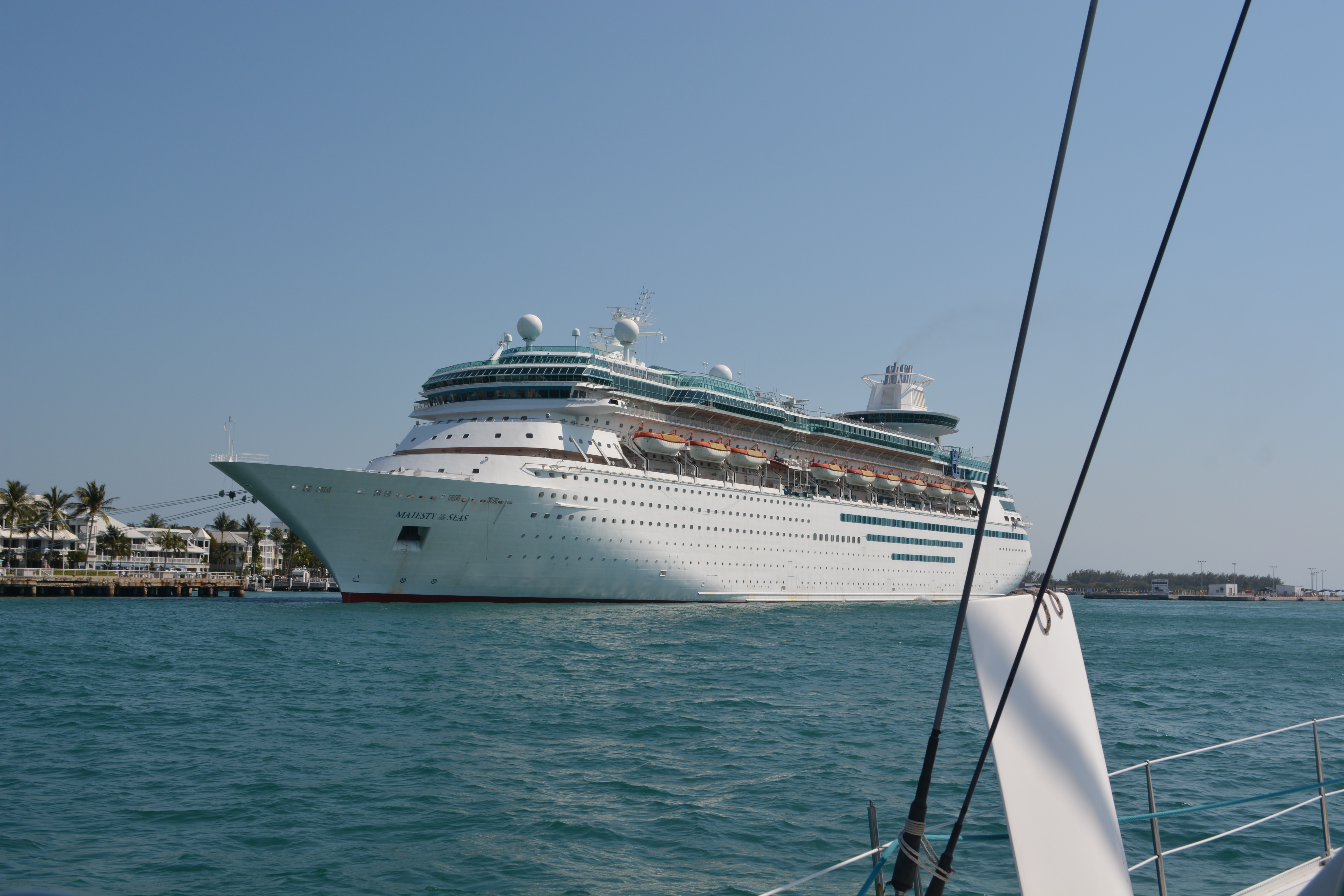
Then after a year and a half it was time for us to head to the strangest land of all…Florida. With the help of  the Gulf Stream giving us an extra 2+ knots push we sailed along at times up to 10-12 knots, making the trip in a speedy 48 hours .  We would have loved to stay in Key West a bit longer, but only had time for a delicious fish dinner and trip to the Hemingway house before a cold front and cruise ship invasion made us zip out and up to Fort Lauderdale and a marina tie up.

polydactyl cats at the Hemingway House

polydactyl cats at the Hemingway House

Beautiful Key West

Beautiful Key West

Pete Hemingway House

Pete Hemingway House

Cruise ship

Our signal to depart

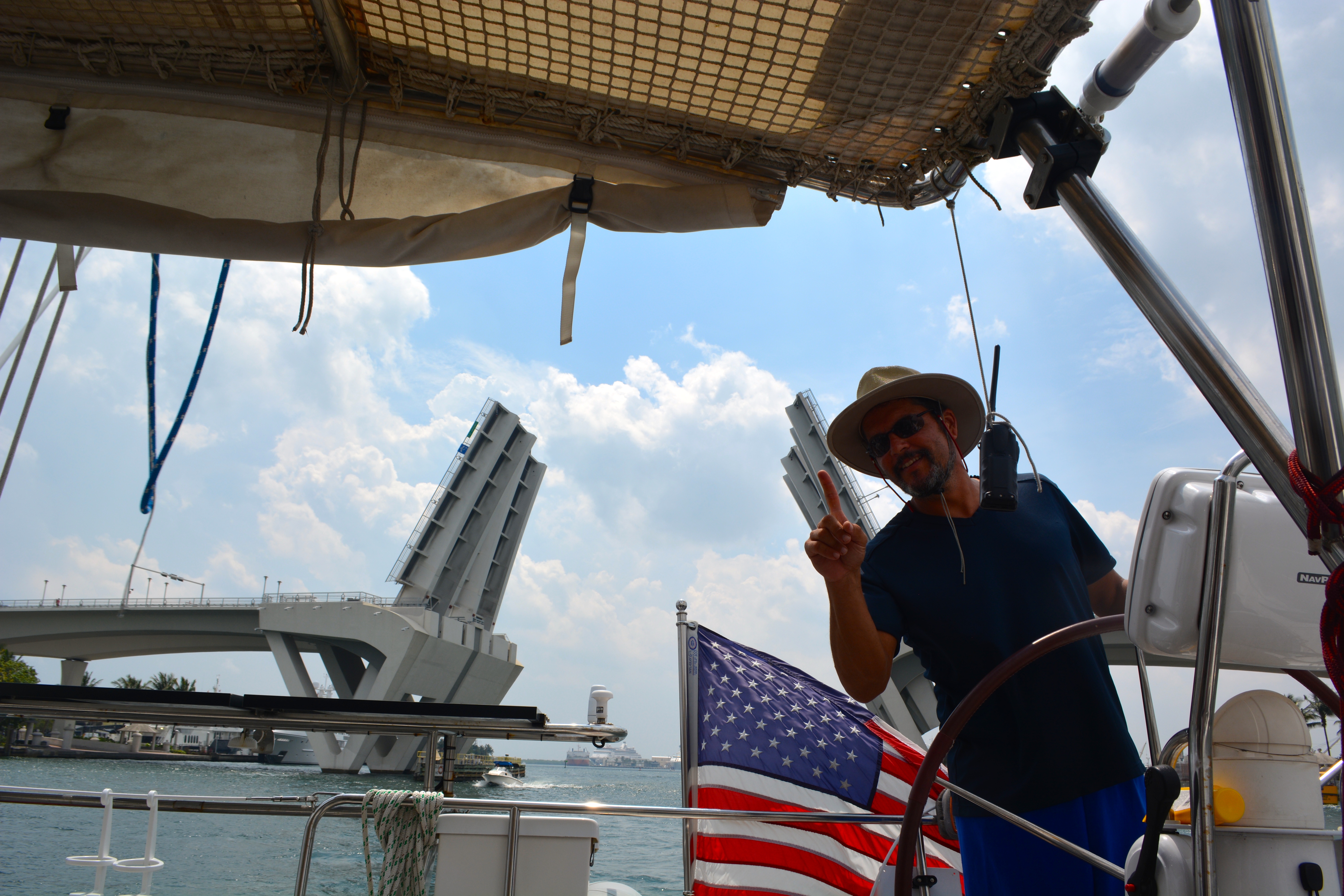
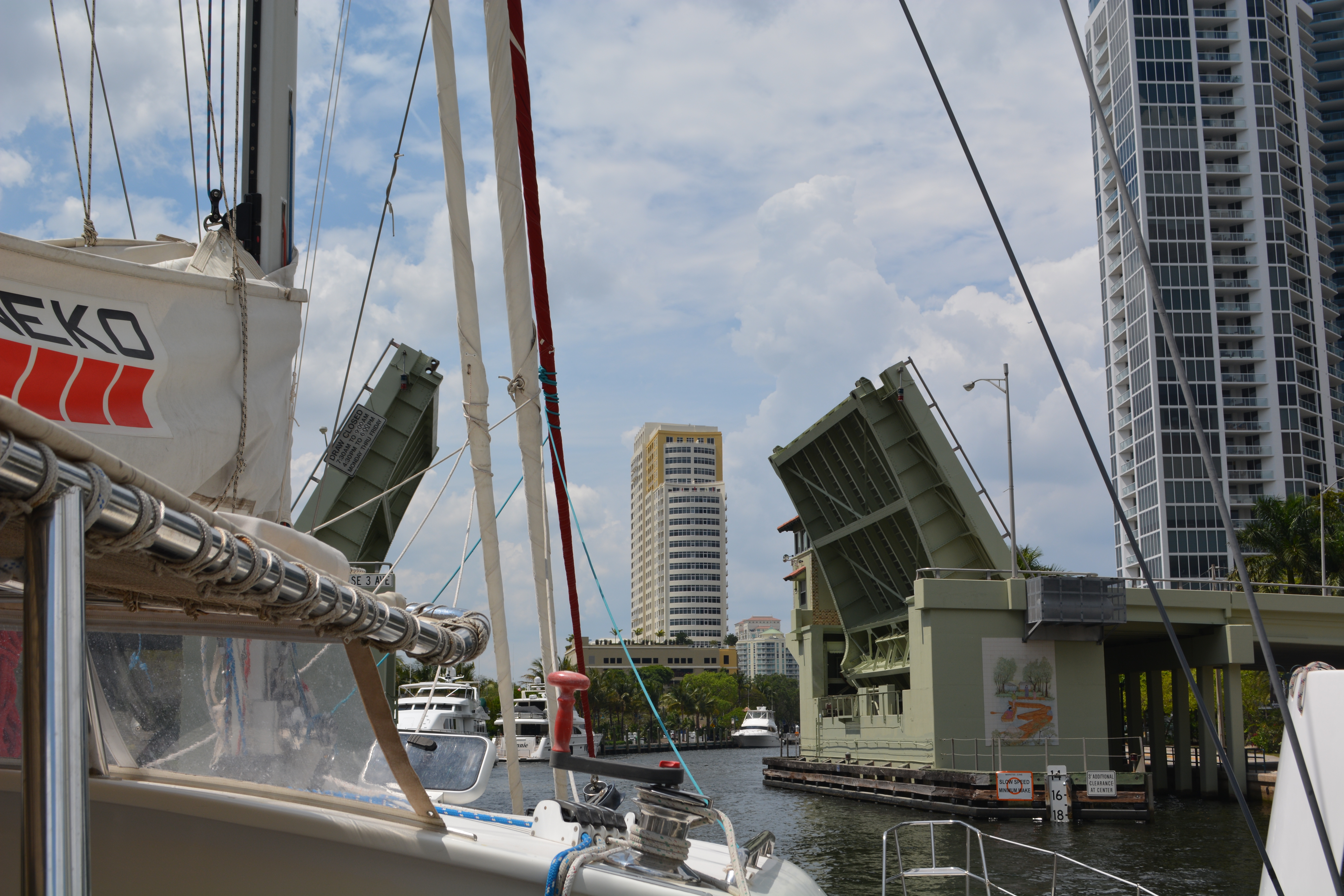
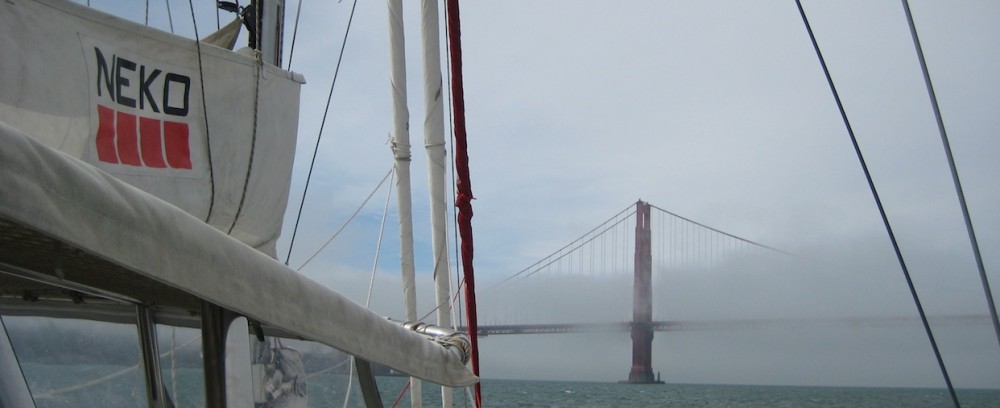
Funny, we left San Francisco under the Golden Gate Bridge and returned to the U.S. under another bridge, this time they had to open up for us to fit under.

Safely through the 17th Street Bridge.  The first of 5 bridges to get to our new home base in Fort Lauderdale for the next month.

Safely through the 17th Street Bridge. The first of 5 bridges to get to our new home base in Fort Lauderdale for the next month.

We left the U.S. under the Golden Gate Bridge and returned 1.5 years later through another.

We left the U.S. under the Golden Gate Bridge and returned 1.5 years later through another.

So after some boat repairs here in boat heaven, a.k.a Fort Lauderdale, visits with family and friends, and trips to Target we will move on to the Bahamas and then, who knows?

Seeing is Belizing

We have been to Belize twice before on charter boats: first in 2001 (when we met and adopted Lucy)

Lucy in 2001

Little Lucy in 2001

and then again in 2010.   Even though I’d love to say that Lucy recognized her homeland, I think we were more excited anthropomorphizing her nostalgic reaction than she was to return.  Honestly the best part is that she is still with us after all these years and we were able to share another great experience with our favorite hound.

Who said you can't go home again?  Looking longingly at the homeland

Who said you can’t go home again? Looking longingly at the homeland.

Belize is bordered by a barrier reef (supposedly the longest one in the northern hemisphere) which only allows entry at certain points.  These can be treacherous and often require passing with the sun clear of clouds and well overhead.  The reason for this is that where the reef is not sticking above the water, it lies only a few feet below and you can only tell it is there from the different color of the water.  In bad light, they are invisible. Charts show shipwrecks dotted along this reef virtually every few miles.  It would be real easy without modern navigation aids to trip right over it.  When Pete and Chris came over from Roatan, they slowed down and had to wait for hours outside the reef for some squalls to pass before the light was good enough for them to see the reef entrance. However, they got inside and anchored in the cute little town of Placencia, where I met back up with them after my sojourn to the Sundance Film Festival.

Tranquil restaurant is a delightful place accessible only by boat (or I guess you could swim)

Tranquil restaurant is a delightful place accessible only by boat (or I guess you could swim)

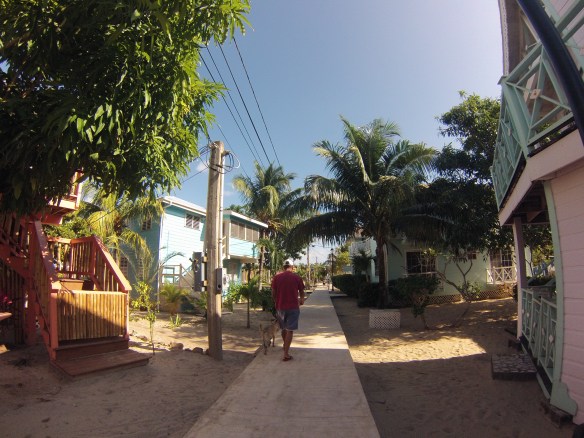
Placencia footpath

Placencia’s footpath guide you around town

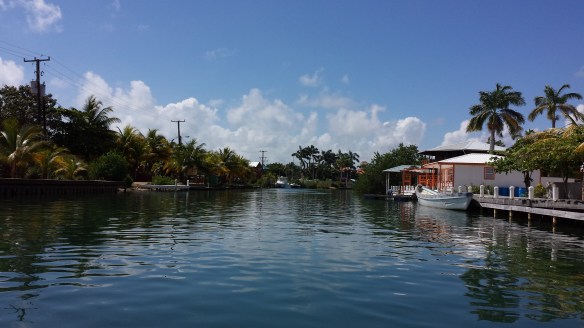
Placencia waterways

Or you can use the waterways

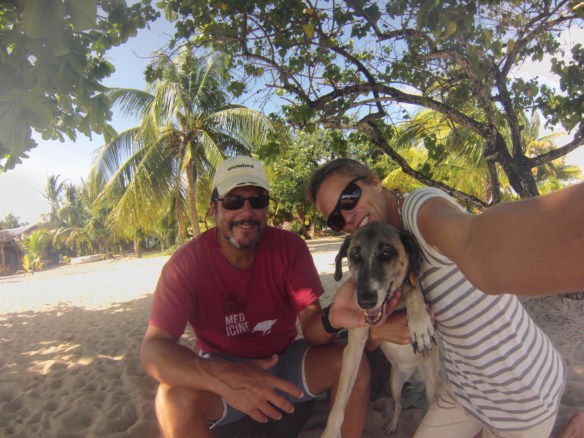
Placencia Selfie

Placencia Selfie

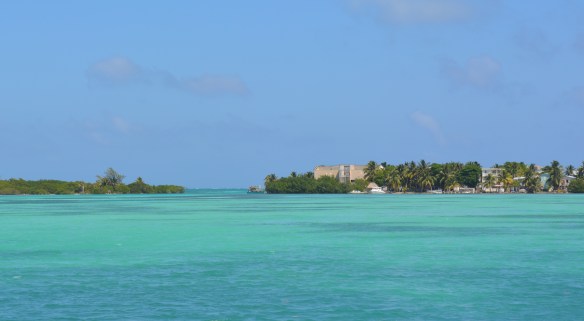
On previous trips to Belize we focused on the northern part of the country so we were thrilled to explore the southern cays, mangroves and the outer atolls.

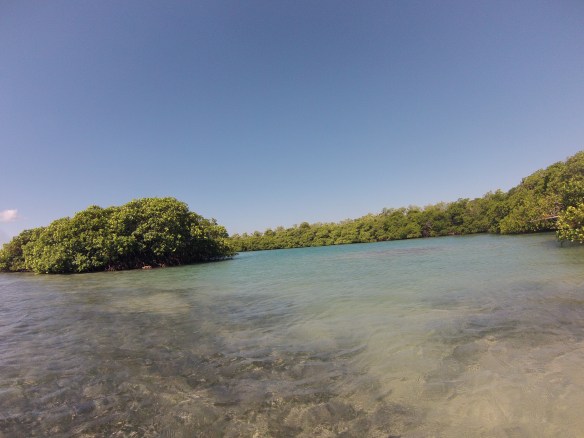
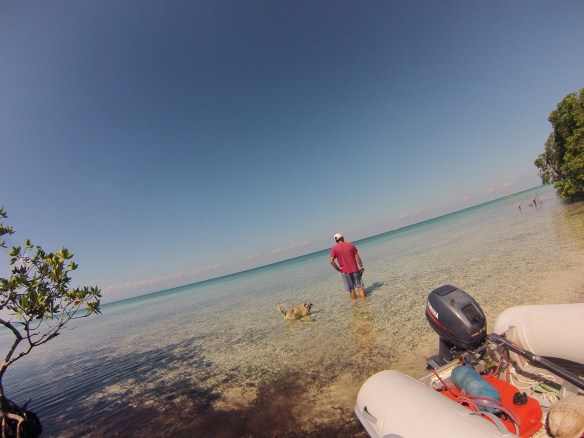
Exploring the mangroves, sadly we didn't have a manatee sighting

Exploring the mangroves, sadly we didn’t have a manatee sighting

DCIM100GOPRO

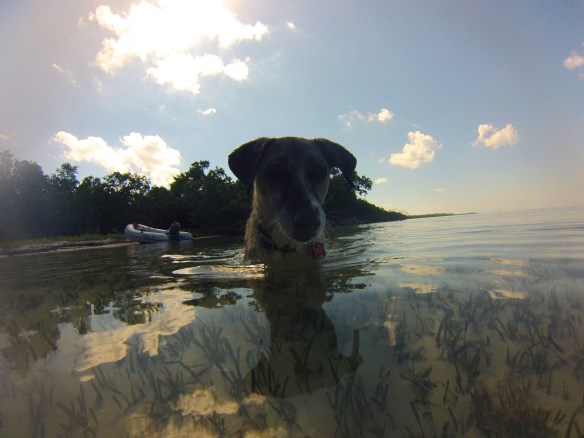
Swim day. Lucy has mysteriously taken to wading out and then swimming a bit without any coaxing from us. This is new behavior.

DCIM100GOPRO

Why, hello dare.

DCIM100GOPRO

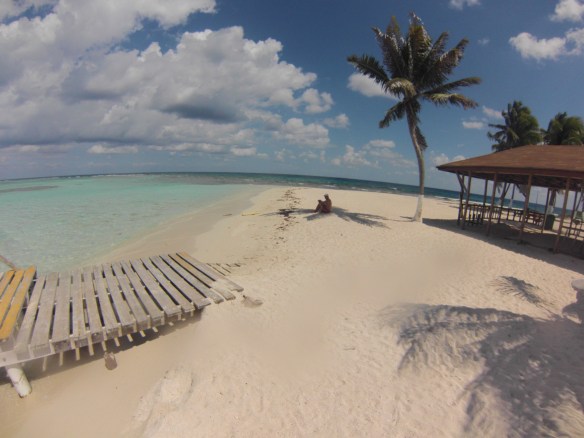
Goff’s Cay. Pete was looking for the Corona and lime from the ad.

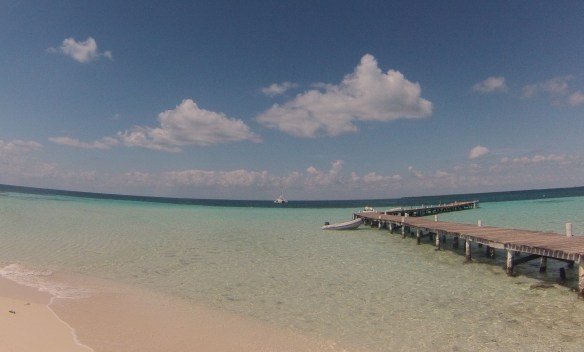
DCIM100GOPRO DCIM100GOPRO(Word of the day ATOLL – a ring-shaped coral reef or a string of closely spaced small coral islands, enclosing or nearly enclosing a shallow lagoon.  You’re welcome cross word puzzle lovers 😉  They lie outside the reef and reaching them requires passing back through the reef.  The waters all around Belize are crystal clear and very shallow.

The water was clear as gin.

The water was clear as gin.

It is a world of difference when you are on a charter boat (think rental car) zipping through the shallow waters of Belize without a second thought compared to gingerly putting along in your own boat through the shallows praying you won’t run aground.  We draw 4′ and at times we were uncomfortably close to the bottom.

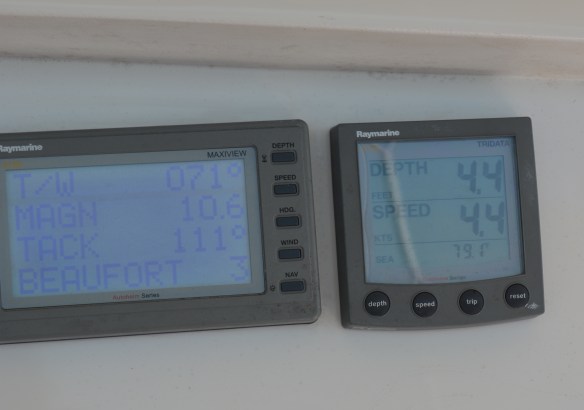
It is slow going when you draw 4 feet and the depth finder reads 4.4

It is slow going when you draw 4 feet and the depth finder reads 4.4

After our rock encounter in Panama, we were at first a little gun-shy.  But the bottom is mostly sand and the few coral heads that do stick up are easy to spot.

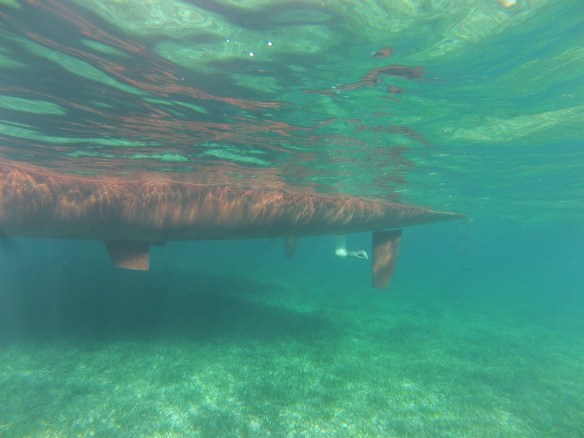
Yes that is the bottom of Neko and yes that is the bottom of the sea.

Yes that is the bottom of Neko lying feet off the bottom.

After a few weeks of this dance, we were considering 8′ really deep water.  Back in California we would have had a fit if we strayed into 8′ deep water. The Belize atolls are delightfully remote and populated only by quirky little dive- or eco-resorts where everything is shipped in by boat.

clear water Belize

clear water Belize

Neko and Pegasus enjoying a romantic sunset

Neko and Pegasus enjoying an atoll sunset

James and Charlotte from Pegasus

James and Charlotte from Pegasus

Glover

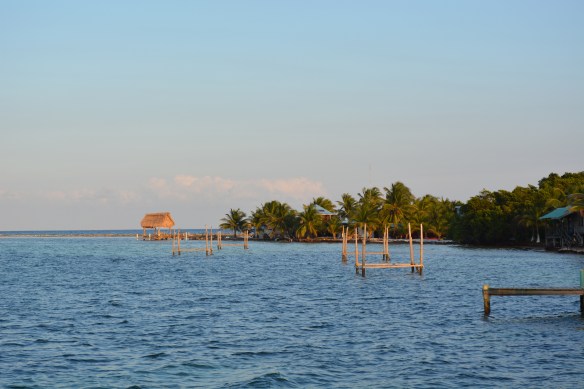
Glover’s Reef with odd stick structures.

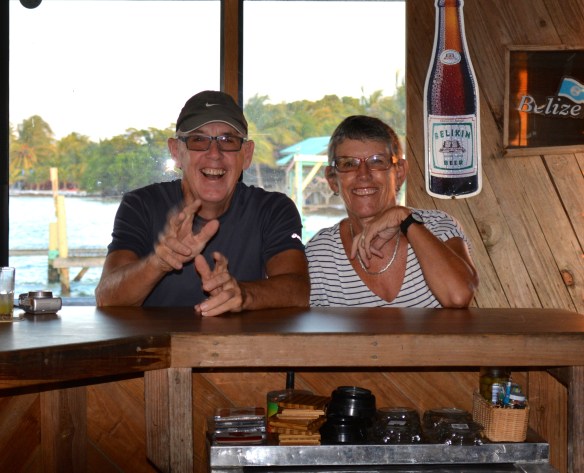
Pete and Lucy at Marisol Bar

Lucy never passes up a happy hour


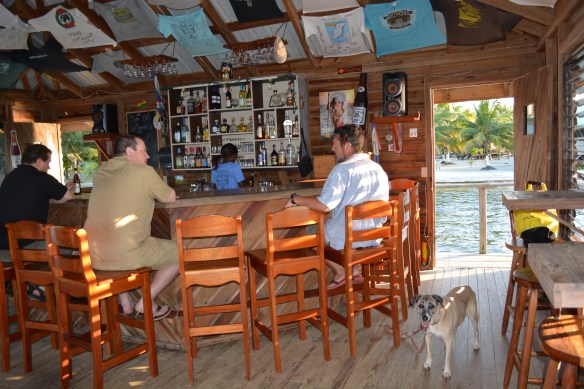
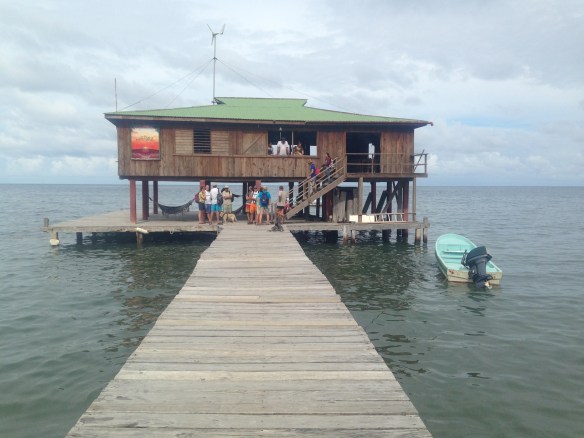
Nothing better than a bar at the end of a dock

Nothing better than a bar at the end of a dock

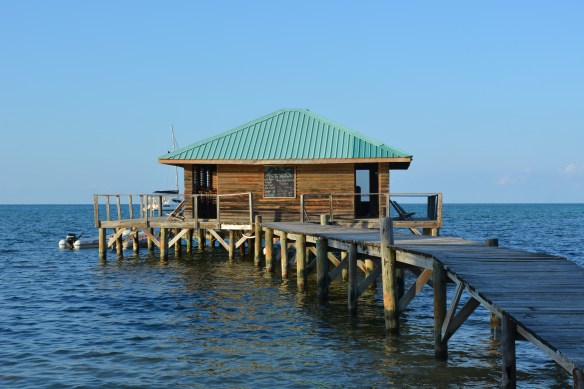
Your room awaits you

Your room awaits you

We continued our diving adventures with our pals Charlotte and James on Pegasus at Glovers’ Reef and Turneffe Atoll.  The water in Belize is beautifully clear and full of coral and sea life.

Sea Hunt

Sea Hunt

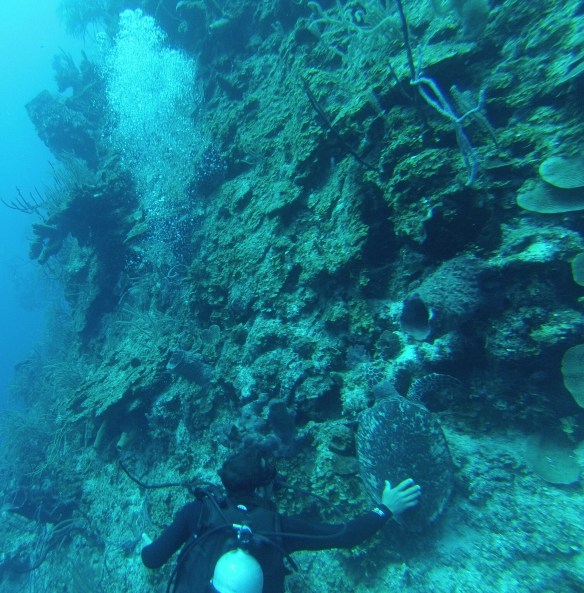
Pete's new pal

Don’t touch that turtle!

Rollin' in the deep

Rollin’ in the deep

Mary and Peter Scuba II

I still can’t believe I’m doing this

Diving "The Crack" at Glover.  One at a time please

Diving “The Crack” at Glover.   Yes, this is the way up and out…WTF

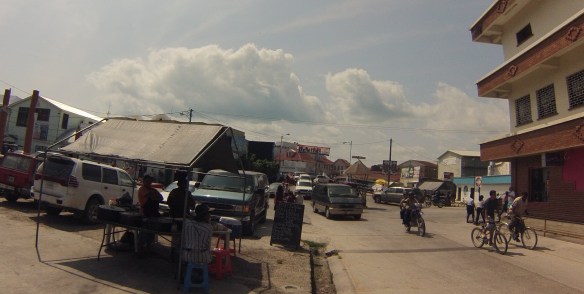
We had a blast but a norther (strong wind from the north) was threatening and these islands do not have safe places to anchor with protection from north winds.  So we hustled back inside the barrier reef and ducked into the Cucumber Beach Marina to wait it out.  For our fellow boaters, this marina is well protected and a good place to pick up/drop off visitors at the airport.  Belize City itself is worth a look if you are there but I wouldn’t make a special trip.  But check out of the country there was fast and simple.

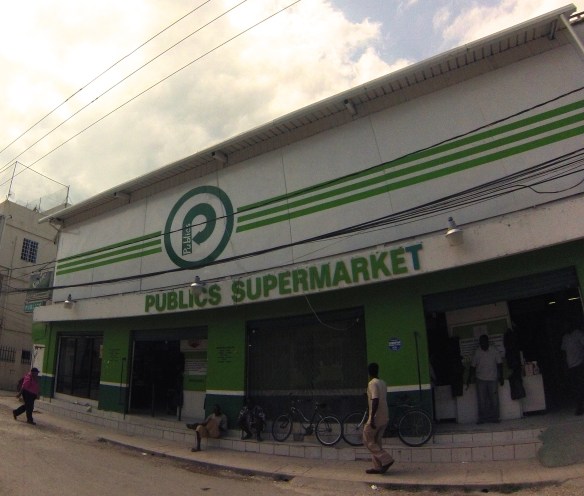
Belize City

Belize City

Ice cream stop

Ice cream stop

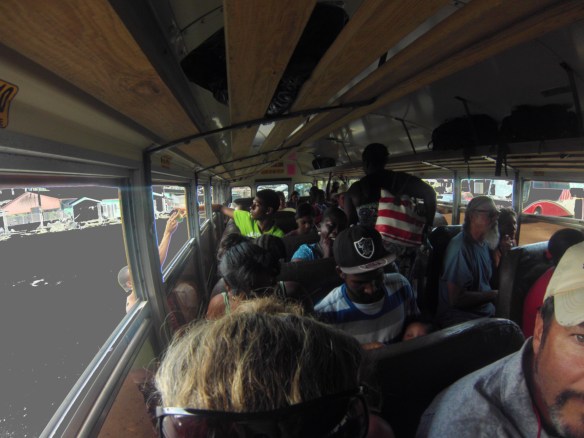
Local bus to Belize City

Local bus to Belize City

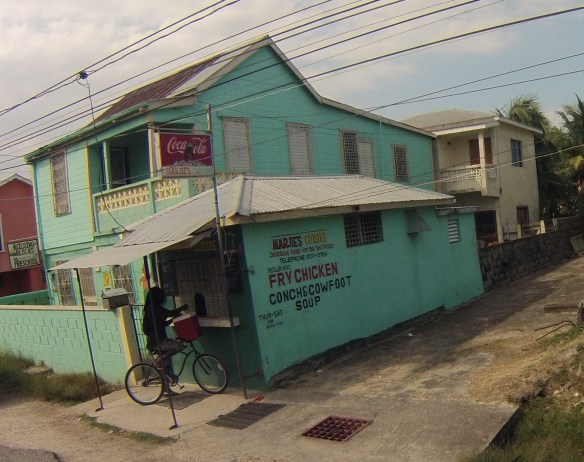
I passed on the cow foot soup

DCIM100GOPRO

Lighthouse named for a guy who paid for it but never set foot in Belize City

DCIM100GOPRO

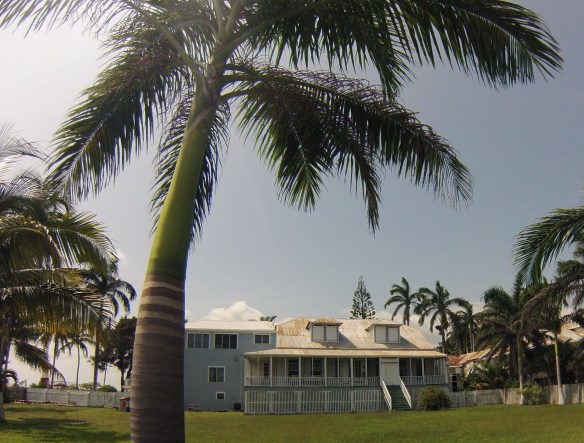
Florida? Could be, but its Belize City.

DCIM100GOPRO

Belizean Venice? Not really…


For my Florida friends...I think there might be a trademark law suit here LOL

For my Florida friends…I think there might be a trademark law suit here LOL

From here on we were back in familiar territory and didn’t spend too much more time.  We couldn’t pass up a stop at Caye Caulker, an island with no cars, but loads of rastas, hippies and young people out exploring the world.  Its a fun stop and we spent about a week there.

DSC_0271 DSC_0272

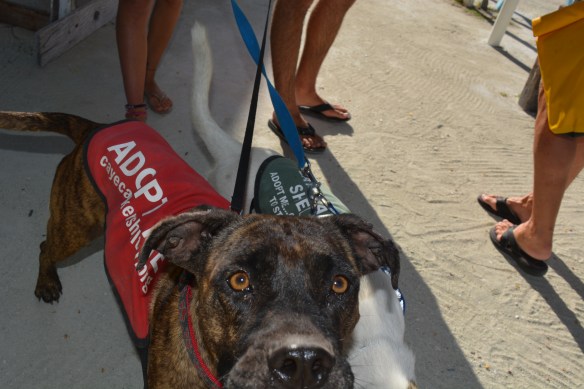
Happy to see a rescue dog program in place

Happy to see a rescue dog program in place

DSC_0303

Use your best island accent to figure this one out


Rasta bar

Rasta bar

DSC_0288

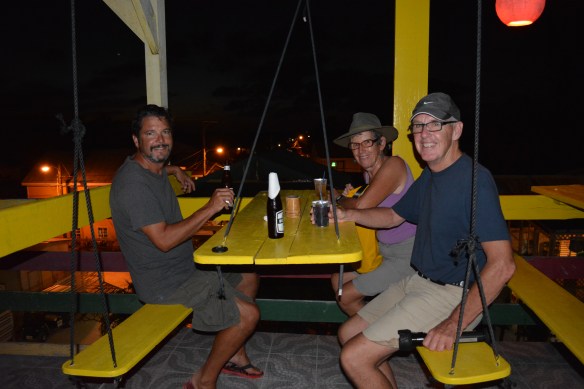
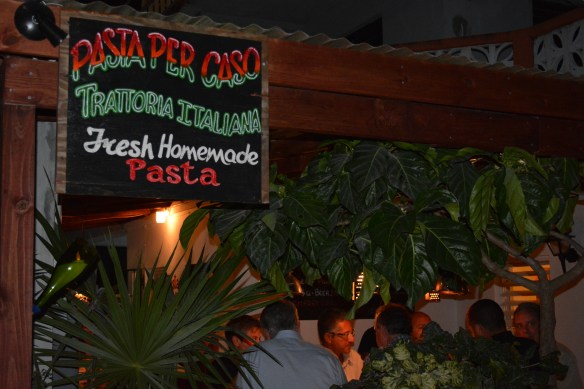
Eat here it is fantastic Italian!

Eat here it is fantastic Italian!

DSC_0268Then it was out another reef cut into the ocean for our return to Mexico, this time Caribbean side.

DSC_0252

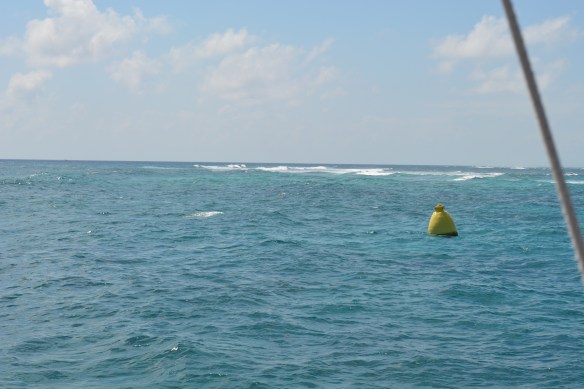
Leave the yellow buoy to starboard (hope its where its supposed to be), turn left, don’t hit the rocks.

P1070340

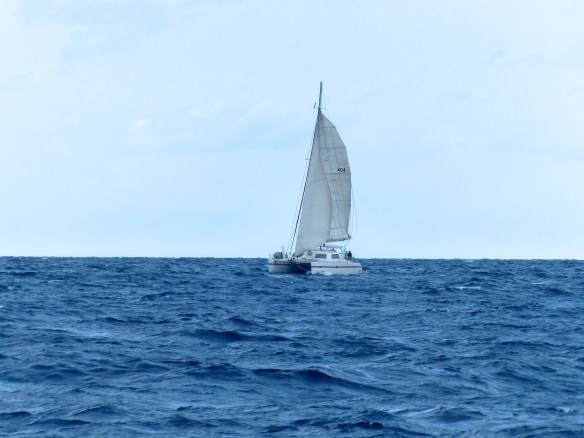
Reefed down on the way up to the next stop, Mexico.


Honduras – Easy Come, Not So Easy Go

Our little fleet of 3 sailboats (Neko, R&R Kedger, Second Wind) and 1 trawler (Pegasus) all departed Providencia for the Bay Islands of Honduras in the dark wee hours of January 13th.

Providencia anchorage

Providencia anchorage

We had one of the best sails of our career going 350 miles over the top of Nicaragua through little-travelled waters rumored to harbor pirates and drug runners.  However, we only saw an occasional fishing boat or distant cargo ship and our little fleet was able to make radio contact with one another at times.  We turned off the engines just outside Providencia and didn’t turn them back on again until we approached Guanaja, Honduras, 2 nights, 3 days later.  We were making over 10 knots during the days and, even though we slowed down to 5 or 6 at night to get safely through the badly-charted, reef-strewn waters, we still had to slow down to a crawl at the end to be sure to make our final arrival in daylight.  We are now in the land of uncharted coral reefs and need sun up in the sky to see and avoid them as we approach land.

20150117_075407_IMG_7656

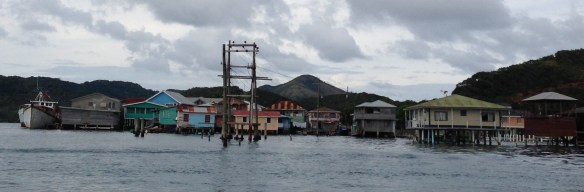
Neko at anchor. That isn’t another boat in front of us it is a hotel built on a rock.

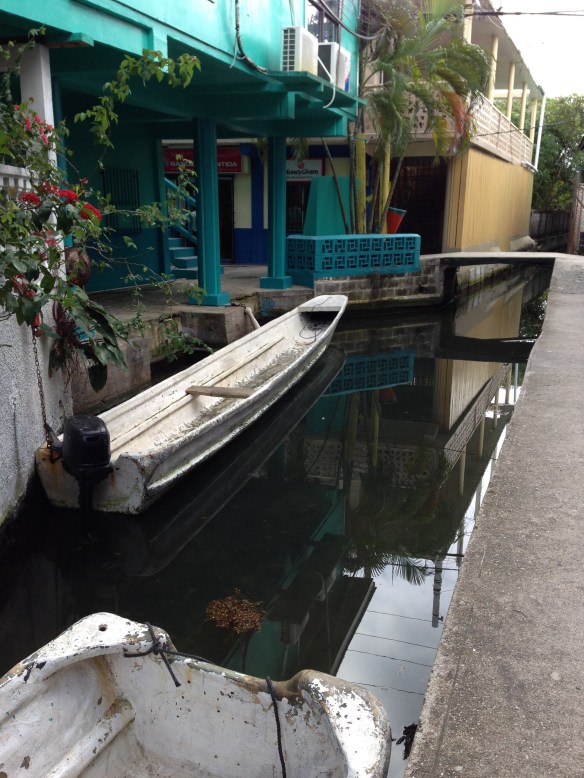
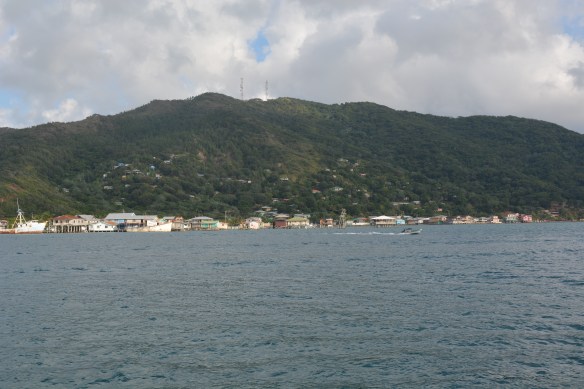
Guanaja is the furthest east of Honduras’s bay islands.  It is an interesting place where almost all of the population resides on a tiny island in the larger island’s lagoon. IMG_7277 IMG_7278Bonacca town is really two islands long since connected by the construction of buildings, canals, bridges and other things.  It is chock-a-block with small huts and the streets are for walking only.  It has canals cutting through it where locals transport stuff by small boat.

Bonacca canals

Bonacca canals

It can be a little tough – one local told us a way for some to make a little cash is to find floating bales of cocaine and sell them to … someone … for $10,000 a bale.  After questioning a number of locals it turns out this is a new distribution model for drug runners.  Apparently, the USCG patrols the waters of the Bay Islands fairly thoroughly looking for drugs, but not so much the waters closer to Nicaragua that we had just traversed.  There is a fairly steady current running west through those waters along Honduras through the Bay Islands toward Guatemala and Belize.  The drug runners have hit upon the tactic of dumping a lot of bales of coke over in these waters and letting the current take them west.  Locals know that they can find these bales and “sell” them to people who want them.  Surely a number of bales get lost or picked up by authorities, but this method ensures some predictable number get through (as opposed to the cost and disruption of having one large shipment get caught) and entails some cost in buying the bales back from locals (although they are worth a lot more than $10,000, the locals seem to understand they get what they get).  Anyway it was an interesting look at the cat and mouse game being played down here in the illegal drug industry.

Back to Guanaja.  While most of the inhabitants live on this tiny island, the mountainous mainland is sparsely populated.

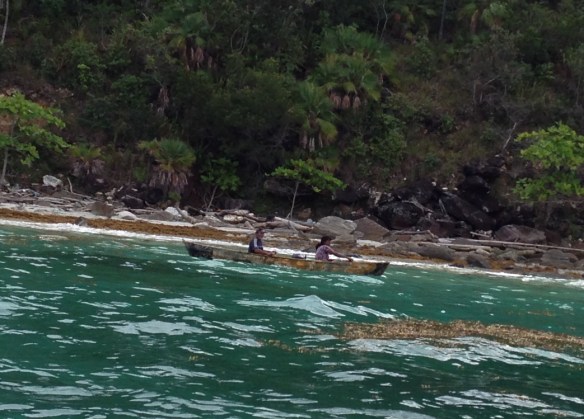
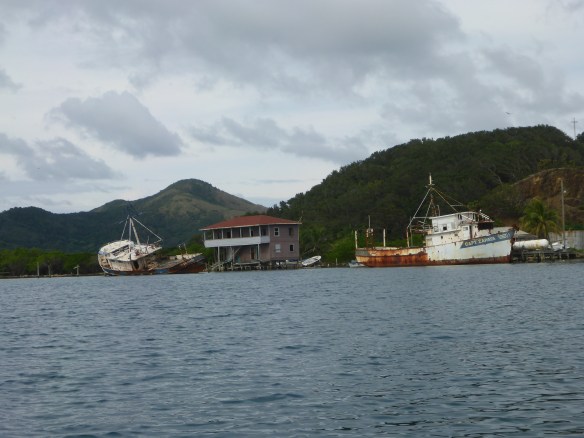
GuanajaIt has one tiny road and several cars, but the vast majority of people get around by boat.  From sizeable ferries to one-man dugout canoes, there is a bewildering variety of boats plying these waters and rotting in the mangroves ashore.

Local travel

Local travel

These boats have seen better days

These boats have seen better days

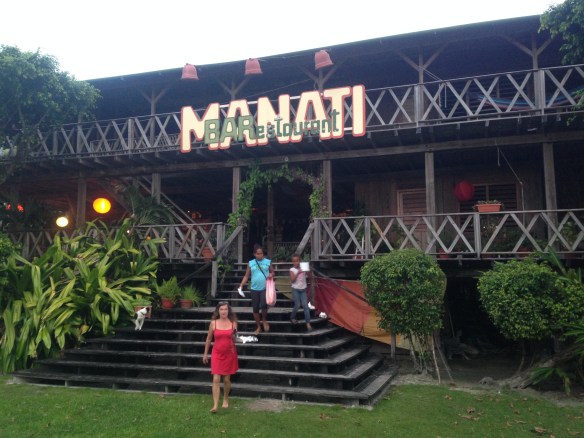
One of our favorite stops ashore was Manati, a beautiful restaurant run by German ex-pats.  How odd to find good, solid German food and cold weissbier in tall glasses in such a remote place, but we were hooked.  Manati’s owners, Klaus and Annette, really make you feel welcome.

20150118_172901_IMG_7836 DSC_0049 DSC_0052 DSC_0041

Klaus and Annette, the über friendly owner's of Manati

Annette and Klaus, the über friendly owner’s of Manati

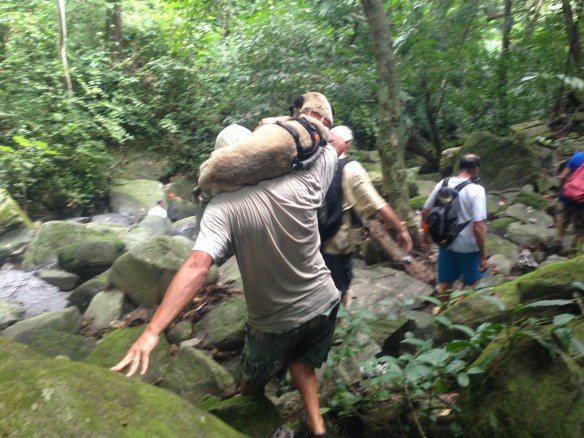
DSC_0025 DSC_0035 Their son, Roland, operates a local B&B but also runs tours on the island.  He took us on a hike to see a waterfall on the sparsely populated windward side.  Guanaja has abundant spring water and this creek and waterfall apparently flow year round.

Our fun loving hiking guide Roland

Our fun loving hiking guide Roland

It was a little more strenuous than we expected.

It was a little more strenuous than we expected.

DCIM120GOPRO DCIM120GOPRO

Lord of the Rings set?

Lord of the Rings set?

Lucy getting a little help from Pete

Lucy getting a little help from Pete

Nice lunch at Green Flash after our hike

Nice lunch at Green Flash after our hike

Worn out from the hike

Worn out from the hike

After about a week, we sailed from Guanaja to Roatan, the largest of Honduras’s islands. Roatan is a much more touristy island. We stayed a week or so at Fantasy Island Marina, where Lucy was constantly harassed by three local monkeys.  We even caught one on our boat one morning and Lucy and I chased it off, barking and yelling.  There were also roosters strutting around, unafraid of the dog, and agoutis, small delicious-looking (at least to a dog) rodents, scampering all over.

This place was too much stimulus for Lucy and we had to get out.  So swapping Mary, who flew out to Utah for Sundance and a stop in Texas, for my brother Chris, we set about leaving Roatan for Belize.

I would miss Mary, but what a treat to have Chris aboard for a while.  He is our first stateside guest since California.  We hope to have many more as we are now in accessible waters with good weather.

Ahoy Chris!

Ahoy Chris!

Checking into and out of countries is often a tiresome exercise in redundant paperwork, cab travel or walking, inscrutable fees, and sometimes mordida (small bribes).  It can be a delightful look into local culture or a ridiculous waste of time.  We were admitted to Honduras in Guanaja with an expired Coast Guard documentation certificate.  This is not a big deal and we had used it in a few other countries.  This certificate is renewed each year and it is sometimes difficult to get it to us on the boat.  Anyway, when we went to check out, the port captain in Roatan, who deals more often with cruise ships than small boats and clearly enjoys exercising his authority, treated us like criminals.  He confiscated our paperwork, told us the boat was impounded and not to move it and demanded a new, original version of the document before he would allow us to leave.  $40 slipped into our passports and put on the table did not move him at all.   When I told him there was no way we could get an original of the document sent to us here in any reasonable time, he said to get a letter from the Coast Guard explaining that a copy would suffice.  When I told him I doubted this could be arranged, he said he had received such letters in the past.  I did not believe him and after I spoke to the Coast Guard the next day it was confirmed as a lie when I was told the Coast Guard do not write such letters.  We were really worried we’d be stuck in Honduras for weeks arranging to get a new certificate mailed to Mary’s folks in the US and then somehow shipped to us here.  We even researched just leaving without exit papers and making the 1100 mile trip directly back to Key West.

Cruisers hangout Roatan

Cruisers hangout Roatan,

However, the U.S. Coast Guard is an efficient outfit and, for a small fee and our statement that we were impounded in Honduras, they expedited the renewal of our certificate.  It actually arrived by email within an hour of my contacting them by phone and submitting the paperwork.  How’s that for a government agency that actually functions!?  I didn’t have my letter but the certificate did have on it a legend stating that it was a certified copy of the original.  Now I just had to convince the little Napolean in the port captain’s office to accept it.  What a relief it was when Chris and I went back and there was a different officer there and he accepted the paperwork without question and processed our departure papers.  We hurried back to cast off the lines and leave ASAP.

adios Honduras

adios Honduras

We’re PRO Providencia!

Ok, get your maps out boys and girls because we are about to have a geography lesson.   Before this cruising life, we hadn’t even heard of many of the places we have visited and now we feel like we could at least win the $300 question in the “Where In the World?” category on Jeopardy Latin America.

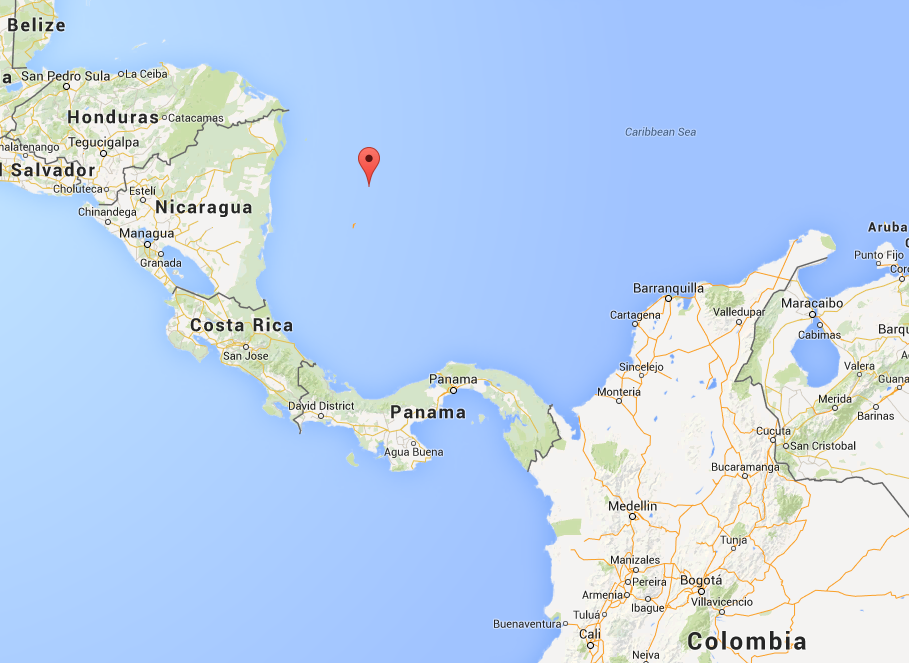
That red marker is Providencia

That red marker is Providencia

Our latest stop was the Colombian island of Providencia.   Near Colombia?  Oh no, my friend it is 380 nautical miles west of Colombia in the middle of the Caribbean Sea.  It is actually closer to Nicaragua (140 nm off that barren coast) and a world away from the all-inclusive tropical resorts found throughout the Caribbean.

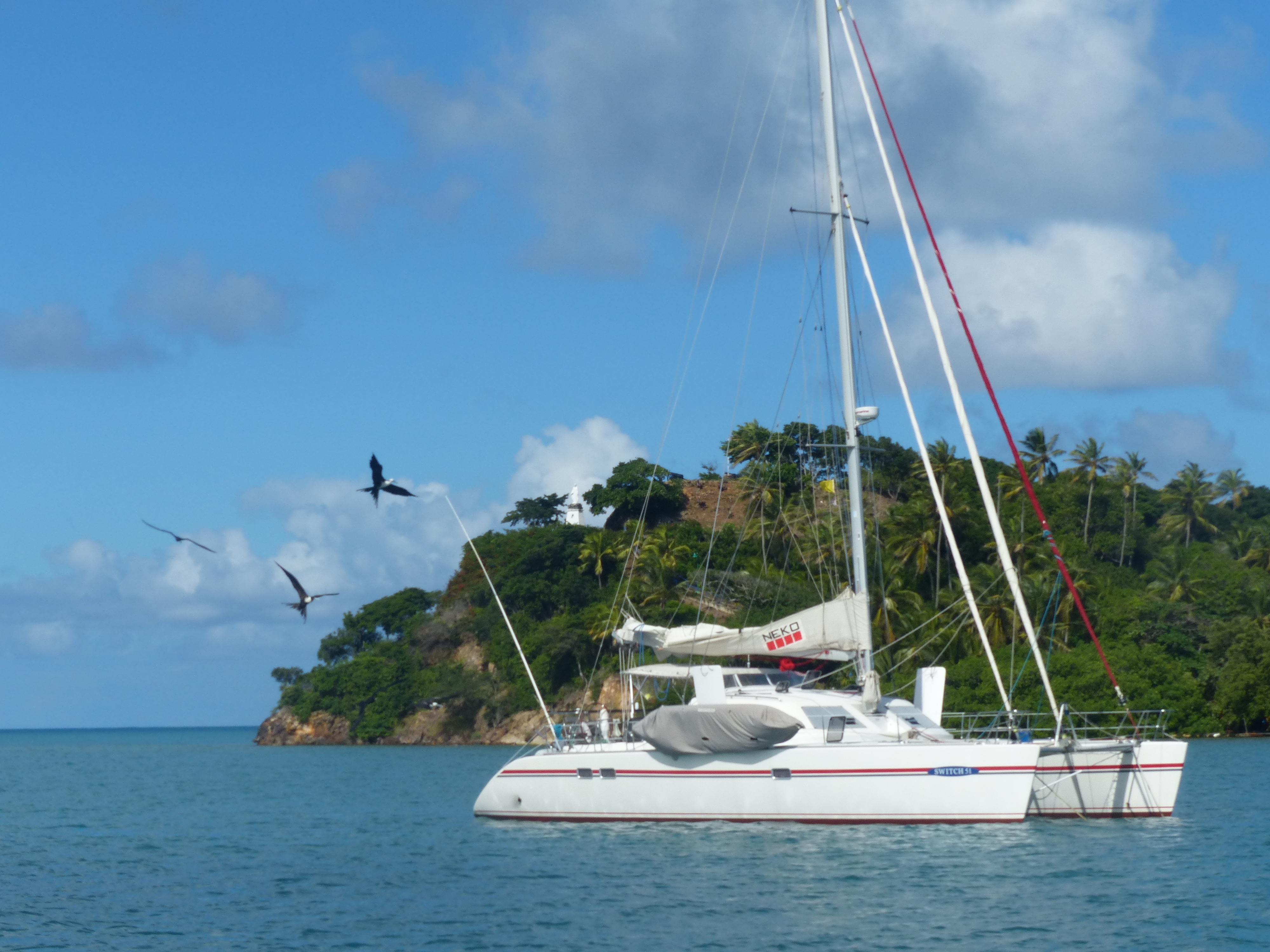
Neko anchored in Providencia

Neko anchored in Providencia with frigates circling

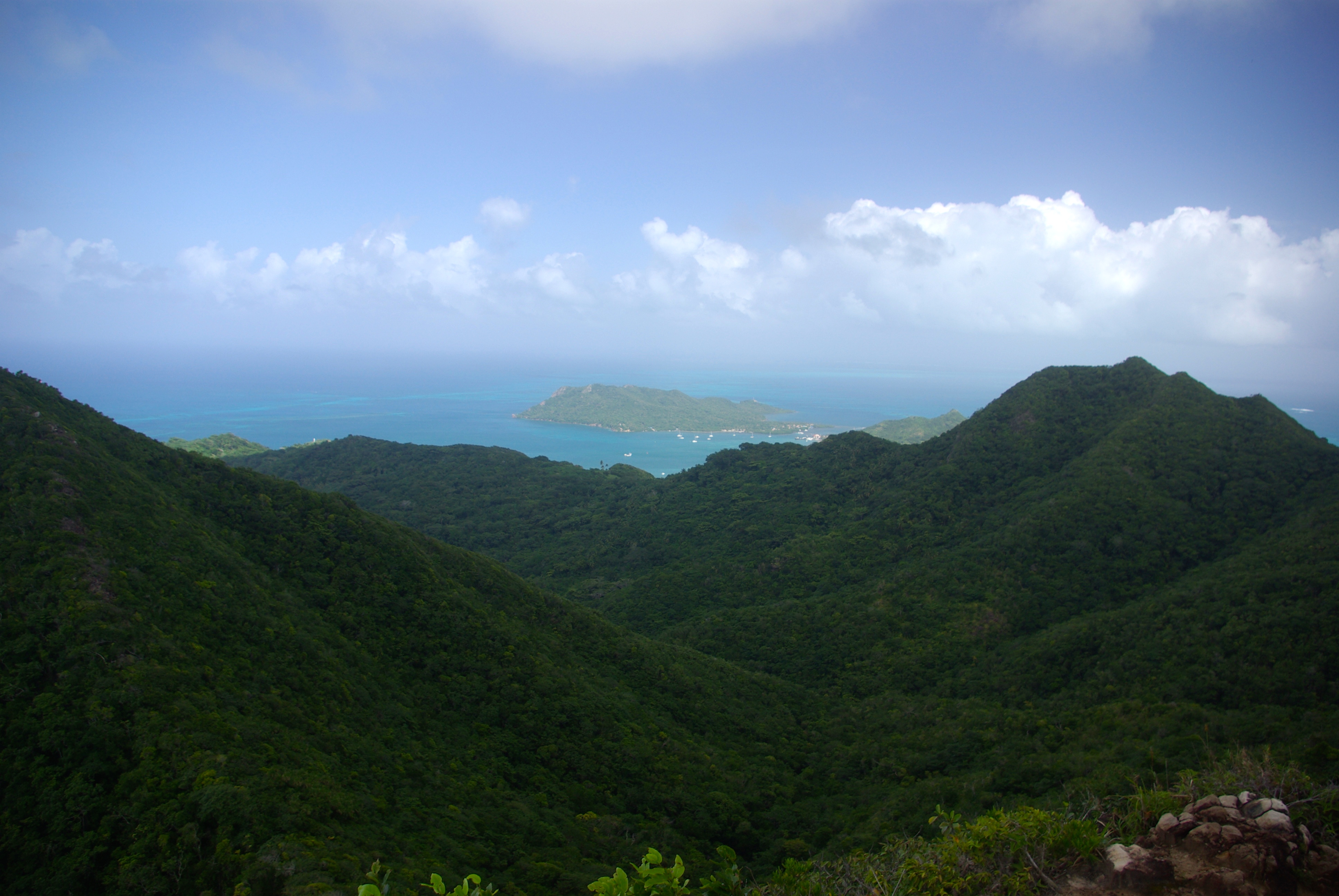
Neko way down there

This fantastic vista was our reward for hiking 360 meters to the top of”The Peak”, the island’s highest point.   One of those white dots out there, probably the one uppermost and furthest left, is Neko.

Tourism is very low-key here and the island is pleasantly geared toward merely sustaining the slow-paced lives of the locals.  This we’ve discovered is the common theme to our favorite stops.

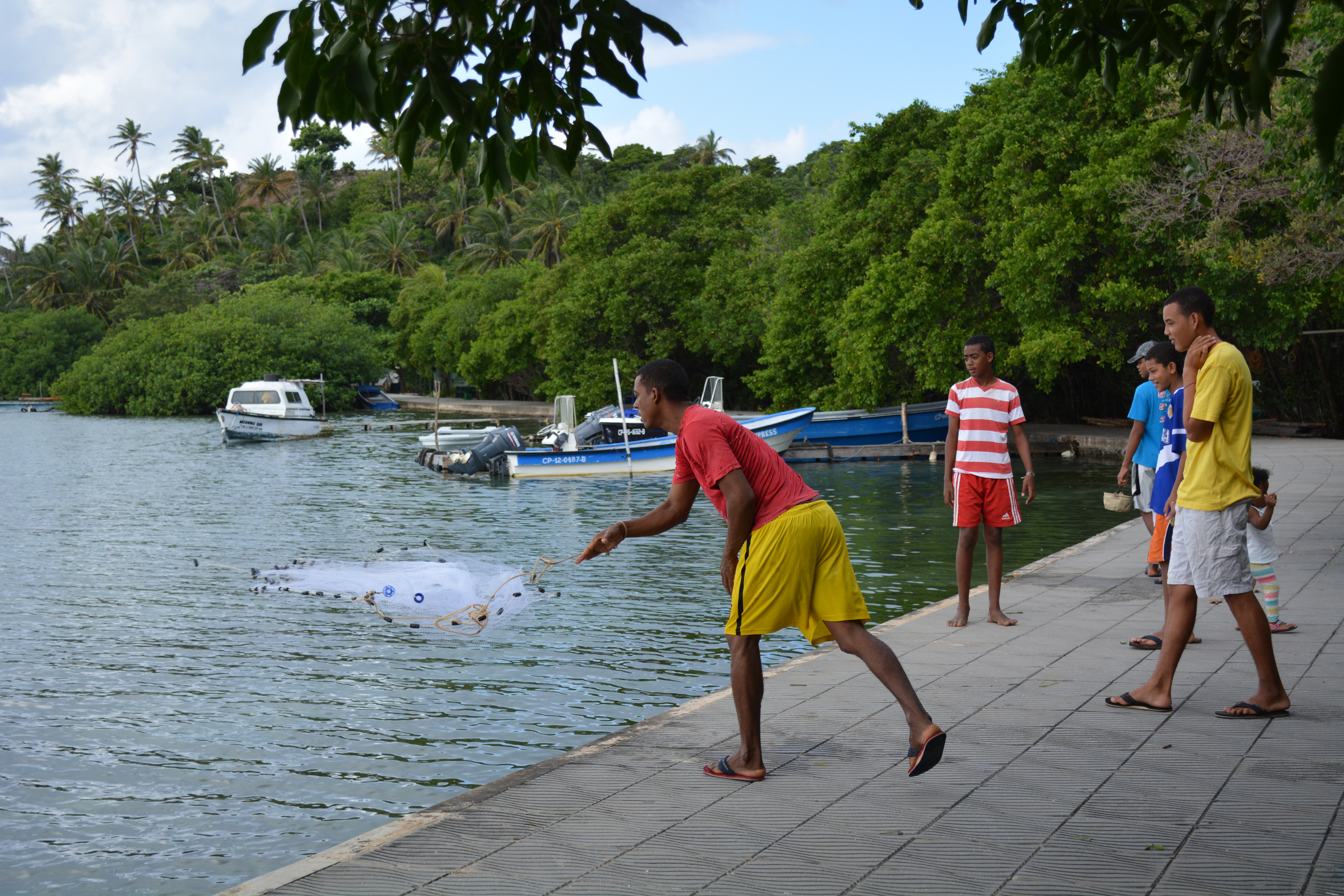
Expert net throwing

Expert net throwing

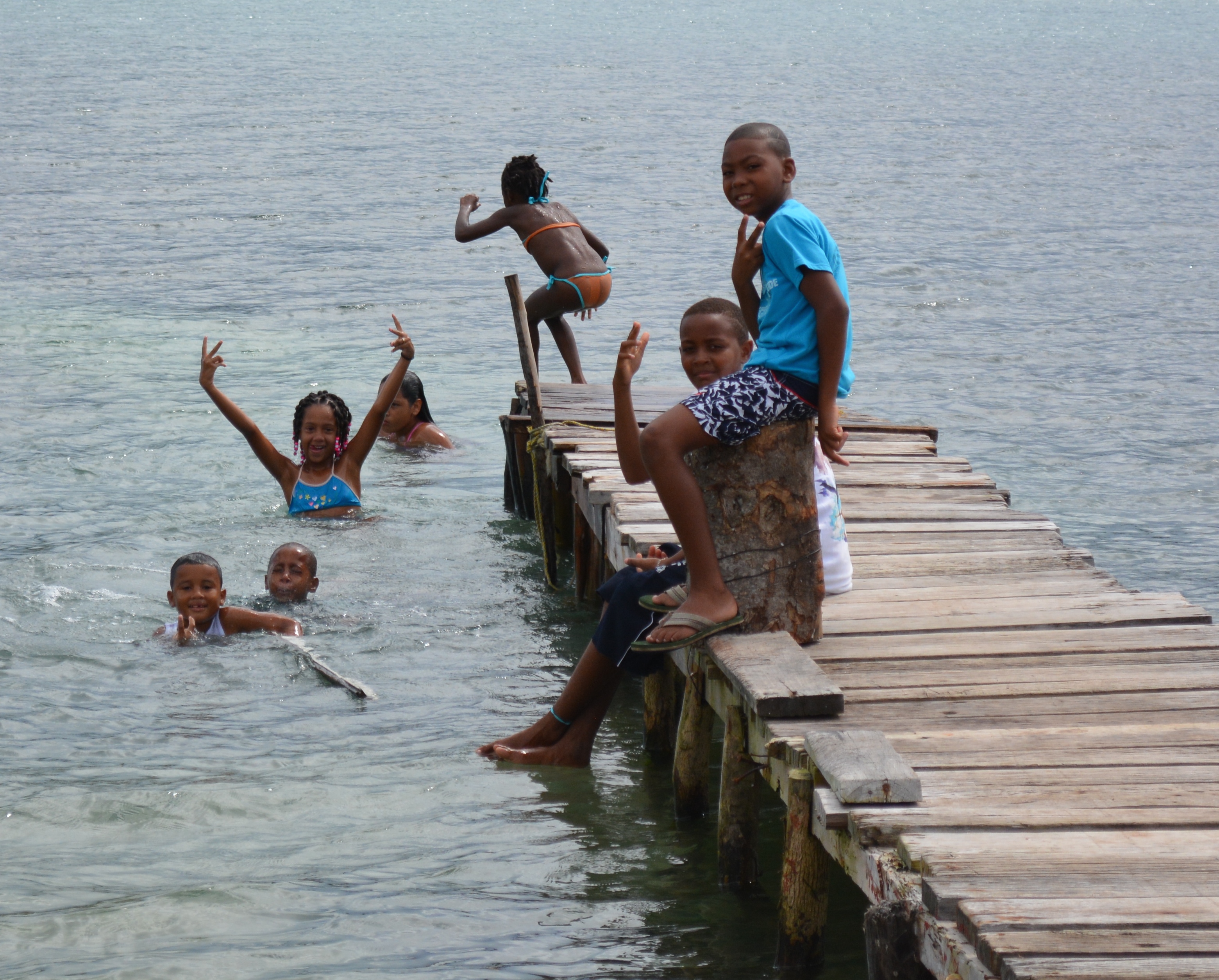
Local children enjoying a swim

Local children enjoying a swim

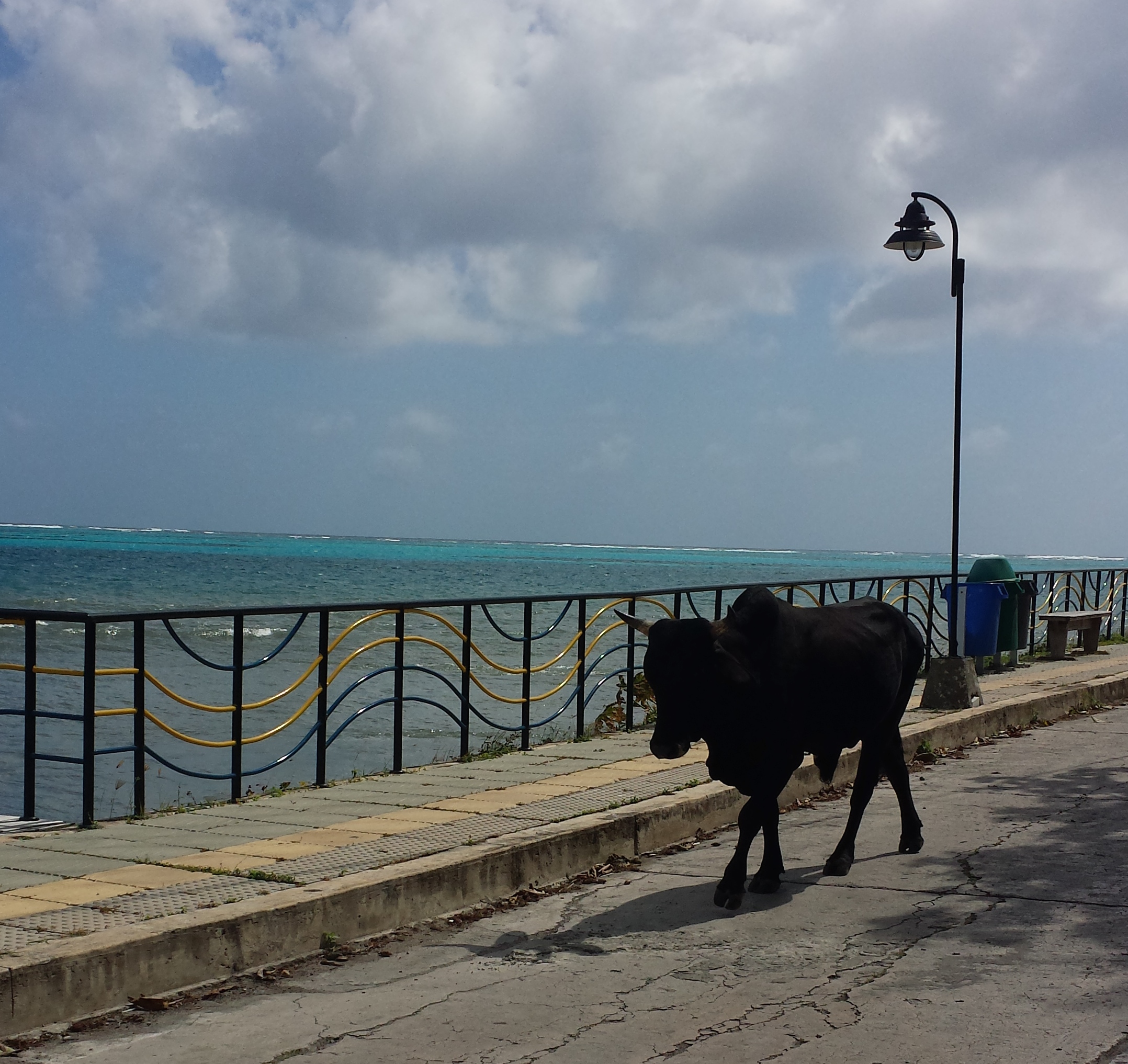
Just out for his morning stroll

Just out for his morning stroll

With a population of just over 5,000 it is small enough where everyone seems to know each other and accordingly there is little crime.  Think of it, if everyone is going to know you did it and you live on an island hundreds of miles from any escape route, what kind of life of crime can you really lead?

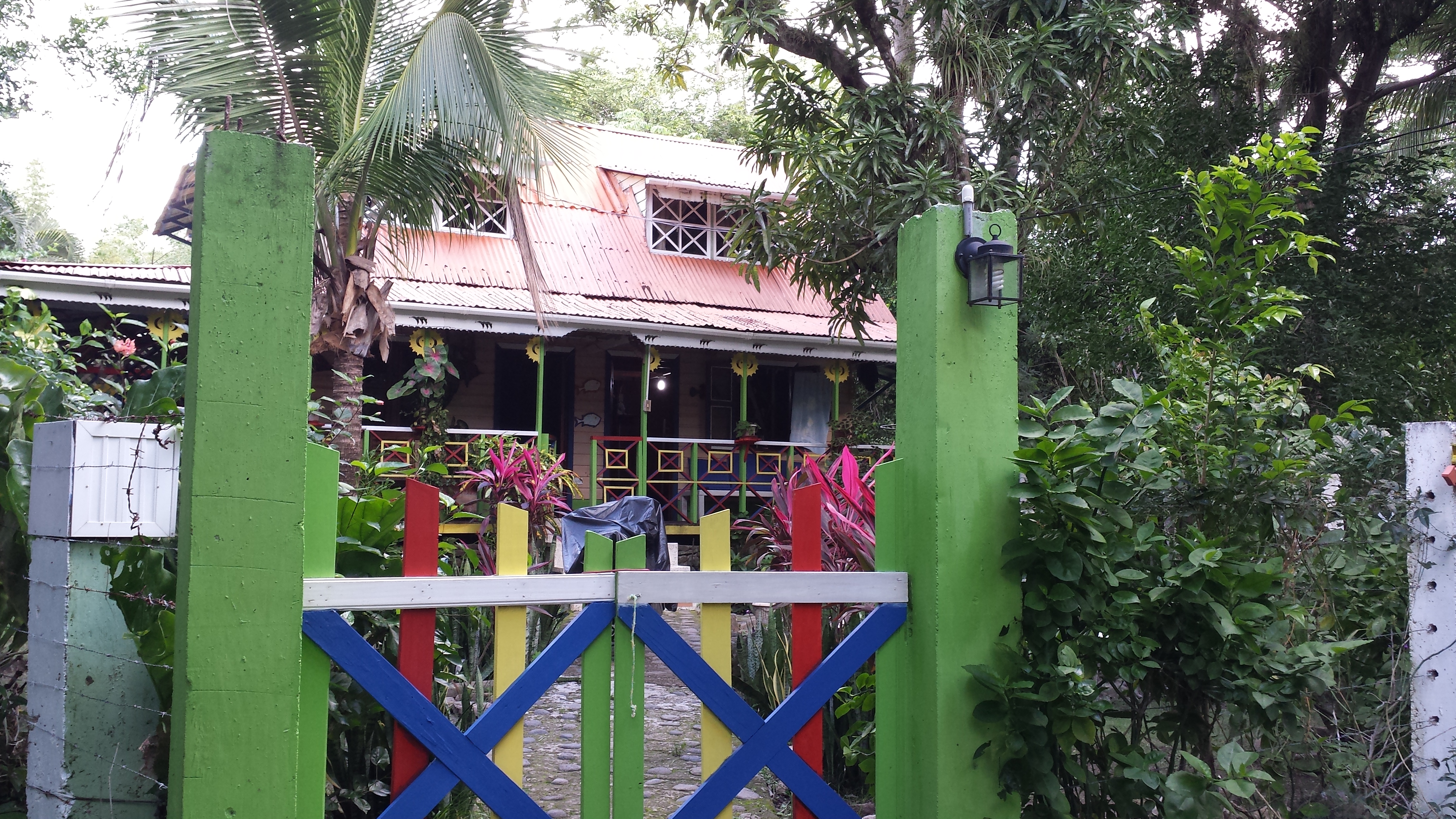
Local house

House in the section of the island called “Bottom House”.

The locals speak Spanish but they seem more akin to Jamaicans than Colombians.  Their preferred mode of communication is a rhythmic patois with more English than Spanish but with words truncated making it very difficult for outsiders to comprehend.  In fact, one of the Mr. Bushes on the island (anonymity protected as certain names dominate on the island – there are more Bushes or Hawkinses than you can count) told us that its purpose was so pure Spanish or English speakers could not understand it.   But its rhythm makes it a delight to hear.   (double click photos to see full size)

There are only a handful of cars and trucks on the island and everyone seems to get around on a scooter, small motor bike or mule (sort of like a 4-wheel ATV).  They are world champions in carrying people and items on bikes – we never saw 5 to a bike, but 4 persons on one scooter is routine.

We arrived a week before Christmas planning to ring in the new year and be on our way, but Mother Nature is a tough travel agent and had a different schedule in mind.

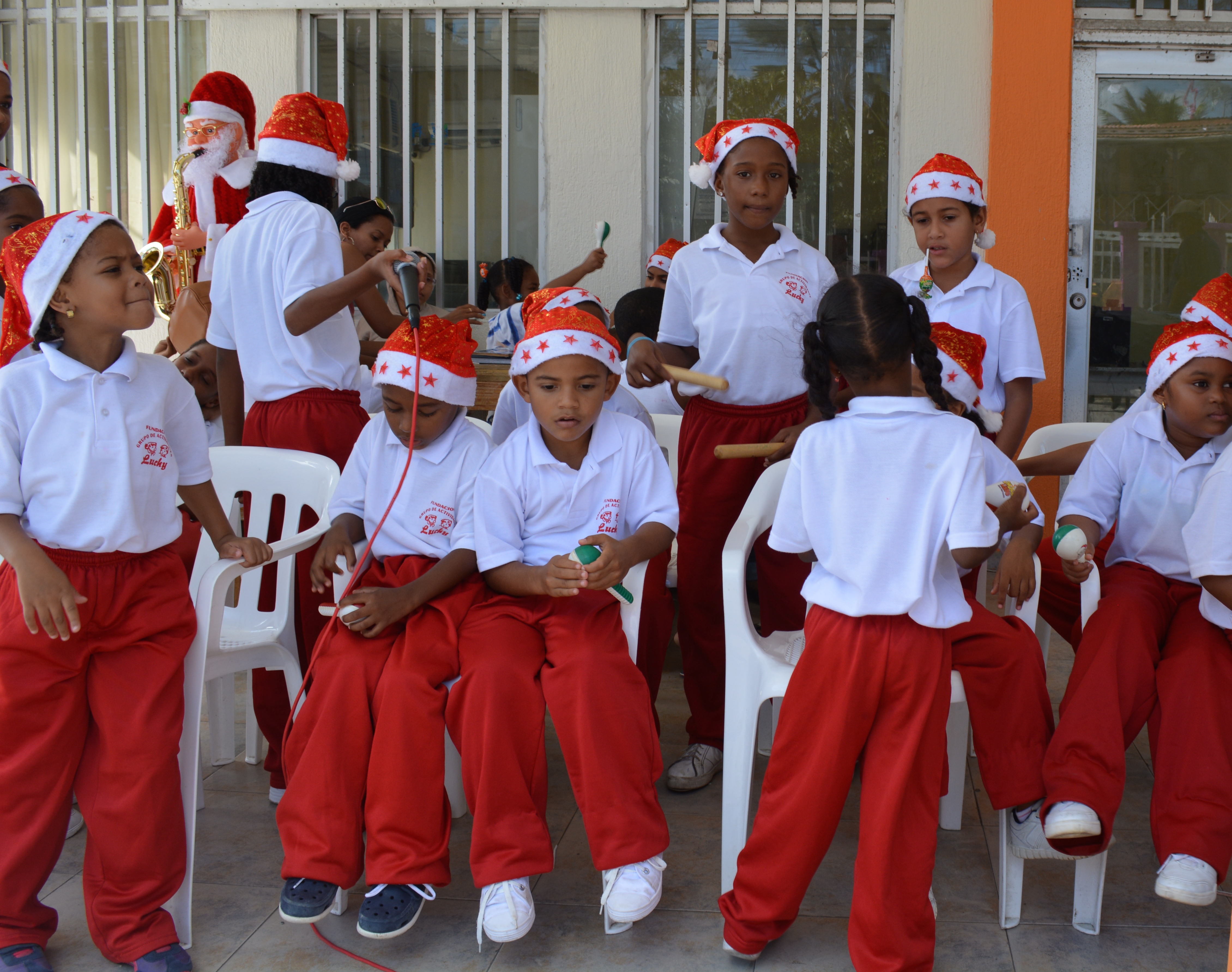
Santa kids

The island started the holiday party the afternoon of Christmas Eve and kept going until well after the new year

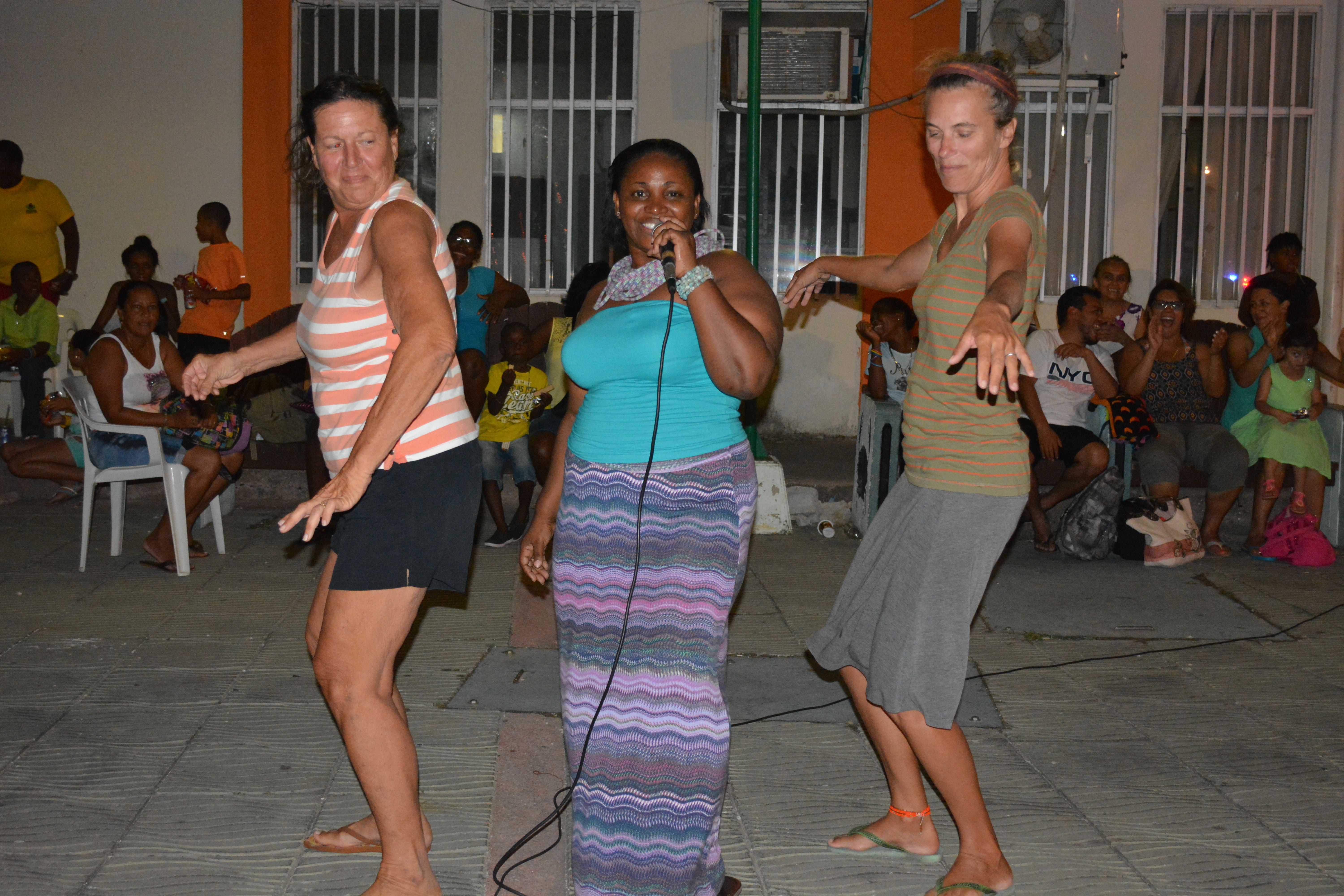
DSC_0098

Susan, Stella and I getting our groove back

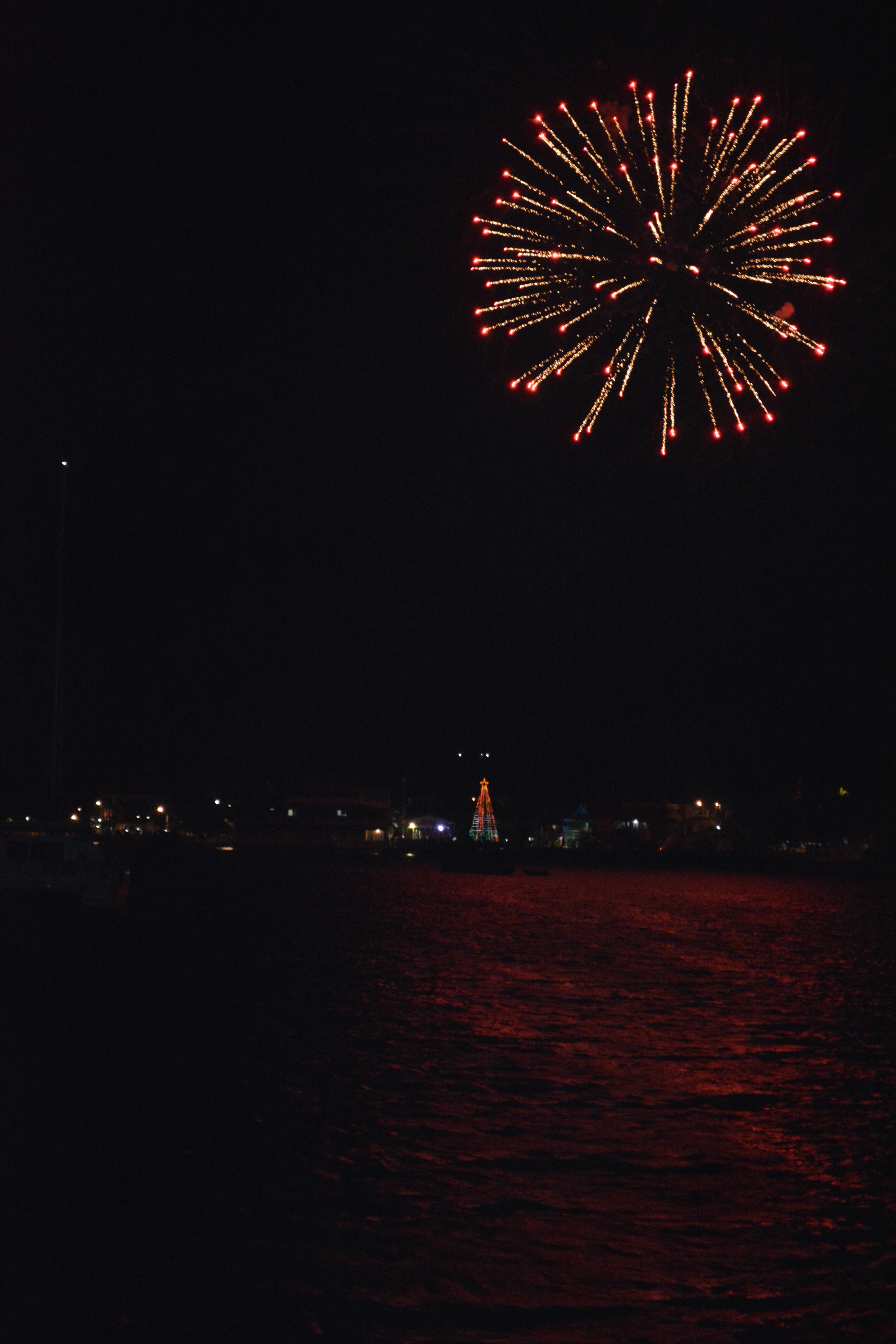
Fireworks

Perfect view from Neko of the Christmas fireworks

Winds were blowing a steady 25-30 knots and seas outside were 10′-15′ so we hunkered down with fellow buddy boaters Pegasus, R&R Kedger, Second Wind and new pals Aphrodite and took to exploring Providencia from its high peeks to below its seas.

Since the island is surrounded by the 3rd largest reef in the world and we had the time, Peter and I took diving lessons and were able to get our open water PADI certificate.     I didn’t think I’d ever do this, but never say never and there I was down 60 feet with the rays, sharks and coral breathing air from a tank.

So after a fabulous month in Providencia, Mother Nature was satisfied we’d properly experienced the island and she calmed the winds and seas down just enough for us to head to the next esoteric locale “we’ll take Guanaja, Honduras for $500, Alex”.

The Scoop on the Dups

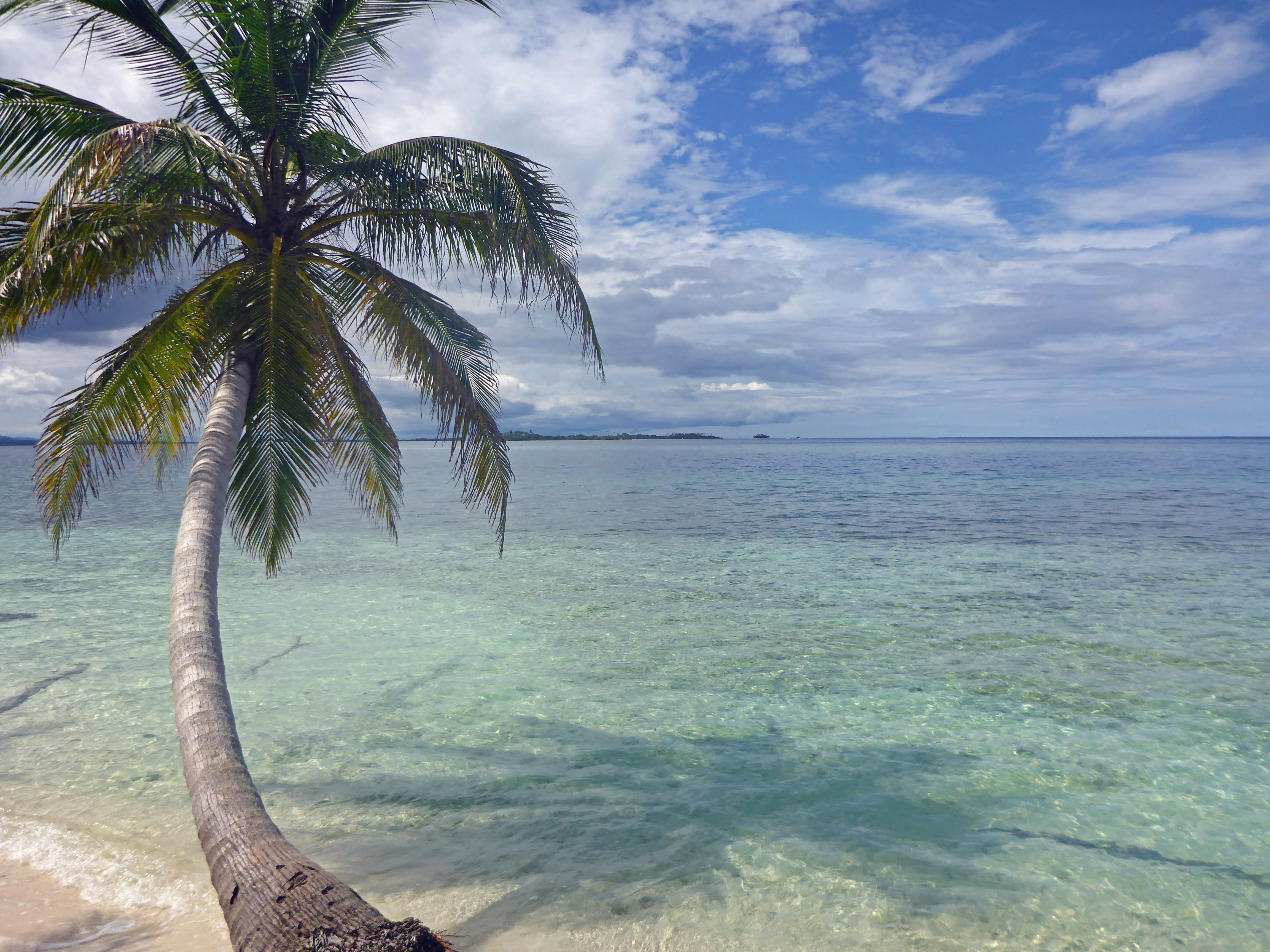
The San Blas archipelago is one of the top cruising destinations in the Caribbean.  Lying only 70 miles east of the entrance to the Panama Canal, these 300+ islands range in size from a spit of sand with 1 perfectly arching palm tree seen by many only in beer ads to village islands with dwellings packing ever inch.

Cue the Corona commercial

Cue the Corona commercial

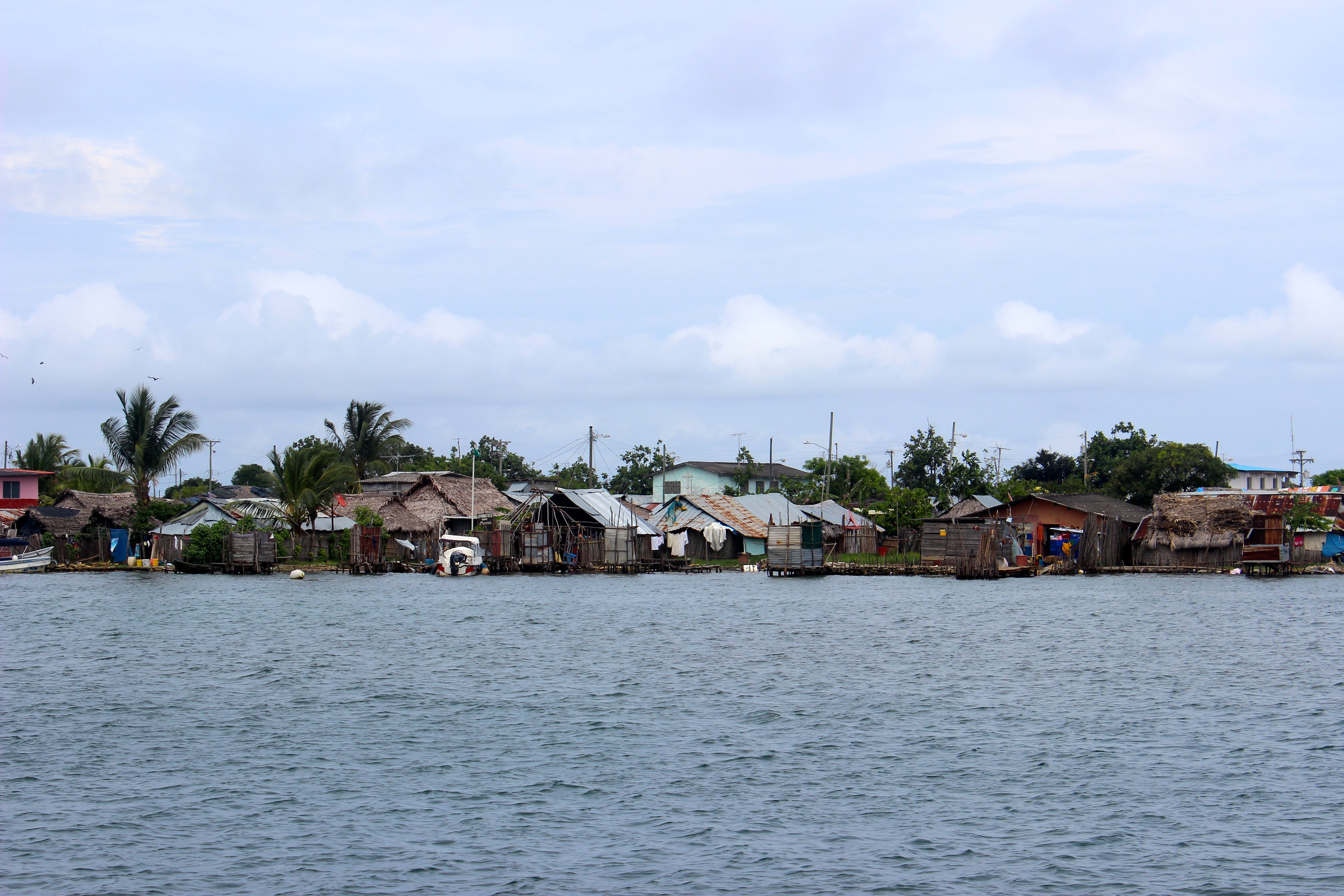
Of the 300+ islands, only 30 or so are inhabited, Nargana is one of them.

But mainly you see uninhabited islands surrounded by the clear Caribbean sea.   They lie off the Panama mainland which is mostly undeveloped.

Guarladup in Coco Bandero Cays is not

Guarladup in Coco Bandero Cays is not

Waisaladup

Waisaladup

Kanlildup (Green Island)

Kanlildup (Green Island)

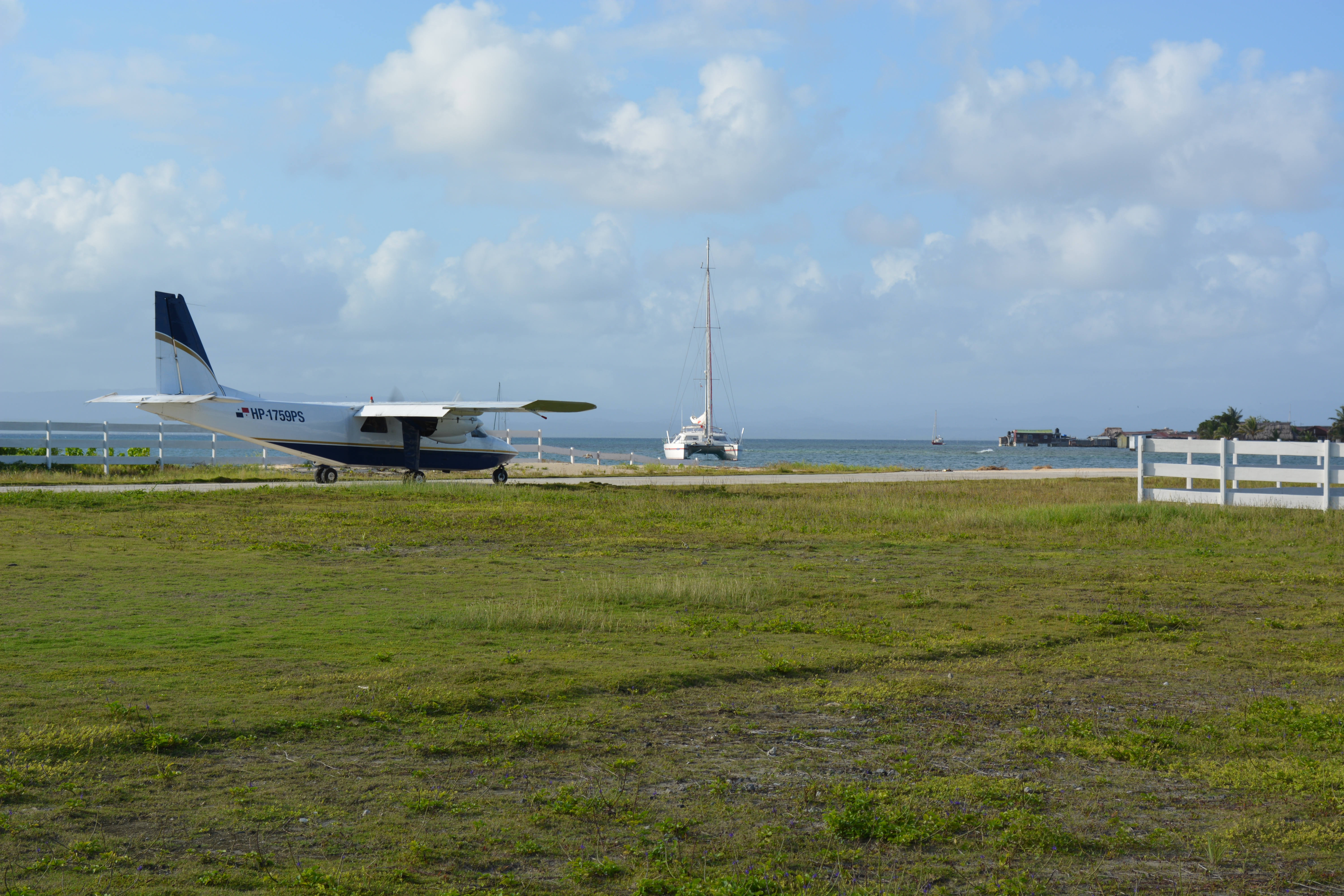
Travel, other than by boat, into Guna Yala is an arduous dirt road jeep trip + water taxi or by small plane.

Yes, that is Neko anchored at the end of the runway

How is that for airport parking? Neko anchored at the end of the runway.

The Gunas are the indigenous folks who live in the islands and are proud of their traditional way of life and, though technically Panamanian, they have managed to live autonomously and preserve much of their culture.

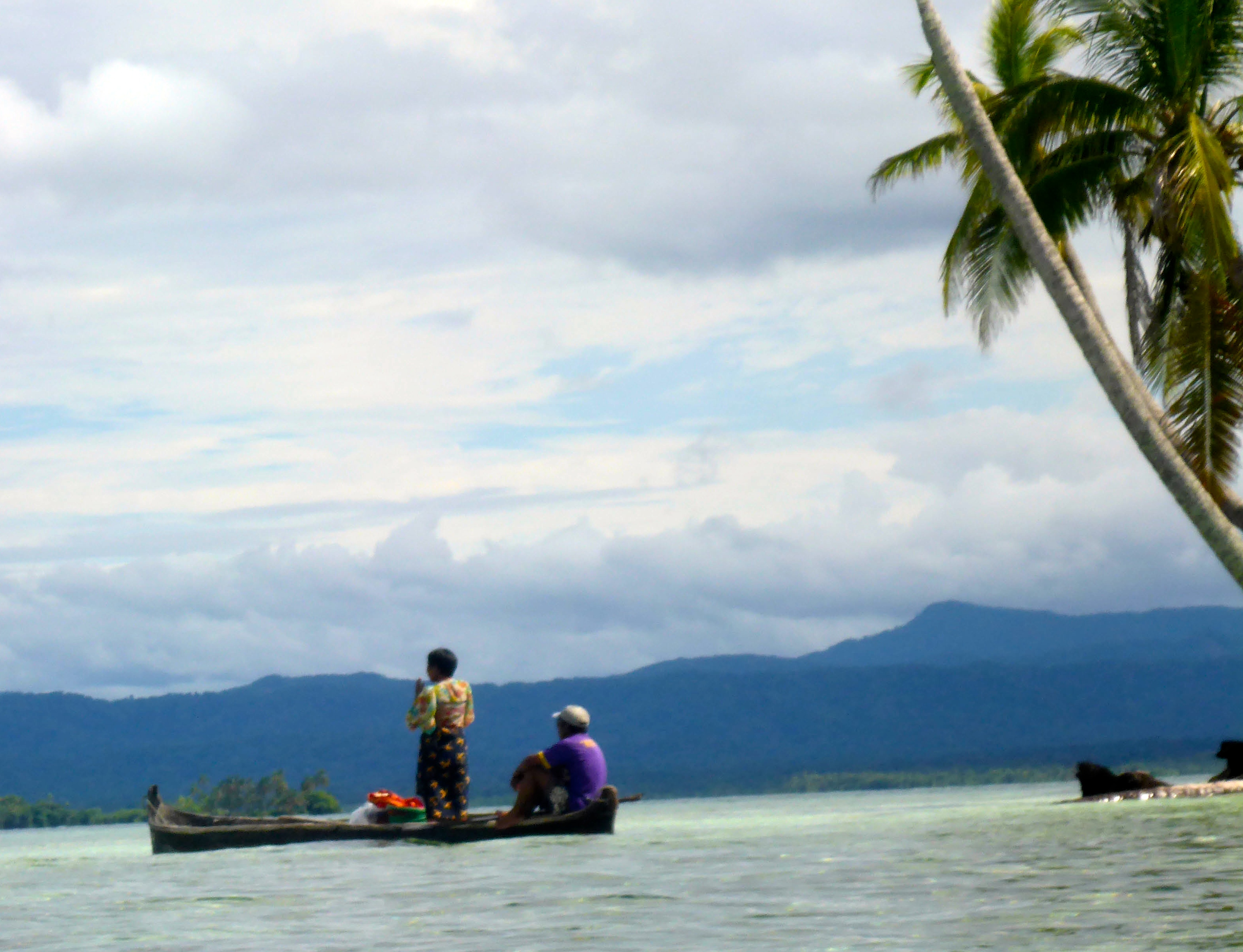
Hard to see but this Guna lady is standing in her boat talking on her cell phone.  I didn't say they were Amish, a gal has gotta keep in touch.

Hard to see but this Guna lady is standing in her boat talking on her cell phone. Hey, I didn’t say they were Amish, a gal has gotta keep in touch.   Many times Guna will come by your boat asking you to charge their phones as most islands have no electricity.

The Gunas are the primary residents of these islands and have their own language and refer to the area as Guna Yala (Panamanians call it the San Blas).  Charts of the area label the islands with a bunch of hard-to-pronounce letters each ending in “dup” (pronounced doop), the Guna word for island.  Doesn’t “Ogoppiriadup” just roll off the tongue?

Guna sail or paddle their cayucos all around these islands.

Guna sail or paddle their cayucos all around these islands.

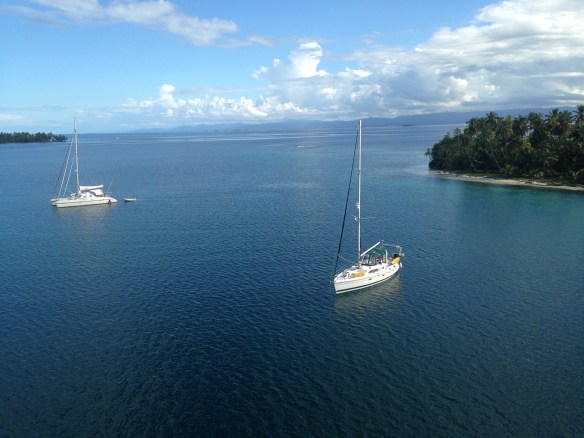
However, having once been a part of Colombia and now Panama, Spanish words pepper the area as well.  And now that the Americans, Europeans and gringos in all shapes and forms have discovered this cruiser’s paradise, they have added names of their own.   So the anchorages around Banedup, Quinquindup, Kalugirdup, Miriadup, Tiadup are referenced by clear-water loving cruisers as the ” the swimming pool” “the hot tub” and “the changing room”.

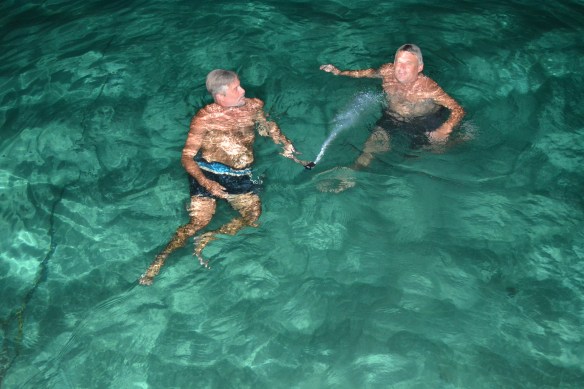
You can see why they call it the swimming pool.  Mike and Dave night swimming

You can see why they call it the swimming pool. Mike and Dave night swimming.  And if you look to the left of Mike you can see our anchor chain…now that is some clear water!

Neko & Apsaras anchored in the changing room. (thanks for the photo Rob)

Neko & Apsaras anchored in the changing room. (thanks for the photo Rob)

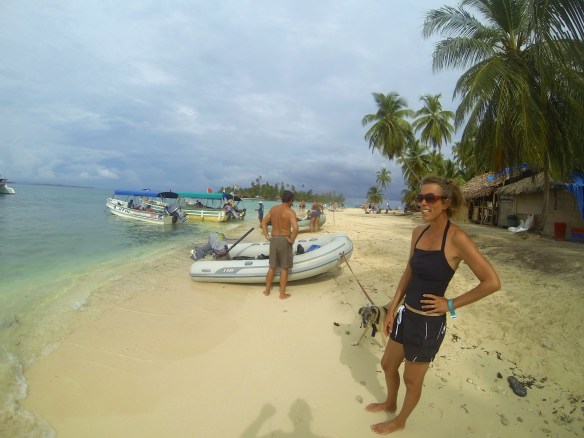
In addition, there is a Dog Island, a Green Island and BBQ Island.

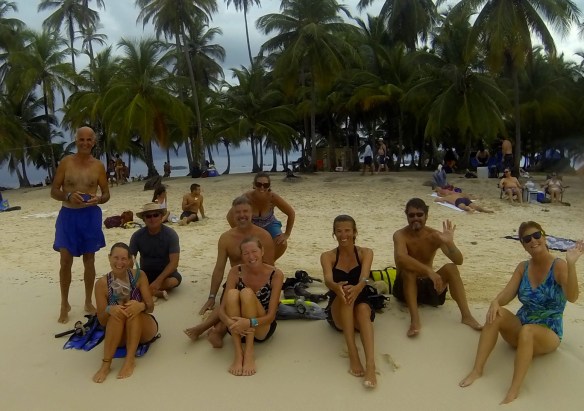
Snorkel gang on dog island

Snorkel gang on Dog Island

Dog Island

snorkeling on a wrecked ship

snorkeling on a wrecked ship

Peter exploring the wreck

Peter exploring the wreck

Appropriately Lucy went to Perro Island

Appropriately Lucy went to Isla Perro too

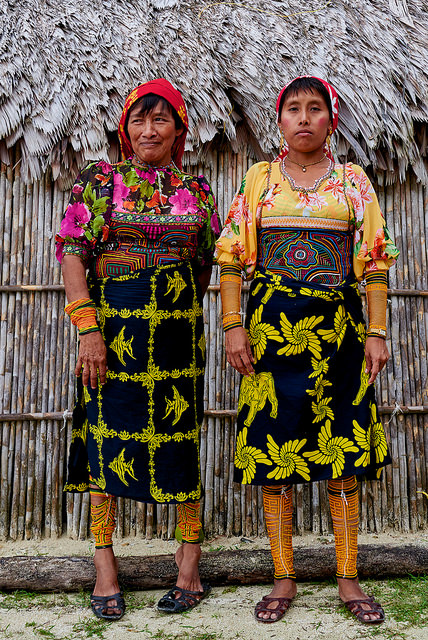
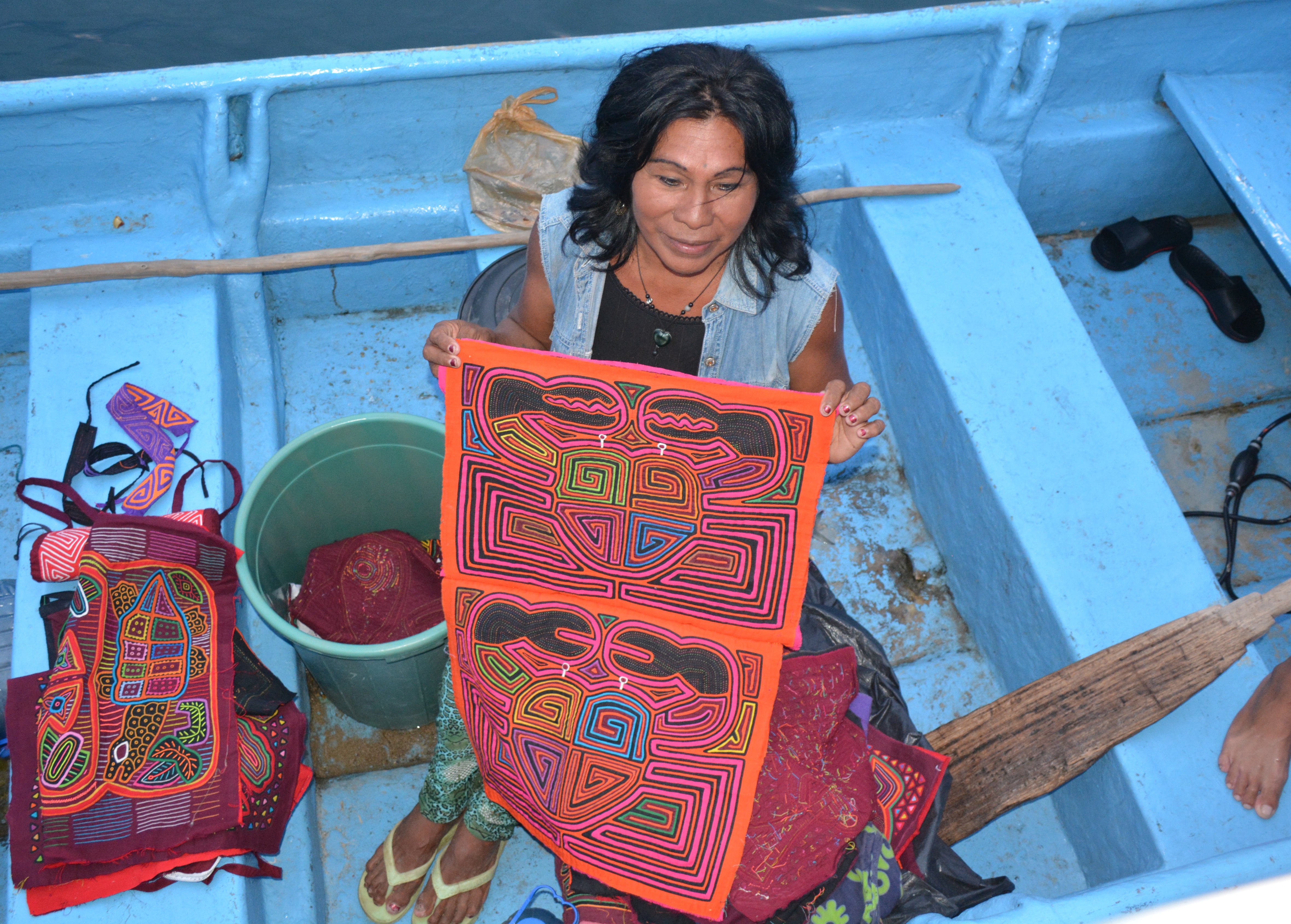
The Gunas are small-statured people, with large skills in fishing and mola making.  Molas are multilayered panels of cloth cut away to achieve intricate patterns of abstract shapes or animals. Aappliqué is also used and carefully hand stitched to create the panels.

Guna women in traditional dress.  Note mola panels on the front of their shirts.   And wini beads around their legs

Guna women in traditional dress.  I got this photo online to illustrate the mola panels on the front of their shirts. And intricate wini bead design around their legs.

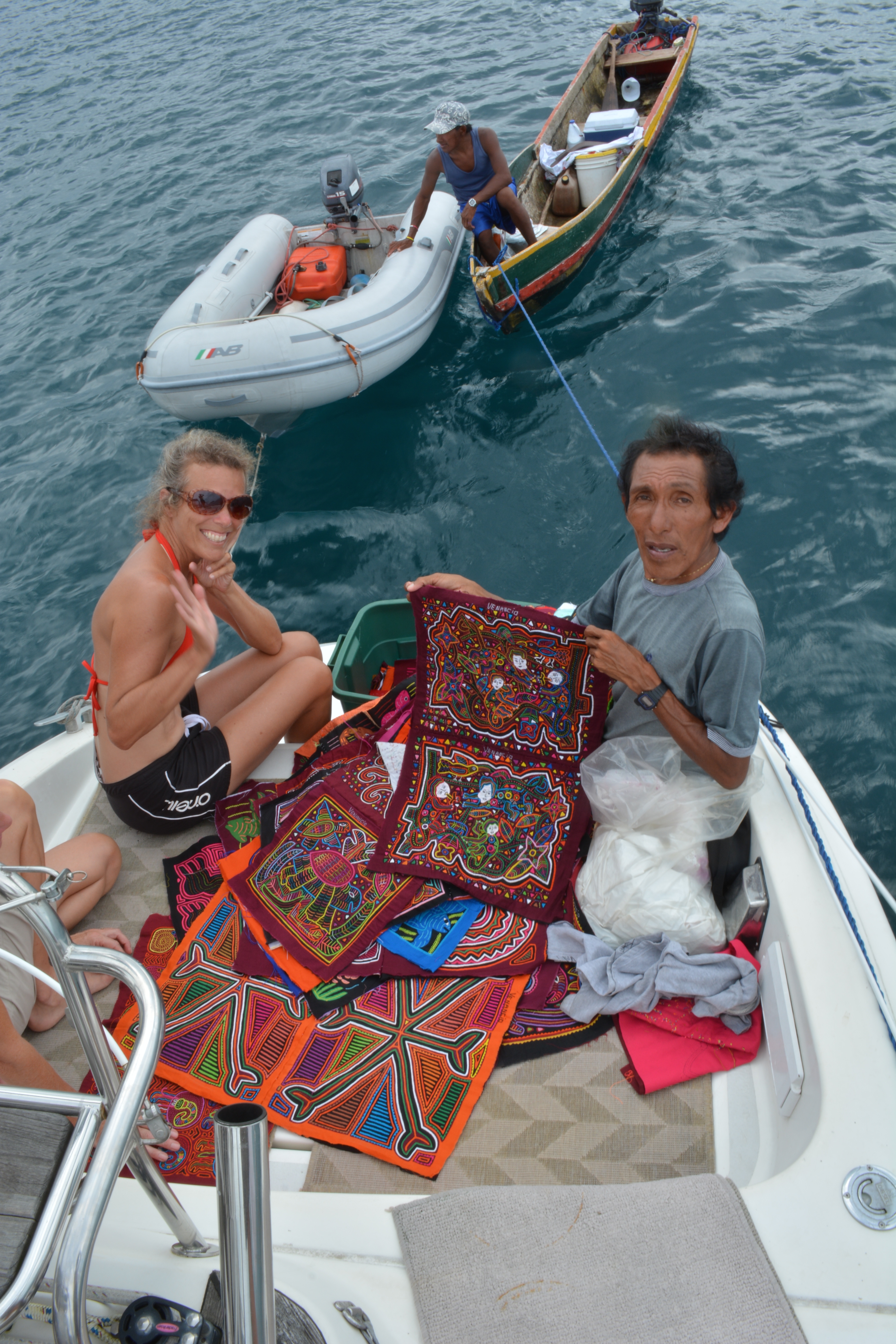
The molas are used as a front and back panel of women’s blouses, but the craft has become their signature and the panels are seen now by many as folk art.   While fishing, lobstering and crabbing are traditionally done by the Guna men, mola making is “women’s work”.  However, the two master, and best known, mola makers are transgender women (completely normal and accepted by the Guna), the famous and talented Lisa and Venancio.

Lisa, master mola maker comes by for a visit.

Lisa, master mola maker comes by for a visit.

Buying molas from Venancio

Buying molas from Venancio

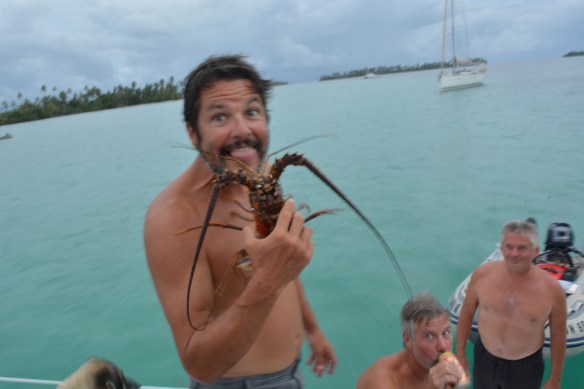
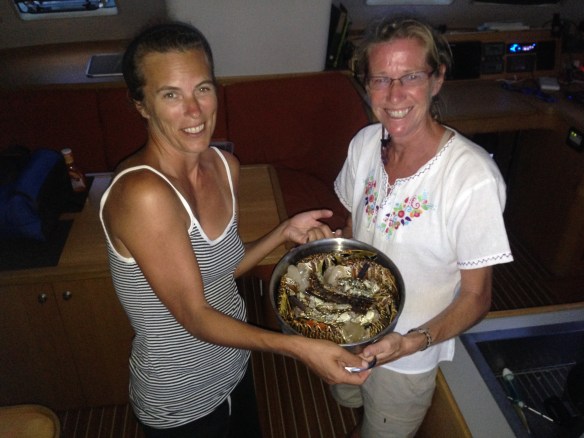
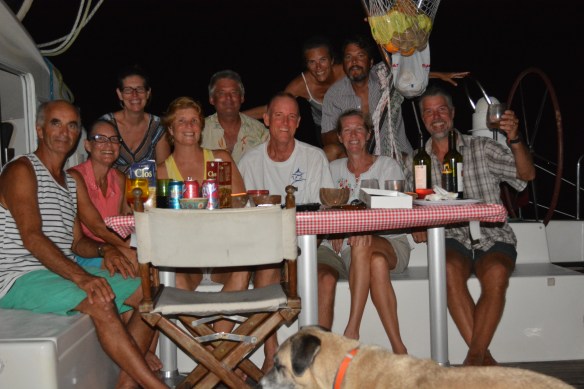
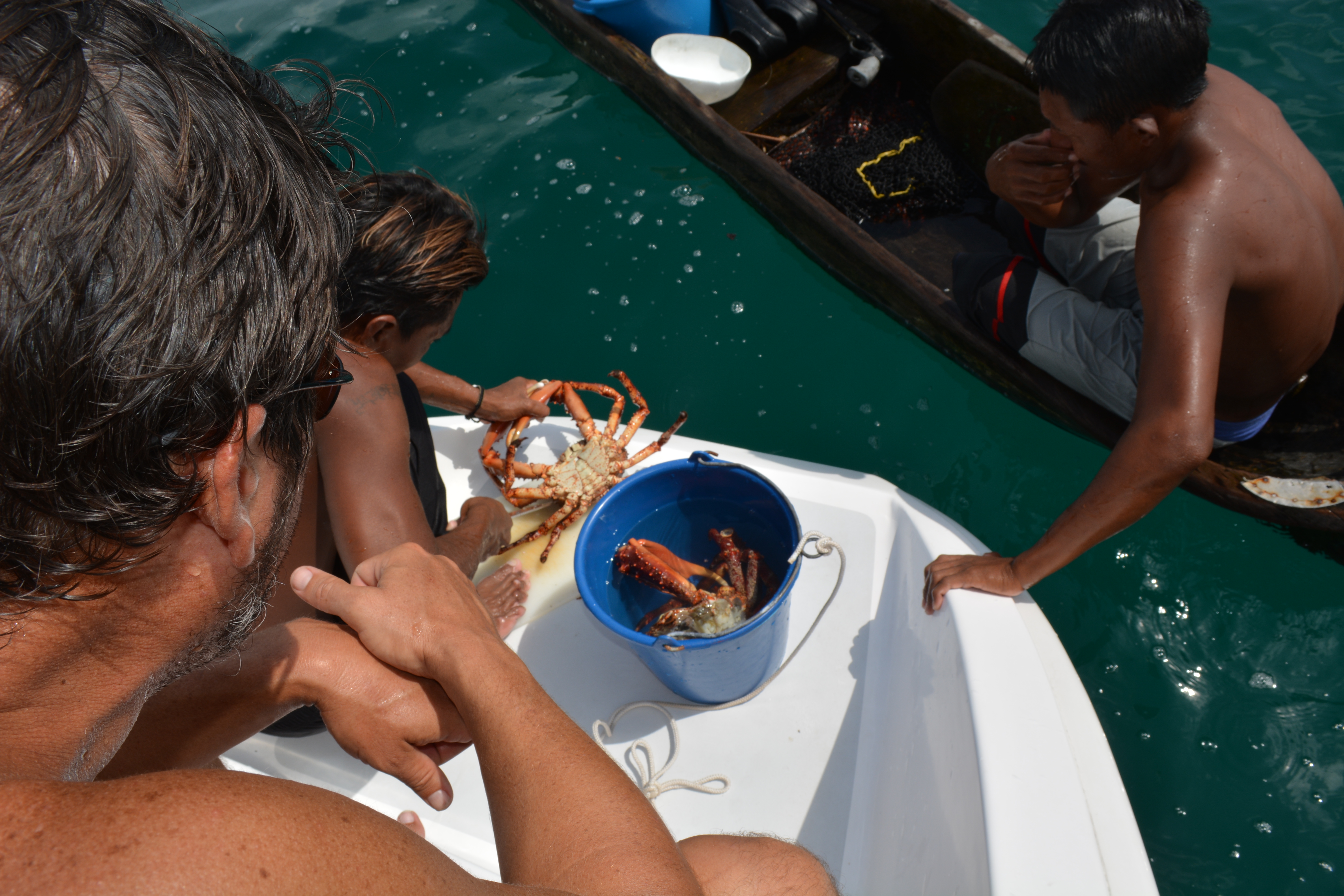
We dined several times on local lobster and giant red crabs sold to us by enterprising Guna fisherman working from their dugout canoes. We had the pleasure of our friends Mike and Holly joining us on Neko for a few weeks of sailing these beautiful islands. Fellow boat pals Rob & Rose on “R&R Kedger”, Dave & Melissa on “Apsaras”, Dave & Margaret on “Heart and Soul” and special guest stars Roger & Susan on “Second Wind” made up our fun loving “lobster” fleet.  By the way readers, the SS Neko is now open for visitors, so let us know if you want to spend some time with us.

Peter, Mike and Dave aka the lobster executioners.

Peter, Mike and Dave aka the lobster executioners.

Mary and Holly ready to steam these babies.

Mary and Holly ready to steam these babies.

Lobster Fest 2014

Lobster Fest 2014

Red Crabs

Next up, giant red crabs for dinner. This time kindly fishermen did the dirty work of cleaning them.

Thanks to R&R, Apsaras and Second Wind for sharing photos.  Click on photos to enlarge.

Dagger To The Heart

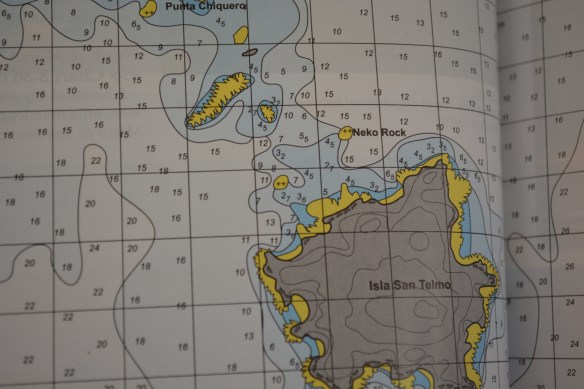
You may recall an earlier post where we described a little damage done to one of our daggerboards when we hit a rock in the Las Perlas islands.  Well, thanks to some FORMER friends ;-), we now have a landmark in Panama named after us in perpetuity.
Neko Rock in Eric Bauhaus' "Panama Cruising Guide"

Neko Rock in Eric Bauhaus’ “Panama Cruising Guide”

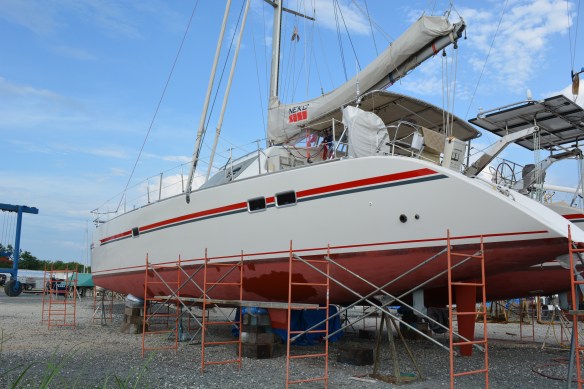
We attempted to have the daggerboard repaired in Balboa Panama by the local boatworkers.  But they did a poor job and the board did not fit in its trunk very well.  We decided to have Shelter Bay redo the repair, and at the same time perform a few other cosmetic jobs – remove old bootstripes and paint new ones, raise the transoms 3″, repair a few gelcoat dings, etc.

Neko's new stripes

Neko’s new stripes

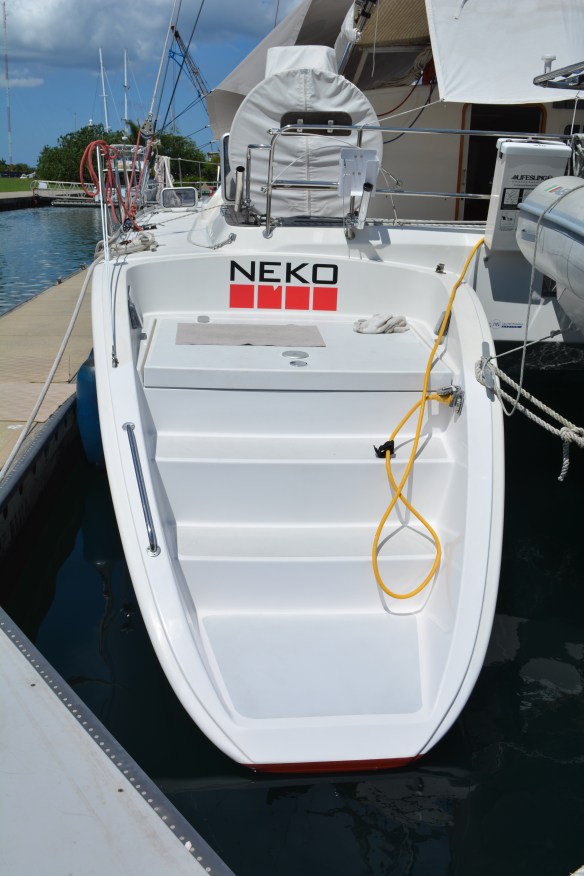
new swim steps

new swim step

These jobs ended up taking a LONG time.  This is why it seemed we were stuck in Panama forever and why blog posts were few and far between.  We started the work in August and it was not completed until Thanksgiving.  We spent one month in the hotel in Shelter Bay while the boat was out of the water (NB: a lot of cruisers remain living on their boat while it is on the hard, but Shelter Bay keeps the cats far from the showers/heads and it is not easy to lift Lucy up and down several times a day, so we decided to treat ourselves to a hotel – it having air conditioning did not hurt).  When the boat was put back in – splashed in boatspeak – all the work was finished except the daggerboards.  After one more month, the boards were finally ready and we provisioned up and got ready to head back out for more cruising.

Pete leading the dagger lines

Pete leading the dagger lines

Attempt #387 trying to fit dagger boards

Attempt #387 trying to fit dagger boards

However, upon inserting the beautiful new daggerboards back into the boat, they once again were just too thick to slide into their slots.  We were crushed that our job was back to square one. Shelter Bay has a good overall mechanic in Victor, a very good paint/fiberglass guy in Ramon and Edwin, the yard manager, does the best he can with the resources he has.  Diesel work, general rigging, electronic work and sail repairs are done by journeyman sailors who may or may not be there when you arrive.  Also, they may or may not want to or have time to work on your problem.   We got big help from Scott and Eddie (the man) as well and Scott’s dog Eddie, Greg the diesel whisperer, and Pierrick.  The issue with the Shelter Bay yard, however, is that the owners do not provide the resources to function as a proper yard, yet they hold themselves out as being one.

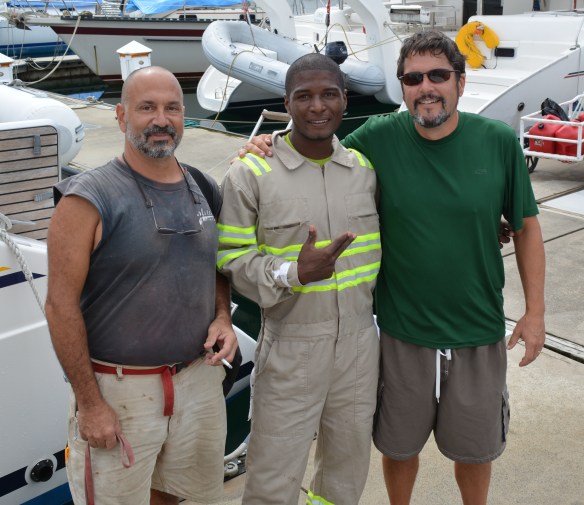
Hard working Scott, Eddie and Peter

Hard working Scott, Eddie and Peter

Scott and Peter make a jig to shape the boards

Scott and Peter make a jig to shape the boards. Eddie the dog supervising.

DSC_0010

Victor is as ready for us to leave as we are

DSC_0007

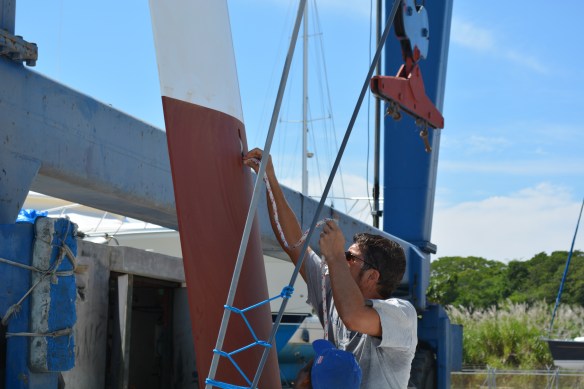
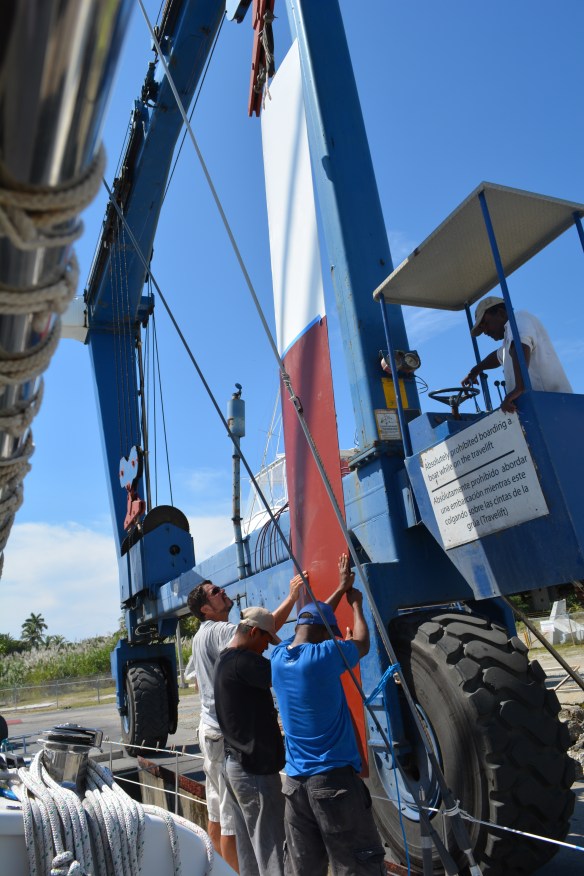
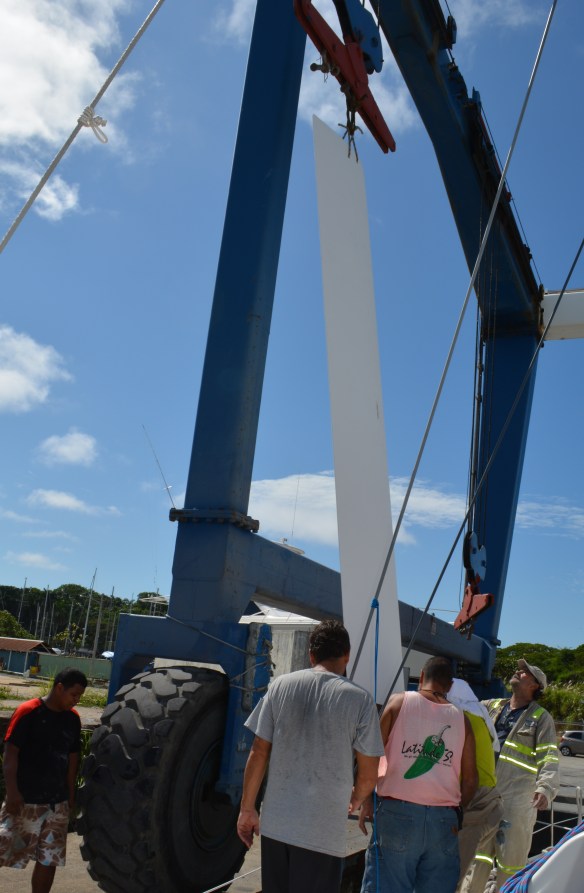
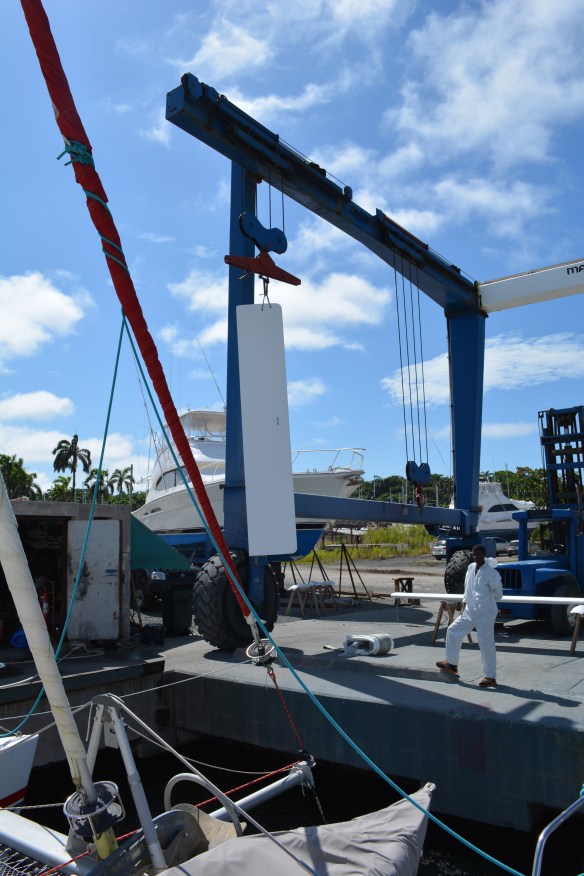
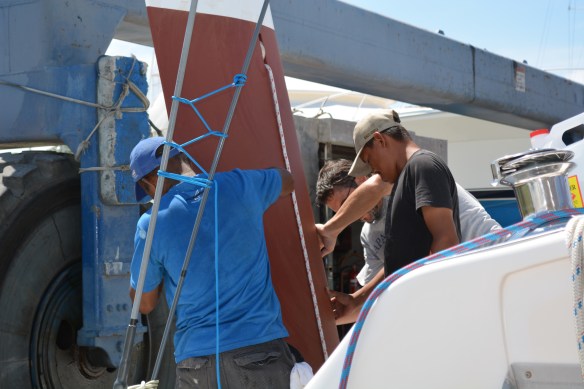
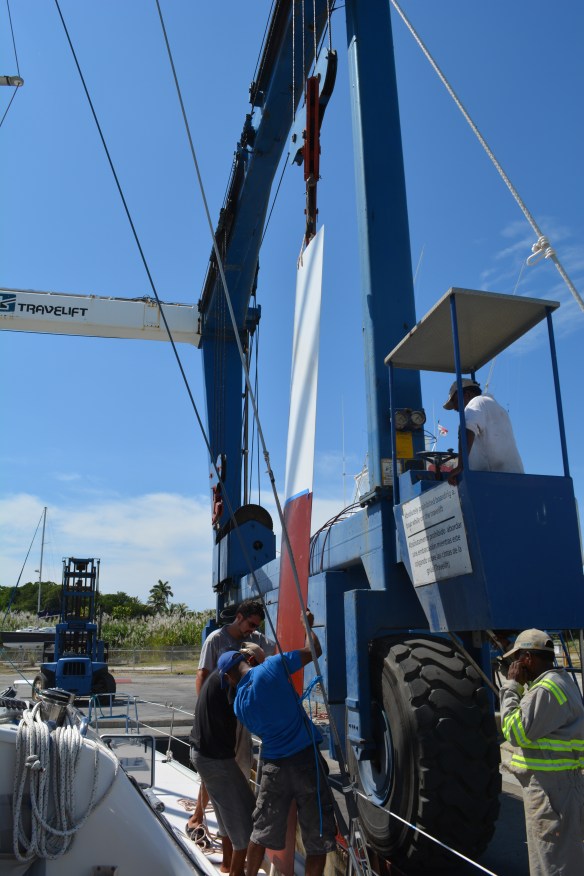
Ramon, Scott and Pete use the travel lift to hoist the 300lb dagger board

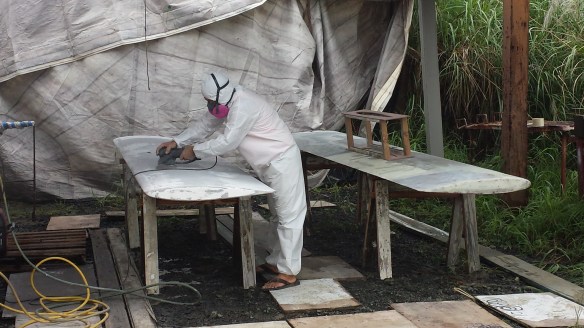
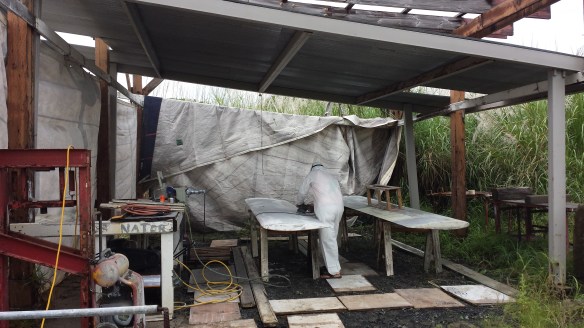
DSC_0003 DSC_0008 DSC_0015 For example, our daggerboard repair took place outside in a work area with a mud floor, an insufficient amount of gravel strewn around to deal with the mud and old planks lying around to walk on.  The area was surrounded by marshy reeds and riven with mosquitoes.  One of the workers flicked a giant spider off him one day and they all worked in fear of snakes every day.  The structure was mere wooden posts with old jibsails tacked to them to attempt to keep dust out, a leaky, rusty corrugated roof that prevented work during rain (do you think it rains in Panama in the rainy season?) and barely adequate electricity.

Scott sanding boards in the mud pit, I mean work shop

Scott sanding boards in the mud pit, I mean work shop

make shift workshop

make shift workshop

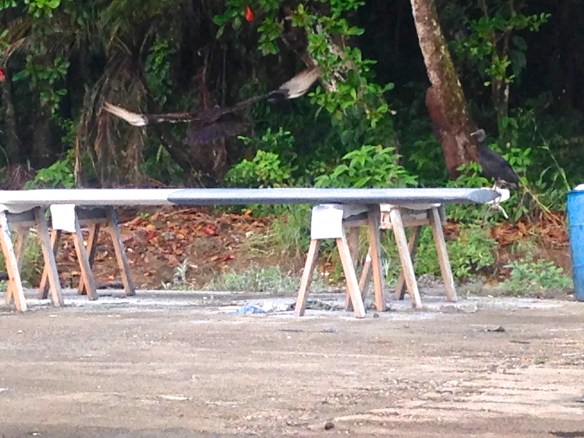
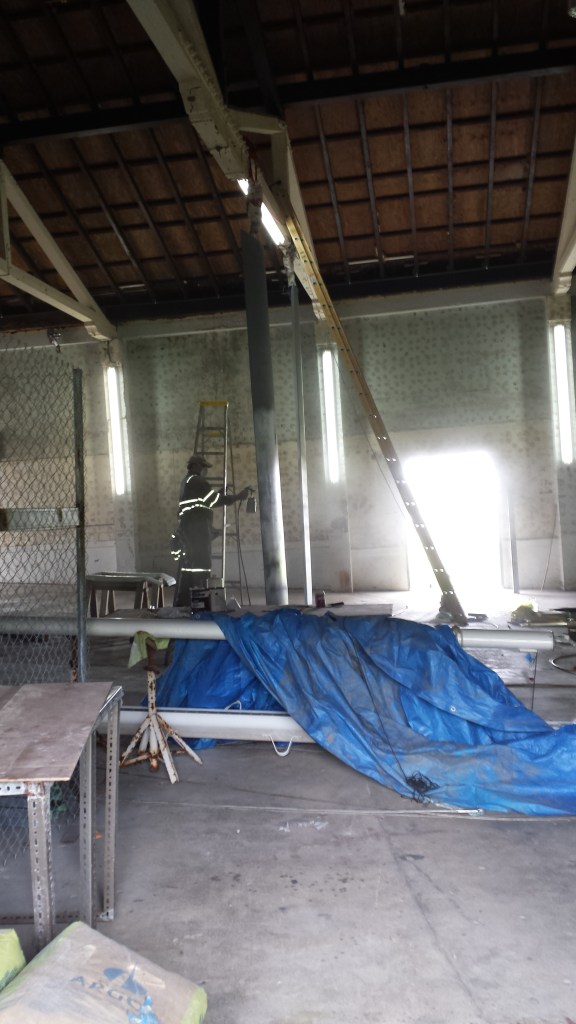
Then we moved to an open air area where the ever-present vultures were an ominous metaphor for the entire job.  Once the boards were shaped properly, we moved again to the abandoned theater, er I mean sail loft, to hang for painting.

Not a good omen to see vultures hanging around the boards

Not a good omen to see vultures hanging around the boards

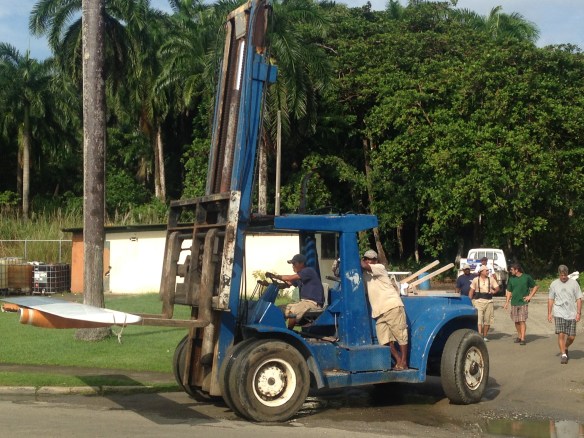
on the move

on the move

Boards hanging to paint

Boards hanging to paint

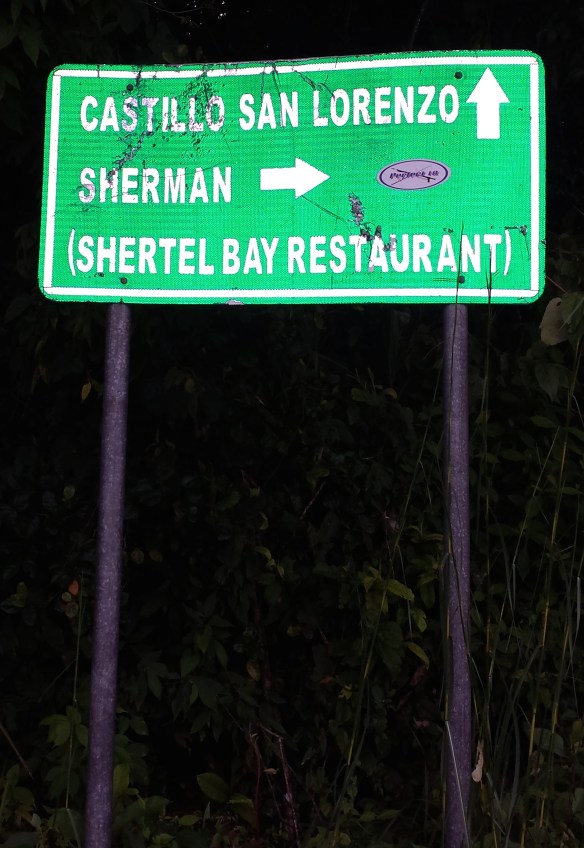
In any event, after another month of work in these conditions, the daggerboards were finally done.  It was now two days before Thanksgiving and we desperately wanted to have the holiday at anchor in a pretty spot with our friends.  So we ran around frantically for two days cleaning, stowing, provisioning and otherwise getting ready.  We got it done and were finally able to escape Shertel Bay.  Shertel Bay

Escape From Shelter Bay

If I were to pitch the movie version of the last few months at Shelter Bay Marina it would be Dante’s nine circles of hell meets a tropical version of Groundhog Day. Like Bill Murray, it seemed that each day we would wake up and repeat the day before; saying hello to the regular cast of characters, taking Lucy for a walk through the jungle in search of monkeys and sloths, working on boat jobs, jumping in the pool to cool off, checking on the repair of our dagger boards, joining friends for happy hour, rinse and repeat.

The long and winding road to Shelter Bay

The long and winding road to Shelter Bay

And just when we thought our endless boat work-related stay was coming to an end we were plunged into a deeper level of hell (see Dagger post).

Attempt #387 trying to fit dagger boards

Attempt #387 trying to fit dagger boards

Why oh why were we on this endless loop? Were the sailing gods, Dante and Harold Ramis all trying to tell us to reexamine our lives? Thankfully this is a feel good movie and after feeling frustrated and tortured enough, we cued the inspirational music, stopped feeling sorry for ourselves and made the best of a rough time.

We met a lot of new friends, old friends caught up to us for reunions and the dagger boards were FINALLY fixed!  And our happy ending had us leaving the docks along with buddy boats R&R Kedger and Apsaras and with friends Holly and Mike from Wanuskewin joining us on Neko to start our 2nd year of cruising.P1030353

Adios suckers

Adios suckers

We definitely were thankful to be on the move again and hosted Thanksgiving on Neko with 8 others.  Between us all we were able to create the traditional dishes and it felt like the real deal apart from the fact we were floating on a boat and it was 90 degrees.

Yes, oh so thankful to be cruising again…

Now these are the kind of days we want to repeat.

Happy Hour

Sundowners, the perfect ending to the day


Time to Reflect

One year ago we officially left the States to begin our adventure at sea.

Away we go

Away we go

We wish we could say that “dropping out” for a year has given us the secret to the meaning of life which we would now share with you, but alas it has not.  Give us another year and we will have it all figured out (LOL).

Plenty of time for selfies

Plenty of time for selfies

It HAS given us the one thing we always wished we had and that is time.  It is odd, time has flown by and inched forward simultaneously, becoming both a blessing and a curse.   We have time together which was a rare treat during the working years, we have time to reflect on the wonders of life while staring at hundreds of dolphins swimming and jumping next to the boat, we have time to read, time to really listen to music like when you were a kid devouring an album alone in your room, and we have time to spend with great new friends.  It seems a bit like camp or college or combat; friendships are accelerated, days = weeks and strong bonds form quickly over shared stories, travel, hardships and thrills and of course cocktails.  It is one of the best parts.  Honestly when is the last time you made a dozen+ solid friendships in a year.

On the other hand time sometimes becomes the enemy, as we wait for repairs, we wait for packages of parts to make those repairs, we wait for good weather windows, we wait for dial-up internet to sweep in our emails and we wait for our night watch shift to end so we can get some sleep.  At home our culture has perfected instant gratification.  If you want something, just go get it or do it.  Here, and maybe in most of the world, it doesn’t work that way.  So we are learning to go with the flow and not flip out when things don’t happen immediately, but it is harder than you think.  For me one of the things I’ve found hardest to learn is that every second doesn’t have to be part of a mind blowing event.  This is our life and sometimes life is, well, just life and not a blockbuster movie or glossy travel magazine or even blog worthy ;-).  Before we left I said I was 91.8% ready for boat life and I can now honestly up that to 96.5% 😉

So let’s turn up the lights and see if there are any questions out there…write them in the comment section and we will gladly answer your queries about our first year.

Year #2, here we come…

Victory Smooch

Victory Smooch

Bogotá Bound

I’ve heard stories about Colombia all my life. Not the drug riddled danger zone of the 80’s & 90’s, but tales of living in a foreign land from my grandparents and aunt Lynn who lived there from 1959-1965.

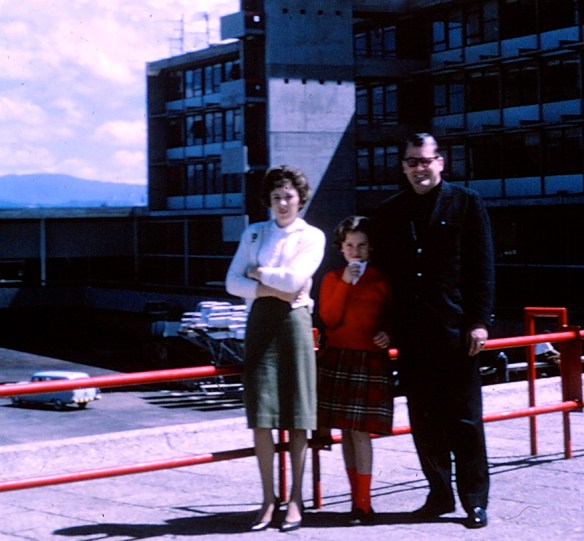
My mom, aunt Lynn and grandfather in Bogotá 1959

My mom, aunt Lynn and Johnny Cash…um… I mean my grandfather… in Bogotá 1959

My grandfather was a manager at Owens Illinois Glass Company and went first to Bogotá and then to Medellín to build glass plants.   He was a captivating storyteller and would have us all in stitches about the crazy characters at work and their resourceful ways to fix almost anything.  I remember his story of the time he foiled the plan of a robber trying to steal their washing machine by hoisting it over their outer wall with a getaway cab waiting.  I lament that my grandfather isn’t alive to hear about our adventures on Neko, he would have loved it.   I find myself thinking about my grandparents a lot during our cruising and now relate to the obstacles they faced living in a foreign land.  Living in 1960’s Colombia without internet and with revolution always looming was definitely a greater hardship than traveling by sailboat with modern technology, but there are many similarities.   I remember my grandmother telling me how shopping for groceries became a whole day’s adventure and how she had to wash all the vegetables with bleach (Been there, done that).   And how she got by with only rudimentary Spanish thanks to the kindness and patience of the Colombian folks (hmmm…sounds familiar). They tried new foods, made new friends and turned what sometimes were difficult and frustrating times into positive lifelong memories. I cherish that example they set for me and I try to remember their great attitudes when we struggle with bureaucratic red tape, language barriers and improvised boat repairs.

My aunt, mom, family friends and grandmother up on Monserrate

My aunt, mom, family friends and grandmother up on Monserrate, 1959   Note everyone in skirts and dresses because it was forbidden for ladies to wear pants.


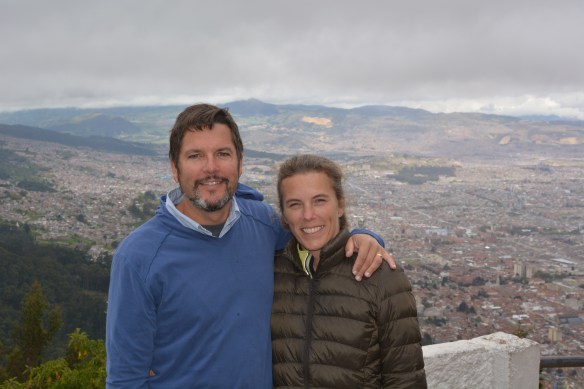
Enjoying the view up on Monserrate

56 years later, Peter and I enjoying the same view up on Monserrate, 10,000 feet above sea level (note the outerwear – our thin blood was not ready for this cold).

One of our objectives all along was to get to Colombia to honor their pioneering spirit. So as Peter and I found extra time during the rainy season, we decided to hop a plane to Bogotá.  Although it’s 50+ years from when my grandparents lived there, it was fun to see some of the things I had heard about. With great guidance from my Aunt Lynn and my Mom (who didn’t live there but visited enough to remember details), we set out to see what was still there and what had changed.

Grandparents house in 1960

Grandparents house in 1960

Their house is no longer there, but it seems they have kept the retaining walls

Their house is no longer there, but it seems they have kept the stone retaining walls

This is the spot where their house stood, now an apartment building

This is the spot where their house stood.


Sadly the house they lived in was torn down and replaced by a swank apartment building, but It does seem that the old stone retaining wall remains.  Peter and I had fun playing detective and finding their old, but much-changed neighborhood. I was hoping to see some 80 year old woman walking down the street who would have remembered them, but my life is not a movie, so off we went to explore the rest of of the city.   And what a vibrant city it is.


As always, click on a picture in the gallery below to rotate through the images.