Adios Mexico
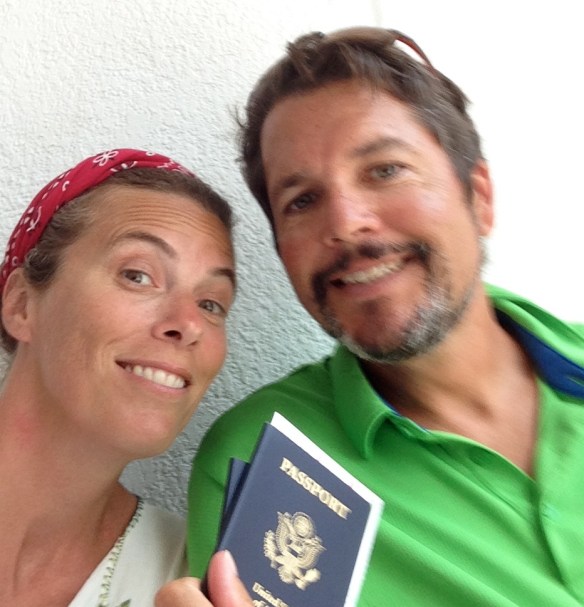
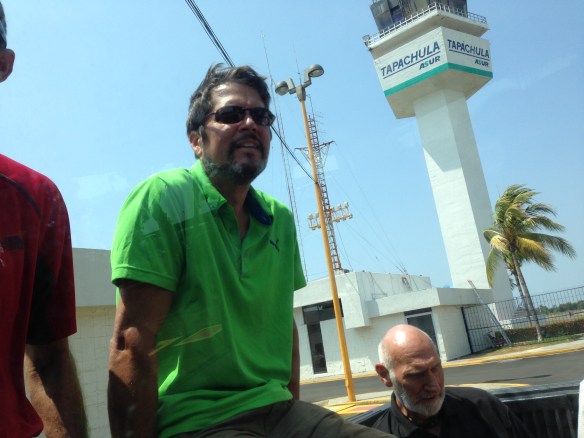
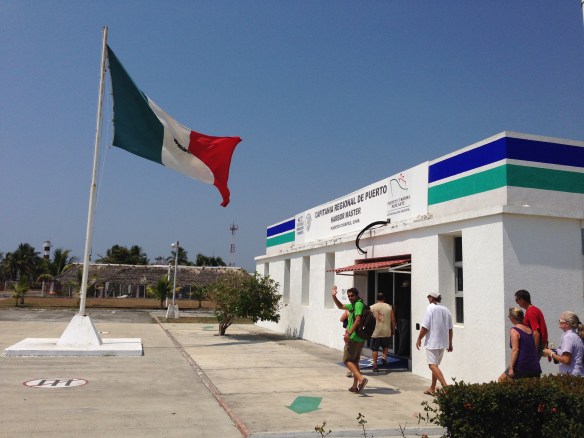
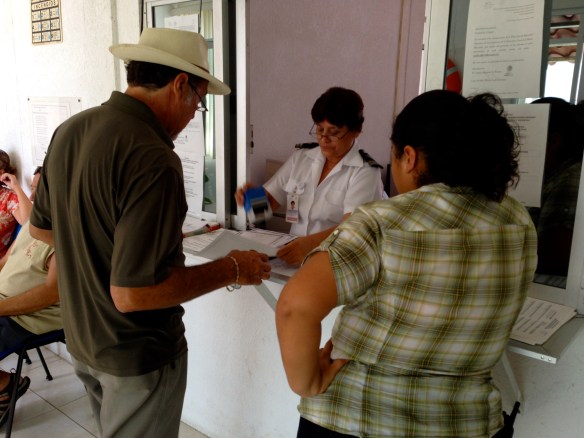
After four fun filled months in Mexico, it’s time to go, but first…
Animal House
One of the greatest aspects of travel is the people you meet. You become fast friends with fellow boaters because you are experiencing this strange new lifestyle together and can completely relate to one another. You become friendly with locals at each stop and benefit from their knowledge and eagerness for you to experience their hometown. You meet folks on their vacations who are perplexed by your strange way of boat life. These interactions are the brightest part of our travels, but our stay at Casa Raab was somehow different. It didn’t seem like we were meeting new friends; it was more like coming home to old ones.
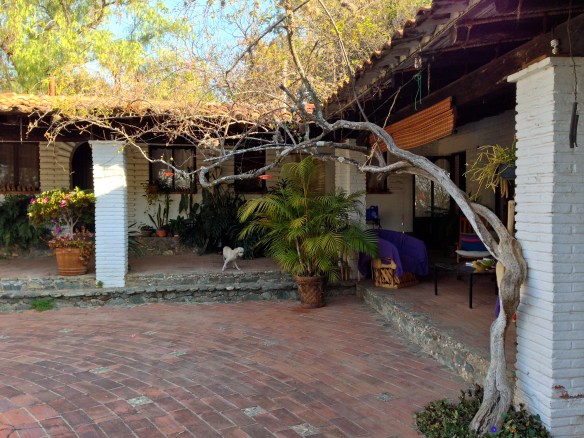
Casa Raab is a B&B 20 miles outside of Oaxaca in San Pablo Etlan and we went there for a few days simply to balance out our time in the city and see what the countryside had to offer.
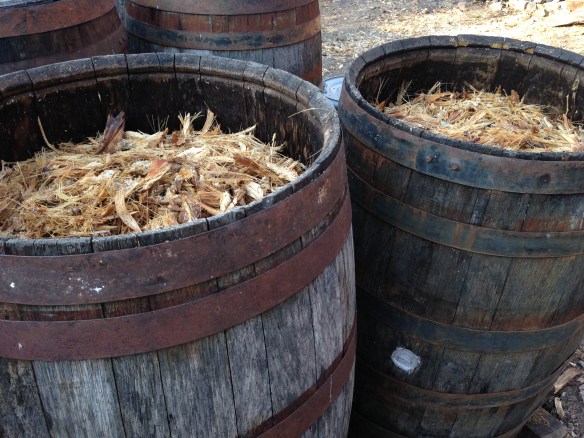
Rebecca, the owner, lives on this 40-acre ranch that her husband’s family built in the 1960s. Now she, her husband Tony and her mother Coralie run the inn/boutique mezcal farm/animal rescue center.
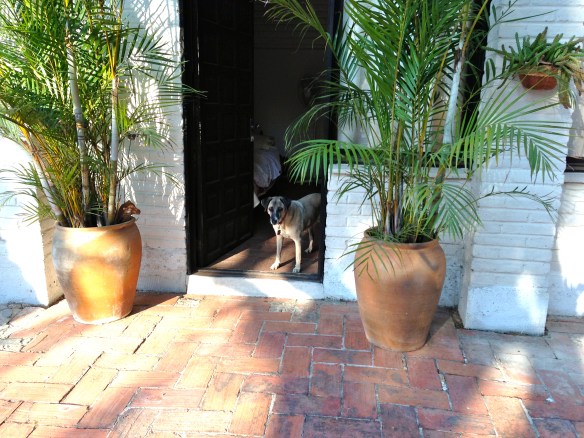
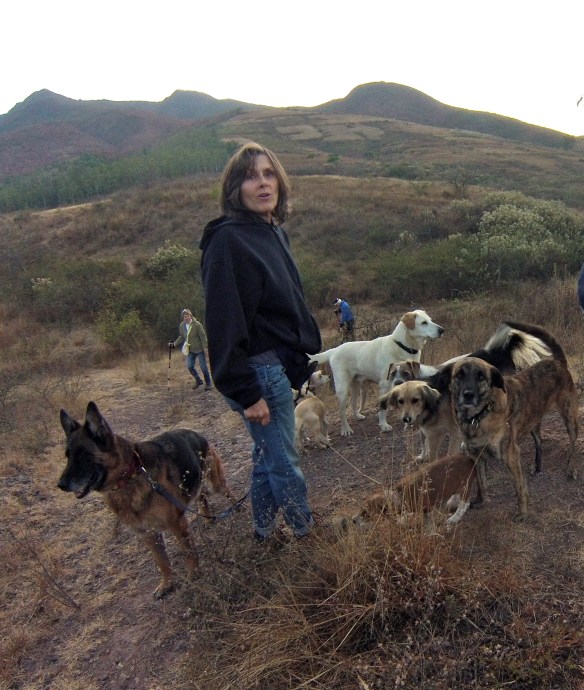
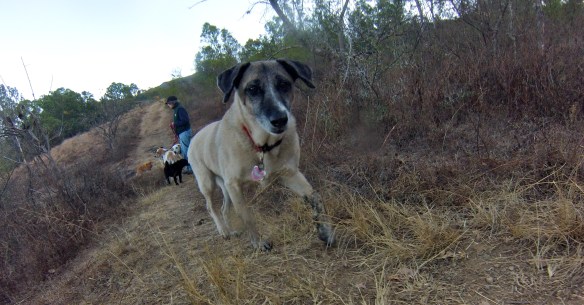
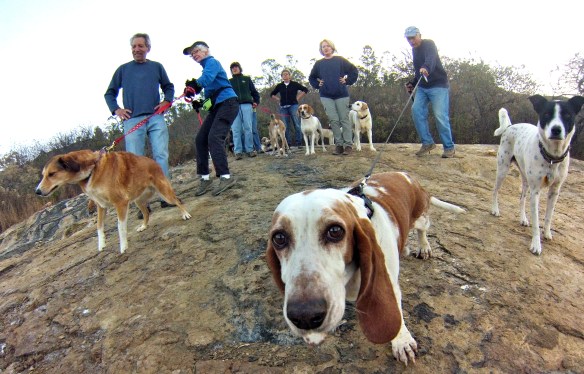
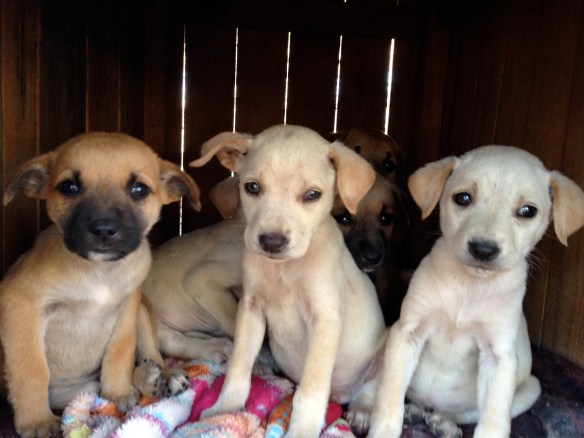
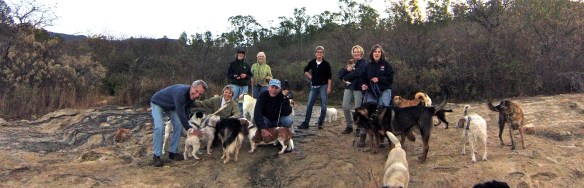
Yes, you heard me right, animal rescue. When we pulled into the gravel driveway we had to slow down to avoid hitting any of the dozen or so dogs that were running to greet us. Lucy was happy to see the other dogs and even happier when she learned that the humans carry treats in their pockets. Rebecca is a true inspiration to me as she has rescued hundreds of local dogs over the years. In fact, just the day before we arrived she had taken in 8 puppies. And no, dad, I did not take one home.
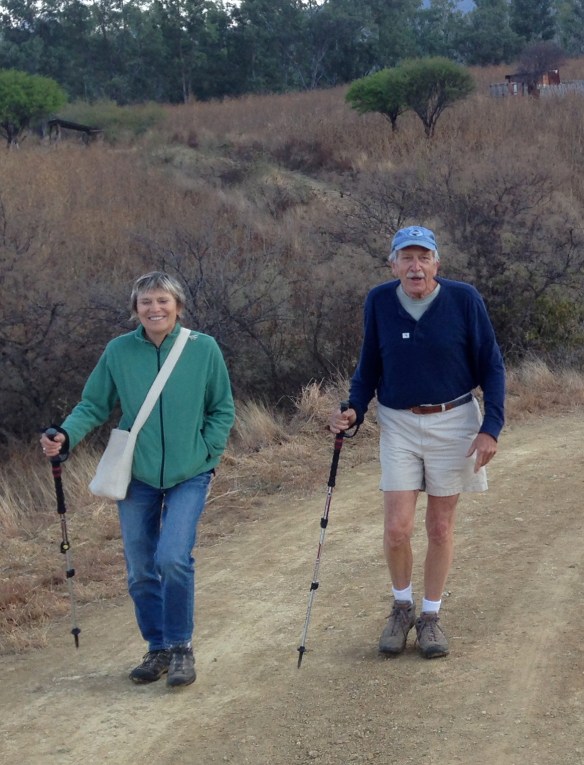
Tom, his wife Judy and his other wife Jane (LOL, just kidding), long-stay guests at the inn but really honorary assistant managers, made the introductions to all the dogs and gave us a tour of the grounds.
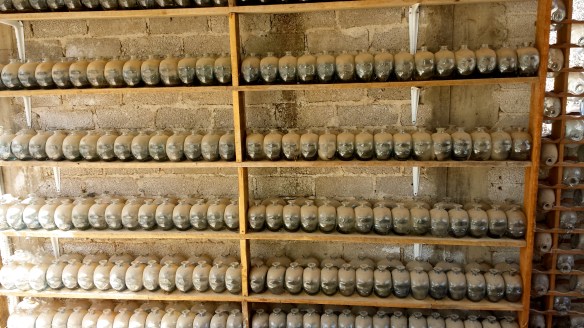
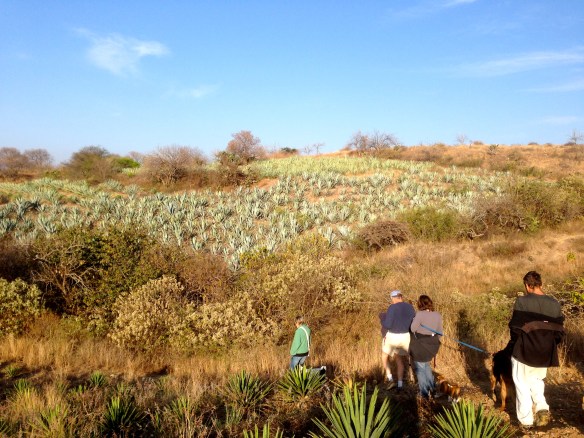
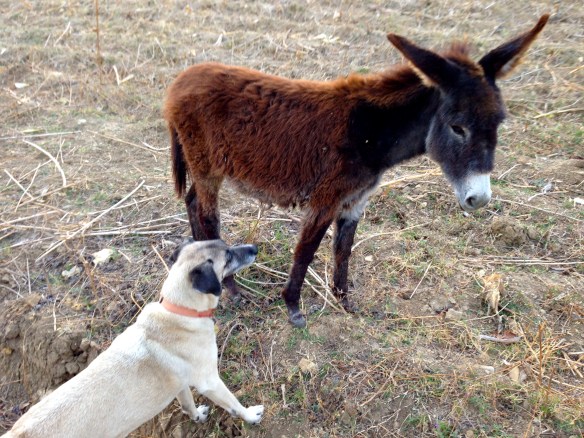
The stunning scenery and charming home includes horses, cats, turtles, donkeys and of course the dogs, as well as acres of agave plants they grow and use to brew their own mezcal.
We met with a varied cast of ex-pat characters staying in the main house and casitas on the property as well as neighbors, all of whom welcomed us into their little family and turned a sightseeing trip into a special treat. We quickly learned that Casa Raab is a place where people come to stay for months at a time and come back year after year. Yikes, I’m making it sound like a cult, but seriously it is a group of wonderfully interesting, funny and kind people who know how to enjoy themselves. We all sat around gabbing and drinking and within a few hours, as we sat down to a marvelous homemade Mexican dinner, we weren’t sure if we’d checked into an inn or arrived at the home of long time friends.
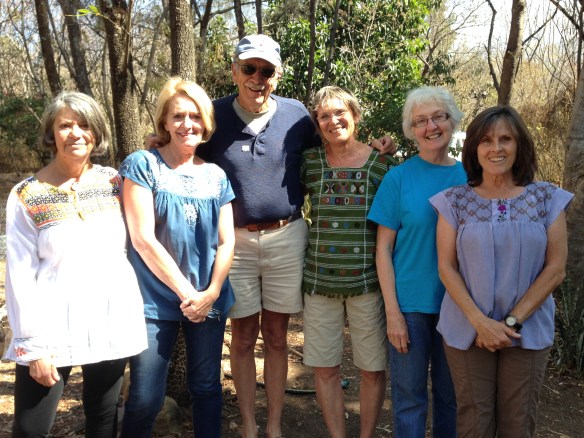
Tom and his wife Judy from Richmond have been coming here for years and stay for several months at a time. You think we are crazy to travel with Lucy by boat – they drove to Mexico from Virginia, so their two dogs, whom they adopted from Rebecca’s rescue, could be with them. Their friend Jane who also is from Richmond was there and we immediately bonded, as she became by fashion consultant. And Rebecca’s friend Debbie was using the house as a home base for her buying trip for her store in Texas. She really knows her Mexican folk art and crafts and taught us a lot and even was kind enough to let me have the pick of the litter from her collection of hand woven bags. We met Melanie and Norman from Brooklyn, and they gave us a much-needed dose of NY. And, of course, Coralie, Rebecca’s mom, was a delight.
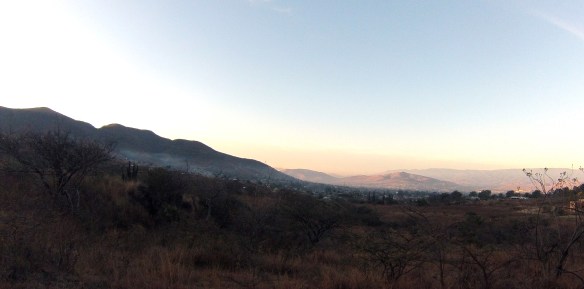
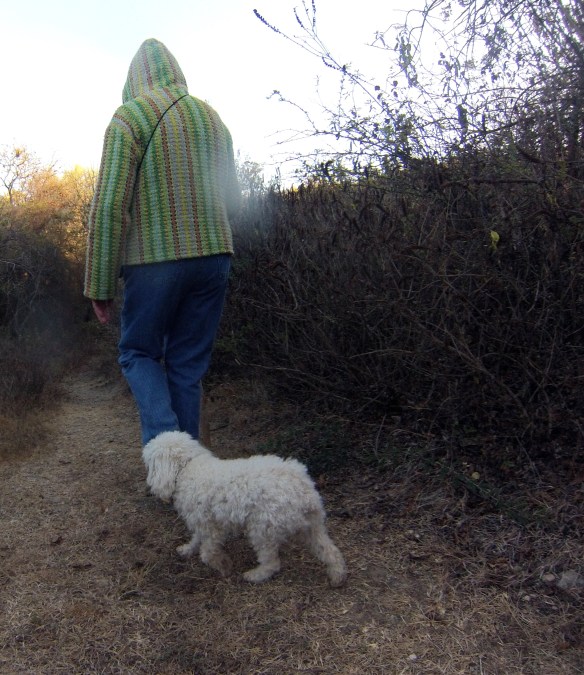
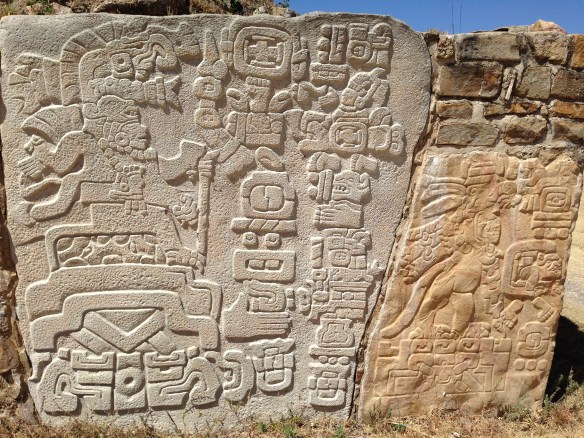
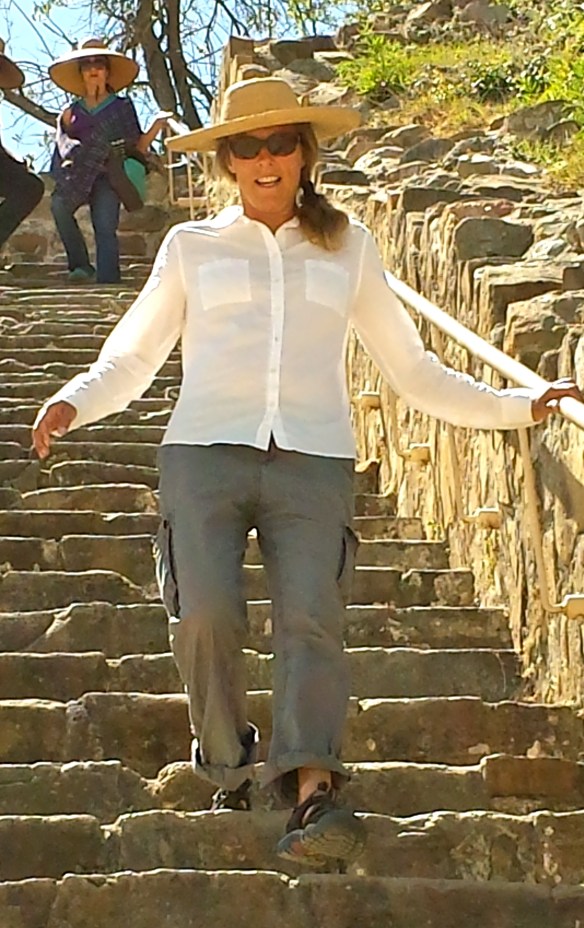
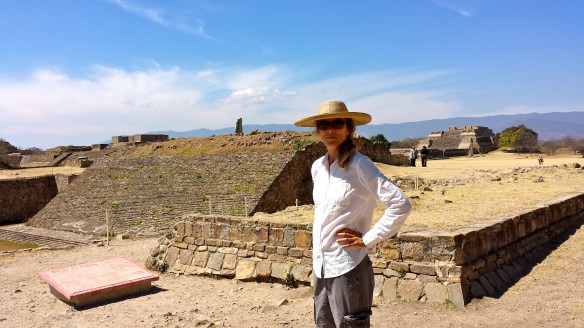
Every morning at 7am, everyone is welcomed to join in on a hike with other visitors, neighbors and the dogs through the 40+ acres of Casa Raab grounds. It is a beautiful setting, feeling much like the hills of Tuscany, only with agave fields instead of olive trees and in the distance Mayan ruins instead of old forts. Tom kindly offered for Lucy to stay under his watchful eye one day so we could more easily explore Monte Albán and head back into Oaxaca to explore museums and have dinner. We love Lucy to death but this is a rare treat as visiting museums, nice restaurants and shopping can be difficult with Lucy in tow.
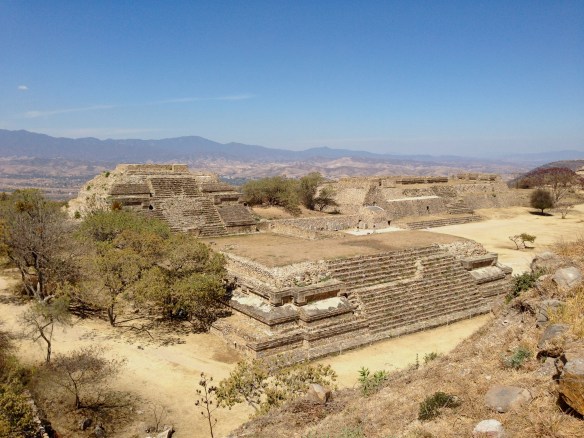
Monte Albán lives up to its reputation as a fascinating archaeological site.
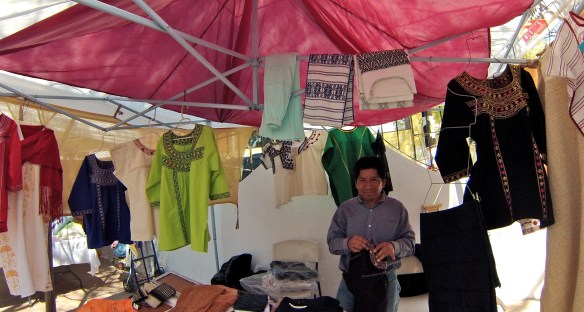
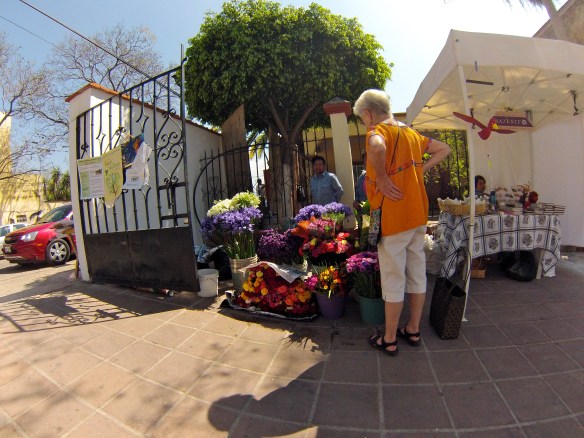
The next day we were treated by Jane serving as our first tour guide of the day and she took us to a small organic market and helped me pick out an embroidered blouse made by man from Mixes (MEHAYS), an area so remote it isn’t even mapped yet.
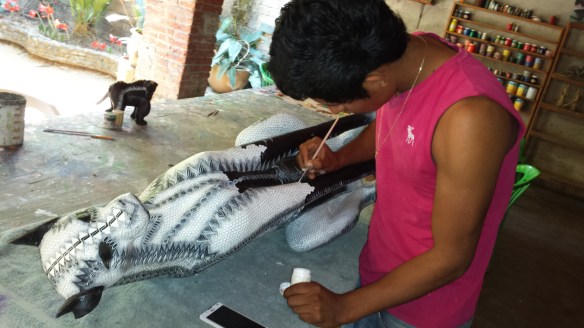
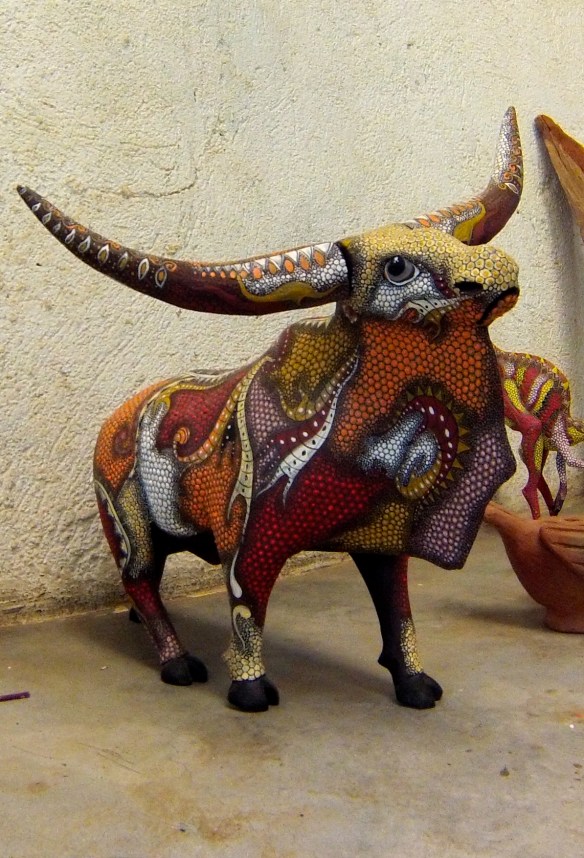
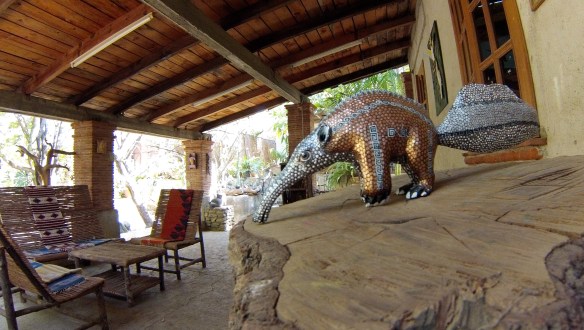
She also took us to a local artist’s studio, which had a beautiful home and workshop where we saw the most impressive alebrije (colorful wooden folk art sculptures) we’d seen in Oaxaca.
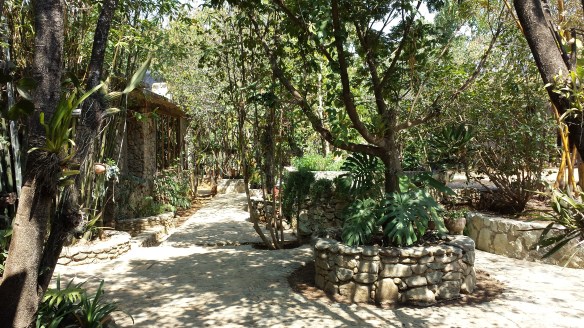
It was fascinating to see the precision of their artistry and skills, far surpassing the brightly colored traditional figures we’d seen throughout the area. This is one of those places we’d have never discovered on our own and were so grateful to Jane for the insider’s tour. But, the fun didn’t stop here, in the afternoon Judy took the lead and drove us to an incredible artist space known as El Centro de las Artes San Agustín Etla, or simply CASA.
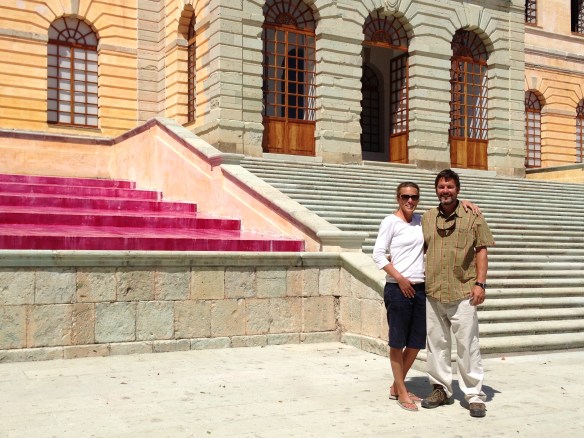
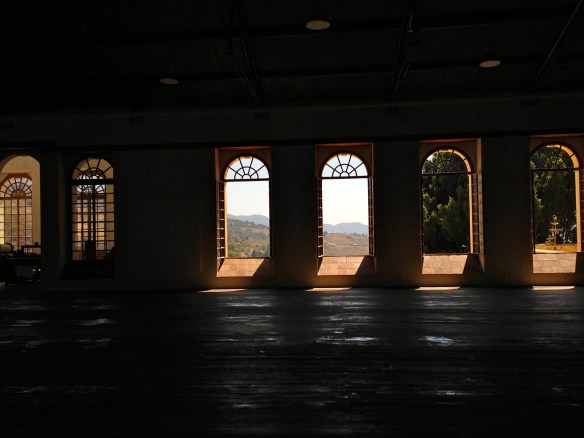
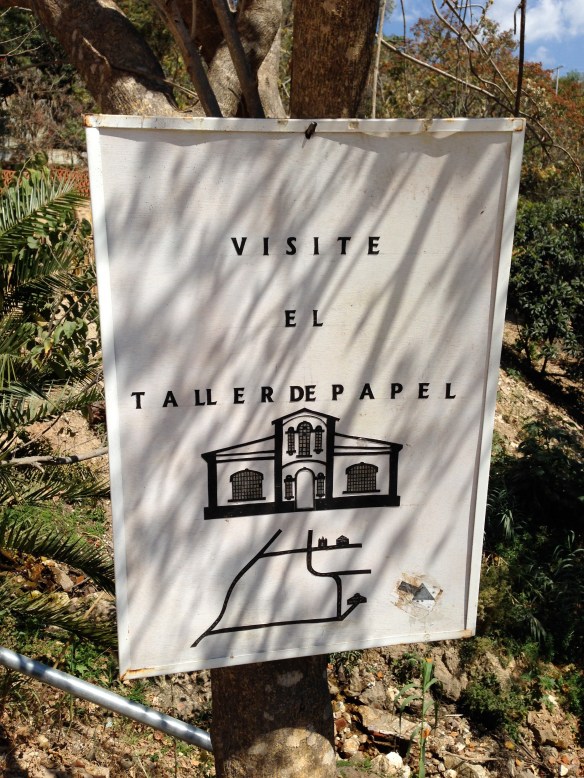
CASA is located at an old weaving factory that now has been restored into Mexico’s first eco-arts center founded by famous Mexican artist Francisco Toledo. The building itself seems like a work of art and amazed us that a factory would be placed in such a grand edifice.
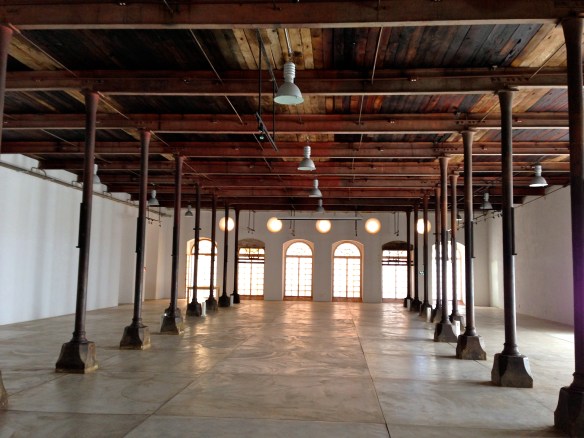
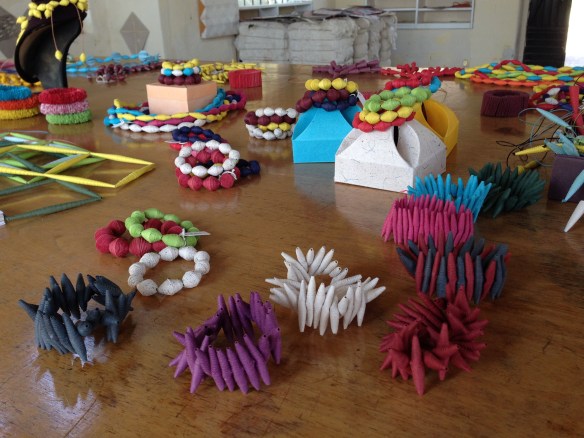
Old water pipes from a former hydroelectric plant were utilized to bring water in for Arte Papel a handmade paper facility. The grounds alone would have been worth the visit, but we were also treated to a Toledo exhibit and the opportunity to watch artists in residence working on intricate fabric creations, printmaking and papermaking.
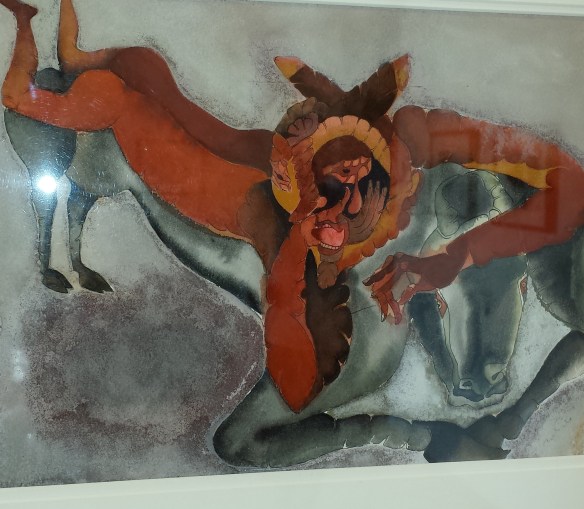
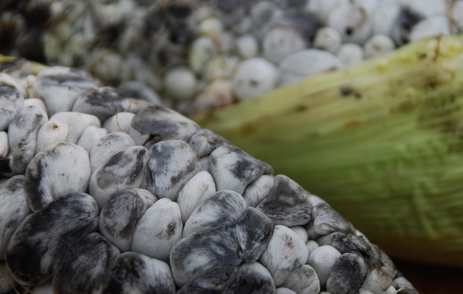
We returned to a farewell dinner of the most interesting dish I’ve tasted since we came to Mexico. Judy and Jane made Huitlacoche (weet-lah-KOH-chay) served over pasta. What is Huitlacoche you ask. Don’t worry, I asked too. Well, simply put it is corn smut or fungus. Oh yes, nothing but the best for us, LOL. Seriously, it was so delicious and is considered a delicacy to many, now including us. You may see it in the states marketed as Mexican truffles, but really there is no need to spin it, it’s fungus and it’s fabulous.
Finally on the morning of our departure, we said our teary goodbyes as if we had known this group for decades. Loaded down with gifts (beautiful bread from Tom and Judy, mezcal gourds from Rebecca, a belt from Jane and the bag from Debbie) we aimed the car back to Huatulco and those windy roads.
Our stay was way too short, but this was definitely a quality trip and truly called for a hasta luego and not an adios to our new amigos. If you are reading this, guys, we want to thank you SO MUCH for a wonderful time!
Oaxaca This Way
When we first pulled into the outlying parts of Oaxaca City, we thought, this is what we drove 6.5 hours to see? But as soon as we turned into the colonial downtown we knew right away we made the right decision.
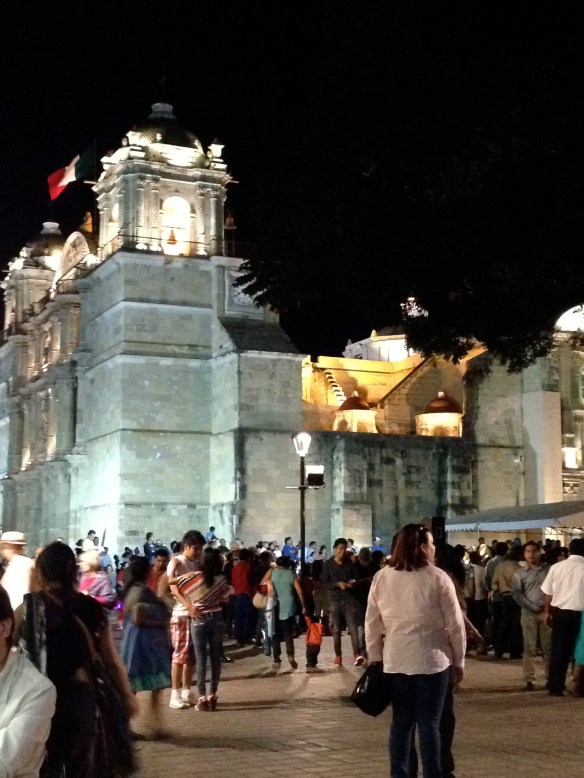
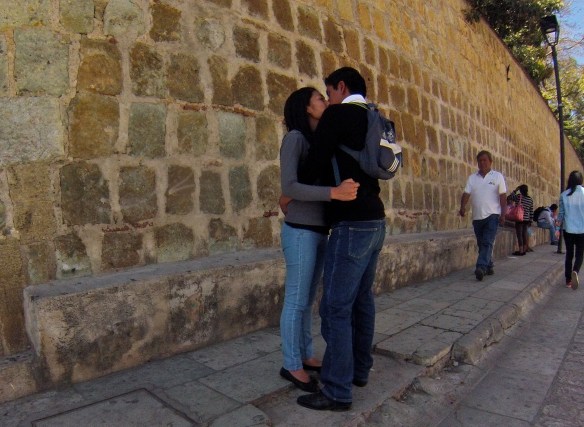
We arrived late in the day, but after a spin around the Zócalo (the main square and center of town), a leisurely bite to eat and an evening of people watching, Oaxaca (wa-ha-ka) began to live up to its billing. Oaxaca evokes an old European city with a special Mexican touch. On this and most Sunday evenings the Zócalo is filled with live music, people dancing, families strolling and lovers embracing. 
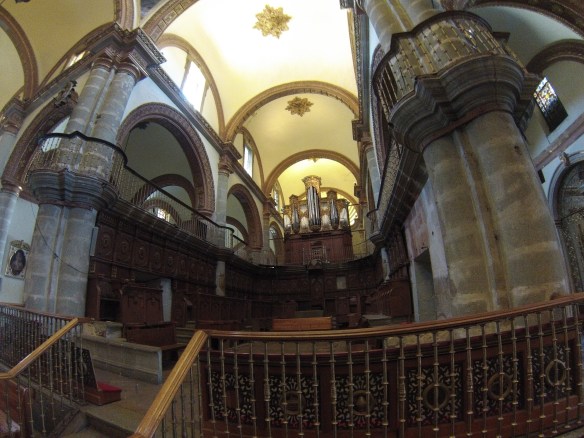
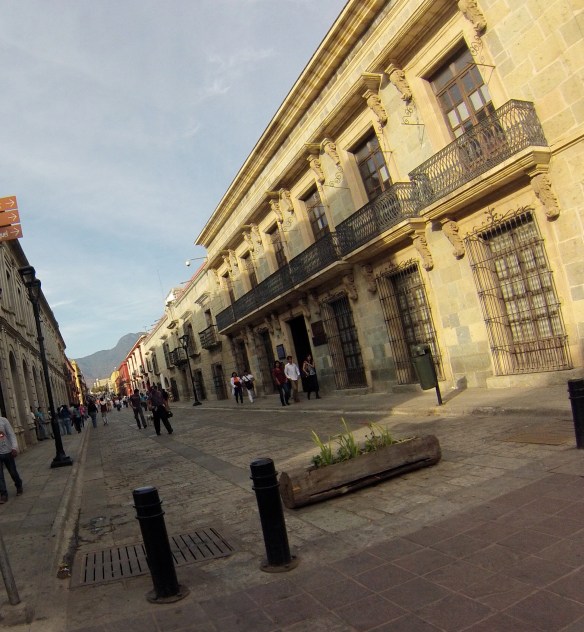
What we found so fascinating was that, even though this is an old city, full of churches, gorgeous old stone buildings, churches, cobble stoned streets, and did I mention churches, it not only preserves the historical but also celebrates the new.
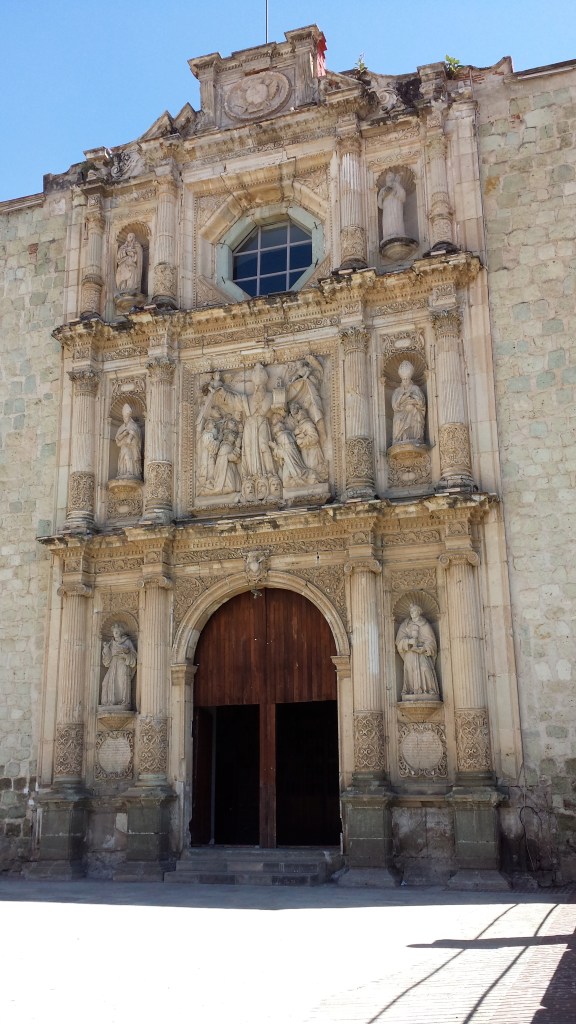
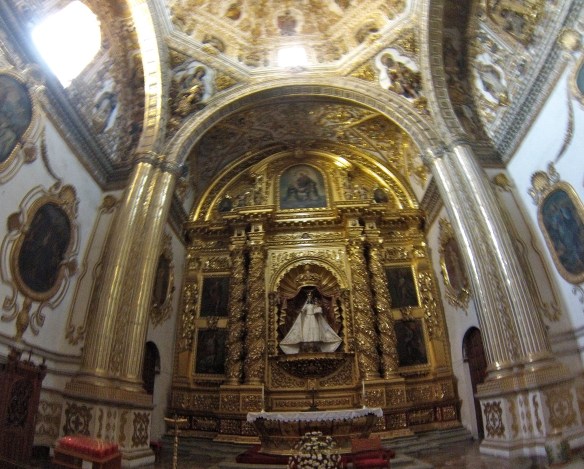
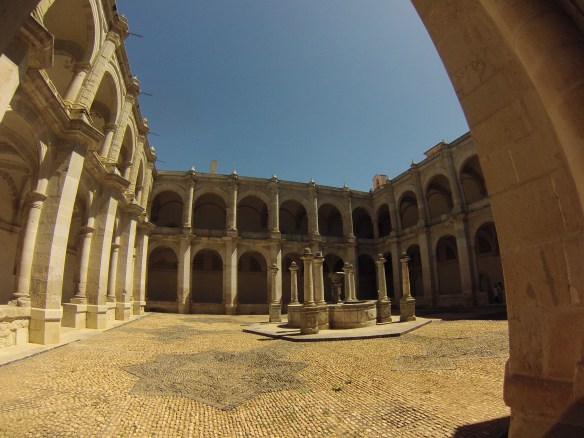
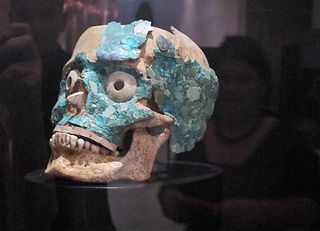
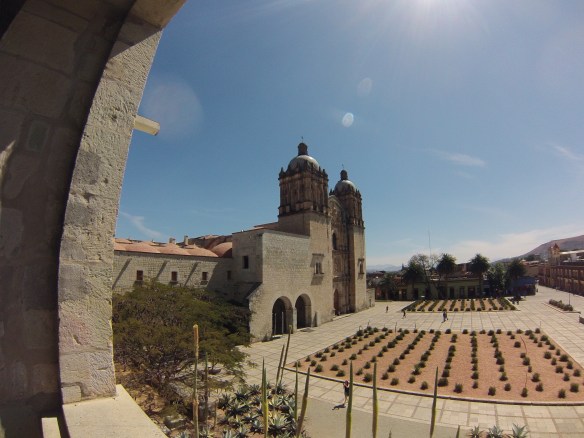
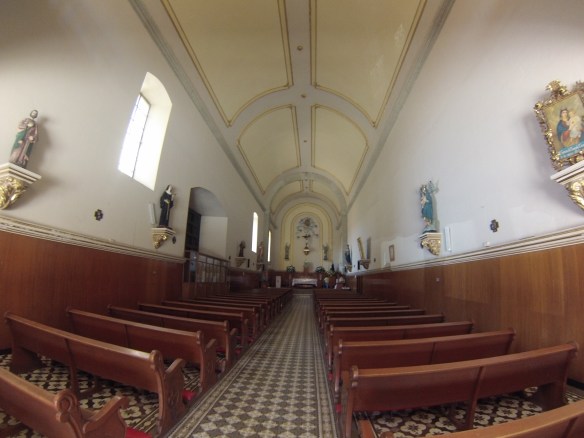
The churches range from the highly baroque to the modestly simple and everything in between. Most of them are working churches and not museum pieces. But Santa Domingo’s former monastery now is home to the fascinating Museum of Oaxacan Cultures and Botanical Garden.
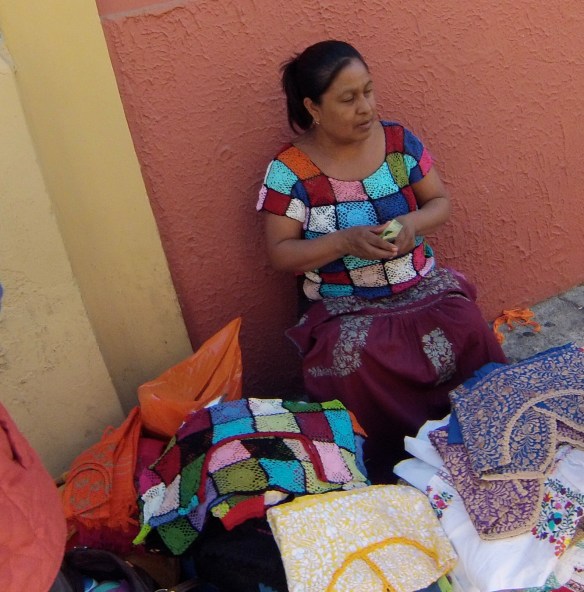
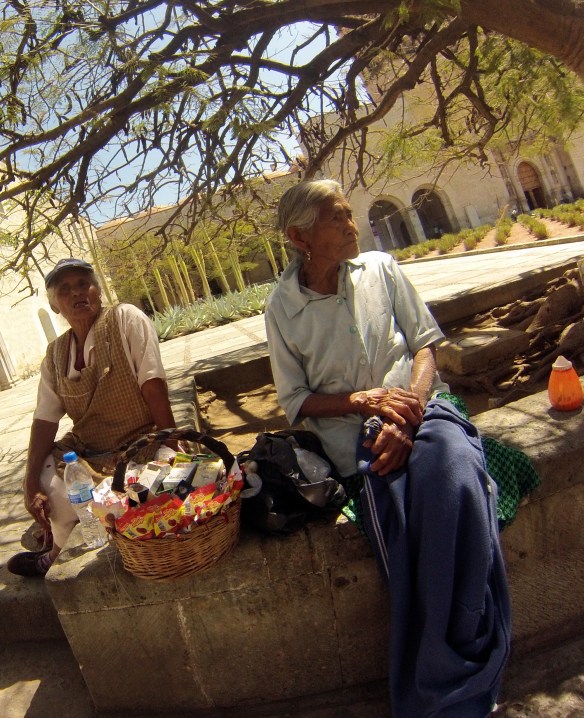
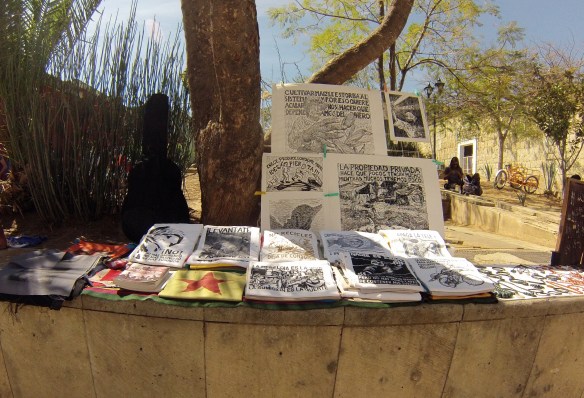
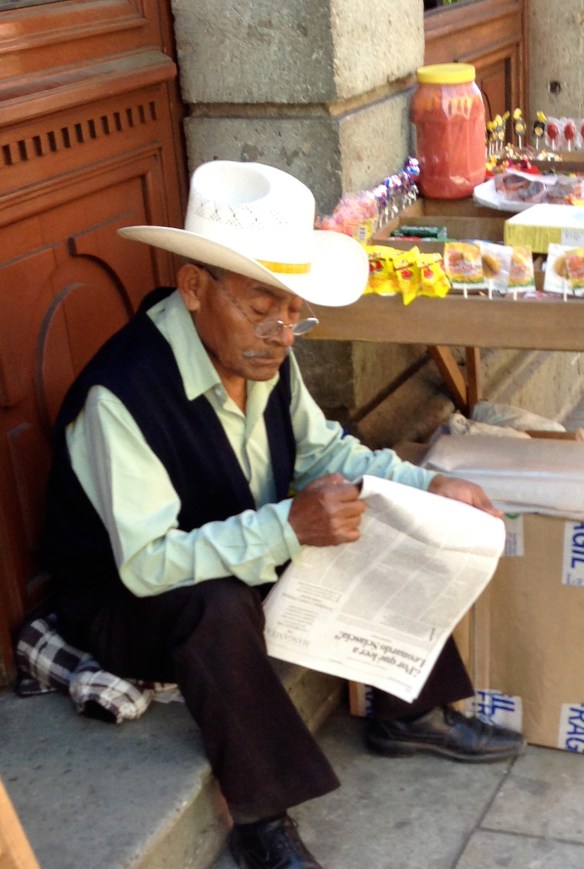
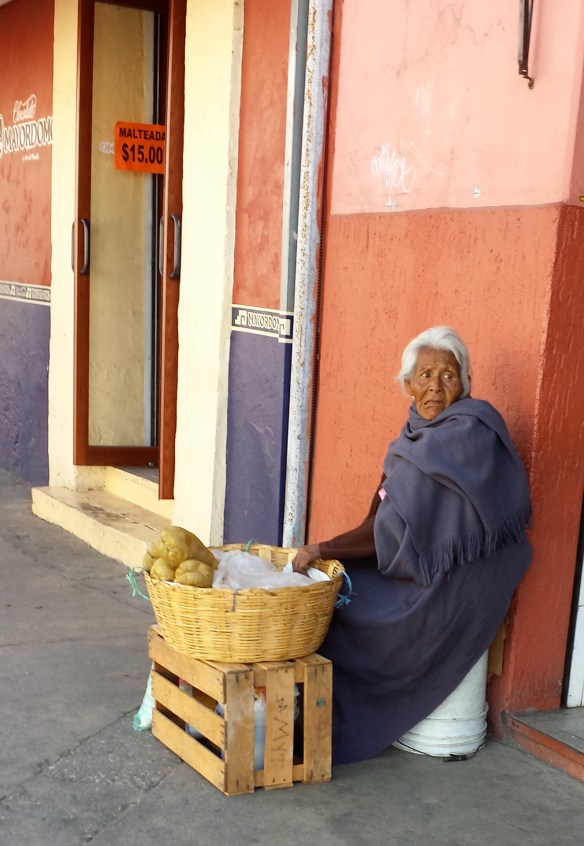
Indigenous peoples sell their crafts on the streets and in the markets and along other streets you’ll find young artists selling their creations.
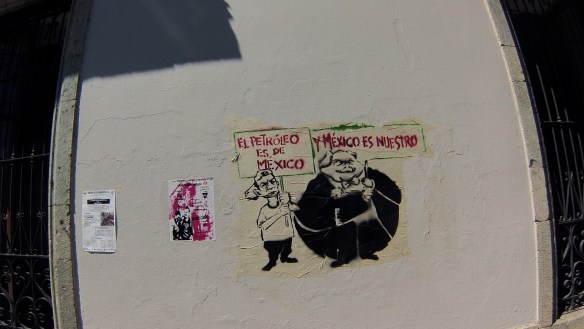
Young people freely show their passion towards each other as well as their political passions through physical protests and visual ones. The political graffiti is fascinating.

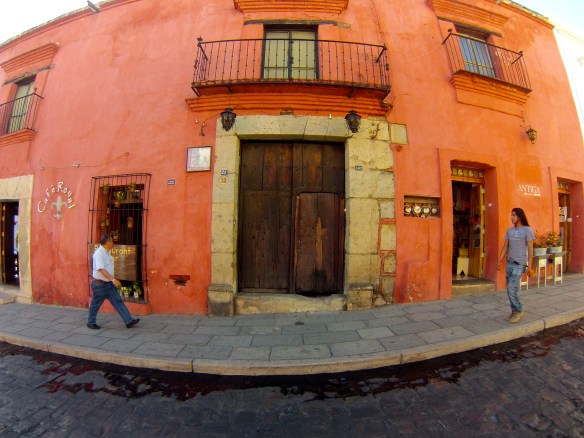
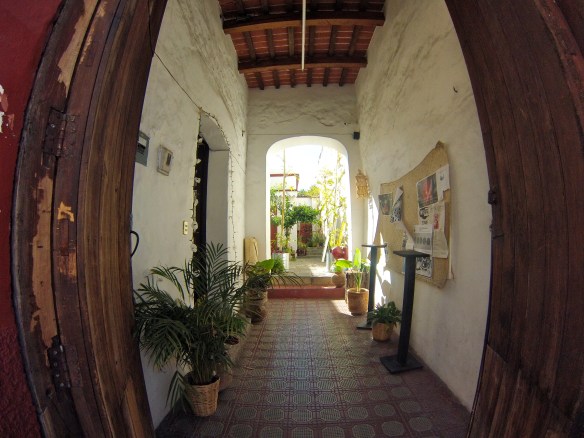
It was just enjoyable walking through the city taking in the bright colors and finding delightful courtyards behind wooden doors. Impressive stone homes from the 1600s still
stand and house both historical and contemporary museums, art galleries, libraries and host film festivals.
Click here to check out the cool doors of Oaxaca.
What also is special about Oaxaca is the number of indigenous people who live here. We heard estimates that the many indigenous groups, the Zapotec and Mixtec people being the dominate ones, make up 1/3 of the population of Oaxaca, with many of them speaking their languages and not Spanish.
The woman are tough cookies; strong and noble. One lady let me have it when I was taking a street shot outside the market place and she did not want to be a part of my tableau. You don’t have to speak Zapotecan to know she was pissed off. From then on, I asked for permission to take photos, even if it was of a piece of fruit. And they always said yes. Speaking of fruit, click here to read about the food.
Oaxaca Means Food
This is a food town for sure, with corn, chocolate and mezcal being the cornerstones. Once again what is compelling about Oaxaca is the way they preserve and celebrate their traditions, but also welcome the modern take on them. And food is no exception, from the fantastic marketplaces and family restaurants, to today’s chefs putting new twists on locals dishes.

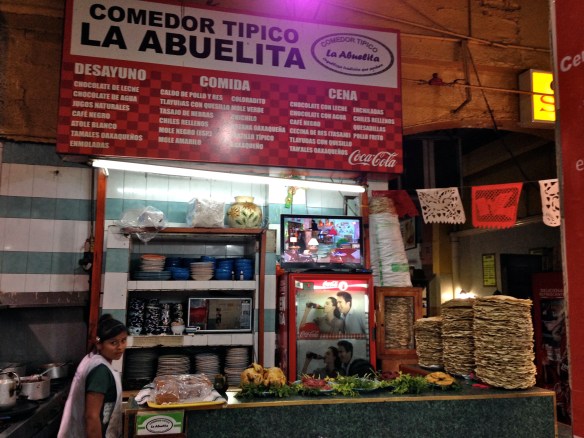
Comida, is the main meal of the day. It includes sopa (soup) or ensalada, a main dish and postre (dessert). It is often accompanied by an agua fresca(fruit flavored water). That is the milky looking drink on the table.
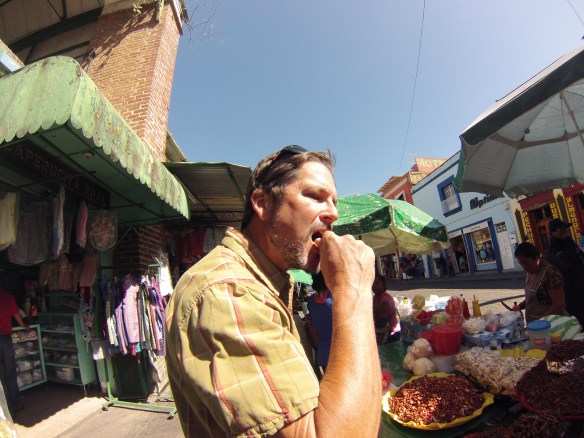
One tradition is chapulines, baked and spiced grasshoppers. They sell them by the bagful in the marketplace, but we also saw them on restaurant menus. And yes, we did try them. We just sampled some from a street vendor. Peter’s was spicy and crunchy and mine tasted like a dill pickle and crunchy. Let’s just say we can check that off the list.
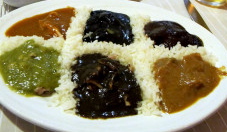
Chocolate comes in numerous forms from a beautifully crafted hot chocolate to the famous mole poblano. The complex sauces can be bought throughout the markets and of course ordered in restaurants. Many debate if there are 6 or 7 official types of moles, so Peter decided not to try just one and ordered a tasting that came with roasted pork in 6 different moles.
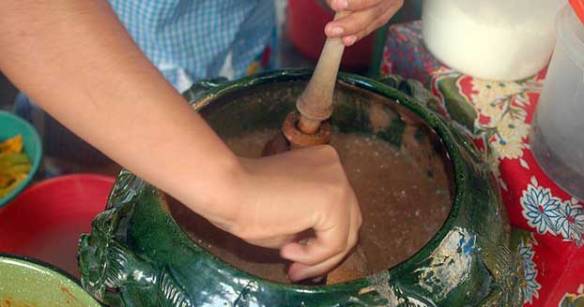
Hot and cold chocolate drinks are made with the same intensity as your coffee barista. They scoop steaming milk into ceramic pitchers and break in chunks of dark chocolate from solid bars and feverishly mix and froth with a traditional wooden dowel called molinillo (moh-lee-NEE-yoh)
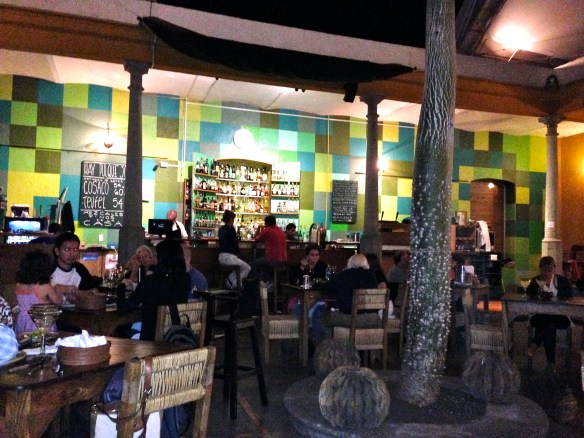
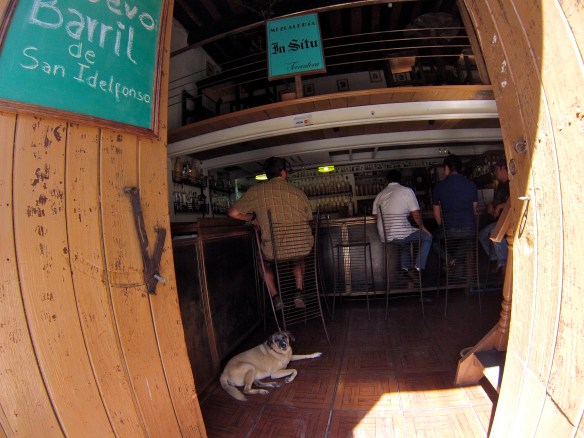
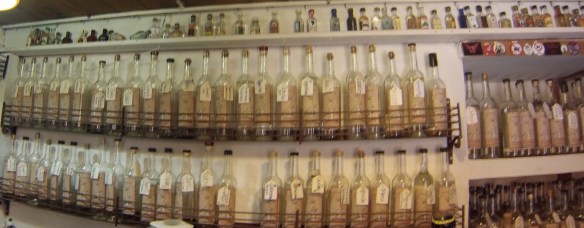
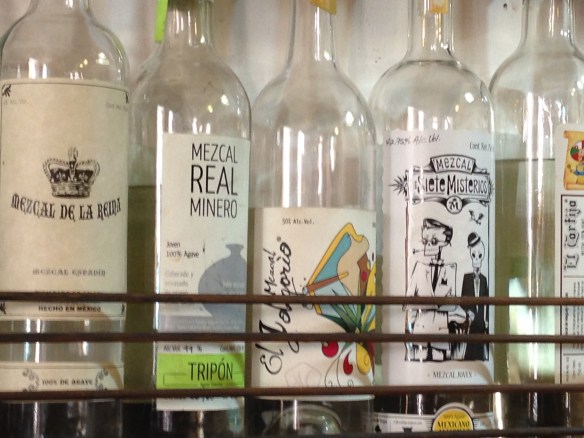
One thing Oaxaca is really into is Mezcal – not the rot gut downed by Hollywood banditos, but rather high-end, aged clear Mezcal, sin worm. Mezcal is made from maguey, a type of agave and is meant to be sipped straight. Thanks to a tip from our friend George, we went to a little hole in the wall mezcaleria called In Situ. Its walls were lined with hundreds of bottles of Mezcal, and only Mezcal.
The liqueur is made in dozens of factories around Oaxaca, from Mom and Pop shacks to fancy places with tasting rooms that would not look out-of-place in Napa. A red-cheeked round little man named Ulisses Torrentera runs In Situ, and he wrote the book on Mezcal (literally – he handed us the book he wrote but alas it was in Spanish). However, even with his limited English and our nearly non-existent Spanish we learned a great deal from him and tasted several varieties before settling on a bottle with a nice smokey flavor to bring back to the boat.
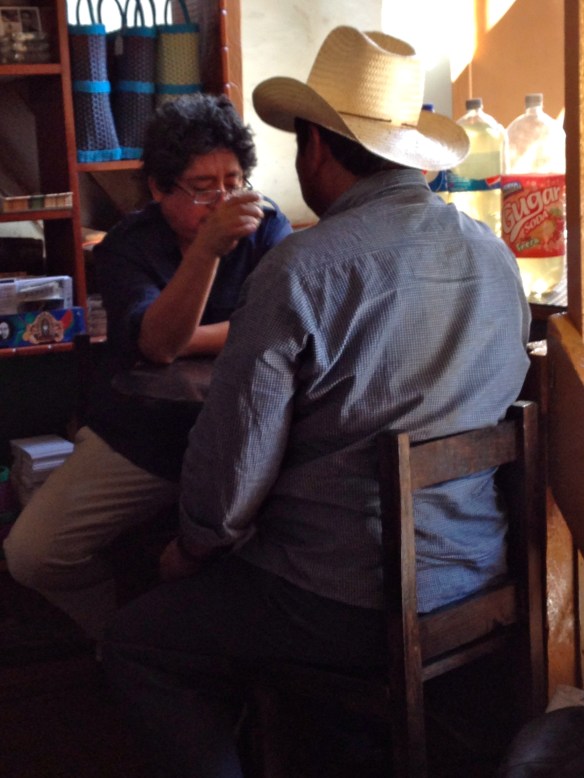
It was fascinating to watch a farmer come into the shop with several large soda bottles filled with his product to sell to Ulisses. After tasting it, Ulisses let us know under his breath that this particular batch was not very good and he wouldn’t be buying any. We felt bad for the farmer but that’s business I guess. Although it isn’t as well know as tequila, mark my words, I predict it will soon be the next drink de jour in the states.
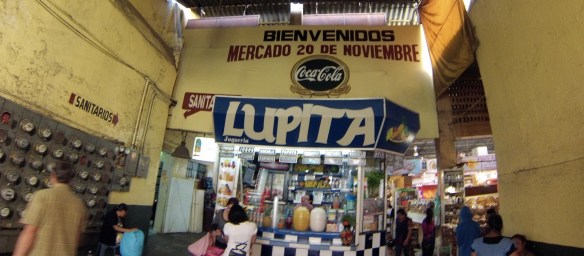
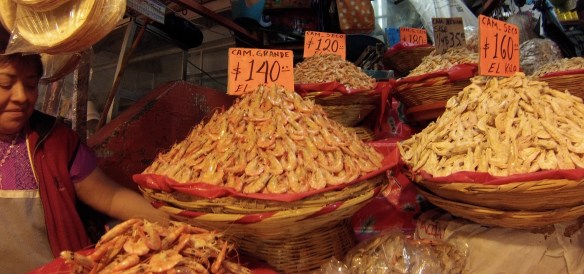
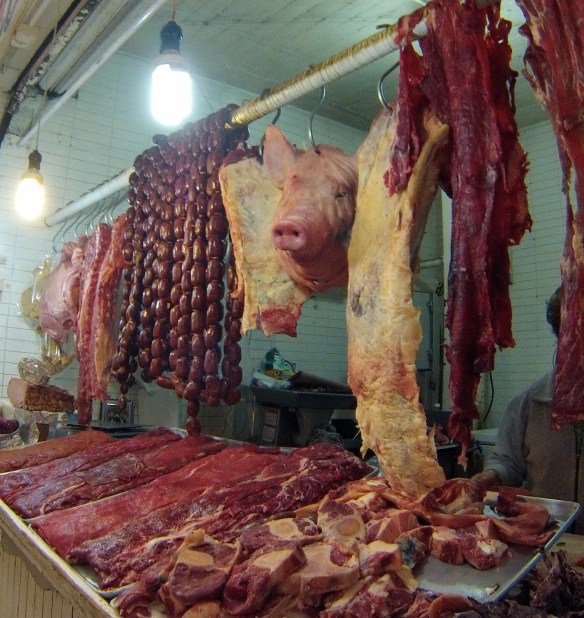
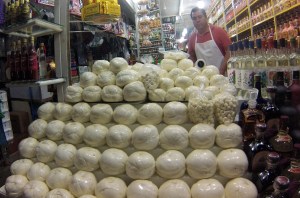
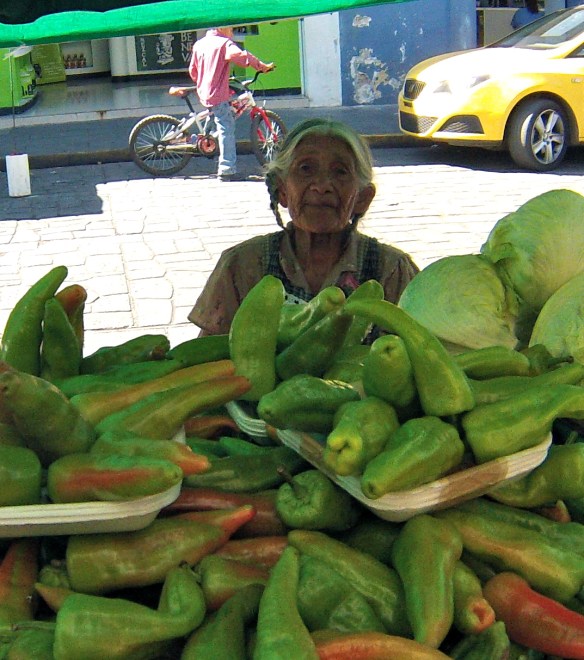
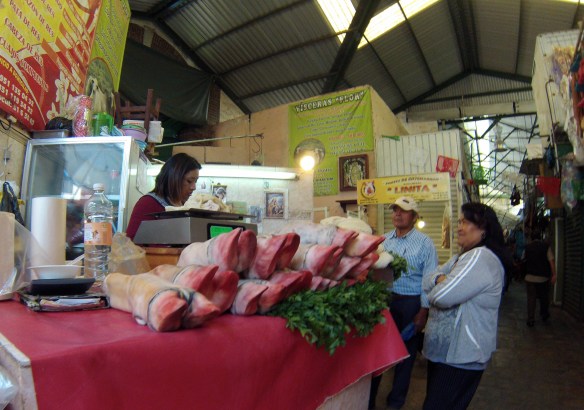
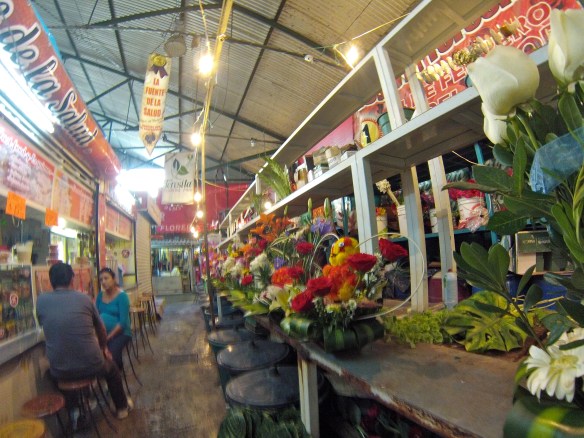
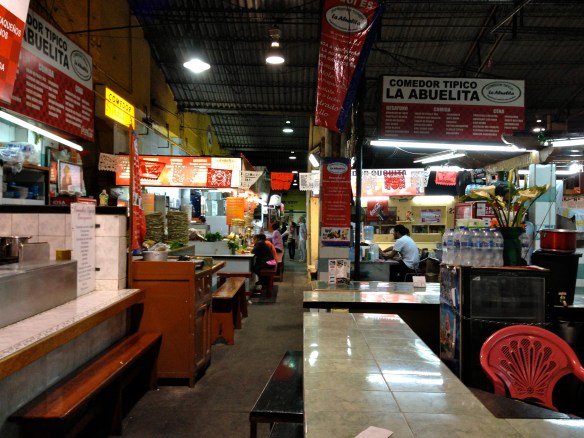
The Juárez and 20 de Noviembre mercados are giant labyrinths of food and craft vendors selling everything you can imagine and some things you can’t. On our days, yes we made several trips there, we ate and sampled and bought everything from Oaxaca cheese (like string cheese), chocolate to those damn grasshoppers.
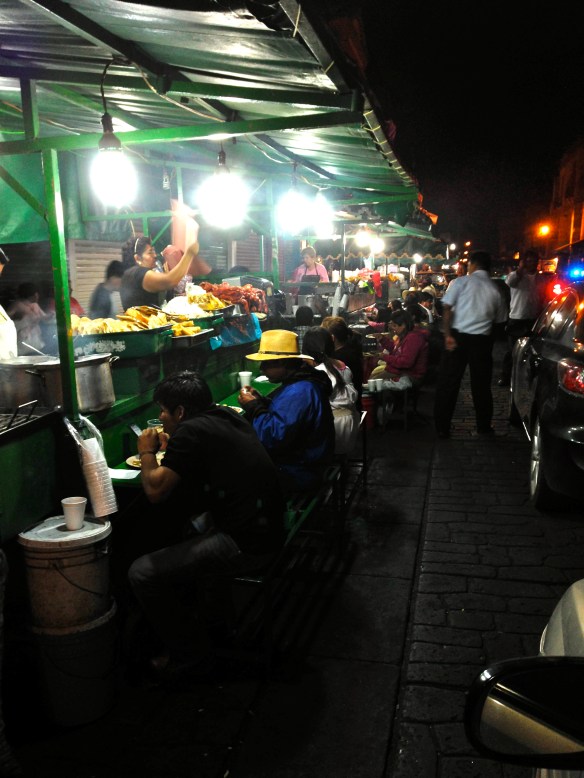
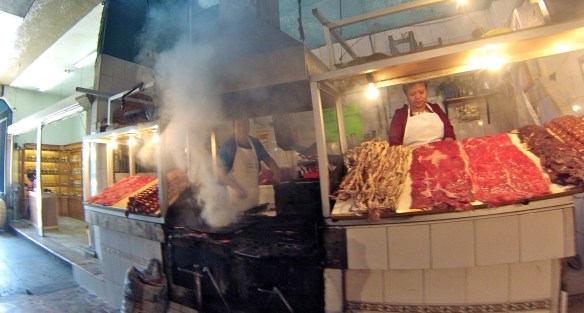
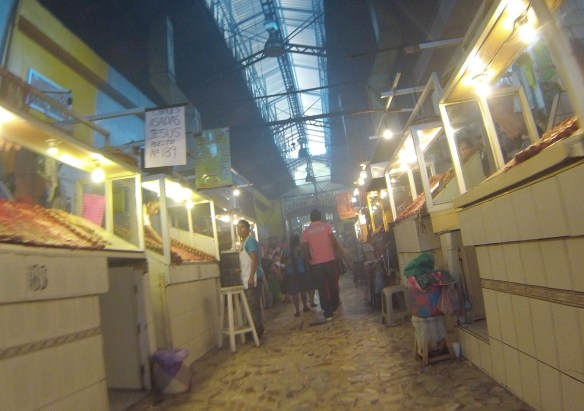
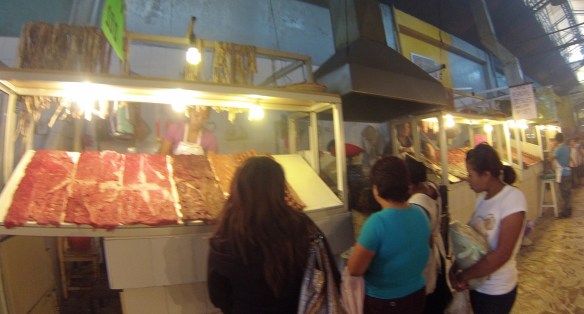
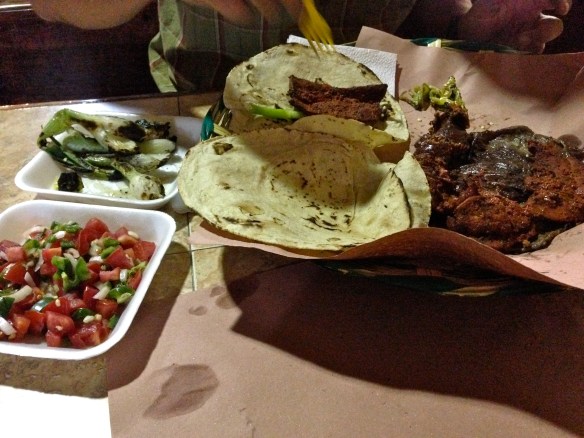
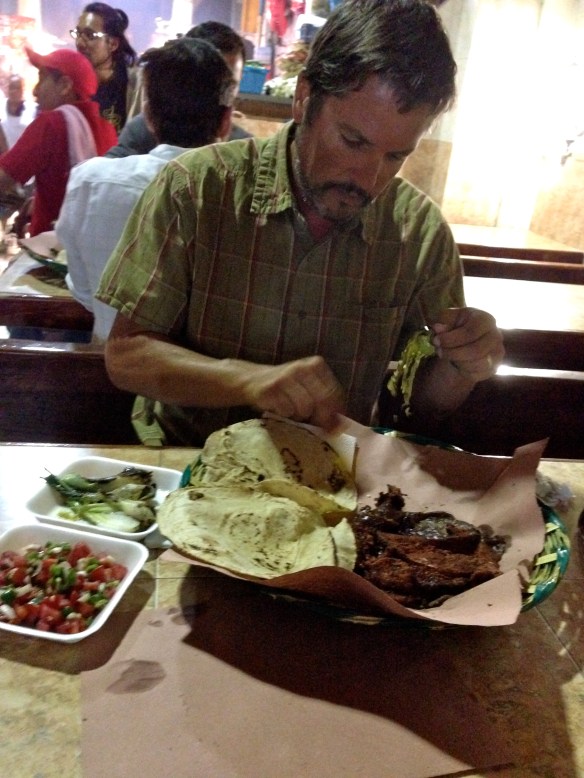
Peter was in carnivore’s heaven when we wandered into the smoky carne asada alley. It’s about 200 feet long and lined with glowing barbecues on each side. You can barely see your hands in front of you, due the smoke. He didn’t know what the procedure was, but after a little Spanish and a lot of pantomime, he was handed a plate with raw peppers and scallions and pointed to the row of identical stalls grilling beef and sausage.
He picked one and handed his plate and the vegetables to the grill master and said “mixto”. What he didn’t know was that the meat was sold by weight and, not specifying an amount, they decided how much he wanted. We sat and waited and soon a kilo, maybe more, of perfectly grilled meats and the aforementioned scallions and peppers as well as tortillas and salsas were delivered to the table. It was really a meal for two or three people and all for about $9.
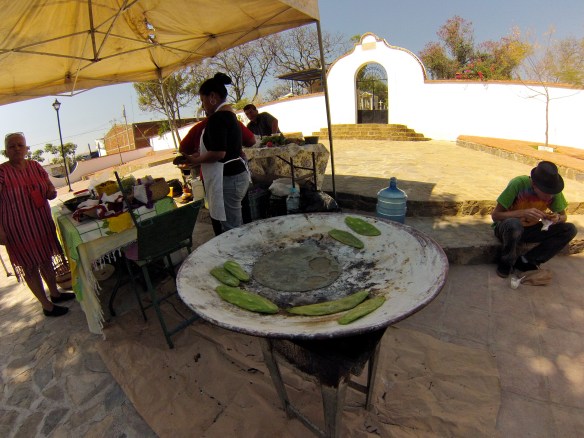
I went to another stall in the marketplace for a tlayuda. This is a pizza-size baked tortilla that is covered with any combination of things, but always based with black bean paste.
Again this was enough food to feed the town and was only $5. I wasn’t successful finishing mine (I shouldn’t have filled up on those grasshoppers 😉
Click here to read other posts on our road trip to Oaxaca or for post on touring the city.
Little Tehuantepecker
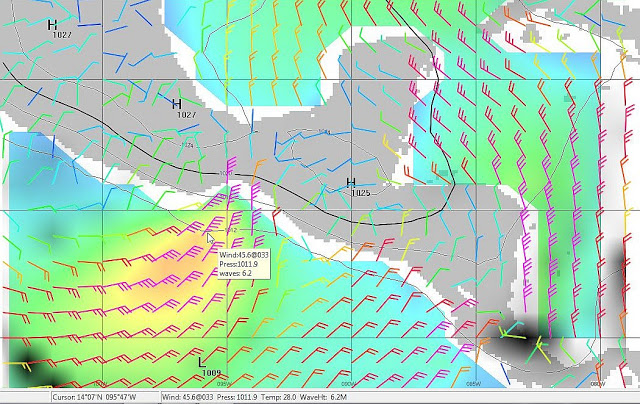
Crossing the Gulf of Tehuantepec is one of the most dreaded pieces of sailing in Mexico. The gulf is a narrow isthmus separating the Pacific from the Gulf of Mexico. When northerly winds are blowing in the Gulf of Mexico they cross the isthmus into the Tehuantepec and a narrow gap in the mountains funnels and accelerates the wind. What may be a pleasant 15 knot breeze on the eastern side can become a 40 knot gale on the western. This is an example of a prediction of the Tehuantepec winds (thankfully, not for our crossing of it).
These are GRIB files – raw government weather forecast data displayed graphically. This one shows 40-45 knots of wind in the middle of the Tehuantepec. (I keep writing Tehuantepec because I like the way it sounds, although not as much as Topalabampo in the north). That’s enough to create 15 – 20 foot seas at very short periods – ie, boat breaking stuff.
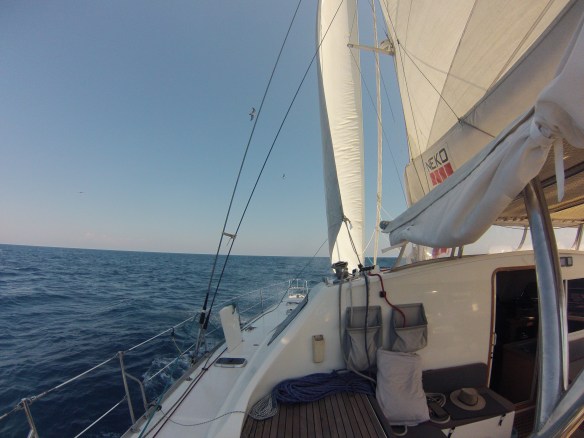
We download these images, along with other weather resources to see what we will get whenever we go anywhere. We looked intensely at weather predictions before leaving on the 250 mile (2 day) trip across the Tehuantepec. We were hoping to leave Monday morning and our predictions varied but some showed very light winds for the entire trip and some showed a short period of heavier winds Tuesday morning. We decided to brave it and left with one other boat, Wanuskewin with Mike and Holly aboard. Sure enough Tuesday morning, well more like Monday night, just as we were approaching a shallow sandy bar clogged with large fishing boats, the wind piped up. We saw a max of about 35 knots, which is a lot of wind, but we reefed (reduced the size of our sails) and carried on. It only lasted a few hours and for the rest of the trip we had little to no wind.
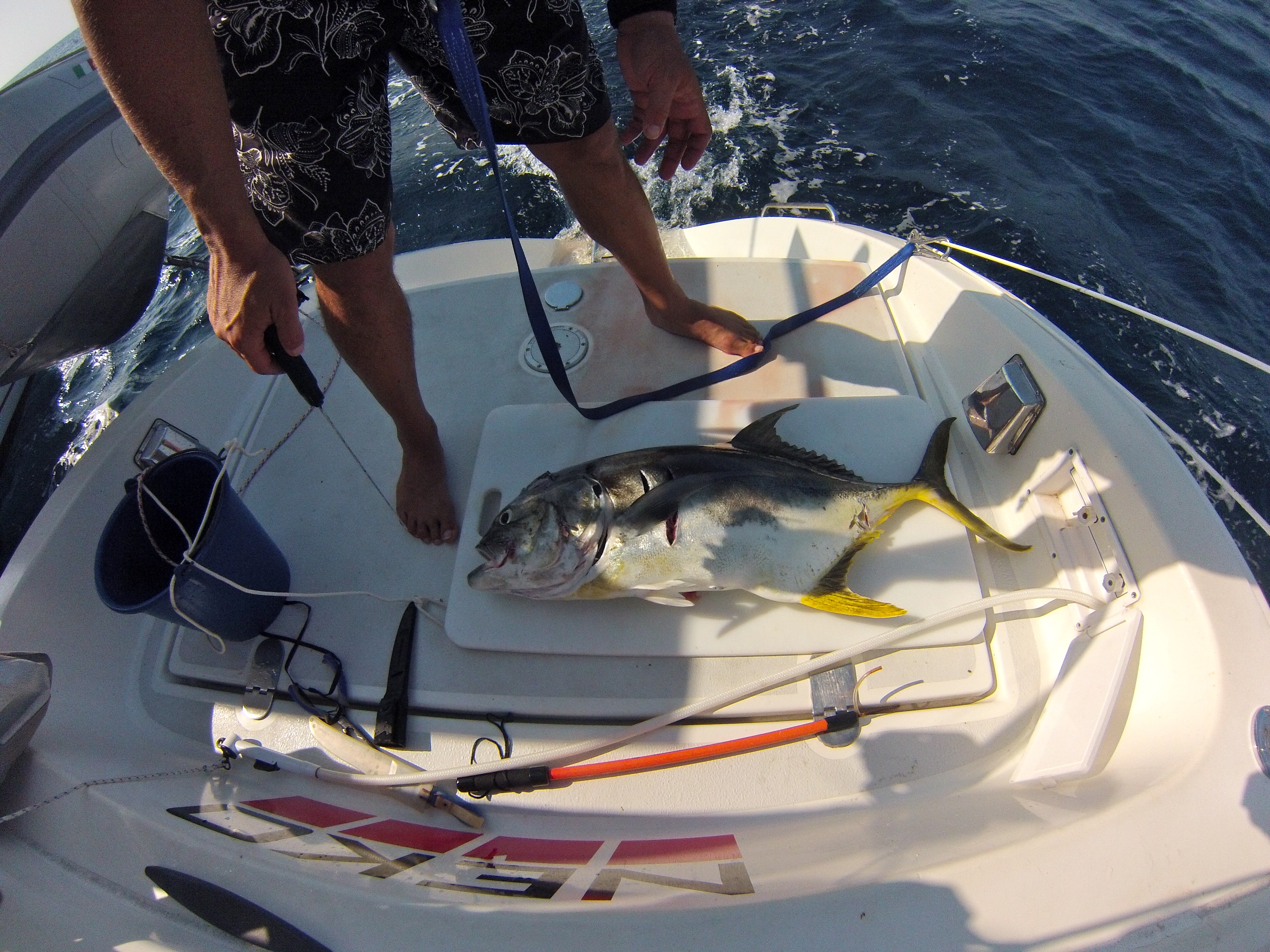
Calm enough catch and filet this crevalle jack on the back of the boat. So those weather forecasters were pretty close to spot on.
By Tuesday morning (and by that I mean about 3 am – we sail the boat 24 hours a day, taking 3 hour shifts) we were ready to get into port. It was only about 2 miles away and we were motoring right for it in calm weather. Arrivals after a few days at sea are really rewarding. However, our trials were not quite complete. Suddenly, the boat lumbered to a halt and the engine stalled. Looking over the side, I could see that we were snagged in a large and long fishing net. What was this thing doing strung right across the main channel into a large port? Who knows but the fishermen were soon on the scene and, characteristic of most Mexicans we’ve met, they were not angry and took their loss in stride. They helped me cut the net away and left to salvage what they could of their catch. This left a large chunk of net tangled around our propeller, daggerboard and rudders like a fly in a giant spider web. Mary and I anchored the boat in the calm ocean to figure out what to do. Mike and Holly from Wanuskewin witnessed the whole thing from a mile behind us and were super kind to anchor near us and help.
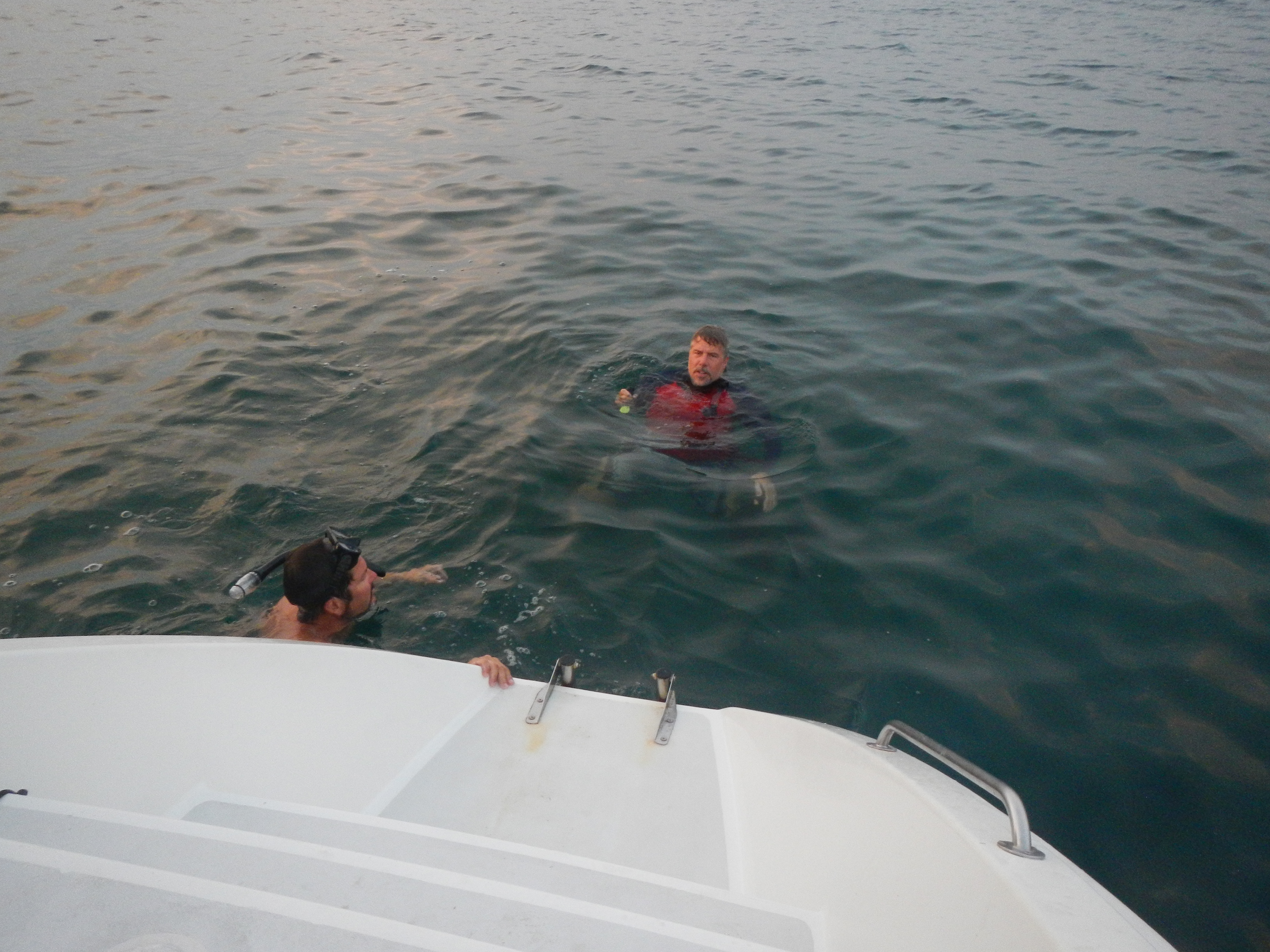
Mike and I dove with snorkels and knives to saw away the remainder of the net that was so tightly twisted around stuff under the boat, being careful not to let it tangle us. After about an hour we had every last bit of it off. We saved what we could to throw out so it would not catch any more sea creatures and mourned the fish who were caught in the discarded net. I kept some of the floats from the net as a reminder of this little battle.
The Road to Oaxaca
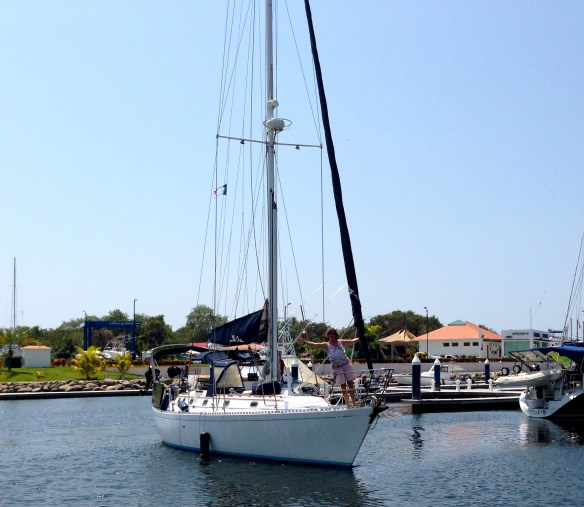
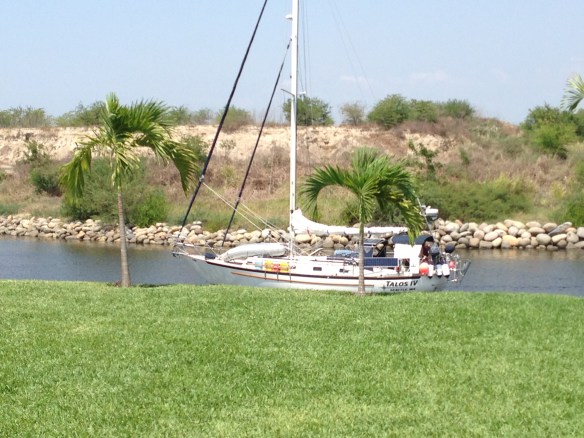
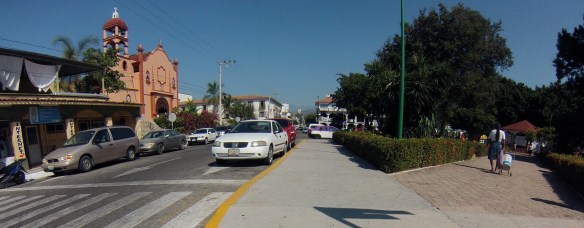
We arrived in Hualtuco to find long stretches of empty beaches, a nice marina, but a sterile town.
This is one of Mexico’s planned tourist areas, trying to make up for the sins of Cancun and Ixtapa by thinking things out before slapping up high rises on every square inch of land.
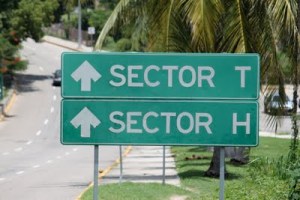
They succeeded in avoiding the spring break blight, but forgot about history and culture, resulting in a charmless town with quaint neighborhood names like
sector A & sector C and, oh yes, everyone’s favorite sector T. Most boaters hole up here waiting for a favorable weather window to cross the infamous Gulf of Tehuantepec (Click here for that post). Amazingly when we arrived there was such a window and several other boats we knew were going. So what to do: do a quick turnaround and take the opening or stay for an inland adventure? After our fun stop in Acapulco, we were itching to see more sides of Mexico, not just beach towns, and Oaxaca (wa-ha-ka) was at the top of our list. Many warned against the long journey and torturous roads, but after researching and hearing that our NY pal George and his wife Laura had just had a fantastic trip there, so we couldn’t resist. Besides Lucy had already rented a car 😉
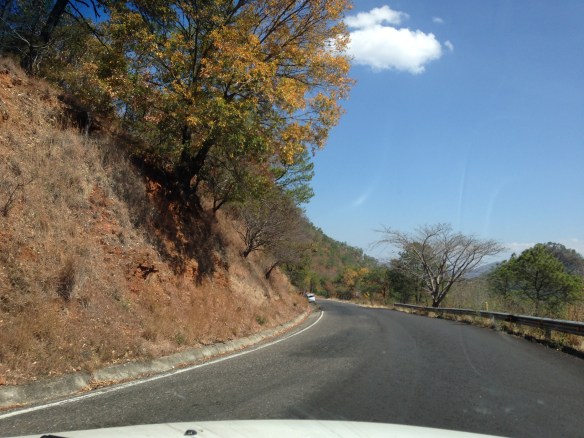
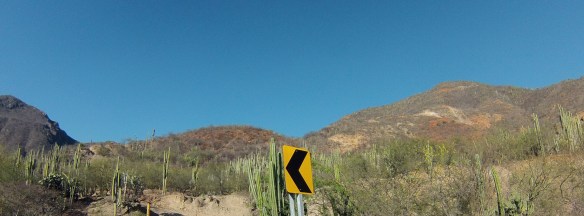
So we drove about 250 miles from Huatulco to Oaxaca. We will do a longer posts about the trip, but first we had to get there. Many folks warned us that the drive would be a horrible one on a bad road in very mountainous terrain. We had a lot of experience driving in mountain switchbacks from our time in Northern California and thought, “how bad could it be?” Well, the road was VERY windy and long (6.5 hours), but it is pretty well maintained.
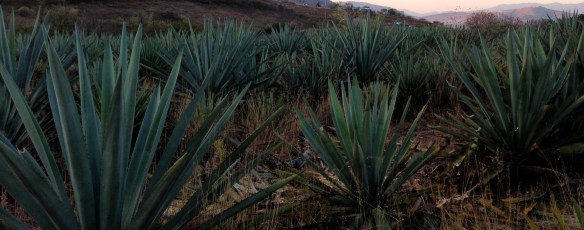
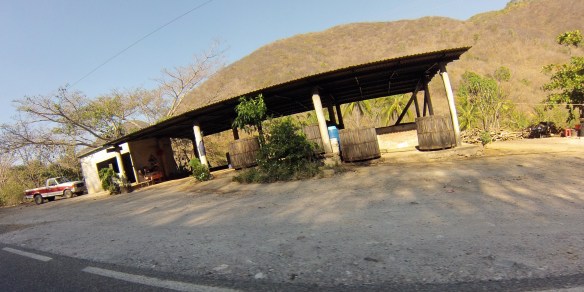
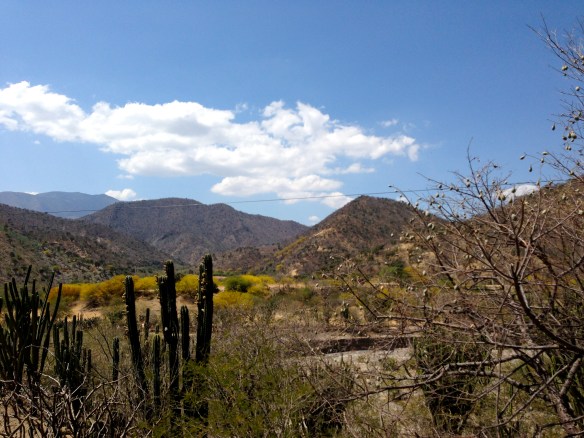
The countryside is absolutely stunning – very hilly and largely unpopulated, with many agave fields and roadside mezcal factory.
Whenever you’d approach a small town, sometimes just a couple of buildings clustered near the highway, there would be a speed bump, or several, spanning the highway, called a “tope”. Now, mind you, this was a highway that several seconds
earlier you were traversing at 70 mph. We only failed to see and slow down for about two of them and those we bounced over Dukes of Hazzard style, thinking we’d have to buy the rental car company a new exhaust system.
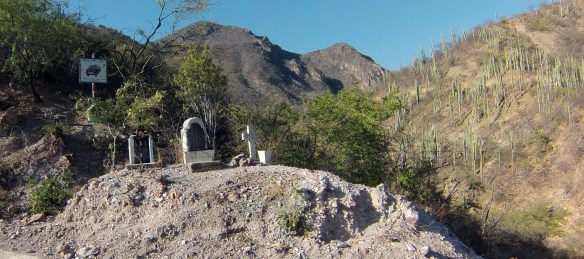
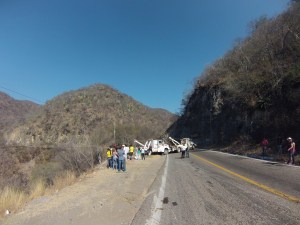
But, apart from those instances, the trip was fine. We arrived in one piece and can report that it’s not the road that makes the trip tough but the crazy drivers down here. There seemed to be a memorial at ever other turn.
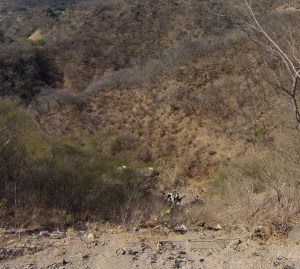
This is a truck chassis being dragged 500ft back up this hill from where it went over the edge. May whomever was in that vehicle rest in peace.
Click on photos to enlarge or click here for photo gallery
A Fabulous Trip to Sunny Acapulco
I first learned of Acapulco, in the 1970s, home sick from school, the overzealous Price is Right announcer declared the final showcase prize as “A Fabulous Trip to Sunny Acapulco!”. The Love Boat pulled into port more times than I could count and I’m pretty sure the Flintstones took a trip to Rocapulco. Sadly, in recent years the media’s main focus has been on the city’s episodes of drug gang violence, thus the demise of Acapulco’s tourist industry. Because of the latter, many boaters don’t stop here, but damn it, I’ve been waiting to see cliff divers since the 2nd grade.
So cliff divers we saw.
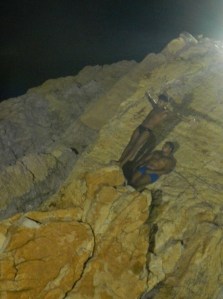
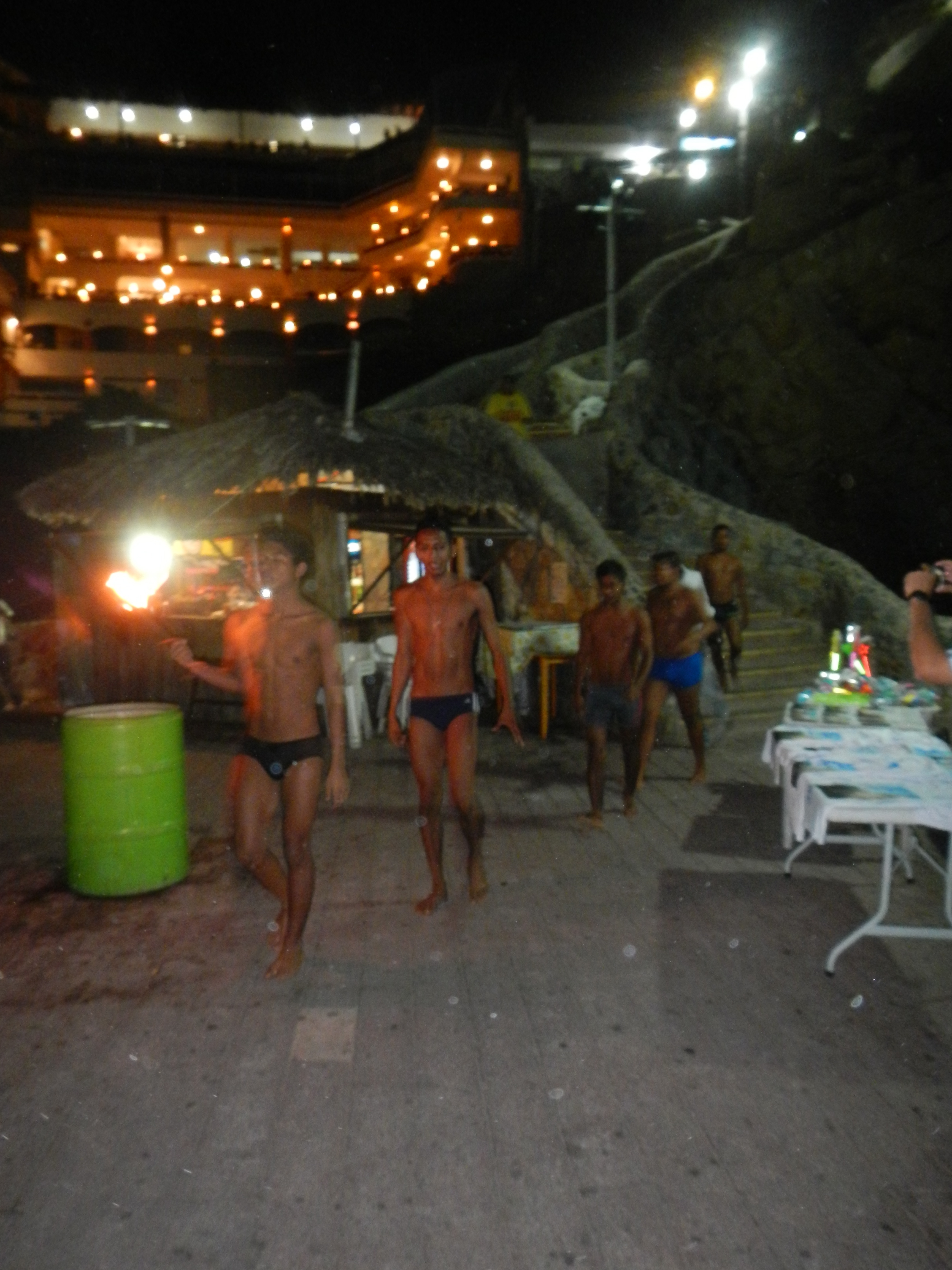
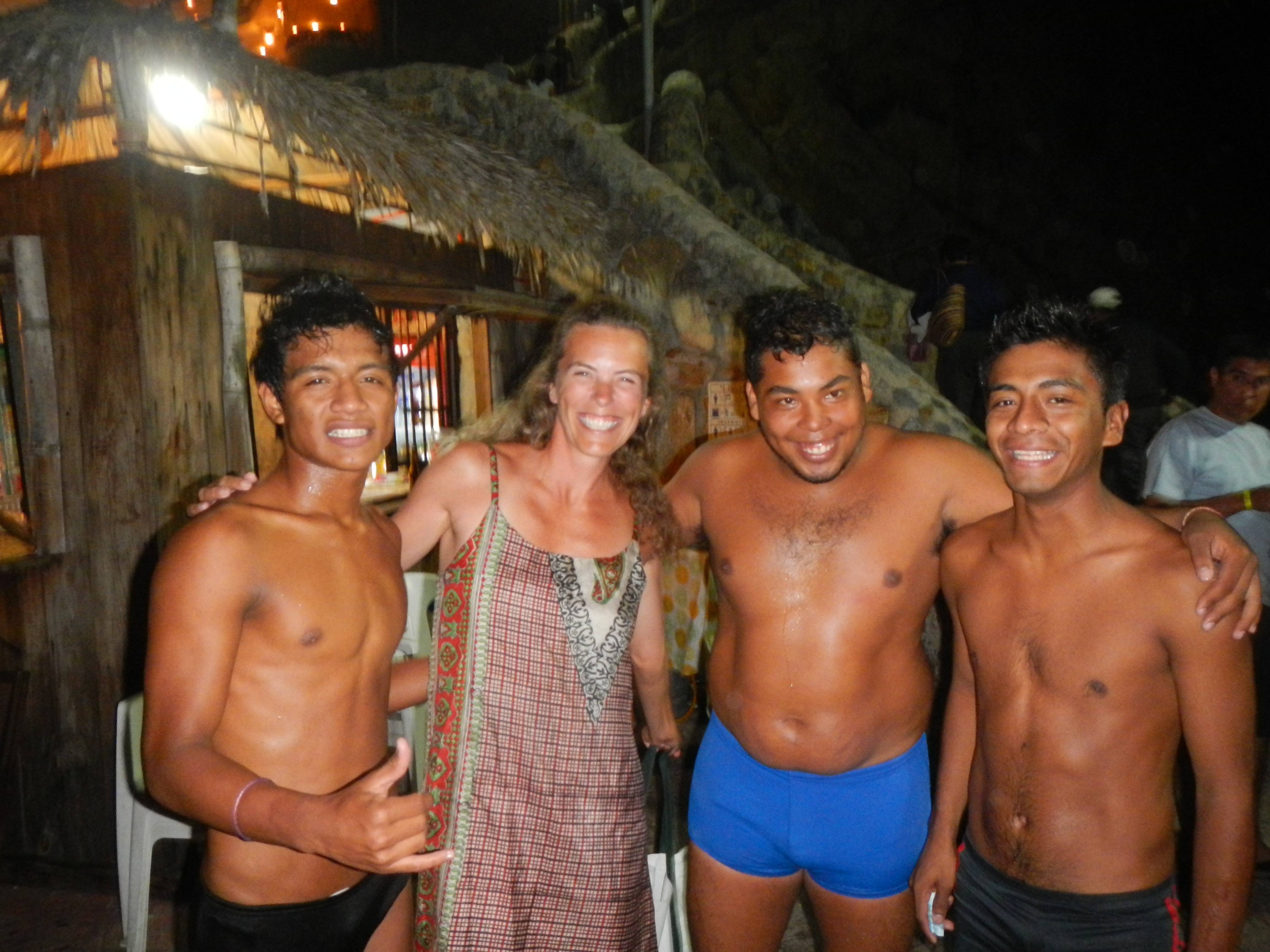
We decided to go to the night show, which is great for the drama, but not great for our camera, so sorry for the grainy photos.
FYI, there are many ways to watch the clavadistas (divers); free from the road, pay $4 for the viewing platform or pay a $15 cover fee for a table (fee includes two drinks) at La Perla bar at the El Mirador hotel. Guess which option we picked?

Peter and I had the place to ourselves and watched the divers from the best seat in the house. From our vantage point you could see the whole spectacle; the divers parading down the stairs, jumping into the narrow cove and swimming across to scale the steep jagged cliff wall (which in hindsight seemed like the most dangerous part), praying to the Virgin of Guadalupe, to the big dives from as high as 130 feet. Pretty spectacular, but there were only 4 divers and 2 of them dove in tandem. Don’t get me wrong, it was impressive, but for some reason I thought the show would last longer. Luckily there was another dive at 9:30pm, so we decided to move down to the viewing platform for round two. Here you are right where the divers hop over the wall to enter the water, making you feel part of the action. The one thing we noticed was that after 80+ years of this tradition, how simple and old school of an event it is. The divers walk down by themselves, no handlers, no cheesy music, no corporate sponsors, no “senor y señoras please direct your attention” kind of announcement. It is just the divers and their bravado.
This time there were six divers and with each one the height of the dive and difficulty increased, culminating in the final diver landing into a ring of fire in the waters below. “ooohhh, awwww” We loved it.
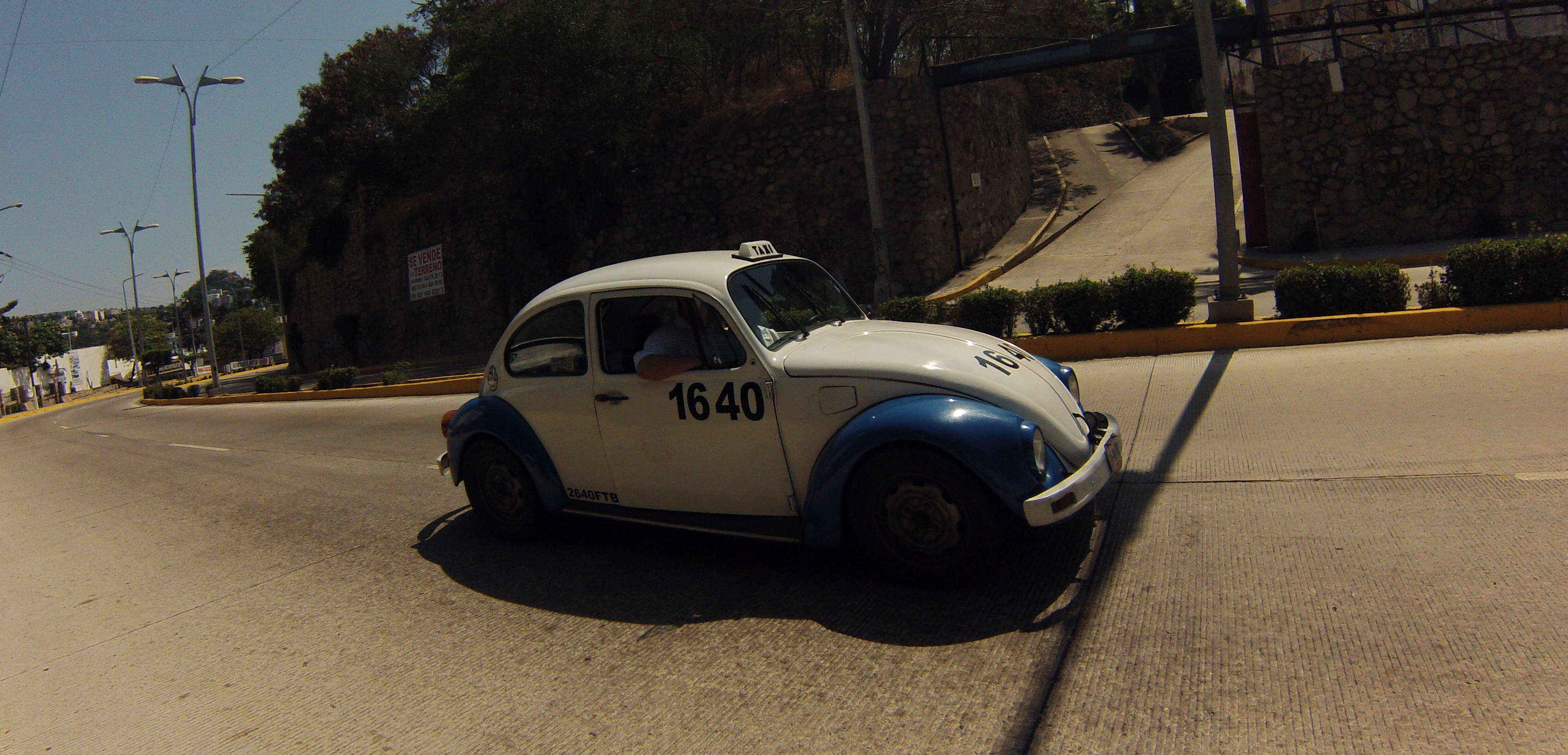
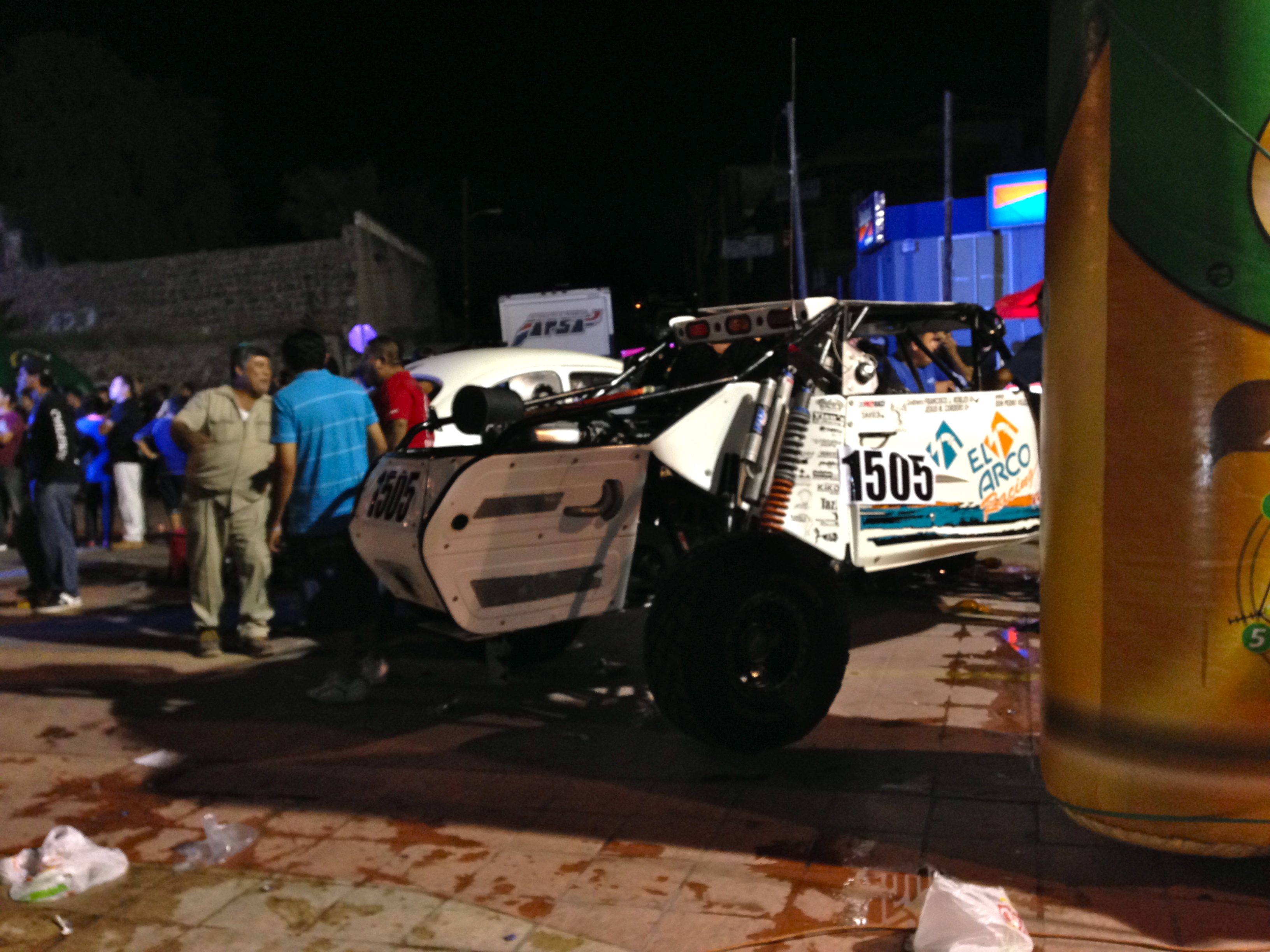
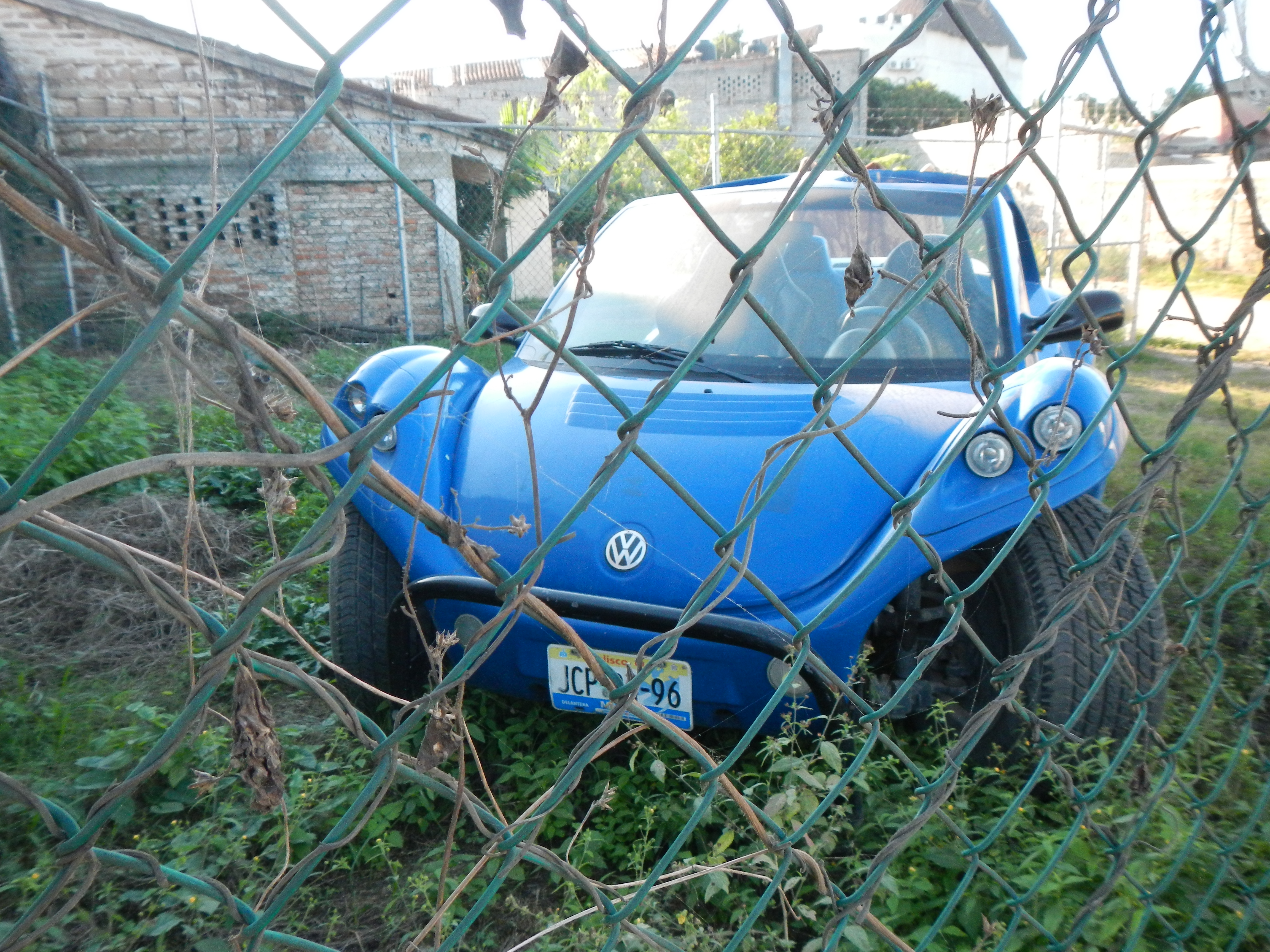
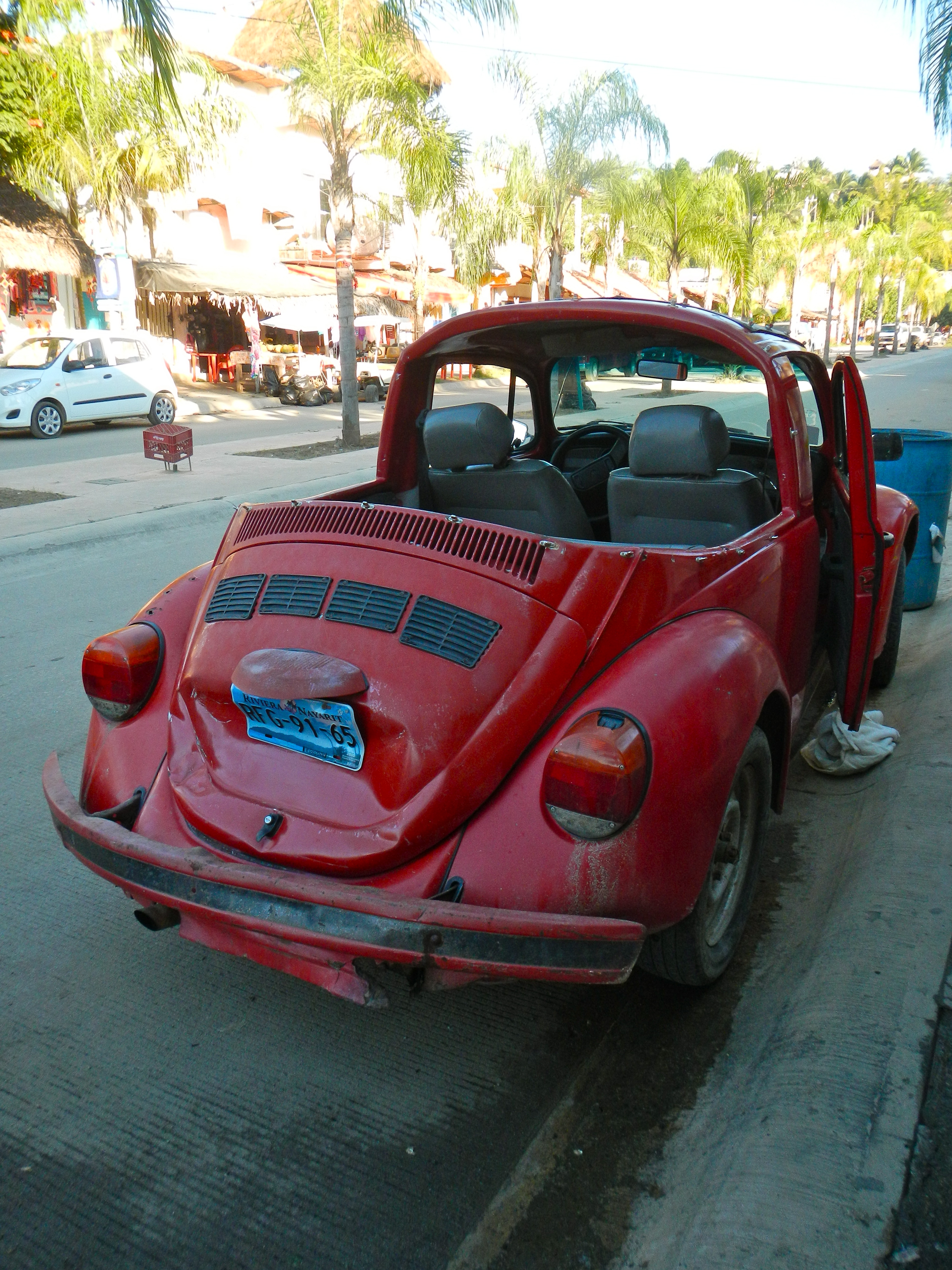
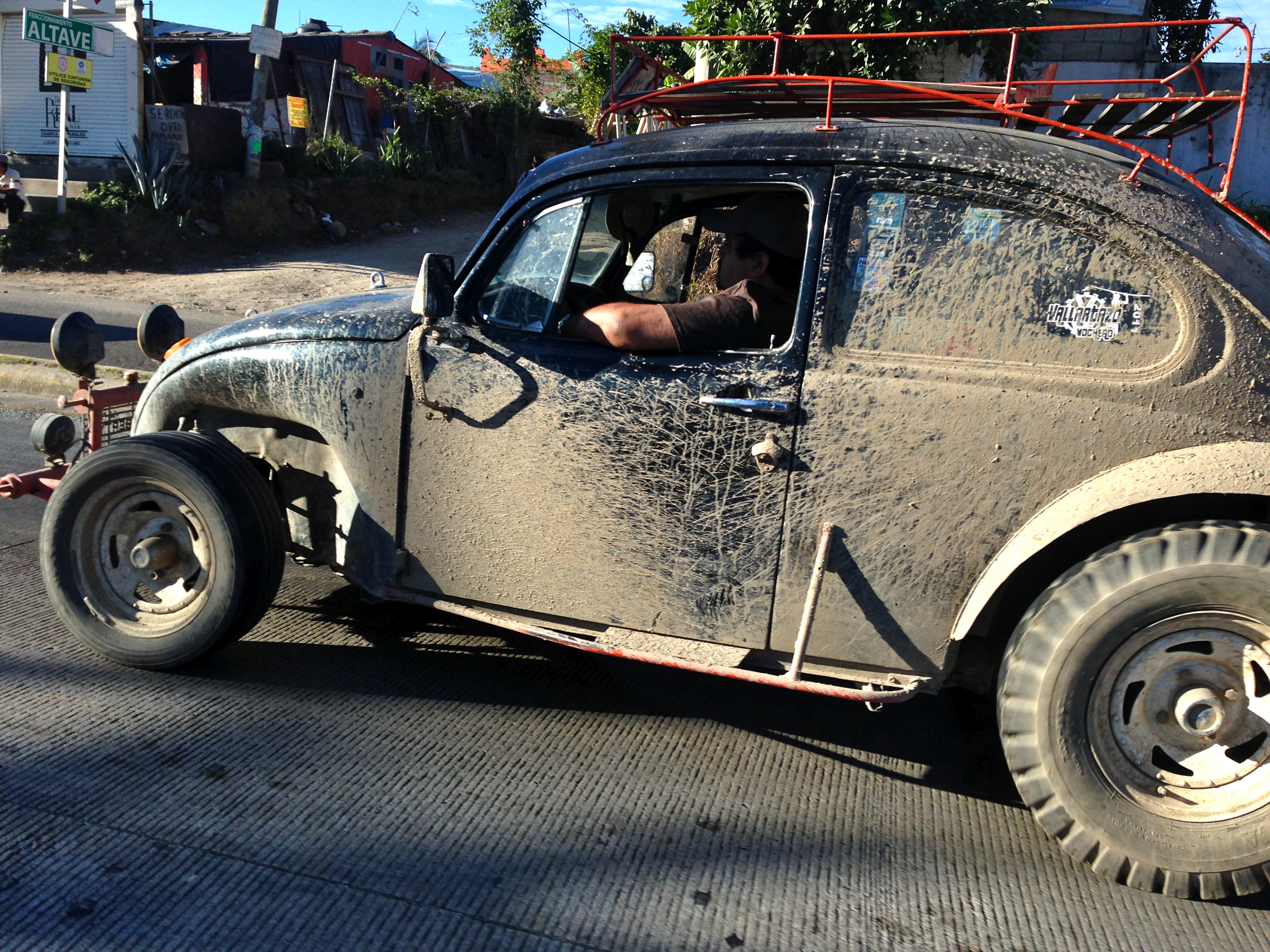
Since it was late we jumped in a cab back to the boat. No yellow cabs here, another charming part of Acapulco is that almost all the cabs are VW Bugs. No, not the brand new, plenty of leg room Beetles, but the old ones that they thankfully refuse to let die. Since our family had a 1964 Bug in my youth, they are near and dear to my heart and it was great to ride in one again. The city is much like San Francisco with its many hilly, curvy streets, so the driver’s stick shift ability was almost as impressive as the cliff divers.
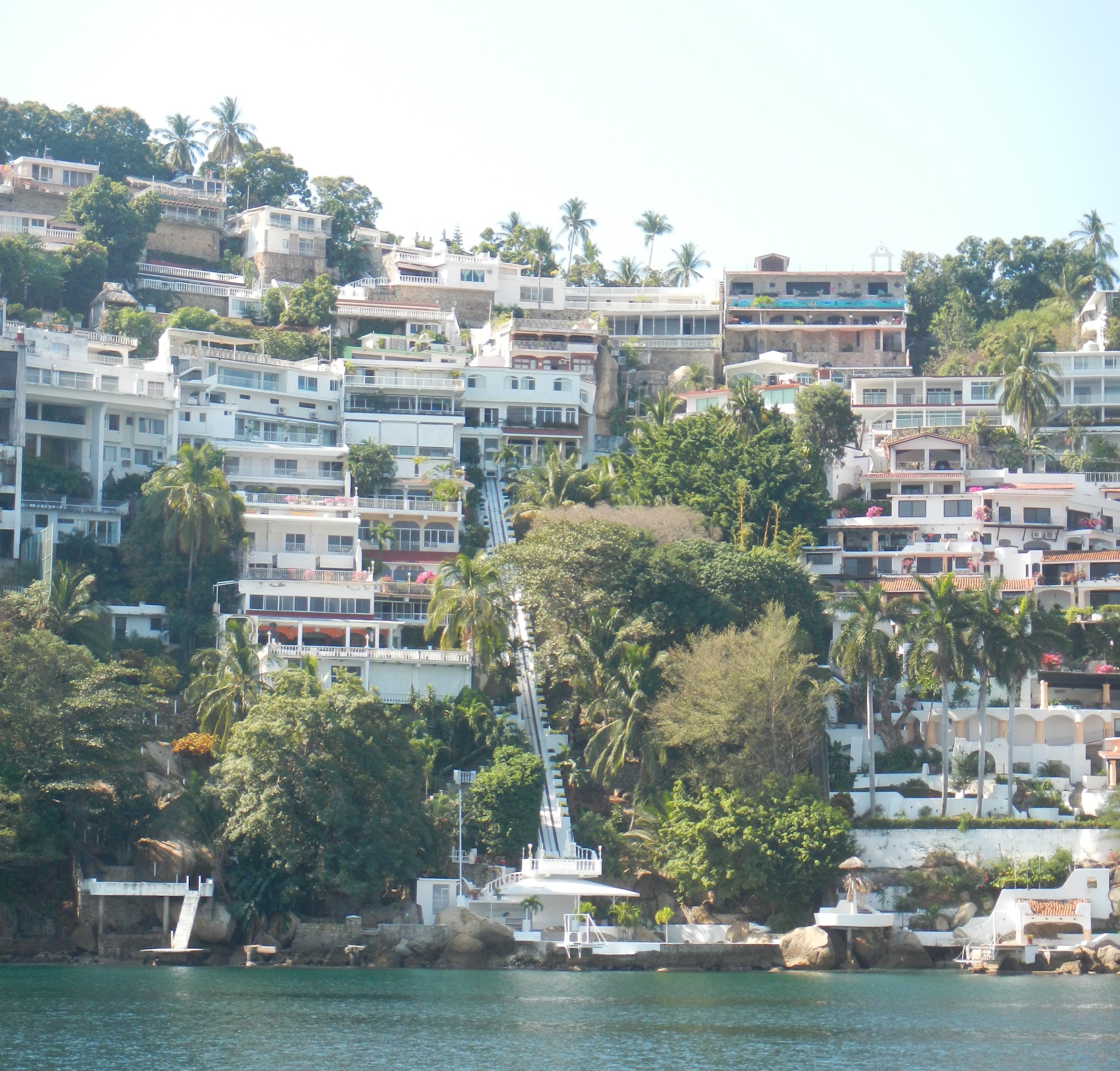
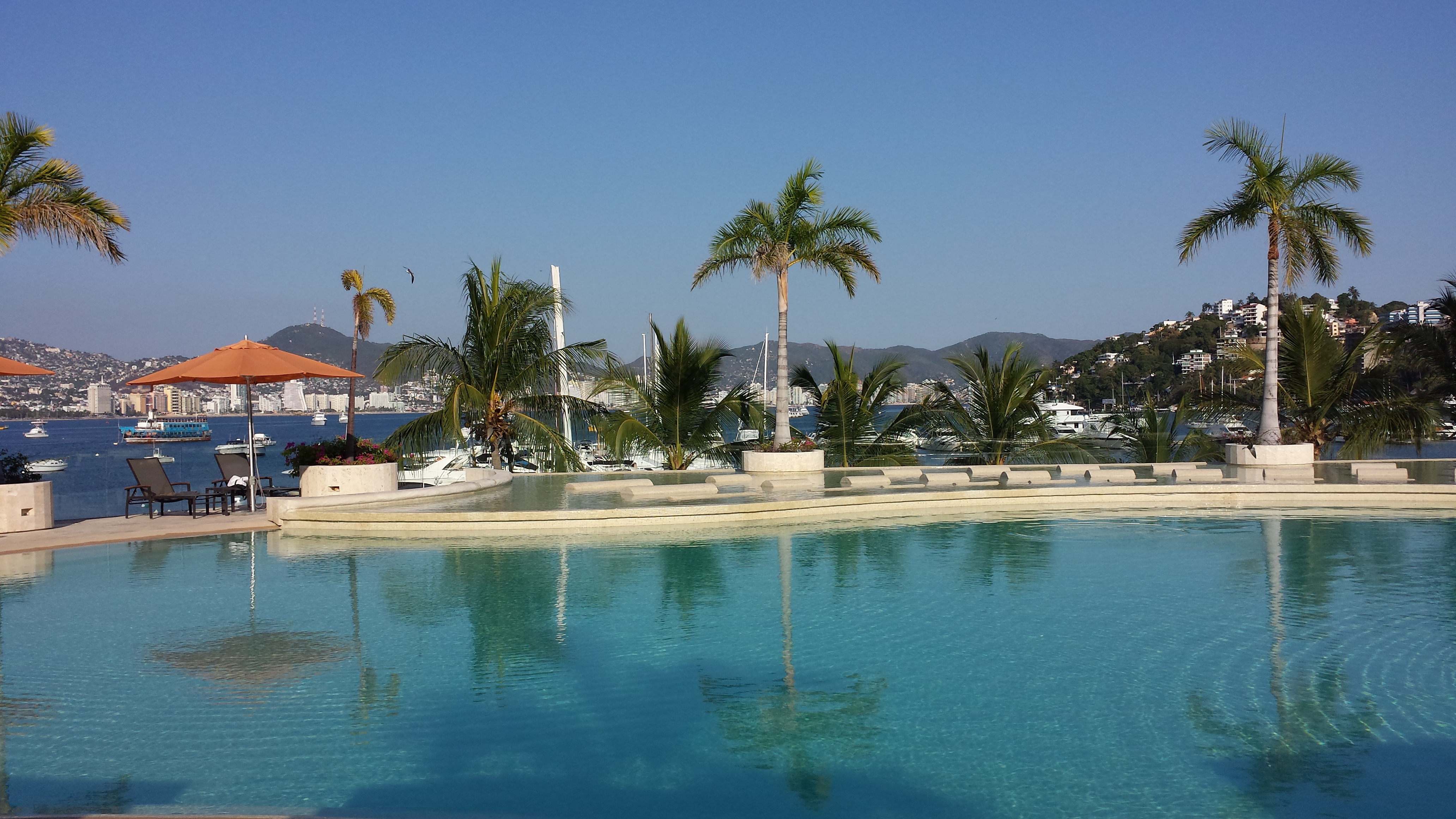
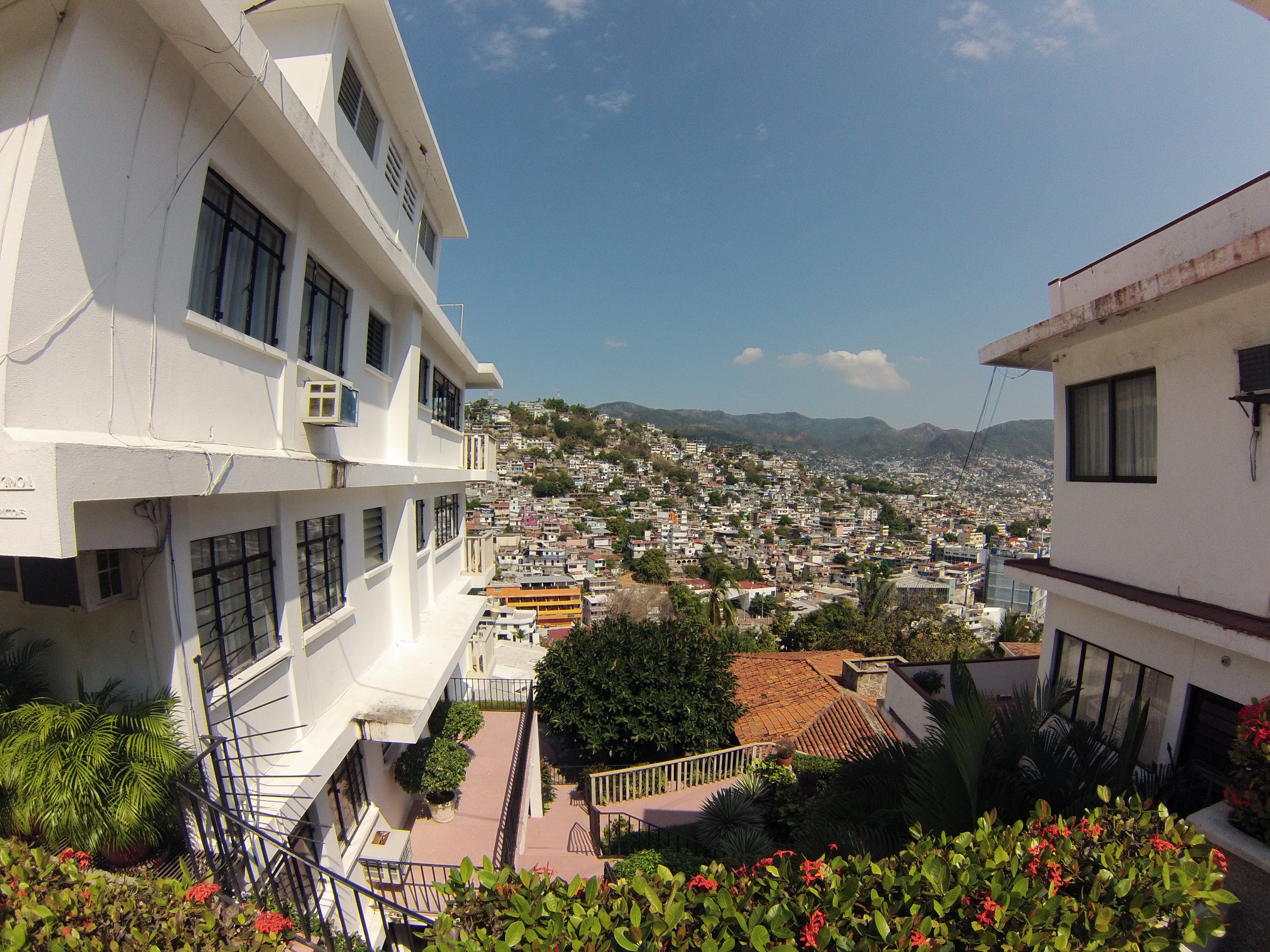
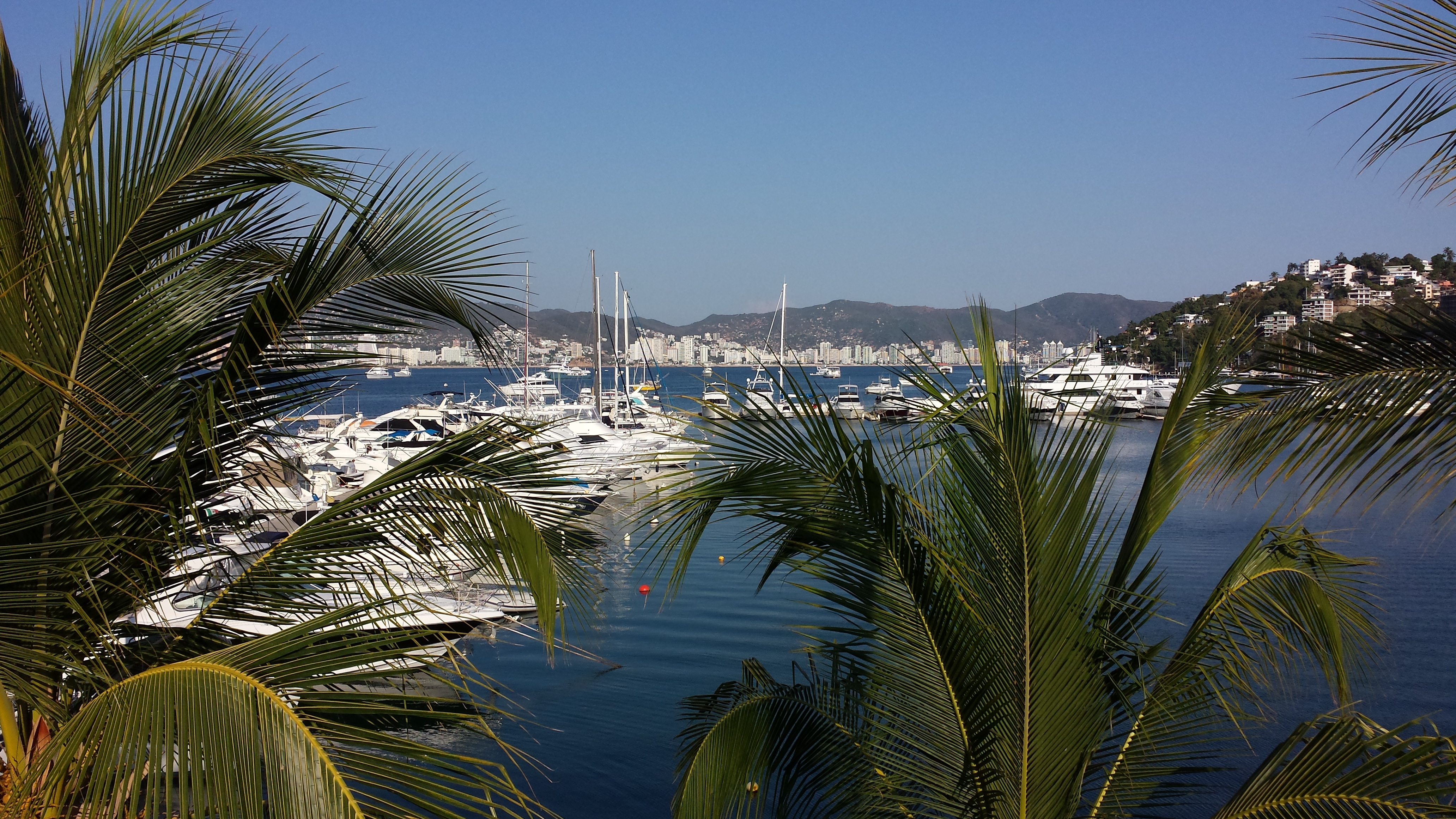
With over 1.5 million people Acapulco is a real city and a much needed contrast from the many small beach towns we’ve experienced. We need that balance or it all starts to seem the same and god forbid we become jaded 😉 On the approach to the harbor you have a great view of how large of a place it is, sprawling up the hillsides and around the enormous bay. This is a house divided as the mega rich live and vacation on the North side in areas like Diamante. We stayed in a rather nice newly
renovated marina on the South side and decided to stick to this area and explore the older historic part of town. As we walked around you could definitely feel the character of a city that once was and glimpses of it trying to come back.
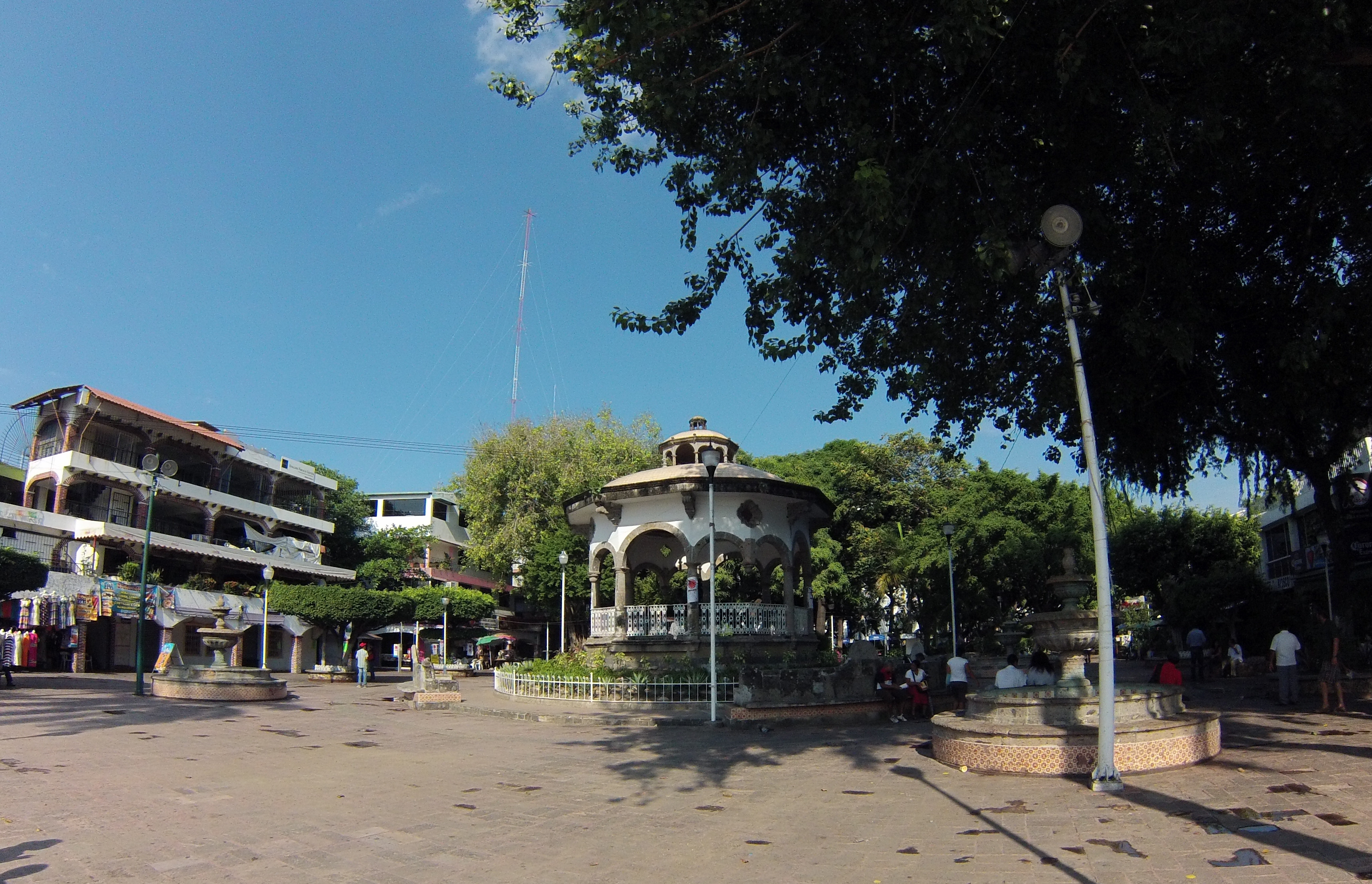
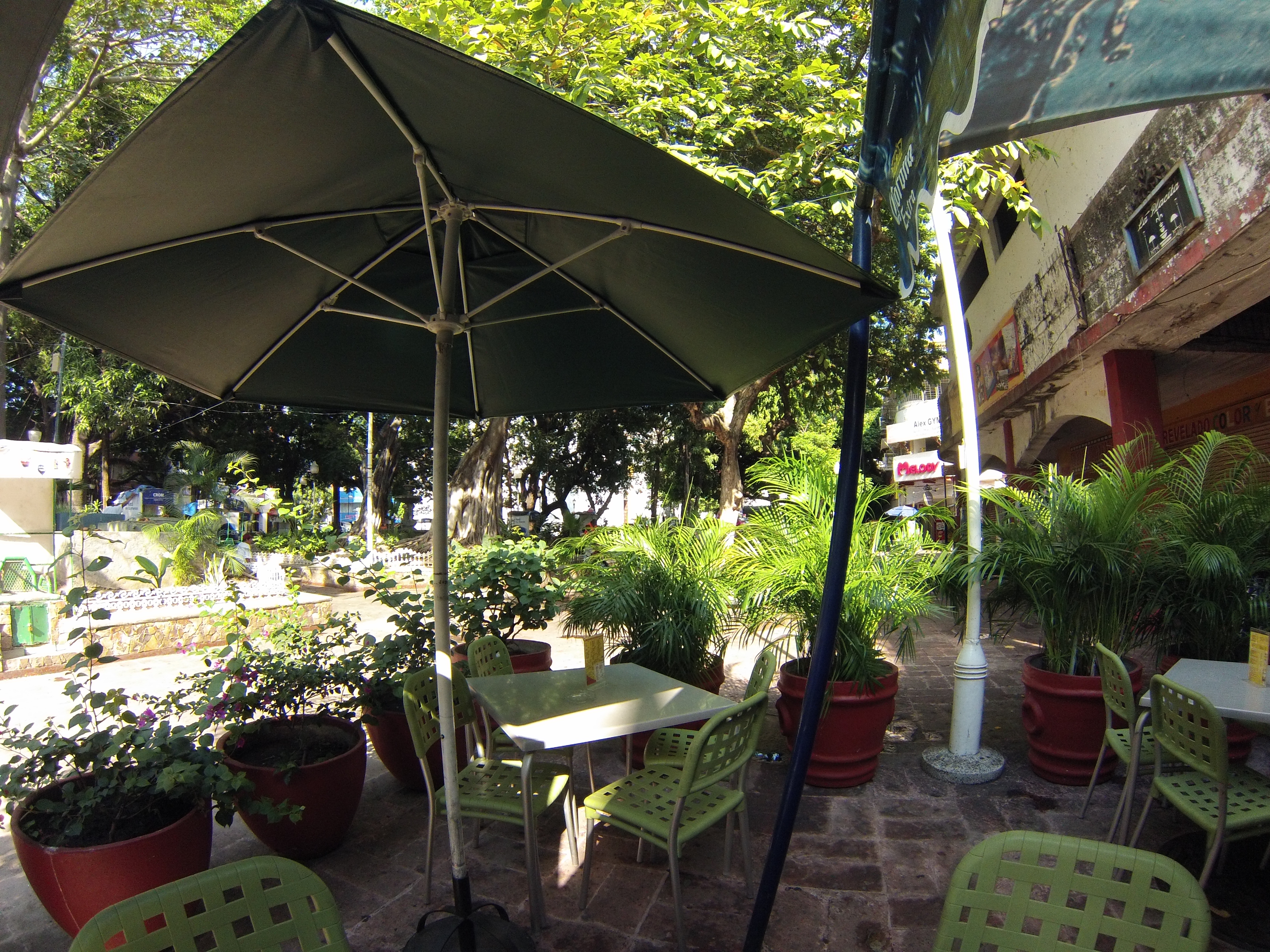
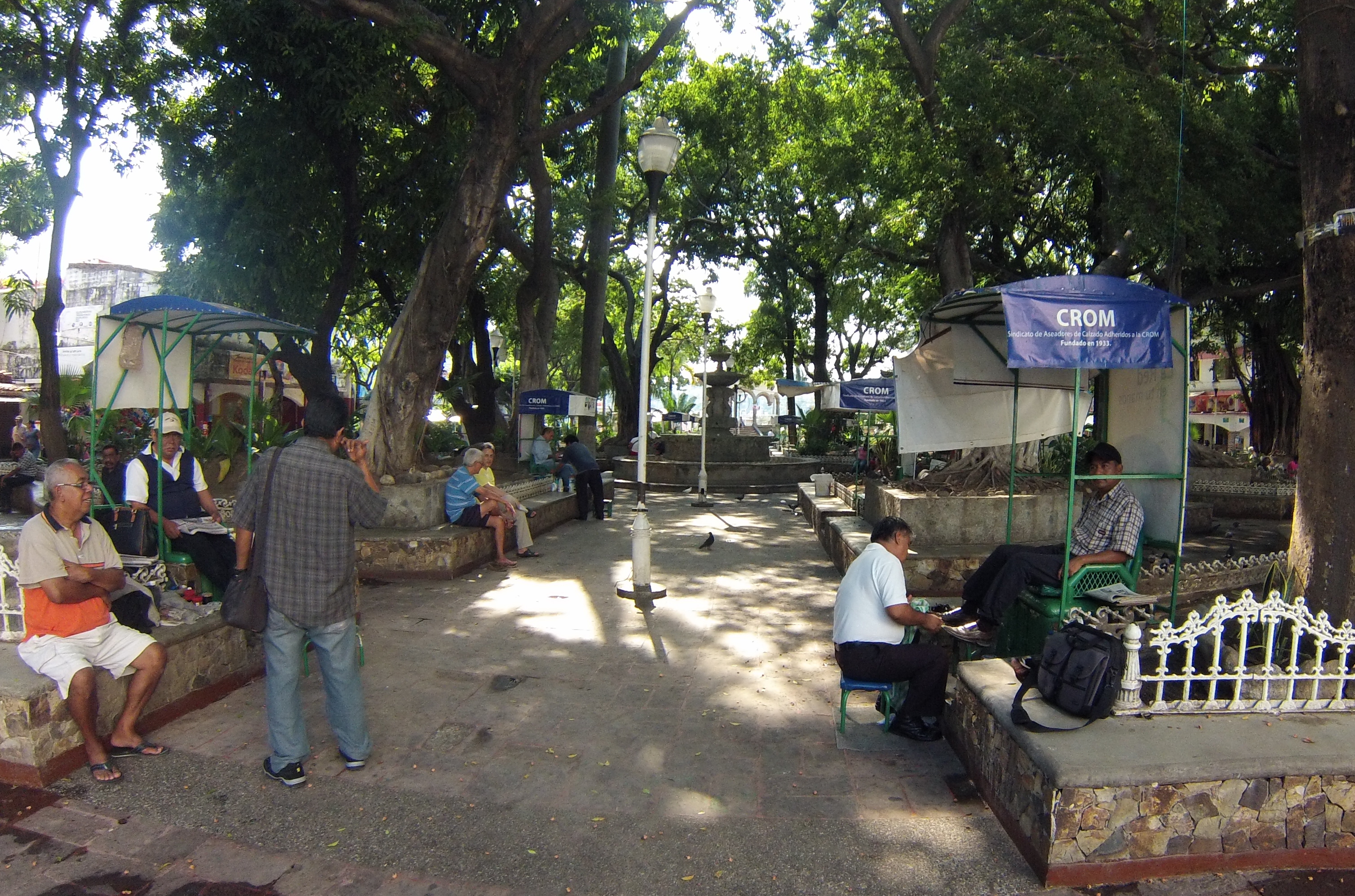
The traditional main square, the Zócalo, is lined with banyan trees, cafés and pedestrian only streets.
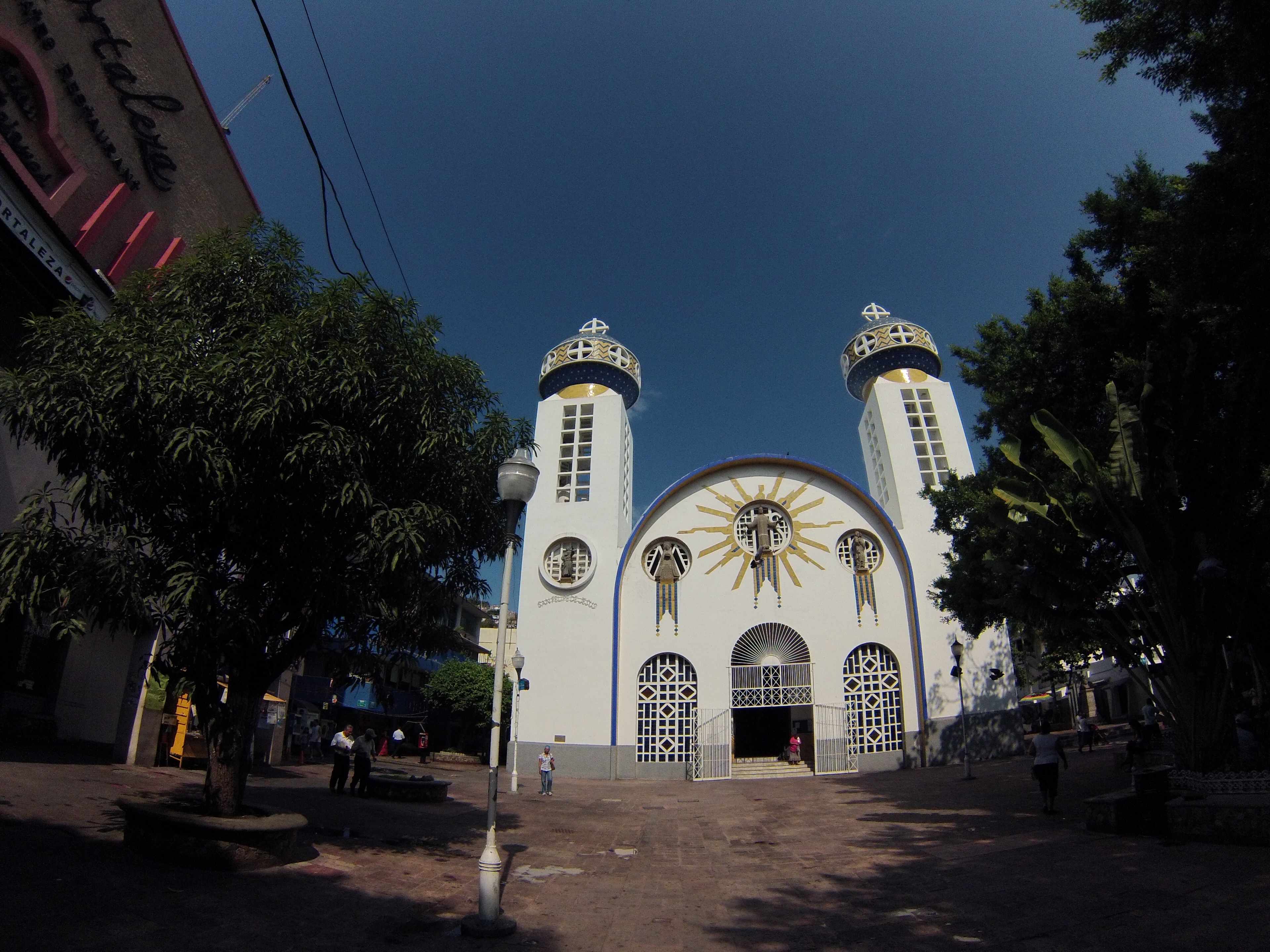
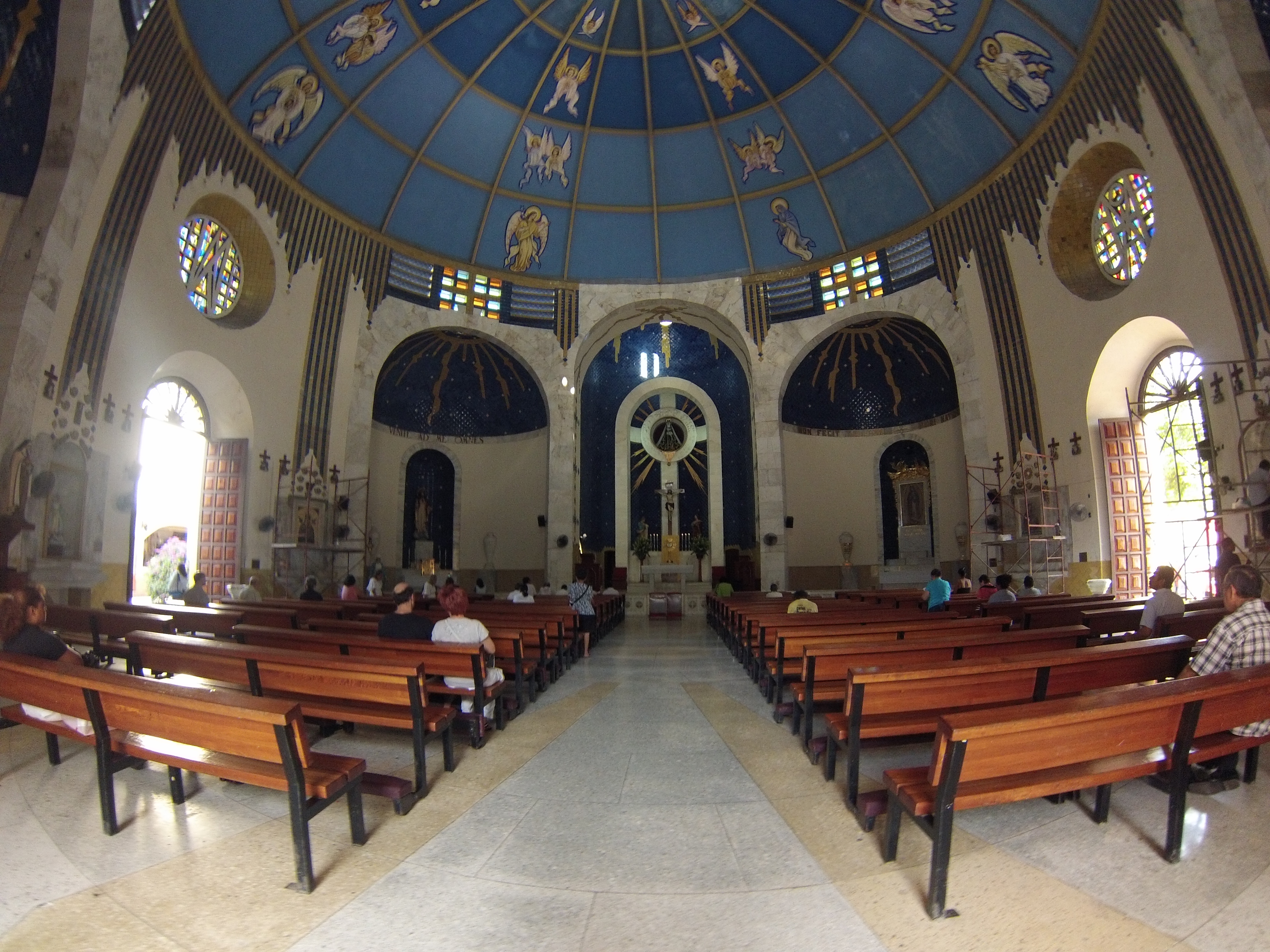
At one end of the square is the Nuestra Señora de la Soledad cathedral, with a surprisingly non-Mexican architectural style of blue onion-shaped domes and Byzantine towers.
We stopped for a bite to eat and people watch in the square. Although I have never been somehow I feel like this is what parts of Cuba look like.
Then with map in hand we set out on a walking tour of the city and to hunt for the “La Casa de los Vientos” (House of the Winds). So up and down and around the streets we went seeing one beautiful view of the city after next. The hilly streets really reminded us and our leg muscles of San Francisco.
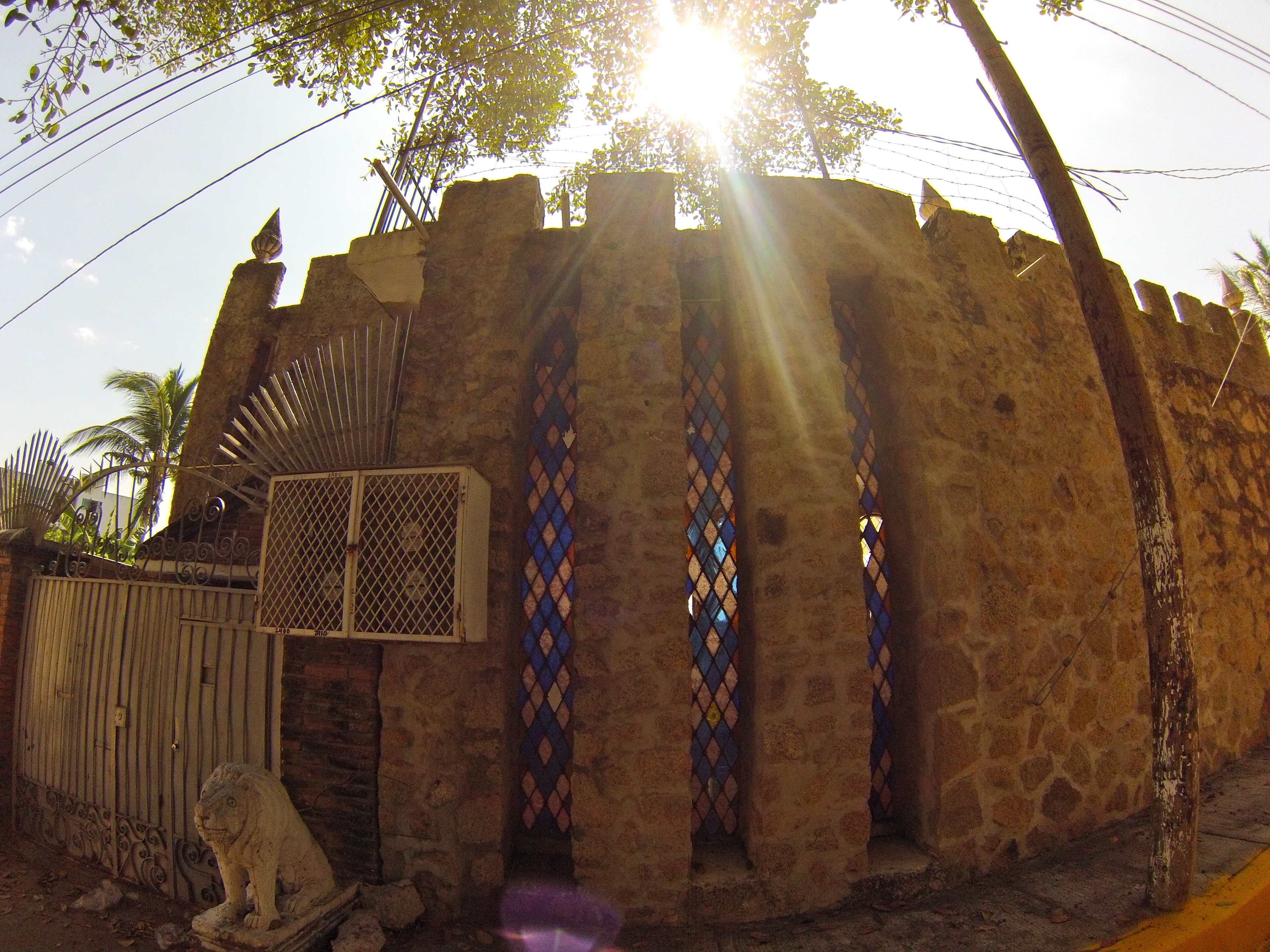
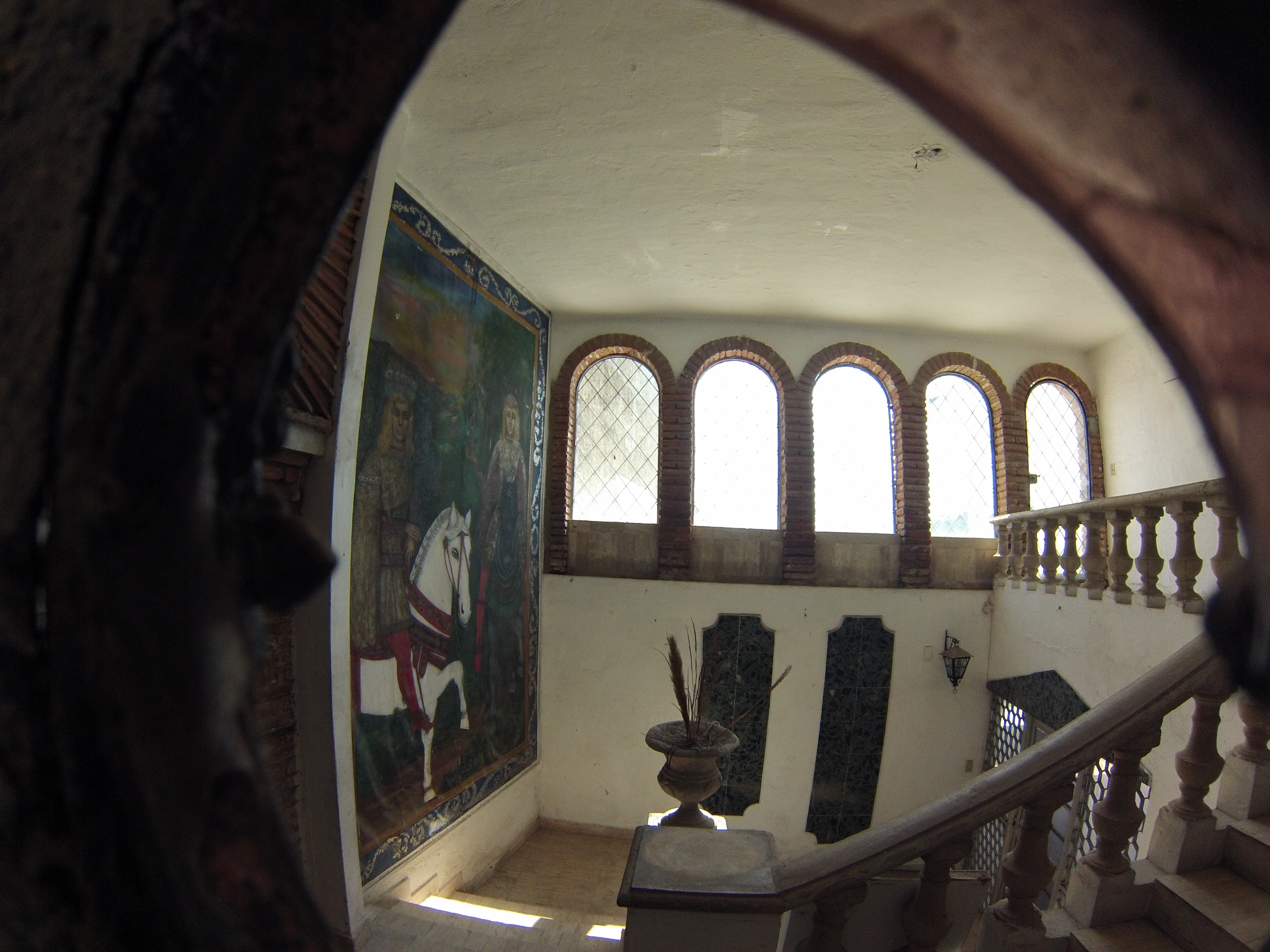
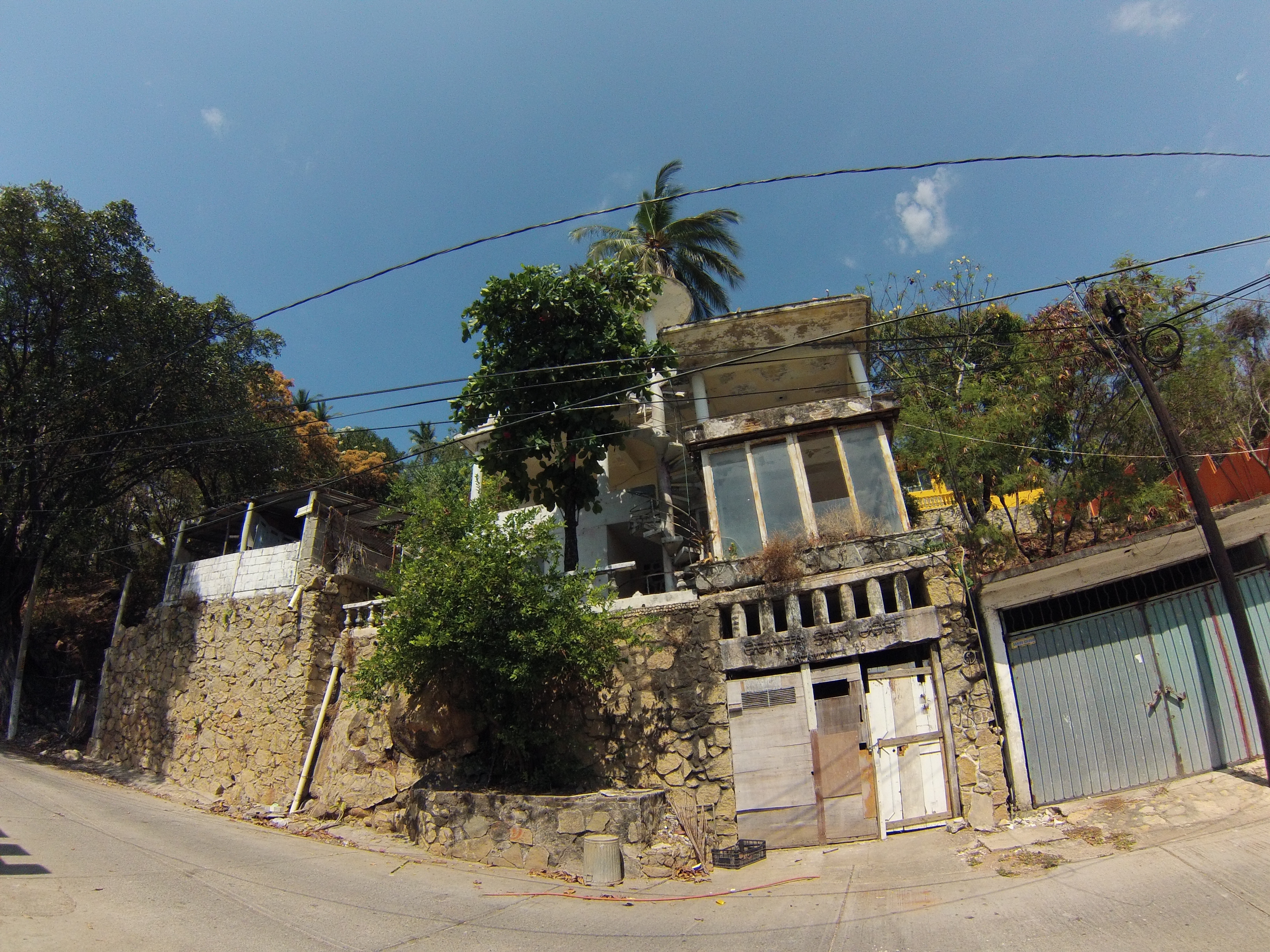
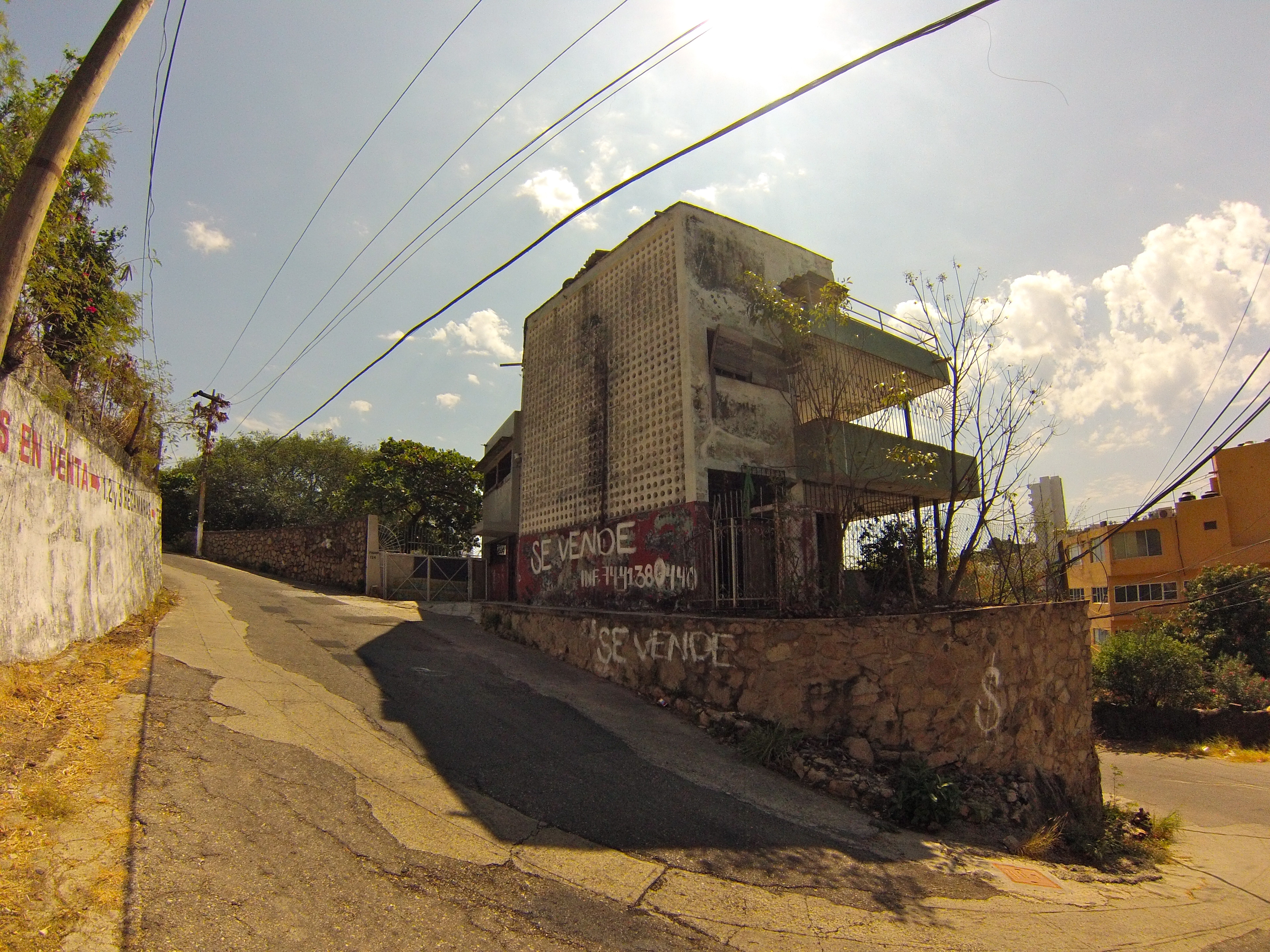
We couldn’t get over the stunning grand old stone homes that have been abandoned, but our itch to buy up investment property was left unscratched. I’m sure we will be kicking ourselves in a few years when this place is booming again.
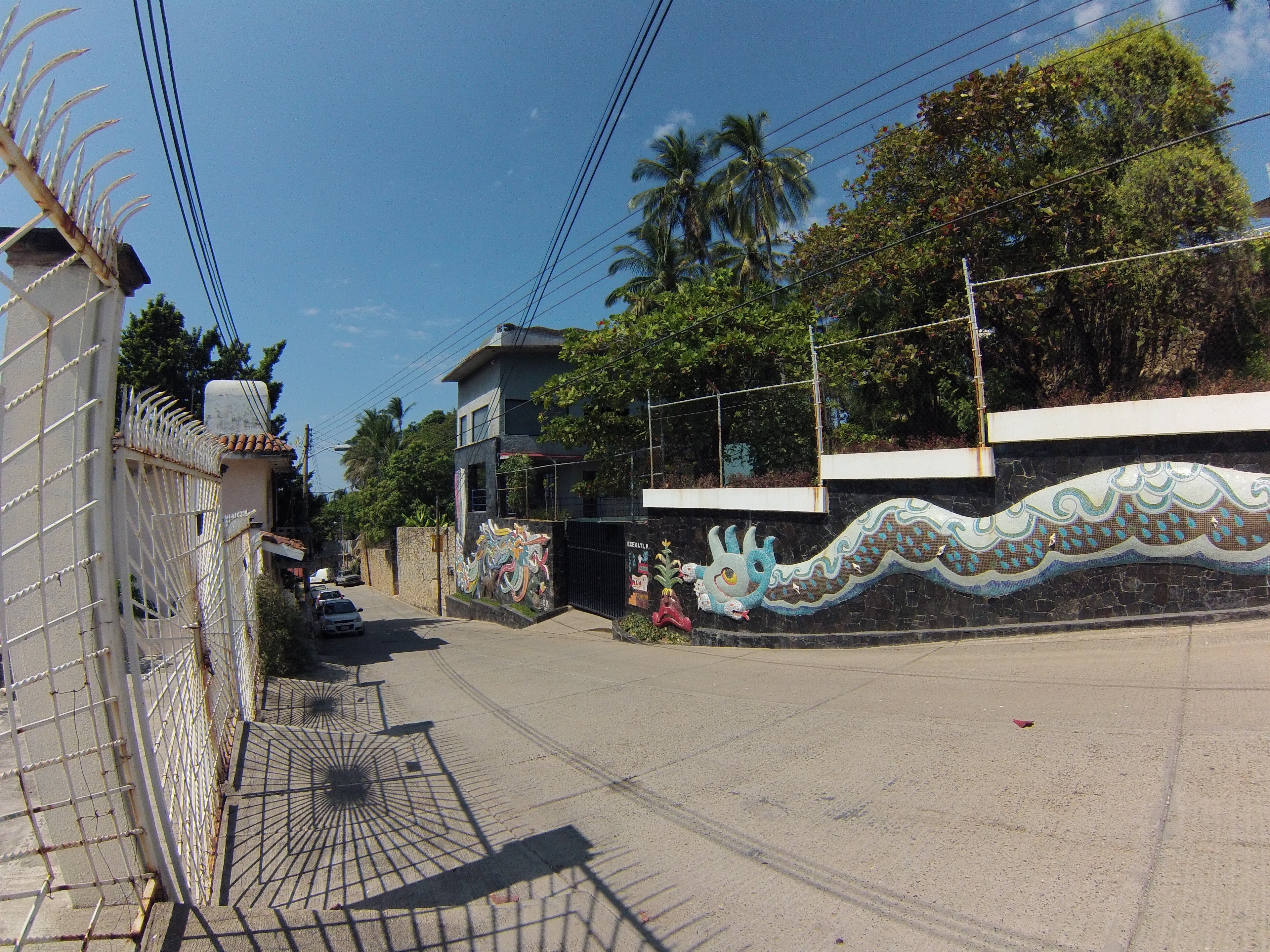
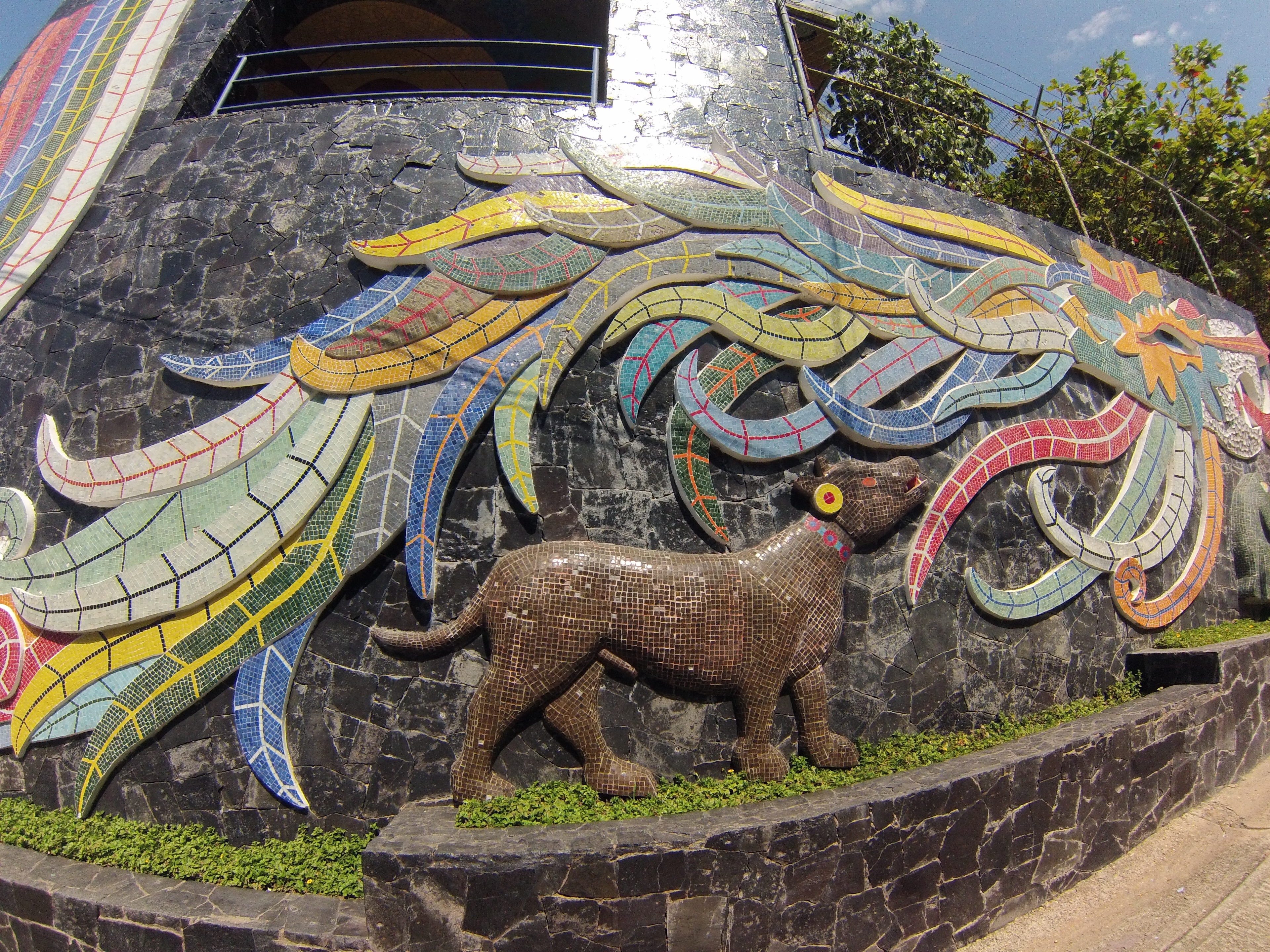
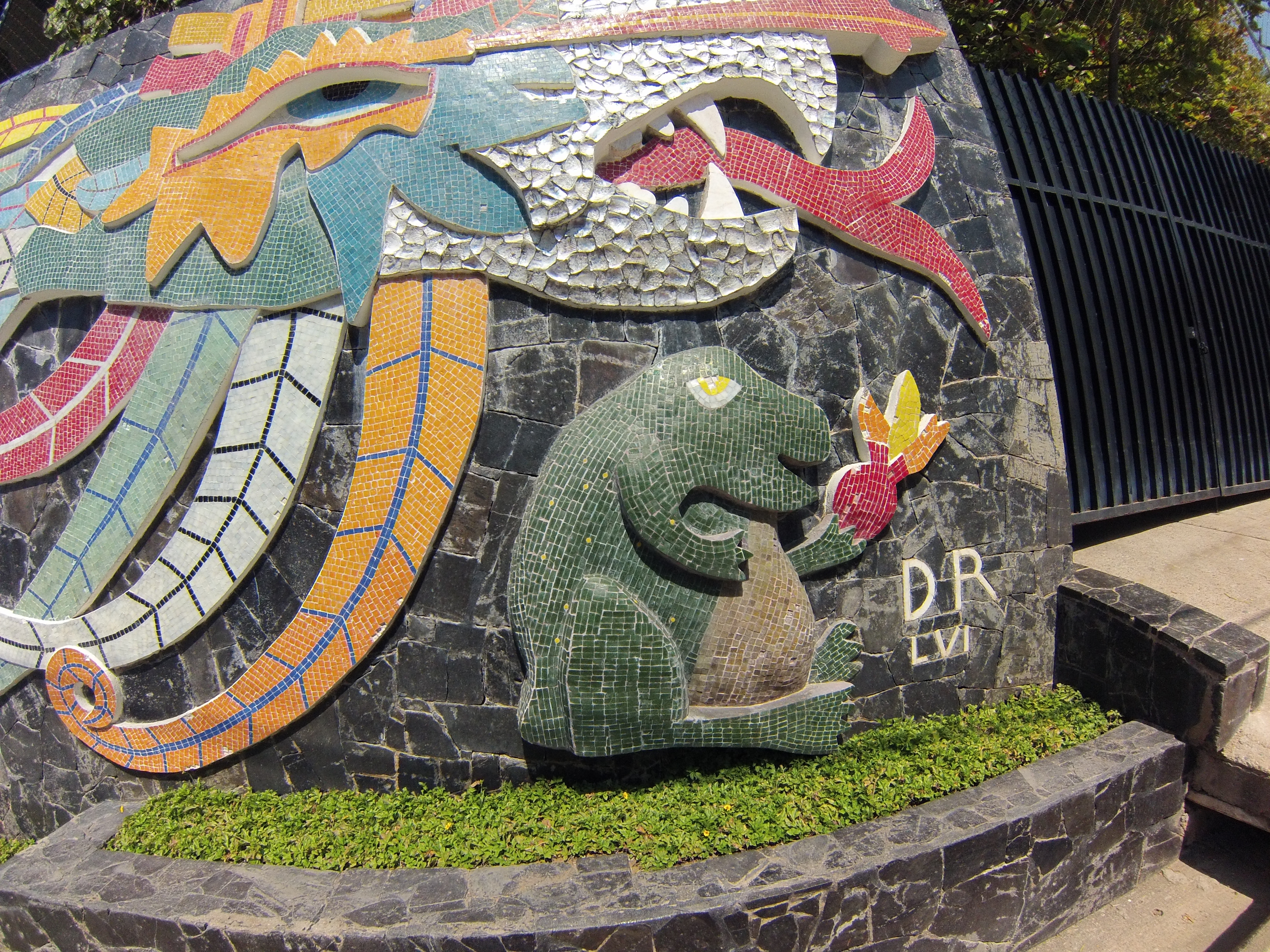
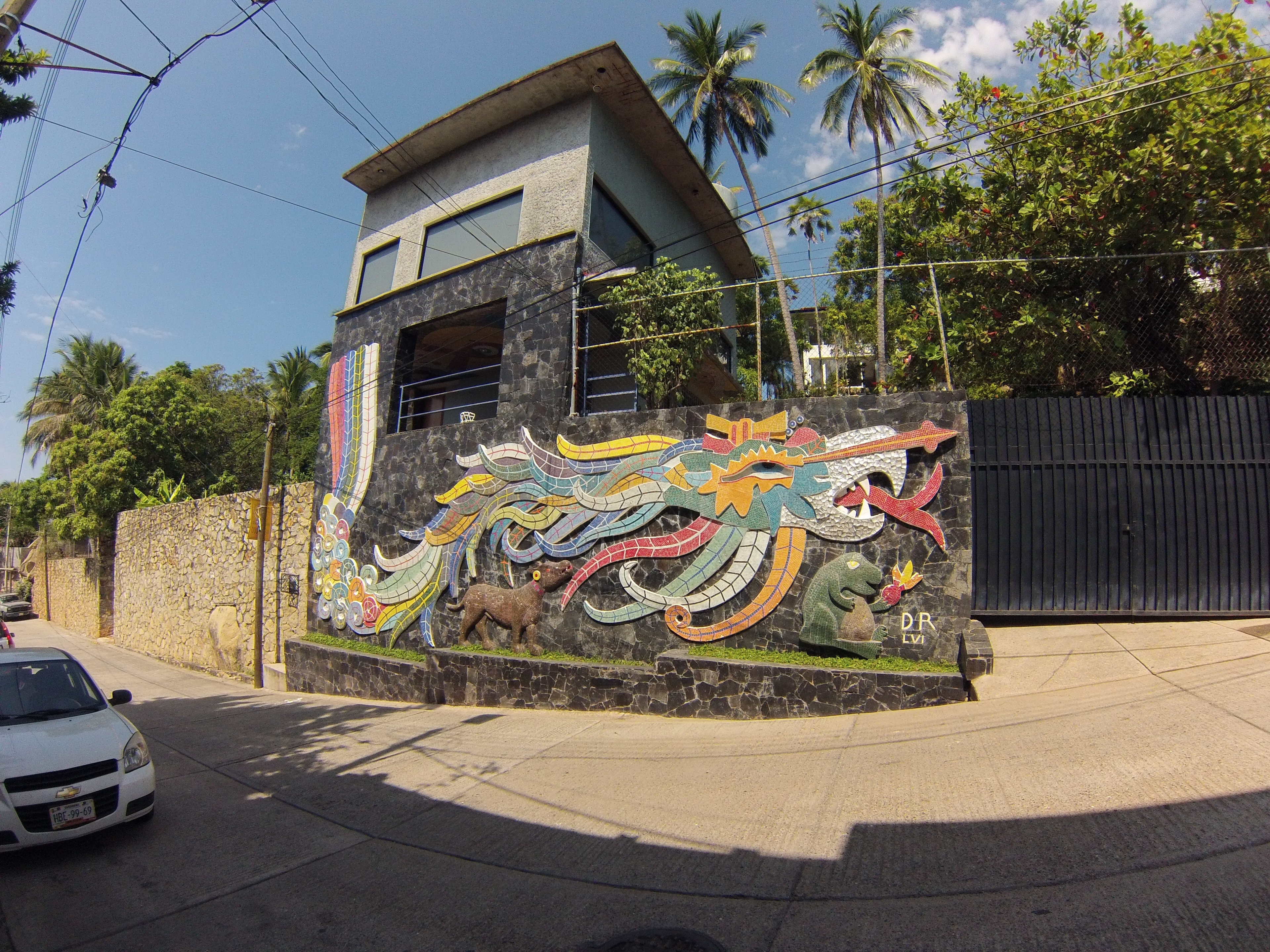
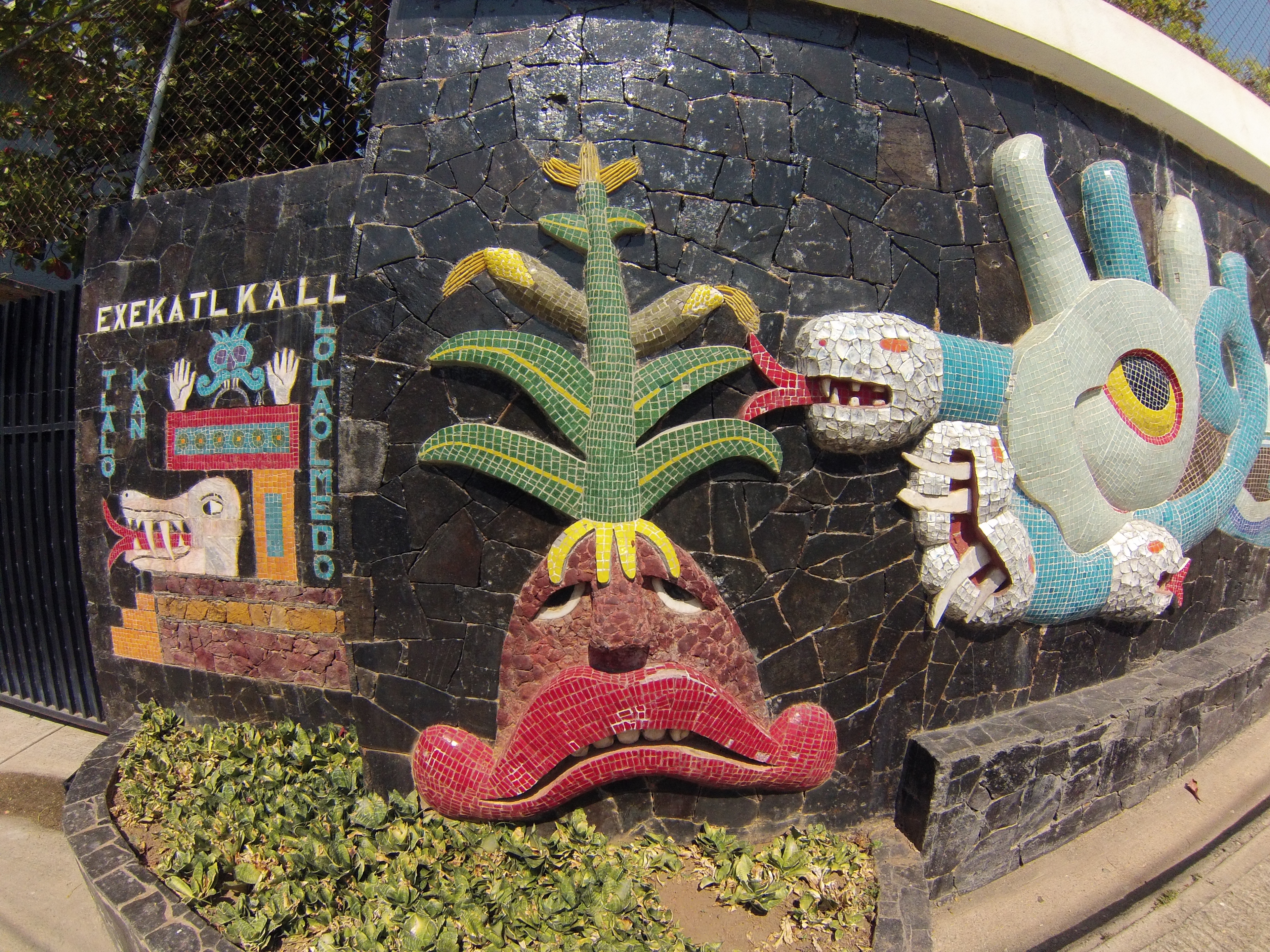
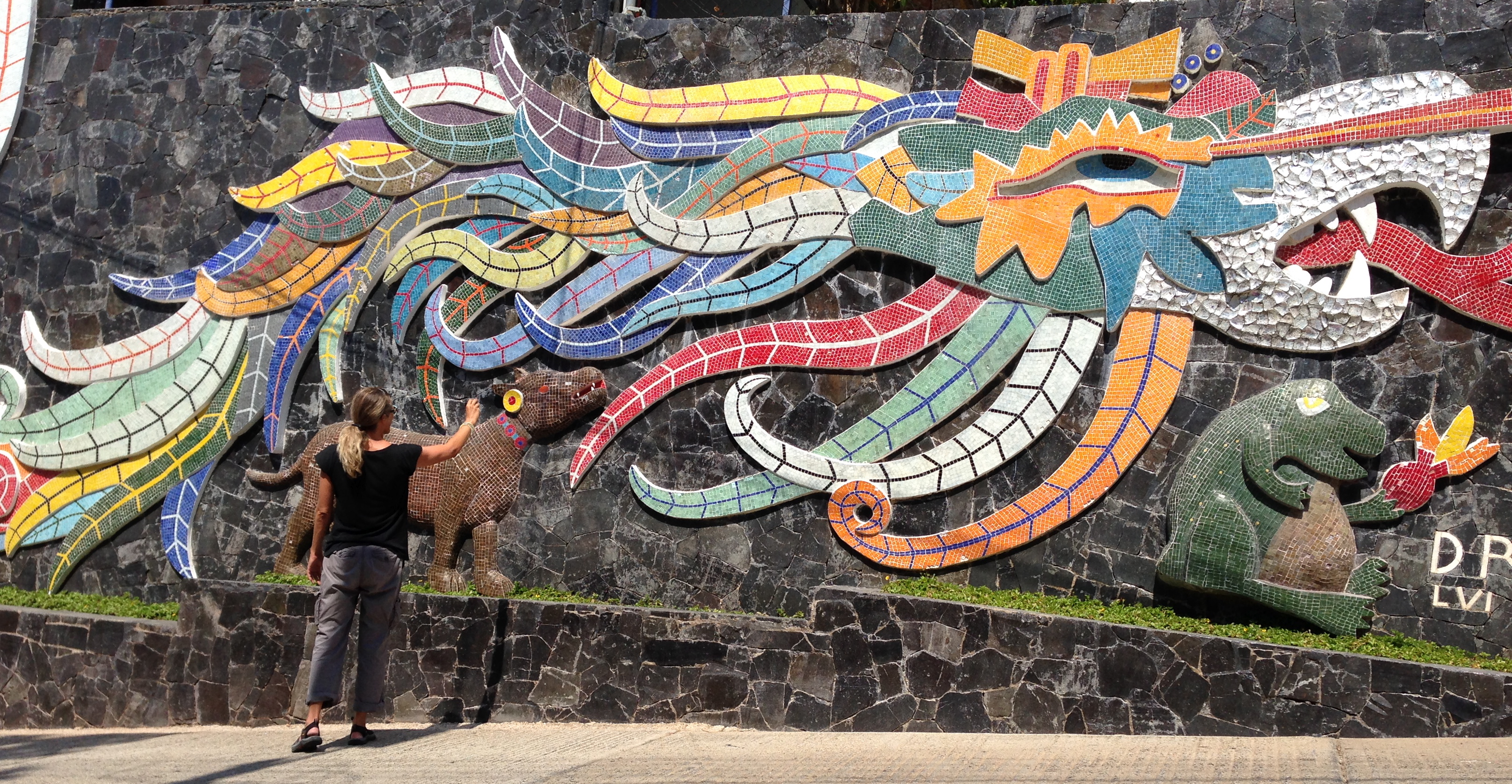
Finally, we arrived at the “La Casa de los Vientos”, where the famed artist Diego Rivera lived out his final years and although the home is now a private residence, you can see his tile mosaic mural depicting Aztec gods on the wall outside. 
This was a terrific payoff to a strenuous, hot hike up and down this residential neighborhood.
About a 6 ½
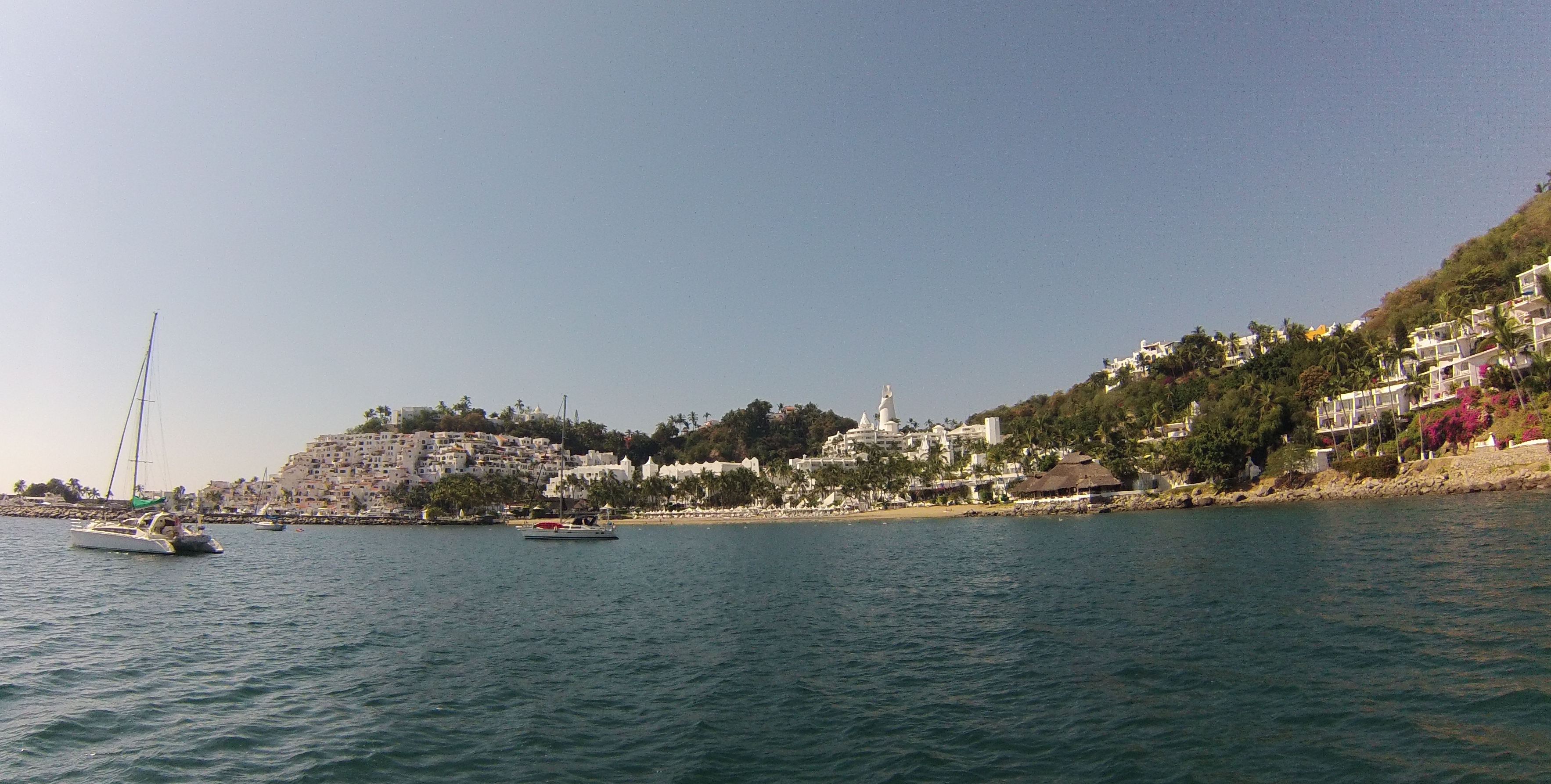
We anchored in Manzanillo in front of the “Las Hadas” resort where they filmed portions of the movie 10.
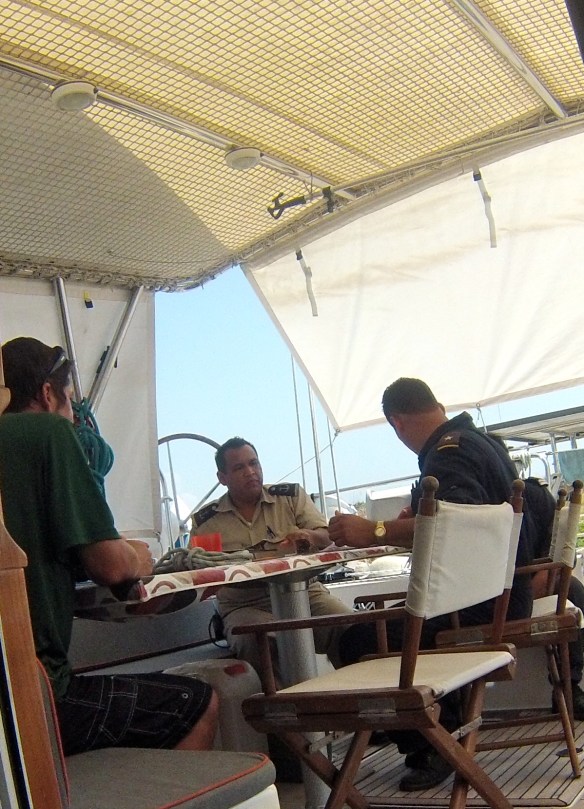
Nice enough place, but it is getting a little long in the tooth and far from our perfect stop. It was a combination of things; being stuck for a week in a place in which we would rather have spent only a few days, lots of loud BAD music playing until the wee hours of the night and the only real way to shore and into town was to go through the resort. Although they do have a marina at the resort, they were not overwhelmingly welcoming to the riff raff coming from the anchorage.
They charge 200 pesos a day to park at the dinghy dock – about $18US a day. Most dinghy docks are free or only a few bucks, so this seemed a tad pricey. However, that fee did allow us to use the resort’s decaying pool and a dip in fresh water is always a plus, so who were we not to take advantage? And, no, I didn’t get Bo Derek cornrows 😉
Lucy was perra non grata here. Now, I completely understand her not being allowed in the resort proper, but you’d think you could take her up the service road. One time after we walked out the guard would not let Peter back in with Lucy, even though it was the only way back to the boat. Unfortunately, this service road was the only way to get the local bus, which was the only way to town, so we cajoled and demanded and played dumb to get her in and out.
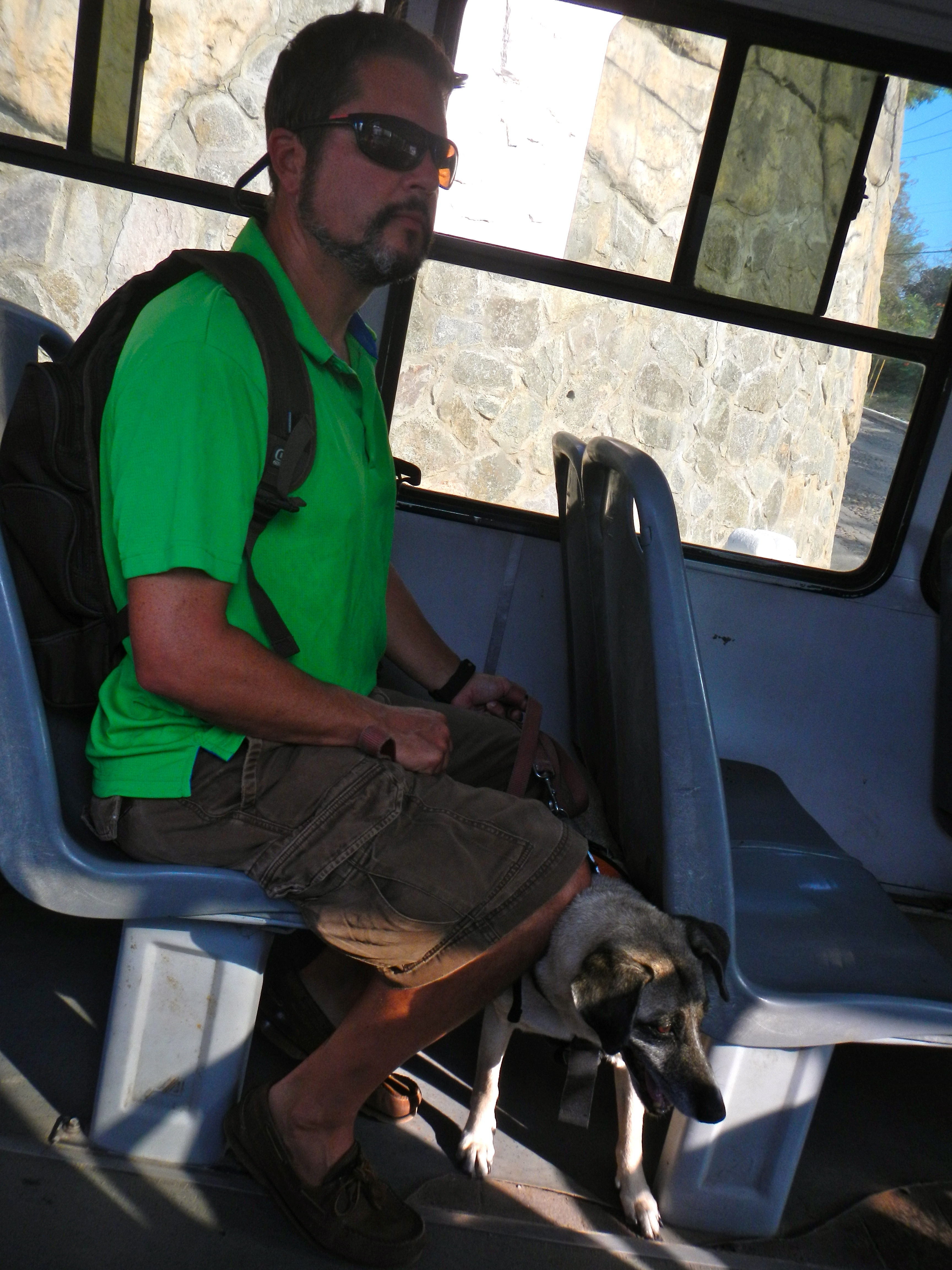
Once outside Las Hadas, we were back in action and Lucy boarded buses and walk the streets without anyone batting an eye.
The reason we were “stuck” in Manzanillo was we were waiting for our infamous package of boat parts to arrive from the US. Shipping anything to Mexico has the distinct possibility of being hung up in customs, misplaced by incompetent shipping companies and a whole host of other issues too ridiculous to bore you with, but the frustration definitely hung over us like a black cloud.
We had been trying to get this package shipped to us in several different cities, but with each new and devious snag, we moved on and had it shipped to the next city.
After many days of this craziness, we were hoping to celebrate Peter’s birthday with the arrival of our new watermaker pump (yay! He says), but it was not meant to be.
Apparently Peter’s day of birth is cause for rejoicing not only in our family but also in the shipping company’s office, as they decided to take the day off for no apparent reason, except of course to fiesta por Pedro. So we turned our attention to historic downtown Manzanillo to try and salvage this blessed day.
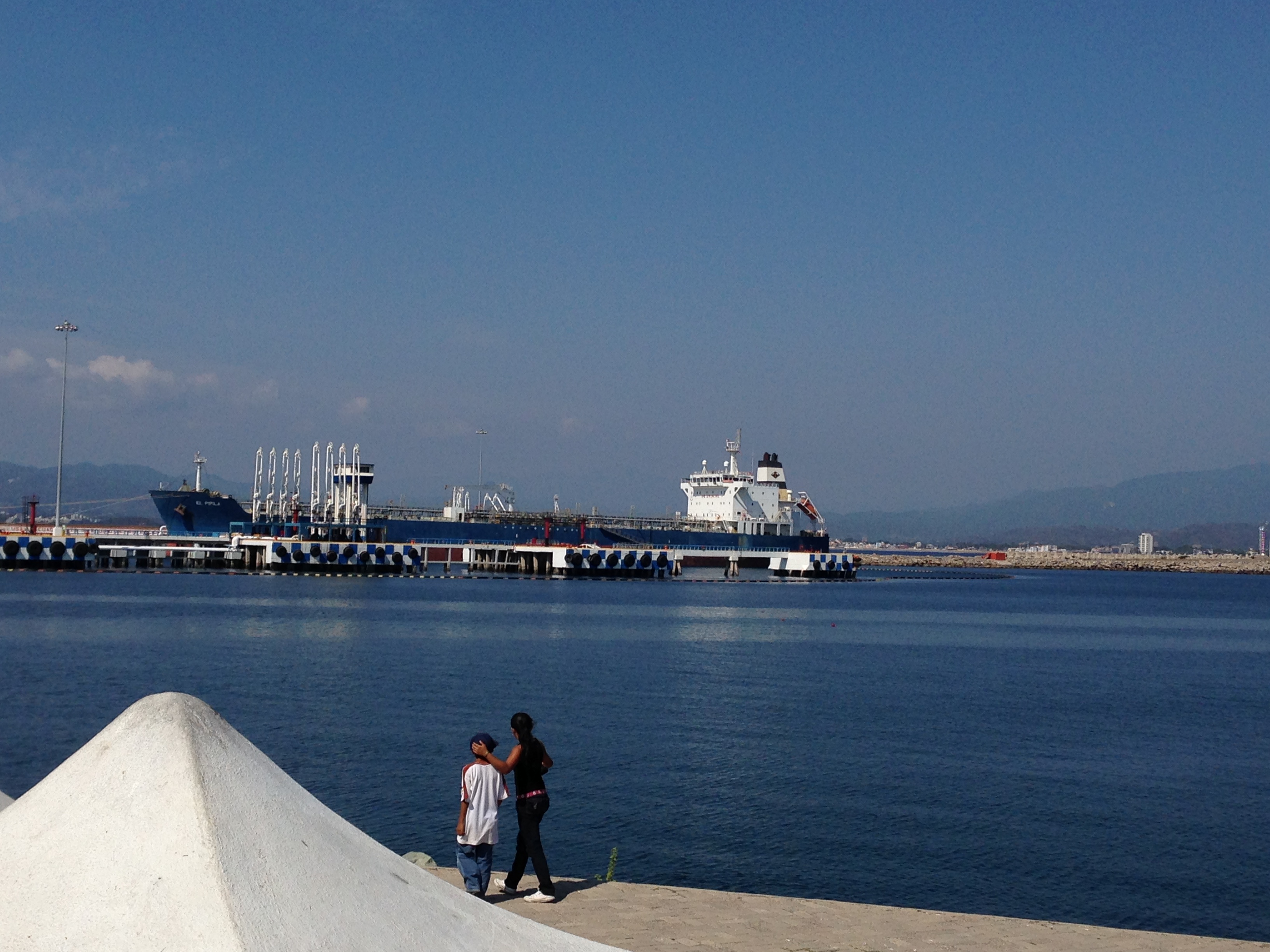
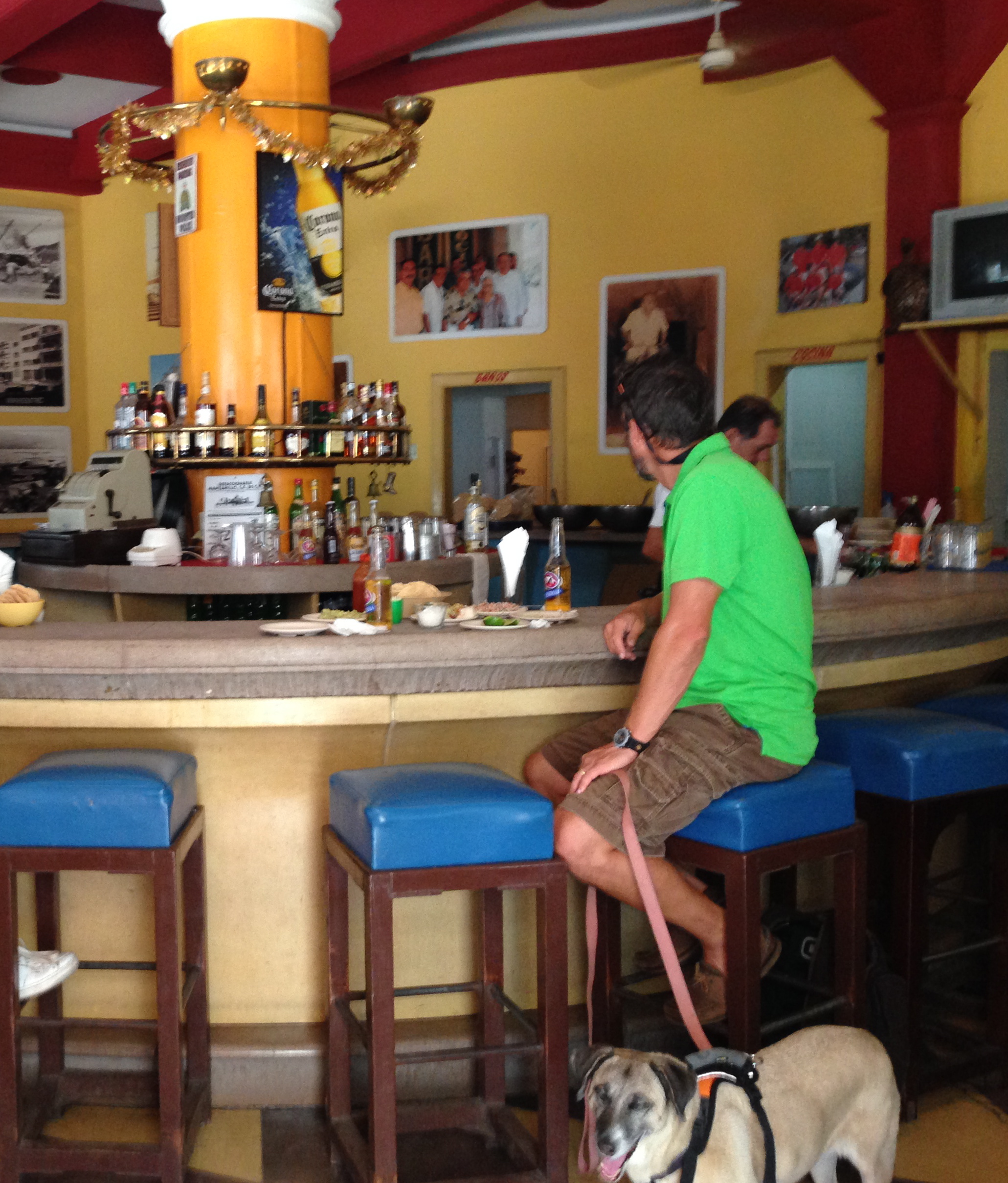
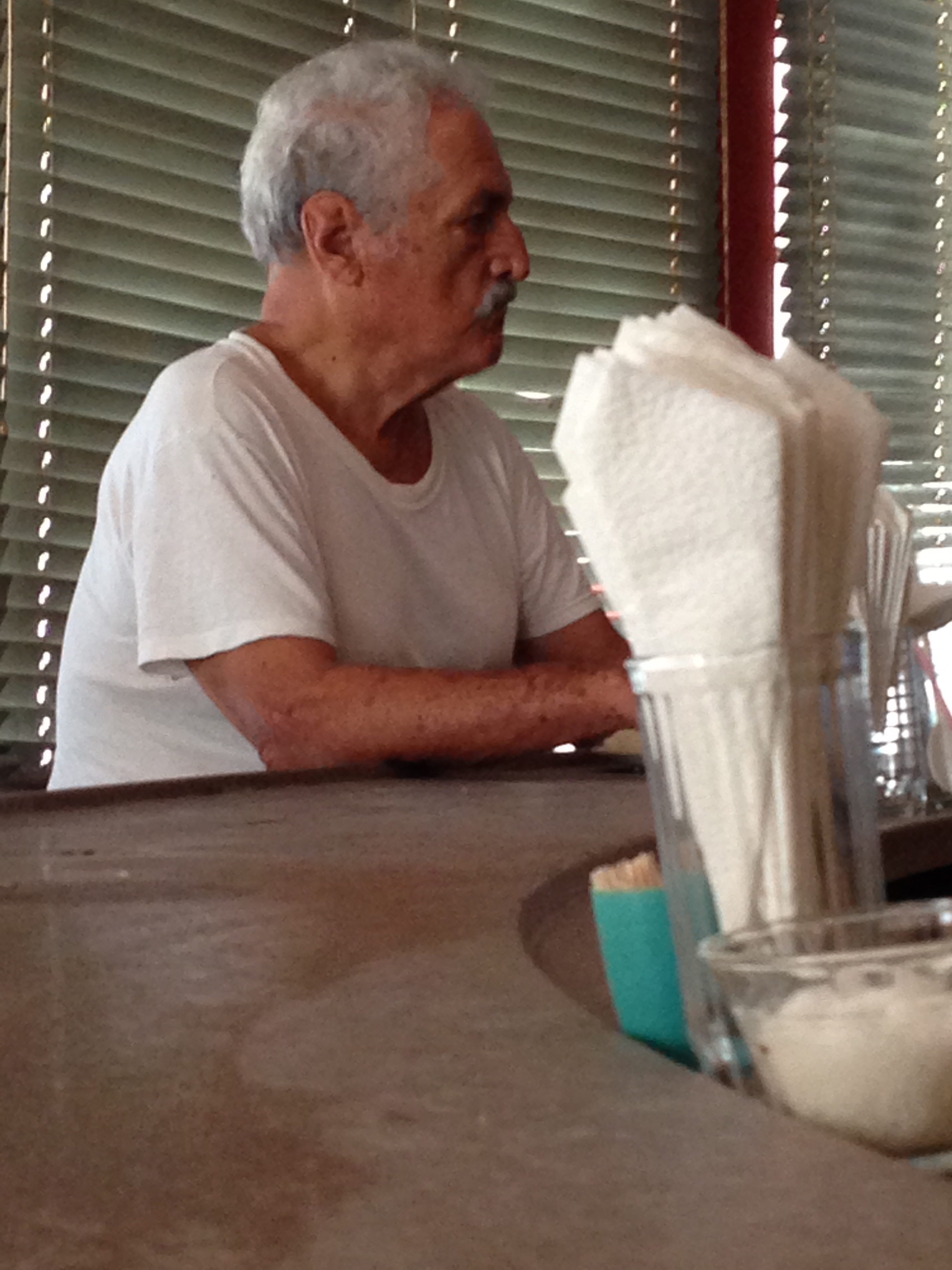
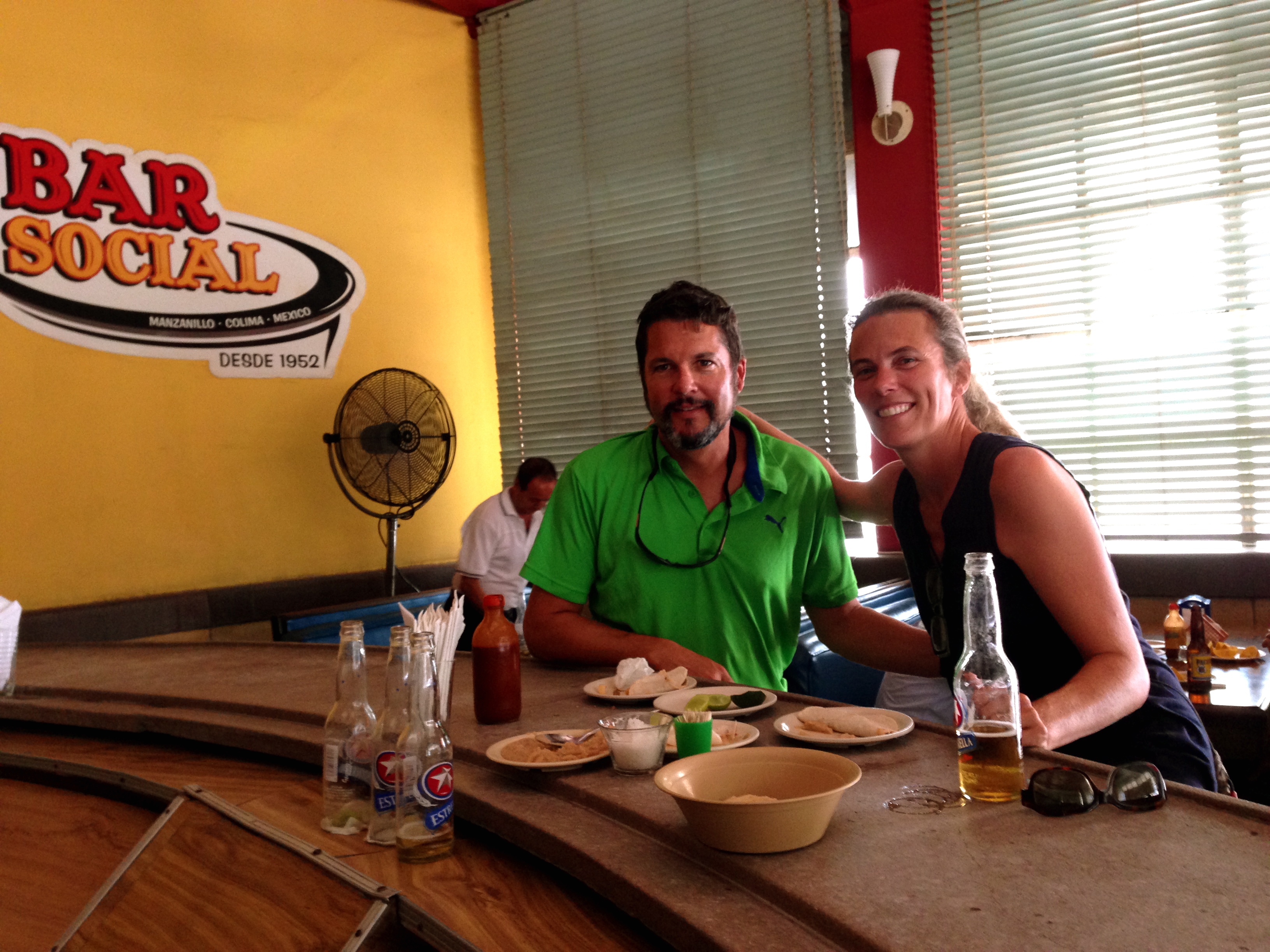
Manzanillo is Mexico’s largest cargo port city so it is a real working town. It was interesting to see a place where tourism isn’t #1. The city is a little rough around the edges, but that is what actually gave it some charm. We met some real characters and had a ball at Bar Social, a famous cantina in downtown Manzanillo.
It has been there since the 1950s and hasn’t changed much, including some of the clientele and tradition of free botaneras (appetizers) with your drinks. The bartender brought plate after plate of delicious nibbles from guacamole to ceviche to my favorite -fresh jicama with lime and chili powder. Let’s just say we sat there drinking long enough not to need dinner 😉
A few days later, the package finally arrived, the black cloud lifted and we sailed off to Zihuatanejo. Since we didn’t find our perfect 10 in Manzanillo we hope Zihuatanejo delivers all that Andy Dufresne dreamed it would be behind the bars of Shawshank. (click here for more photos)
Cave dwellers
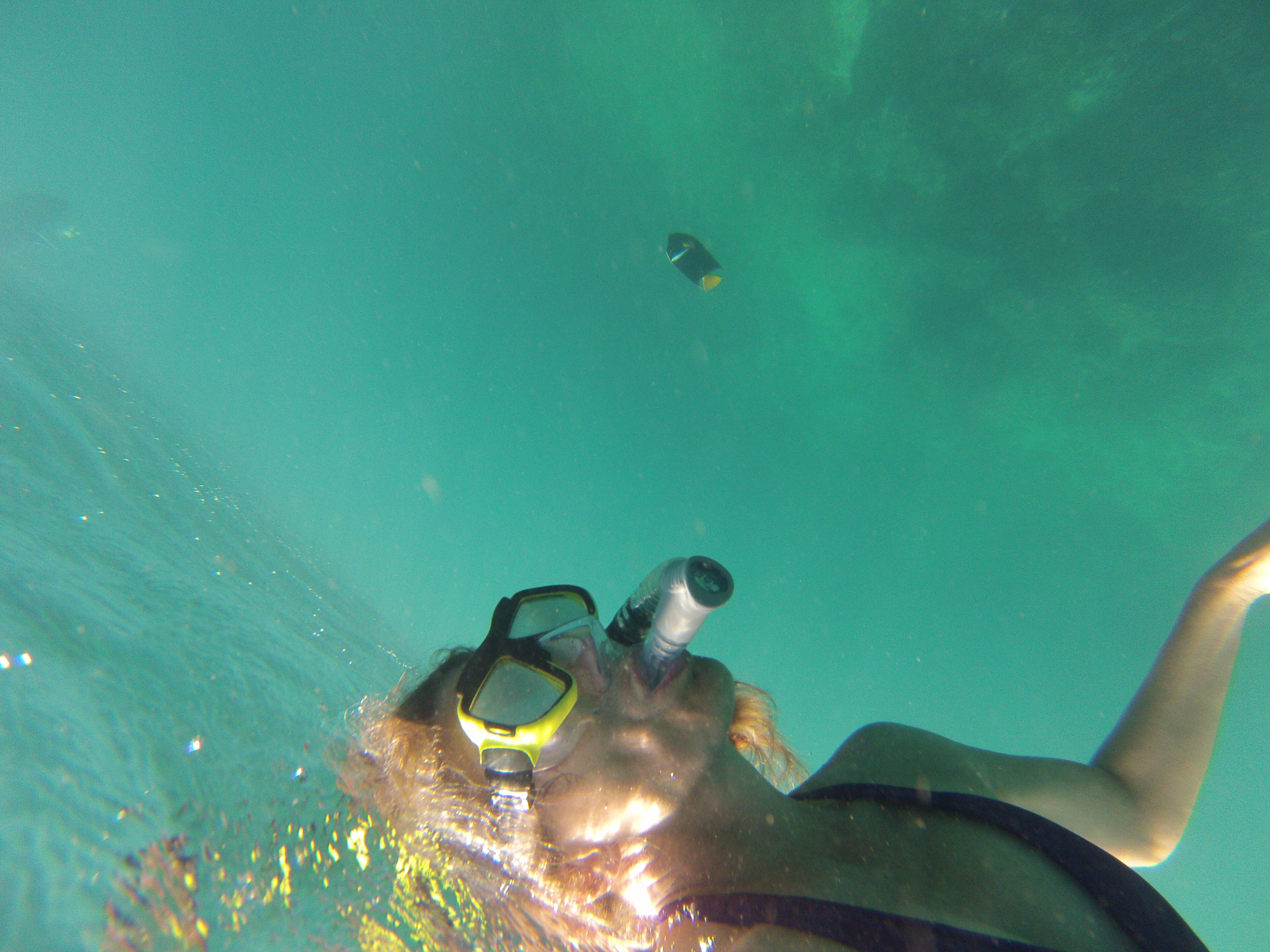
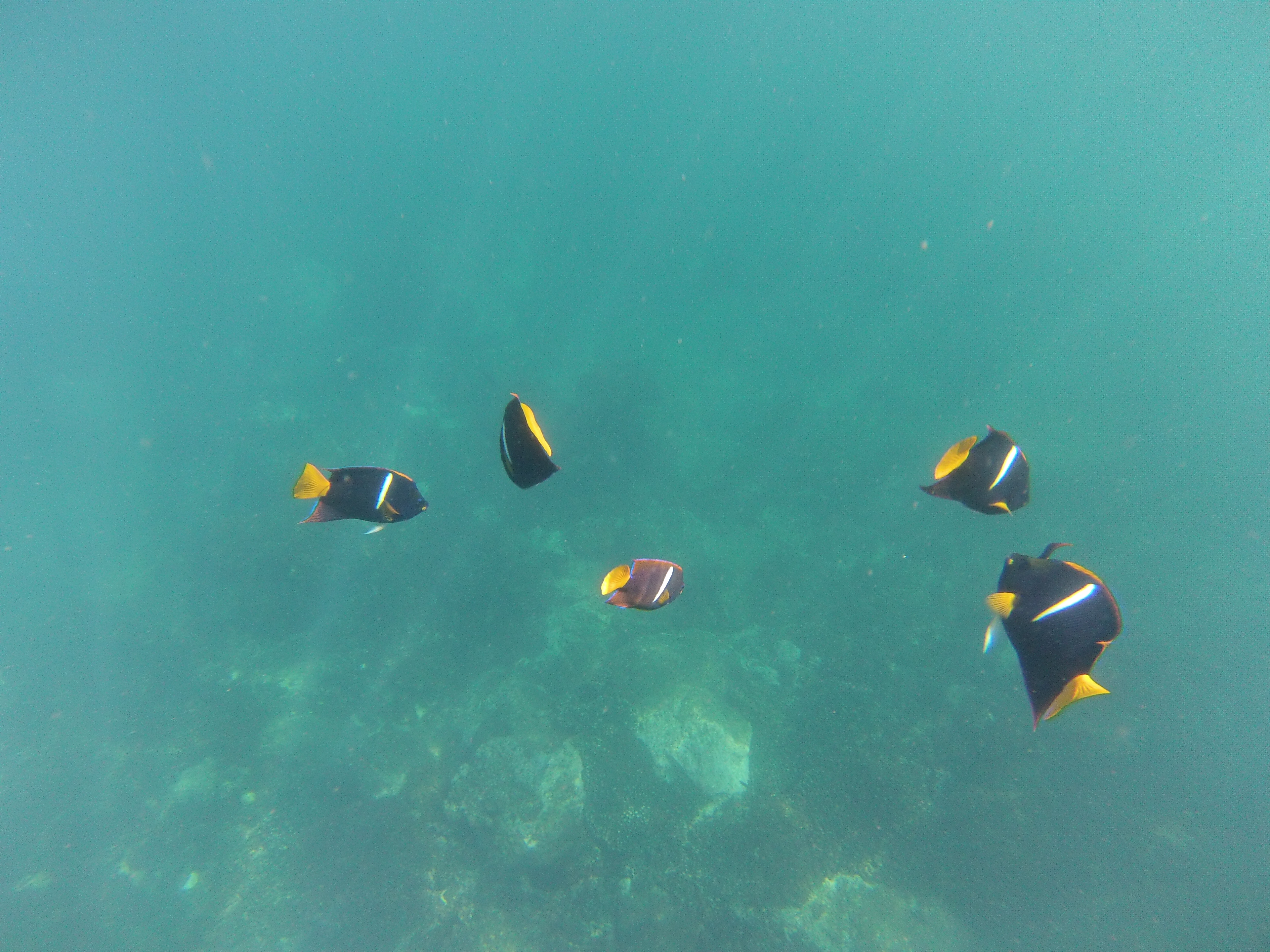
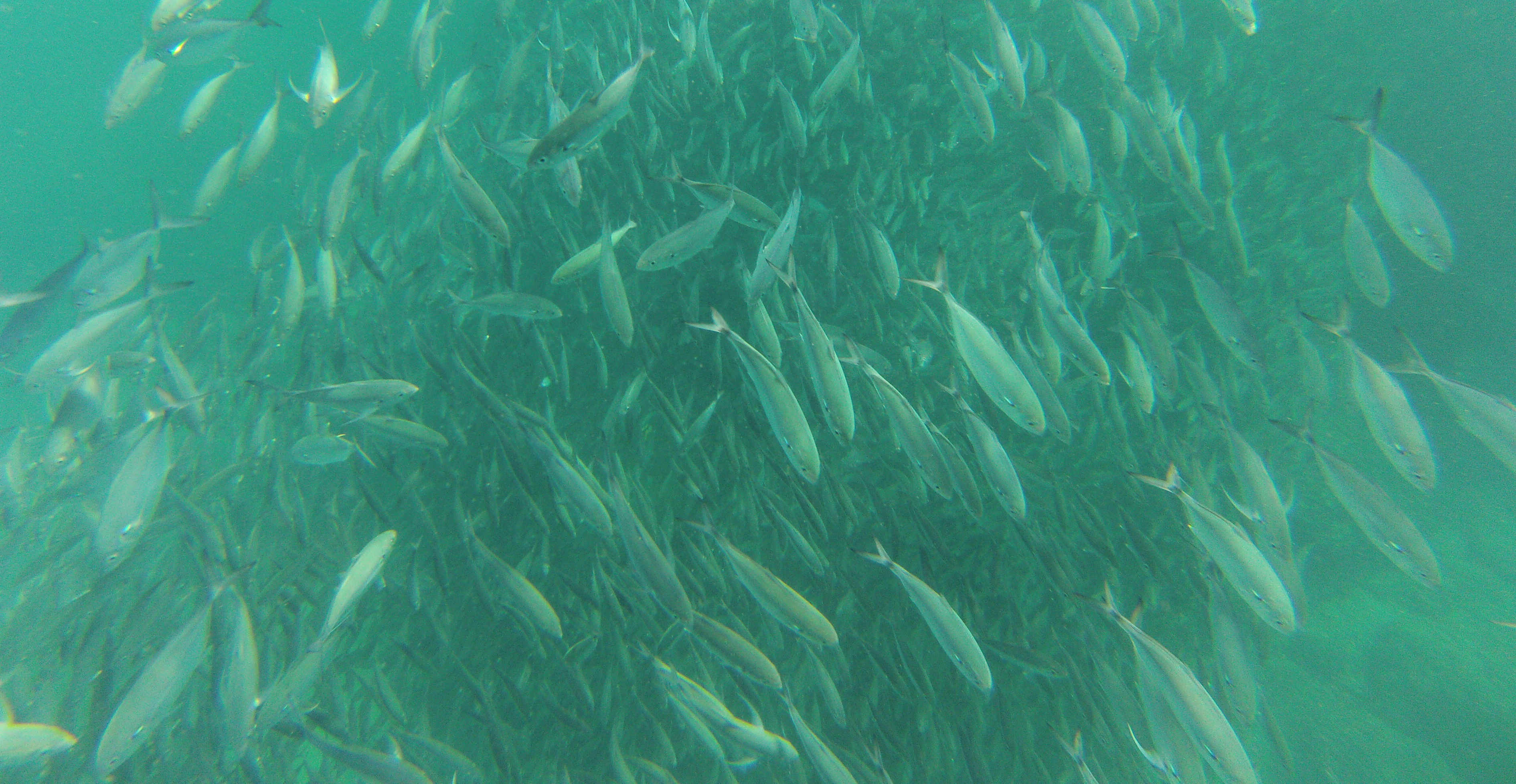
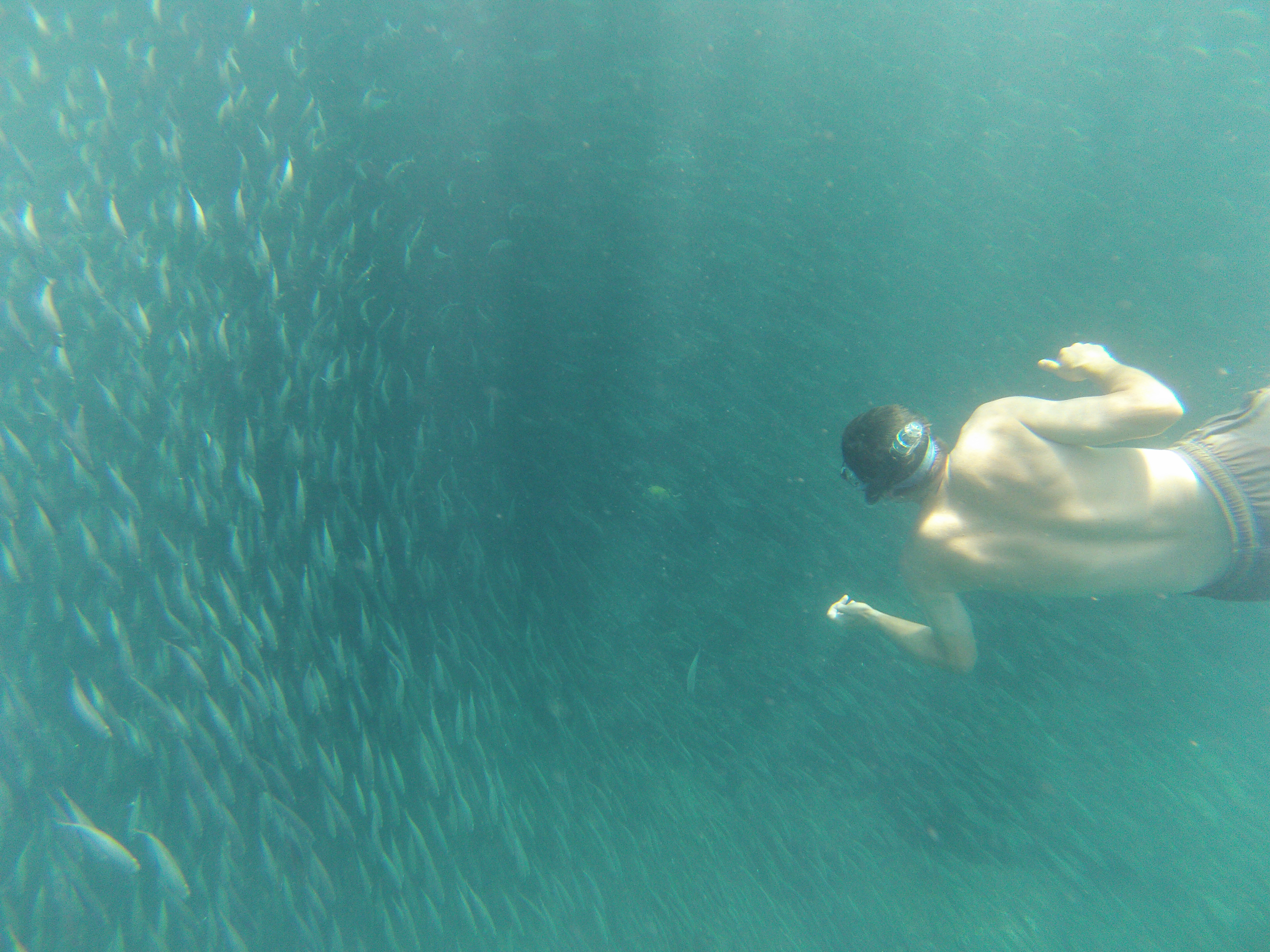
We stopped for a few days in the isolated anchorage of Ensenda Carrizal, just a few miles north of Manzanillo where we heard the snorkeling was good. A lot of the guide books proclaim places as “a snorkeler’s paradise” but often are far from it.
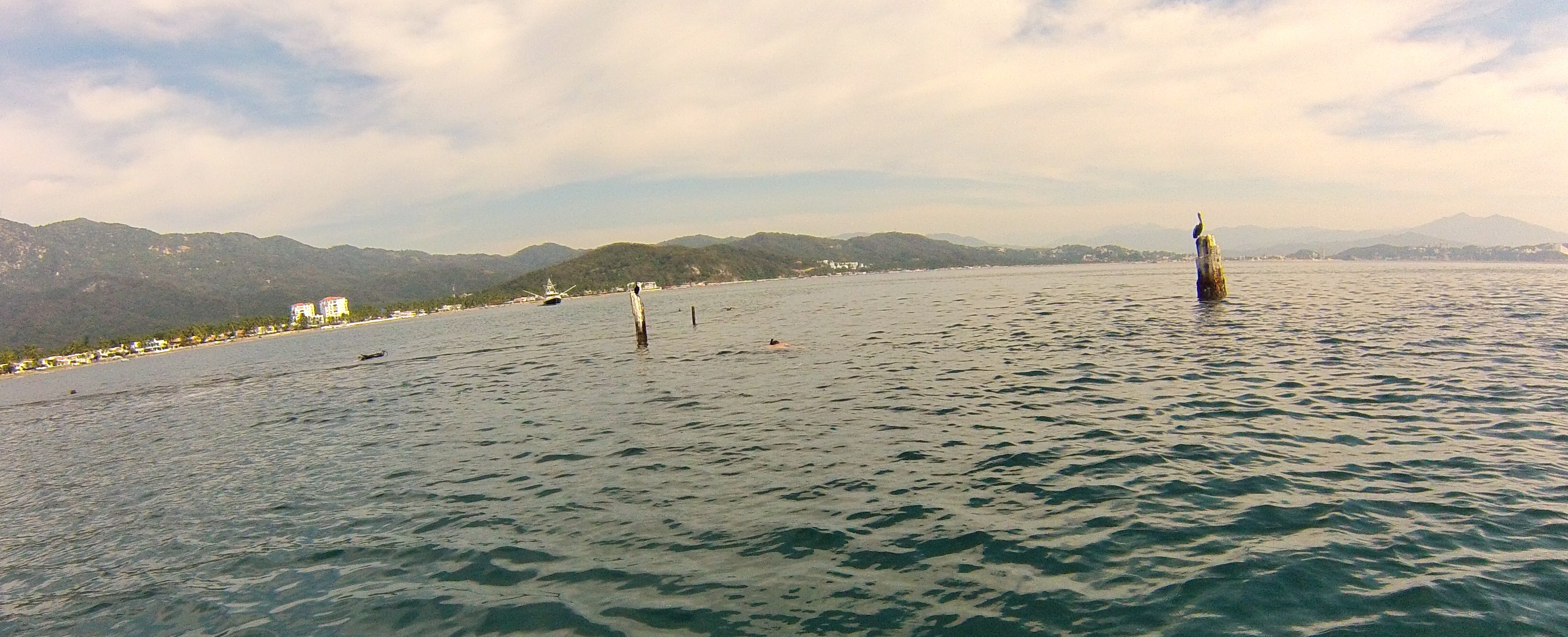
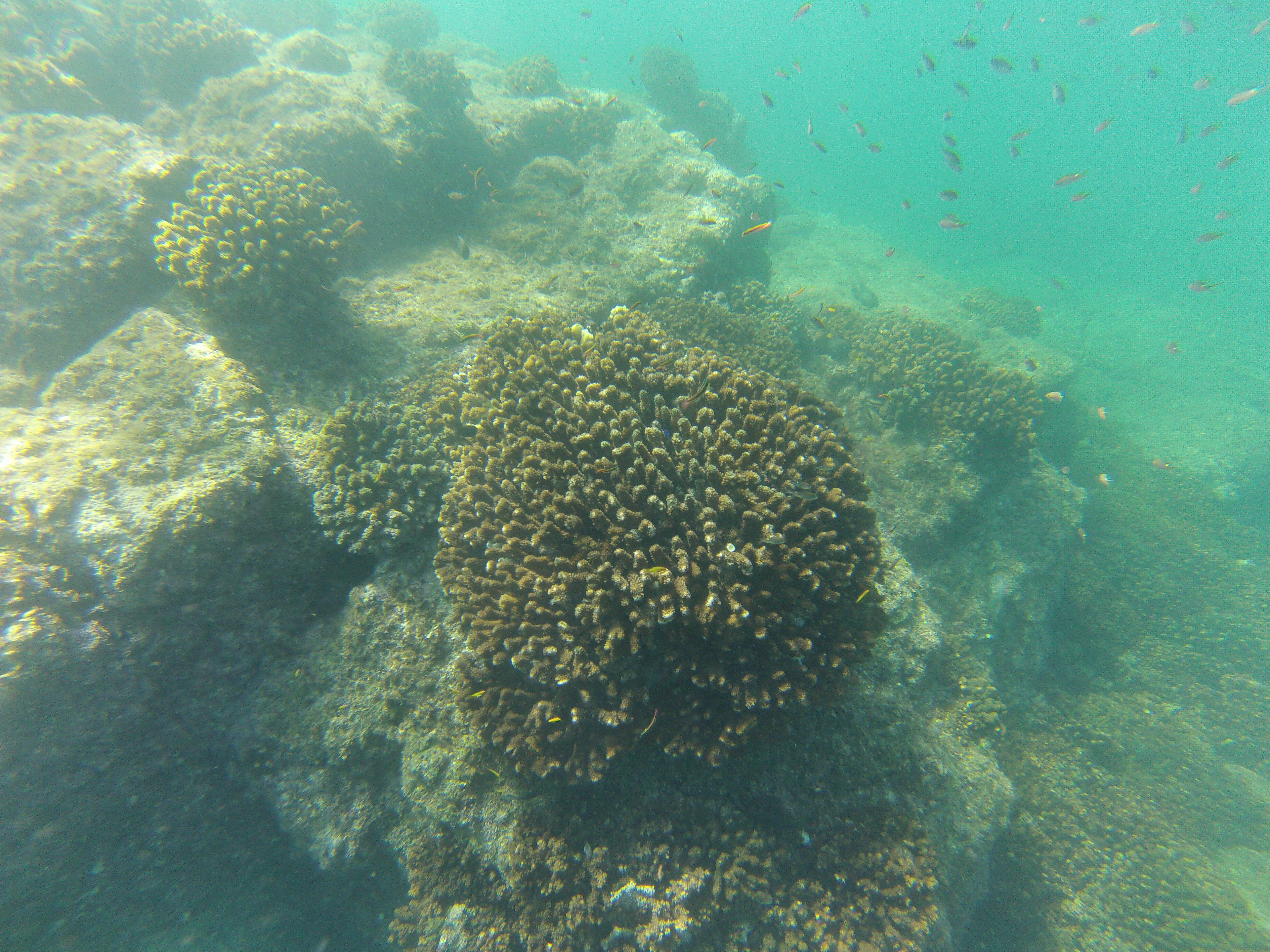
If the water is murky and you can’t see 2 feet in front of your face, who cares how many fish are there. Sadly this was our experience at a site close by in Bahía Santiago where the cargo ship “San Luciano” sank during a hurricane in 1958 and is now an artificial reef. Although it was interesting to see the top of the 300ft. ship sticking up out of the water, under the hazy waters, we saw nada . But Carrizal certainly made up for that. I don’t think I’ve ever seen as much live coral in one place and it was reassuring to know that there are still thriving coral reefs in this world.
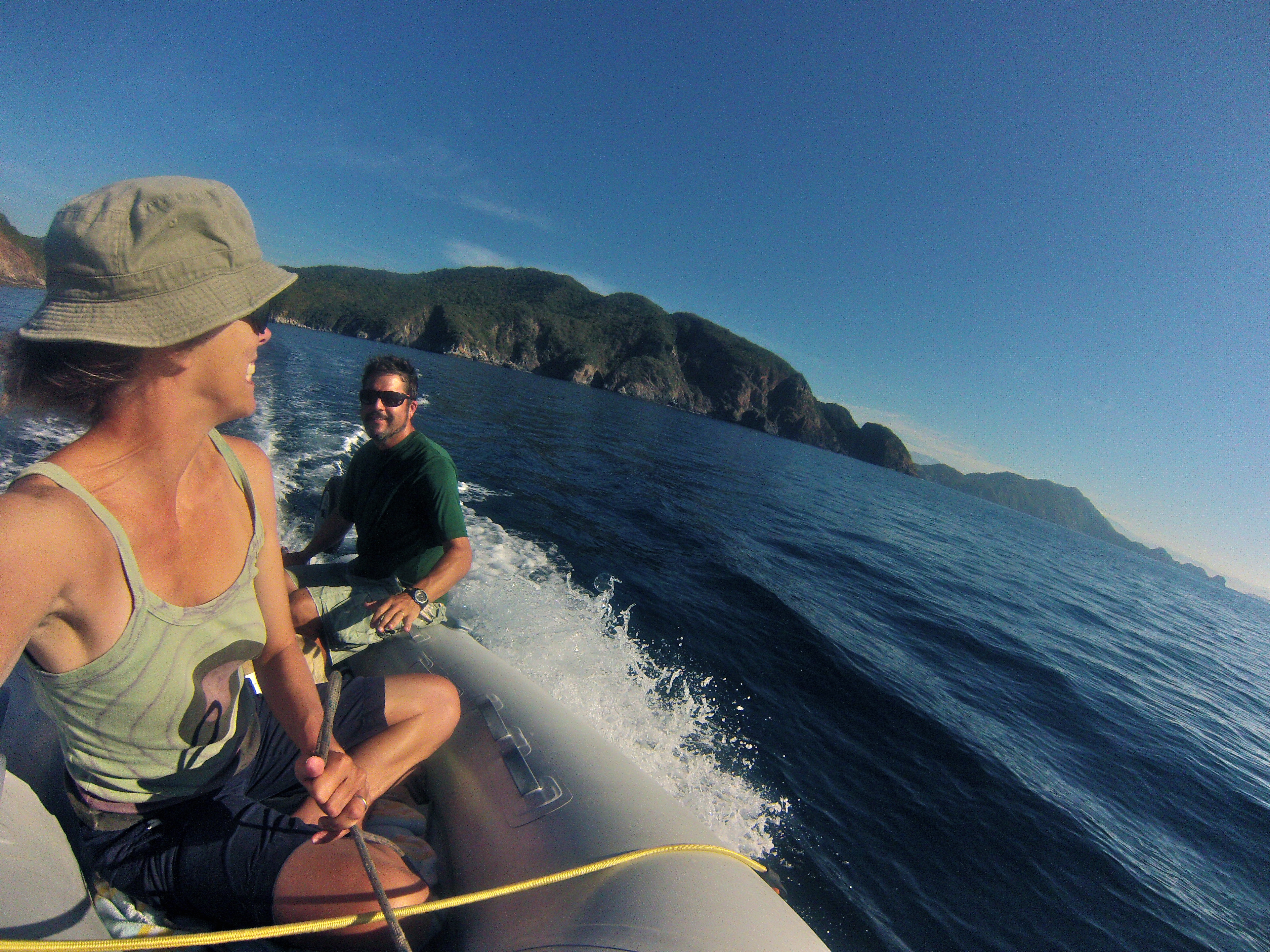
“Kia Ora” was the only other boat in the anchorage and one morning Ken and Julie came by to introduce themselves and told us to jump in our dinghy and follow them to some rock caves they had discovered on a previous visit. 
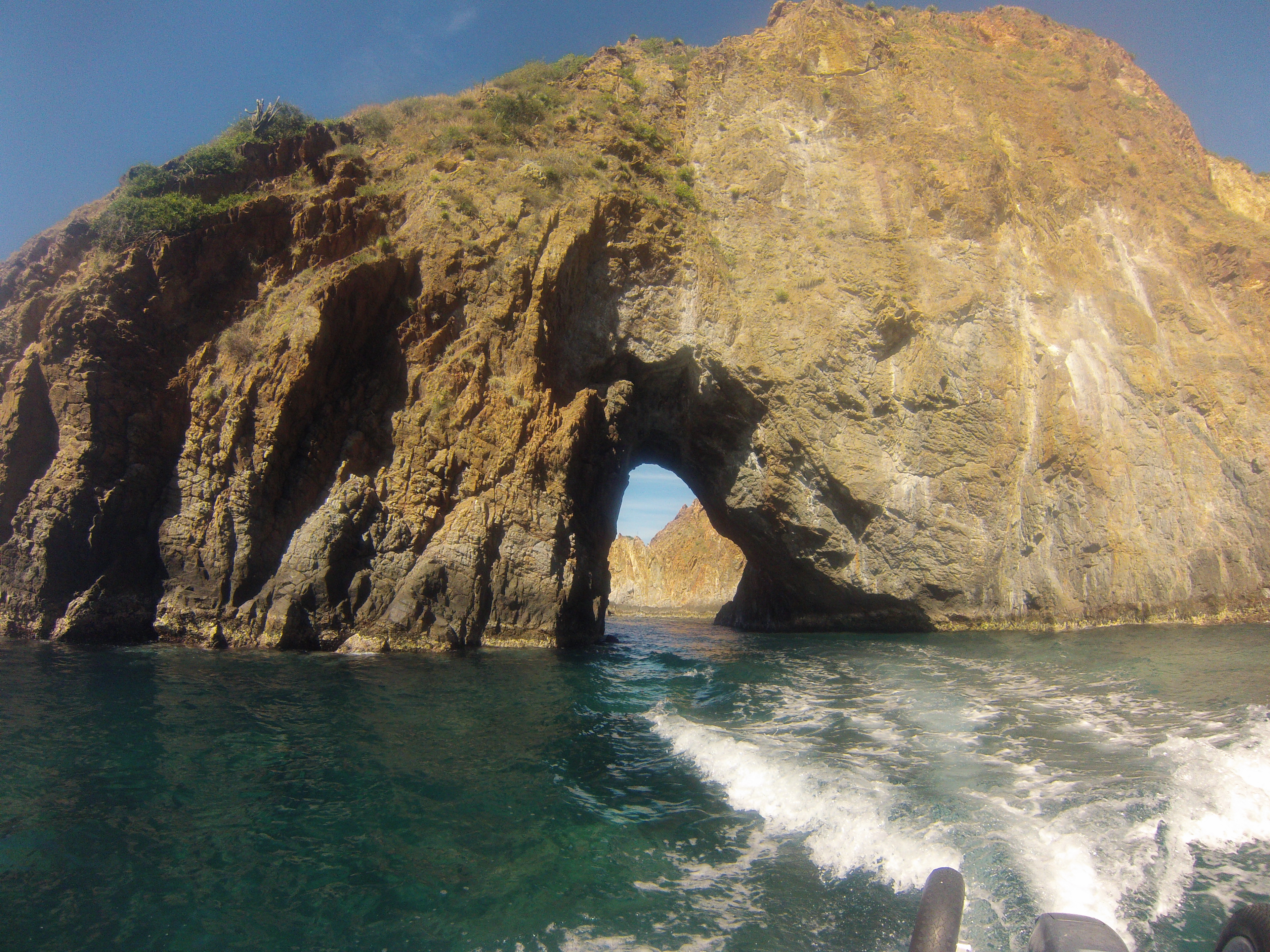
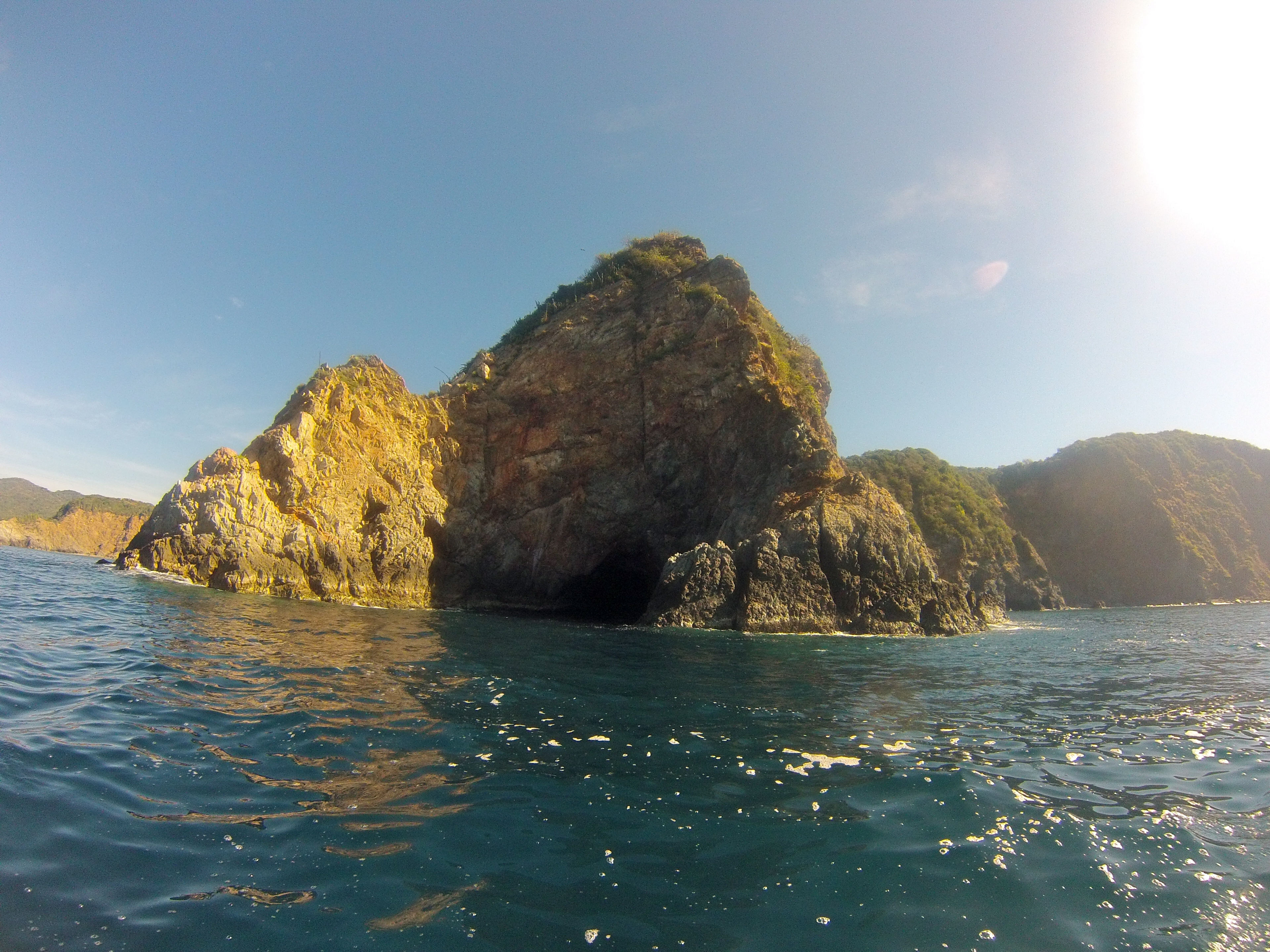
So off we went around the bend thinking we’d see a cool rock arch (which we did) we could zip through, but to our delight (ok and yes, my hesitation) they lead us to a real cave about a 100 yards long. It was absolutely beautiful and our own little Pirates of the Caribbean ride sans mechanical pirates and the “yo ho ho” song. The first time through was a little unnerving as you weren’t sure if the surge was going to push you against the wall, or we’d hit a precarious little rock or my shrill screams would deafen Peter, but alas, we survived and round and round we went back through again and again, no E-ticket needed. click here see video (ok, I’ll admit after watching the video it doesn’t look that scarey -LOL)
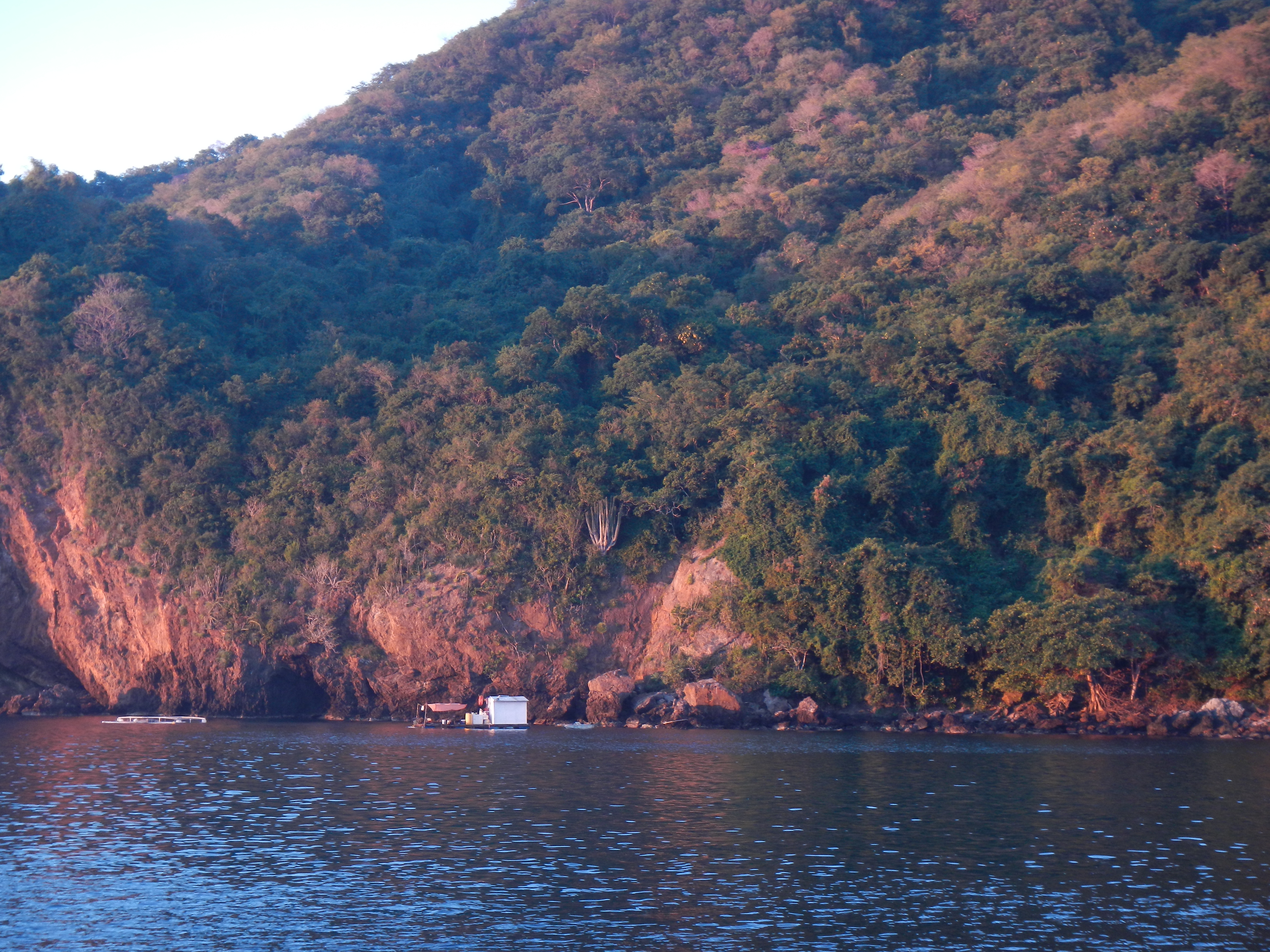
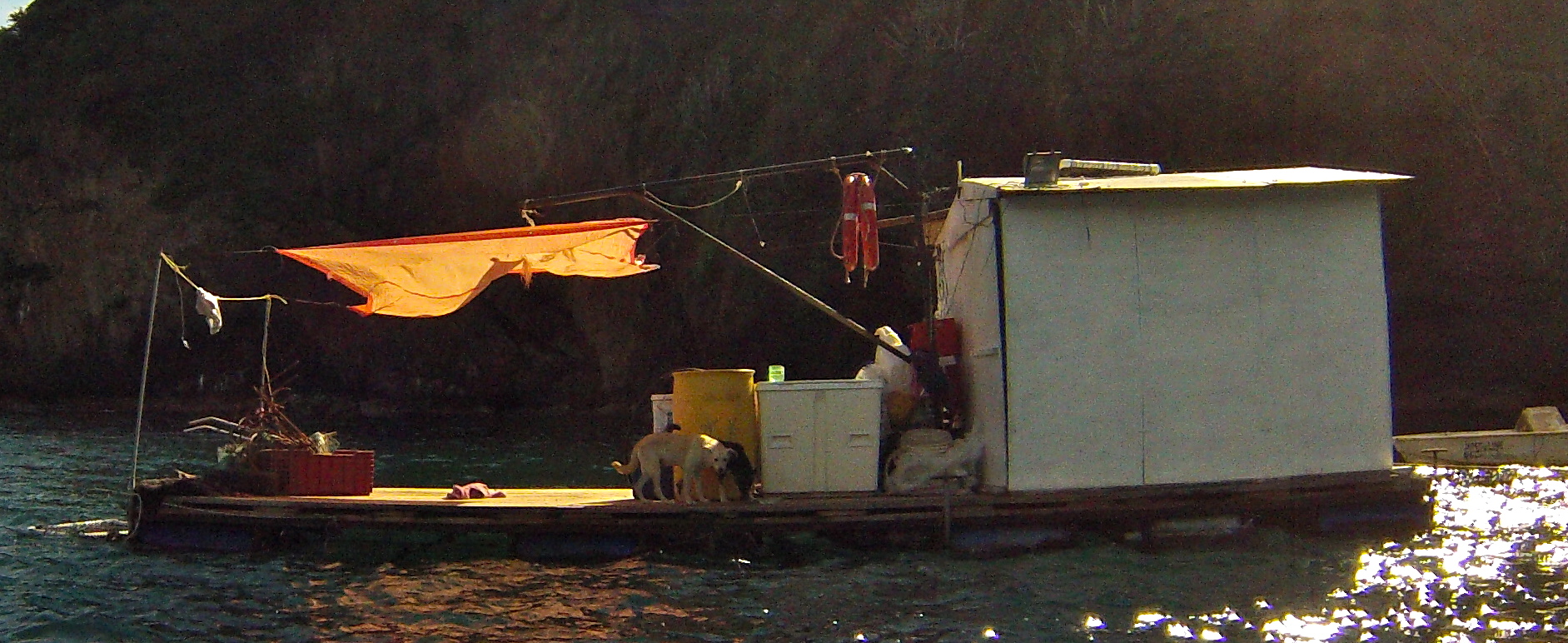
Also in Carrizal is a little fishing shack floating on a raft like contraption. All a quaint little scene until I heard the bark of a dog.
So of course I grab the binoculars and sure enough their are two young dogs on the platform portion of the raft and no fisherman in sight. The next day still no fisherman. I know they are there to do a job and guard this area, but it was hot and god knows when they were fed last. So, not being able to stand it any more, we take a big bowl of water with ice cubes and a few scoops of Lucy’s food and head off to the raft.
Initially, the dogs go bananas barking at us as we get closer, but as soon as we pull up next to their raft they slink behind a barrel (some guard dogs). We leave the food and water and as we drift away, slowly we see them inch forward and gobble it up. We made another trip over there the next day to do the same, this time leaving a lot more water for the poor pups. Fellow boaters/animal lovers, if you are in this anchorage and see them and no sign of the fisherman, please drop off at least a bowl of water for them.
To see the photos larger, just click on them!!!