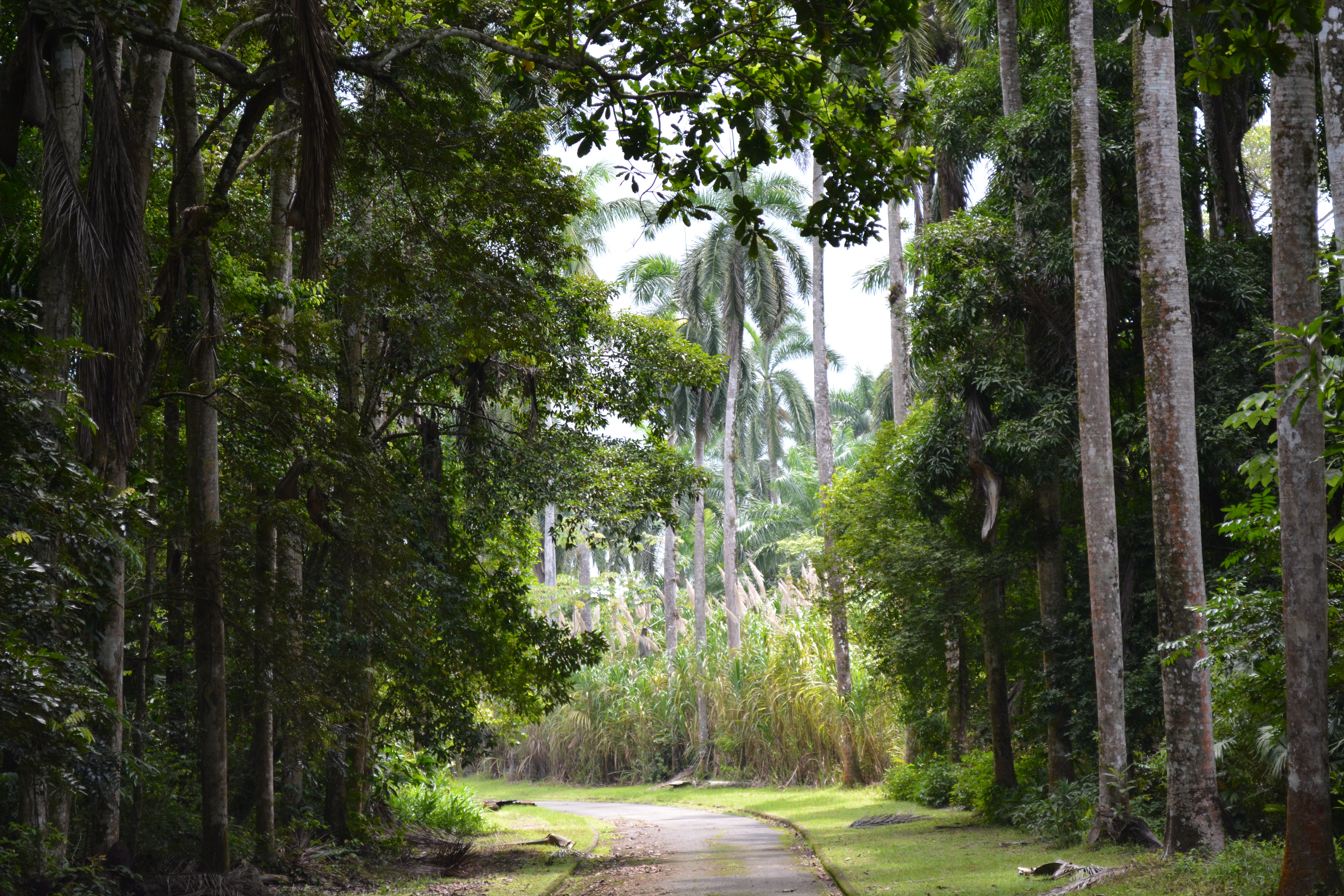
Well, we are overdue for some new content here, but the truth of the matter is that things have just slowed down a bit for us. It is hurricane season in the Caribbean and, although we are out of the danger zone, it is incredibly rainy, hot and humid. The weather just makes you lethargic. We now understand the origin of “island time” and the need for siestas. You can’t do much or move quickly in these conditions. Surprisingly, however, it does cool down a bit on most nights and the heat doesn’t build back up until about 7:00am (LOL, but no joke). We sometimes take a stroll with Lucy on peaceful mornings. The surroundings are an abandoned US military base that is slowly and silently being reclaimed by the jungle. It makes for good flora and fauna viewing. So without further ado, here are some pictures we took on these walks.
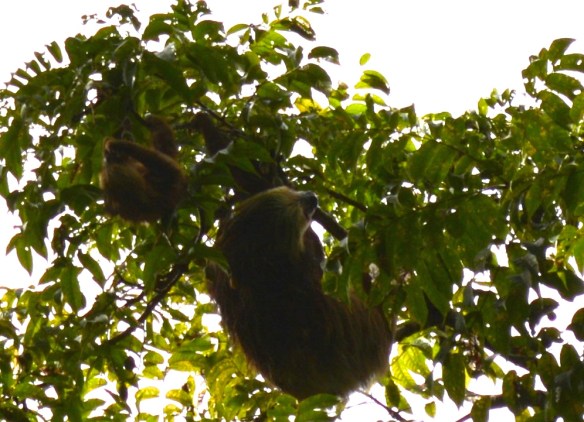
Mama and baby sloth -slow lane experts
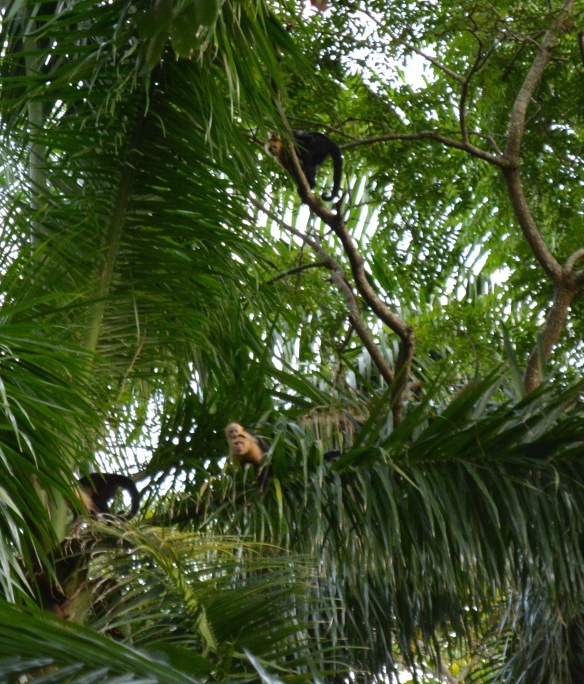
Got a monkey on your back. White headed Capuchin monkeys
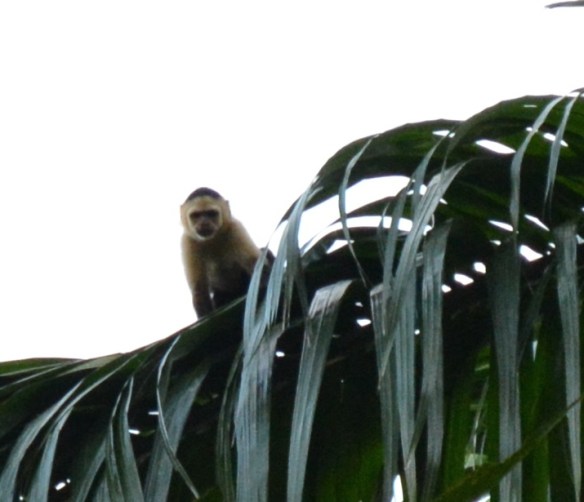
you lookin’ at me?
Jungle reclaiming Fort Sherman
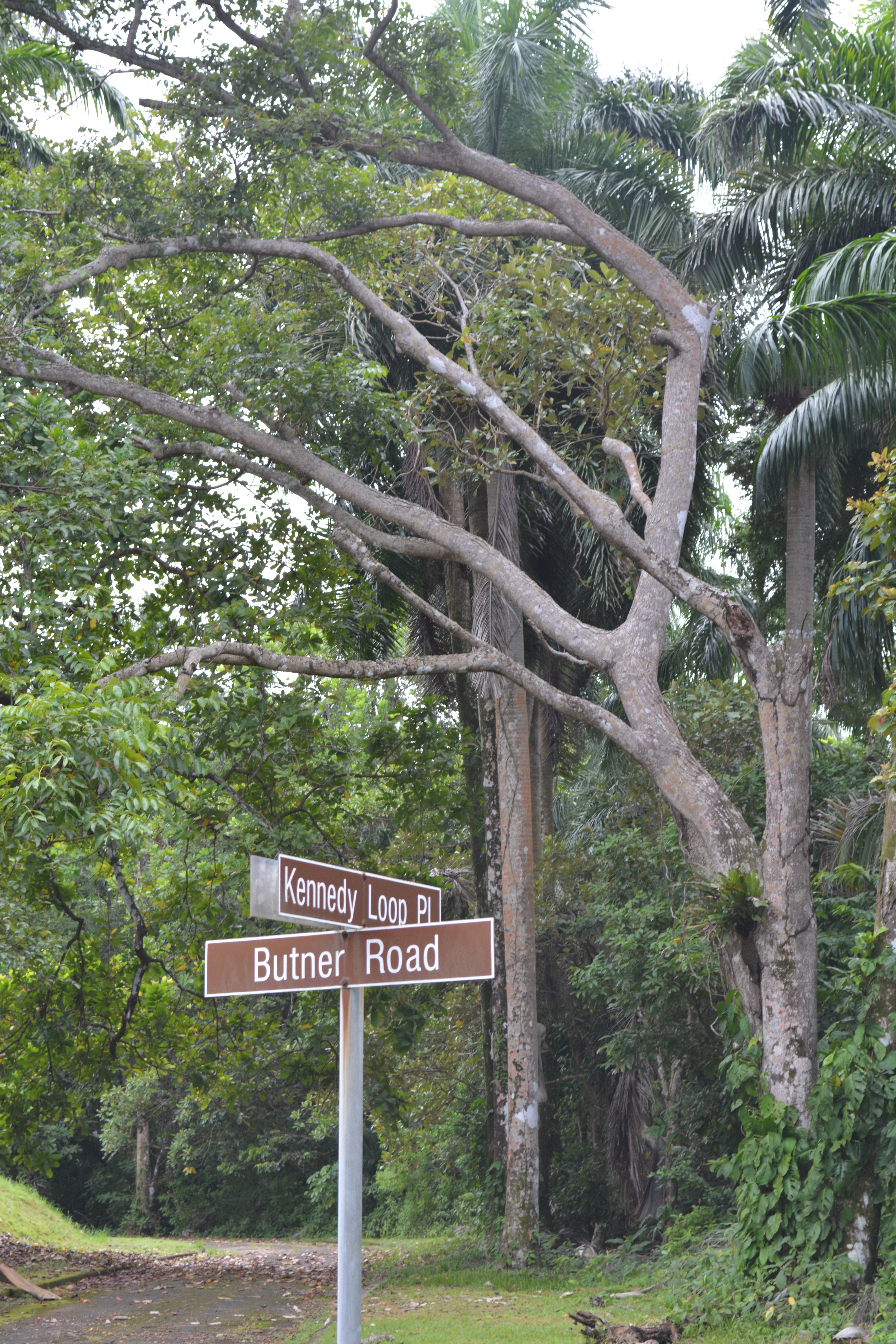
I think every US military base has to have something named Kennedy.
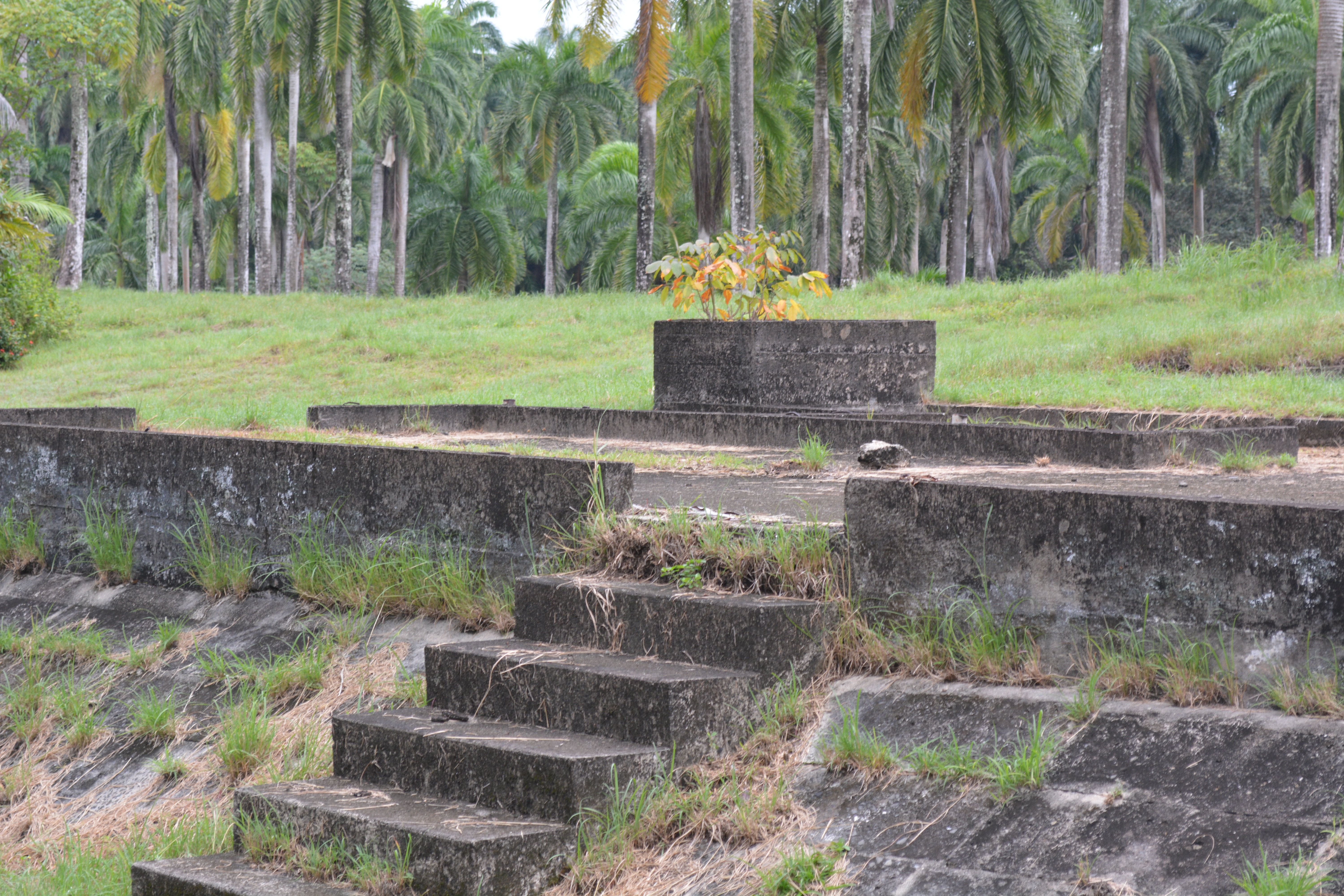
Looks like ruins of an ancient temple.
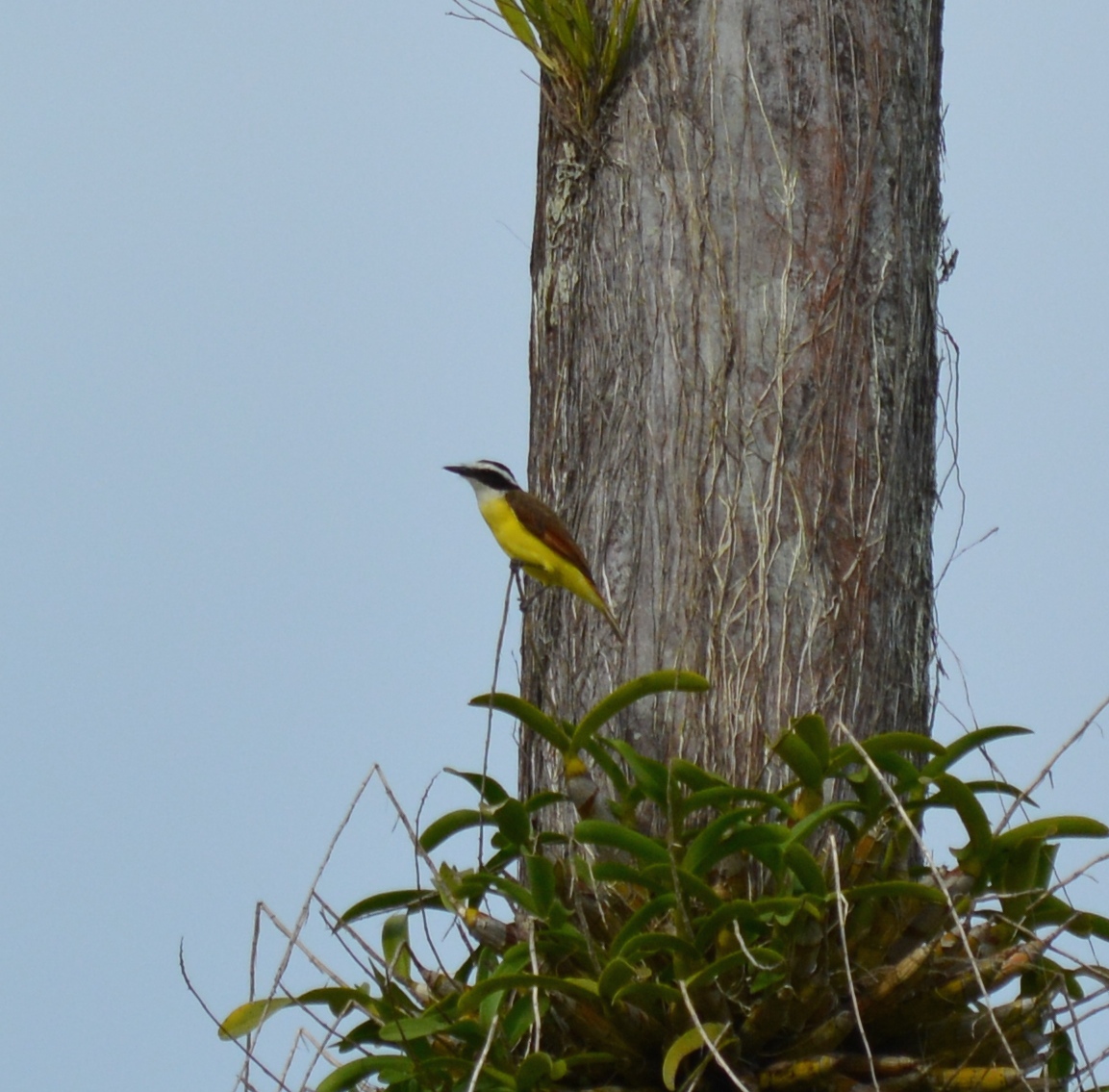
Kiskadee. These are all over.
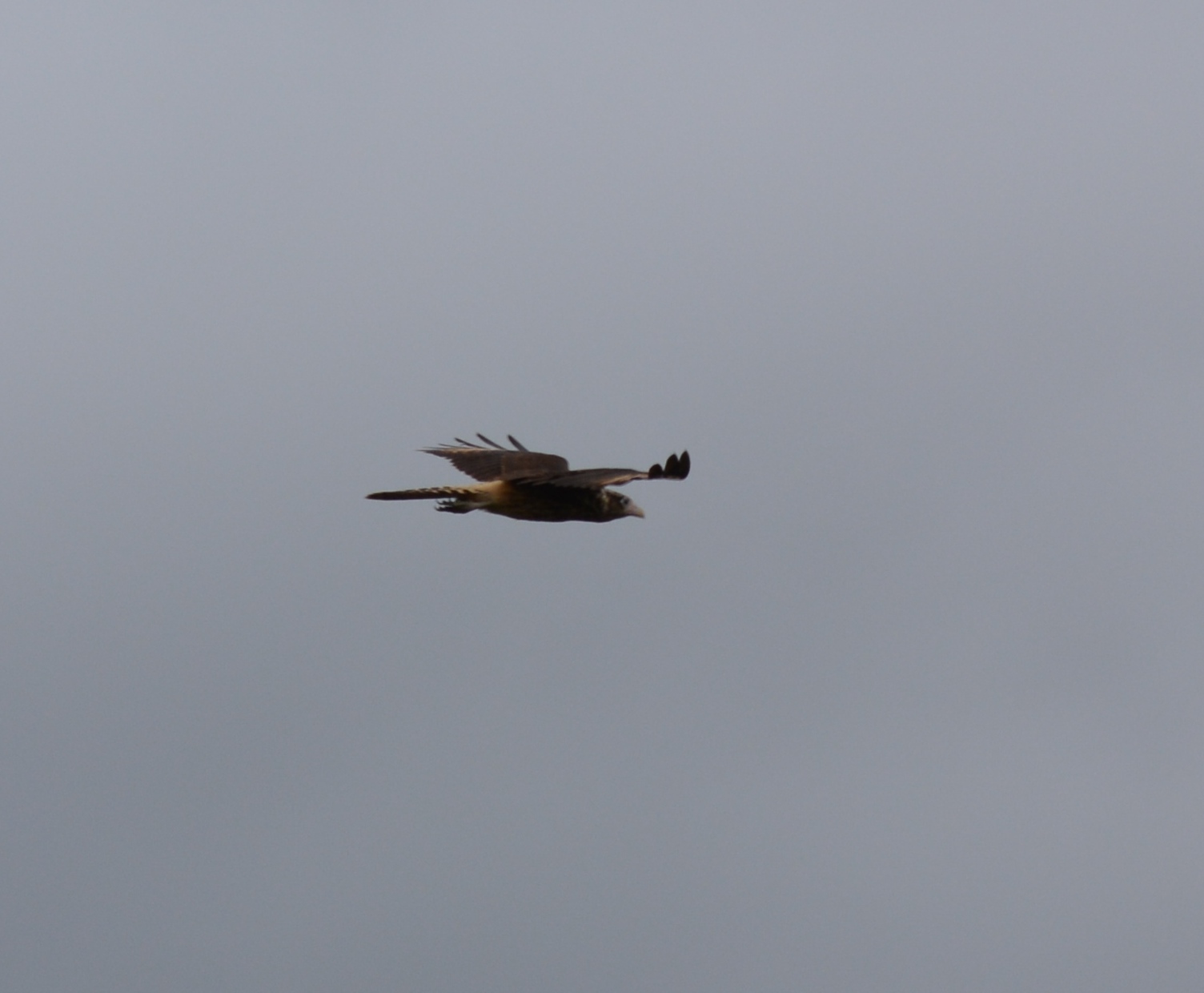
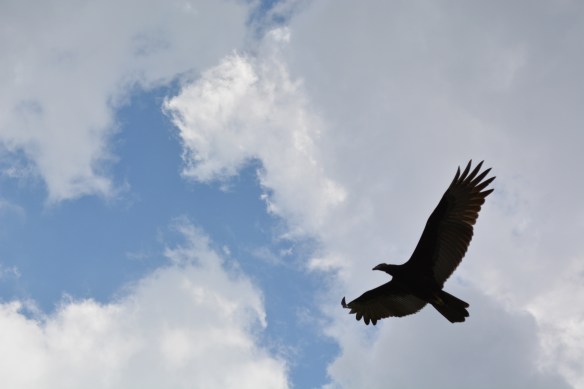
Hawk
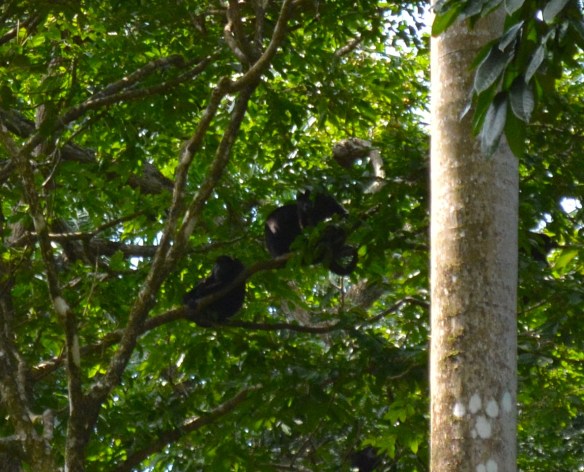
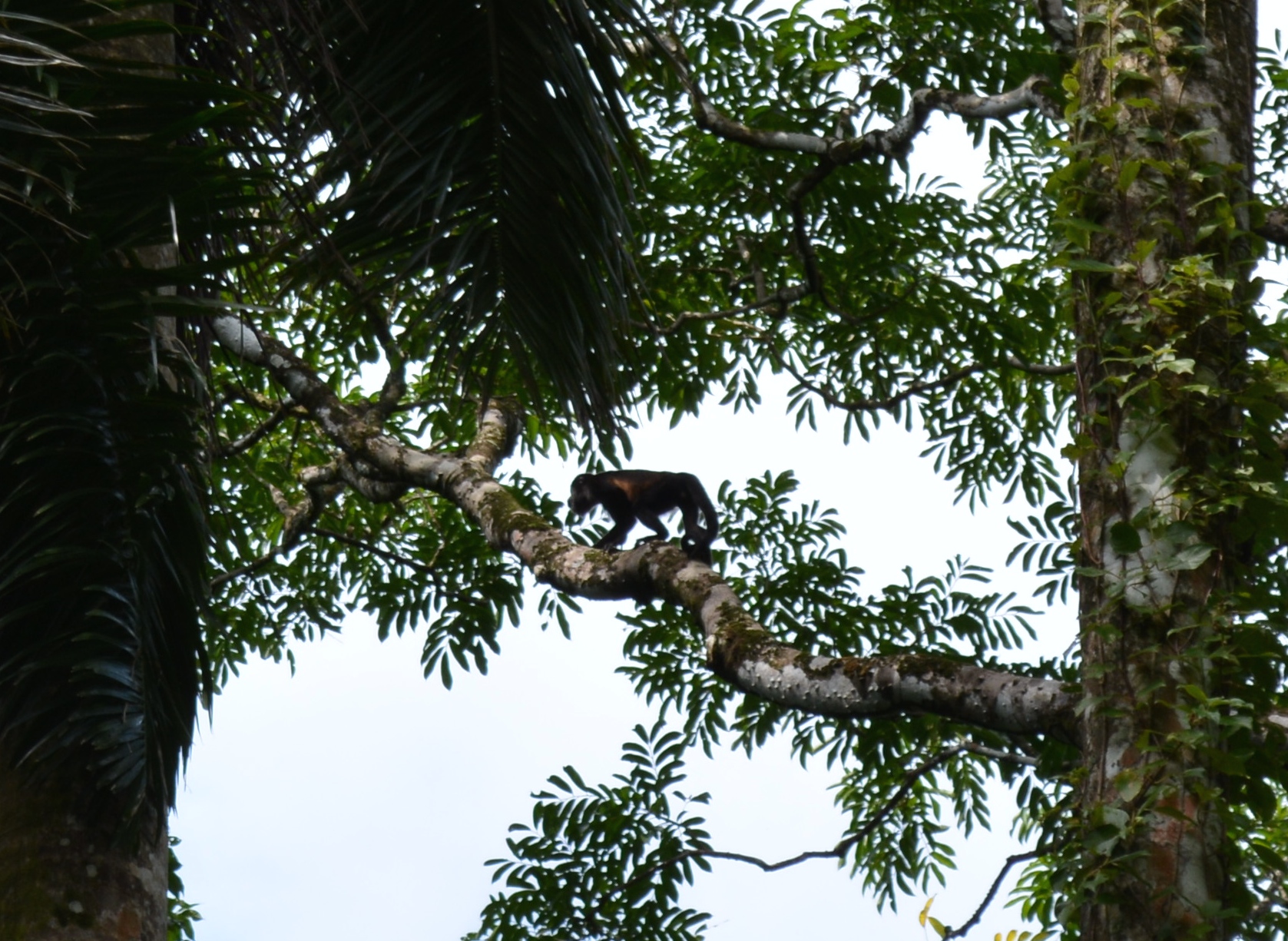
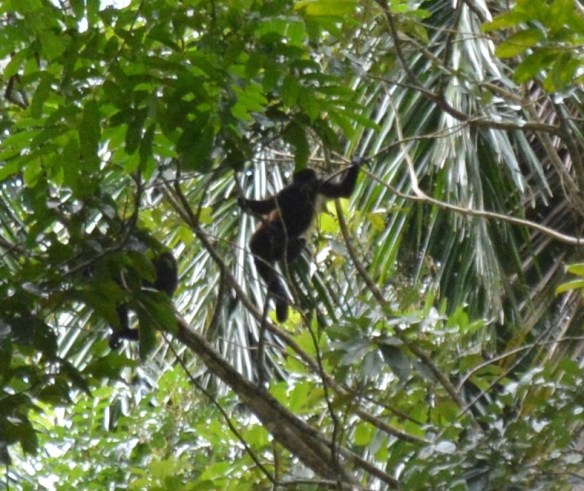
Even the monkeys just lounge about. Howler monkeys
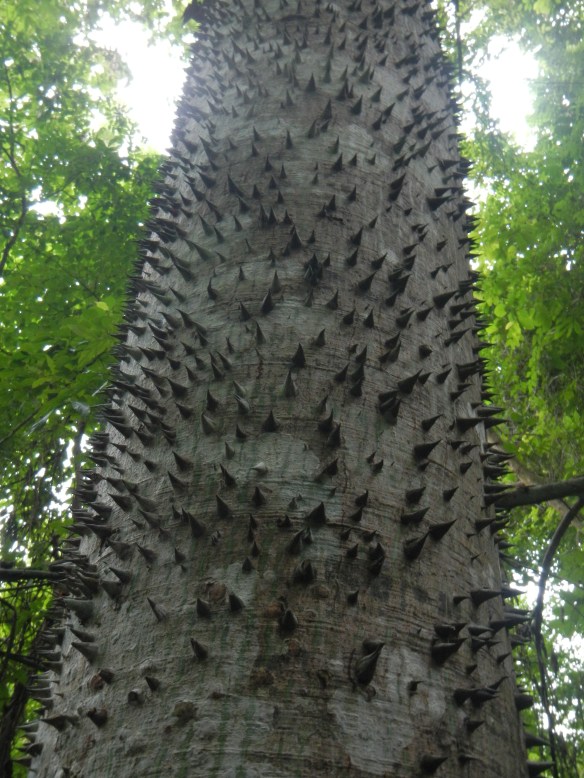
Good deterrent to climbing
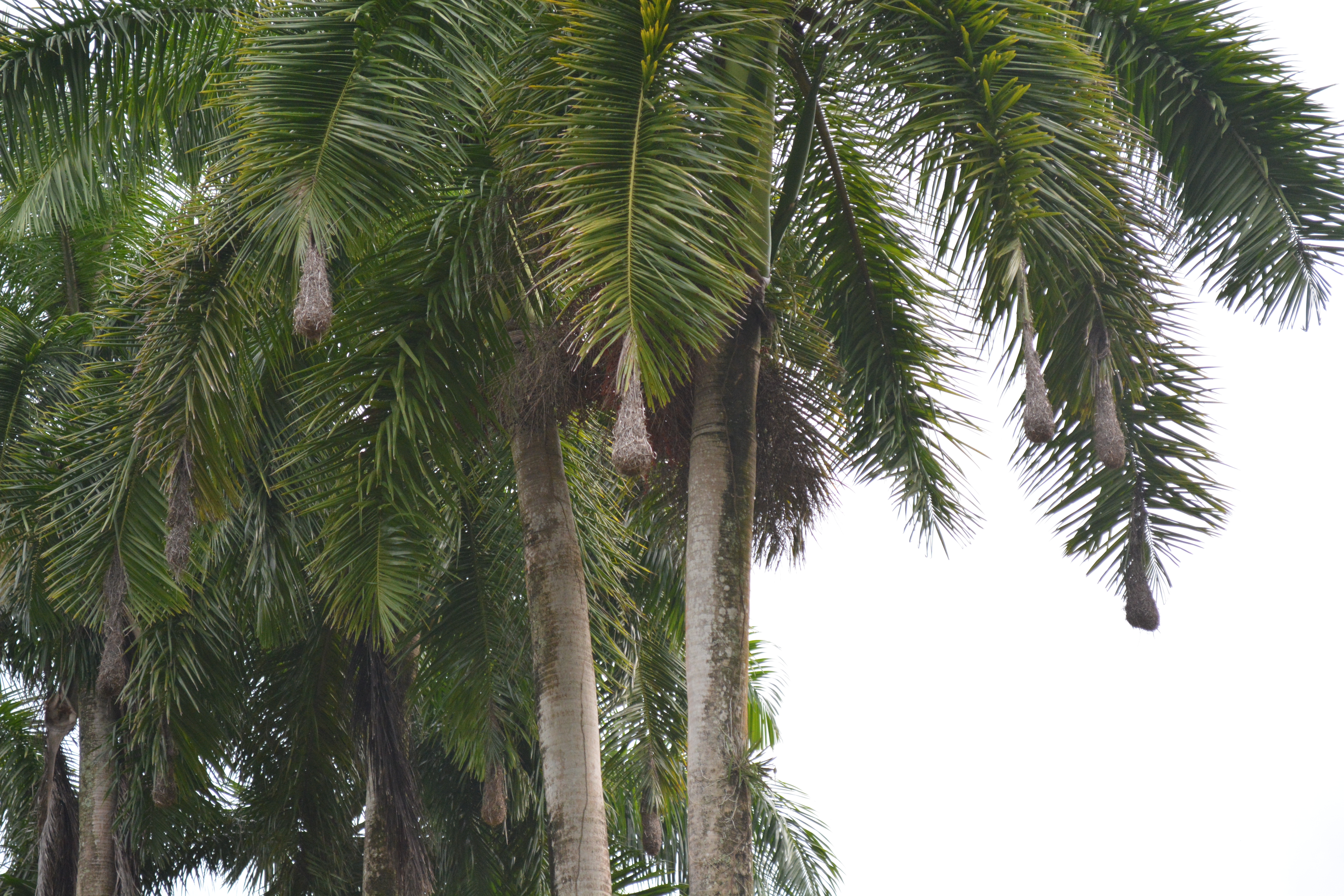
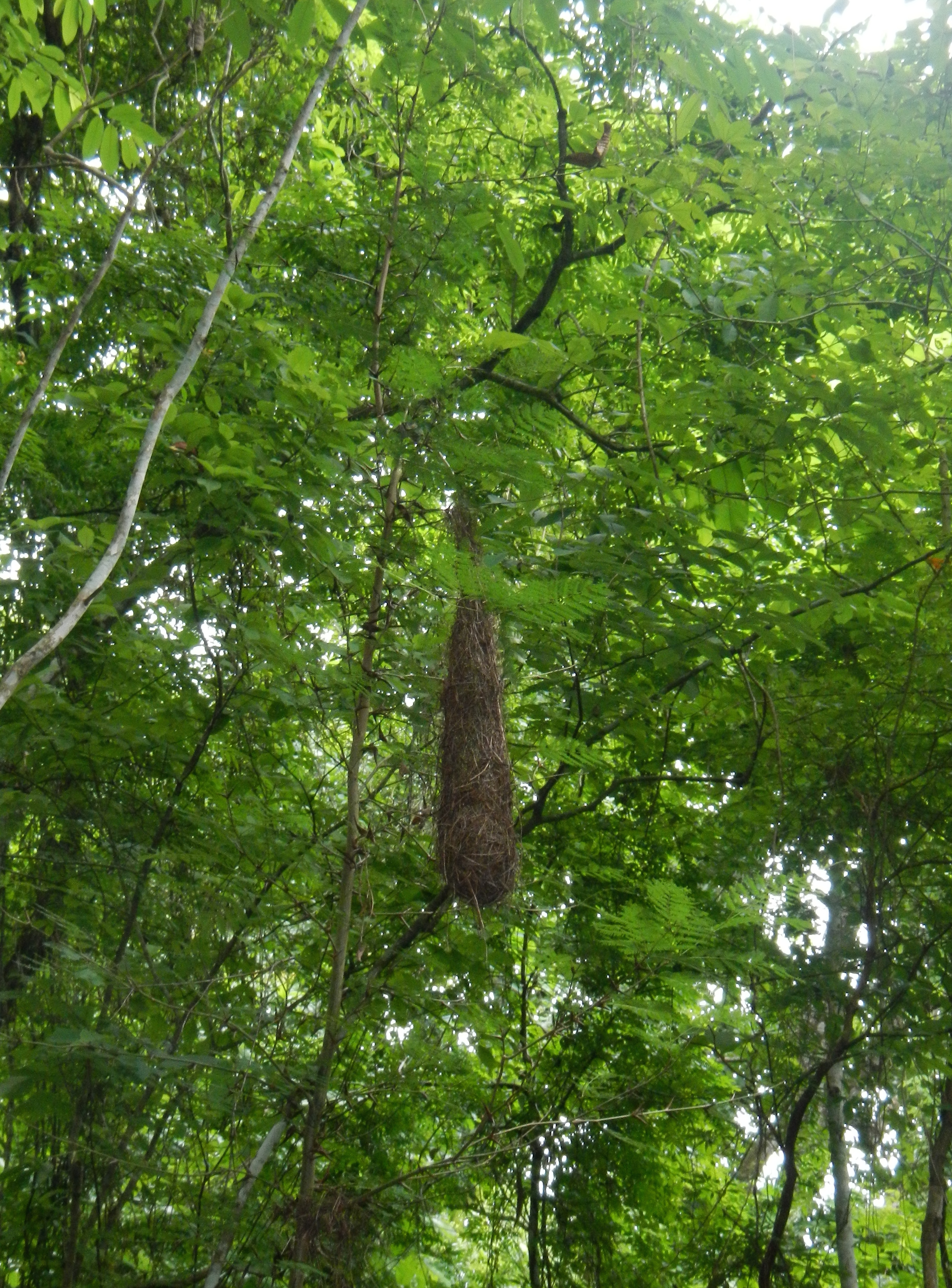
Hanging birds’ nests
Howler monkey on the prowl. Some say they are the loudest land animal in the world.
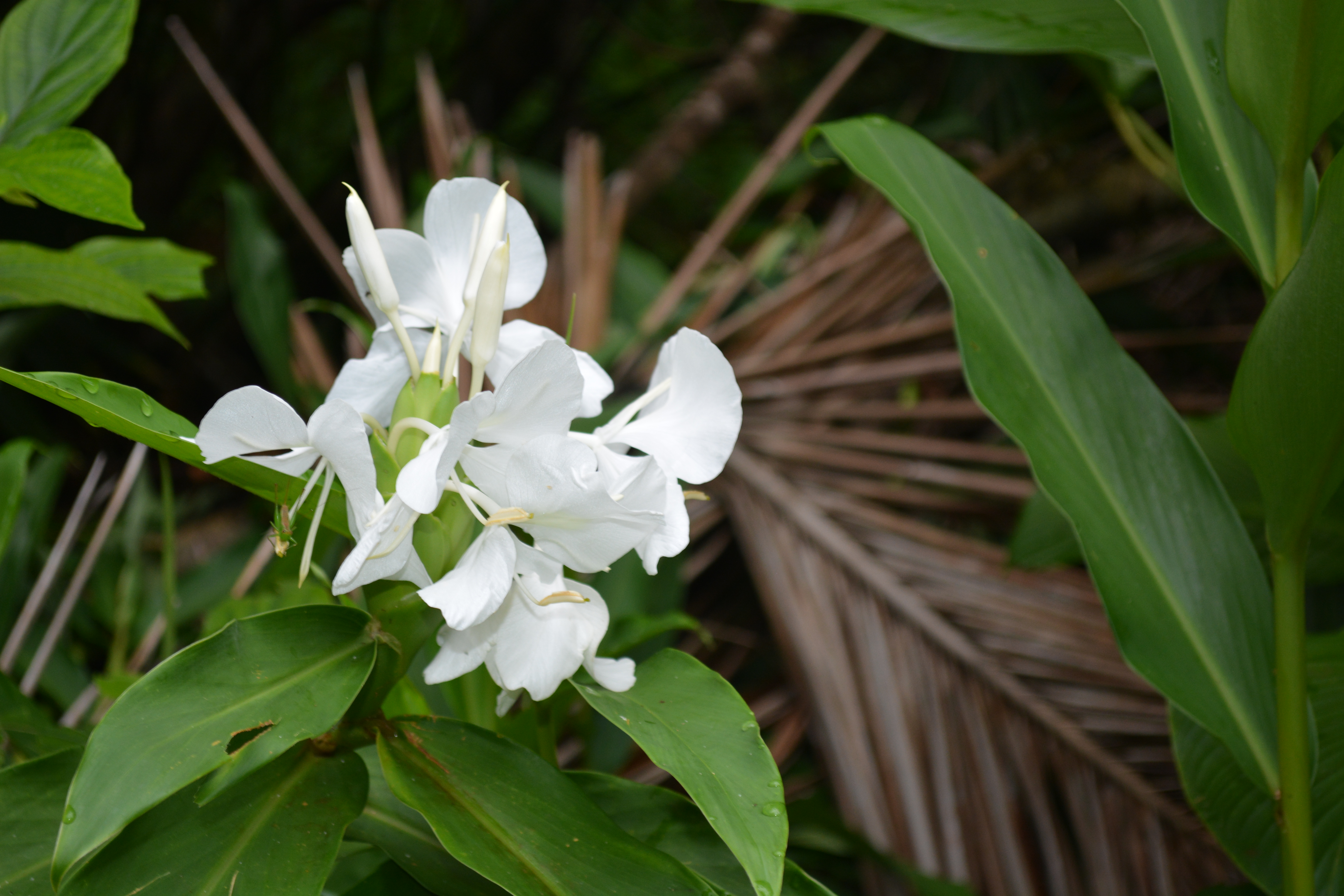
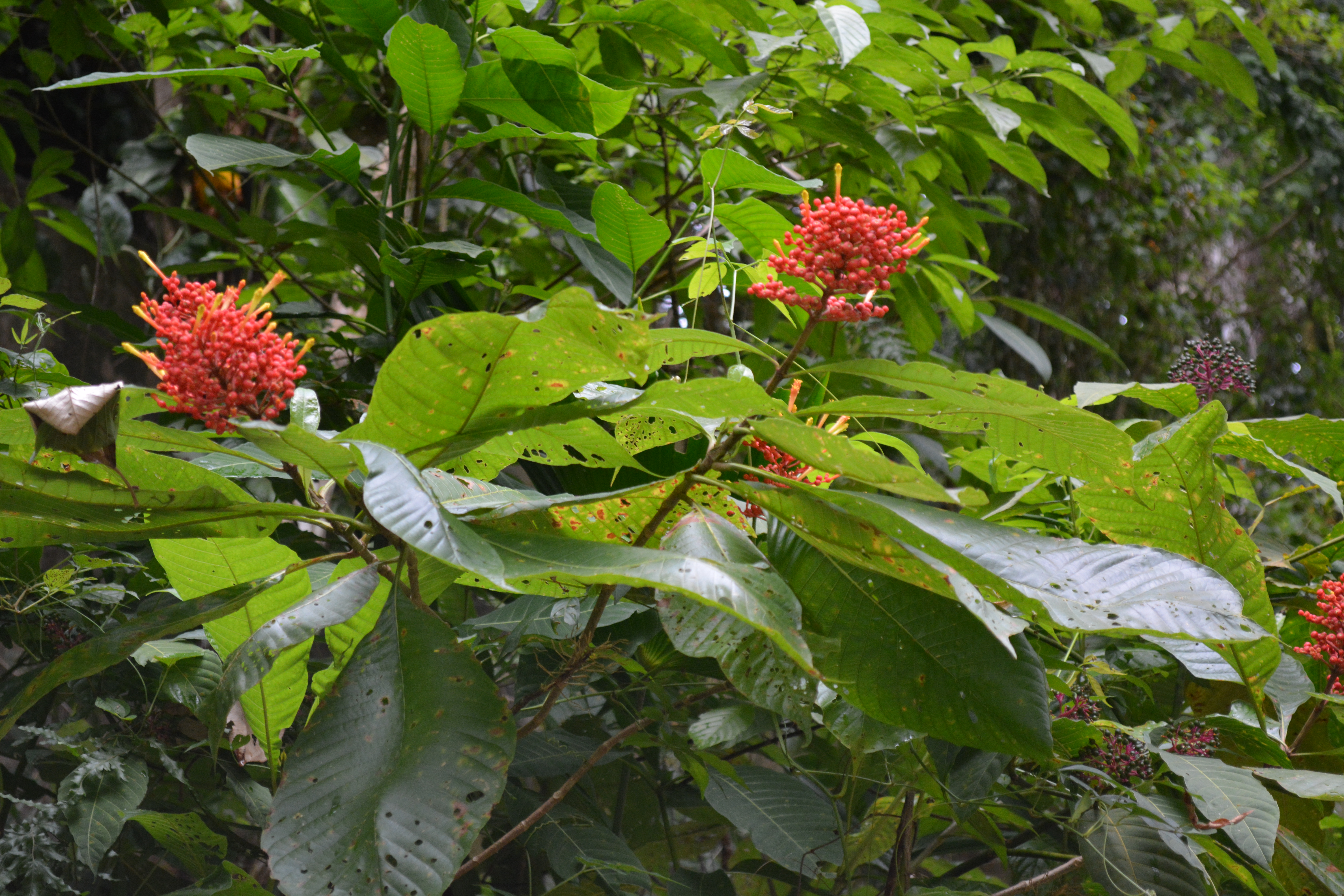
wild flowers abound
another hanging bird nest
These look like vultures. They are quite large.
More monkey business
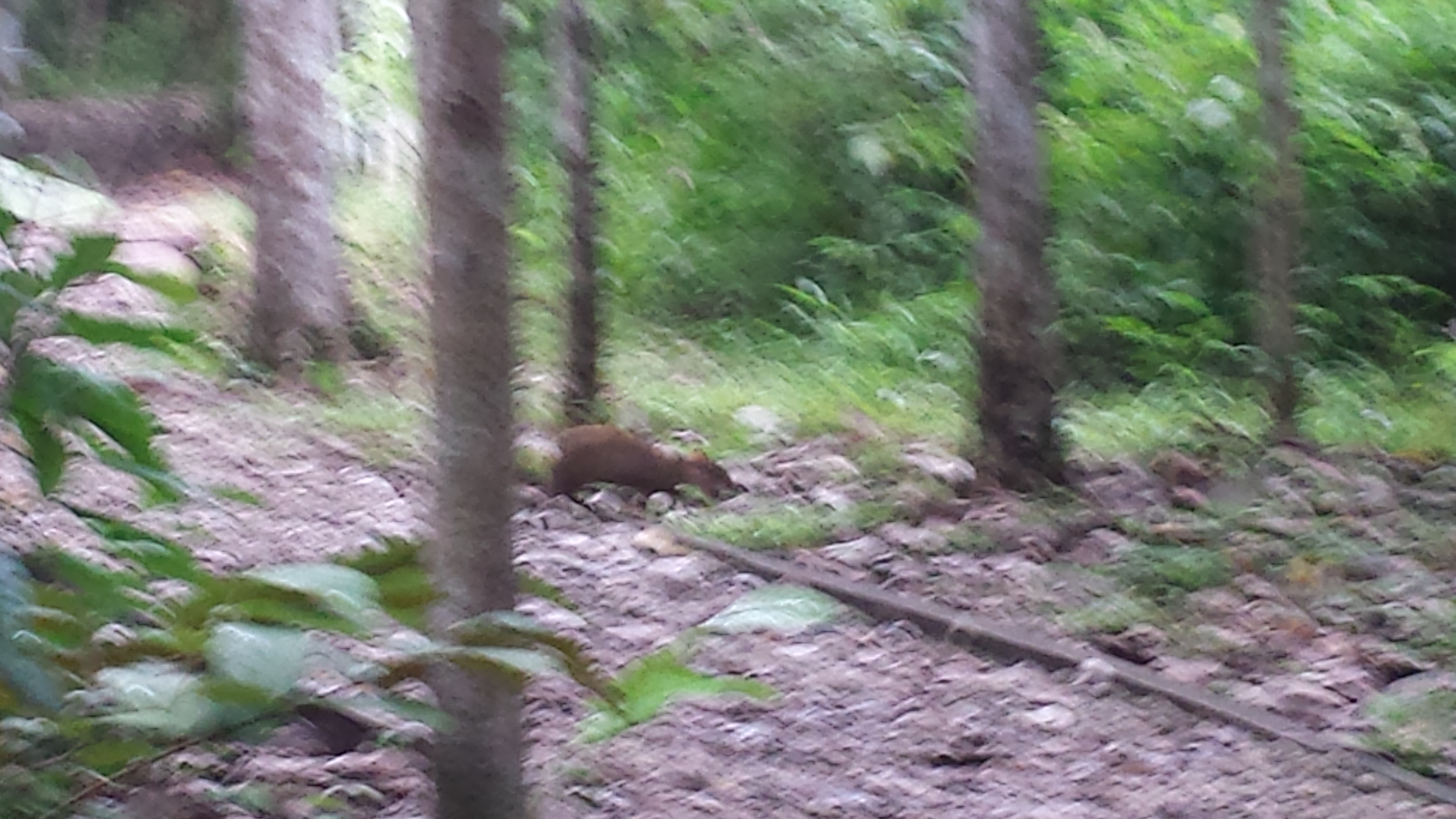
Agouti – sort of a cross between a wallaby and a rat. Sorry for the blurry photo but he was quick and we barely were able to shoot it.
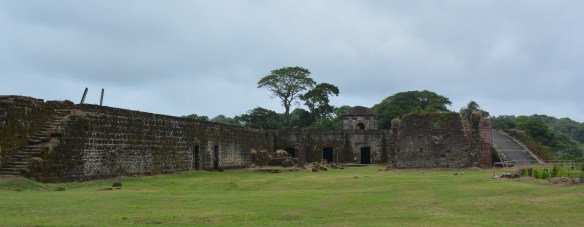
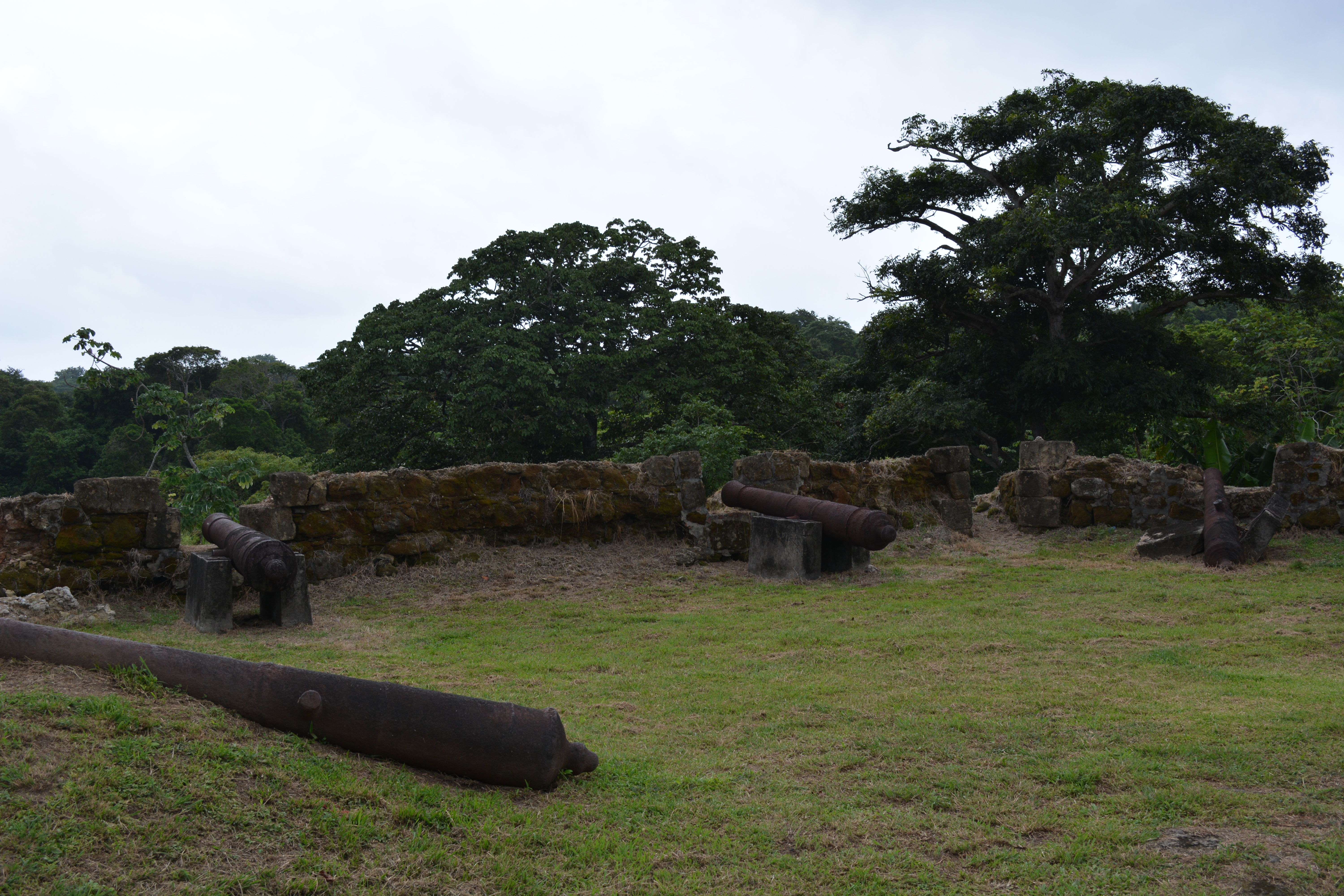
Apart from the old military base and the jungle, there is nothing around for miles except the remnants of the 17th century Fort San Lorenzo.
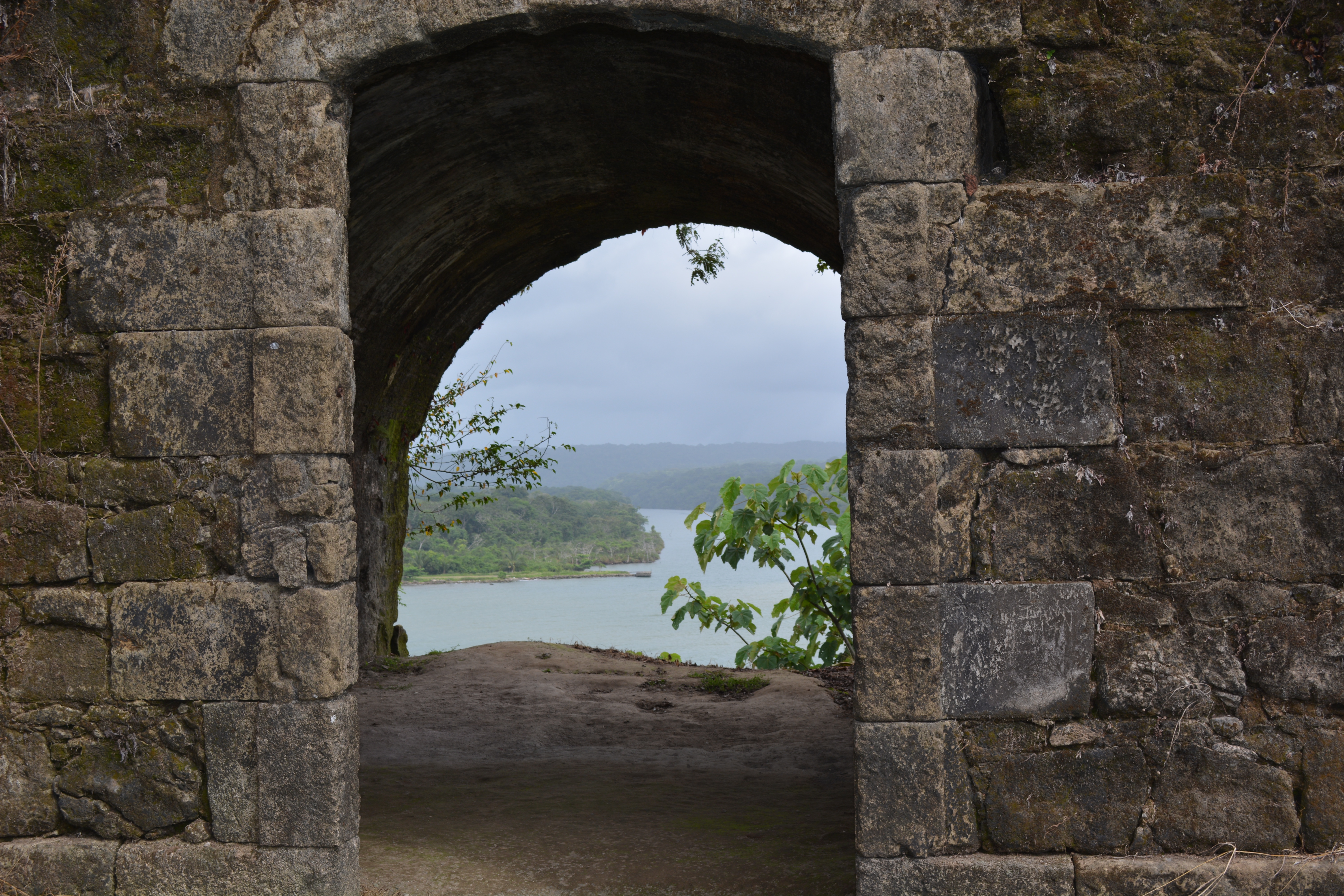
Fort San Lorenzo guarded the Chagres River from pirates – and had a good view of it.
Fort San Lorenzo
Fort San Lorenzo
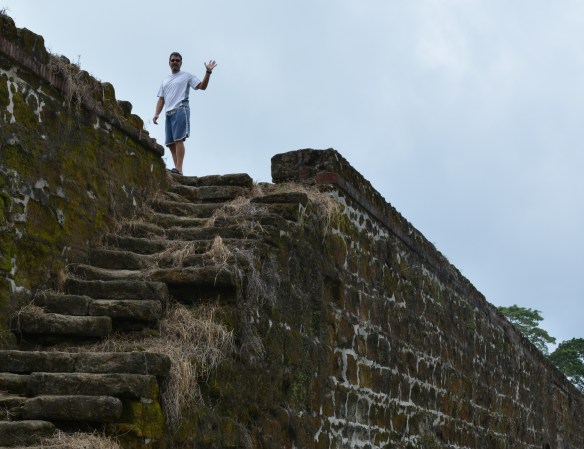
Manning the ramparts
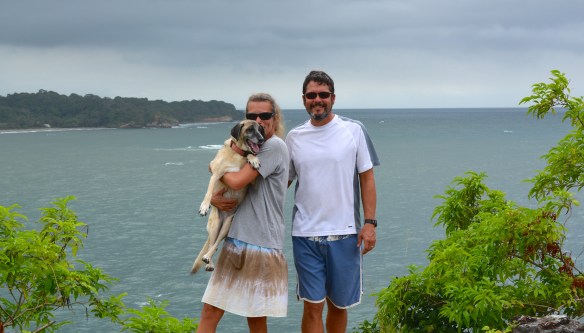
The old fort had a great view
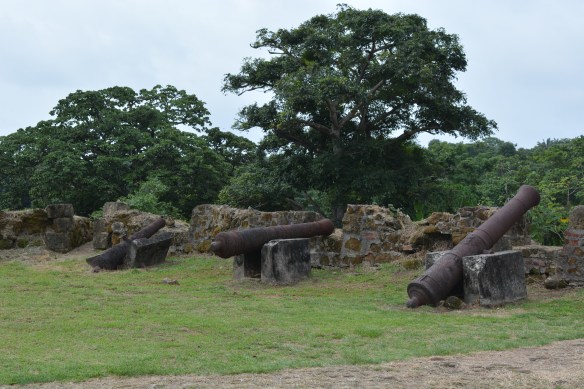
These cannons are just lying about. Dozens of them.
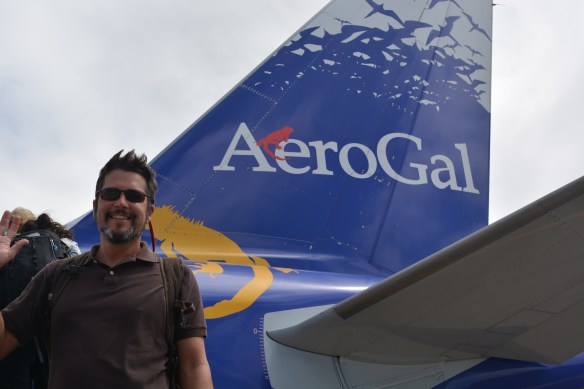
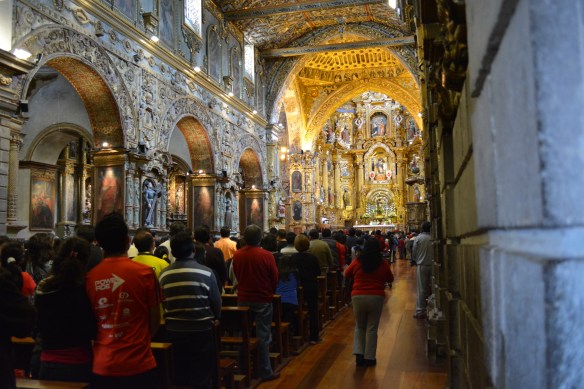
You may ask, where do people who live on their boat go on vacation? Why, another boat of course. Before heading through the Canal we thought about sailing to the Galapagos, but since we were not continuing on to the South Pacific and due to the red tape of taking your own boat, we decided it would be easier to let someone else do all the work. So we left Neko safely in a marina and Lucy safely at VIP Kennels (that’s Very Important Paws) and we were off to Ecuador.We book-ended the Galapagos adventure with a few days on mainland Ecuador, first in Guayaquil (click here for Guayaquil photos) and then in the capital city of Quito (click here for Quito photos). These are the two cities where you can fly out to the islands so try both, but if you can only do one, we vote for Quito. Not only is it perched 9,000 feet above sea level providing us with much-desired cool weather, but it boasts charming Spanish colonial architecture,
Jesus loves a little bling
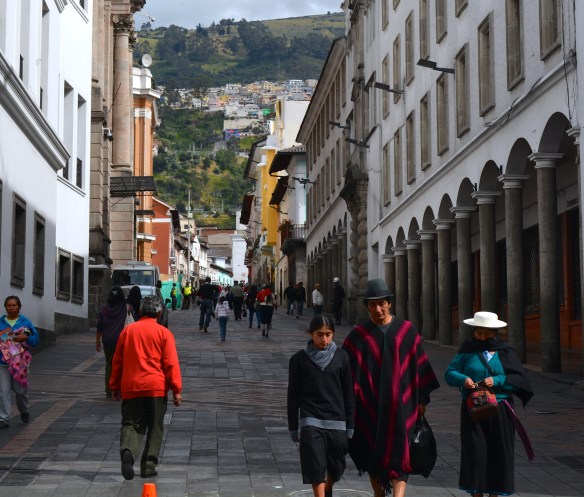
more over-the-top churches than you could possible imagine and friendly folks that look like they just stepped out of the “Ecuador” volume of the Time/Life encyclopedias we had when I was a kid.
Streets of Quito
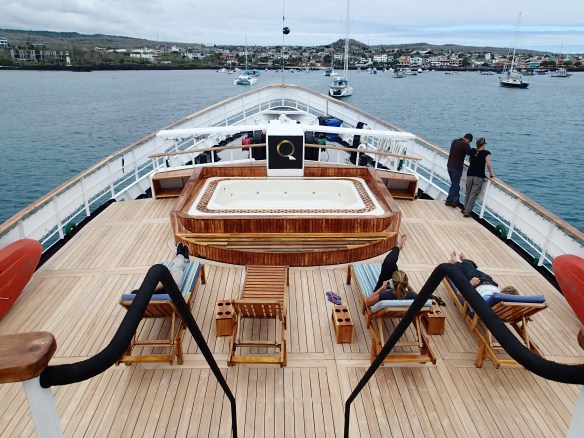
The Galapagos portion of our trip consisted of an 8-day cruise aboard “The Evolution”.
Peter and I enjoying the view from the foredeck
Now I have zero interest in cruise ship travel, but it is the name of the game in the Galapagos. You can stay in a hotel and take day trips by boat, but you can see more traveling by ship. Boats range from private yachts for small parties to 100-passenger cruise ships. We picked a smaller boat (25 people) allowing us to get to know all the passengers and the perfect amount of space to have alone time.
Now these our my kind of passengers, Mark and Michelle take over the bar
We met some delightfully diverse and fun loving folks and amazingly there wasn’t a dud in the bunch. Our crew was friendly, attentive and spoiled us so much that now I’m thinking we need full time crew on Neko (just kidding, but a girl can dream).
Capt Pete with Evolution’s Captain Victor and first mate David
Each day consisted of 2 land trips, 1 snorkel trip, 1 short history lecture and preview of the following day’s itinerary and of course, food, drinks and napping.
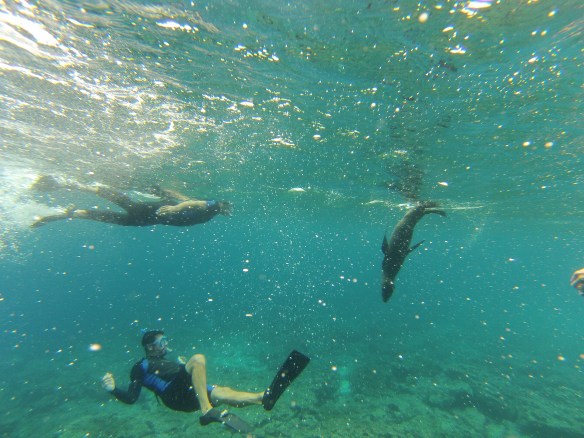
Peter and his new pal snorkel the day away
Every stop, whether on land or in the chilly waters, provided us with a distinct landscape, a treasure trove of native and endemic species and an unbelievable experience I thought was all brochure hype.
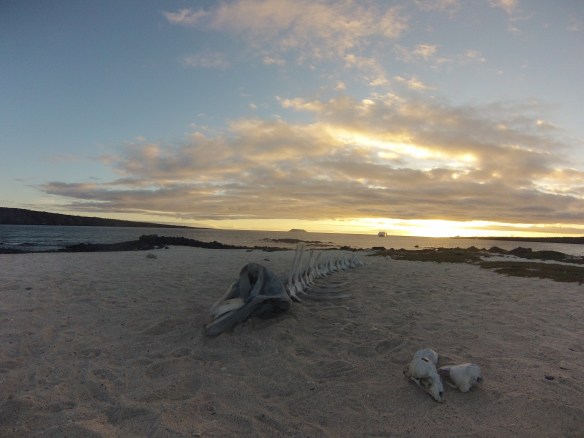
Sometimes the remains were just as interesting as the live animals. (orca skeleton)
Sally Lightfoot Crab
What a face
Pile up on the 101
Oh yes, we swam with sharks.
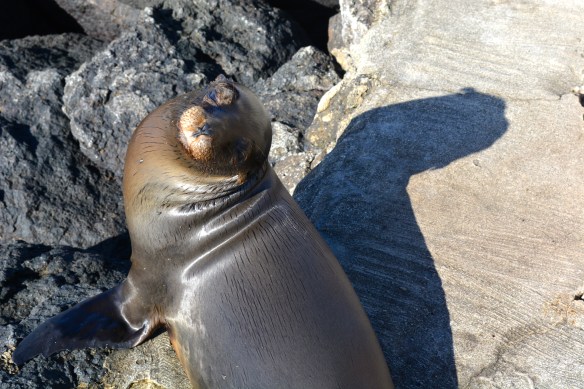
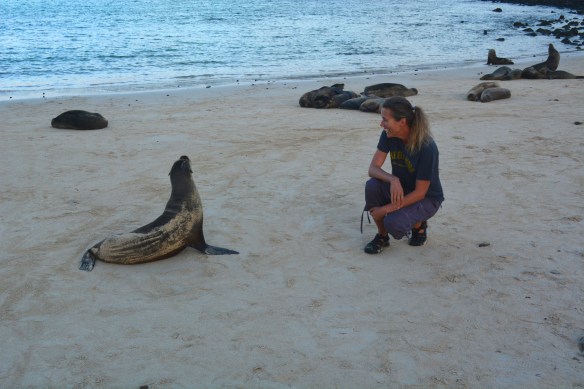
You know I’m all about the animals, so I was in heaven swimming with sharks, sea turtles and nose to nose with playful sea lions.
Peter swimming with sea lion
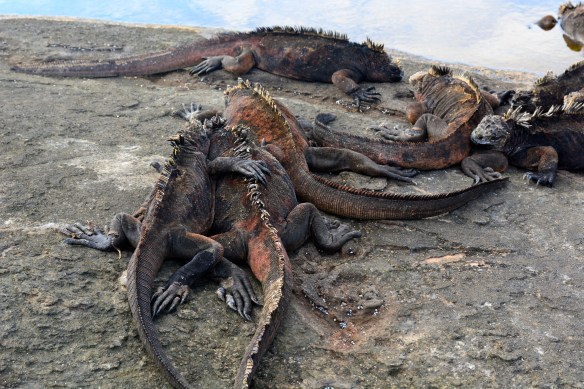
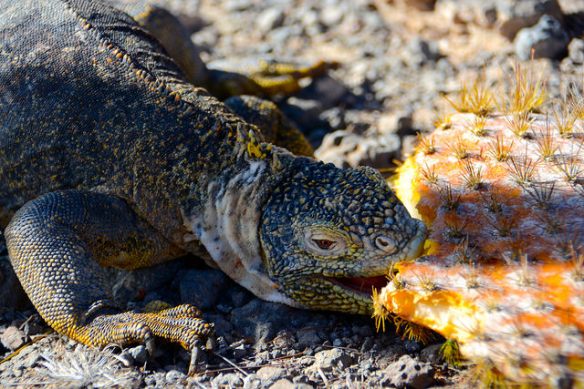
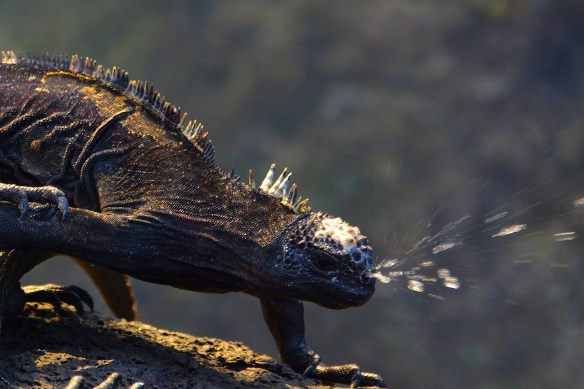
We encountered land and marine iguanas,
Land Iguana enjoying a cactus snack
Marine iguana shooting sea water from his nose
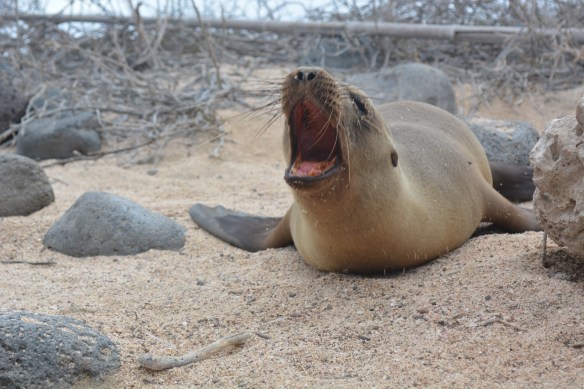
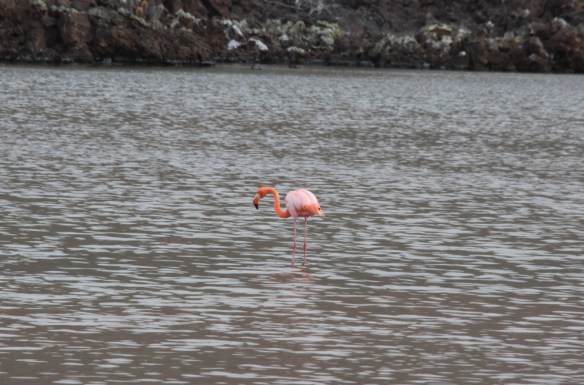
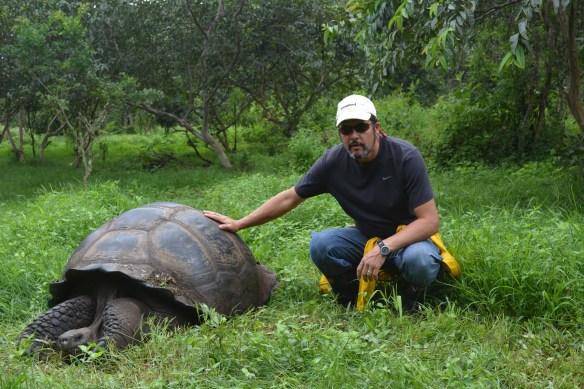
more sea lions, penguins, sea lions, Darwin’s famous giant tortoises, pink flamencos and birds of all sorts and did I mention sea lions.
Hungry sea lion
Pink Flamingos
Hello new friend
Galapagos is the Spanish word for tortoise
Penguins, yes penguins
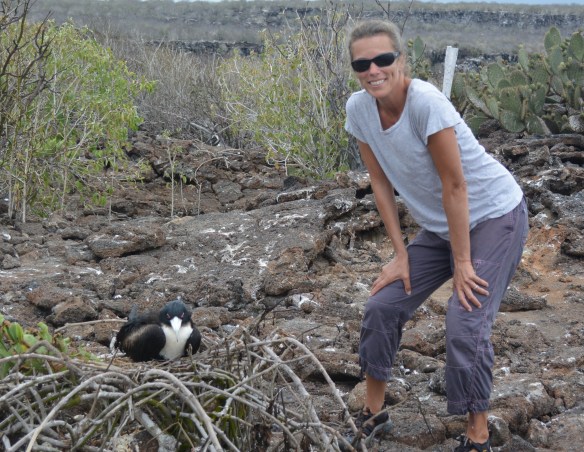
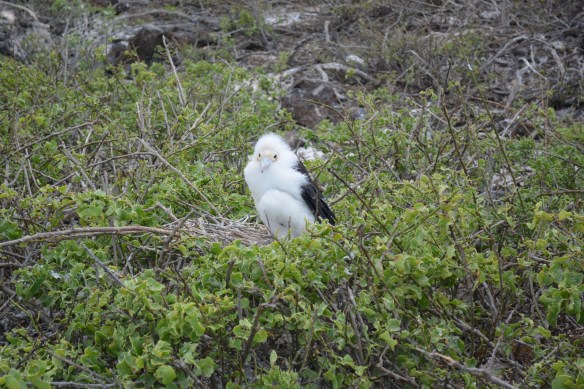
Since we started cruising we have met lots of “birders” and though I can drum up an “ooh and ahh” at a wild Scarlet Macaw or the elusive Quetzal, birds don’t do much for me, but I’ll admit while literally stepping over nesting birds and standing inches from down covered newborn frigates I still felt – nothing. NO, I’m joking, by the end of this trip my feathered friends melted my heart.
Baby Frigate
Red-footed bobby
So along with our fellow passengers, we took about a billion photos of sea lions, sea turtles, birds of all sorts, tortoises, red crabs, penguins, iguanas and on and on. By the end we were ready to work for National Geographic. So enjoy the photos, book your trip there and be thankful this isn’t the 1970s and I’m making you sit in my living room looking at a billion slides of sea lions, sea turtles, etc. If you want click here for more photos.
Our naturalist Freddy, who was born and raised in the Galapagos always knew just where to take us.
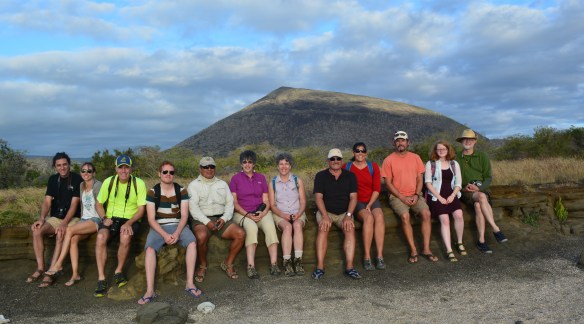
Fellow passengers
Thanks to fellow passengers Sue, Faith, Michelle, Lance and Johan for sharing many of your photos.
The Pacific Ocean to the Caribbean in 10 hours – not too bad for a days work.
When preparing for our transit we read a lot and we heard a lot of tales of transits from hell to partying through the locks. Half the sailors you talk to say you have to hire a Canal agent (someone to do all the admin) and the other half say there is no need, you can do the paperwork yourself. Some say you won’t make it through in 1 day, it will definitely take 2. Your boat has to go 8 knots or you’ll bring global shipping to a screeching halt. And on and on it goes. So to all our pals who are planning to go through, listen to all the stories, file away all the information, keep your head straight and enjoy the passage. Because, the truth is that every transit is different and you never know what you are going to get until you do it. We chose not to use an agent and found it quite straightforward and if you want that information, email us and I’m happy to walk you through the steps.
If you want to know about the history of the Canal, read David McCullough’s excellent “The Path Between the Seas”.
Fortunately the stars aligned just right and we had an awesome (and not the overused, unnecessary “awesome”, I mean “inspiring joyful awe“ “we went through the Panama Canal on our sailboat” awesome) experience.
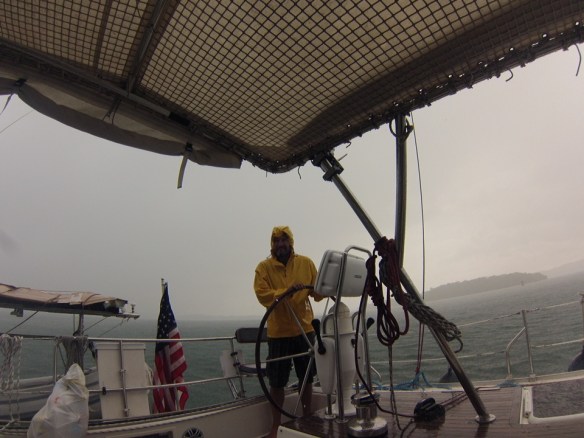
Every boat going through the Canal has to have a Canal advisor onboard to, you guessed it, advise you throughout the trip. The canal is run like an airport with the signal station acting as air traffic control. Your advisor is your communications link to central control. The name of the game for the Canal is the huge cargo ships, that is where the big money is, so a 50’ sailboat is more of a nuisance and they don’t want you slowing down their 24/7 operation. But their treatment of yachts is professional and efficient. We were told to pick up our advisor at 8:00 am and after he promptly boarded at 10:00 am (ok, maybe not so efficient, but the canal schedule seems subject to the whim of the gods) we were on our way, with Captain Pete at the helm,
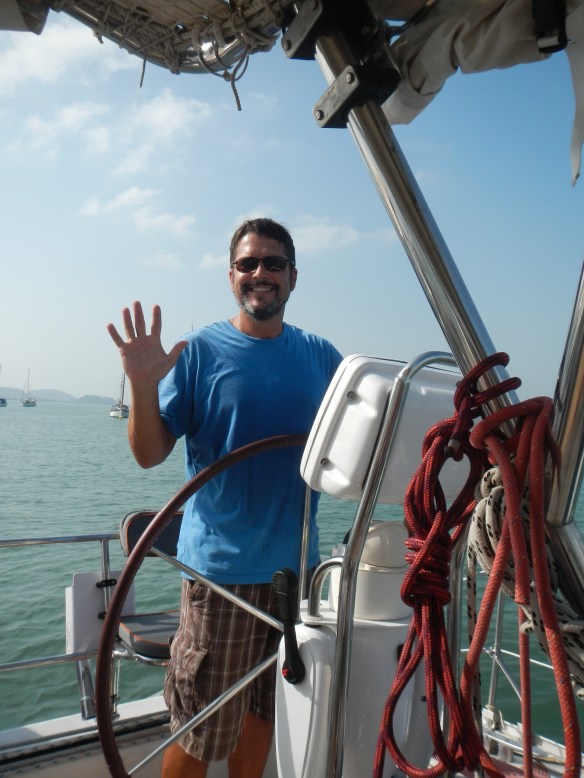
Captain Pete
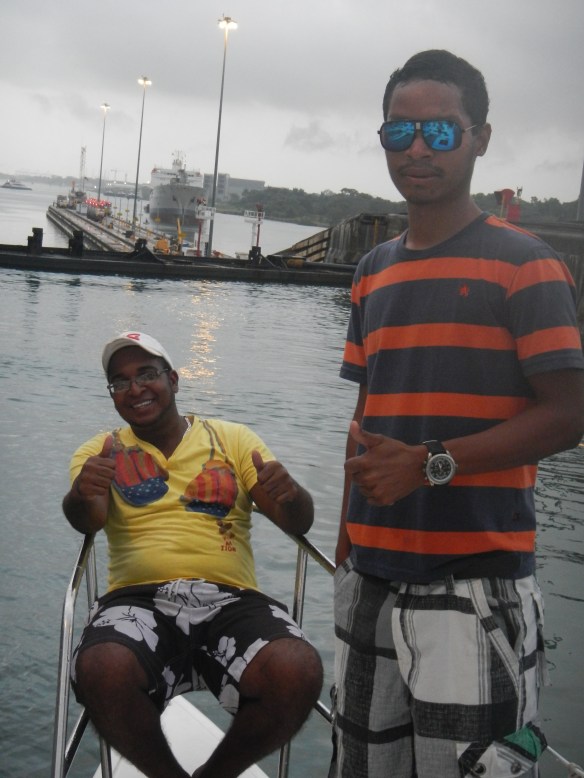
2 experienced hired line handlers Raymond & Marcos,
Raymond & Marcos, expert line handlers and snappy dressers
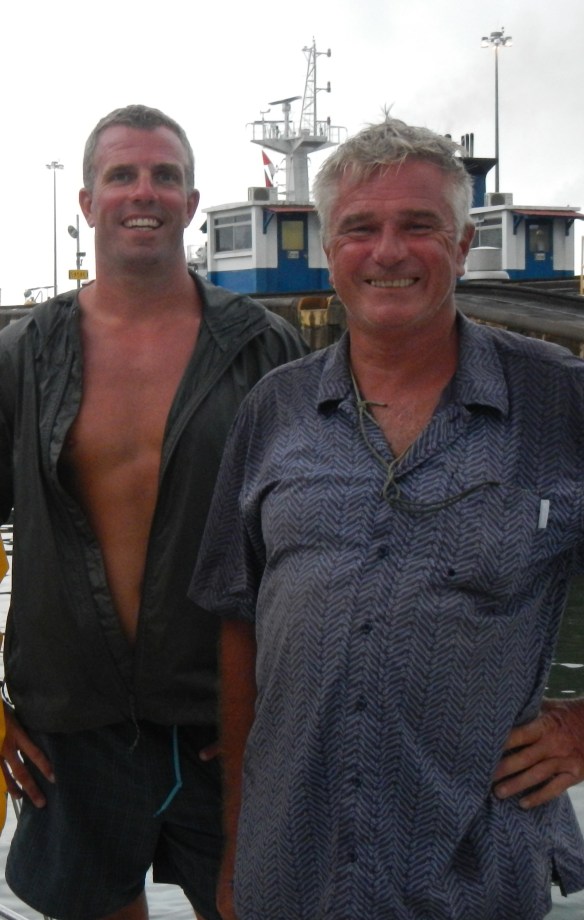
2 volunteer line handlers and sailors, Axel and Stephen ready to work the lines in the locks,
Axel & Stephen, rounded out our international crew of 2 Americans, 3 Panamanians, 1 German, 1 Brit and 1 Belizean dog on our French boat.
me ready to sub in at the helm or lines and feed this motley crew, and Lucy milling about keeping tabs on everyone and making sure no food was sloppily left lying around, we started out.
Lucy on the bow wow wow
It quickly became clear that our advisor, Astro (his real name), knew his stuff and, importantly, worked seamlessly with the line handlers and was hands on and not just a dictator. He was a font of knowledge about the Canal and felt like our own personal tour guide.
with Astro our fabulous Canal advisor
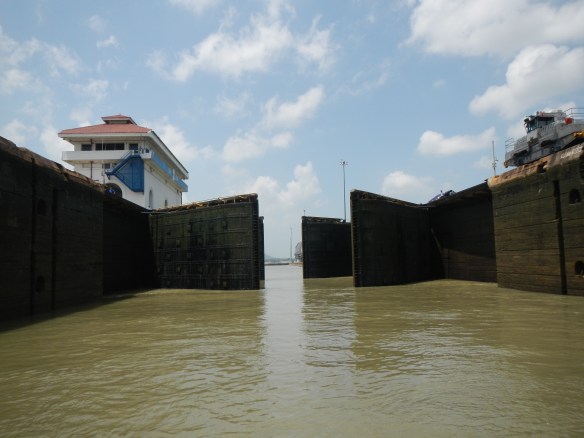
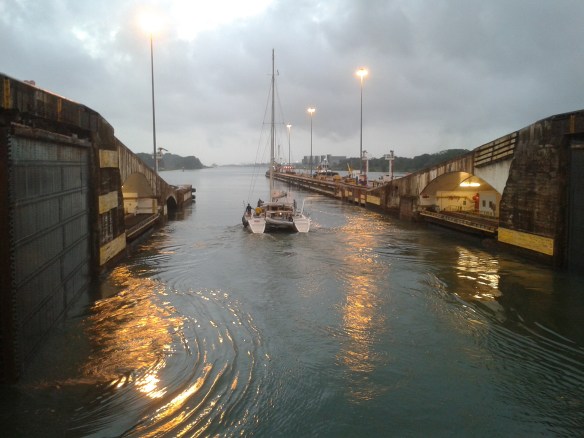
The Canal consists of six locks – 3 to get up into Gatun Lake, which is in the center and was created when they dammed up the Chagres River – and 3 to go back down on the other side. Each lock is a massive, medieval-seeming concrete tub with giant heavy riveted steel doors that swing open and closed like the entrance to some fortified castle. They are supreme feats of engineering operating nearly identically to the way they did when first opened exactly 100 years ago.
Lock doors closing
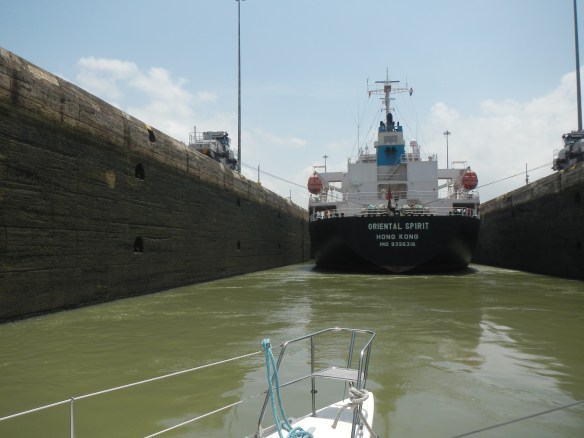
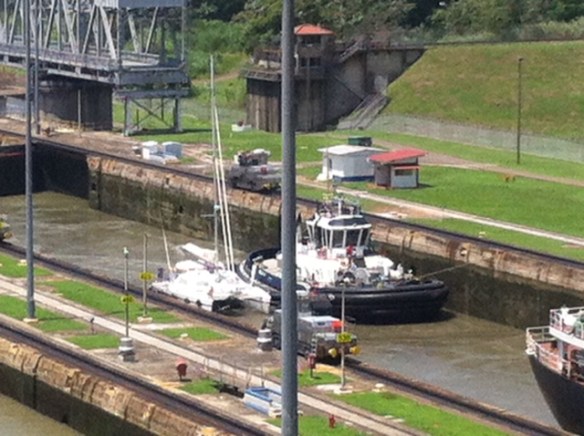
Outside the first of these, we waited for the giant container ship ahead of us to secure to the “mules” (heavy electric trains that hold ships’ lines) before we were ordered in to tie up to the ship’s tugboat, which went in just ahead of us.
Oriental Spirit, the cargo ship ahead of us in the locks. Note the “mules” and the lines running down to keeping it steady.
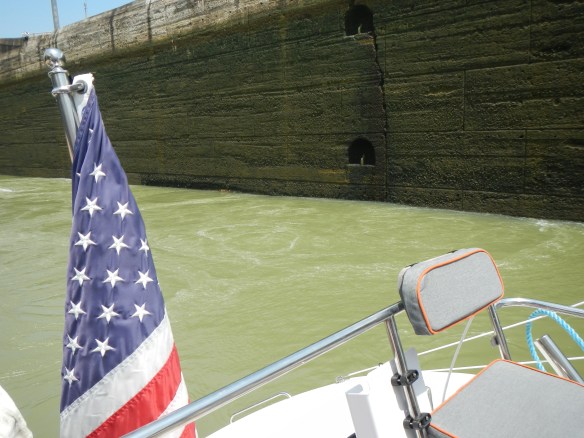
As you approach the lock is empty and the rough walls tower up on each side. Mystery currents in the lock buffet the boat back and forth and Pete was working the throttles and the wheel to keep the boat off the wall.
Pete worked the hardest of us all
Boats in the locks have lines going to the top of the locks to hold them in place. As the water rises, the line handlers on the boat have to quickly and in unison pull the lines in to keep the boat in position. We had heard horror stories of lines not being handled properly with boats swinging around into the walls or the ship, etc. In addition to great embarrassment, this can cost money since the canal fines you for causing any delay.
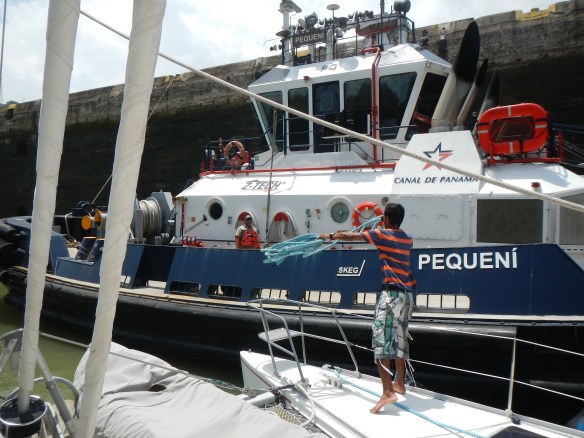
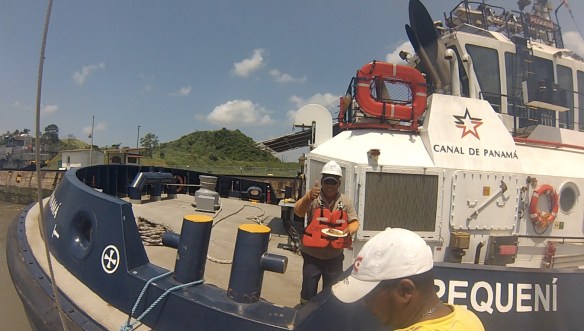
Marcos tossing line to tie to the tug, Pequení, our lock buddy
We, however, were lucky in that we tied up next to the tugboat and it handled the lines to go up and down. All we had to do was tie up to it and hold on tight. Once all were secure, the locks are flooded and all boats rise up. The water in the lock becomes an insane cauldron of swirling eddies from the water rushing in through the underwater channels.
Water filling up the locks
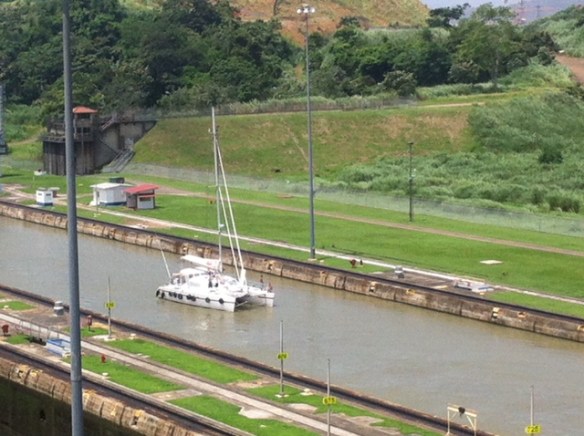
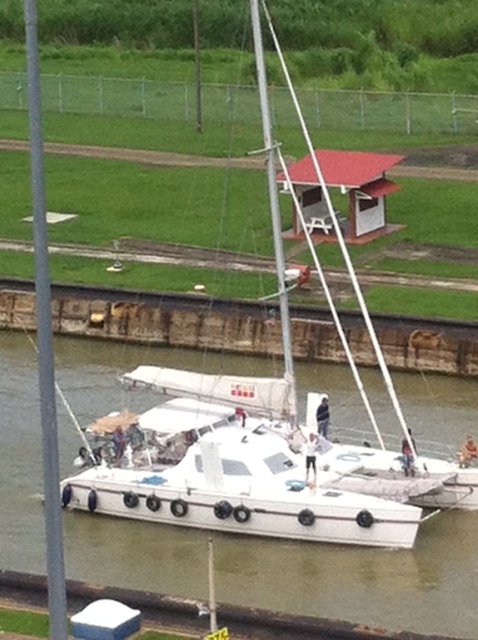
Aerial view of Neko (lower left) in the locks. See how the cargo ship dwarfs Neko. (Thanks Angie for the photo)
You tie tires to the side of your boat to act as fenders against the walls and other boats
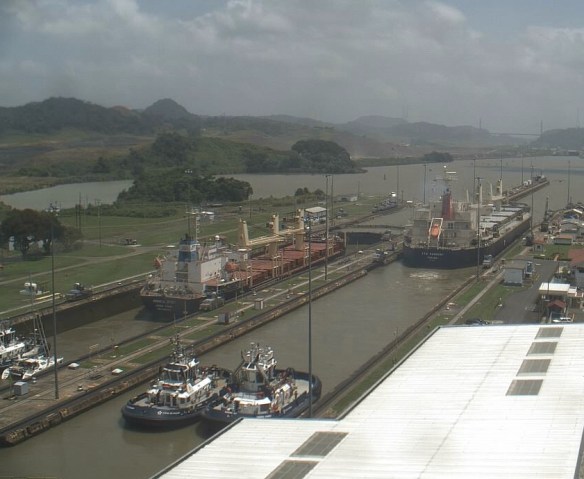
This photo was taken by our friend Holly Scott from the observation platform at Miraflores Locks
You can see the tight fit between Neko and our pal Penquin the tug.
After it’s all over, we simply toss off the lines and proceed to the next lock and do it all over again. Well, maybe not so simply. The ship is moving out and to let the tug out we have to move backwards and closer to the wall. The tug is a small boat of enormous power and when it moves its propwash (water being pushed around by its propellers) can push a yacht around like a bathtub toy. However, taking the good advice of some other boaters, we befriended the tug crew and gave them a tray of cookies with the unspoken hope that they would pull away from us gently. And it worked! They were extreme gentlemen and slowly idled away from us when it was their turn to leave.
Plate of cookies = happy tug boat crew
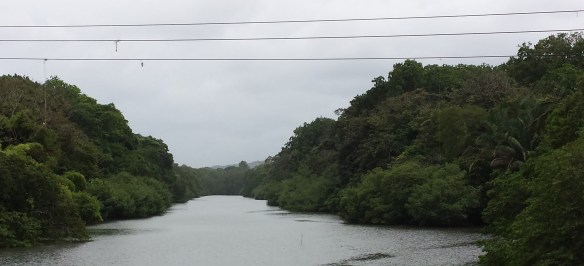
After the three up locks it’s a race through the Gaillard Cut (a narrow channel cut into the rocky hillside that claimed many lives and years of digging during the construction of the Canal) and Gatun Lake to get to the final set of locks in time to make it through in one day.
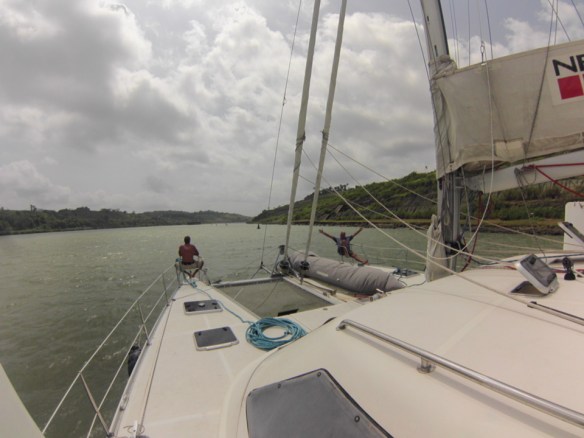
Heading through Lake Gatun
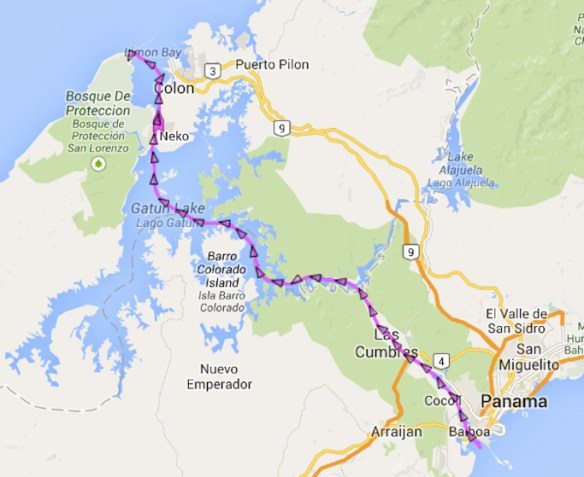
Our GPS track through the Canal and into Gatun Lake
Slow boats are required to take two days and spend a night anchored in the lake. Due to our late start there was a real chance that we might have to spend a night in the lake. It might have been fun to do so, but we soldiered on. Astro kept checking in with mission control and they said proceed, so we put the pedal to the metal and Neko zipped through the lake enjoying its fresh water bath to rinse the salt from her underside. We saw our lock mate, a large cargo ship, heading to the entrance when we were still about five miles away. So Pete gave it a full throttle and got to the entrance of the lock just in time to … wait. The ship had some problem getting secured and we waited outside turning circles in a thundering Panamanian rainstorm while they figured it out.
Neko wasn’t the only one who got a fresh water rinse.
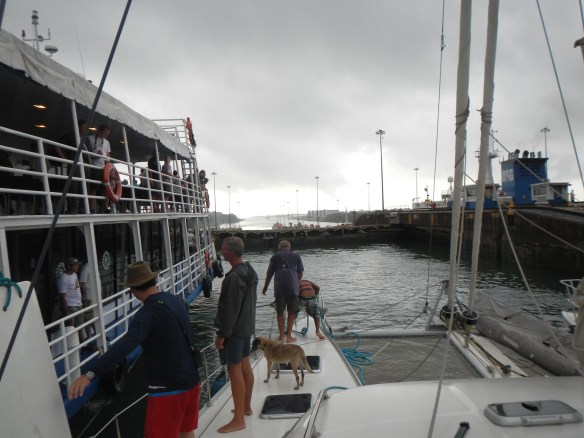
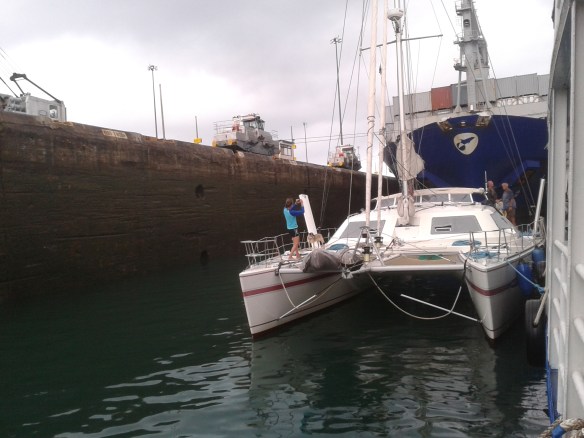
This time we were to tie to a ferry boat that takes passengers through the canal so they can check it off their bucket list. We were definitely a curiosity to these sightseers and posed for many pictures and answered many questions about our trip. Lucy was the star of the show.
Pulling up to the ferry boat in the Gatun Locks
Nerve wracking to have that giant ship just a few feet behind
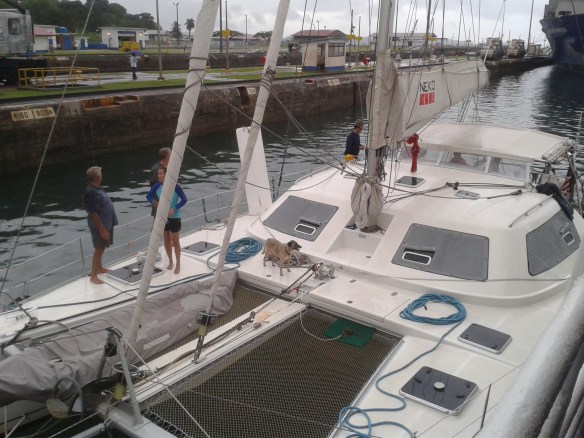
Neko in Gatun locks
After three more locks, this time going down, the last door opened and we at long last got a glimpse of the Caribbean Sea, our goal for so long. It was a milestone completed and a huge relief to get through unscathed.
Welcome to the Caribbean
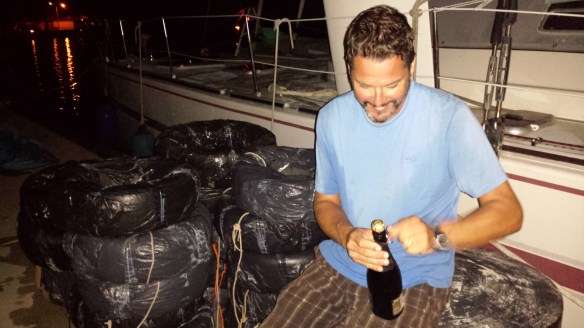
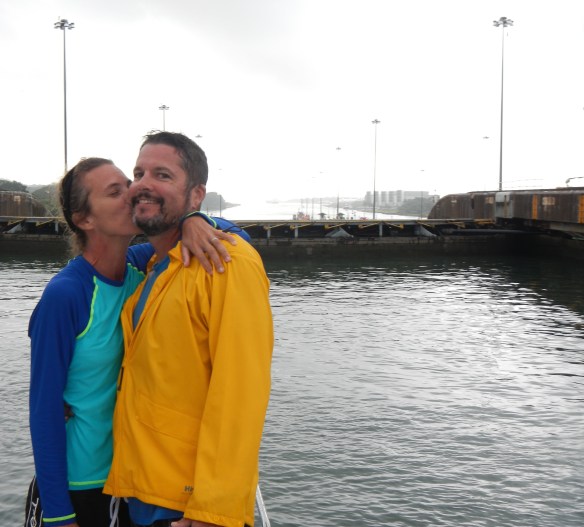
We dropped Astro off and powered into the Shelter Bay Marina in the dark of night for a quick celebration and a well-earned snooze.
Popping the victory champagne
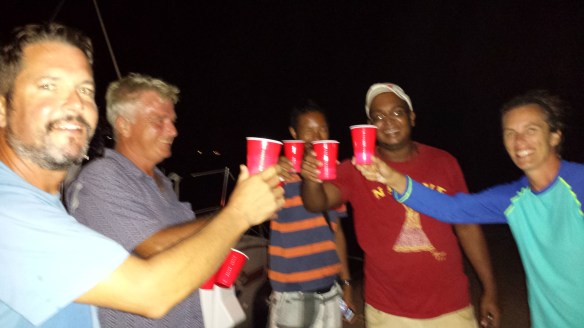
Cheers to our fantastic crew
Here is what remains of the initial French effort at a sea-level canal to the extent it was not incorporated into the final design. Isn’t it cute?
The original French Canal
As you may know the French first insisted on building a canal at sea level without locks. This was ultimately their undoing as it proved impossible. Remember, tides on the Pacific side can reach 18 feet while tides on the Atlantic side are rarely more than 2 feet. After decades of futile effort, the French finally threw in the towel and Teddy Roosevelt saw an opportunity and took it (not without much controversy, as it involved fomenting a revolution leading to Panama’s secession from Colombia). It’s really quite impressive that the final canal was built large enough to handle freighters for 100 years. However, now demands of shipping have rendered the canal insufficient. Panama is embarking on the construction of a larger parallel set of locks to allow even larger ships to transit. It is a technological wonder, that will use much, much less precious water than the original canal. It will use sliding lock doors (like pocket doors) instead of swinging gates. Here are the lock doors. They are massive.
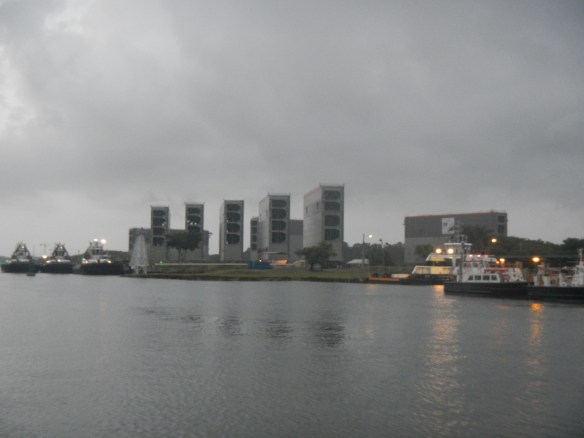
No those aren’t buildings they are the new Canal lock doors
Our Canal transit was twice as nice knowing we had so many family and friends watching us go through via the live web cam and thank you for the photos, videos and moral support. We loved having you along for one of the best legs of this journey.
Click here to see a video Andre and Tom made of us going through the Miraflores locks.
Panama City meant one thing to us: the Canal. Transiting it was our major goal for this year, so I did not give the city itself much thought. We ended up staying there much longer than we anticipated (see rock post) and decided to embrace the opportunity to explore this historic city.
So cue the skyline, public transportation and museums because we were back in a real honest to goodness big city! And just like every metropolitan area you get the good with the bad, so we dusted off those NYC street smarts, threw our Panama hats in the air and enjoyed every second of city living.
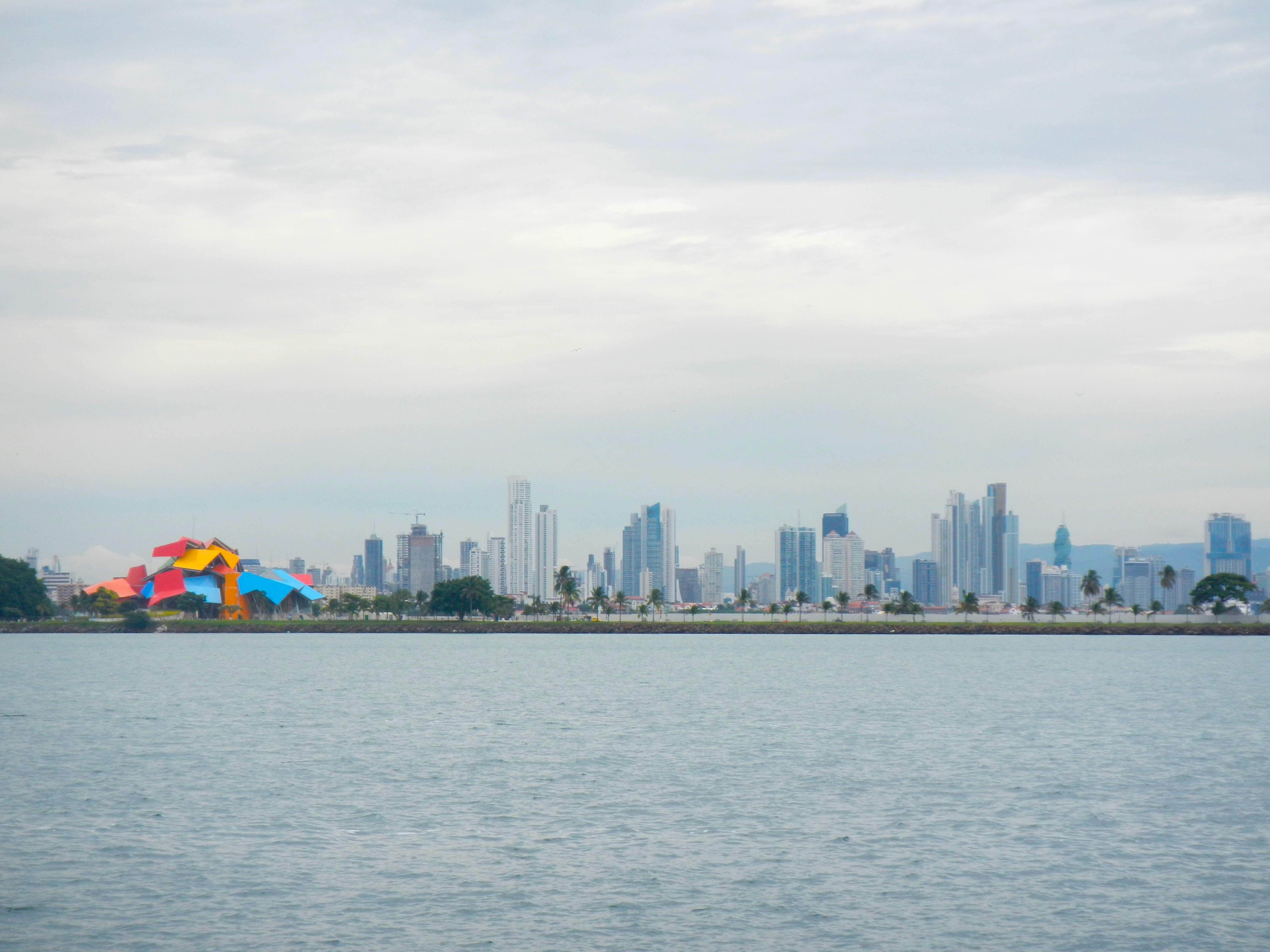
Frank Gehry-designed Biodiversity Museum adds a pop of color to the skyline of Panama City
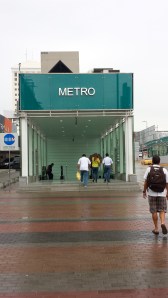
Open just two months, Panama’s new Metro was a terrific way to get around town.
Metro, 35¢ a ride, what a bargain.
Lights of Panama City
The city wears many hats, part Miami with its nightlife and high rises dotting the shoreline, part Old San Juan with its charming historic districts, part ghost town of abandoned American housing in the old Canal zone
Old “Canal Zone” housing now stands empty.
and part bustling port city that, of course, centers around their main cash cow, the Canal. Oh and lest I forget malls.
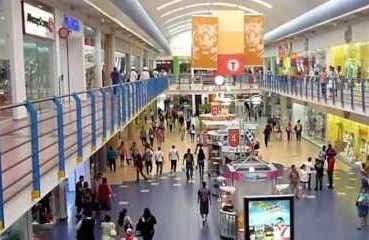
Wall to wall malls
Shopping seems a national sport here. Panama City hosts 4 ENORMOUS malls both high and low end.
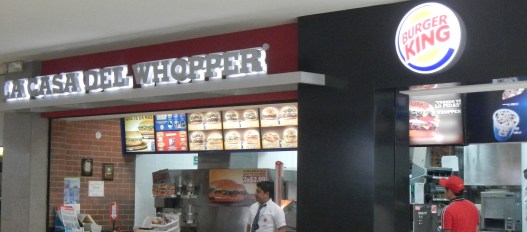
Casa del Whopper
I’m not a shopper, but did enjoy the air conditioning and cheap swimsuits, otherwise they just seemed like a labyrinth of the usual suspects, ubiquitous food courts and multiplex cinemas. But the main transit center is at one of the malls, so you always had to pass through on your way to everything else.
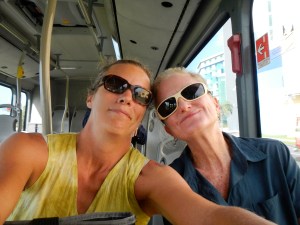
My friend Robin & I mastered the buses!
Casco Viejo (Old Quarter) is the historic district of Panama City. It was established circa 1673 by the Spanish colonialists. Majestic homes, cathedrals, government buildings all went neglected around the 1950s – when we all should have invested in the area. Because now there is a renovation boom. It is fascinating to see the renaissance in action. Street by street it changes before your eyes, turn to the left you see a private residence being lovingly restored, to the right are the shells of buildings ripe for repair, look behind you see a rather dodgy area with squatters occupying buildings in ruins and straight ahead are impeccably restored buildings which house restaurants, shops, hotels, embassies, etc. It has a similar look to the French Quarter in New Orleans without the drunken revelers. (Click on the photos in the gallery to enlarge and read descriptions)
Hats for sale
Casco Viejo restored homes
Golden Altar at Iglesia de San José
Kuna lady – indigenous people of Panama
Lots of stray cats, cared for by locals.
Squatters
The famous Panama Hats are actually made in Equcador
Casco Viejo
Iglesia de San José
Ready for a remodel
Peter and Mike love shopping, but look at that gorgeous tile floor
Rainy afternoon on the streets of Casco Viejo
Peter’s new bud we met in Casco Viejo. He was born in the Canal zone and had LOTS of stories.
No, I didn’t bring this one home, just gave her some love.
Love the wall art in Panama City, Panama
Private home
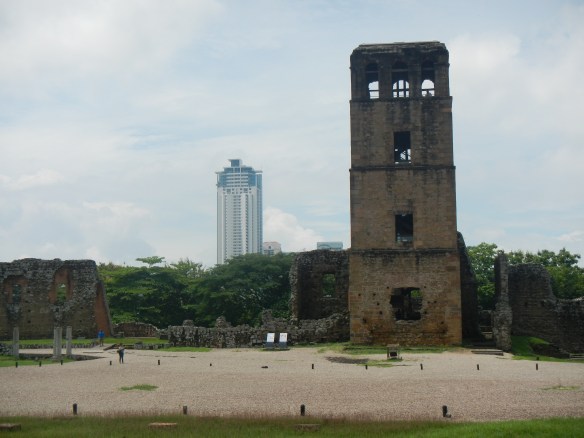
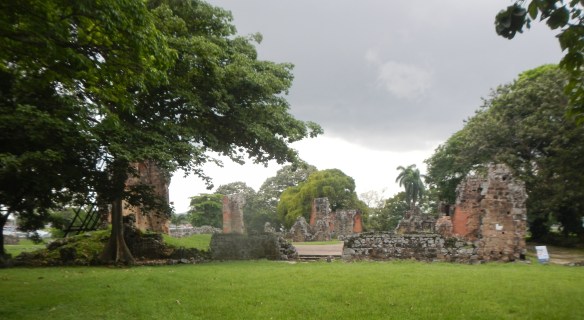
Older you say, you want to see older than 1673. Alright, Panama Viejo is for you. This was the original Panama City founded in 1519 before it was shifted to Casco Viejo. Now they are just ruins which are incorporated into a museum and park.
old and new panama city
Ruins of Panama Viejo
Panama Viejo juxtaposed to the city today
And of course we ate and drank and watched more soccer during the World Cup than we had in our entire lives.
Granclement-best ice cream in Panama
Fish Market
Fantastic ceviche for lunch at the fish market
Sancocho, Panamanian Chicken Soup
Lucy has had enough soccer to last a lifetime.
Havana Panama, Cuban bar
Belly dancing after a delicious middle eastern dinner
Oldest cafe in Panama City (Est. 1875) Classic rice and beans and excellent coffee. That cat slipped in the door right after I took this photo.
Patrons in Coca Cola cafe, they were right out of central casting. We had a great lunch here.
Vendor selling spicy quail eggs. They were good, tasted like mini hard boiled eggs with a kick.
Lung Fung Chinese restaurant. Delicious.
Quail egg down the hatch
Las Bóvedas restaurant in the vaults of the old customs building.
We hiked off all that food and booze in rain forests and parks throughout the city.
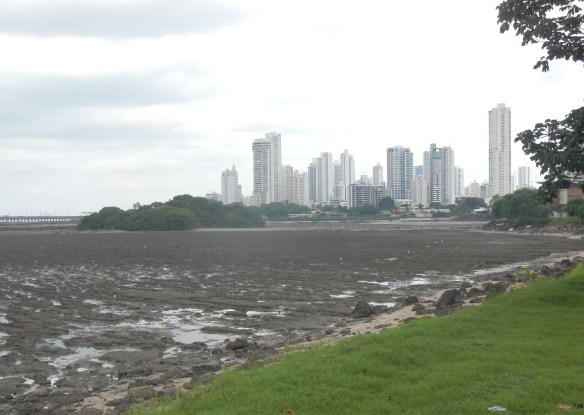
This is a good example of the 18′ tides they have on the Pacific side of Panama. This will all be underwater at high tide.
Hanging birdsnest in Parque Natural Metropolitano, rainforest inside the city
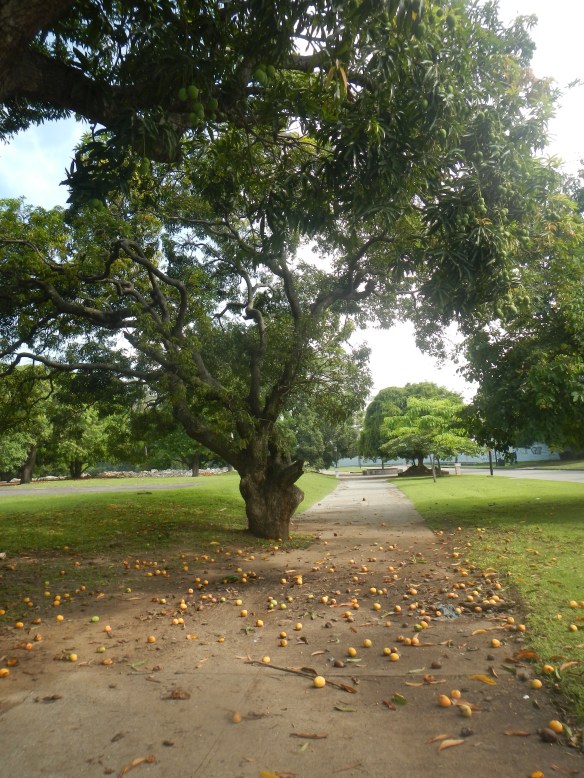
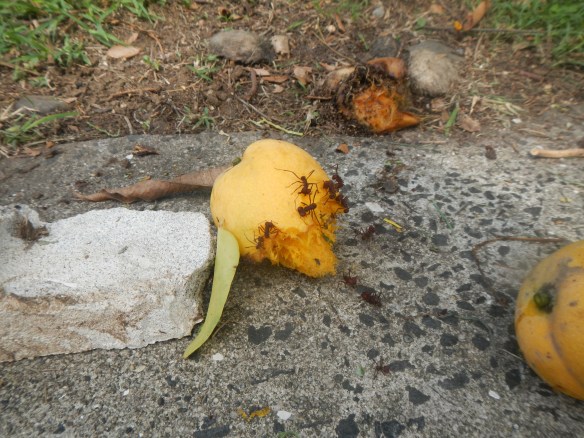
Mango trees are messy
Giant ants love mangos
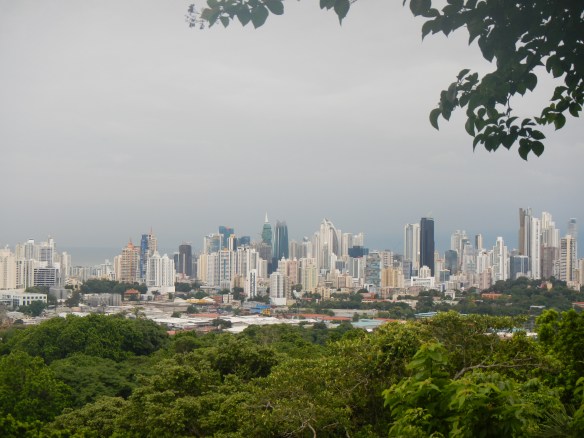
View of the city from the top of Parque Natural Metropolitano
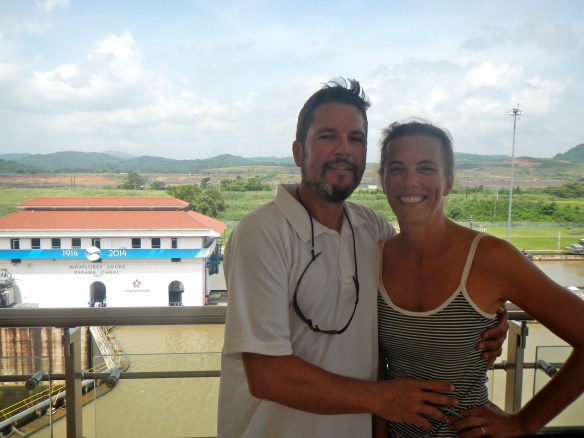
And of course we went to the Panama Canal Museum and Miraflores locks to get an education on what was in store for us!!!!
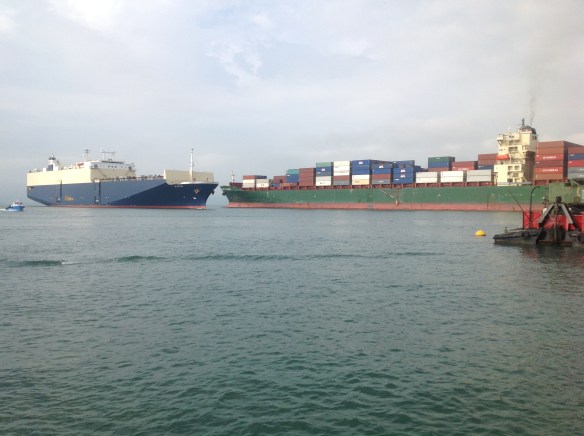
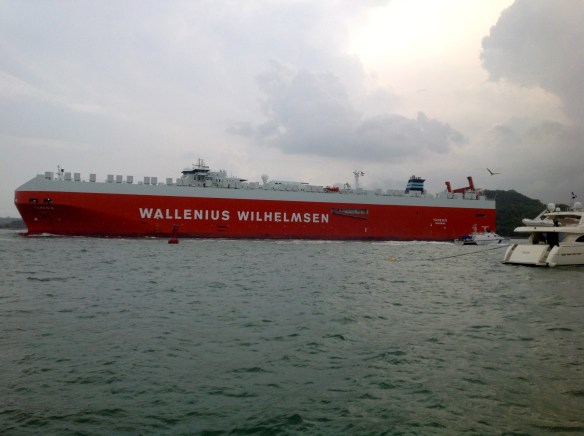
Well, more like the canal. It is fascinating to be moored here only a football field’s length or so outside the ship channel leading to the canal. Gigantic ships glide back and forth along it at all hours of the day and night.
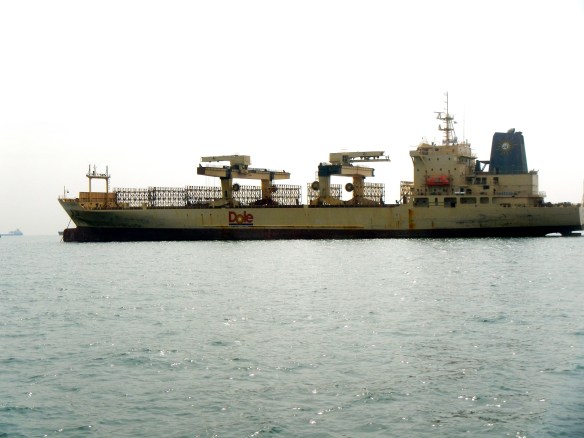
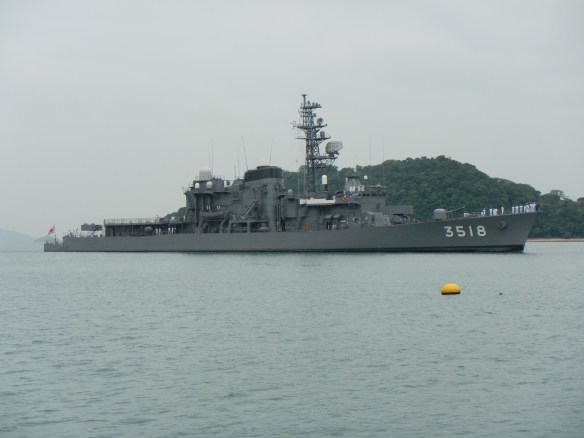
Japanese Navy Ship
See how this cargo ship dwarfs Neko (right side of photo, closest boat to cargo ship)
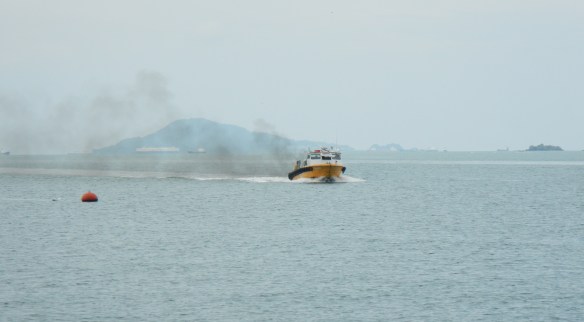
We were pleasantly surprised that they actually throw up very little wake to roll us around. The work boats on the other hand, are a completely different story.
Go Speed Racer Go
Boats come and go allowing us to be neighbors with few interesting boats.
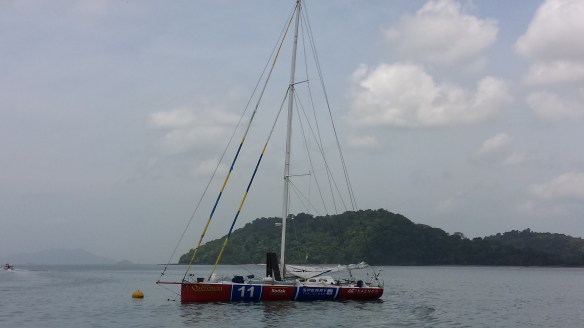
Open 50 raceboat used as a cruiser
Falcor-a Gunboat owned by pro snowboarder Travis Rice
The boats swing according to the current except around slack tide, when the wind dominates. Since we have a lot of windage and are very light with no deep keel, we turn before the boats around us. This has brought us into contact with PapaChino, the local fishing boat moored right next to us, on several occasions.
So we have had to shorten the mooring lines and keep a sharp eye on that thing to keep it off the back of our boat.
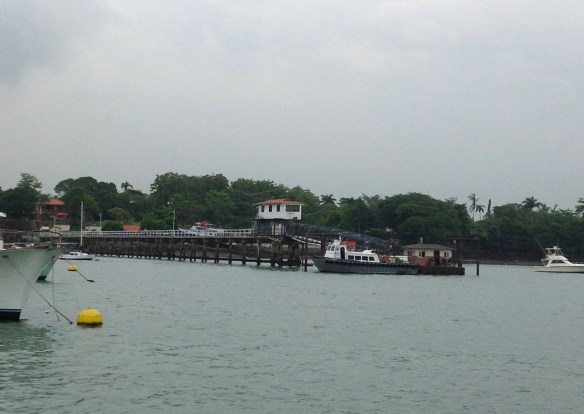
BYC dock
The “yacht club’s” dock is a rusting, jagged metal thing that canal work boats and ferries use to pick up passengers and supplies. We don’t want to tie up to it but we will have to in order to fuel up for our transit and install the repaired dagger board. The water is horribly dirty, so we are not using our watermaker but ferrying jugs of water back from the dock each time we go in. The incessant rain and humidity is causing mold to sprout on everything, bleach is Mary’s best friend.
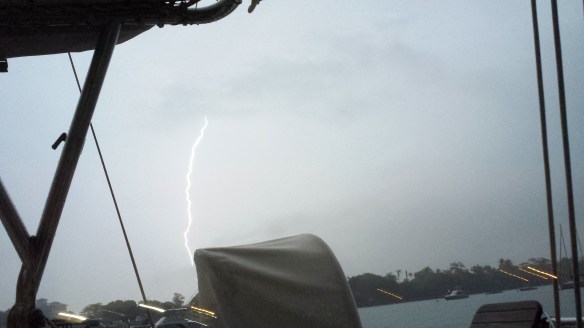
Daily lighting storms
We aren’t in California anymore. Cough, cough, cough
It all makes you think it is miserable here, doesn’t it? Well, we are actually having a pretty good time. Panama City is a large, diverse and interesting metropolis. We like cities like this which do not depend solely on tourism as they give a better feel for what life is really like. We have done some great sightseeing around Panama and always like getting to a big city after weeks out in the wilderness. So, although we are about ready to move on, our time in Panama City was quite enjoyable. For more info about it, click here see Mary’s post.
Make sure you click the tab that says “High Resolution Miraflores” (the regular camera is out of service), Then click the magnifying glass icon to enlarge. The image refreshes every minute so you will see us stagger step through.
Schedules can change throughout the day, but we should be at Miraflores Locks (our first lock) between 9-10am (Central Time) If possible, I will update on Facebook when we are getting close. And of course we will wave to the camera.
You will have a second chance to see us in the Gatun Locks later in the day, maybe around 2pm (Central Time). Again I’ll try to give updates via FB. You can click on the “Gatun Locks” tab as well as the tab for “High Resolution Gatun” for two different angles.
And if anyone wants to grab a screen shot or two of us from the web cam, we’d love a copy and we will include it in our post about our transit.
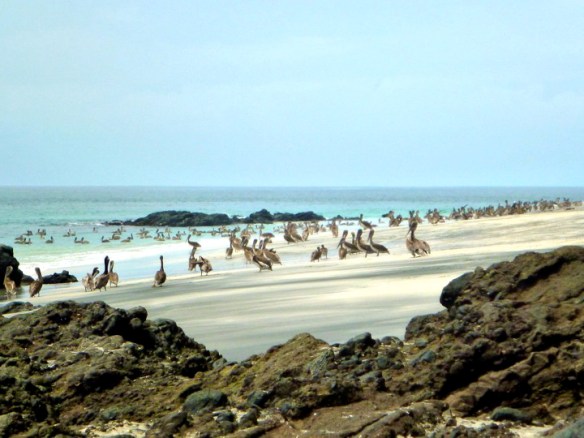
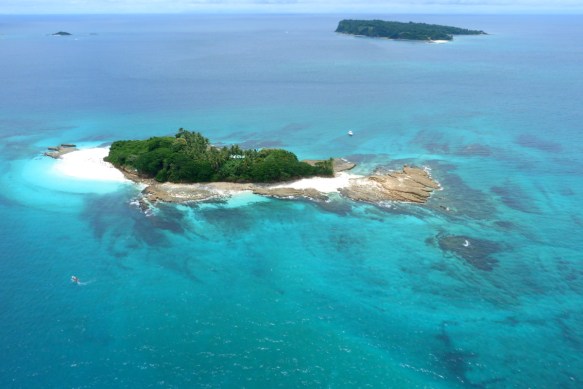
You didn’t think I would leave that cliff-hanger of a post out there for too long, did you? So we found the island with the little submarine on it. Isla San Telmo is a gorgeous uninhabited islet which has been taken over by pelicans, thousands of them.
Pelicans at San Telmo
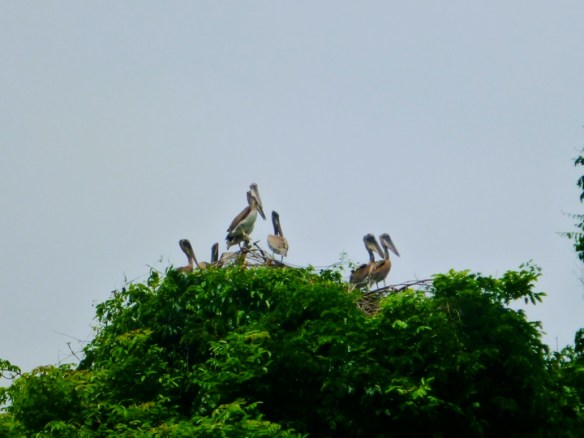
Pelican nesting sanctuary
San Telmo is one of 200 islands within the Islas Las Perlas archipelago, about 40 miles from Panama City.
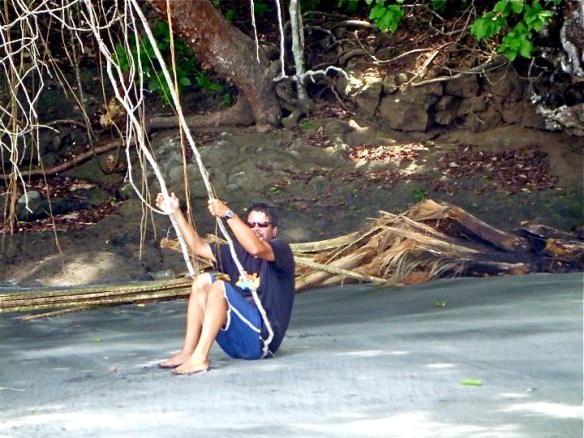
Tarzan needs to lay off the carbs
frangipani flower
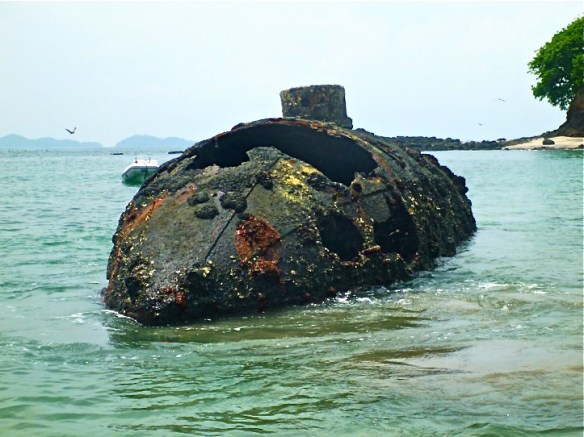
Most of the islands are uninhabited and a few have served as location for the reality show Survivor. We anchored in uneven ground about a 1/4 mile offshore from the little sub. The ancient artifact is about 20 feet long and made of steel that looks like it was 2 inches thick originally.
150 year old pearl diving submarine
Its amazing to me that its still there more or less intact after nearly a century and a half of being covered and uncovered by the tides as it sits in its final resting spot up on the sandy beach. I like to imagine what it was like when the thing was originally deployed around the time when the French were just starting to dig their proposed sea-level canal (read the fascinating The Path Between the Seas), most ships still used sails to get around and Panama was a remote outpost of Colombia. How futuristic it must have seemed for this underwater contraption to set out on its pearl-hunting mission. The Las Perlas (the pearls) are so named because they were abundant in those natural jewels – so much so that someone built one of the first submarines just to exploit them. What caused the poor crew to ascend too quickly and get decompression sickness? How did it all go wrong? Who knows. All that we have to go on is the rusting steel hulk and our imagination.
Pearl diving sub
The charts of this area are terrible – generally based on surveys conducted decades, or even a century, ago and containing very little detail. Areas like these see little commercial shipping, so little official cartographic attention is devoted to them. In addition to two different sets of charts, we rely on guidebooks written by people who have independently surveyed the area and prepared their own charts for certain locations. All the charts we had for this area, when they had any detail at all, showed us in waters with a minimum depth of about 20 feet at low tide and that is about what we saw. However, when we upped anchor to leave and were slowly motoring out of the anchorage, the boat suddenly lurched to the right and we slowed to a stop with horrible crunching sounds. These are such unnatural motions and sounds for a boat that it causes instantaneous confusion and panic. It took several seconds for me to compute what had happened and get the boat into deeper water. We had hit an uncharted rock pinnacle! We were moving at about 4 knots when the water went instantaneously from 30 feet deep to about 4 feet. It was not shallow water because once we ground horribly over the thing we were back in 30 feet of water. We frantically lifted floorboards and opened hatches to inspect for water intrusion but thankfully the boat was dry. Out in these remote islands there is no assistance for miles around so we were on our own as to what to do about it.
We slowly puttered to our next anchorage to gather our wits and plan next steps. Wouldn’t you know it, but just then the skies opened and deluged us with one of Panama’s patented rainstorms. Being out in one of these you actually feel the weight of so much water coming down. The rain makes visibility so bad that you can’t see even the front of the boat, let alone land or anything else out in the water (including the many logs and trees that float out of the rivers and estuaries and must be dodged). We were left to rely on our instruments, which had just tragically let us down, to get to our anchorage. We slowed to a crawl and with frazzled nerves finally got the anchor down in a safe spot. I dove to inspect the damage. One of our daggerboards (large foil-shaped boards that we raise and lower to act as keels) and skegs (a small keel-like appendage forward of the propeller) were damaged in the impact. And our rudder, the last thing to hit the rock as we slid by, had its bottom corner chipped open. We have saildrives for propulsion. These are like outboard motor legs that stick straight down through the bottom of the boat just in front of the rudders and have a propeller on the end. Miraculously the rock passed just under the propeller and saildrive leg. Even though they are only barely higher than the rudder, they were unscathed. The rock must have passed only an inch or so below them. If they had hit the rock, it is likely the drive would have shifted on its mounting and let water into the engine compartment. Our boat is broken into water tight segments and since it is built of foam-cored fiberglass with no lead keel, it is very difficult to sink. So this would have flooded the engine room but not sank us. Nevertheless, it was a huge tragedy narrowly averted. Still and all, we had some damage to ponder and immediately began planning what to do.
location of rock – note the drastic change of our track
We have given the coordinates of the rock to all our friends who will go through this area. Some are labelling it as “Neko’s Rock” – we hope the name doesn’t stick. If you are heading this way, mark it on your chart 08 17.129N 078 50.868W
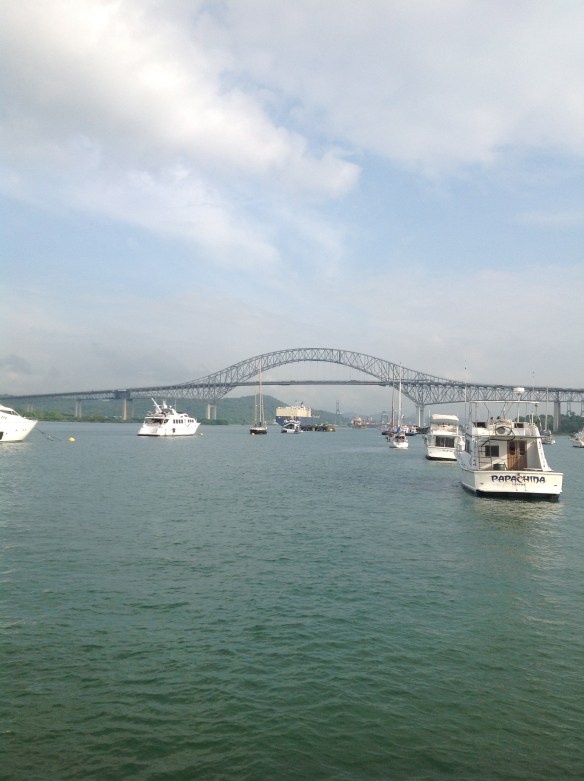
You may know by now we have made it to Panama City and are moored at the very entrance to the Panama Canal.
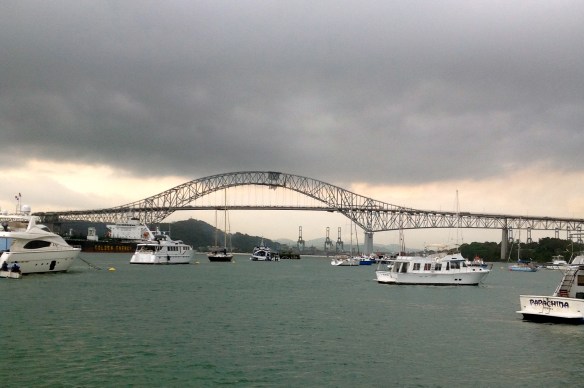
Balboa Yacht Club mooring field at the entrance to the Panama Canal
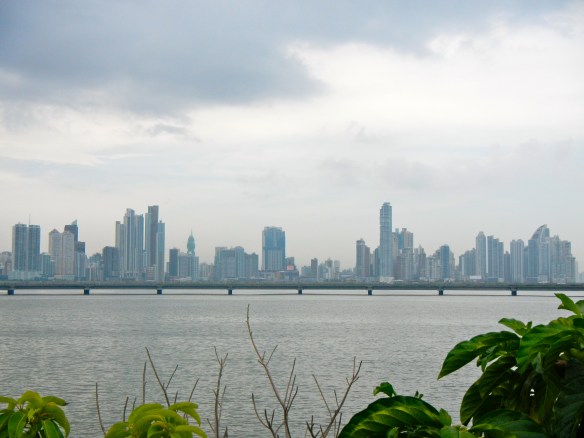
It’s lovely to be here in a large cosmopolitan city.
Panama City Skyline
But I will tell you it was not easy. To get here we had to traverse the third, and generally considered the tamest, of the Central American Gap Wind passages. (See our posts on Tehuantepec and Papagayo). You may recall from my earlier blatherings that these gap winds blow from the Caribbean over low stretches of the Central America isthmus and become accelerated due to land effects (narrow valleys, tall mountains, convection currents, etc.). This third and final bit blows north to south in the Golfo de Panama. Generally, these are lighter than other gap winds and are usually not a problem this time of year. However, unlike the others which are traversed at right angles to the wind, here you have to take them head on for 130 miles or so until you get into the lee of the mainland or the Las Perlas islands.
The guardian of this area is a notorious piece of land appropriately named Punta Mala. Once you leave to round this point and get into the large gulf, there is generally no safe place to duck into if the conditions are ugly. Before setting off on the 2 day trip up into the gulf, we staged overnight in a desolate bay on the western side of Punta Mala which showed no signs of any human presence other than cows inexplicably milling about on the black sand beach.
Leaving Naranjo Bay on a sparkly morning
In any event, early in the morning after one night in mystery cow bay we set out for the southernmost of the LasPerlas islands, which form a very beautiful, lightly inhabited archipelago in the Gulf of Panama. As a landing target they would shave off about 40 miles compared to a direct shot to Panama City. Well, it was an ugly trip generally. The winds never got much over 25 knots, but the currents in the Golfo de Panama are strong and alternate like clockwork. With 12-18 foot tides in this part of the world, the water rushes in and out at great speeds. Having to spend about an entire day working our way up the gulf, we were destined to face an adverse current at least twice. This was what made the trip a little challenging. When the brisk north winds opposed a north-setting current, we were faced with ugly, steep and closely-spaced seas that slowed us to a crawl and plunged the bows under water over and over again.
Roller coaster – motorsailing with just the main
Thankfully, the old ship Neko is a stoutly built boat and she shrugged off all that water without concern. We can’t say as much for her crew and after 30 hours of this treatment we were ready for a little peace and quiet. Early in the morning on the 2nd day of the trip, we pulled into a calm, picture-perfect bay on the island of Isla San Jose to drop the anchor and get some rest.
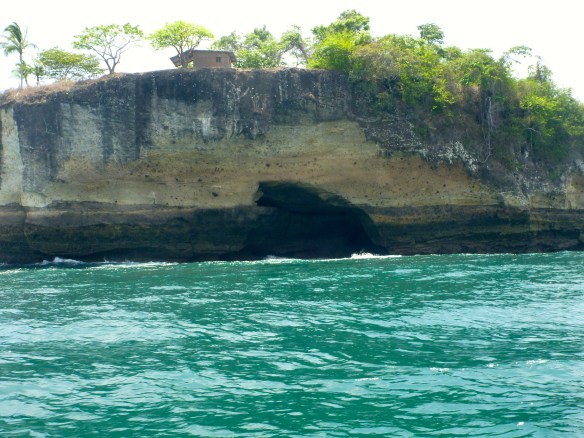
We spent two days resting and exploring the waters of this privately-owned island. Yes, its about 17 square miles and all privately owned. We saw a landing craft drop a bunch of pallets of supplies on the beach and the owners’ workers come and tote them away by tractor. The owners allow certain people to live on the island, including the man who lives in a little hut perched precariously on the edge of a cliff. They say he walks 10 feet out his door and drops a fishing line down the cliff face to pull in dinner. [Ed: add that great pic we have. Auth: Sorry, it’s lost in the computer crash] We didn’t see him but did see the little shack on the cliffs’ edge and can attest to the abundant sea life in the waters. We are quite excited to begin seeing clear water and sea life again after the murky waters of Mexico and Central America. Afterwards, we set off for Isla San Telmo, a tiny island with a 100+ year old submarine still high and dry on shore since it washed up after its occupants ascended too swiftly, suffered decompression sickness and died inside. This was straight out of Jules Verne. Who could pass up something like that, but little did I know it would almost lead to our undoing… [to be continued]
NB: Our photos relating to this time perished in Mary’s computer crash, hence the abundance of text. If we can resuscitate them, we’ll update this post but we are putting it up now anyway to try to get our postings caught up with where we are.
“Hello, is there anybody out there?” No, I’m not messing up the lyrics to ComfortablyNumb, it is how we are feeling as we move into the off-season. Suddenly the normal flood of familiar names heard over the radio or anchored nearby has become nothing more than a trickle. For our land-based friends, the off-season (June-Nov or hurricane season) sees many cruisers leaving their boats and heading back home. Many Pacific Ocean cruisers set sail for the South Pacific (think soft white beaches, palms and friendly Polynesians – but only after sailing 3 weeks across an ocean) or head back north into Mexico’s Sea of Cortez. We have chosen to move south and east where we are safely out of the hurricane zone, but well within the rainy season. Not only are there very few cruisers out there, Western Panama has very few people, period. It is tranquil to say the least.
Islas Las Secas
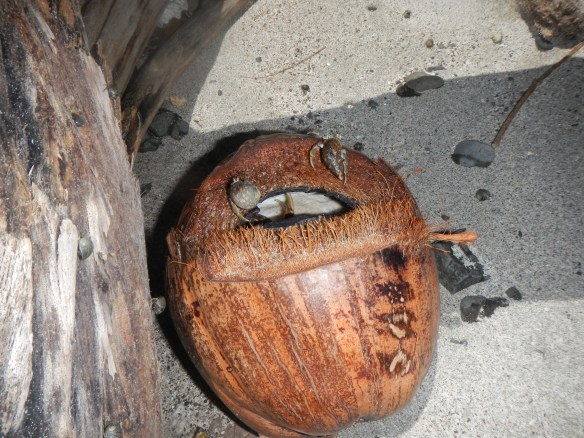
Crab coconut condo
Lucy loves this place and did not want to leave
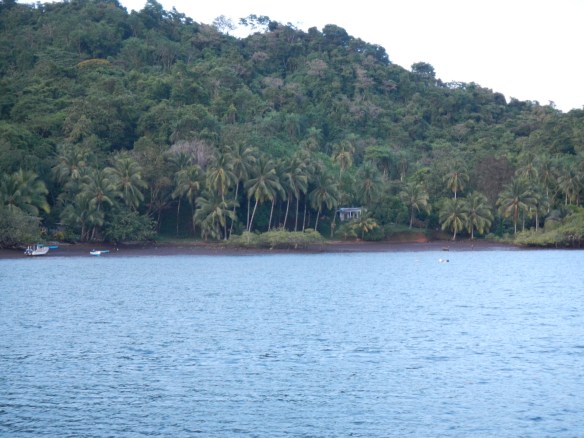
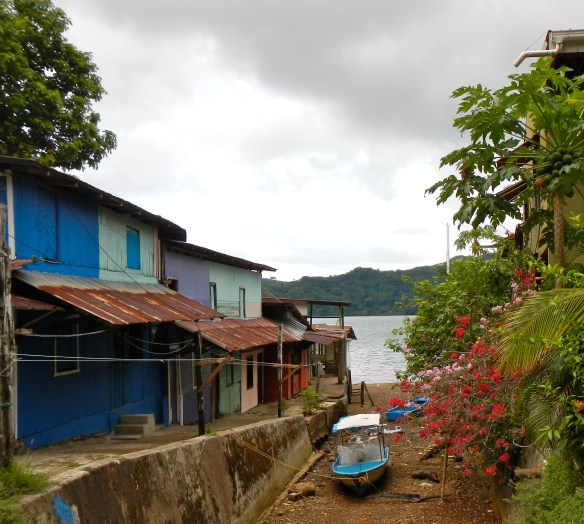
It is a rugged, very tropical, wet, jungly and sparsely inhabited land. There are indigenous peoples mixed in all about and everyone lives a subsistence lifestyle, as there are virtually no cities for miles around.
Fishing cabin
Some of the little villages we saw didn’t even have roads going to them. The locals move about by boat or when necessary over unforgiving trails through the thick forests.
Neko anchored in Bahia Honda
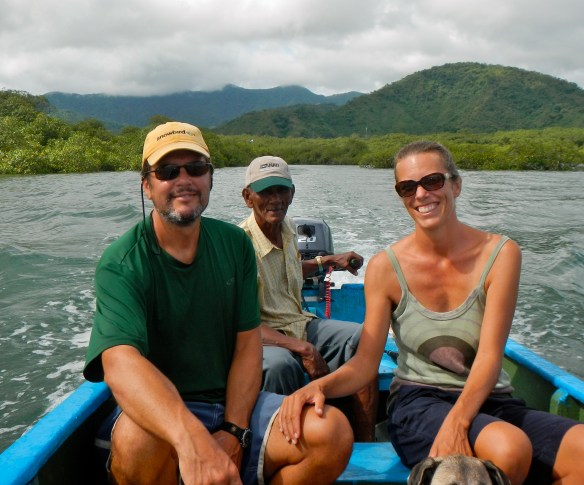
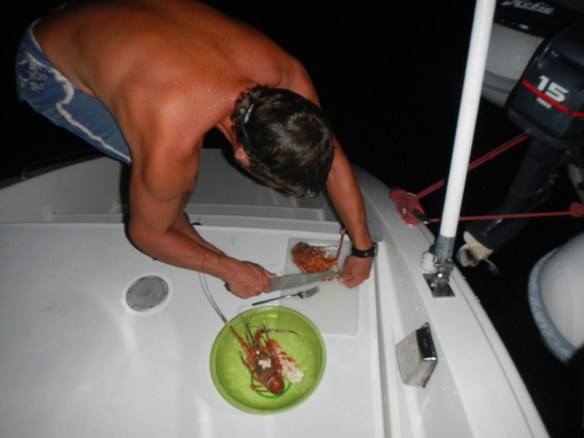
We dropped anchored in the beautiful bay of Bahia Honda and were promptly greeted by life-long island resident and friend to cruisers, Domingo. Although my Spanish is still that of a 3-year-old, Domingo’s constant chatting somehow sunk in and we were trading goods for fruits and herbs, visiting his home and being his guests to visit Salmonete a tiny village up a river to buy lobsters from the fishermen, undoubtedly his buddies.
Domingo’s house
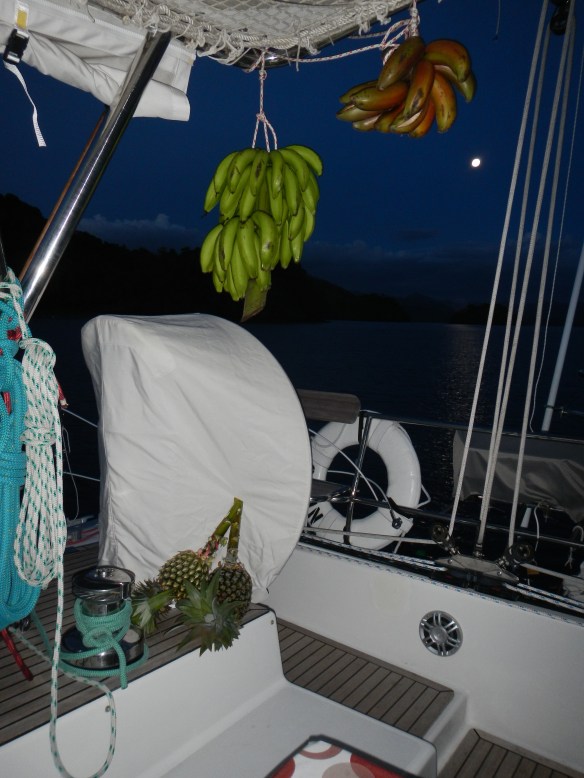
Red bananas, yellow bananas and pineapples from Domingo. Problem with this many bananas is they all ripen at the same time. So even freezing some for smoothies, left us with A LOT of bananas
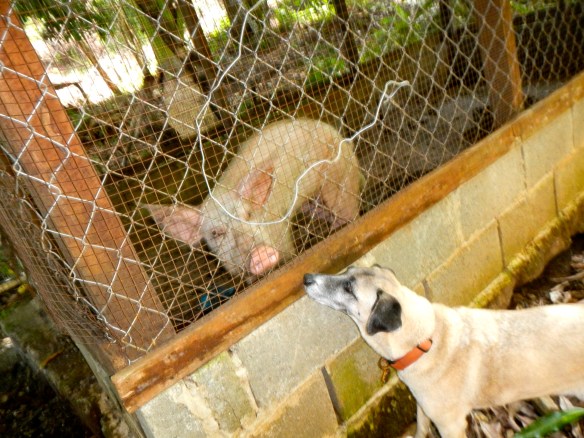
Domingo’s pig, who lived with a terrified cat in this pen. Never got a straight answer why the cat was in there. Maybe we don’t want to know.
Domingo taking us up the river
Young villager welcoming us
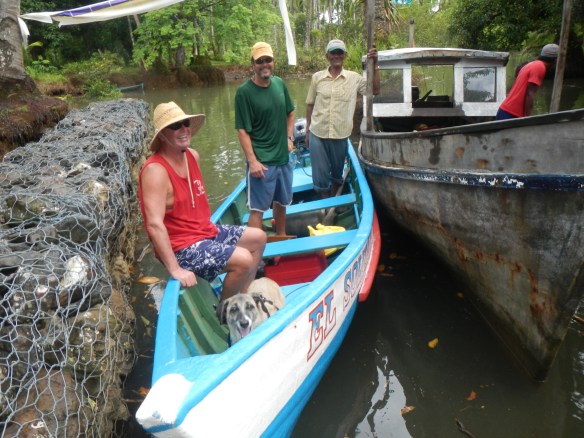
Larry, Peter and Domingo and Lucy
Lobster dinner
Larry and Debbie from “Tropical Blend”
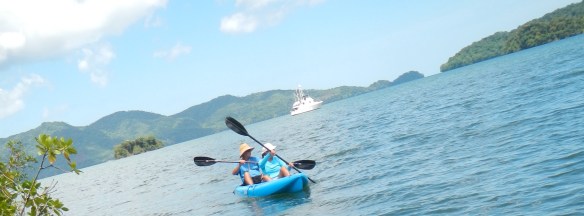
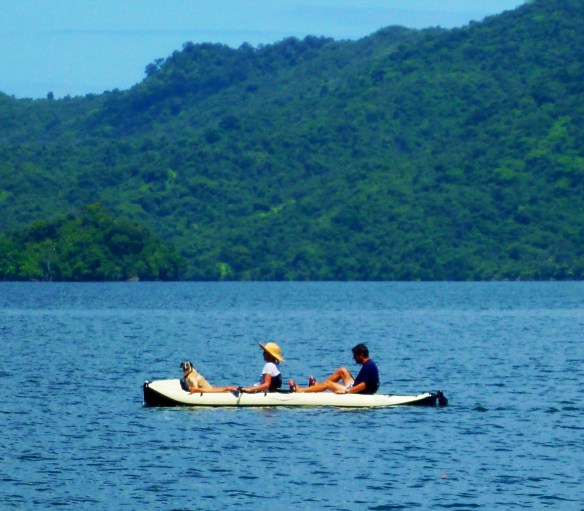
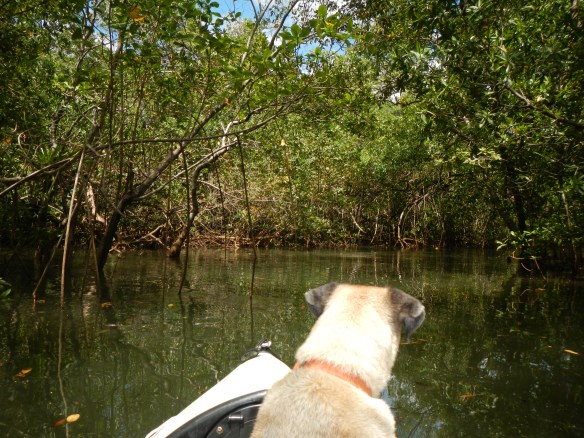
Kayaking in Bahia Honda
sssssssnake
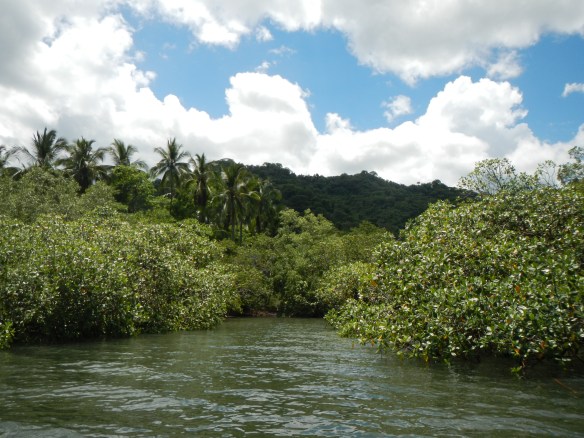
On our second day there we were joined by Larry and Debbie from “Tropical Blend” (whom we met back in El Salvador) and it was nice to have friends join us on the lobster adventure and kayaking through the estuaries.
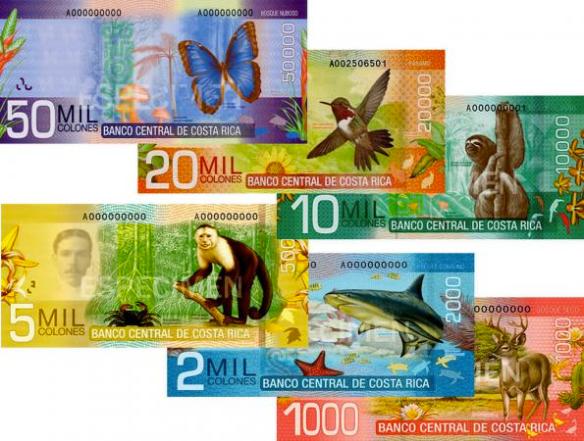
spending too much money (their currency is strikingly beautiful, which is a good thing because you are going to need a lot of it),
Costa Rican Colones currency
and with the rainy season starting in earnest,
Here comes the rain again
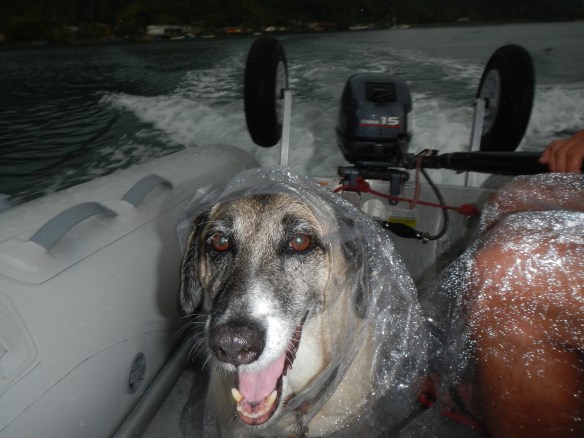
rain gear for all crew members
we ready ourselves for our final stop in the country: the town of Golfito, which is not known for its, shall we say, hospitality. Countless tales of crime from fellow cruisers and locals left us less than excited about going there, but it was necessary, as it is the last port where you can check out of the country.
First impression coming into the Golfo Dulce…looks promising
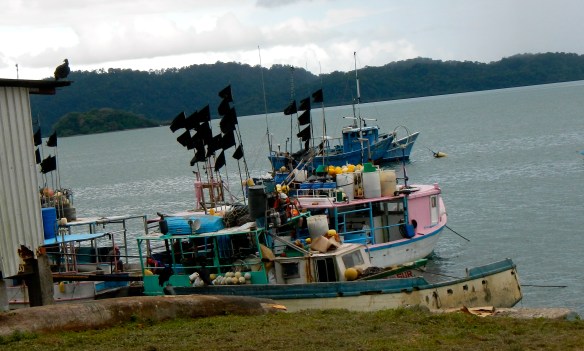
Fishermen use these black flags to mark long lines and nets. The worst color ever to see against a dark sea. How about a nice neon orange?
This once thriving town has fallen on hard times since the departure of the United Fruit Company and now depends mainly on a duty-free zone and robbing cruisers (just kidding…I think). Don’t get me wrong I wouldn’t pick it over a trip to Maui, but for our fellow cruisers you’ll most likely have to be here and it was not as awful as we were led to expect. The bay is well protected and even with the biblical rains we experienced it was always calm. And clearing out of the country is easy and only costs $20.
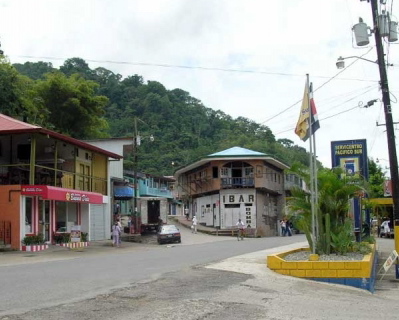
Goflito town
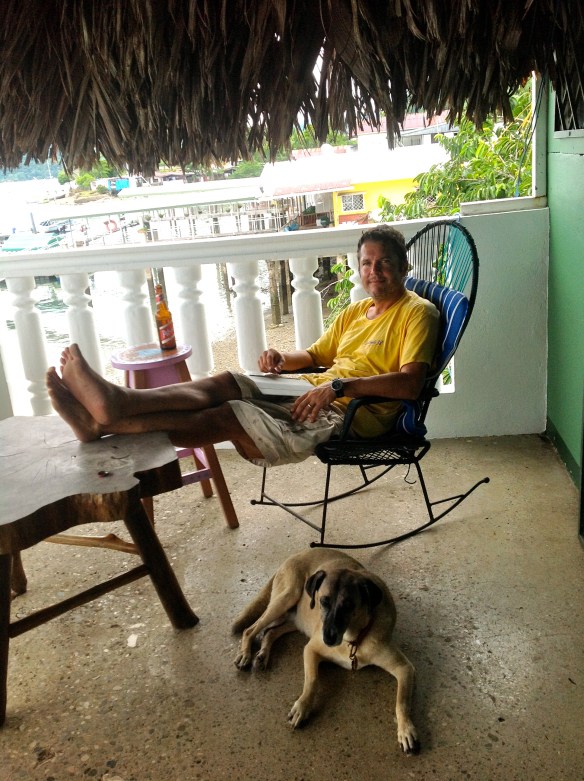
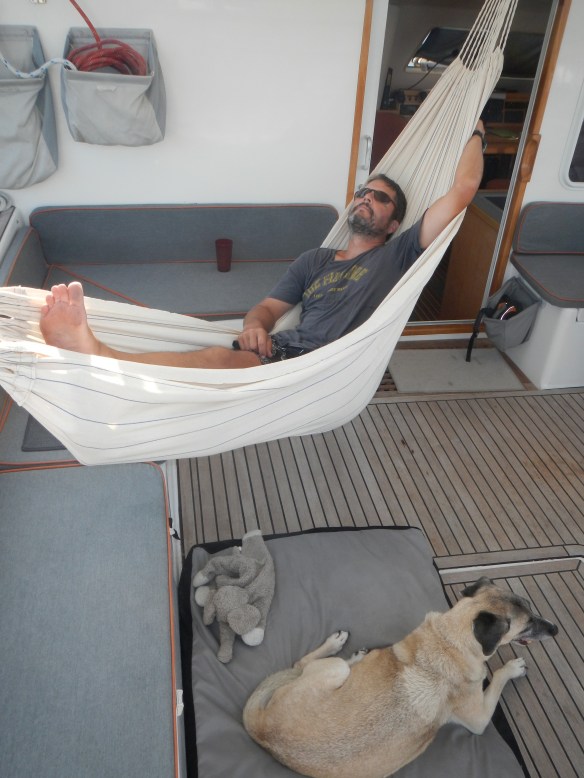
Freshly shaved Captain and his faithful first mutt
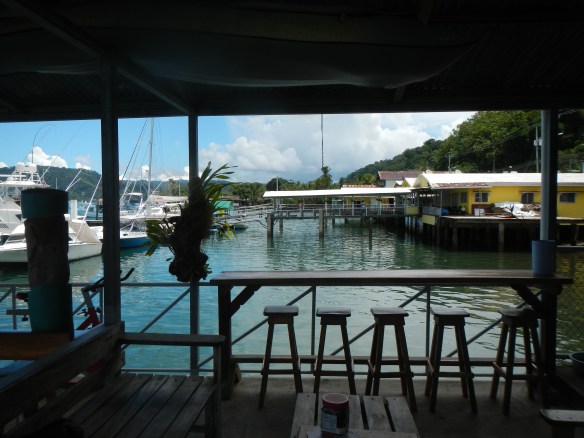
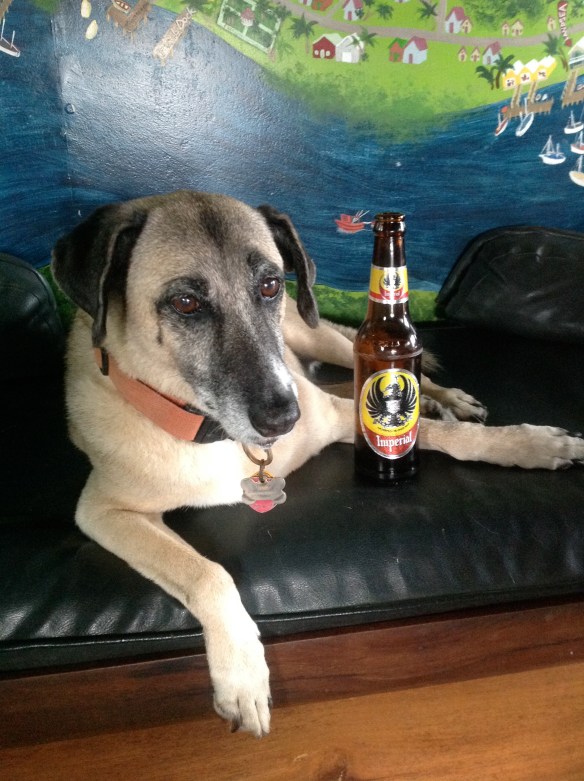
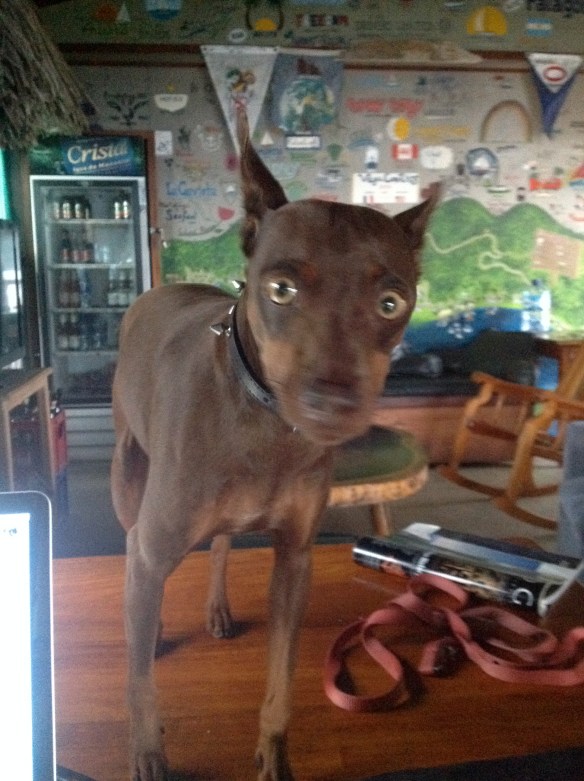
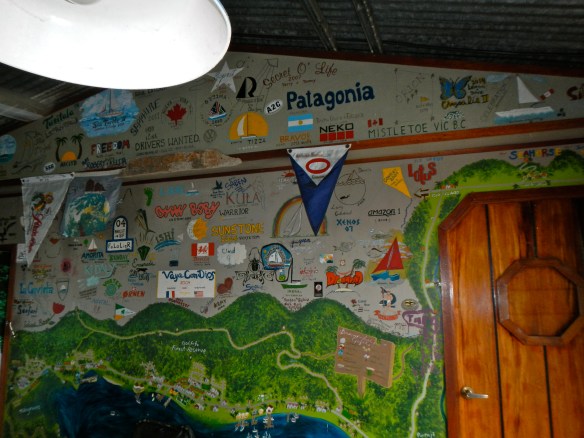
We moored at Land Sea where the owners, ex-cruisers Tim and Katie, and their many pups provided a safe haven and welcomed us, including Lucy. Land Sea has a few moorings and a wonderfully funky cruiser’s lounge. For our land-based friends, let me explain what cruisers want in life; good weather, cheap beer, clean laundry, easy land access and free reliable wi-fi. And we got 4 out of 5 of those things at Land Sea. The rain was by the buckets everyday.
Land Sea deck
Honor bar at Land Sea
My new buddy Vinny. Tim adopted Vinny from an Italian cargo ship where Vinny was a stow away.
Cruisers leave their mark on the walls of Land Sea. Can you spot Neko?
Here comes another storm
Tim regaled us with wild stories from the many years he has lived in Golfito and recommended local restaurants and field trips to fill up the week we were there.
This salty gal celebrated her 46th birthday.
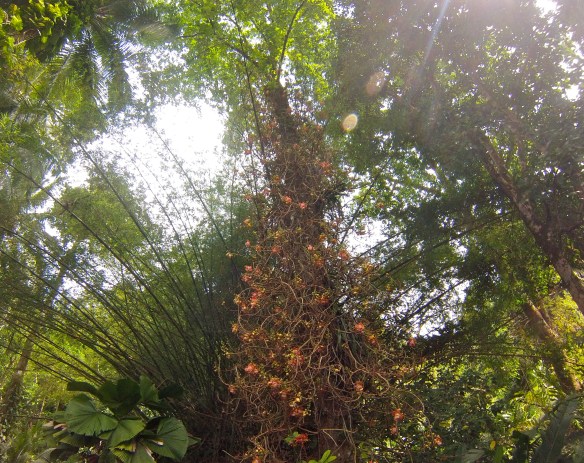
One of our best field trips was to Casa Orquideas, only 5nm but a whole world away from Golfito. These are meticulously maintained gardens owned by an American couple, Ron and Trudy, who have lived here for almost 40 years.
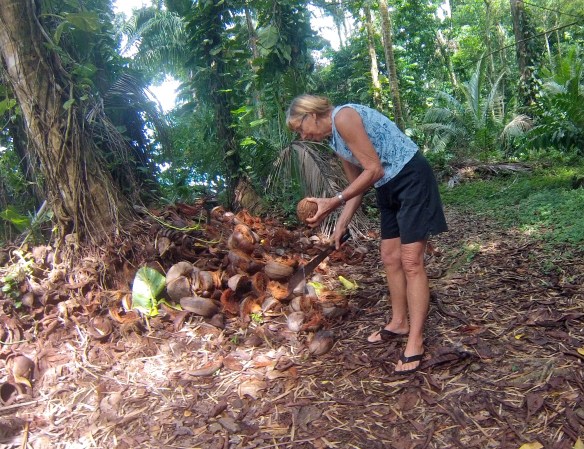
Trudy, coconut opening expert
Trudy is the sweet woman who gave us a botanical education, taught us how to open a coconut, and sent us off with many of her home grown fruits and herbs.
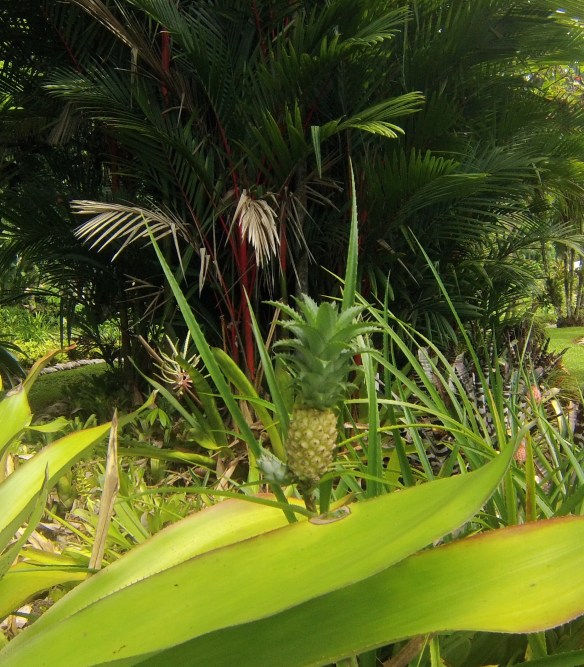
miniature pineapple
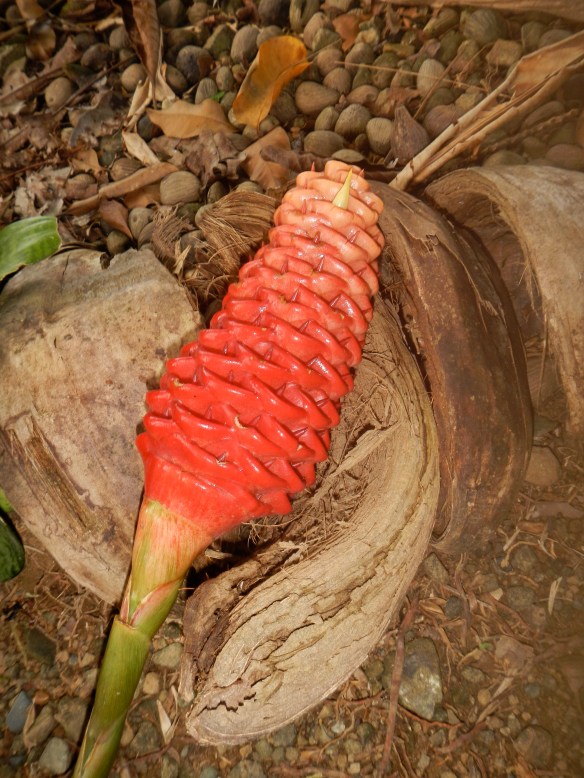
Shampoo ginger . When you squeeze it a sweet smelling liquid comes out that you can use for shampoo.
Lucy enjoying some lemon grass
Water lilies
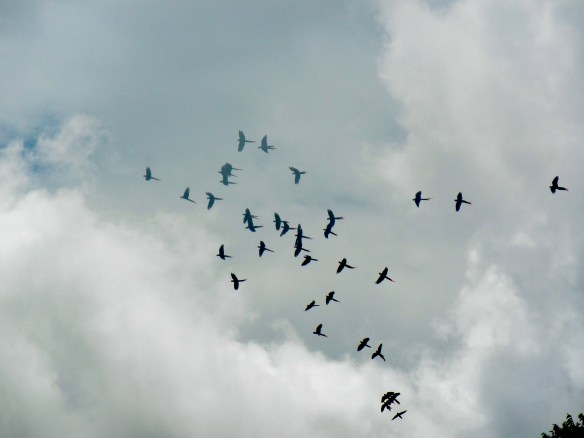
Wild macaws. Wish the photo showed their brilliant colors
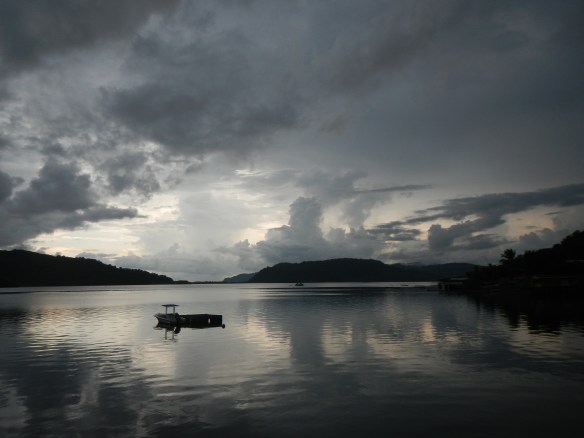
We were just going to go over to this bay for the afternoon, but ended up staying 2 days. It was a delightfully tranquil spot perfect for kayaking, swimming and dreaming of our next stop – Panama.
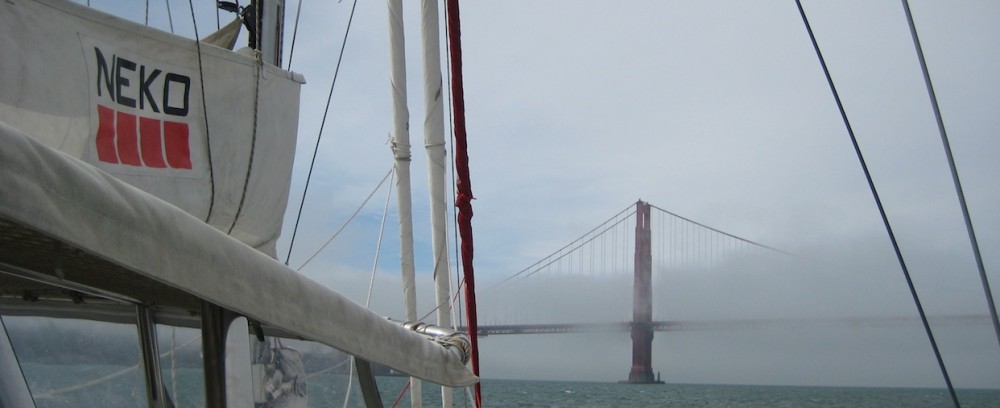


























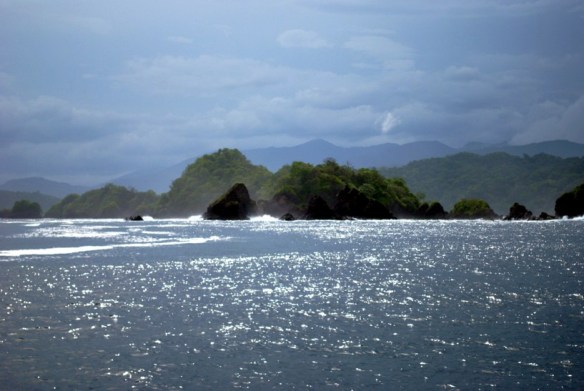
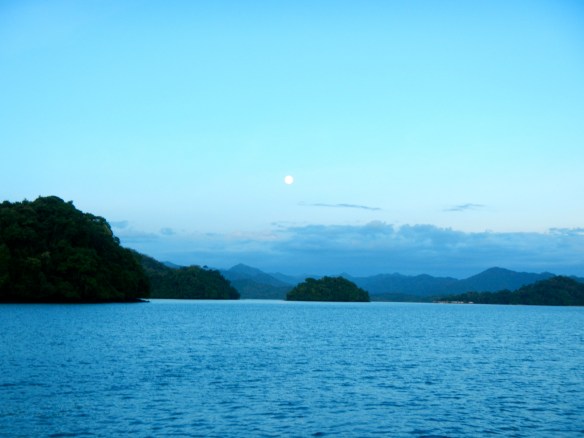
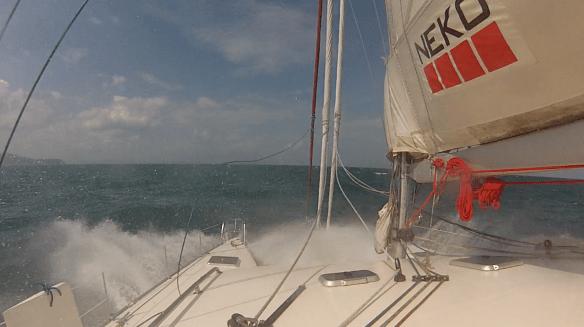
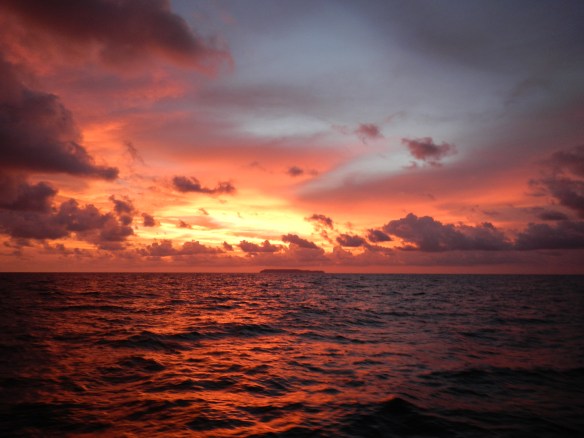
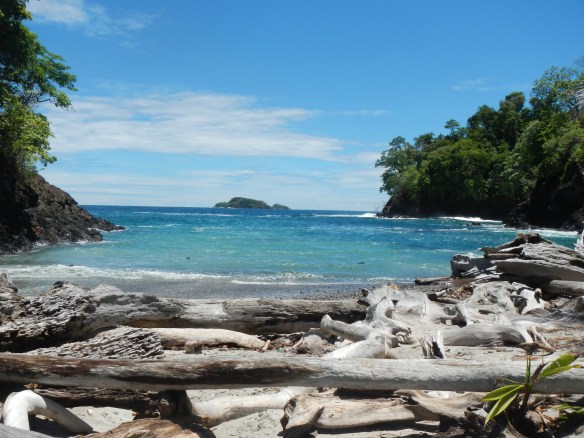
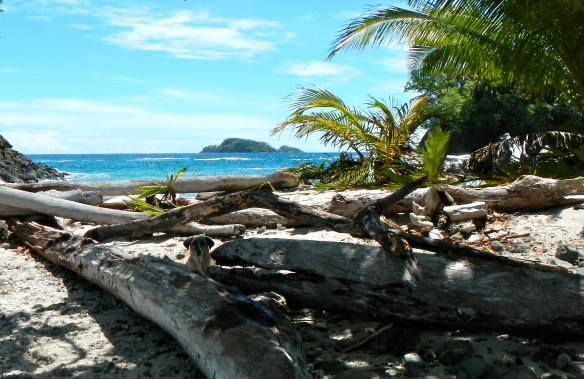
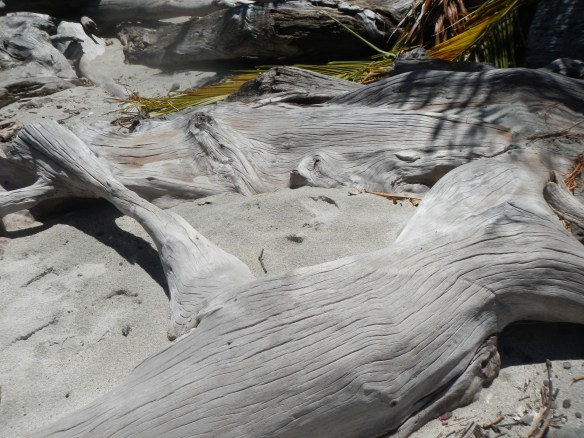

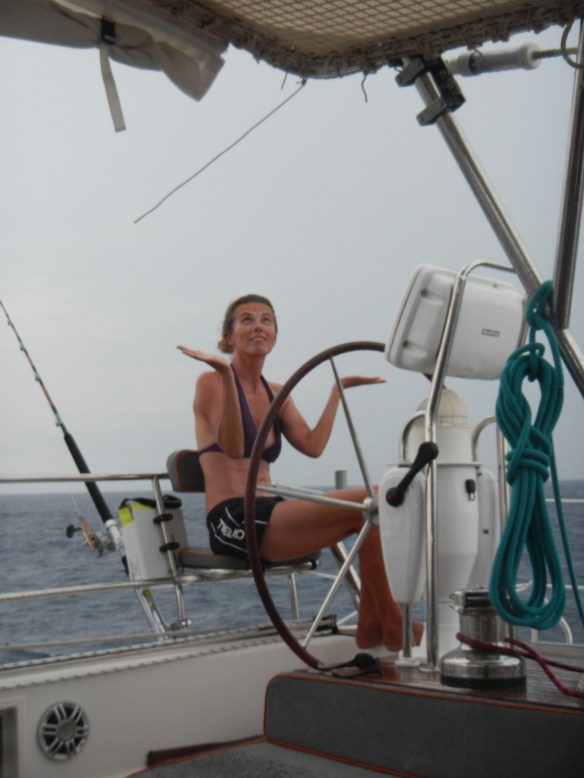
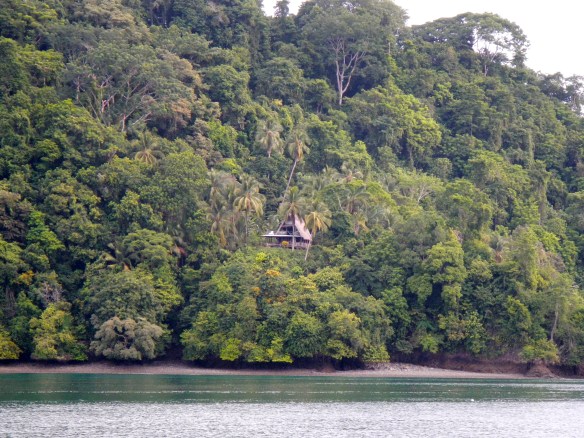





 Sailing on Neko