Little Tehuantepecker

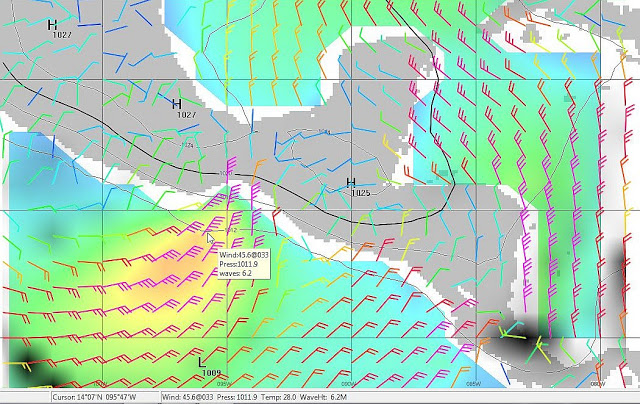
Crossing the Gulf of Tehuantepec is one of the most dreaded pieces of sailing in Mexico.  The gulf is a narrow isthmus separating the Pacific from the Gulf of Mexico.  When northerly winds are blowing in the Gulf of Mexico they cross the isthmus into the Tehuantepec and a narrow gap in the mountains funnels and accelerates the wind.  What may be a pleasant 15 knot breeze on the eastern side can become a 40 knot gale on the western.  This is an example of a prediction of the Tehuantepec winds (thankfully, not for our crossing of it).
Tehuantepec grib

Tehuantepec grib

These are GRIB files – raw government weather forecast data displayed graphically.  This one shows 40-45 knots of wind in the middle of the Tehuantepec.  (I keep writing Tehuantepec because I like the way it sounds, although not as much as Topalabampo in the north).   That’s enough to create 15 – 20 foot seas at very short periods – ie, boat breaking stuff.

We download these images, along with other weather resources to see what we will get whenever we go anywhere.  We looked intensely at weather predictions before leaving on the 250 mile (2 day) trip across the Tehuantepec.  We were hoping to leave Monday morning and our predictions varied but some showed very light winds for the entire trip and some showed a short period of heavier winds Tuesday morning.  We decided to brave it and left with one other boat, Wanuskewin with Mike and Holly aboard.  Sure enough Tuesday morning, well more like Monday night, just as we were approaching a shallow sandy bar clogged with large fishing boats, the wind piped up.  We saw a max of about 35 knots, which is a lot of wind, but we reefed (reduced the size of our sails) and carried on.  It only lasted a few hours and for the rest of the trip we had little to no wind.
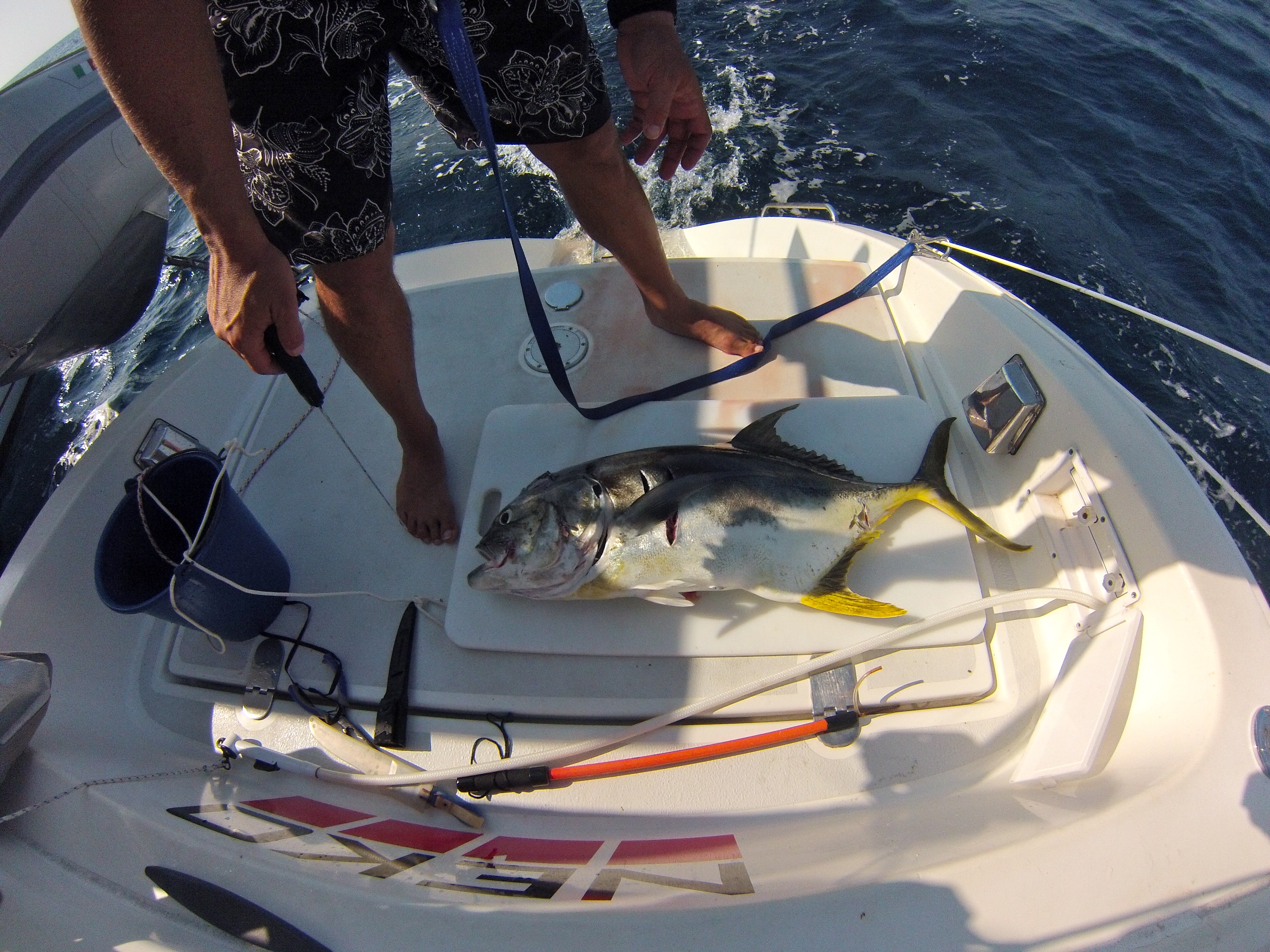
25lbs. yellow fin tuna

25lbs. yellow fin tuna

Calm enough catch and filet this crevalle jack on the back of the boat.  So those weather forecasters were pretty close to spot on.

By Tuesday morning (and by that I mean about 3 am – we sail the boat 24 hours a day, taking 3 hour shifts) we were ready to get into port.  It was only about 2 miles away and we were motoring right for it in calm weather.  Arrivals after a few days at sea are really rewarding.  However, our trials were not quite complete.  Suddenly, the boat lumbered to a halt and the engine stalled.  Looking over the side, I could see that we were snagged in a large and long fishing net.  What was this thing doing strung right across the main channel into a large port?  Who knows but the fishermen were soon on the scene and, characteristic of most Mexicans we’ve met, they were not angry and took their loss in stride.  They helped me cut the net away and left to salvage what they could of their catch.  This left a large chunk of net tangled around our propeller, daggerboard and rudders like a fly in a giant spider web.  Mary and I anchored the boat in the calm ocean to figure out what to do. Mike and Holly from Wanuskewin witnessed the whole thing from a mile behind us and were super kind to anchor near us and help.
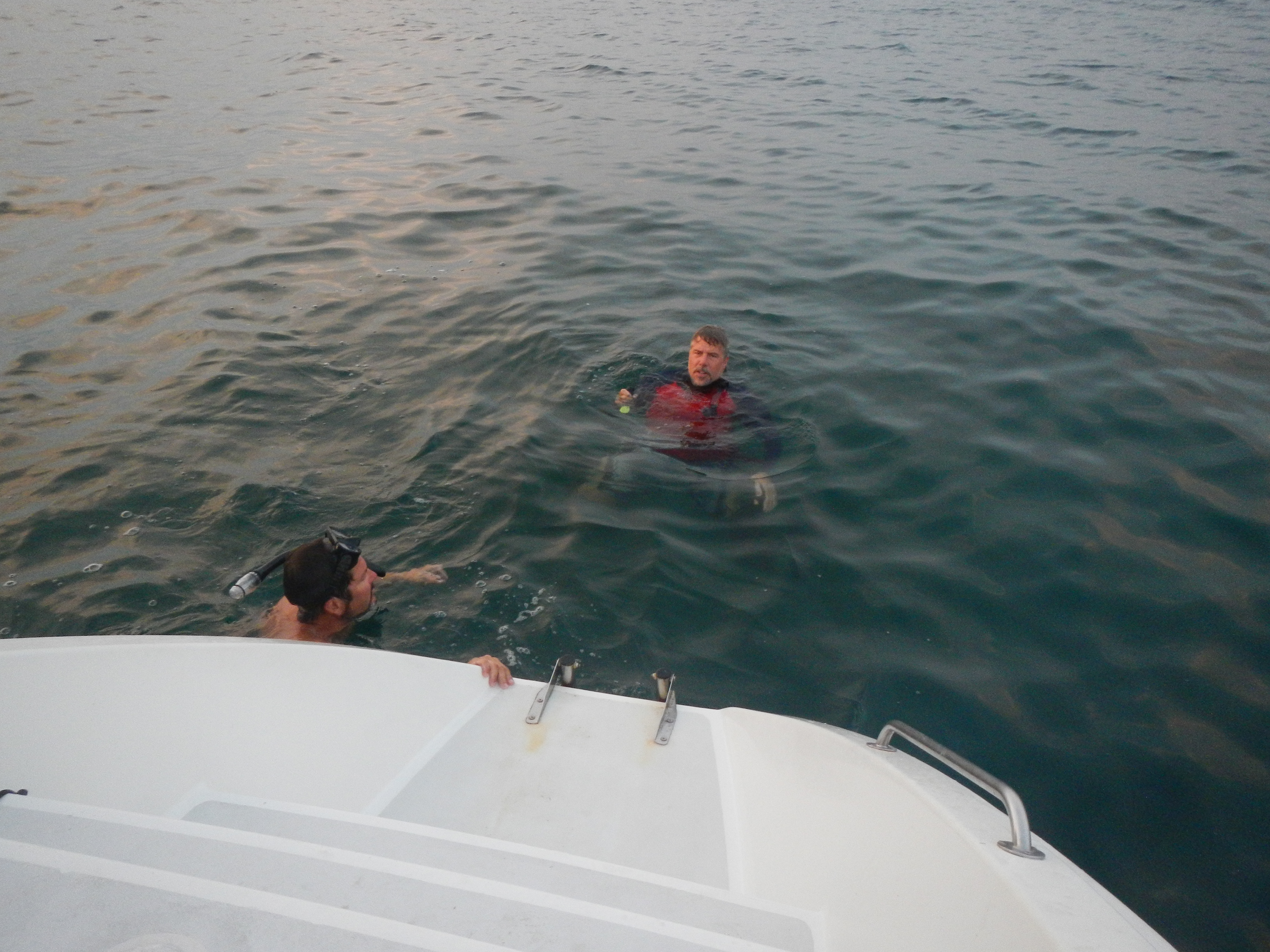
Pete and Mike dive to free the prop from the fishing net

Pete and Mike dive to free the prop from the fishing net

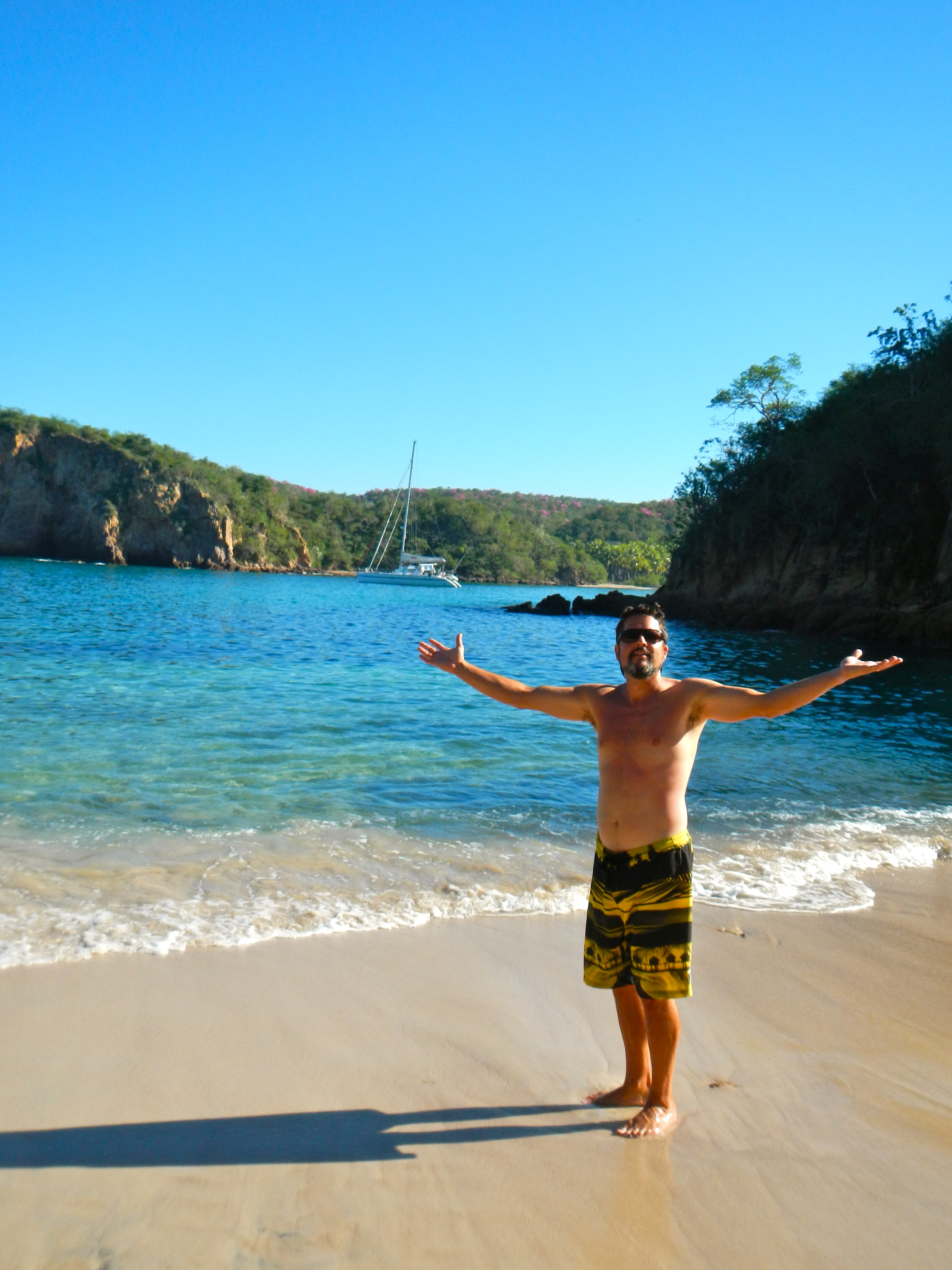
Mike and I dove with snorkels and knives to saw away the remainder of the net that was so tightly twisted around stuff under the boat, being careful not to let it tangle us.  After about an hour we had every last bit of it off.  We saved what we could to throw out so it would not catch any more sea creatures and mourned the fish who were caught in the discarded net.  I kept some of the floats from the net as a reminder of this little battle.

The culprit
The culprit
Another Day in Paraíso

DSCN1538

Just like living in Paradise

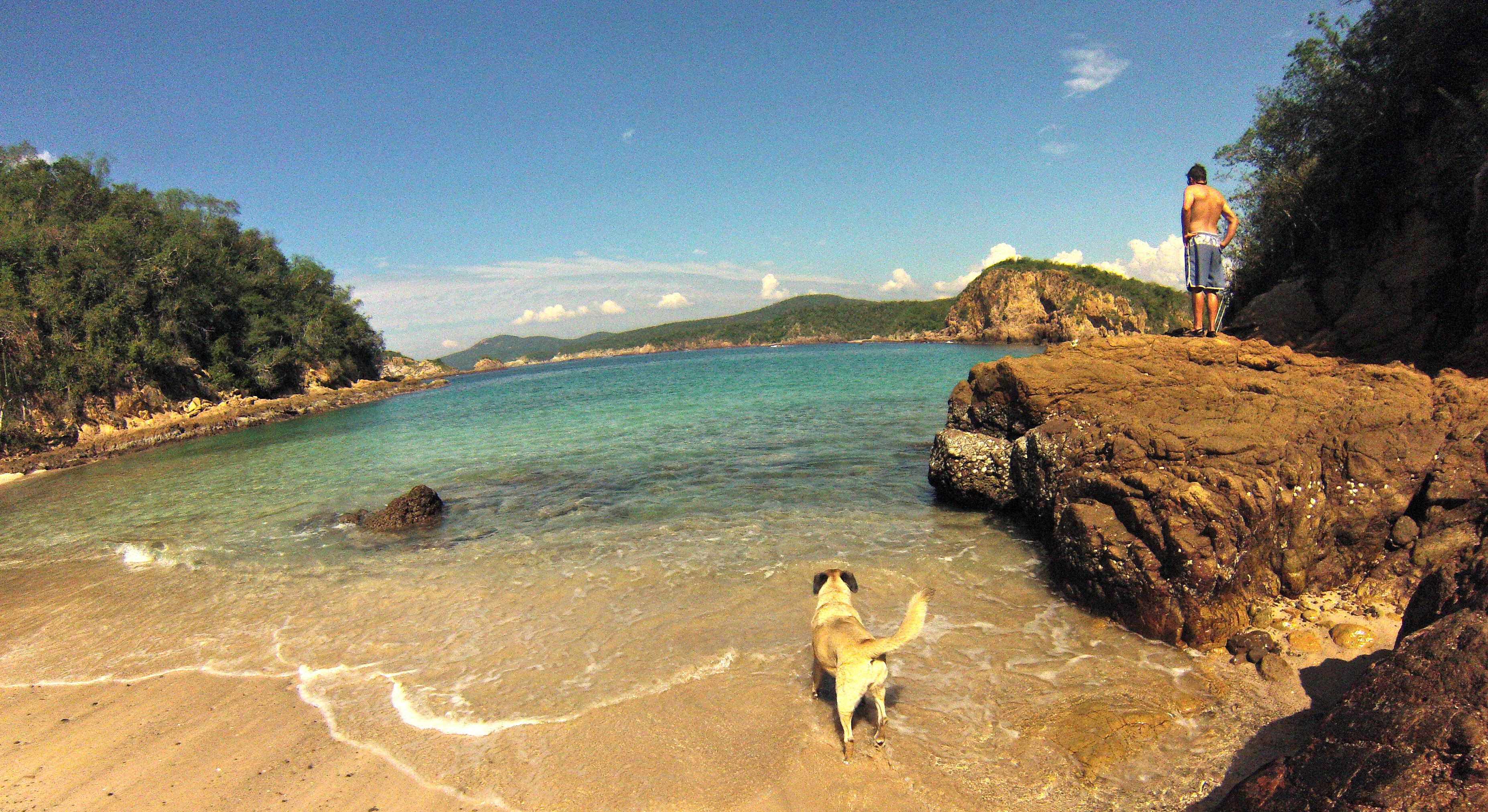
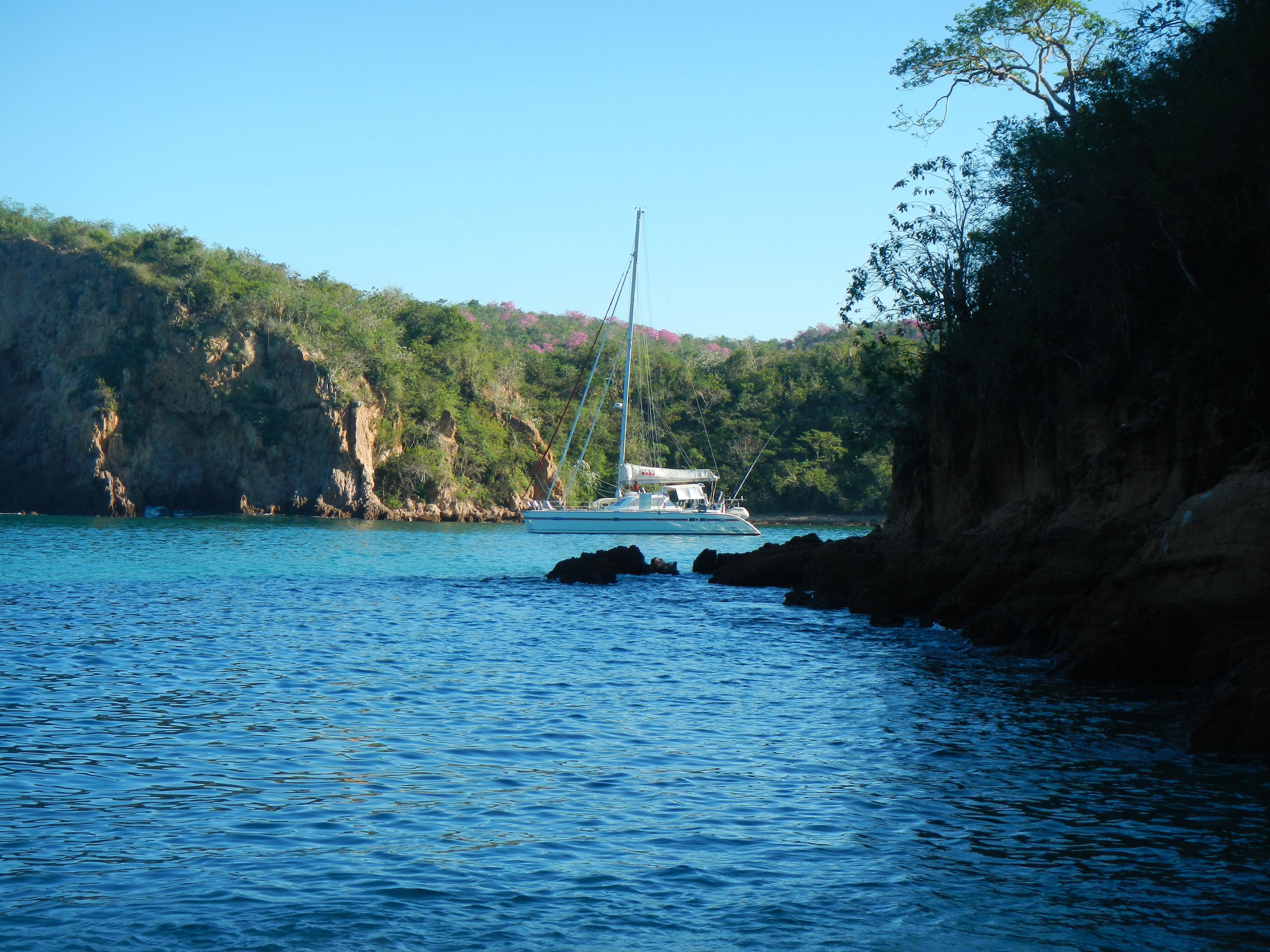
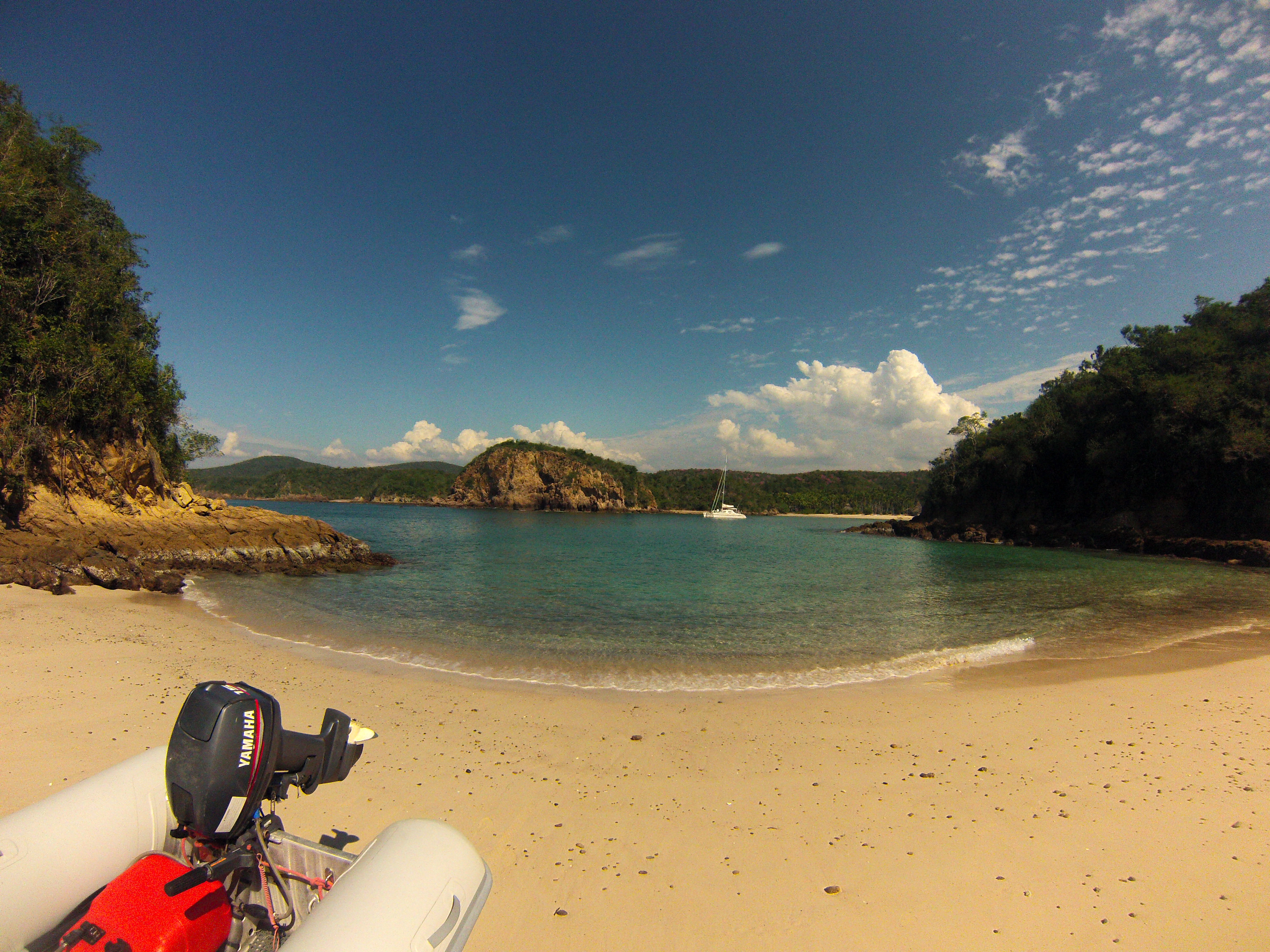
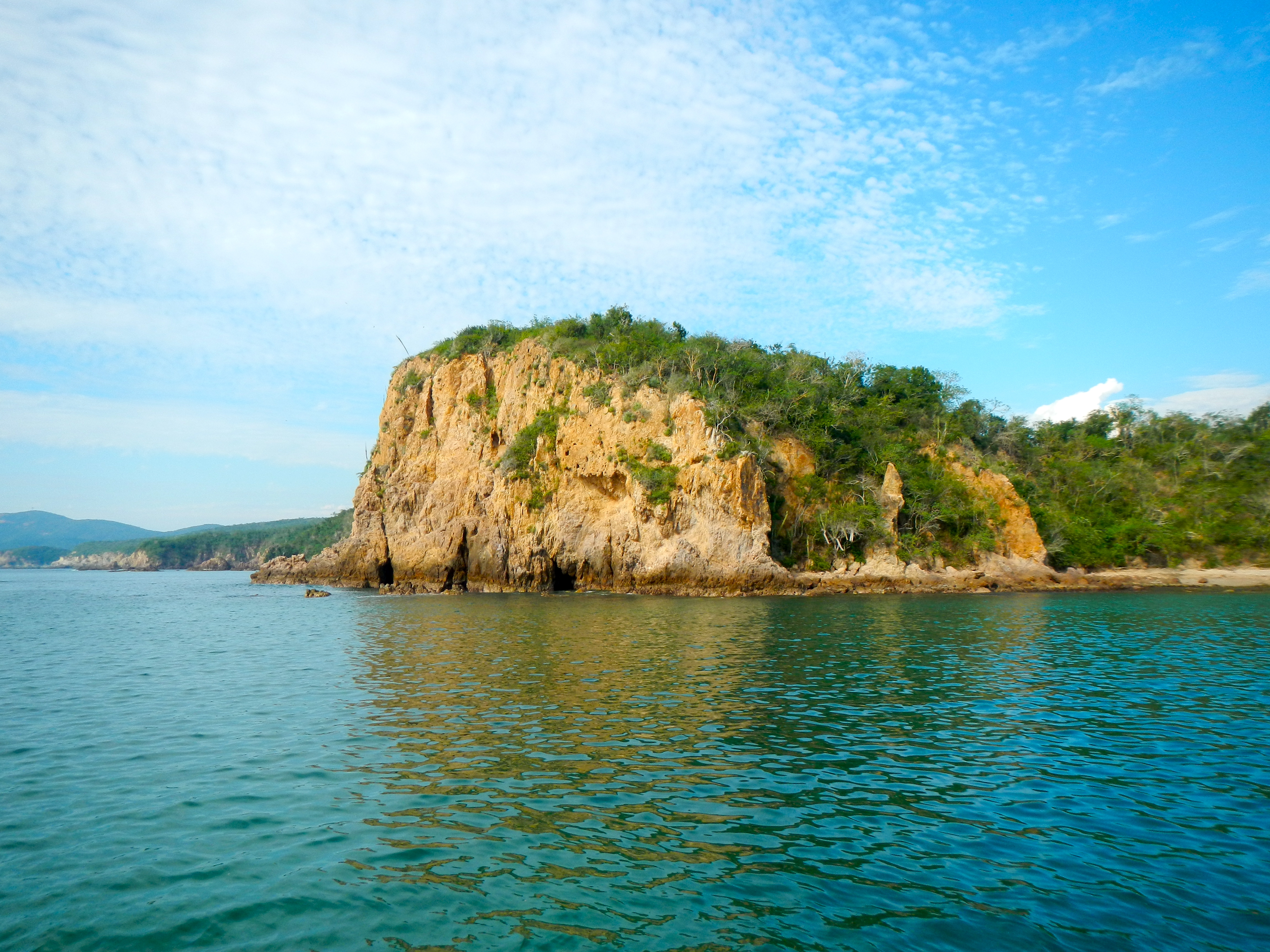
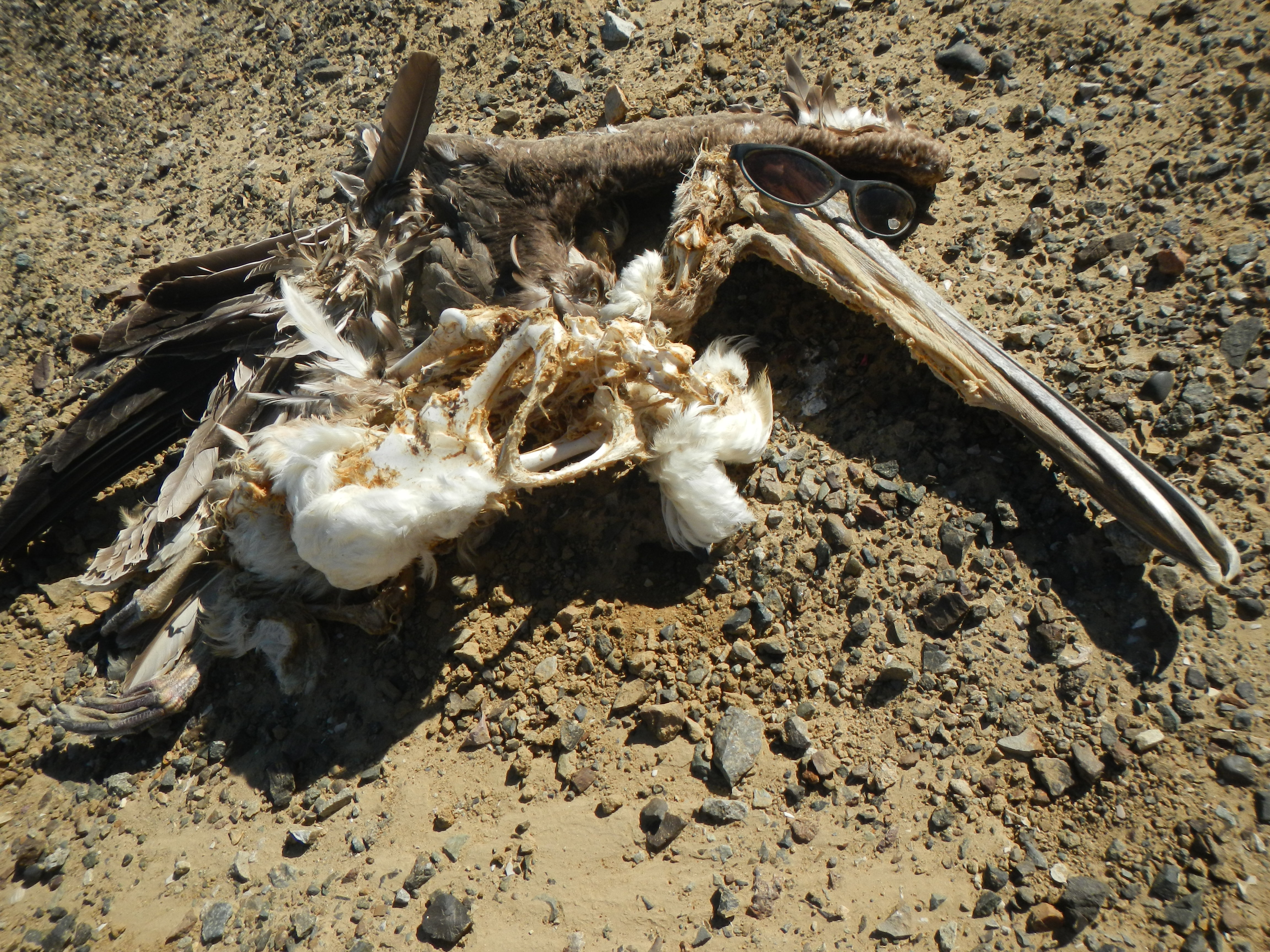
Actually it was just one, but that is all that we needed. Sailors often dream of having a tiny palm-fringed anchorage all to themselves. This is what they sell cruising dreams on. With the boat floating quietly at anchor and a soft breeze providing just enough cooling, we swim and paddle and just enjoy the solitude. This little bay, Bahia Paraíso, is surrounded by magnificent rock formations with little caves and blowholes that the waves continually

bombard and retreat from. It made for perfect nature watching. The anchorage was just big enough for one boat and had a idyllic little deserted beach for us to let Lucy stretch her legs and sniff at stuff.

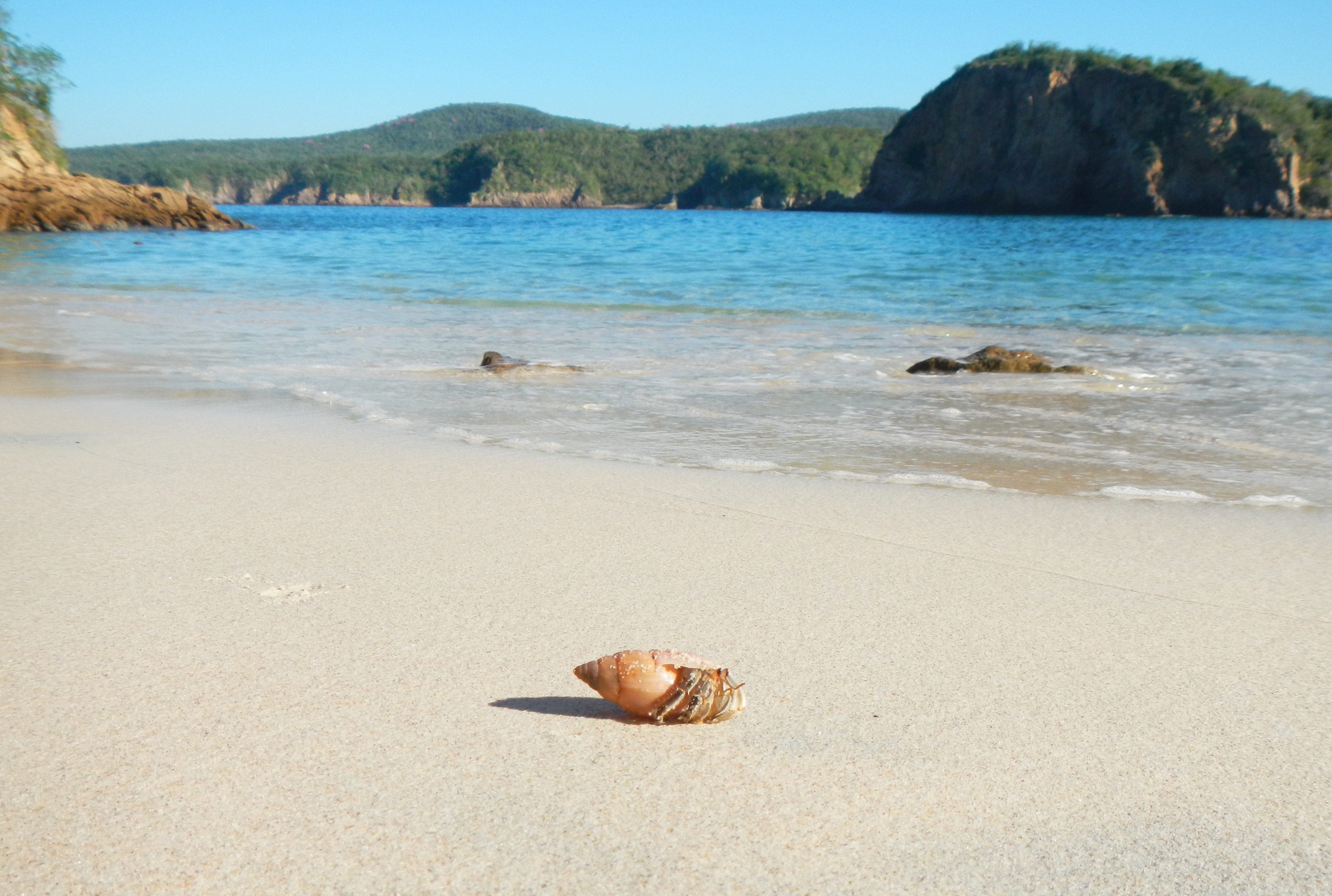
Champion hermit crab

Champion hermit crab

The sand was overrun with hermit crabs and each of us picked one for a race – Lucy’s won when mine and Mary’s refused to participate.

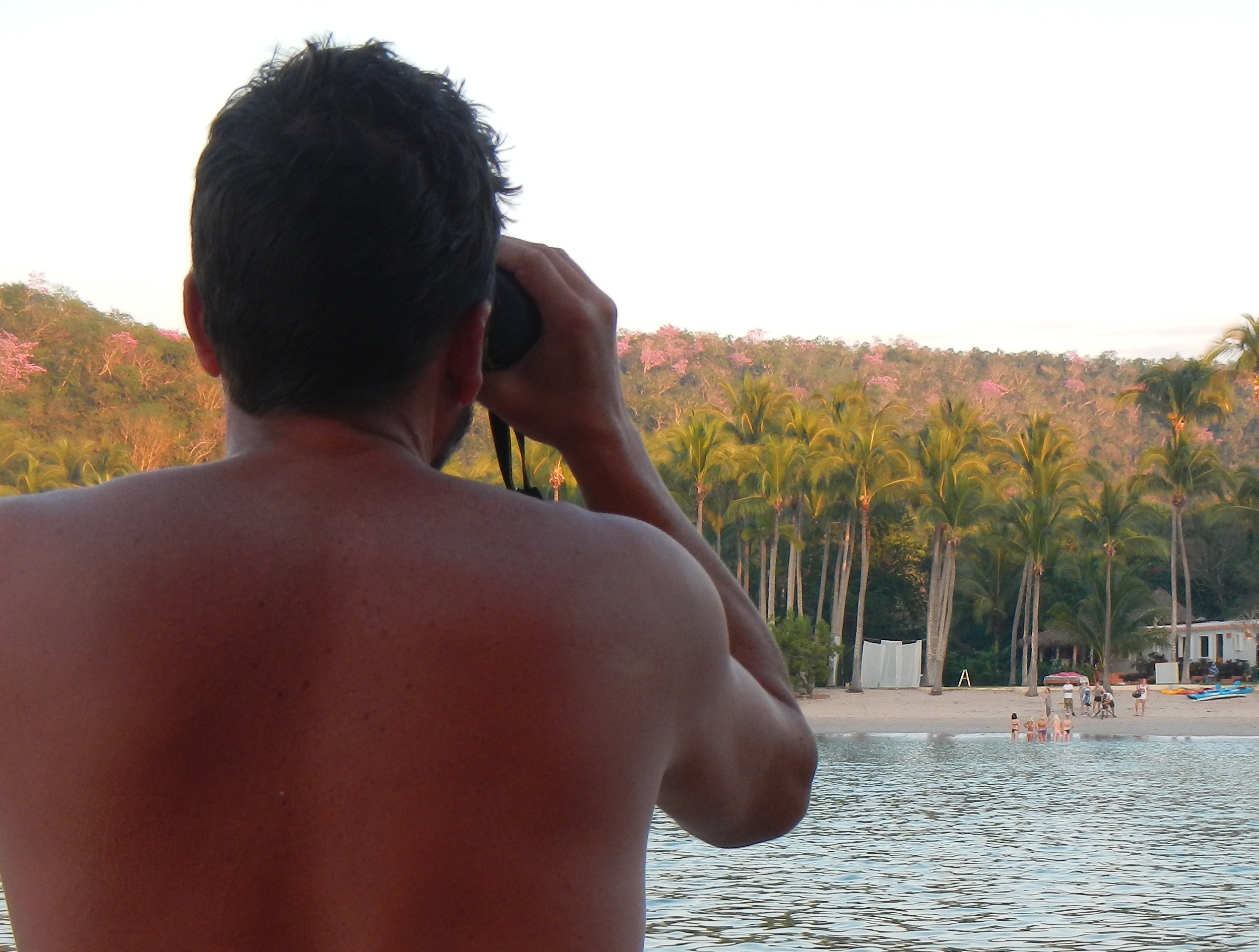
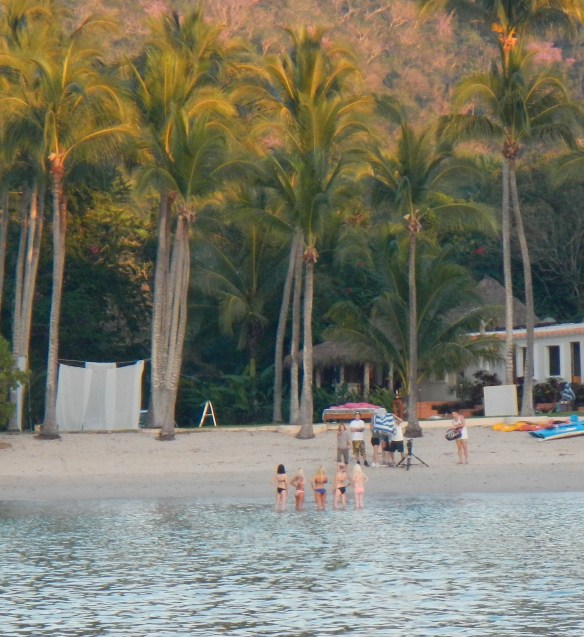
It was all exactly as you imagine.  That is…until a swimsuit photo shoot broke out at the small seemingly deserted hotel on shore. I kid you not. It doesn’t get any better than this 🙂

DCIM100GOPRO

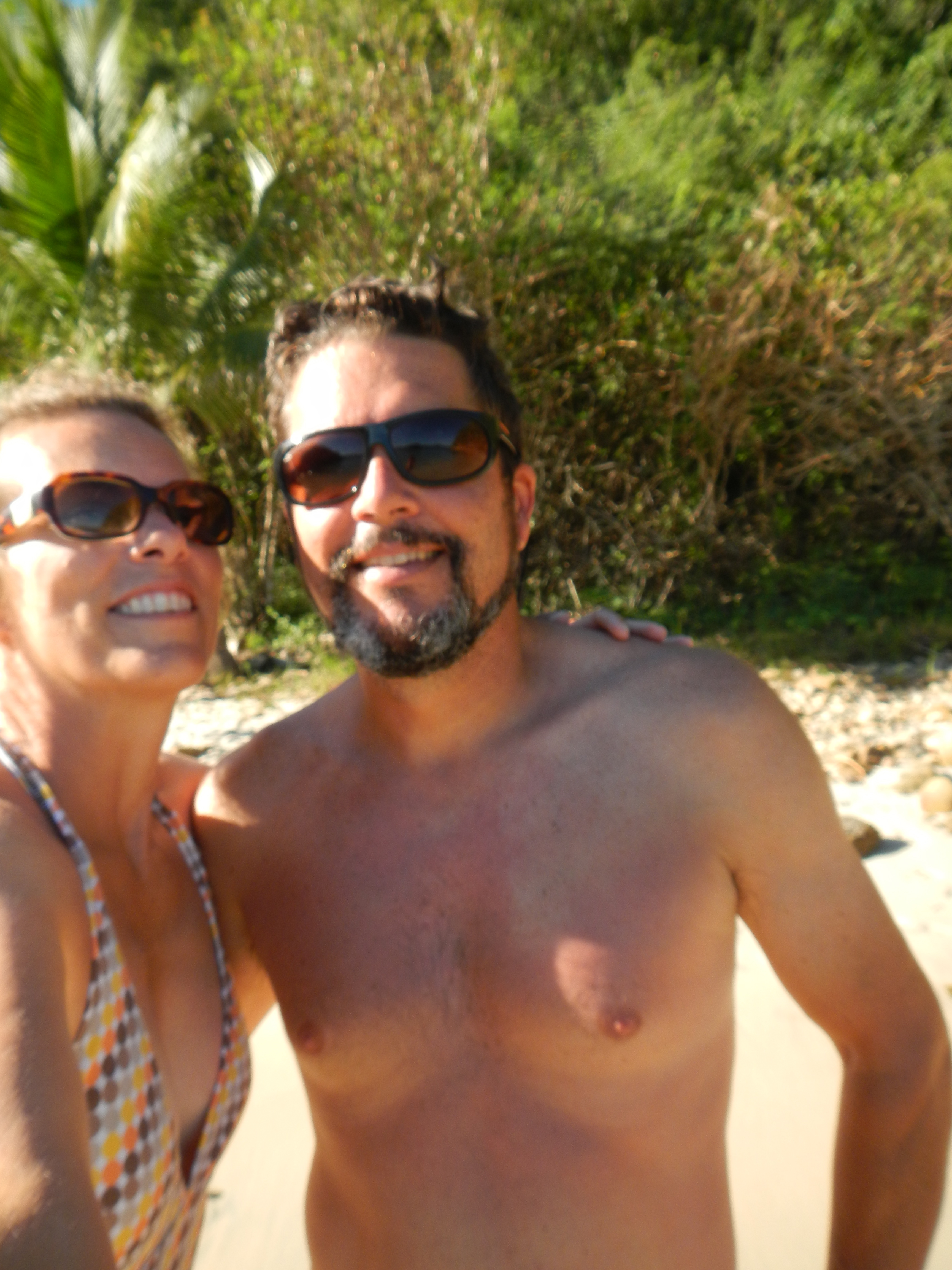
A man and his dog

DSCN1521

Neko at anchor

DCIM100GOPRO DSCN1550 DSCN1504

Wait, what??? Swim suit models

Wait, what??? Swim suit models

DSCN1512

Whales

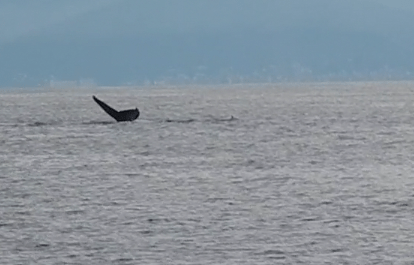
Coming into Banderas Bay, we saw a bunch of whales out feeding.  This is a big whale migratory route so we see them quite often – usually it is just a hump, fluke or spout off in the distance.  This time they came close enough that I had to throw the boat in reverse to avoid getting too close to them.

Whale tail

Whale tail

Boats have been damaged by whales bumping or rubbing up against them so we wanted to avoid that.  So the video is not the best but it was pretty cool to see them in person.  Enlarge the video with the bottom right button for best viewing.

Secondary Anchor Rode

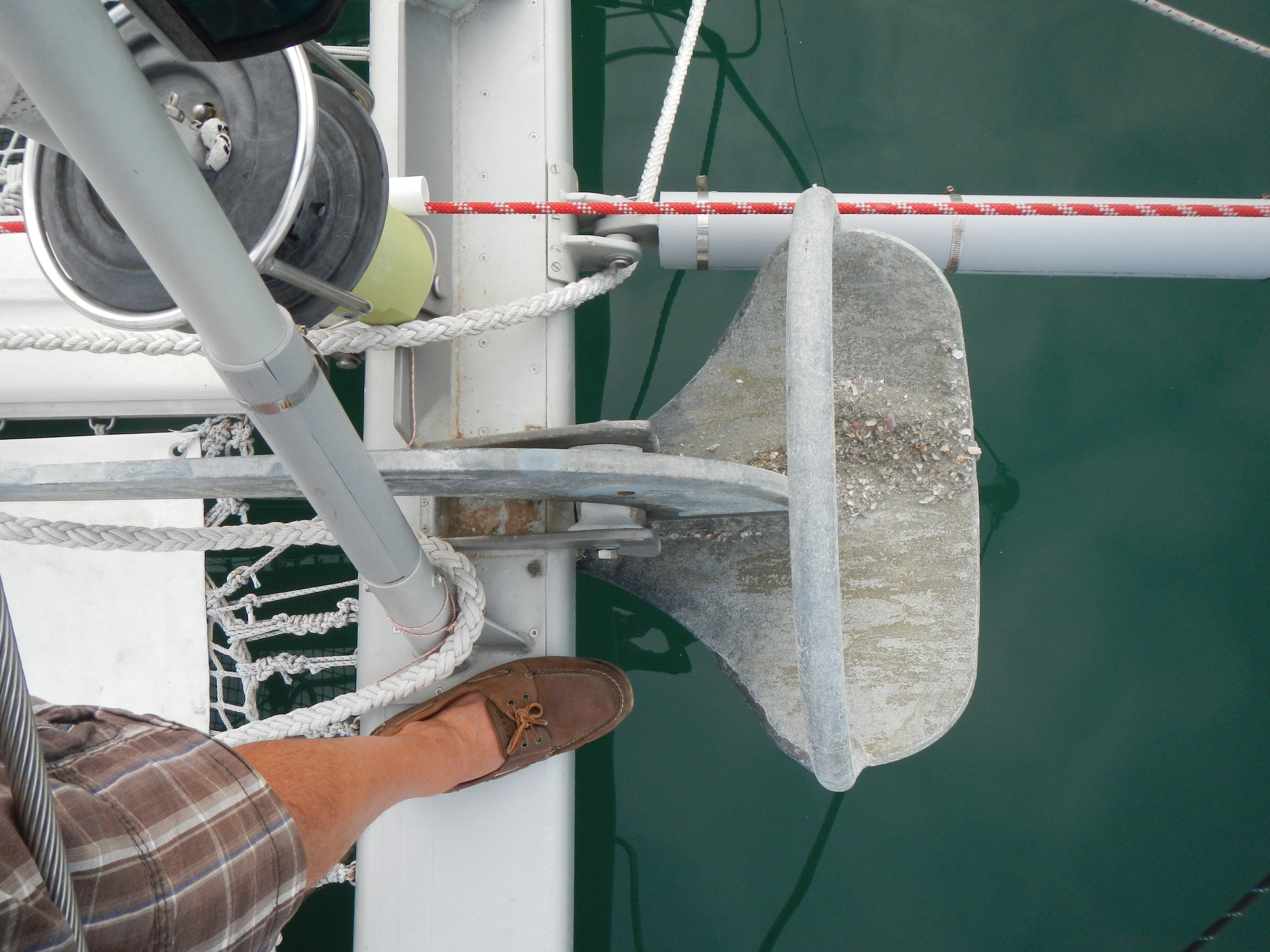
And now for something completely boring.  I have to add a little boating content just to keep things salty.  We have a 7/8″ double braid rope as our backup anchor rode.  We will connect it to 40′ of chain and then the anchor.  A metal thimble (metal piece that goes inside a loop of rope to attach to other metal things) for this size rope is a big hunk of metal that I don’t want flinging around.  So I was planning to just attach the soft loop at the end of the rope to the chain but I hadn’t fully thought through how to connect the rope to the chain, and was being lazy about it.  But recently at Isla Isabel, where the anchoring ground was all rock, I was very worried about our main anchor getting stuck in a rock and us not being able to pull it up.  In that situation, you would re-anchor on your secondary anchor and dive to free the primary one.  Well, my laziness was coming back to bite us because we couldn’t use the backup.  But luckily the primary anchor came up and I quickly got lazy again about the  backup.  Now that we are safely in a marina one of the To-Do’s was to tackle this.

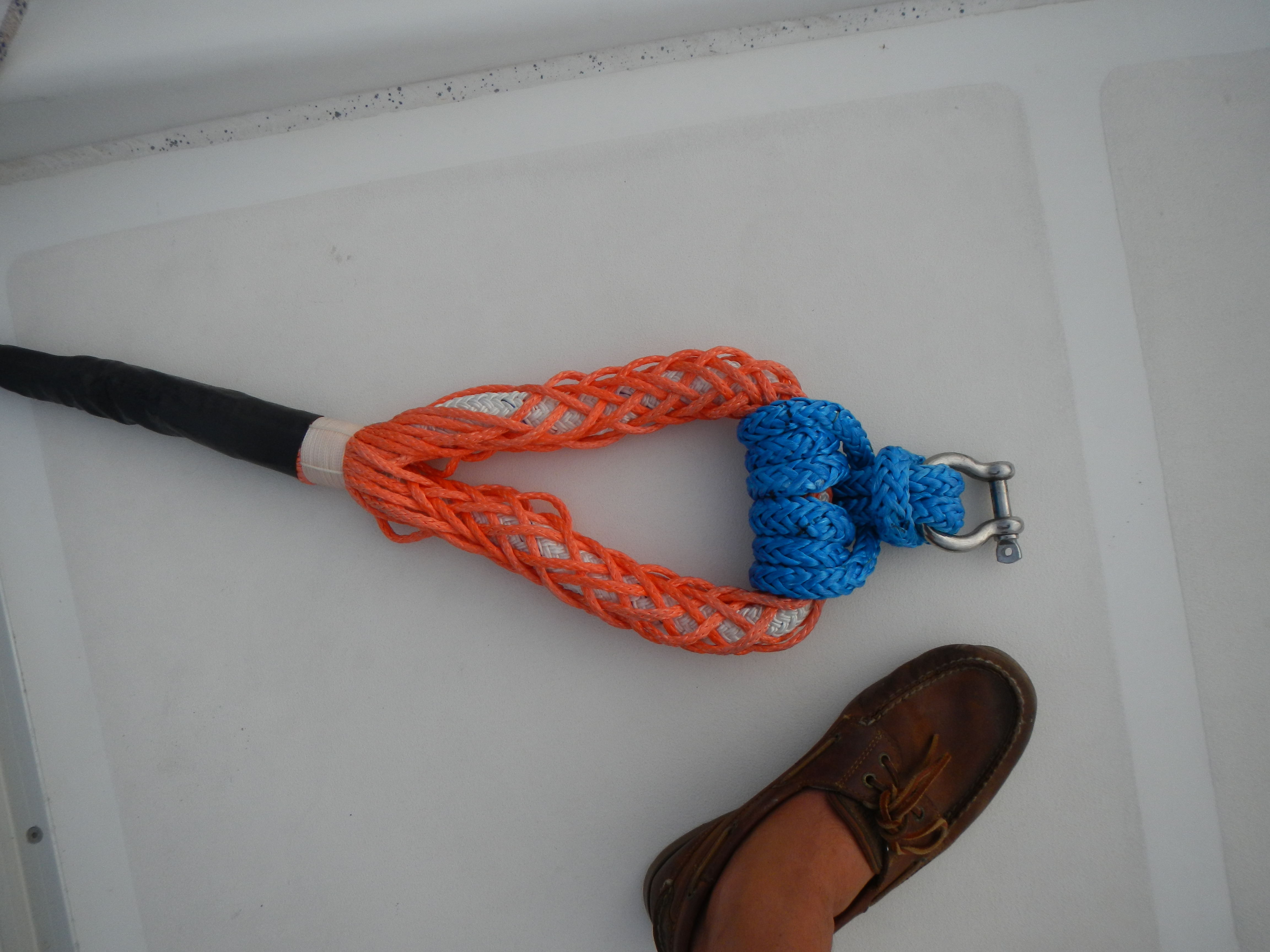
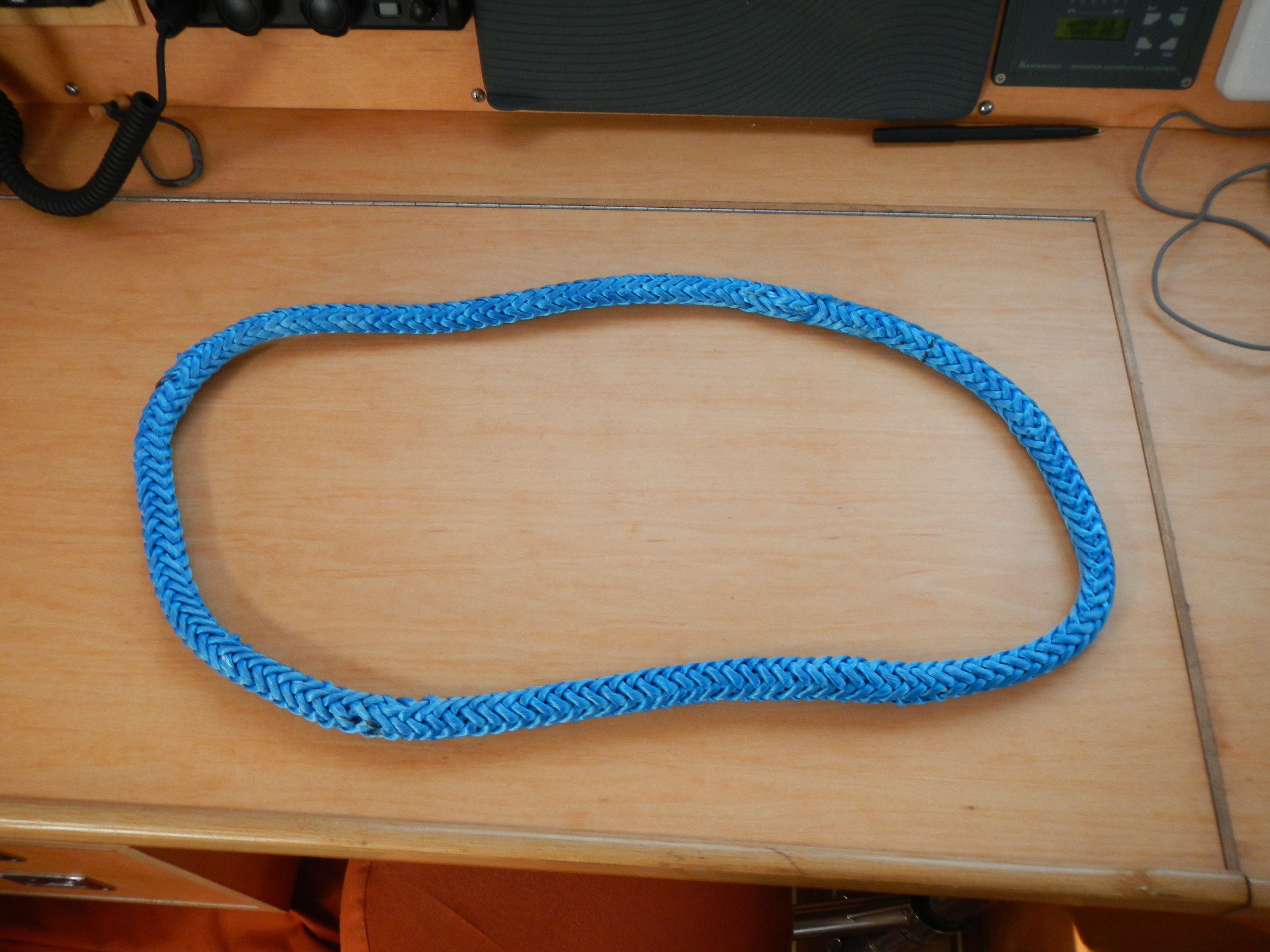
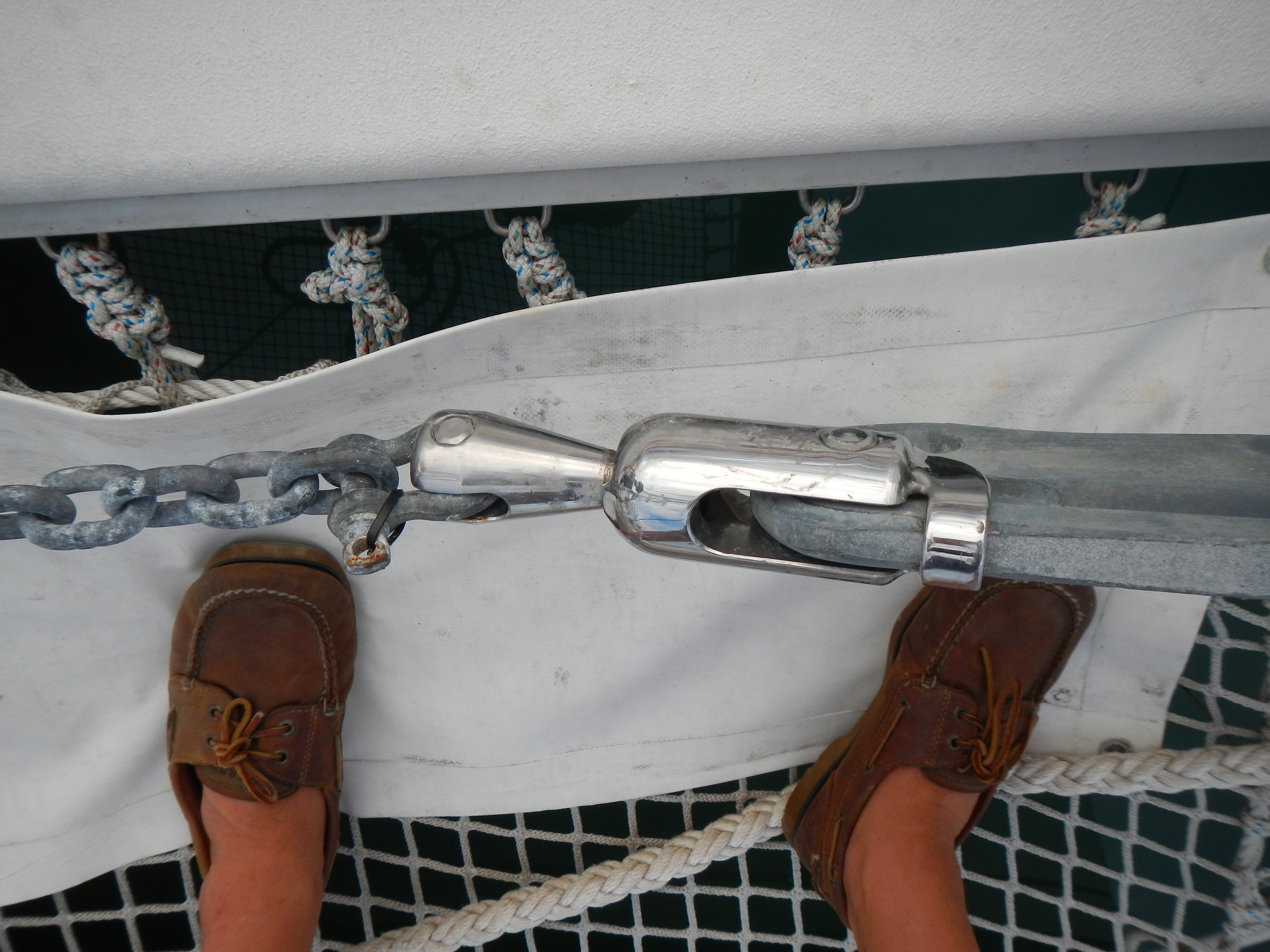
With the help of Allen Edwards who runs the immensely helpful L-36.com website, I made a long loop of Amsteel which I attached to the rope with a prusik hitch and to the shackle on the chain with a cow hitch.  Here are some pics.  My foot is in there for perspective.

Secondary Anchor Rode

Secondary Anchor Rode

Amsteel Loop

Amsteel Loop

Chain and Swivel

Chain and Swivel

Primary Anchor

Primary Anchor

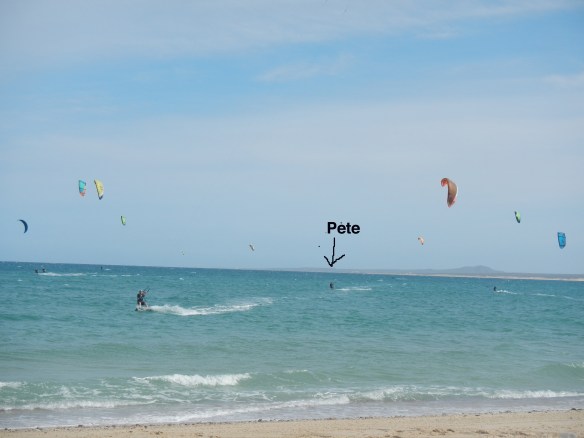
Kitesurfing La Ventana

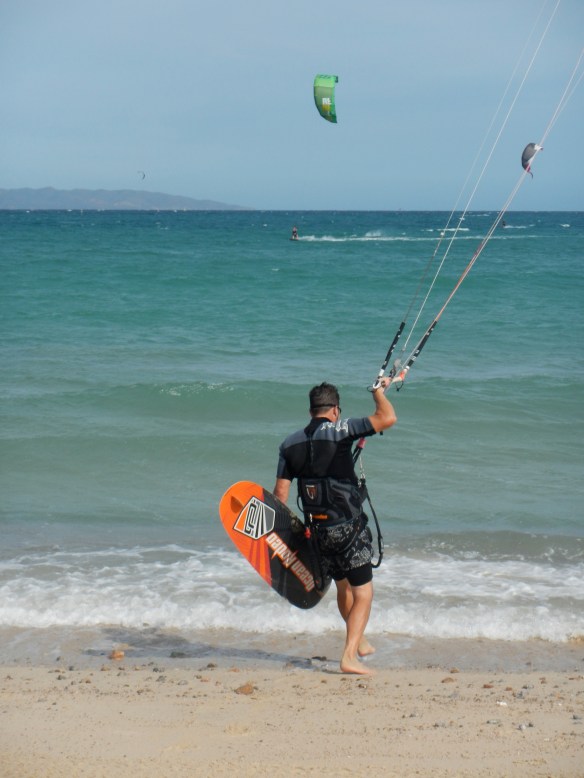
We rented a car (ridiculously cheap at $14/day) and drove about an hour SE of La Paz to the small beach town of La Ventana so I could do a little kitesurfing and Mary and Lucy could do some beach walking.

Lucy and Kite

Kite Guard

Peter

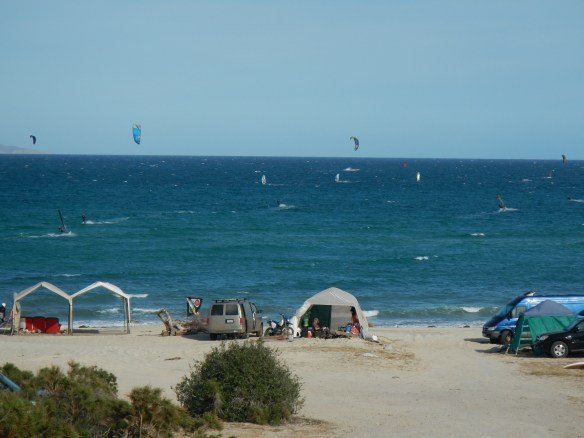
La Ventana is a funky little town plopped down on a desolate and beautiful piece of Sea of Cortez beach.  Its anything goes and there is a large camping area right on the beach where people stay for the entire season in everything from tents cobbled together from tarps to lux RVs.

Camps at La Ventana Kite Beach

Camps at La Ventana Kite Beach

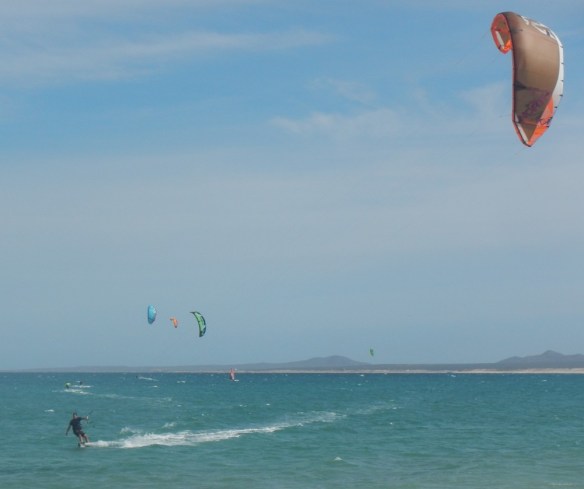
For those familiar with 3rd Avenue, its got the same side-on wind attitude, very similar waves and an L-shaped layout.  But its much bigger, the water is clear and warm, the launch is a wide-open sandy beach, there’s no mud in sight and the downwind shore is more sandy beach and not unforgiving rip-rap.  Other than that, its the same.

I hadn’t kited much in the last year so it was good to scrub some rust off.  I got two good sessions in and had some fun in the waves.  Now I can’t wait to get to the next kite spot – probably Bucerias in Banderas Bay.

DSCN1125_2

close up

peterkitingSee more photos of our La Ventana trip

Swimming With Whale Sharks

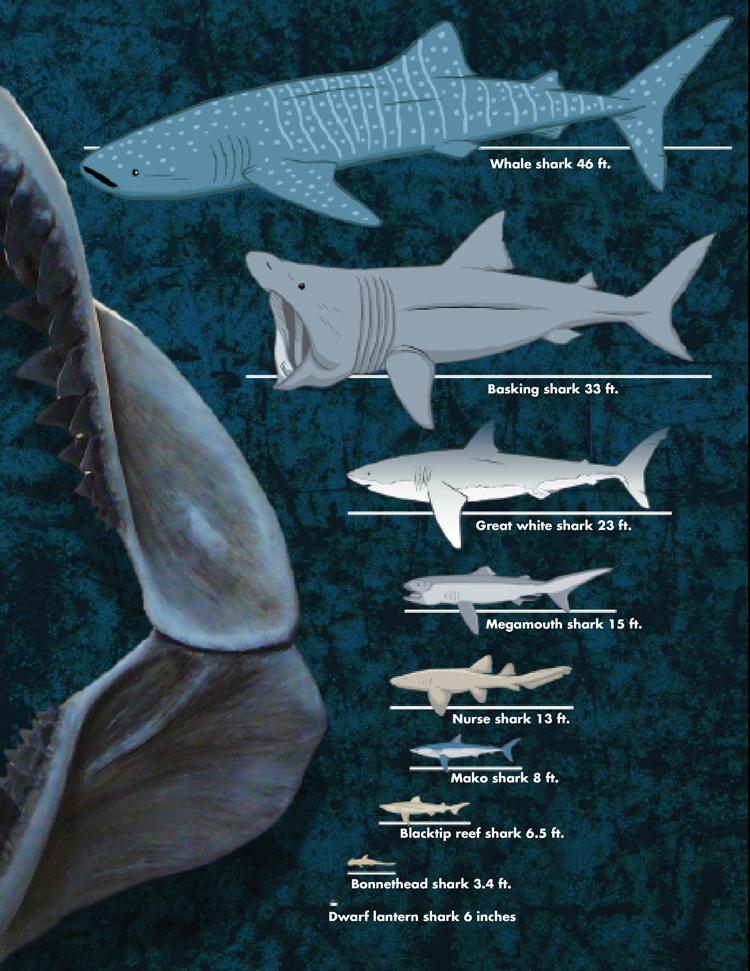
Whale sharks are the largest living species of fish.  They are docile sharks that feed on plankton and can grow to 40 feet.  That’s a big fish.

Relative Shark Sizes

Shark Size Comparison

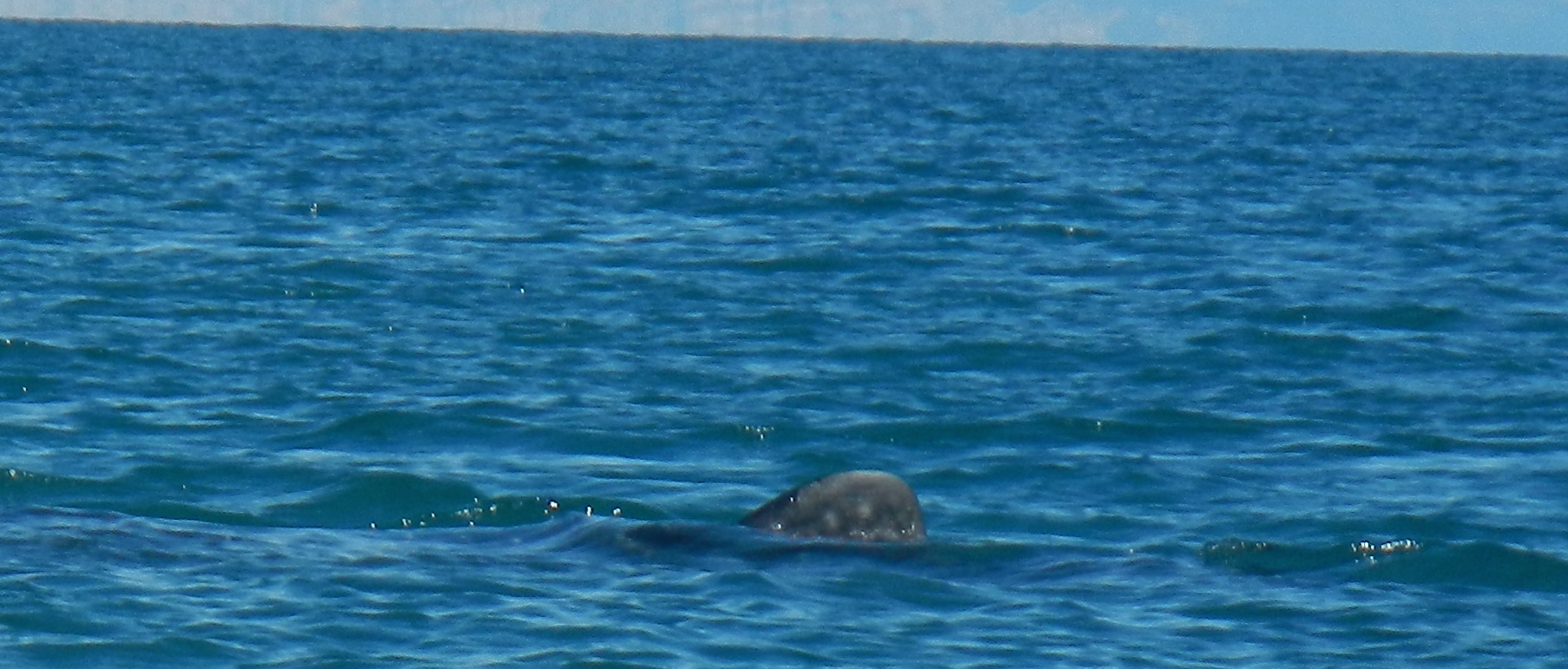
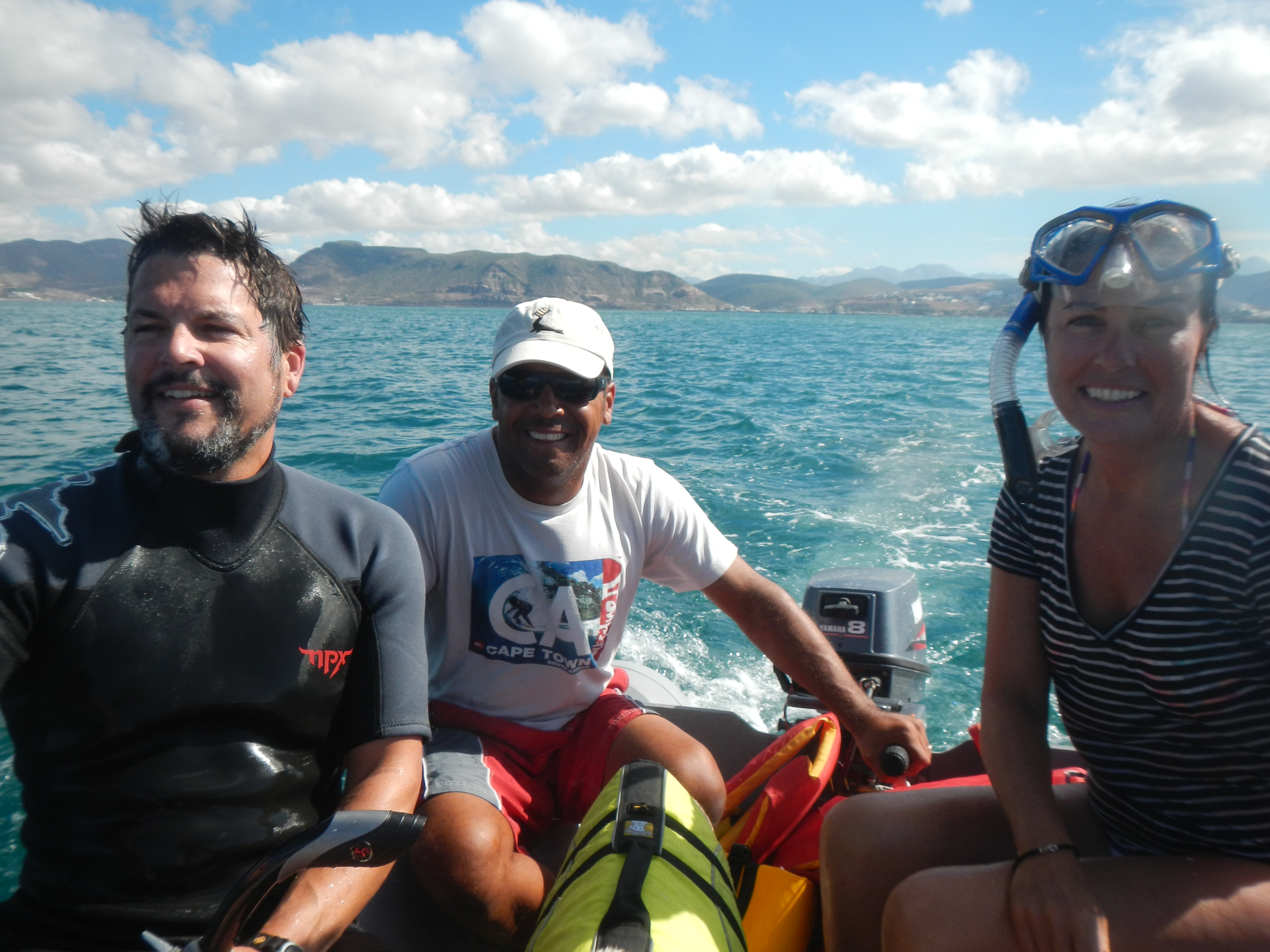
When feeding they swim slowly and suck water into their very big mouths to filter out the tiny organisms they eat.  We heard there were several of them feeding out in the bay here in La Paz so we went out in our friend’s dinghy (Richard & Audrey of Celebration) to check them out.  They don’t appear to mind divers getting close to them and we were determined to see them in the water.  From the boat you first see that familiar dorsal fin shape moving straight ahead with the tail fin swishing side to side.

Whale dorsal fin

Whale dorsal fin

Whale hunters

Whale hunters

Its clearly a very big shark, so you definitely have to repress that human shark-fear instinct to force yourself to dive in.  Plus, you’ve got to jump in right near it because even though it is moving slowly and deliberately, its still moving too fast for you to catch up to if you don’t start out close.  So you dive in, get your bearings, open your eyes and see a 20 foot shark close enough to reach out and touch.  Even though the thing is generally harmless (although you wanted to stay away from its tail) there’s something about being that close to such a huge animal in its own environment that is a little awesome and scary at the same time.  We all did a couple of swims with them and then left them to feed in peace.

See for yourselves     https://www.youtube.com/watch?v=RapDkfgZlM8

Uh oh

Montezuma’s Revenge. Yes, you know what it is and you know what the main symptom is. I can confidently let you know that it also comes with nausea, headache and overall malaise. They say its e coli. Amazing how in the US they recall tons of stuff and maybe even have deaths from it, and here they just shrug it off. Anyway, its no fun that’s for sure. No pics needed for this post.

A Quick Take on the Haha…

Here are my thoughts on the Haha.

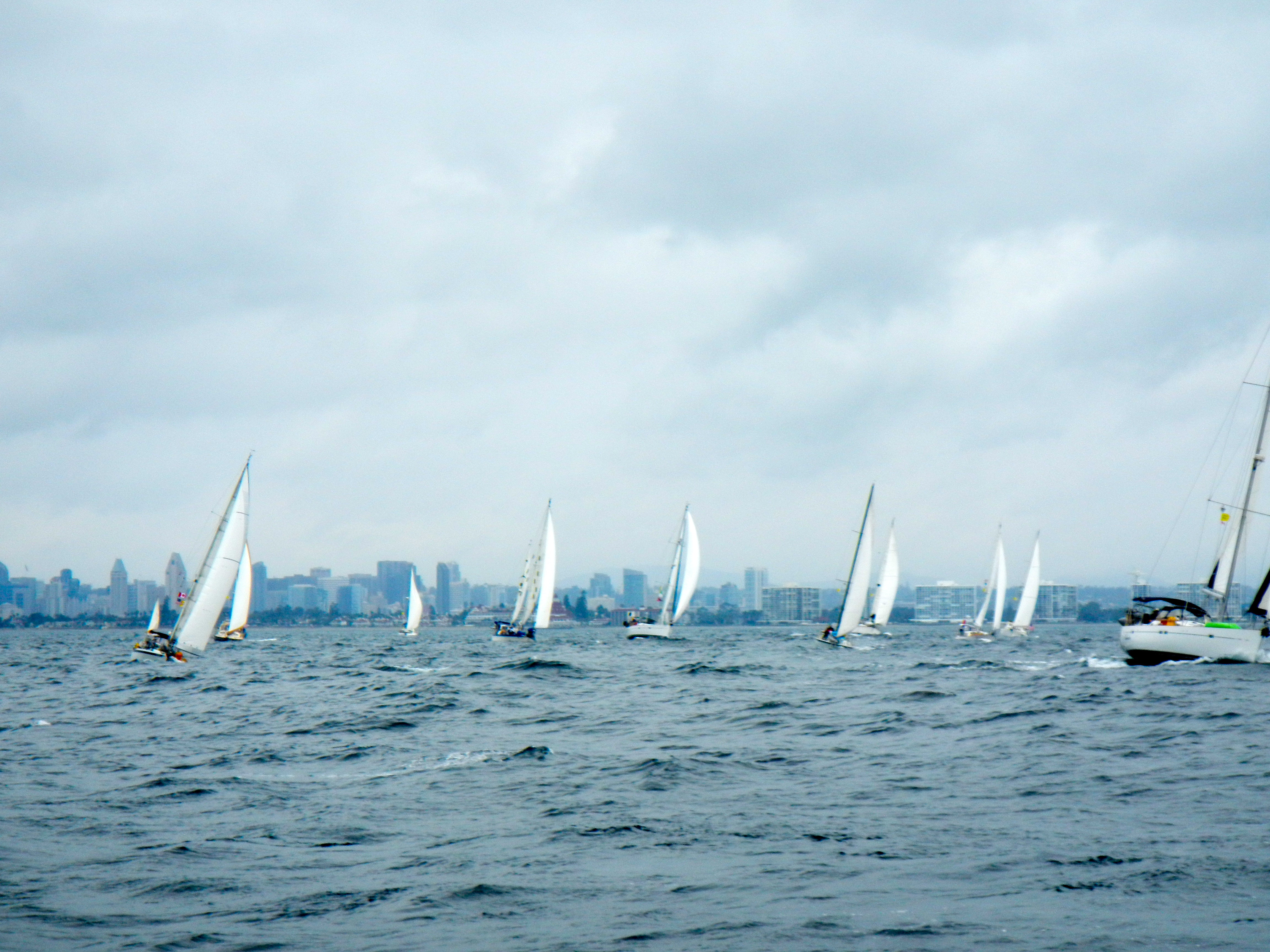
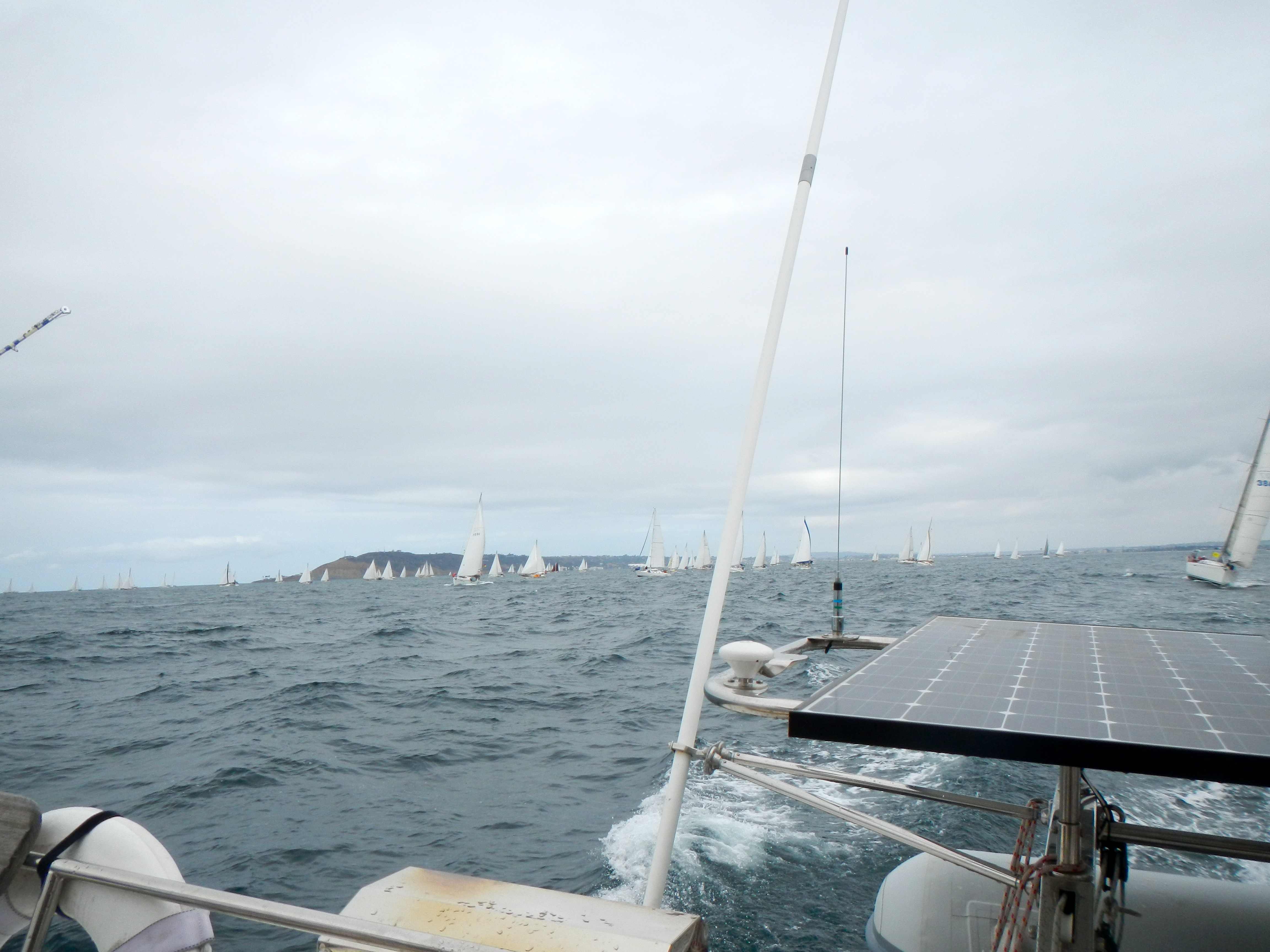
It’s really a boat race loosely organized as a rally.  There was a great emphasis on sailing the entire way and a bit of a stigma for using your engine.  There were 130 or so boats participating, of which only about 8 were catamarans.  Interestingly the cats were the fastest boats of the bunch, with only a few large racer-type monos competing.  In heavier winds, Neko was quite fast compared to all others so long as we carried a lot of sail, but almost uncomfortably so.  We are beginning our cruise and are quite heavily loaded.  In light airs we were slow.  The only cats consistently faster were a very well sailed Schionning 49 named Sea Level and a custom go-fast cat named Kalewa.  I don’t know if the latter is on the web, but suggest you google it.  Quite a boat.  At the very beginning we had about 20-25 knots on a close reach.  We and Sea Level easily left the pack behind doing about 11, with the Schionning slowly drawing away from us.

Leaving the fleet behind in San Diego

Leaving the fleet behind in San Diego

Pulling away

Pulling away

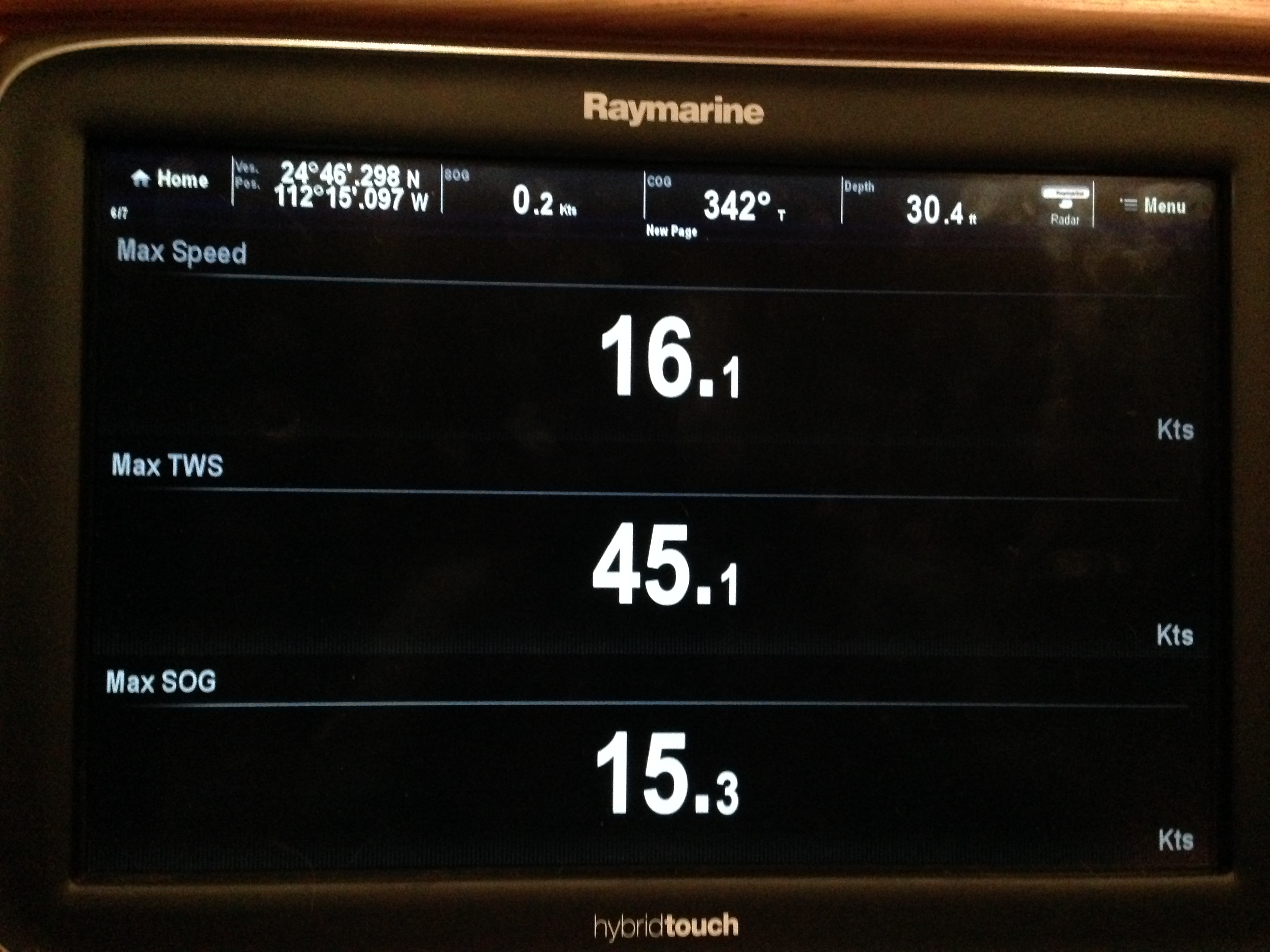
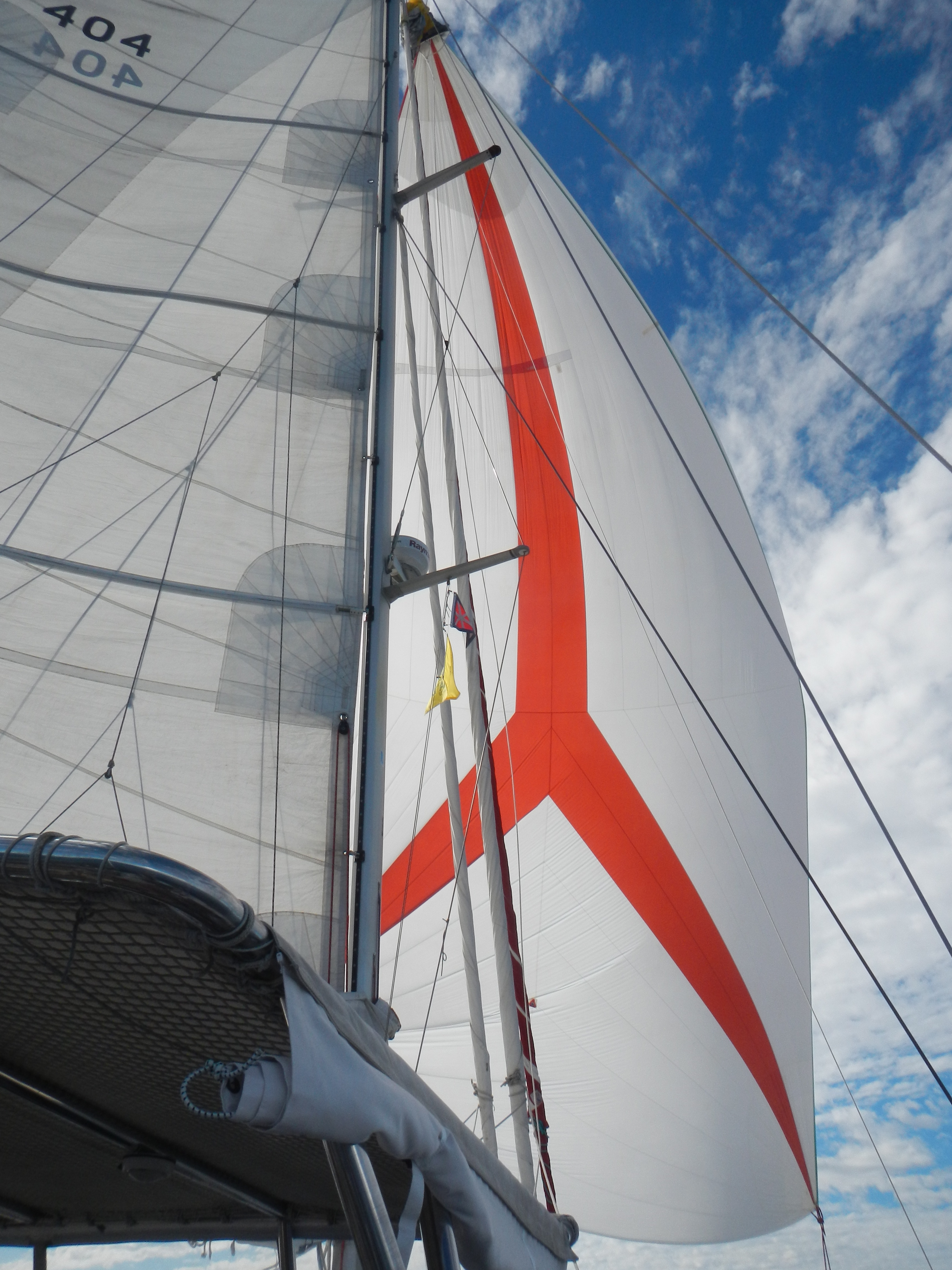
But Kalewa must have started late b/c it screamed up and passed us both.  Its basically a giant beach cat.  We had speeds over 15 knots surfing with the spinnaker up, along with consistent 8s, 9s, 10s and 11s in good winds.  It was the lighter winds that were our downfall.  IMG_5984

Spinnaker flying

Spinnaker flying

It’s already got me thinking of a better light air rig.  Also, a cleaner rig.  We have a staysail, genoa, gennaker on a sprit and symmetrical spinnaker that we fly from both hulls, all fractionally rigged.  This leads to a jungle of lines coming down the side decks – spin tackline, spin sheet, gennaker sheet if rigged, dagger lines, headsail furling lines (3 of them), preventer if you rig one.  We had use for both the gennaker and the spinnaker, so couldn’t really do without one.  I would really like to replace both the spinnaker and gennaker with a big deep reaching sail, preferably tacked to the sprit and furling and even better flown from higher up the mast.  Anyway it was fun to finally put this boat through its paces and see it perform well.

If you like group activities, you’ll love the Haha.  You can participate as much or as little as you want.  They’ve got parties and volleyball and chit chat galore.   Some people clearly can’t get enough of that sort of thing.  Some must have iron stomachs because we saw a few drunk souls the night before leaving on each leg.

Overserved...

Overserved…

Overall, the Haha made sailing down 800 miles of forbidding Pacific coast quite enjoyable and secure.  There were sailmakers and riggers and electronics gurus etc. among the fleet, all of whom were willing to help others for only a cold beer in return.  It had a good, positive overall vibe.  However, now that we are finally around the bottom of the peninsula, we are ready to go at it in a smaller group.   (more Haha photos)

Motorcycle’s Back

I flew to Oakland to grab the bike the other day.  I had always wanted to ride down the coast highway (Route 1 or PCH or whatever you want to call it).  I had done this trip north to near the Oregon border, but hadn’t gone farther south than Half Moon Bay or so.  So I decided to make the most of this delivery trip.  Sunshine Travel booked a room for me in San Simeon and after thanking Anne for storing the bike I took off.  It took about 6 hours to get to San Simeon – a lot longer than I expected and I was exhausted.  The next morning I took a quick tour of Hearst Castle and was off again.  I am not quite sure what to make of Hearst Castle.  He built something truly extraordinary and preserved some fantastic European art there.  But at the same time there is something ersatz about his castle since most of it was created in the early 20th century to look 500 years old.  And thinking of him wining and dining pampered Hollywood celebrities there while pissing away the great wealth his father built up in mining and other hard pursuits makes you lose a little respect for the man.  I am sure I am missing something redeeming, but despite the tour speaking of him in only glowing terms, this is the impression I came away with.  Pondering that I jumped on the bike for the remaining 5 hour ride to LA.  The coast here is absolutely gobsmacking spectacular all the way (except when you get close to LA).  Big Sur reminded me very much of Northern California with fog, big redwoods and woods dwellers – those particular kind of people I had thought indigenous only to Mendocino and its environs, many of whom dabble in a certain kind of farming.  This ride was a prelude for the big Arctic to Tierra del Fuego ride that Mal and I are going to do in a few years.  It is certain we are going to do it.  Mal has staked his manhood on it. He could never back out now.  Anyway, it showed that a lot of practice is needed, or at least a much more comfortable seat.  This ride was very tiring since it consisted about 75% of twisty mountain roads.  You’re sometimes cold in the fog, hot in traffic, wrists sore from holding yourself up, torso tired from the constant flapping of whatever you are wearing, ears ringing from the wind roar, knees aching from being bent up for hours on end and worst of all your butt is aching from that hard motorcycle seat.  And to top it all off, just when I could barely stand it anymore, I arrived in LA and smack into, what else, bumper to bumper traffic.  Well, the bike’s now here and for sale and I’ve got some things to think about for the big bike trip.

Daysail

We went for a little daysail up to Santa Monica bay and back.  It was good to get out after all the unexpected hard work being done.  The sail was great and it was gratifying to pass all the mono’s out on the bay, other than a very big Deerfoot.  I think it was because Mr. Kitty was driving.

IMG_4247