Chessie, we hardly knew ya

The leaves were starting to fall and a tinge of cold was in the air and we knew summer was over and fall was coming.  We wanted to get south to warmer climates and soon. However, the stomach flu (will spare you the photos) and a series of lows marching out of the southeast were pinning us into Jersey City.  So once we were moderately better and got a decent weather window we made a mad dash out of NY harbor, down the Jersey coast, up the Delaware Bay, through the C&D Canal and into the Chesapeake Bay.

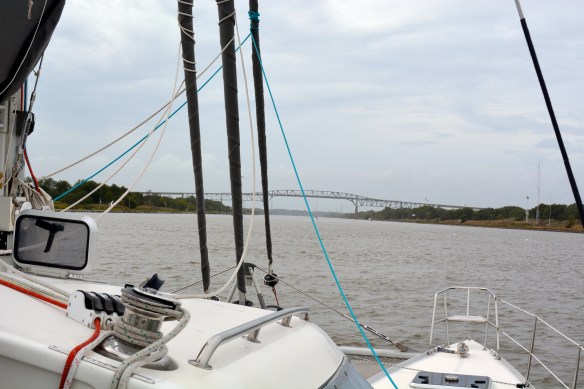
C&D Canal

C&D Canal

Whew, it was long trip but nice to be ensconced in the picturesque calm of this big bay and all its tributaries, creeks, byways and hi ways.  But just as we were about to start exploring, NOAA threw us a curveball by predicting that Hurricane Joaquin would run straight up the Chesapeake Bay and bring a 5 – 10’ tidal surge with it.

Rats, now instead of touring around, we were on the desperate search for a hurricane hole and a way to secure our home so Mother Nature would not take off with it.  We went into lovely Swan Creek near Rock Hall, Md (Swan Creek looks a bit like Hallocks Bay in Orient, only a little smaller, so we felt right at home).

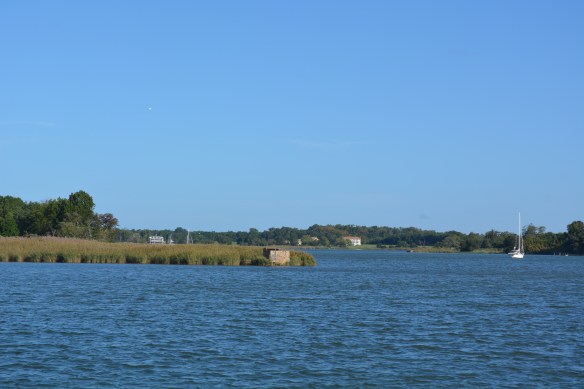
The calm before the storm. Beautiful Swan Creek.

The calm before the storm. Beautiful Swan Creek.

We were the only boat that chose to remain on the hook in this bay but were comforted when John Clarke of Gratitude Marina rode by in his skiff and told us that if we tucked way up in the back bay, we would probably be OK if the storm hit.  He is a former cruiser and said that if the storm pushed Neko ashore, he would come and pull us off.  It was comforting to know that someone nearby knew we were out there.  We immediately went to work removing sails, setting our storm anchor and generally battening down the hatches.

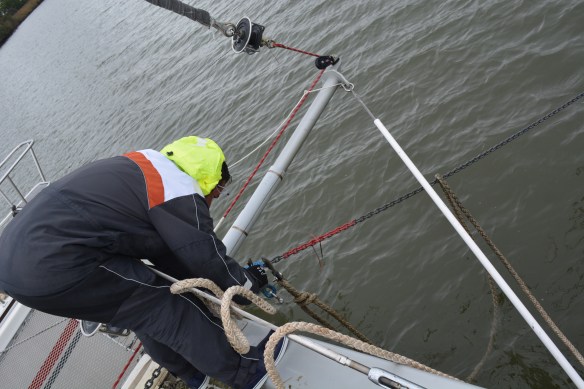
Pete prepping 2nd anchor, yes was that cold.

Pete prepping 2nd anchor.  Yes it was that cold.

Of course, though, merely by doing all this back-breaking work, we assured ourselves that the hurricane would not come.   If we had not prepared, it surely would have hit us in the nose.

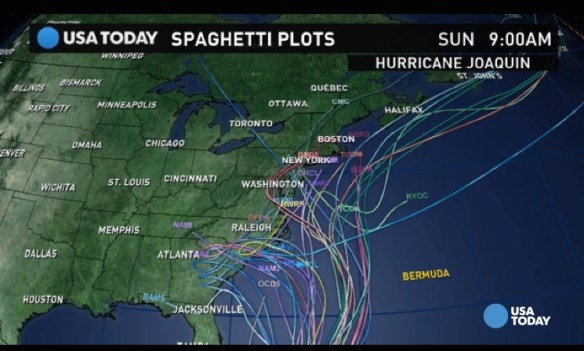
Yes I know not from NOAA but you get the idea of how many possible paths the storm could have taken.

Yes I know not from NOAA but you get the idea of how many possible paths the storm could have taken.

But it was still worth it because a big Nor’easter having nothing to do with Joaquin decided to come visit us anyway.  We had 3 days of big, cold winds and huddled inside and watched movies and thanked providence that we had installed air conditioning/heat when we were in Florida.

But finally the skies cleared and the waters receded and the dove came back with a green twig.  One of our Chesapeake Bay goals was to get to Annapolis for the annual sailboat show.  This is a big draw for sailors with just about every parts vendor and many boat manufacturers present.  We wanted to look at Outremer and Gunboat catamarans and check out any new and interesting products.  Annapolis is a cute little town that hosts the Naval Academy on its beautiful campus.

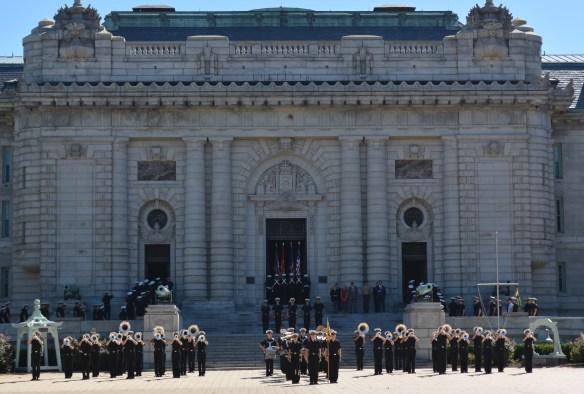
 The Academy is an interesting site to tour with a fantastic naval museum.  Don’t fail to go to “The Yard” to watch the midshipmen march off to lunch.  Every weekday they gather for noon formation complete with a brass band and march in formation into Preble Hall for lunch.  Such a grand procession merely to go to lunch, but tradition abounds in this place and it was quite a spectacle, not to mention it WAS taco Tuesday.

What a production, just for lunch ;-)

What a production, just for lunch 😉

Time was ticking so we made a quick trip over to the Eastern Shore to see the charming town of Oxford and then it was off to Chesapeake Boat Works in Deltaville, Va., where we had a few little jobs done and prepped the boat to be away from the US for an extended period of time again.

 Deltaville was the temporary base for our friends on R&R Kedger. So it was great to catch up with Rob and Rose.  Just when they thought they had gotten away from us, we pull them back in 😉

Relaxing with Rob and Rose

Relaxing with Rob and Rose

Deltaville is a tiny little town but full of marinas, boat support and the perfect place to prep for our big jump South.

Mike and Holly saying goodbye to "Izzy" who safely brought them across country.   Izzy as in "is he gonna make it"?

Mike and Holly saying goodbye to “Izzy” who safely brought them across country. Izzy as in “is he gonna make it”?

We finished our jobs,  and hooked up with Mike and Holly from S/V Wanasquewin.  They left their boat in Curacao to visit home and road trip across the country in a beater car they named “Izzy”.  It safely delivered them to us and we were glad they could join us on the trip to the Bahamas.  However, our Deltaville stay ended in a sad note for us and it was good to get underway again.

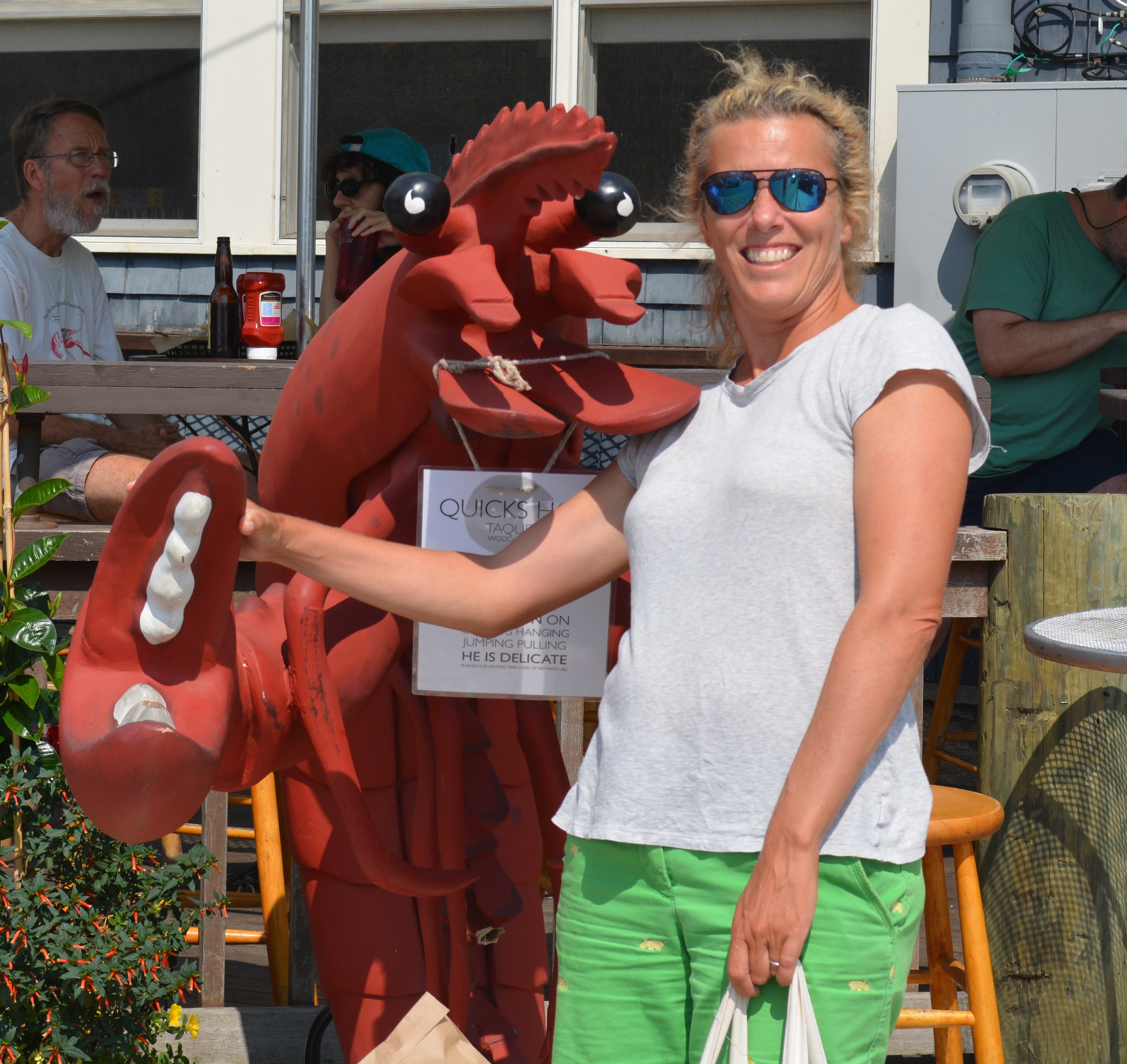
Lawbsta Pots and Chowdah

Dare we say “we summered in Nantucket, darling”.   Haha, well sort of.

Mary's new pal

Mary’s new pal

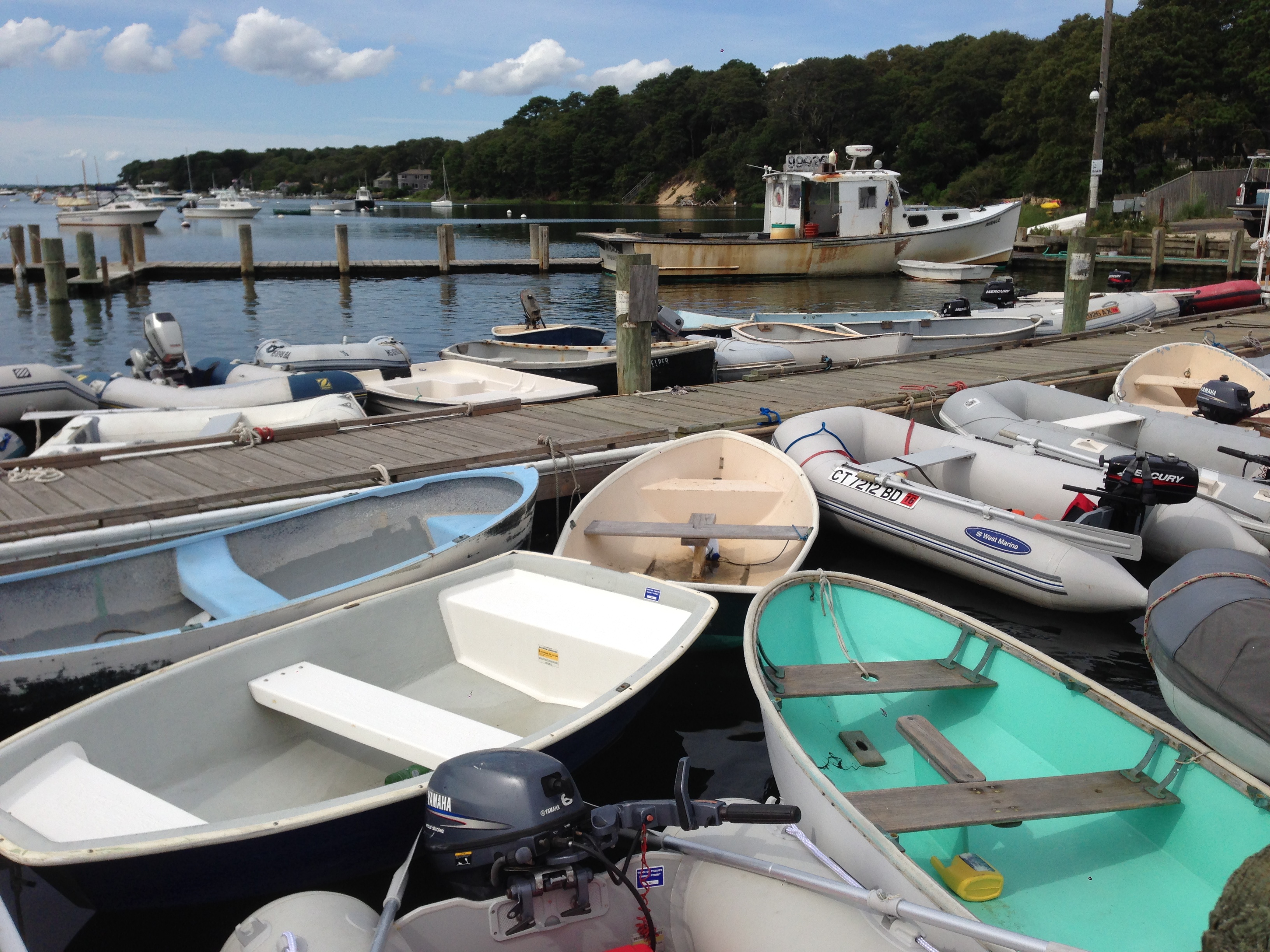
We spent the last few months cruising around New England and remembering why we love East Coast sailing so much – lacking the dramatic natural beauty of sailing on the west coast of North America, it makes up for it with innumerable places to explore, charming scenery and, importantly, safe ways to go ashore and leave your dinghy.  If you are a long time reader you may remember how we went ashore in most places on the west coast – put down the wheels on the dinghy, wait for a break in the waves, run it into the beach and hop out and pull it up as fast as you can.  Walking around dry after that was a fantasy.

Always room for one more at the dinghy dock

Always room for one more at the dinghy dock

So, bays with docks where you just tie up and step off seem like the utmost in civility to us. Oh, it’s the little things, isn’t it?

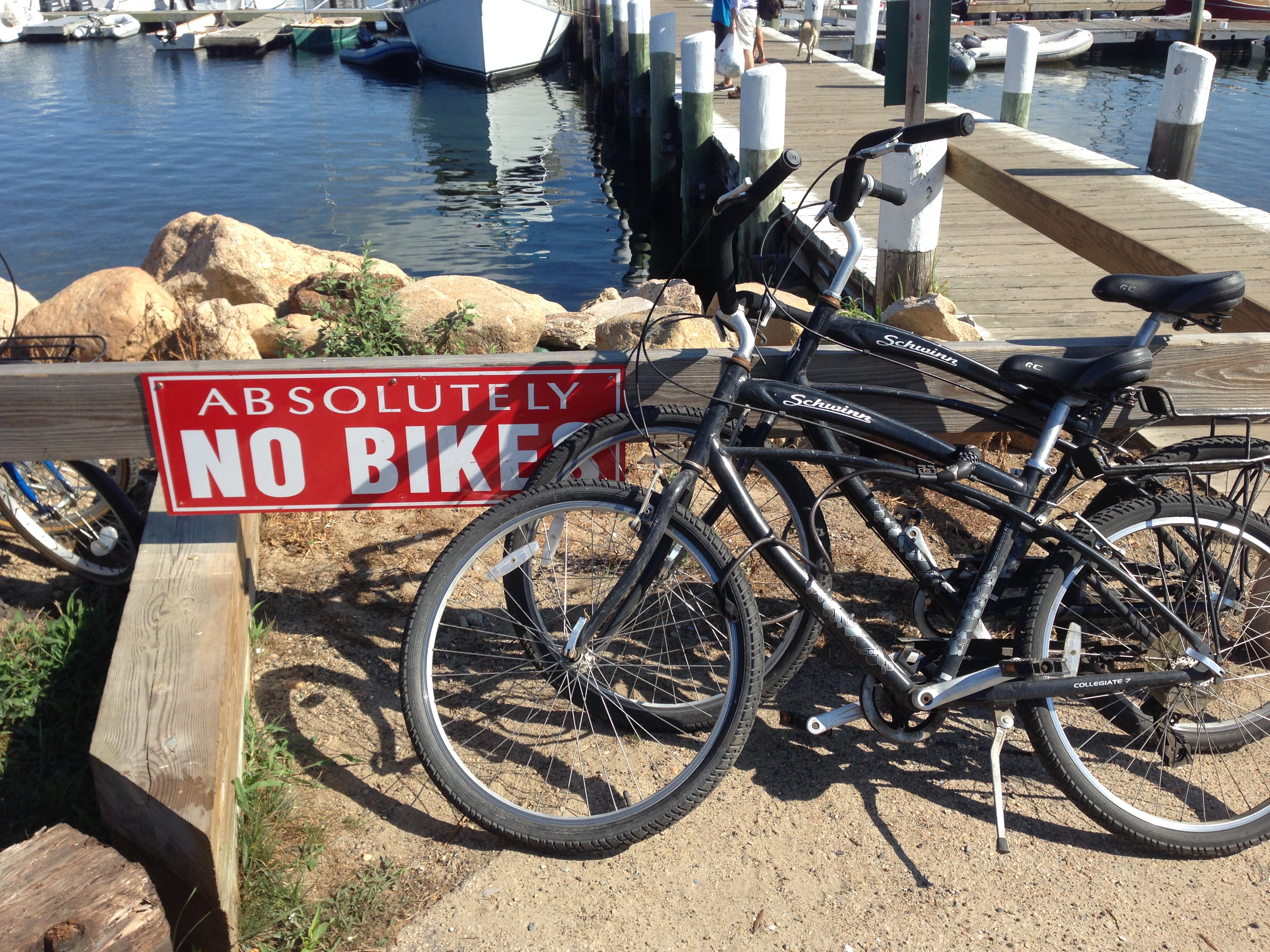
No BikesWe were hoping to get all the way to Maine but we ran out of time and will save it for another visit.   I believe Mother Nature took pity on us after our hellishly hot, wet summer in Panama last year and gave us phenomenally mild sunny days and cool evenings with very little rain for the entire time we spent up north.

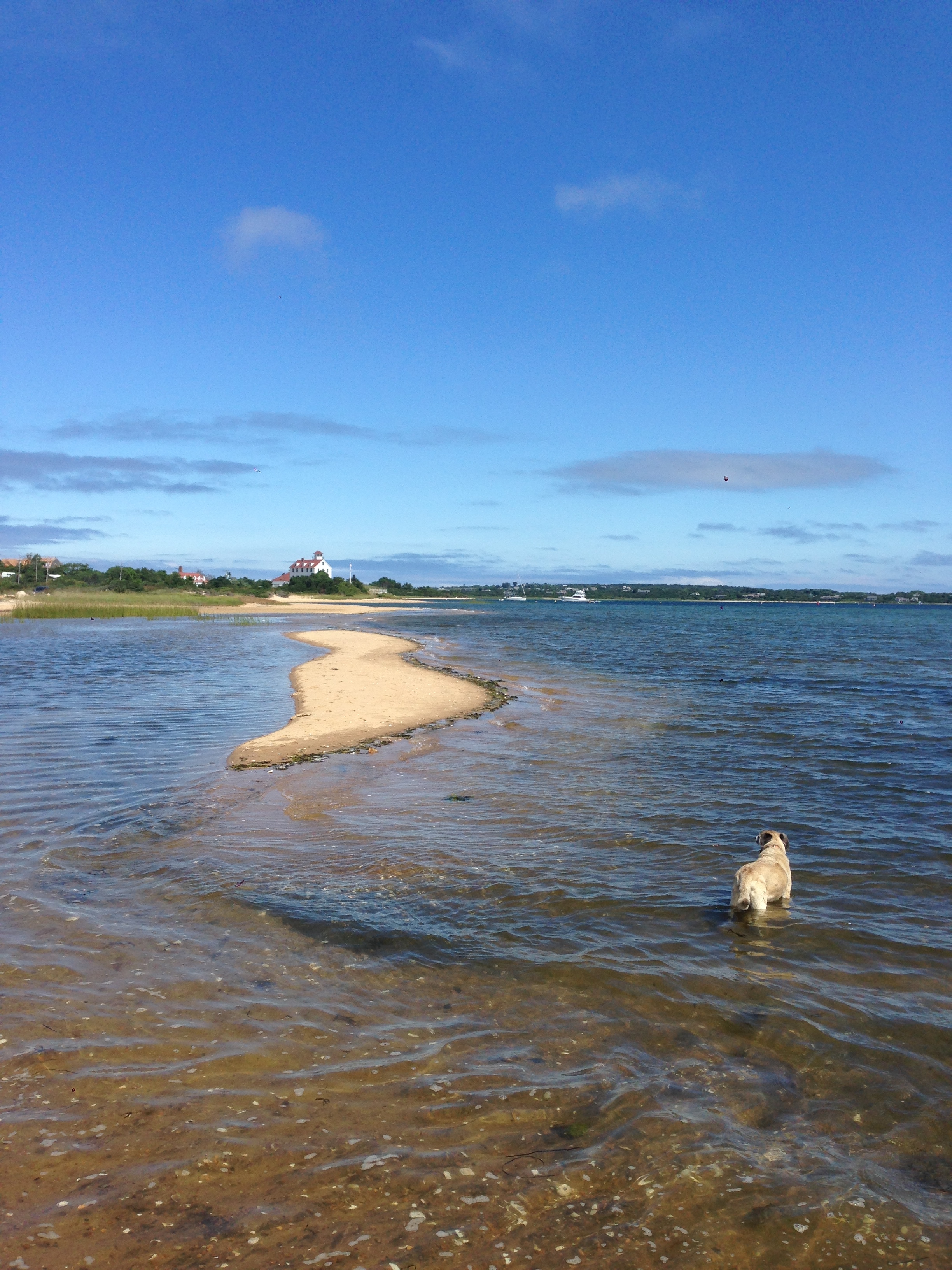
Lucy taking a dip in the waters of Block Island

Lucy taking a dip in the waters of Block Island

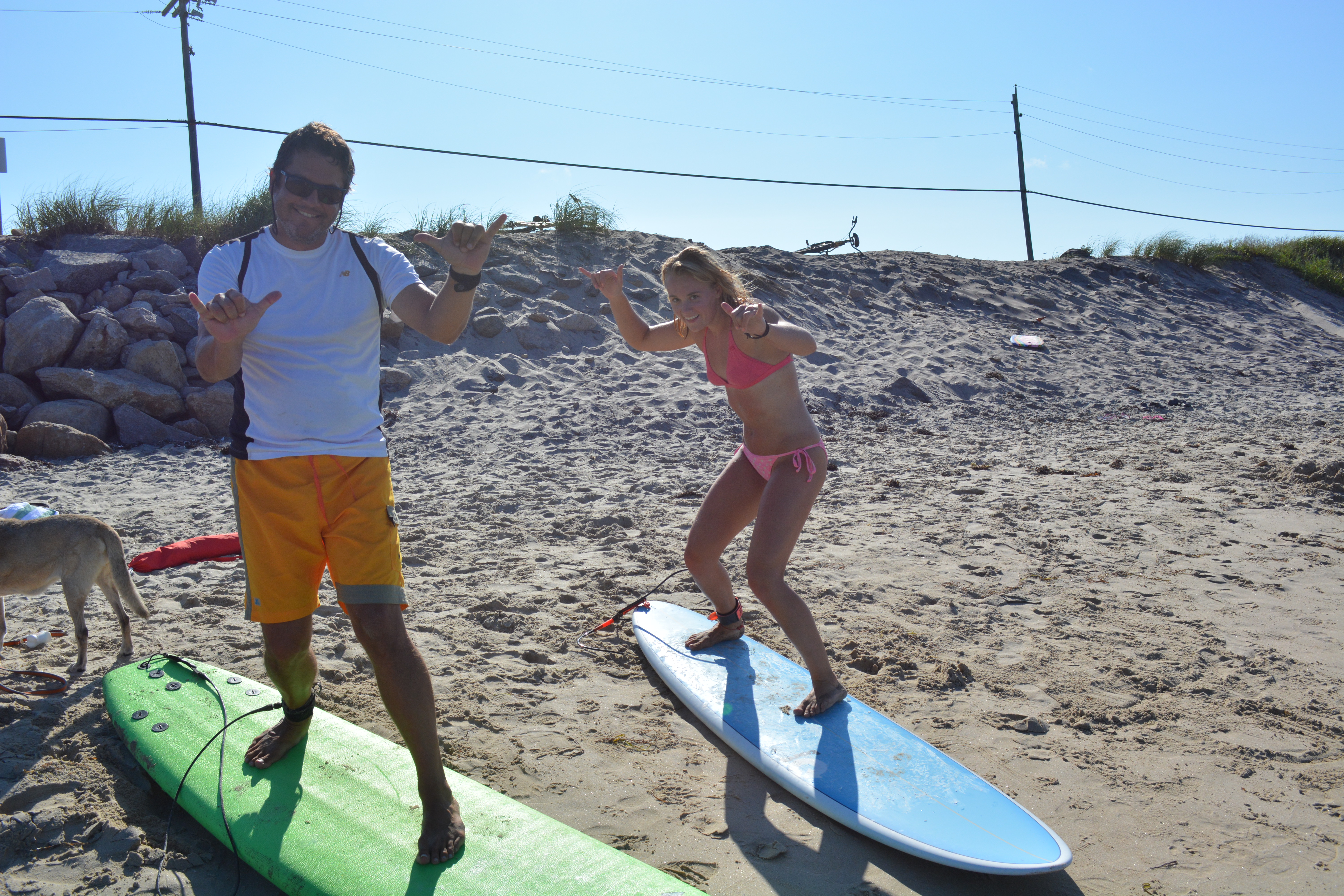
Sophie giving Pete a surfing lesson . Block Island

Sophie giving Pete a surfing lesson . Block Island

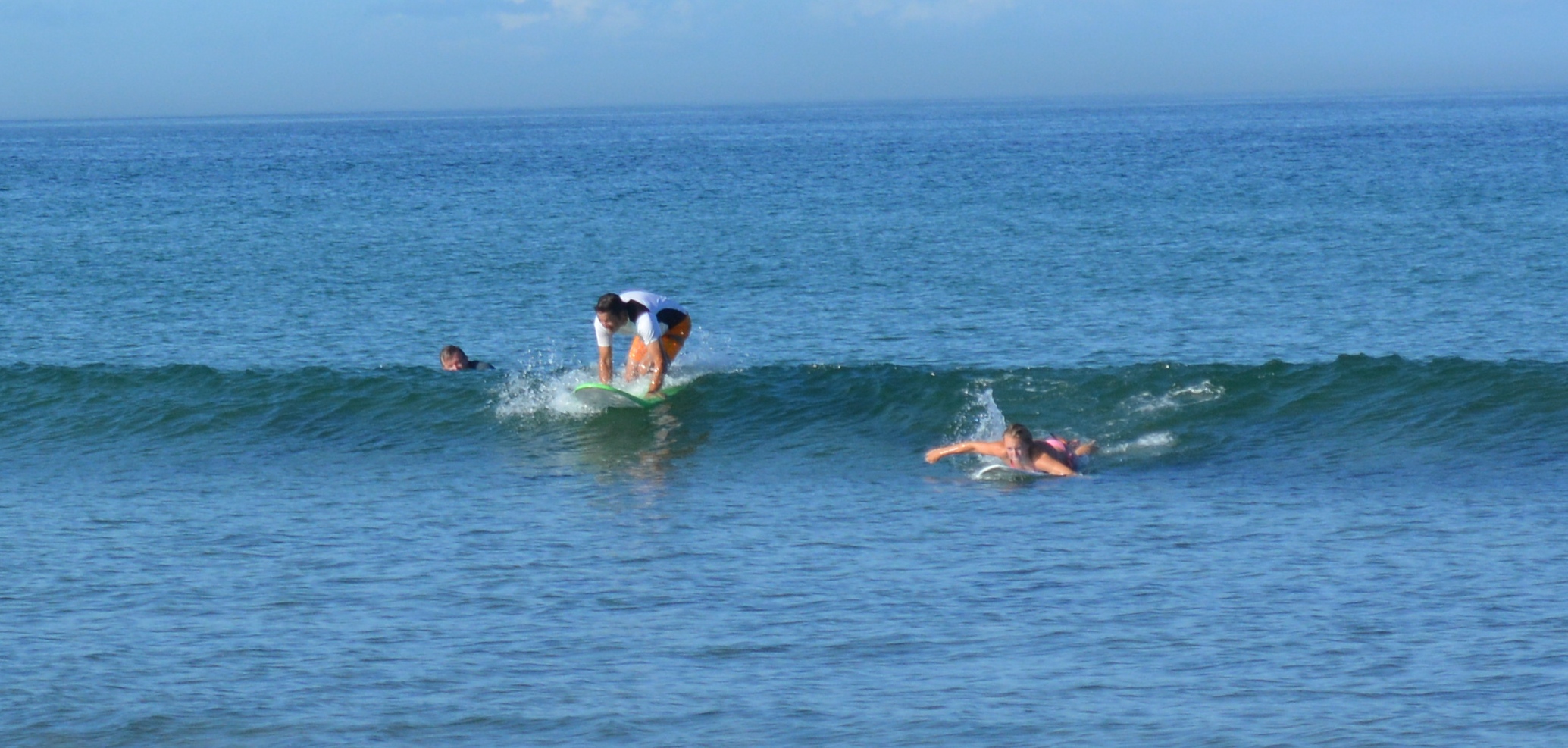
And he is up

And he is up

Summer months are busy in this neck of the woods, especially weekends. Its nice to see the prevalence of sailing over motor boating in these waters, even if catamarans still seem like a UFO to locals (unidentified floating object).

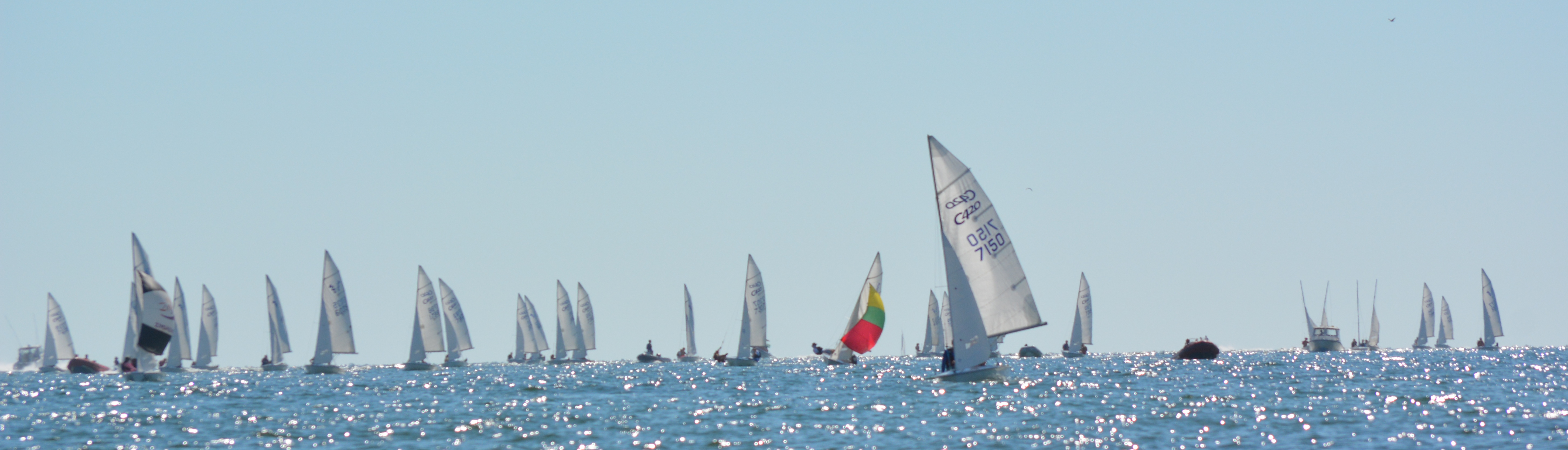
Hyannis race

Hyannis race

They are traditional sailors.

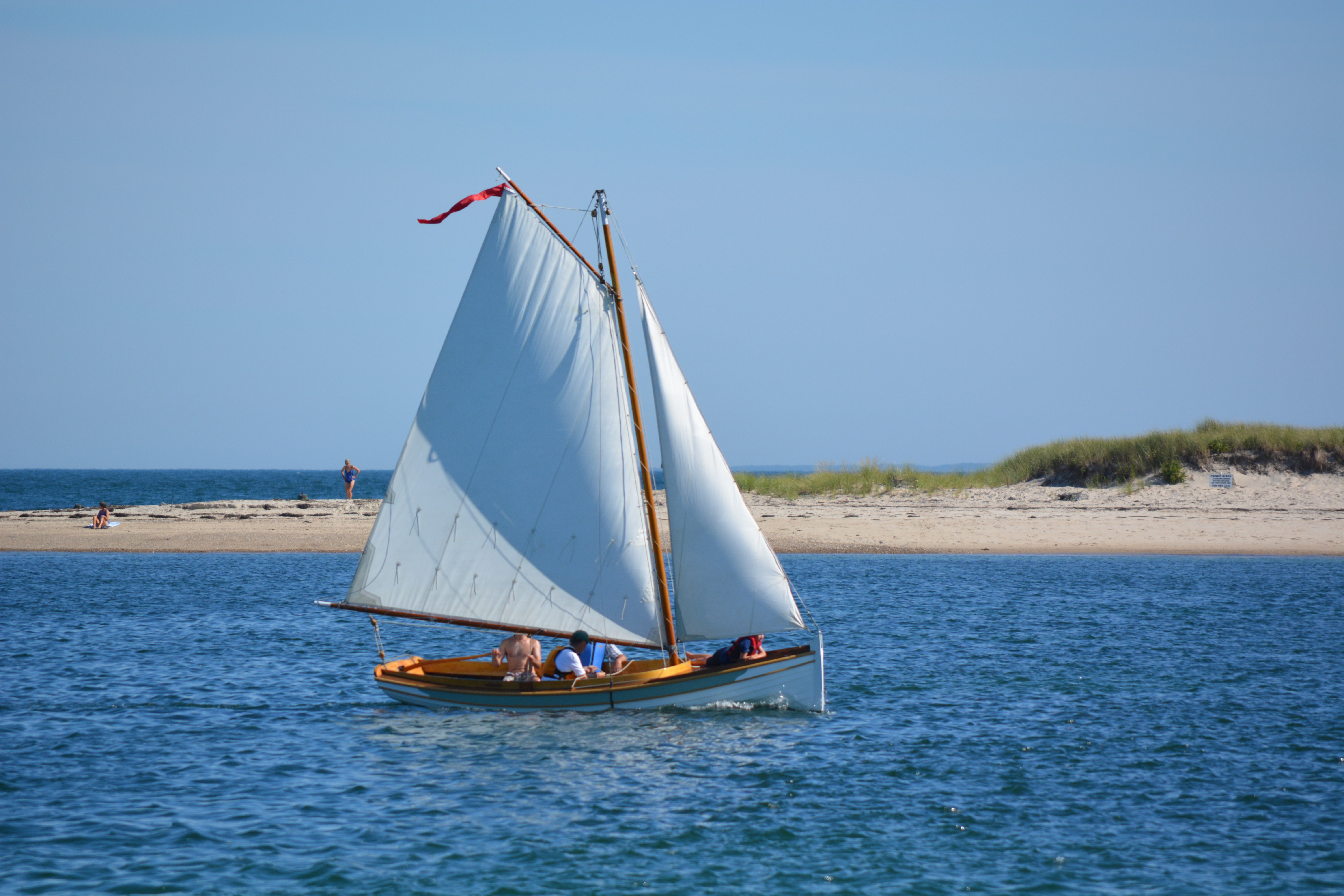
Beautiful sailboat

Beautiful sailboat

Harbors tend to get crowded with weekend and holiday cruisers. However, very few of them anchor, preferring slips or moorings.   We felt our cruising time had trained us well and we happily saved the money and dropped the hook in some familiar harbors like Nantucket, several stops on Long Island and Block Island.

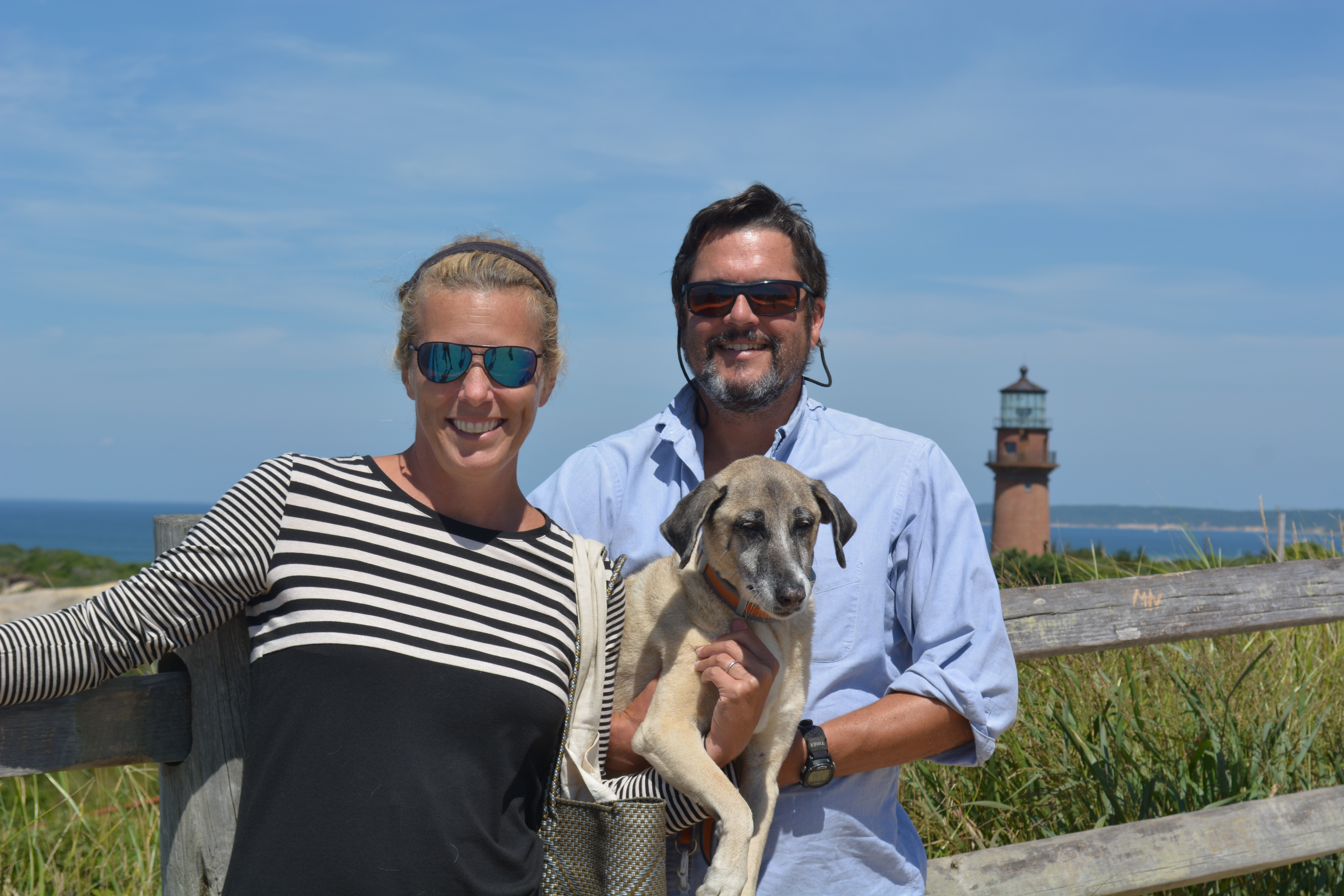
Gay Head Light House Martha's Vineyard

Gay Head Light House
Martha’s Vineyard

We also finally made it to other places we had long wanted to visit, such as Martha’s Vineyard, Cuttyhunk and parts of The Cape.

Perfect way to enjoy sunset with oysters shucked and delivered right to our boat.

Perfect way to enjoy sunset with oysters shucked and delivered right to our boat in Cuttyhunk, MA

We dodged lobster pots and ate clam chowder, met up with old friends and truly had a summer to remember.  Click on each place above highlighted in red for more photos or videos.

Visit from our NYC pals. Gus, Dave, Eileen and Sophie.

Visit from our NYC pals. Gus, Dave, Eileen and Sophie.

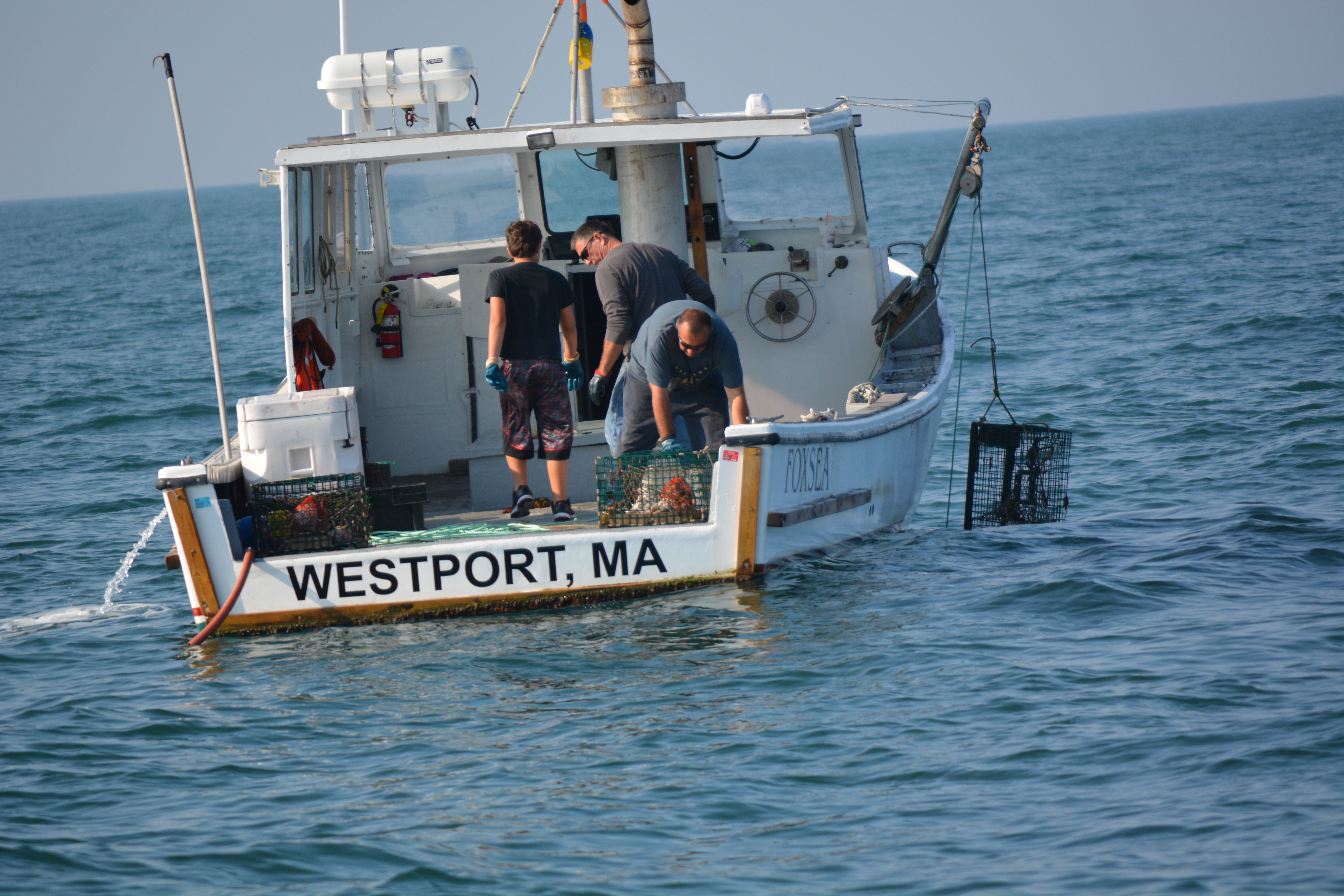
Hardworking Lobstermen

Hardworking Lobstermen

Martha's Vineyard fun

Martha’s Vineyard fun

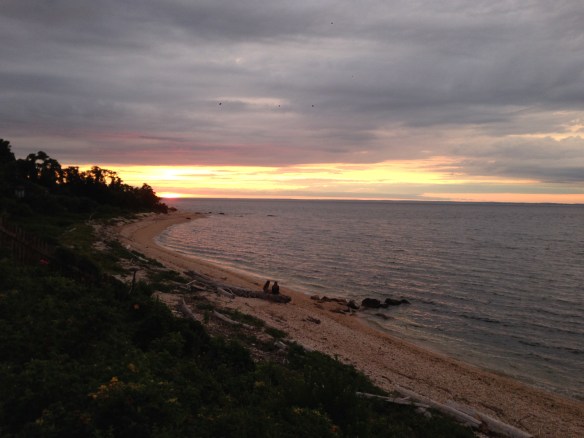
Beautiful Nantucket sunset

Beautiful Nantucket sunset

Getting Re-Oriented

Orient, NY was our home away from home when we lived in New York City.  It was the perfect balance to hectic city life with lots of space, great sailing and peace and quiet.

Bug Light welcomes you to Orient Harbor

Bug Light welcomes you to Orient Harbor

Sitting on the eastern-most end of Long Island (get it, so far east it is the Orient) sits our historic village of less than 800 people.

Orient Historical Society

Orient Historical Society

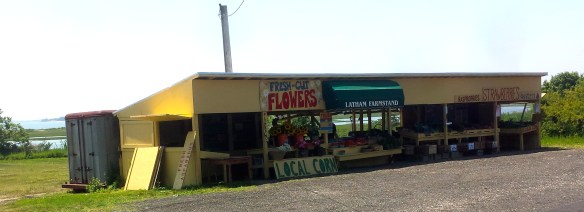
Latham's Farm Stand

Holly's chicken

Our neighbor’s free range chicken

Come on, how much more small town can we get?

For those not familiar with the area, Long Island is in fact aptly named and at the end splits off into two directions.  The South fork is where you’ll find gorgeous ocean beaches, gorgeous homes and gorgeous people, aka the Hamptons. And on the North fork you’ll find waterfront vineyards, working farms and gorgeous people.

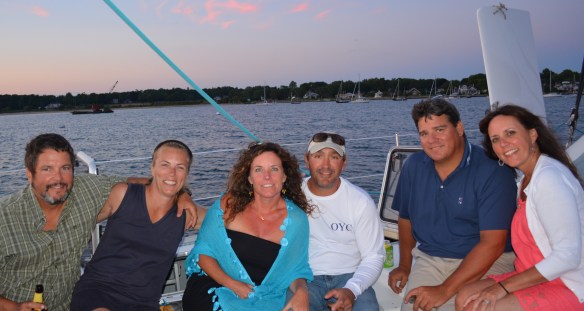
The gorgeous people of Orient ;-)

The gorgeous people of Orient – Holly and Phil and John and Martha

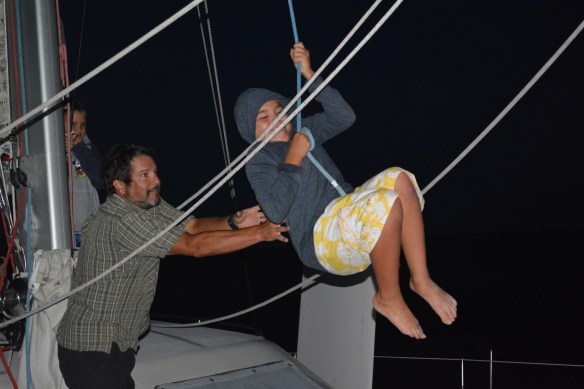
Halyard swing

Halyard swing

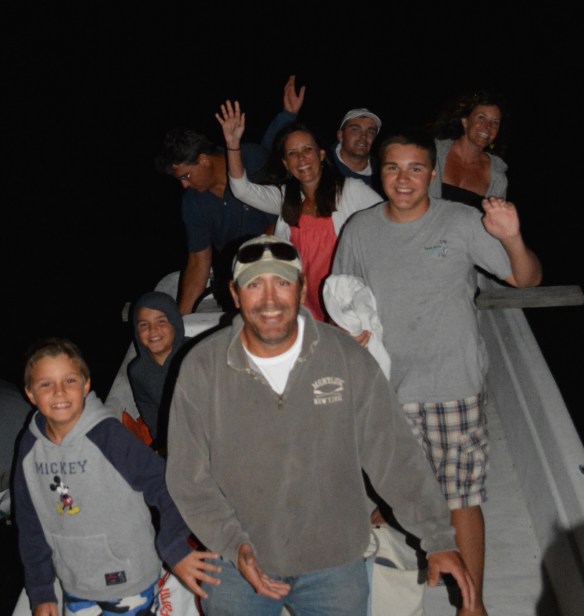
We were a bit nervous to return, worrying that perhaps our memories were rose colored and that reality would reveal something less.  But we were over the moon to find the hamlet had not changed and the small changes that have happened were for the better.   We were welcomed by our friends Phil and Holly and Martha and John, and kids.

Love seeing friendly faces welcoming us back.

Love seeing friendly faces.

We anchored in front of the yacht club, which allowed for easy dinghy docking and shoreside access.

Neko in Orient

Neko in Orient

OYC

OYC

OYC Jr. ragatta

OYC junior regatta

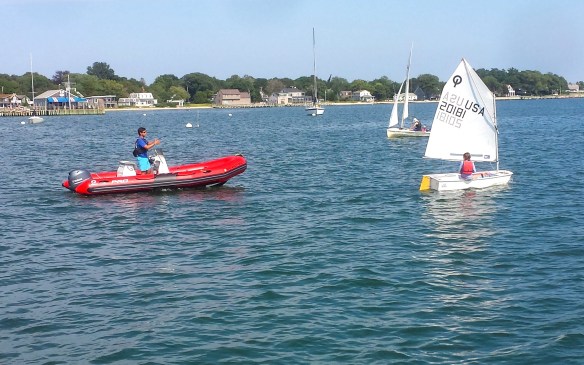
The yacht club’s junior racing program is really the envy of the area.  When we were there, Orienters took all the top spots in an Opti regatta with 6 or so different clubs joining.  The training goes on 6 days a week.

“Too much tiller, Margot” is what this poor young girl heard all during her lesson.

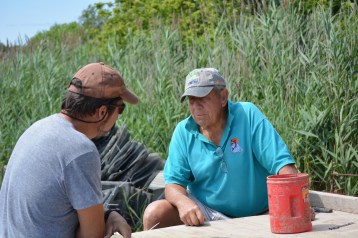
We were thrilled to learn about the oyster biz from our pals at Oysterponds Shellfish Co.

Reg Tuthill

Reg Tuthill

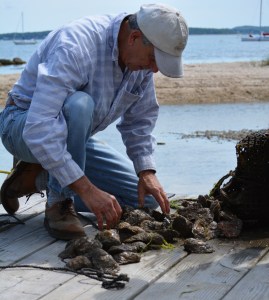
Frank checking the fruits of his labor.

Frank checking the fruits of his labor. “It takes Oysterpond oysters about 18 to 20 months of growth before 75-80% are ready for market. The creek warms up faster, cools down slower and is filled with lots of food for the oysters brought in with the strong flow of water.”*

Orient has a deep history in oysters, in fact Orient was once know as Oysterponds and oystermen thrived harvesting them from 1874 until the brown tide killed them off in the 1980s.  “The algae wasn’t poisonous to the oysters but out competed all the other algae and left the water filled with 99% brown tide which the oysters didn’t like to feed upon. It still shows up in some areas but not at the levels of the 1980″s.”*              *From local historican John Holzapfel

The Tuthill family has the privilege of owning the water rights to the estuary where Oysterponds Shellfish Co. harvest their critically acclaimed oysters.  Their family was one of the original settlers in Orient as deeded by the King of England in 1640s

But aquaculture is alive again and our buddies Phil and John are really helping the old guard ramp up operations.   I think we helped them plant close to a half million baby oysters.

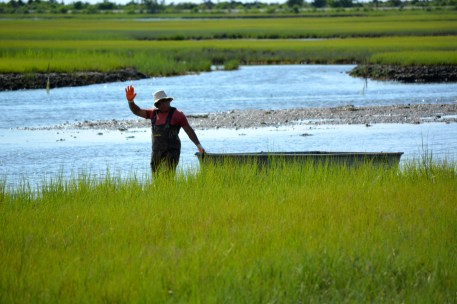
Cruz in the estuary

Cruz in the estuary

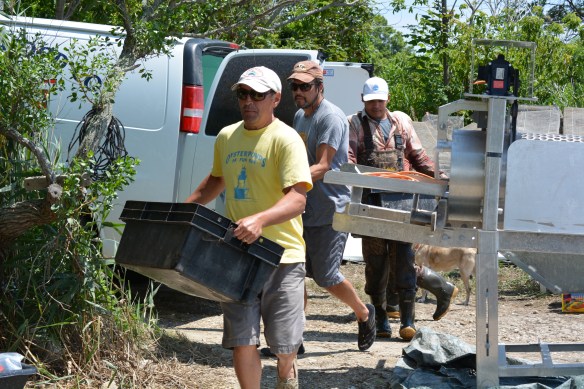
Oyster unloading

Step 1 – Unloading half a million oyster seeds

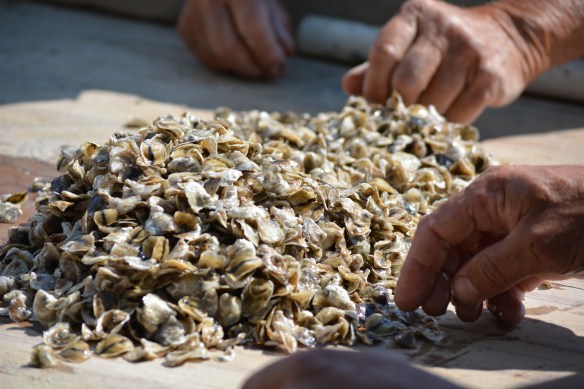
Step 2 spread out baby oysters

Step 2 spread out baby oysters. These seeds are about the size of your thumb nail.

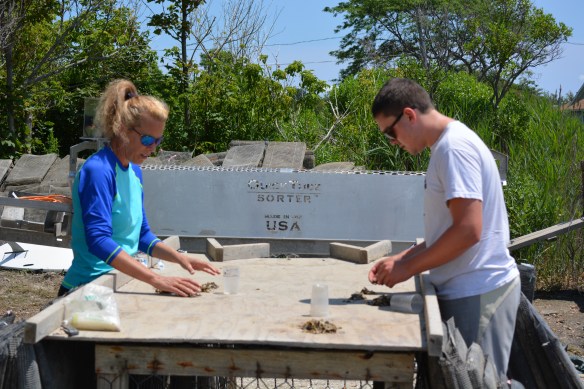
Step 3 count out baby oysters and load in growing bags

Step 3 count out baby oysters( they are about 5 months old) and load in growing bags

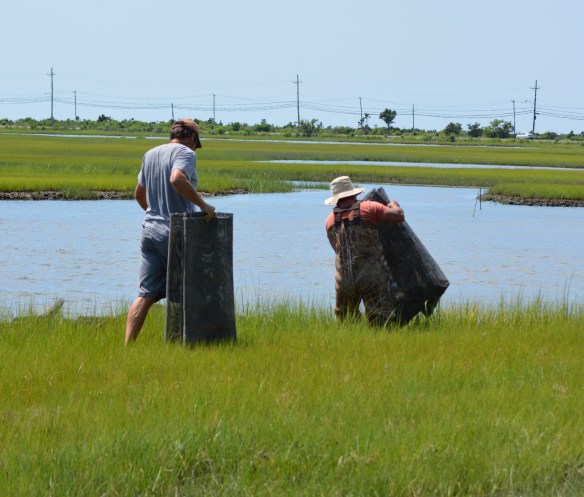
Step 4 carry oyster bags to

Step 4 carry mesh oyster grow bags to “plant” in the bay.

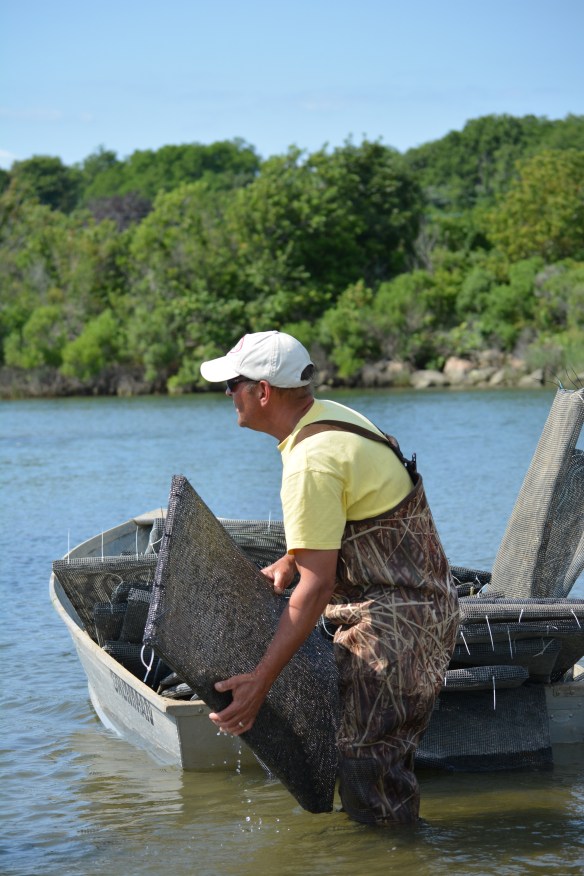
Step 5 Planting oyster bags

Step 5 Planting oyster bags where they will grow doubling in size every 10-15 days. “It takes Oysterpond oysters about 18 to 20 months of growth before 75-80% are ready for market. The creek warms up faster, cools down slower and is filled with lots of food for the oysters brought in with the strong flow of water.”*

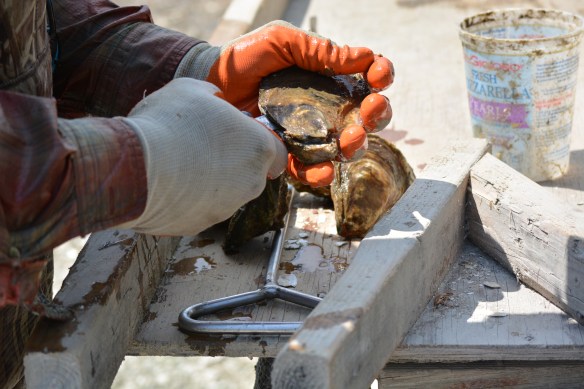
Roberto shucked some mature ones right on the spot, and they are delicious.  If you see Oysterponds oysters anywhere, get them!  They are hearty and briny and perfect.

shucks

Down the hatch.

Down the hatch.

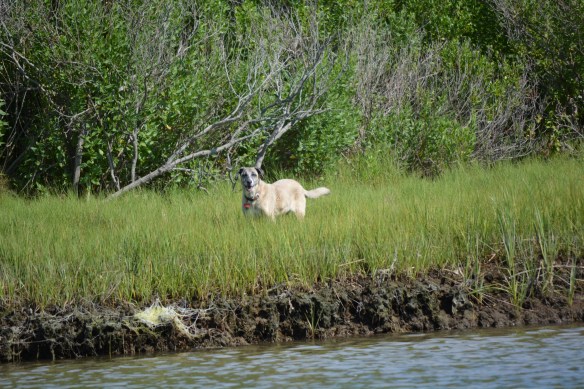
Lucy watching every move

Wild dingoes in the area

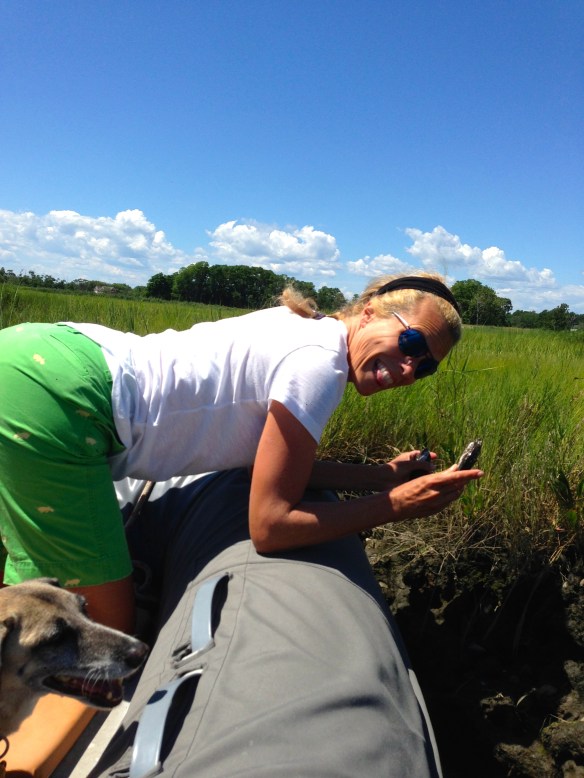
Speaking of local foods, it was nice to sample some of the local fares again.  Farm stand produce, clams that Phil dug up with his hands, mussels that we pulled out of Hallocks Bay.

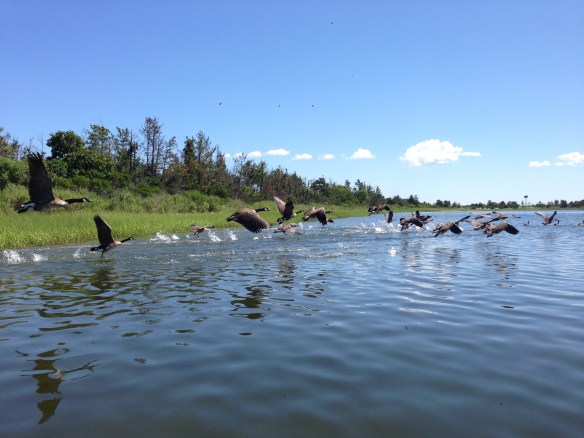
Birds in Hallock's Bay

Geese in Hallock’s Bay

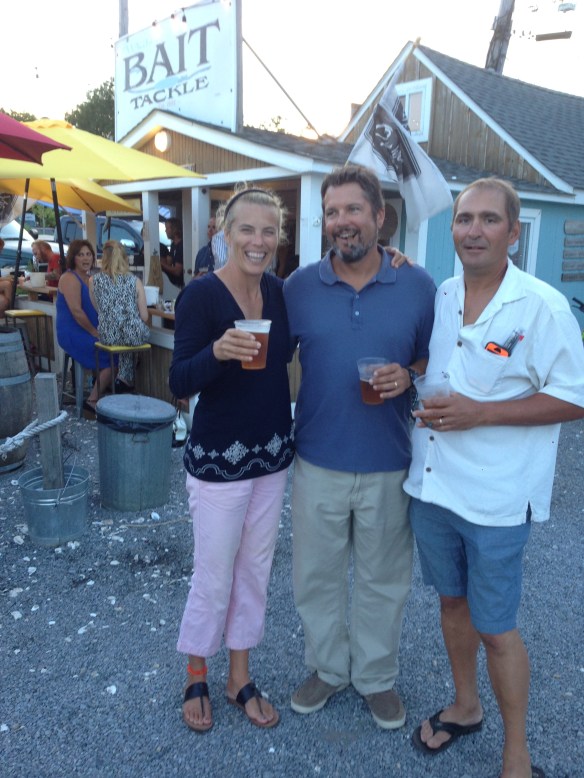
Mary musseling musselsFarm to table has always been a way of eating here, not just the latest trend and it continues to flourish.  The nearby town of Greenport has some exceptional restaurants, The Frisky Oyster is as good as ever, even if its prices are higher than ever.   Newcomer Brix & Rye has an incredible bourbon selection and delicious food.  And Little Creeks’ fun shuck-your-own oysters has taken over White’s bait and tackle shop right at Mitchell Park Harbor.  Linton’s store, now that he sold it it goes by its real name of the Country Store, has been taken over by a young couple selling very good sandwiches and prepared foods.  Orient country store signThe little store in East Marion has been transformed into a gourmet food store called Fork and Anchor.  Greenport has a brewery making craft beers.  And of course, all those vineyards are going strong.

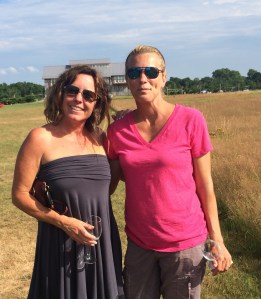
Holly and Mary spending the afternoon wine tasting.

Holly and Mary spending the afternoon wine tasting.

Vineyard

Vineyard

Mary, Pete and Phil

Fun night with Phil and Holly in Greenport

I know these names don’t mean anything to most of you, but these places deserve a plug, check them out if you are ever out this way.   People complain about the strict conservation and preservation rules out in Orient, but we hope they hold strong and keep up the fight because in our travels we’ve seen how overdevelopment ruins a place.  And Orient is a rare pearl worth treasuring. Long Island Sound

Almost Pulled it Off

We were audacious enough to think we could pull off a major refit in a month’s time.  We limped into Fort Lauderdale, Florida with a badly clogged fuel system and loads of crud in our tanks.  Our sails and sail covers were tattered.  Our little generator seemed like it had a terminal case of the flu.  One of our rudders was making ominous knocking sounds.  Our dinghy engine was on its last legs, having rusted nearly away in its 10 years of life.

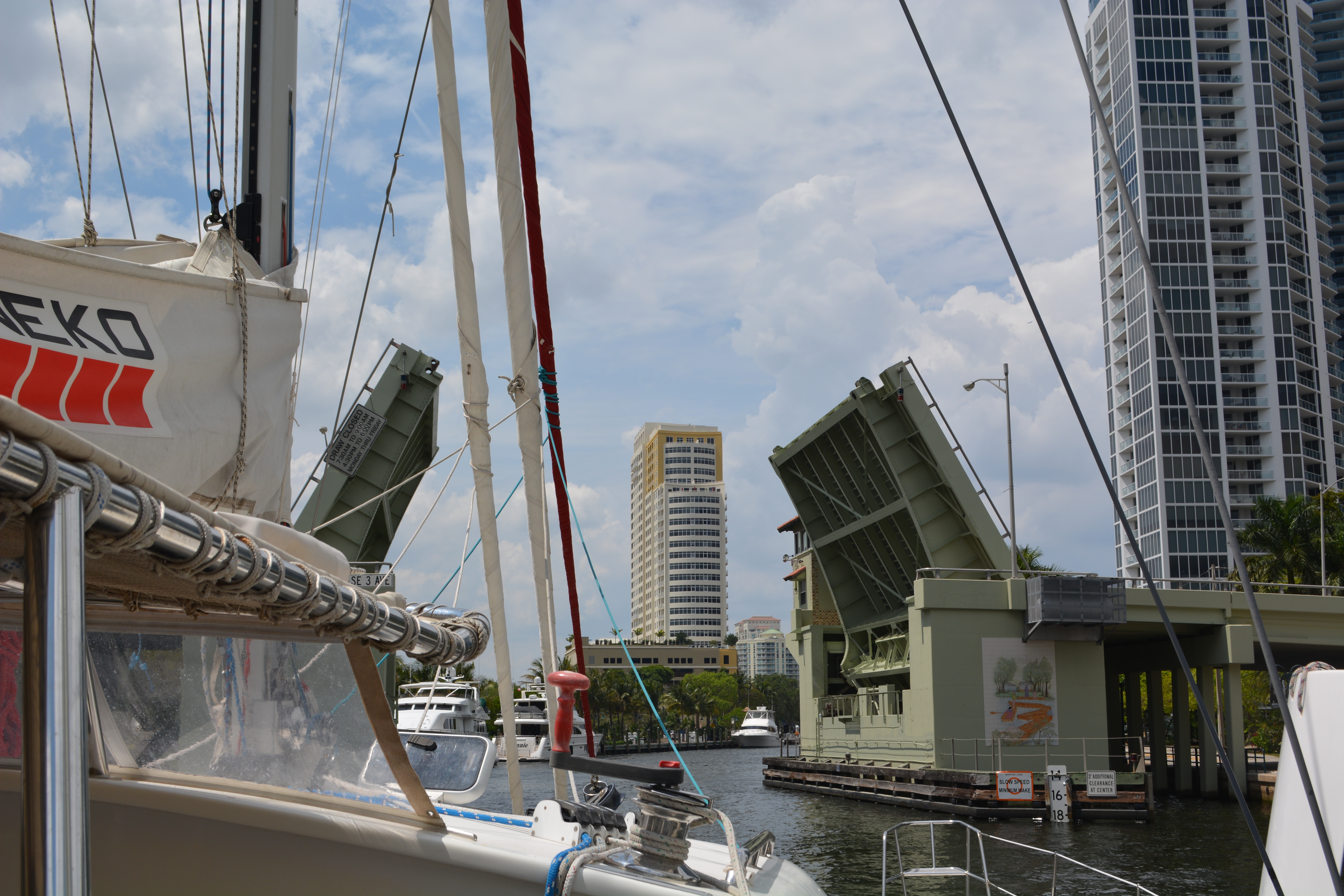
Neko limping our way into Fort Lauderdale through the 3rd Ave bridge, one of many bridges in Fort Lauderdale

Neko limping her way into Fort Lauderdale through the 3rd Ave Bridge, just one of many we had to go through going up the New River to get to Lauderdale Marine Center.

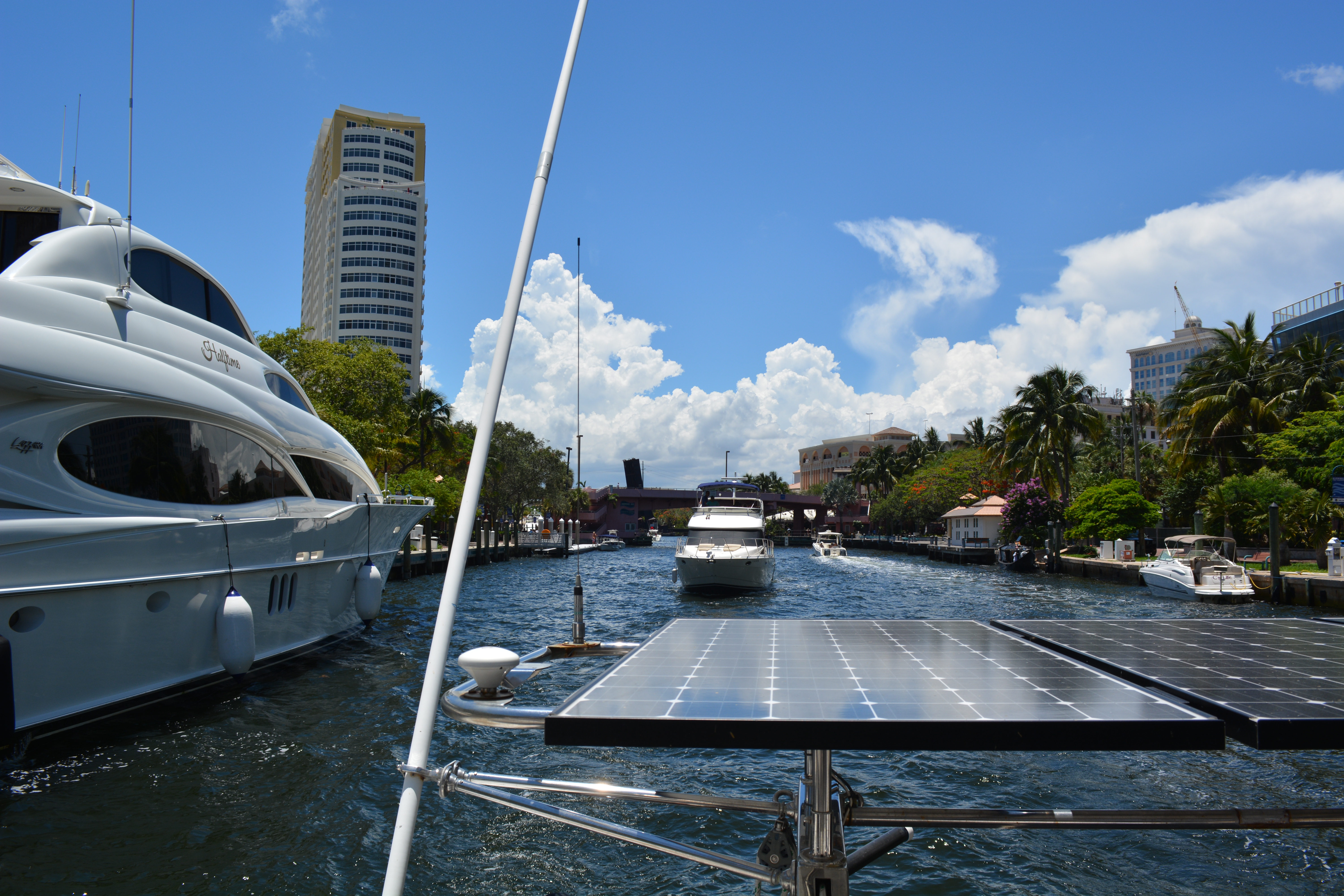
We docked at Lauderdale Marine Center after an amusing trip up the New River past waterfront mansions cheek by jowl along the crowded little waterway and immediately started interviewing potential service providers.

Can be a tight squeeze traveling the canals.

Can be a tight squeeze traveling the canals.

A different experience going up the narrow New River.  A tight squeeze sometimes, but fun sailing right through downtown.

Fun sailing right through downtown.

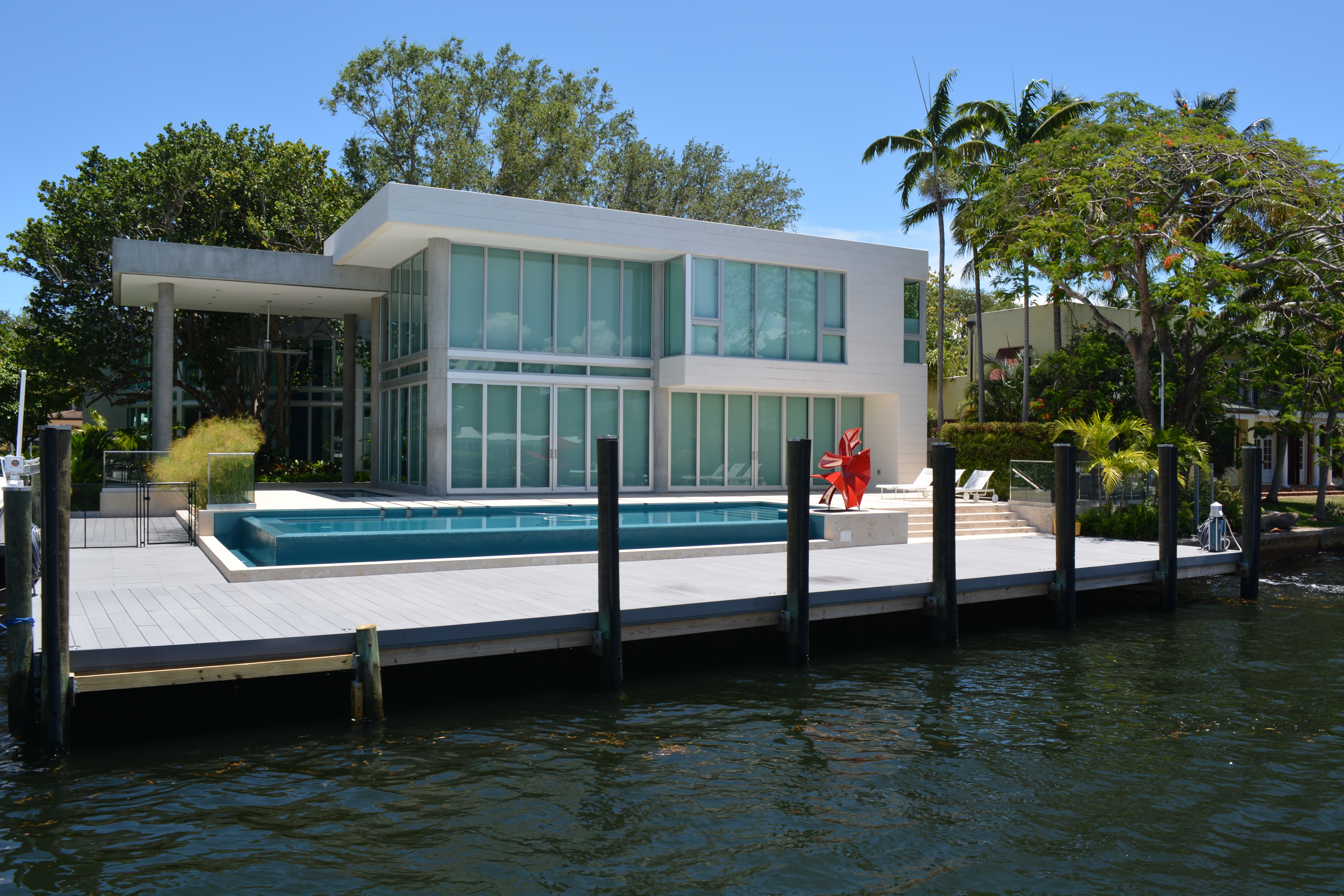
Some houses so close you felt like you could step off the boat into their yard.

Some houses so close you felt like you could step off the boat into their yard or take a dip in their pool.

Our list of work was long: clean the fuel tanks, replace all the standing rigging, repair the sails and replace the torn mainsail bag, much canvas work (new bimini and curtains, dinghy chaps, permanent screens for companionway door and galley window, seat cushions), refinish deck chairs, remove the old generator and replace with a new one (oh, by the way, this entailed using a crane to pull one main engine out of the boat entirely, set it on the ground and lower the new generator in and then drop the main engine back in), install two air conditioning units, rewire the boat for 240V/50hz power from its original European power, replace the washer/dryer unit, plus a whole bunch of projects we would do ourselves.

New rigging

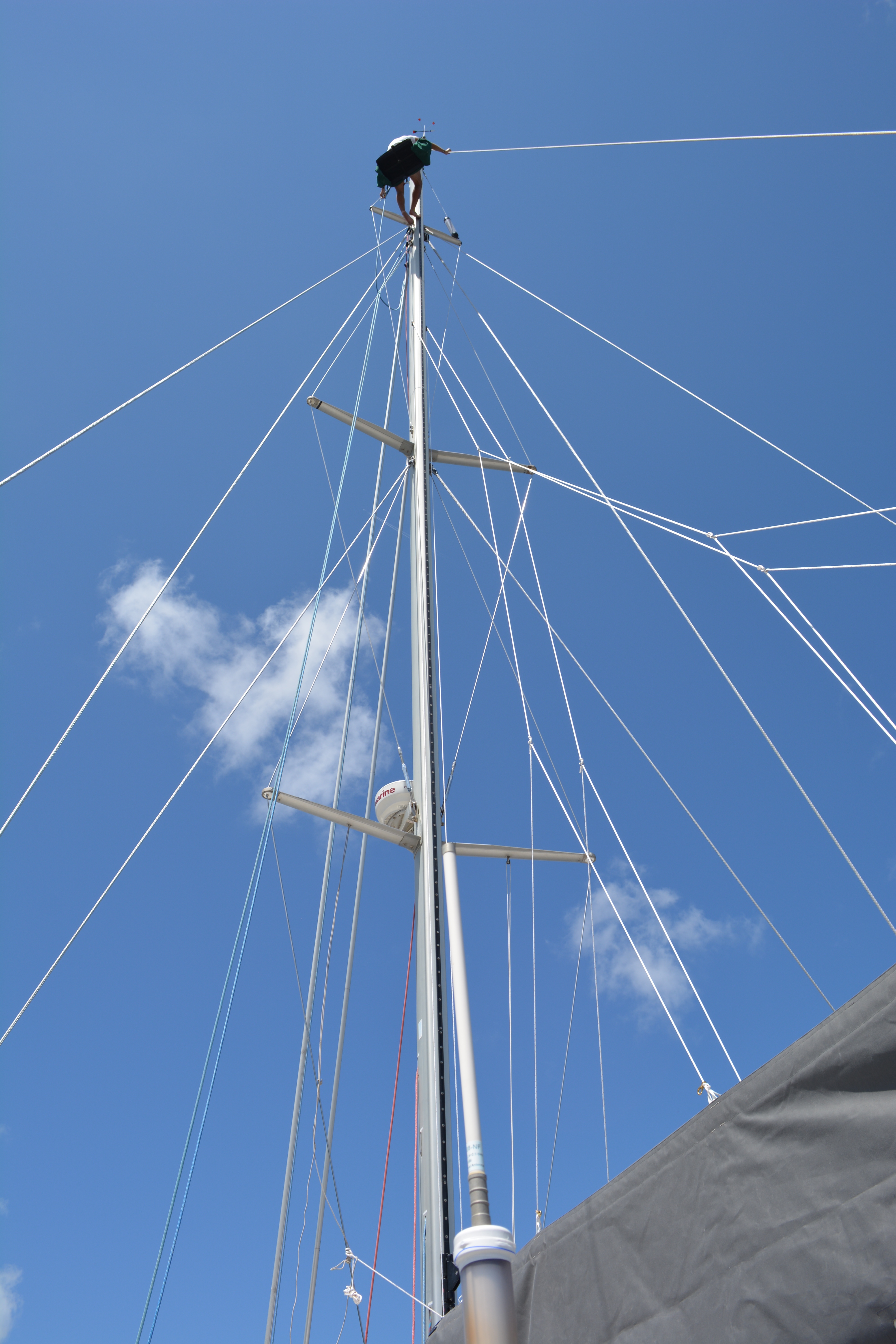
Riggers were up the mast at least 50 times.

Mauricio and his guys were masters at their craft.  Here they are installing our new grey bimini.

Mauricio and his guys were masters at their craft. Here they are installing our new grey bimini.

Who needs 50 shades when our new 1 shade does the trick.  You can see the new dinghy chaps, bimini and sail bag

Who needs 50 shades of grey when our new 1 shade does the trick? You can see the new dinghy chaps, bimini and sail bag

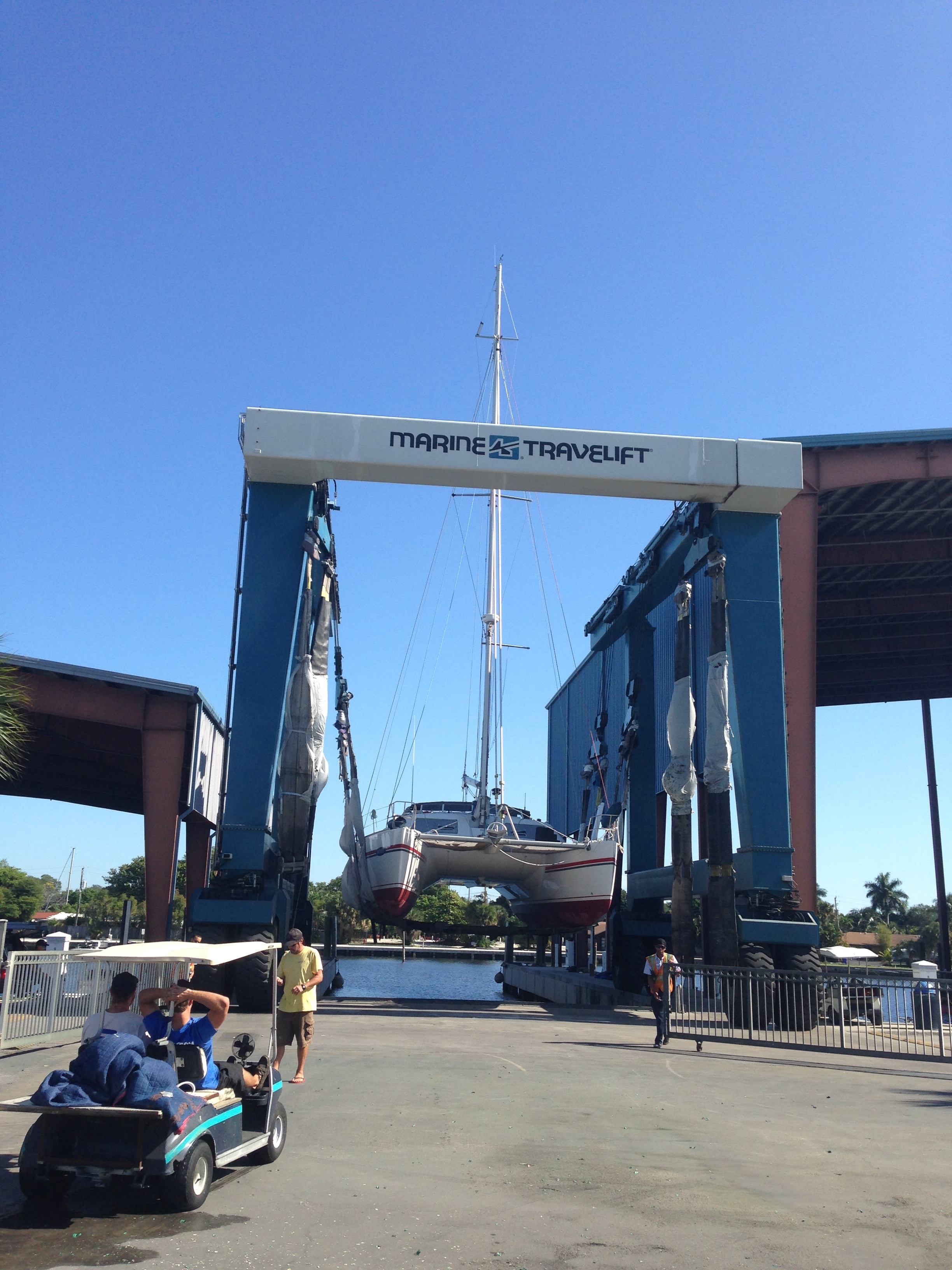
Neko getting hauled out of the water.

Neko getting hauled out of the water.

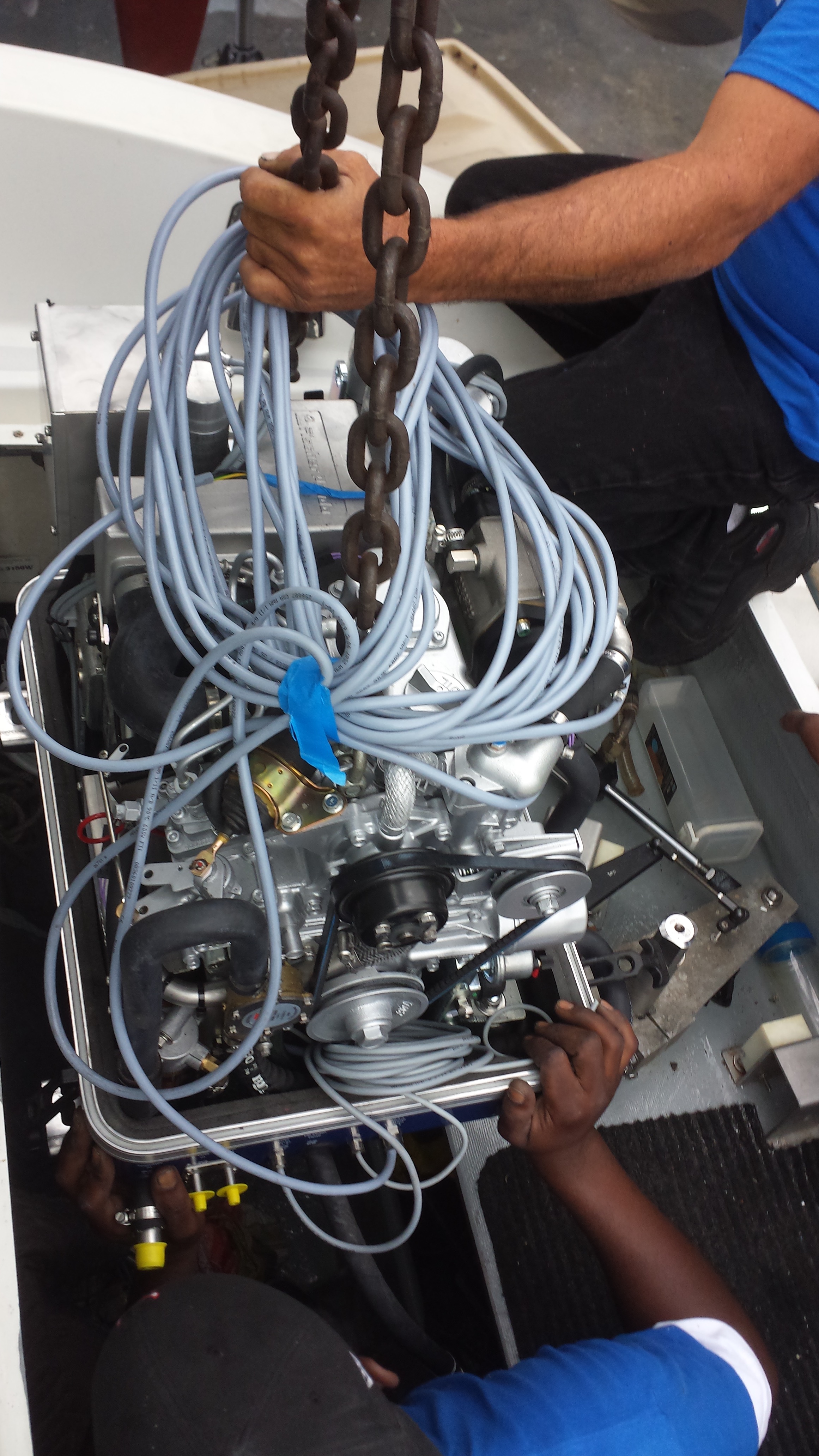
Prepping New Generator

Prepping New Generator

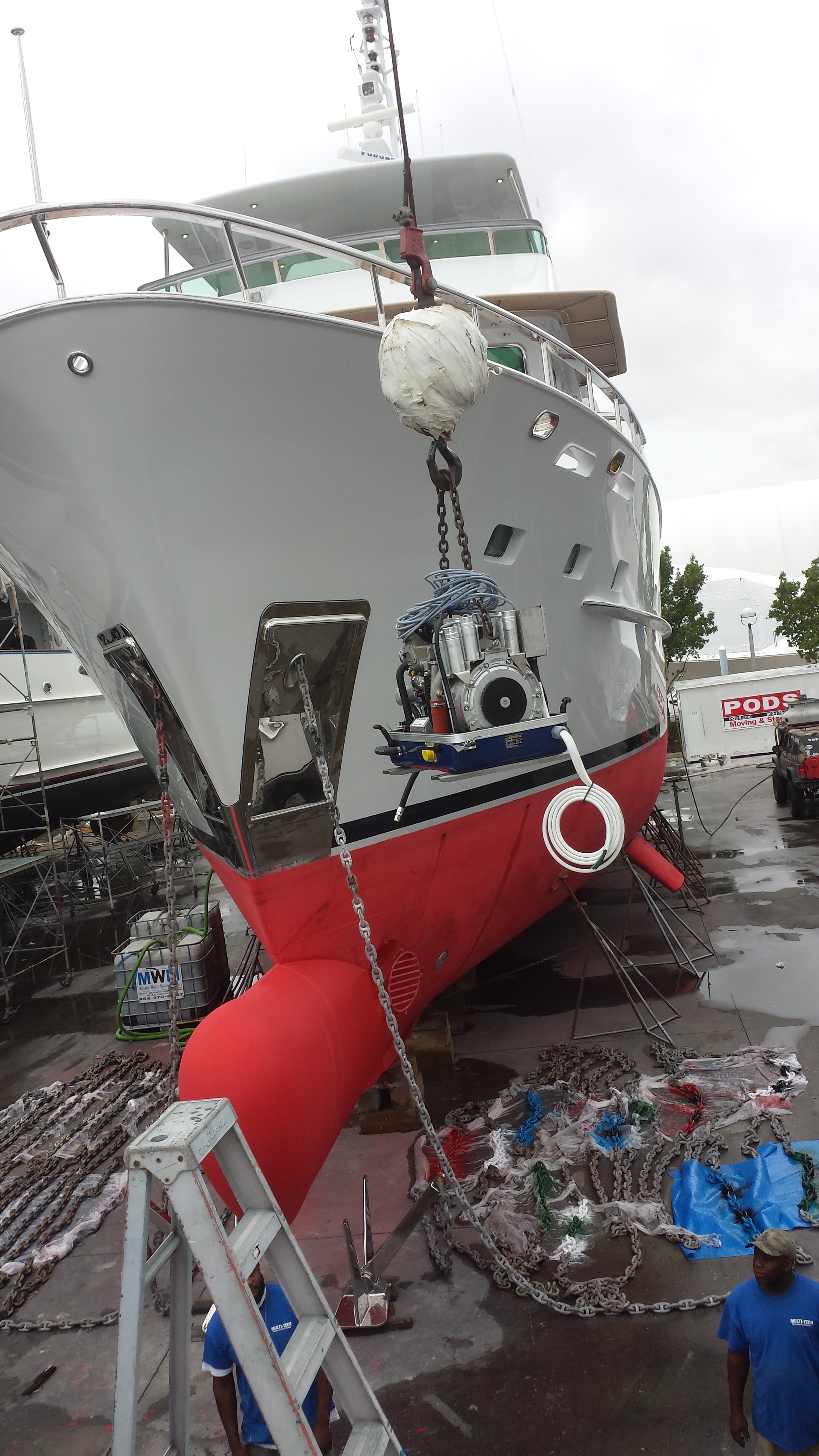
Flying generator.  (Neko is the little sailboat that could in this neighborhood)

Flying generator. (Neko is the little sailboat that could in this neighborhood)

Down she goes

Down she goes

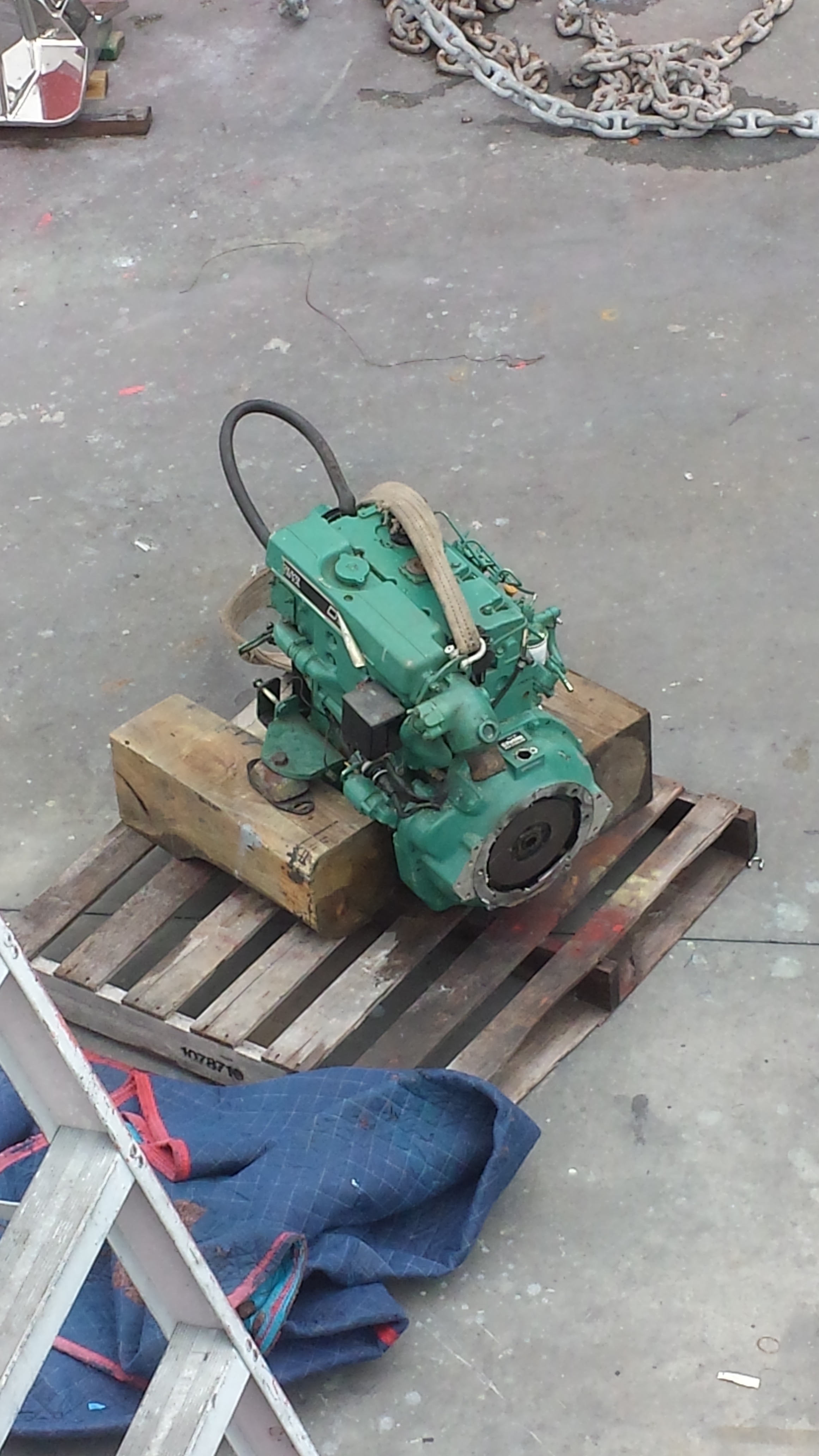
Main engine out of the boat.

Main engine out of the boat waiting while the new generator is installed and then back in she goes.

Guess who loves the AC the most?

Guess who loves the AC the most?

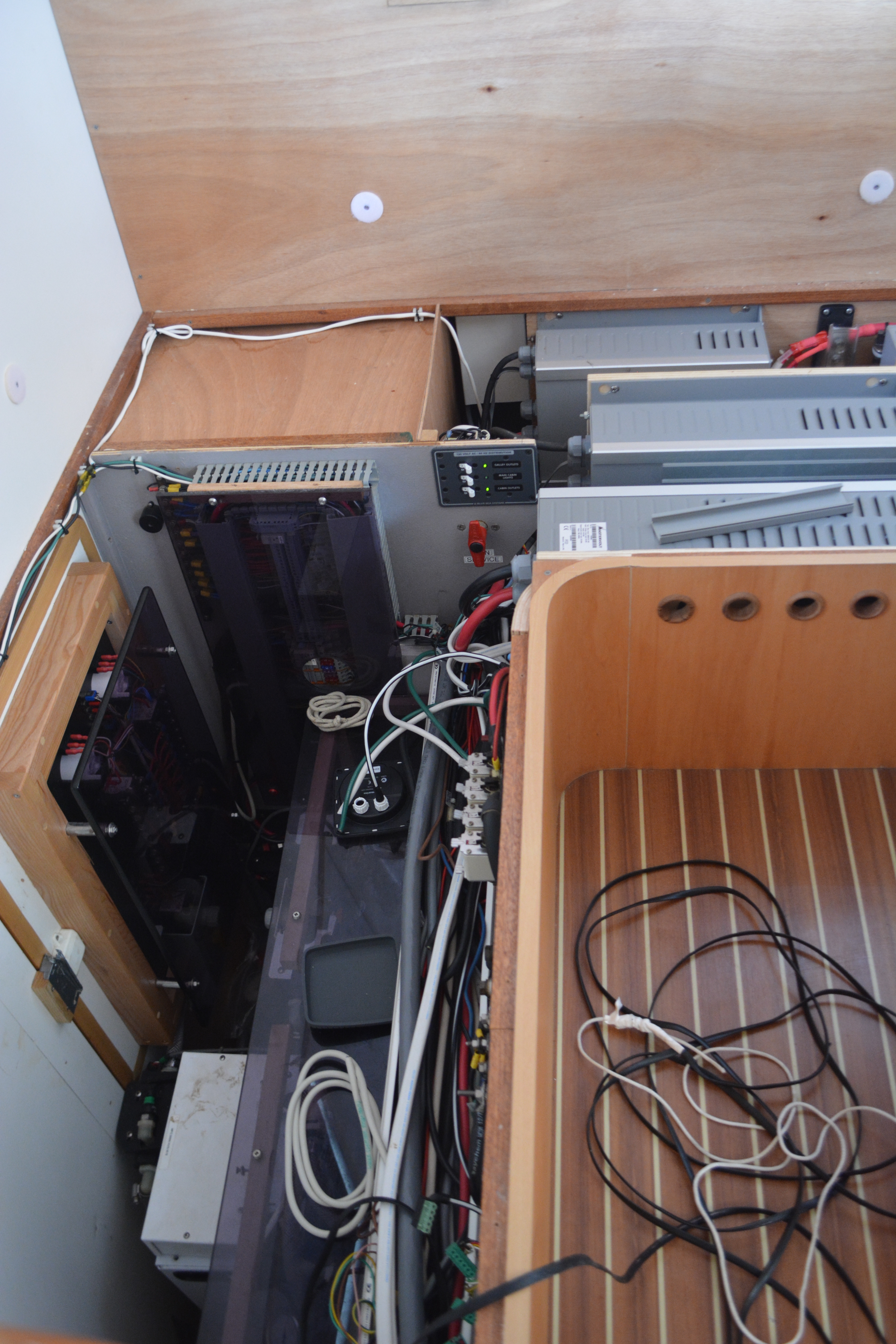
This was once salon seating. Now it is access to our electrical panels.

This was once salon seating. Now it is access to our electrical panels.

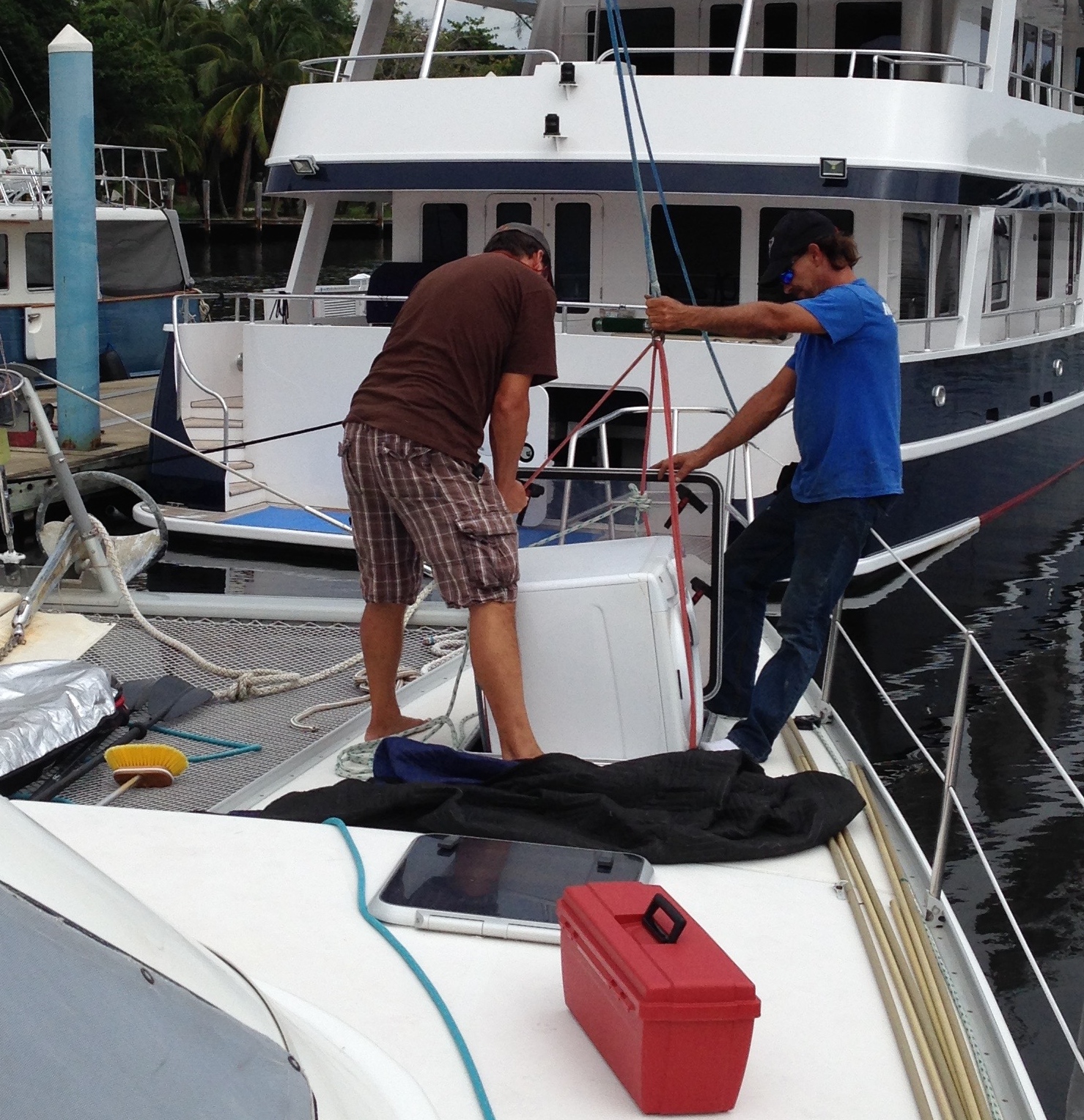
Lowering down new washer

Lowering down new washer

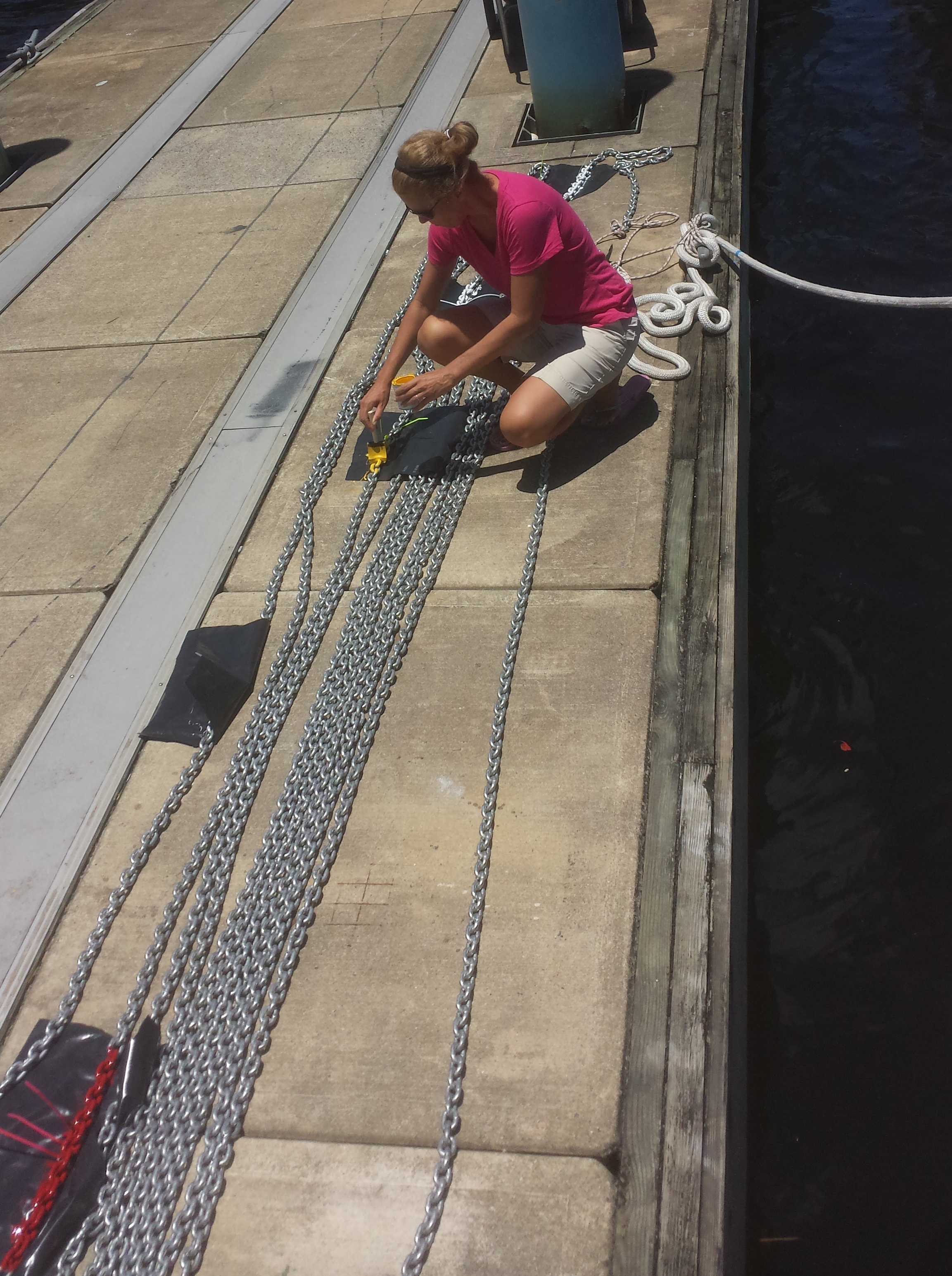
Mary painting anchor chain.  Each color marks 25'

Mary painting anchor chain. Each color marks 25′. We got new Maggi anchor chain.

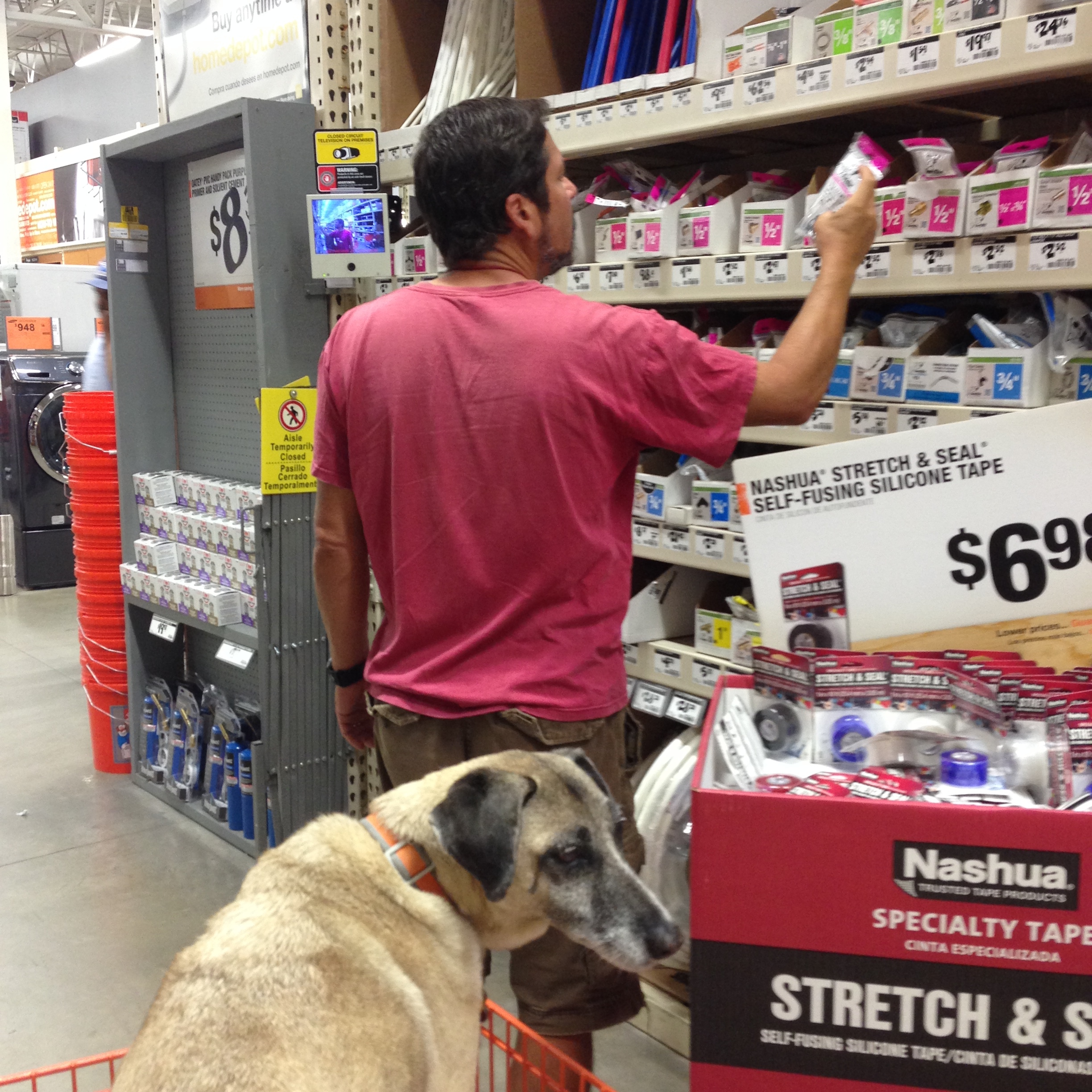
Lots of trips to Home Depot and West Marine

Lots of trips to Home Depot and West Marine

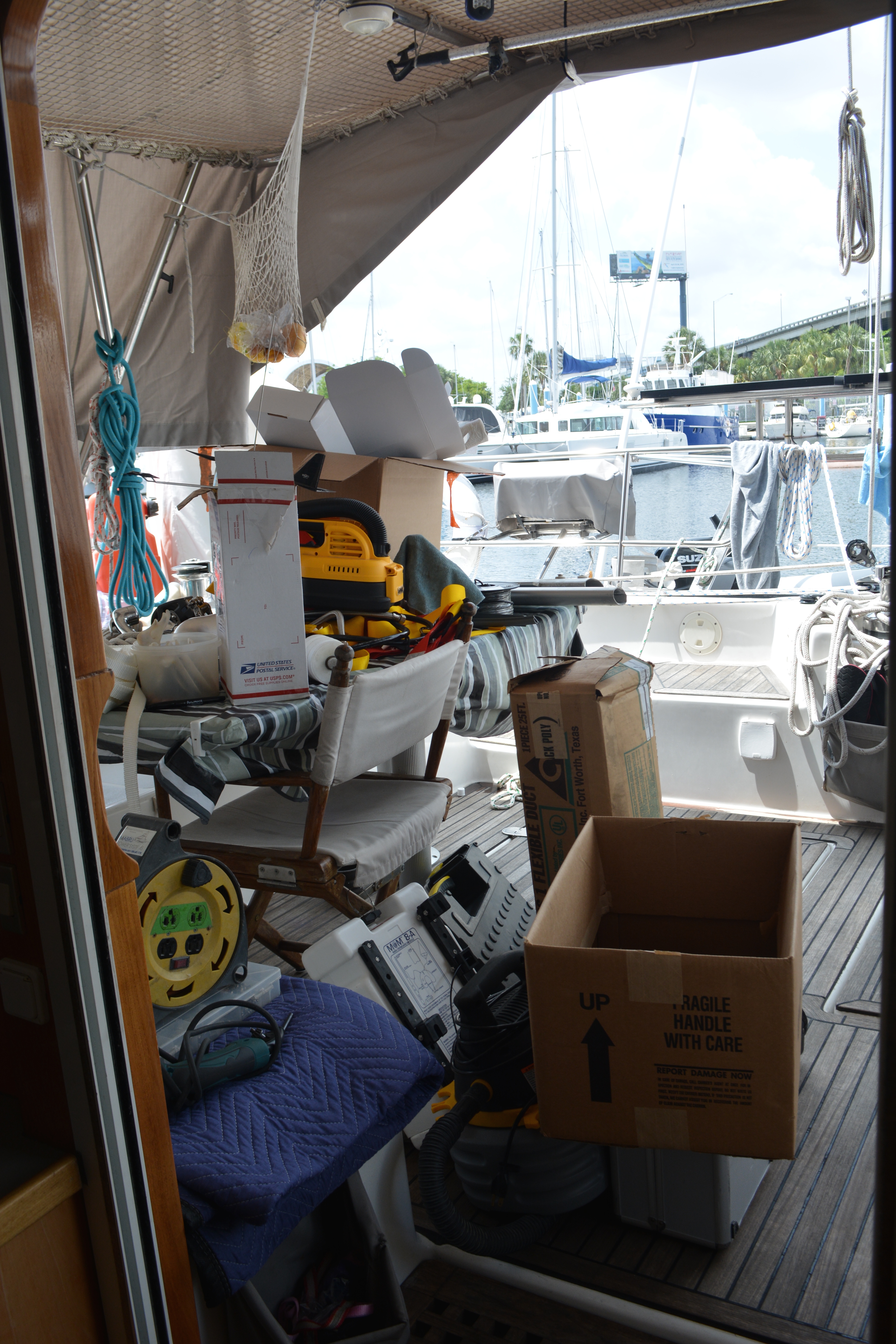
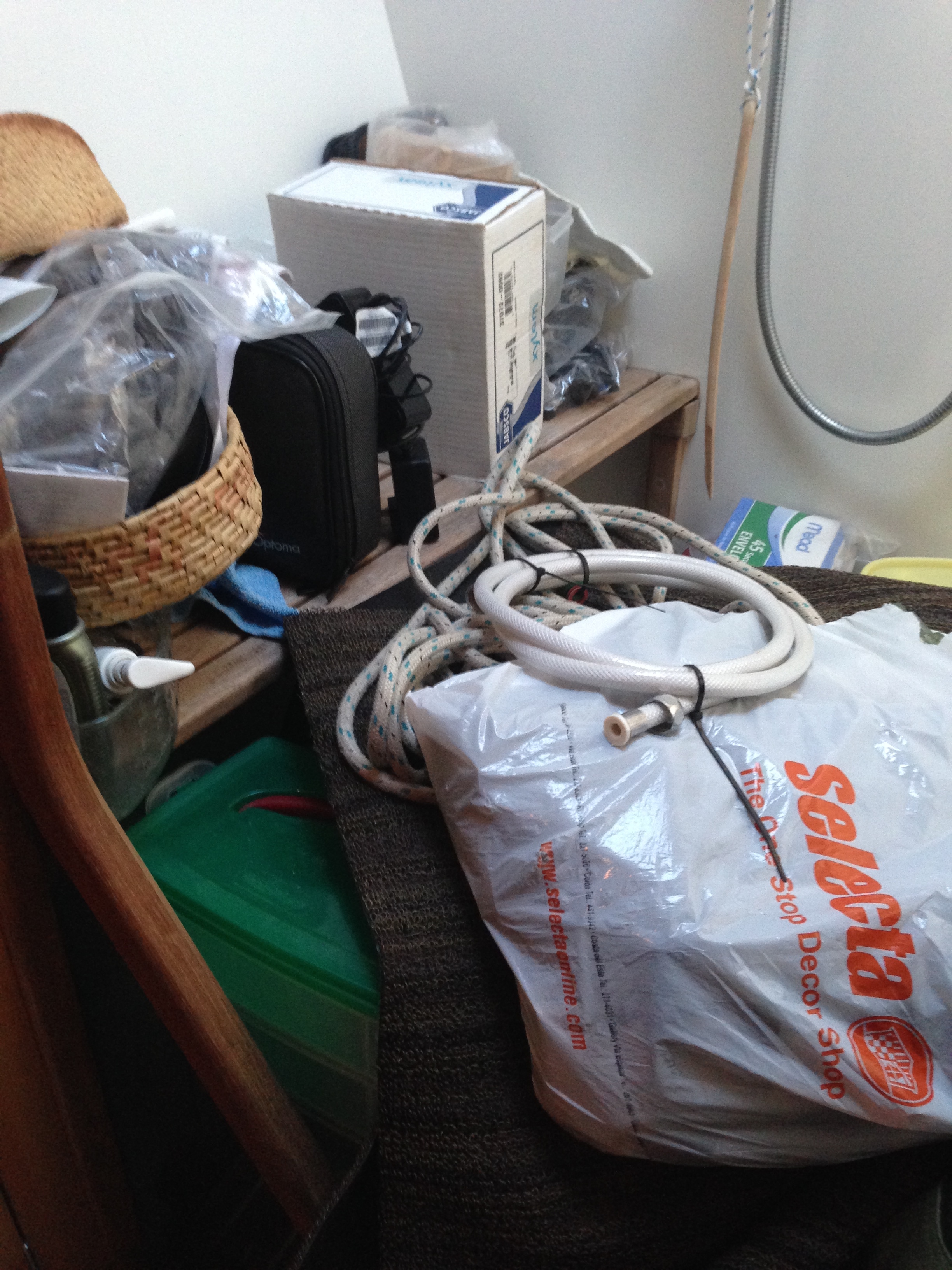
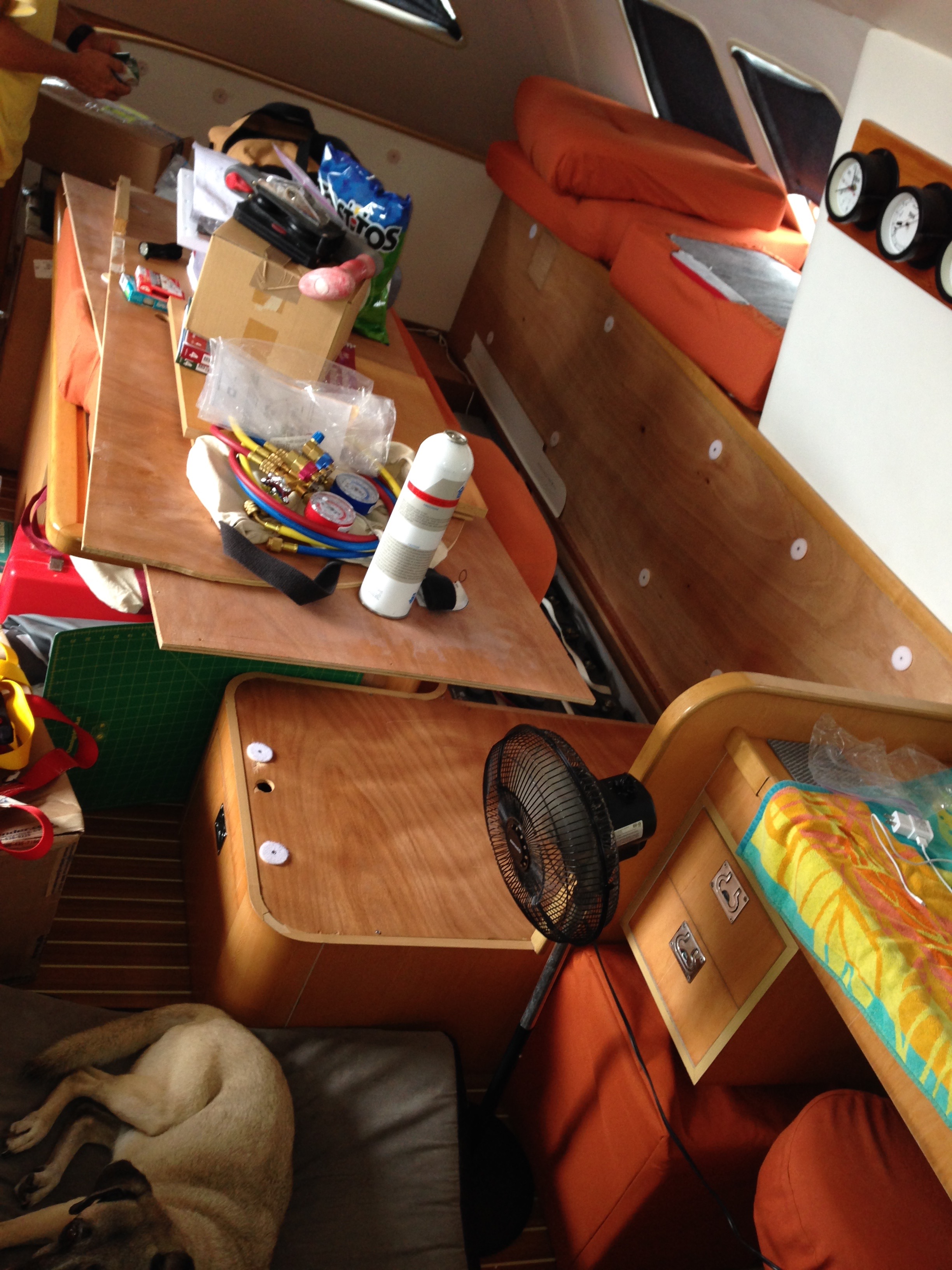
We got down to hiring service providers and hounding them to work harder and faster.  We really wanted to get out on our timetable because the Bahamas beckoned and we had plans to get up the East Coast and meet up with friends and family.  Boat refitting is similar to making renovations on a house, but in much smaller quarters with everything you want to access under, behind or in between something else. This means the whole boat is torn apart.  And all the contents of those perfectly stowed cabinets and lockers are now spread over every square inch.  Making it hard to work, live, maneuver, breathe.

Mess spills into the cockpit

Mess spills into the cockpit

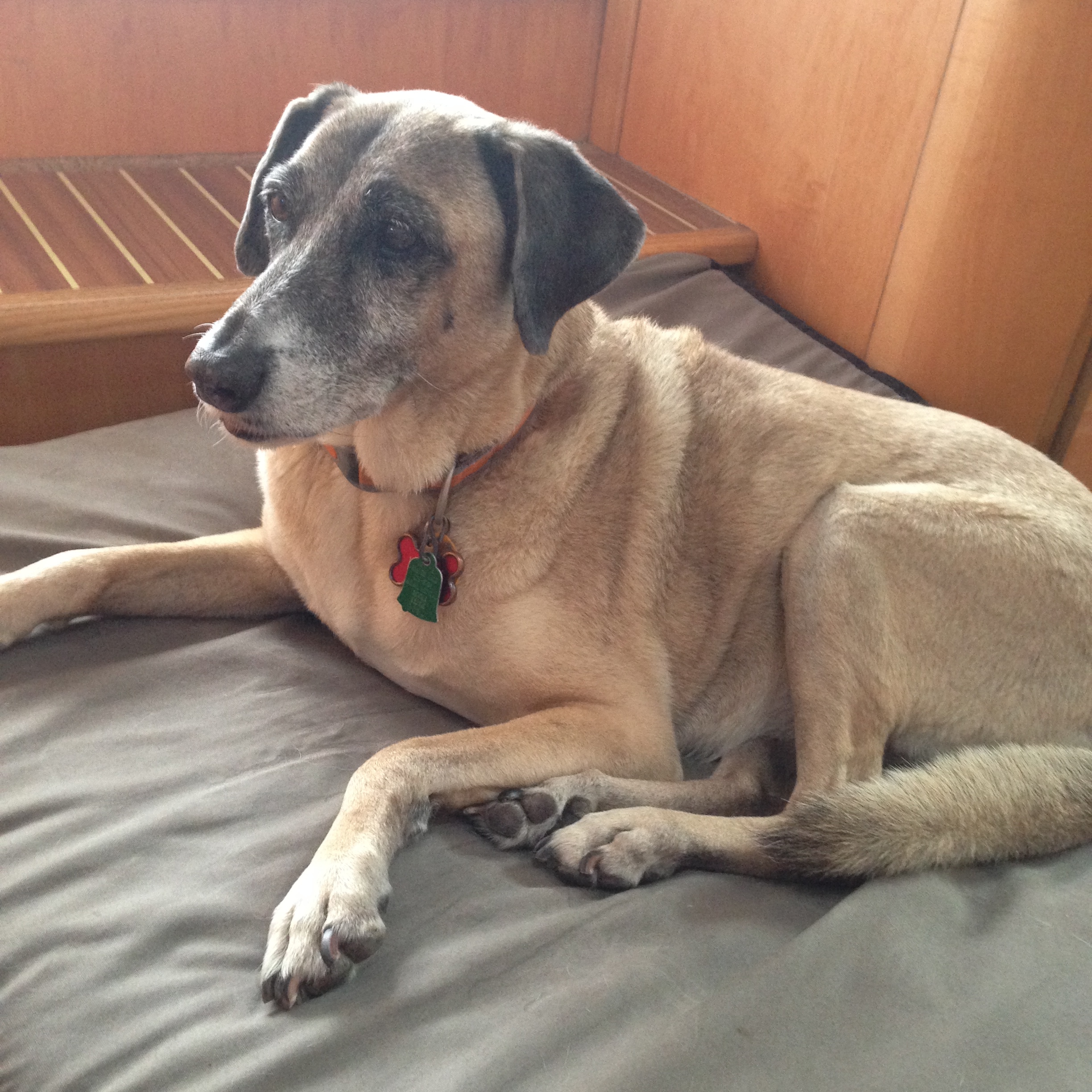
salon, where's a dog to sleep around here?

Where’s a dog to sleep around here?

workers every inch

workers in every square inch

This was once our shower

Even our shower was chock-a-block with stuff

Everybody worked diligently and understood what we wanted to accomplish.  Once they began they showed up and worked hard to get their projects done … except for one company – our riggers.  Despite our continuous hounding of them, they failed to show up and do any significant work for about a month in the middle of our stay.  It got to the point where all the other workers finished and moved onto other projects.  We’d pass them on the docks and they’d ask “Ya’ll still here?”

Yep, still in Fort Lauderdale.

Yep, still in Fort Lauderdale.

We eventually gave up on getting to the Bahamas this season, making apologies to our nephews, whom we’d promised some time in the islands, as well as friends Lloyd and Rob, who wanted to do the sail over with us.   Also, we were then approaching the time of year when our insurance would not cover us for tropical storm damage because we were lingering in the south for too long.  So we also lost the chance to stop in northern Florida and visit with Uncle Bob and Aunt Lorraine.  But on the bright side, being stuck in Fort Lauderdale so long allowed us to see family and friends, attend our dear friends’ wedding, see Mary’s folks and Mr Kitty in Central Florida and Mary to travel up to NYC to celebrate her god daughter’s high school graduation.  Also, we had a wonderful visit from Uncle Bob, who drove all the way down from Stuart to meet us on Neko.  And we saw Mary’s brother Tom (and Andre) before he moved from Miami and who kindly lent us his car for a month.

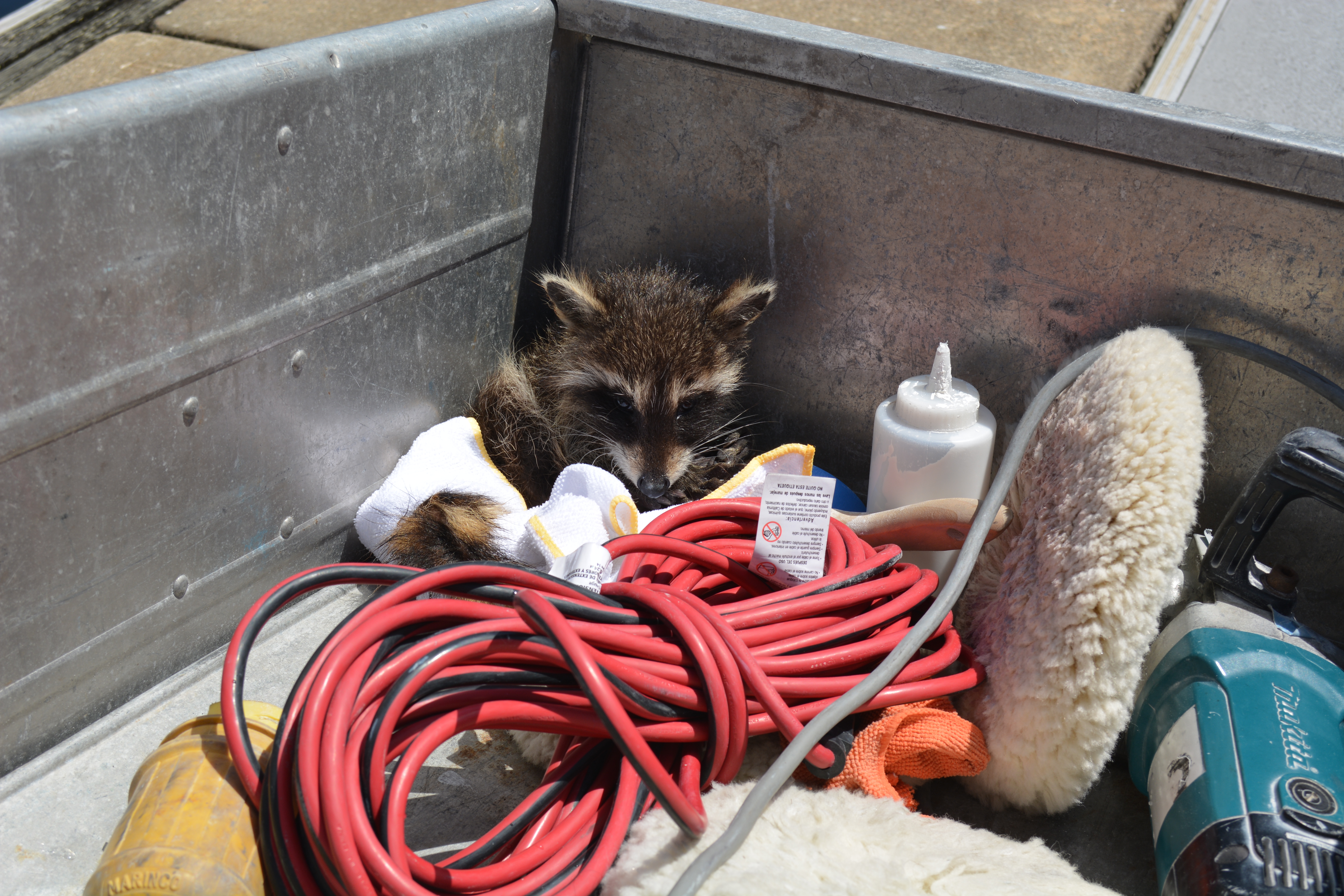
And Mary made time to help rescue a baby raccoon who had fallen in the water.

Raccoon rescue, off to the wild life sanctuary.

Raccoon rescue, off to the wild life sanctuary.

So good things do come to those who wait and Neko is almost as good as new. And we leave Fort Lauderdale much better than when we came.

See ya later alligator

See ya later alligator

Cuba, So Close, Yet So Far Away

We wanted to travel to Cuba before the Americans started flooding in, so along with our pals Charlotte and James we embarked on a 10-day educational trip.
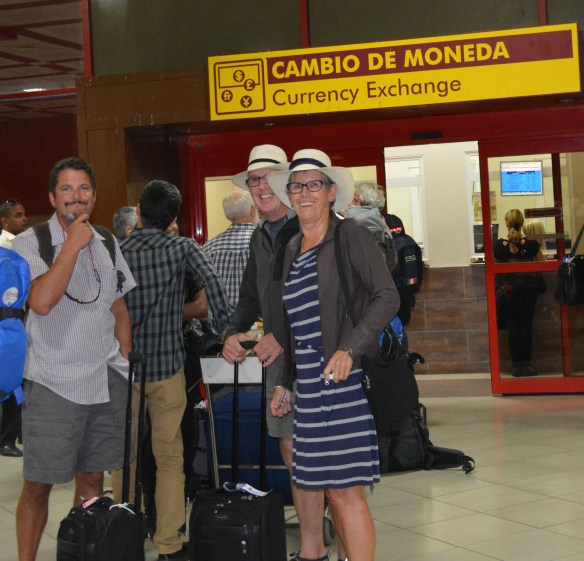
Bienvenido a Cuba Pedro, Jaime y Carlota.

We know that America-Cuba relations can be a hot button topic, so we used this trip to educate and not debate. The key for us was to take a cue from the Cuban people who separate politics from people.
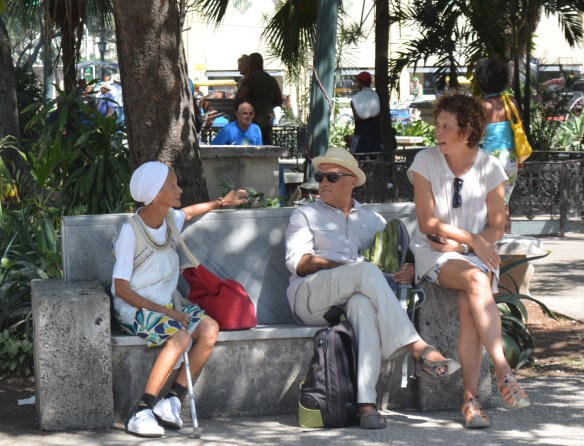
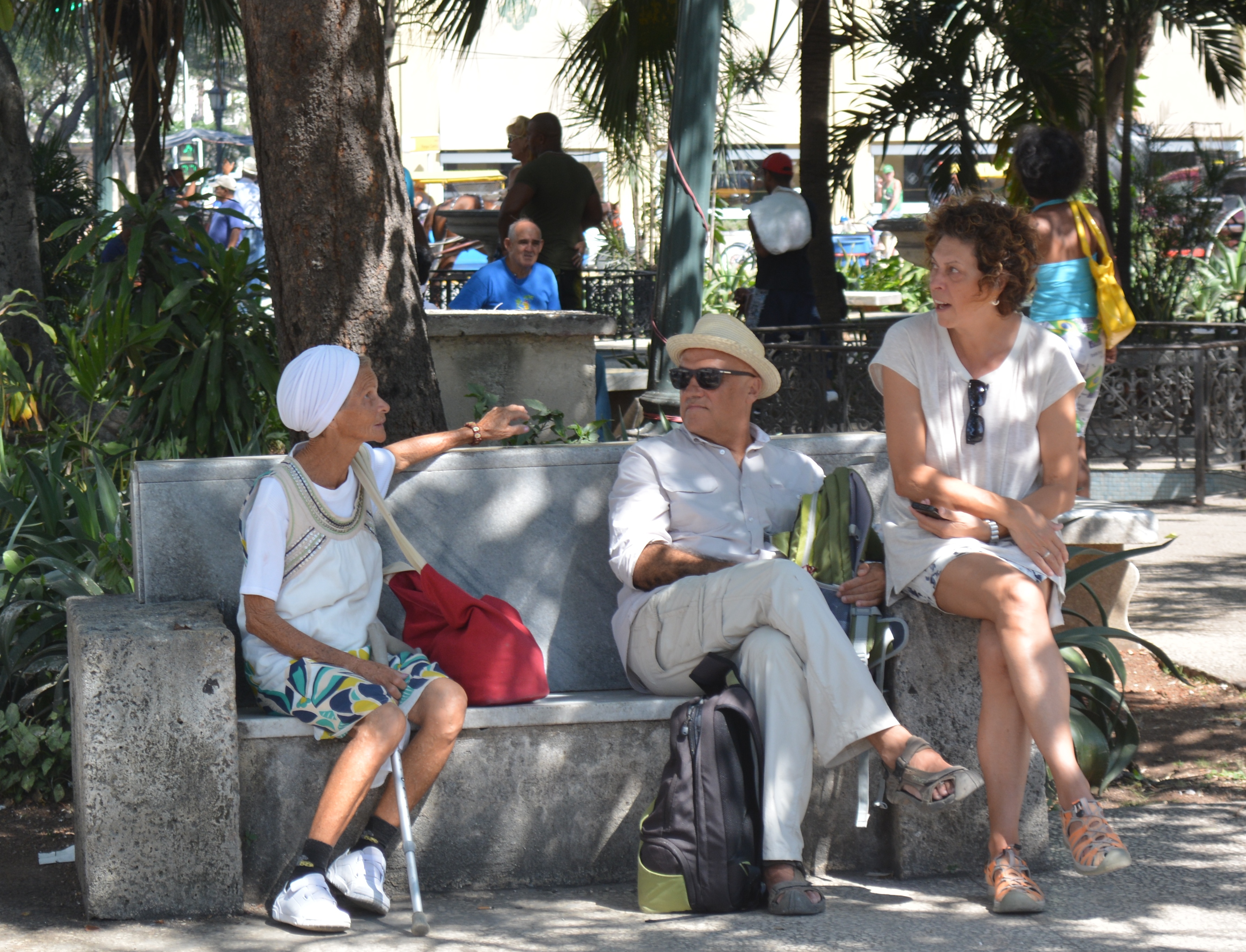
I just love this lady enjoying the day in the park with her amigos

Anyone who can rock a turban is aces with me.

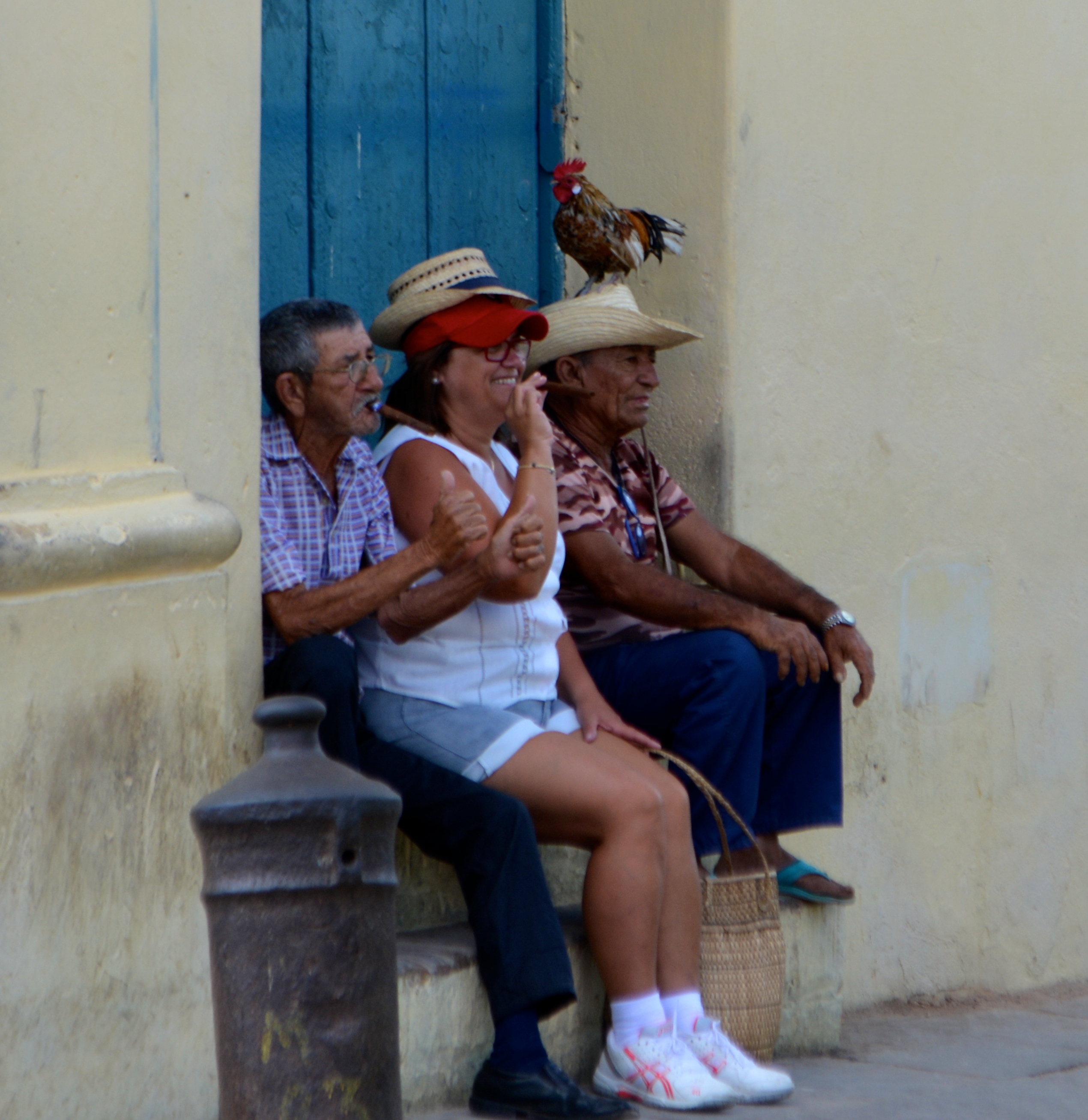
Excuse me, there is a chicken on your head.

Excuse me, there is a chicken on your head.

Initial Impressions.  Cubans love Americans and readily put politics aside to get to know you as a person.  In fact, politics does not even enter into a personal interaction with Cubans.  What a refreshing attitude.  And if indeed some political issues were discussed they were not met with the vitriol that always seems to bubble up in the States.  The people of Cuba are the heart and soul of the country.  They are warm and welcoming, intelligent, funny and delightful.
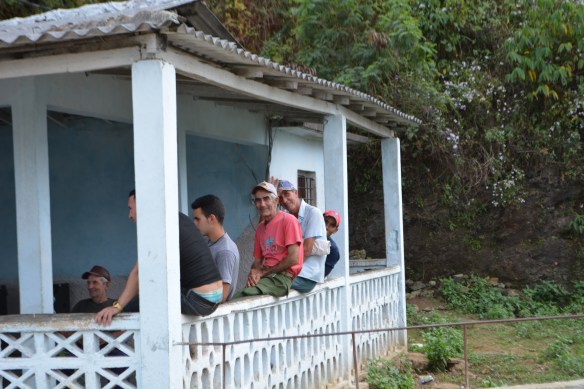
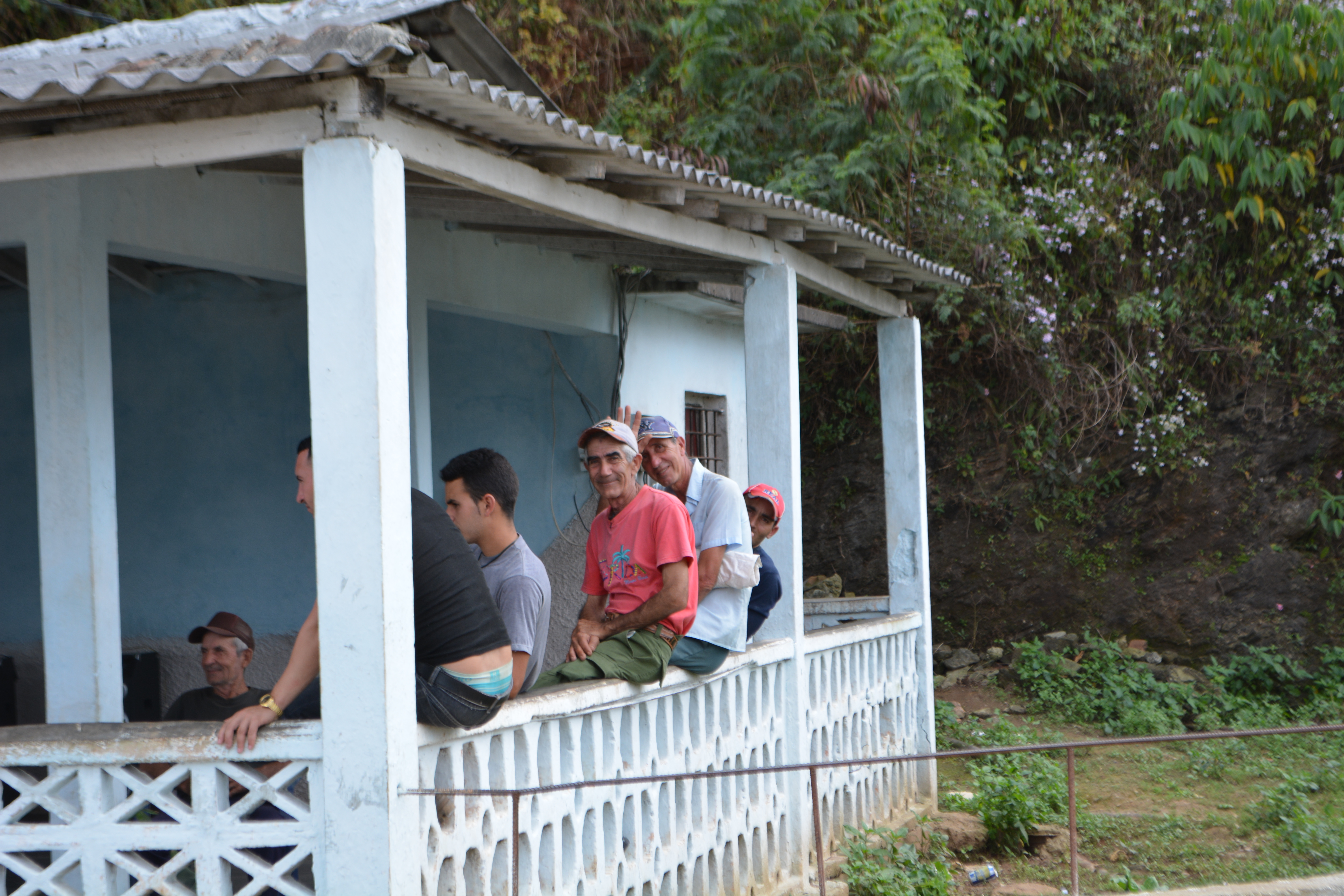
men waving

Always greeted by waves and smiles.

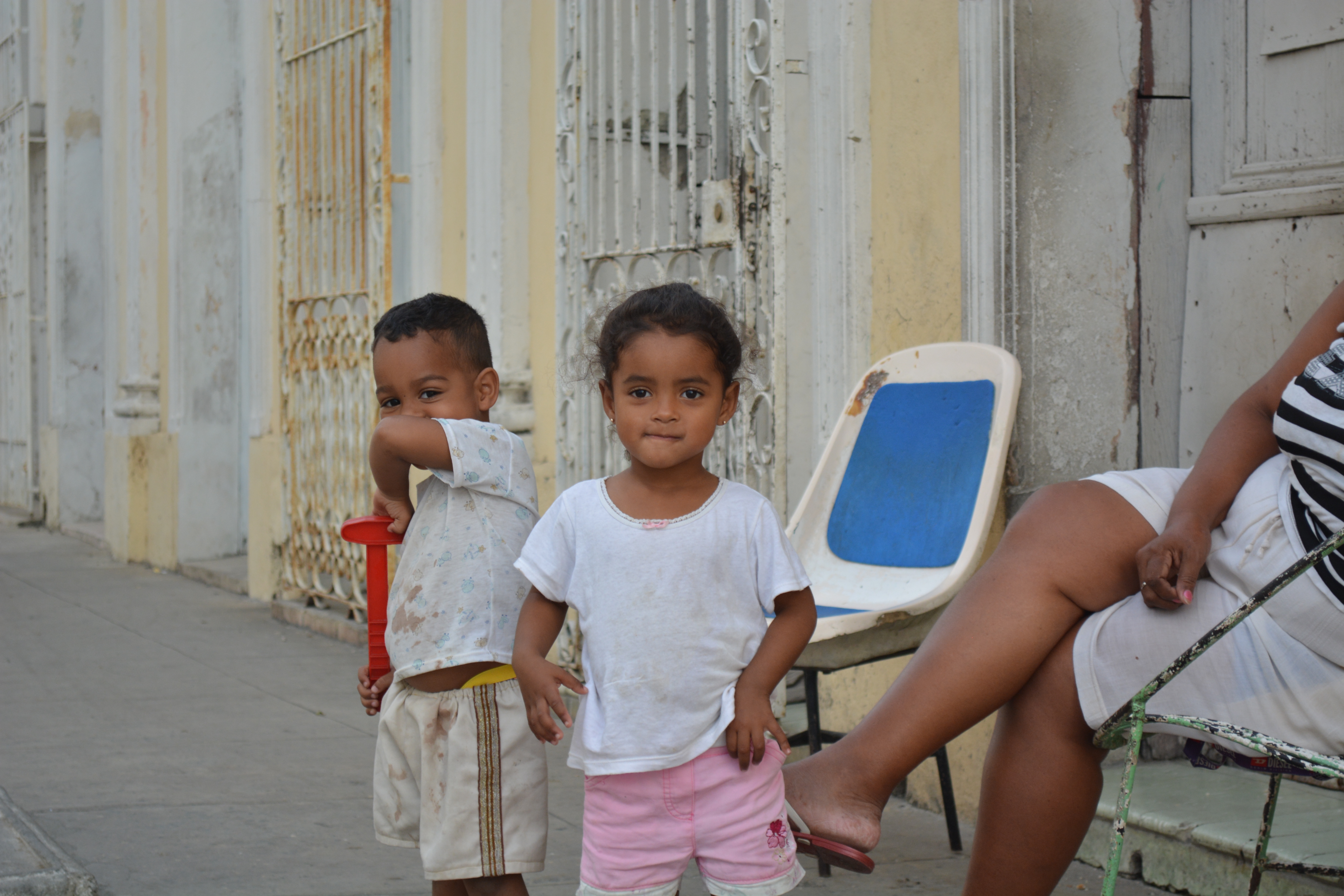
kids

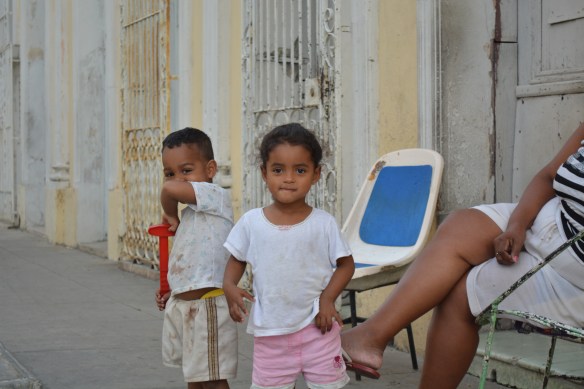
All the children were friendly, curious and full of giggles.
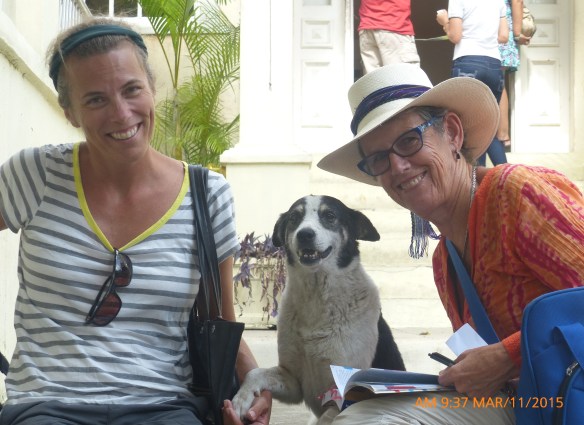
Hemingway house dog welcoming Mary and Charlotte.

Hemingway house dog welcoming Mary and Charlotte.

Honestly, we were not sure what to expect from a country that mainly has been presented to us as either the romanticized playground of the 1950s jet set or a repressed society full of people willing to risk their lives to achieve freedom.
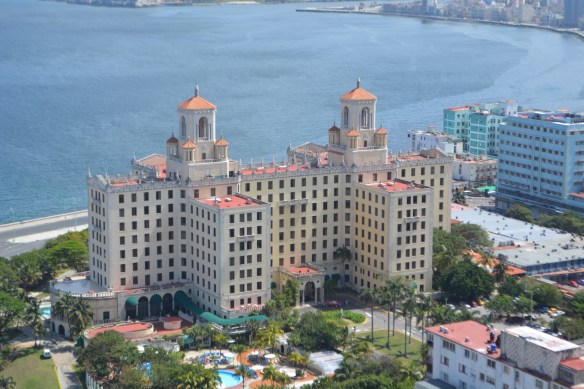
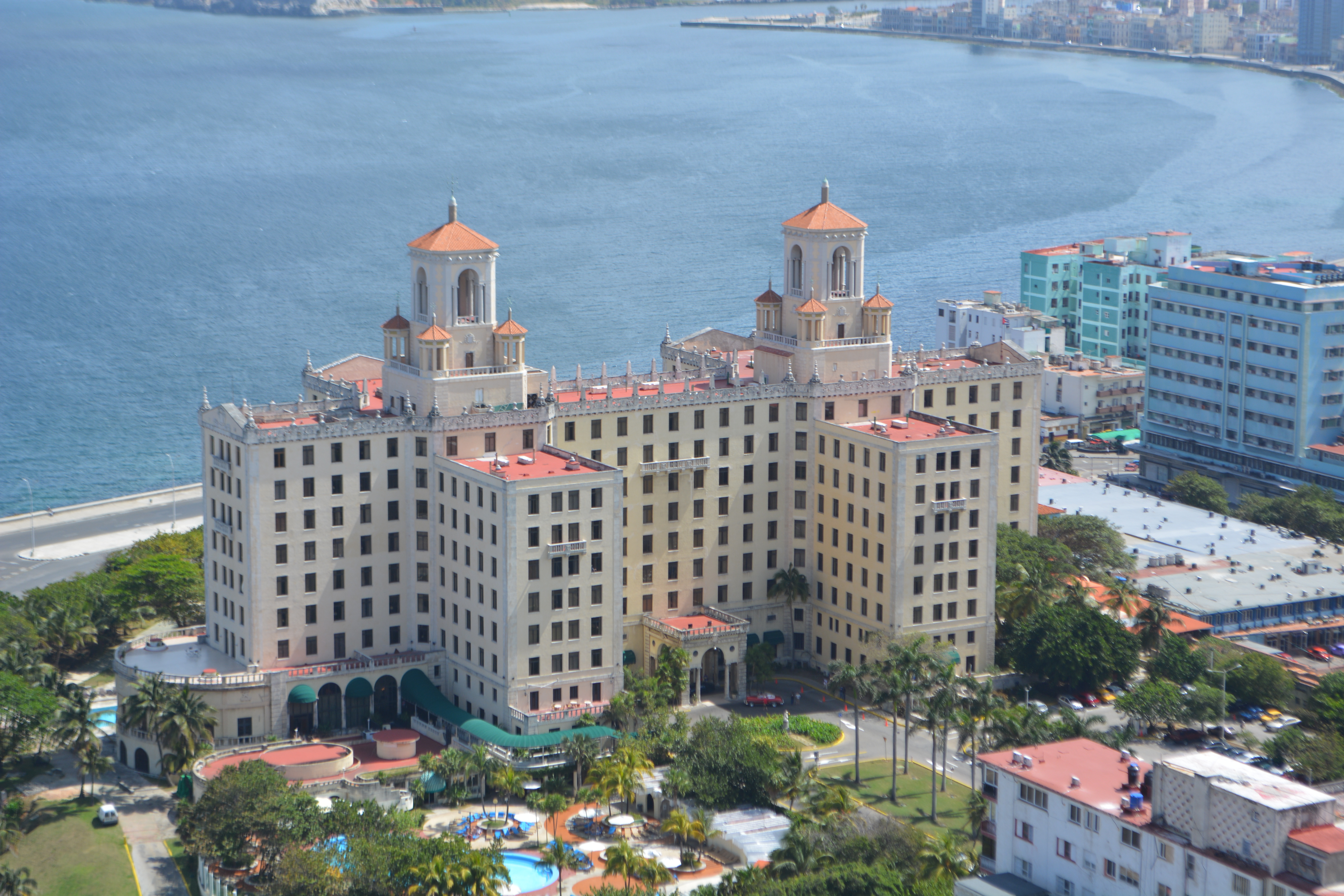
Hotel National

Hotel Nacional De Cuba, host to everyone from Winston Churchill to Frank Sinatra, Eartha Kitt and Lucky Luciano.

Would people speak to us, were they allowed to speak to us, did they have toilet paper?You laugh, but so many people told us to bring our own, so we did.  And then our Cuban friend laughed at us because they have TP.   LOL.
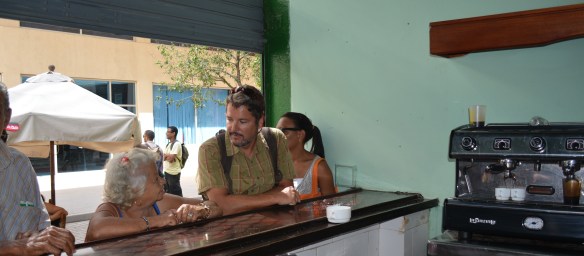
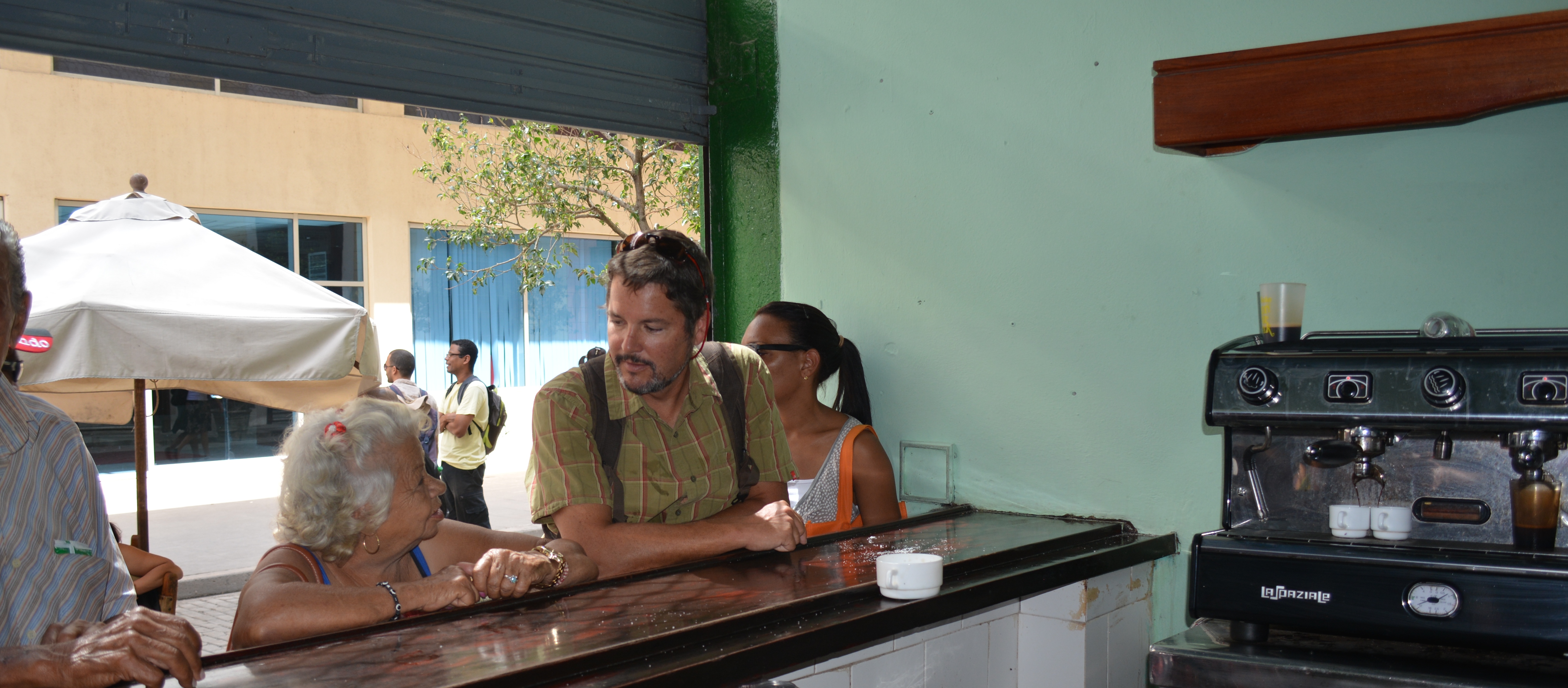
Pete and his new friend enjoying a Cuban coffee

Pete and Señora enjoying a Cuban coffee. No need to worry, everyone spoke to us and were patient with our Spanish and practiced their English.
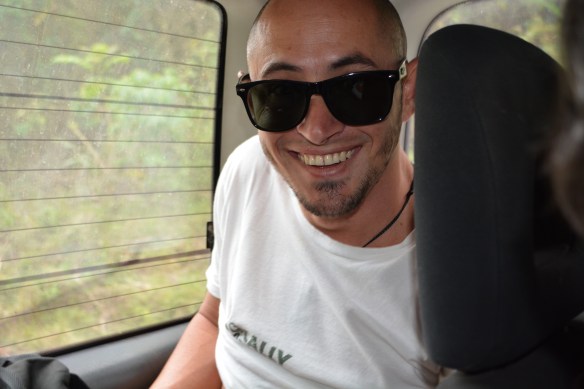
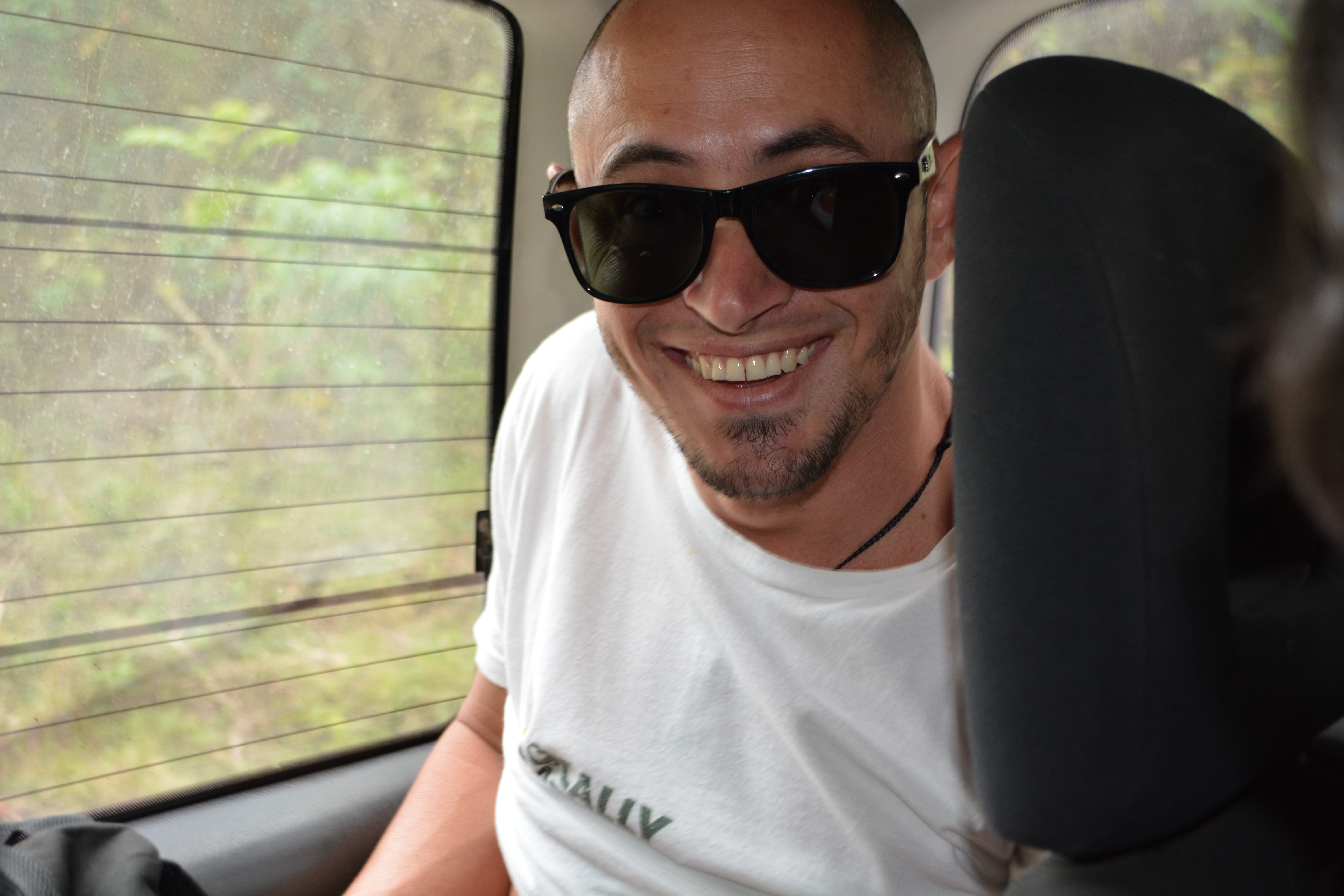
Our new amigo Olexis.  Always happy to answer all our questions and laugh at us for bringing our own toilet paper

Our new amigo Olexis. Always happy to answer all our questions and laugh at us for bringing our own toilet paper.

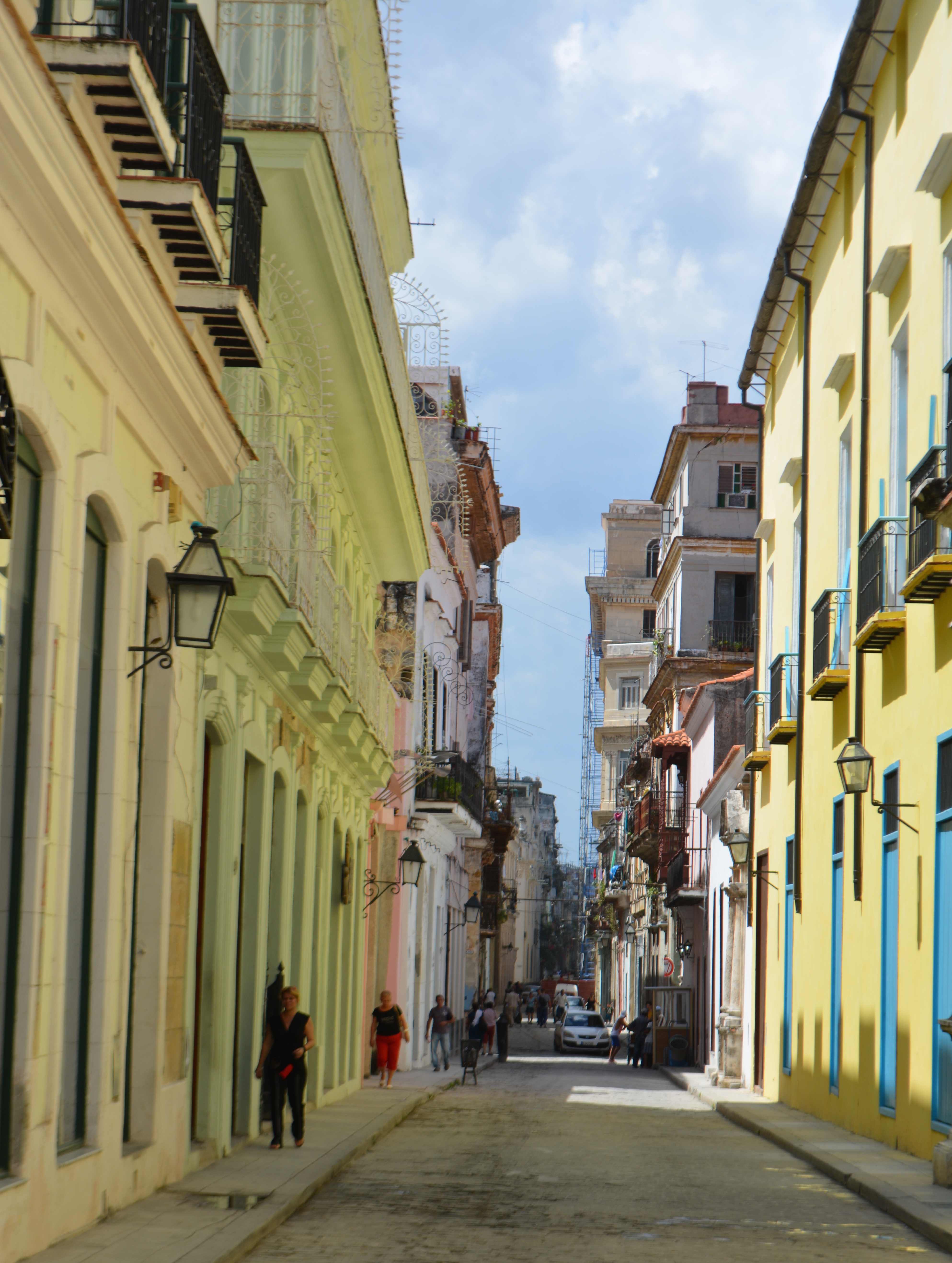
So many of our preconceived notions were way off, while many were confirmed and some things never quite explained. We just took it all in, which is easy to do because everywhere you look the colors, the architecture, the people always are interesting.  Click here for even more photos.
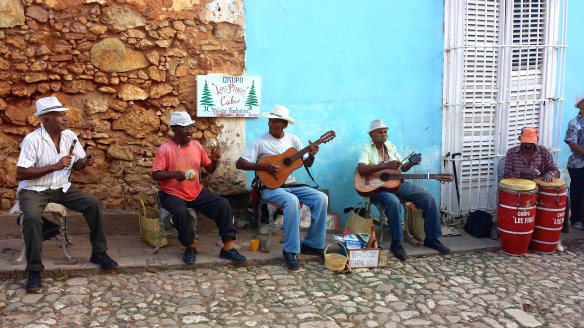
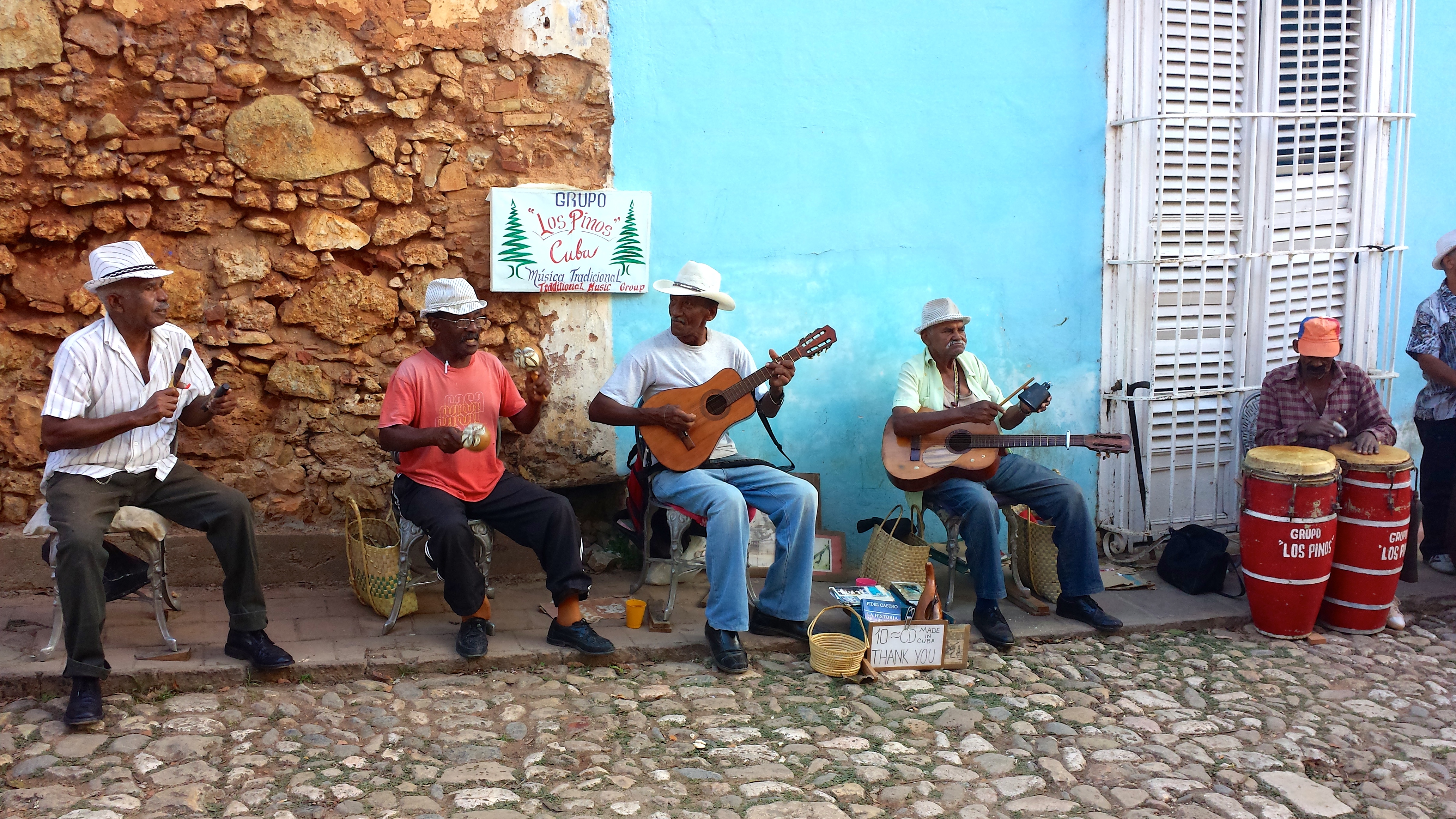
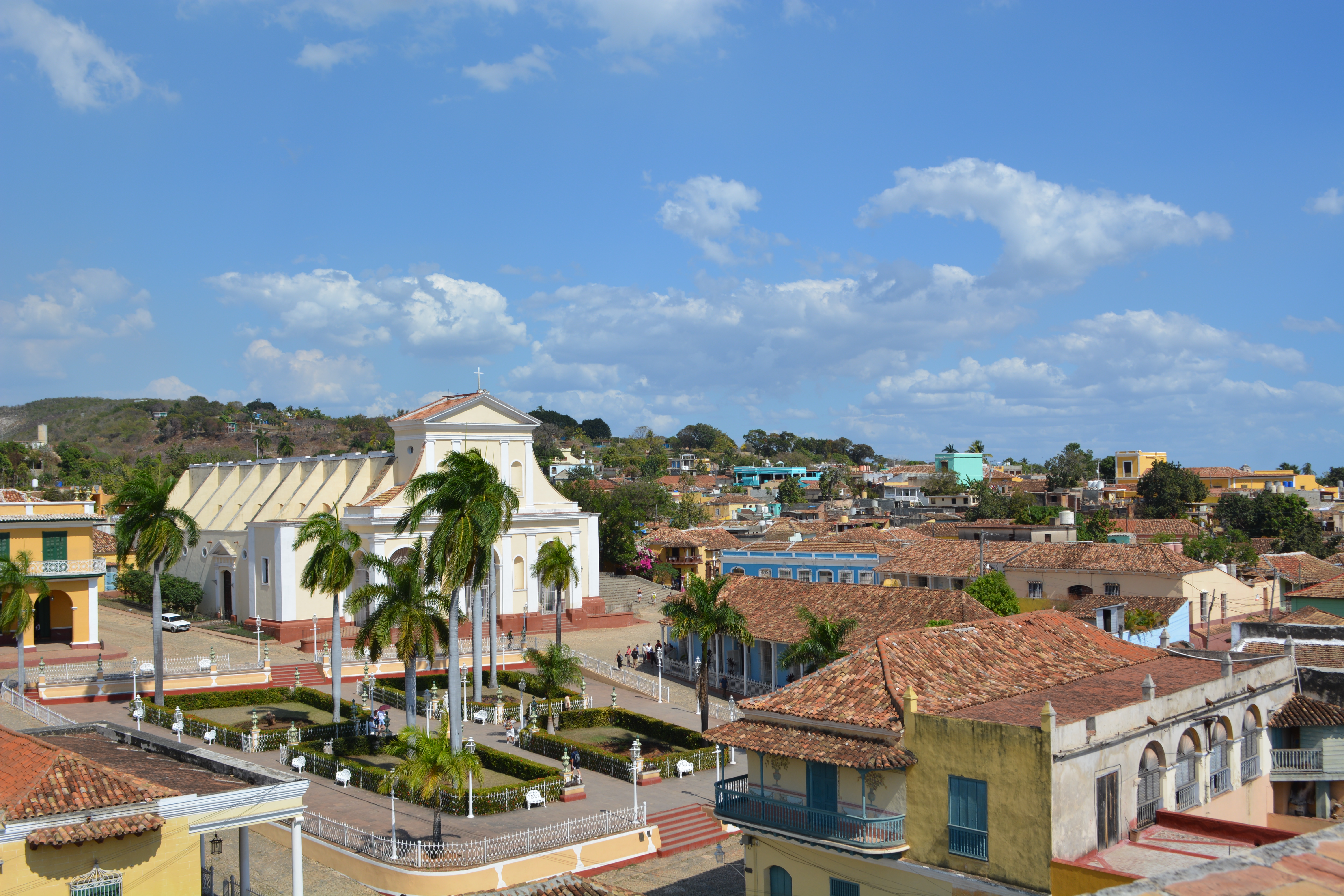
Musicians on the streets of Trinidad

Musicians on the streets of the historic city of Trinidad. We must have heard the song “Guantanamera” a million times from every band, street musician and radio. But we did learn the song is about a girl from Guantánamo. Seems so obvious now.
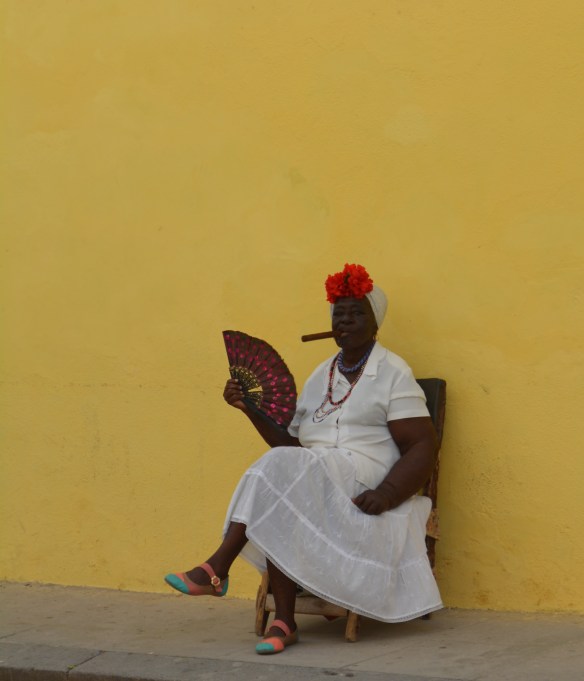
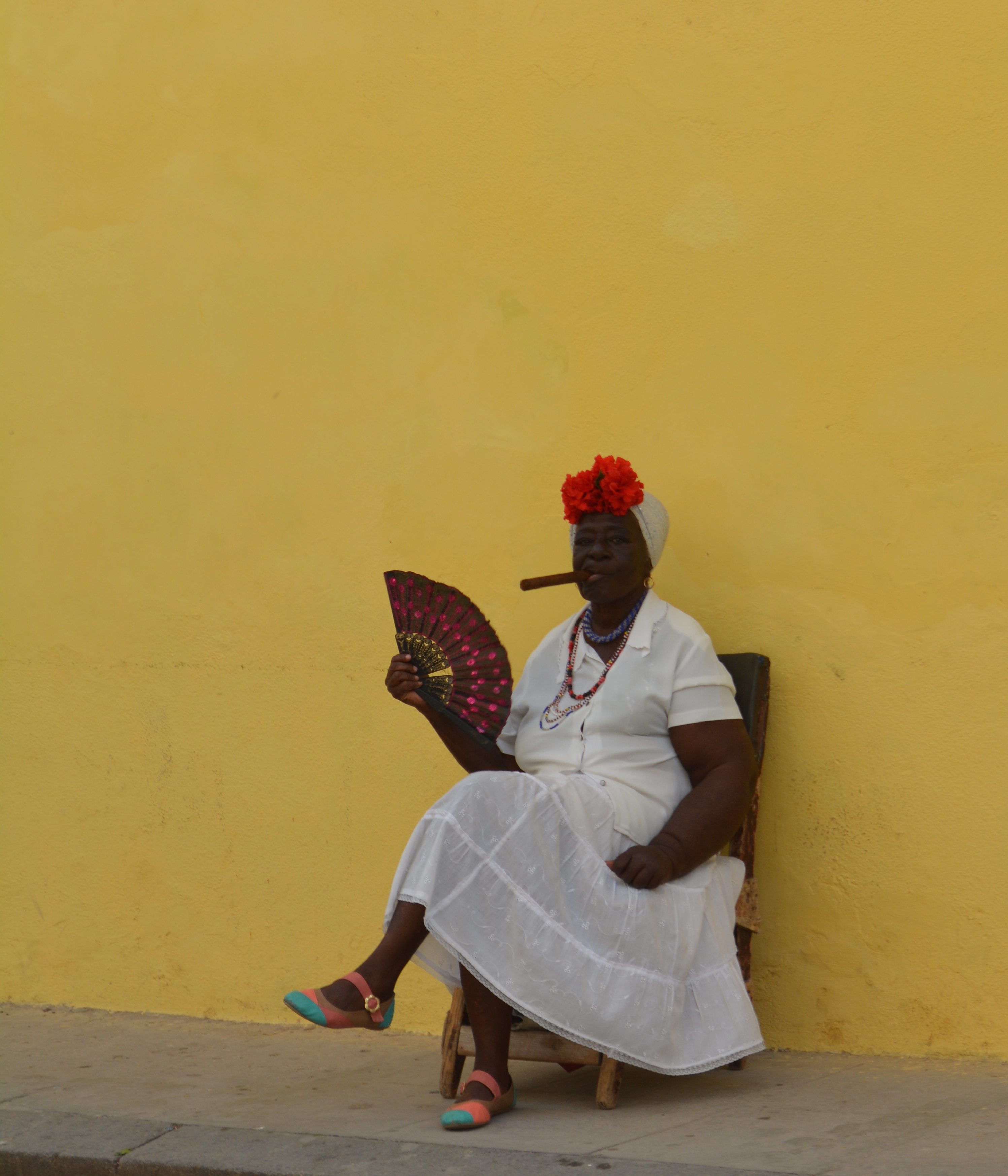
Cigar lady

Who says ladies don’t smoke cigars.

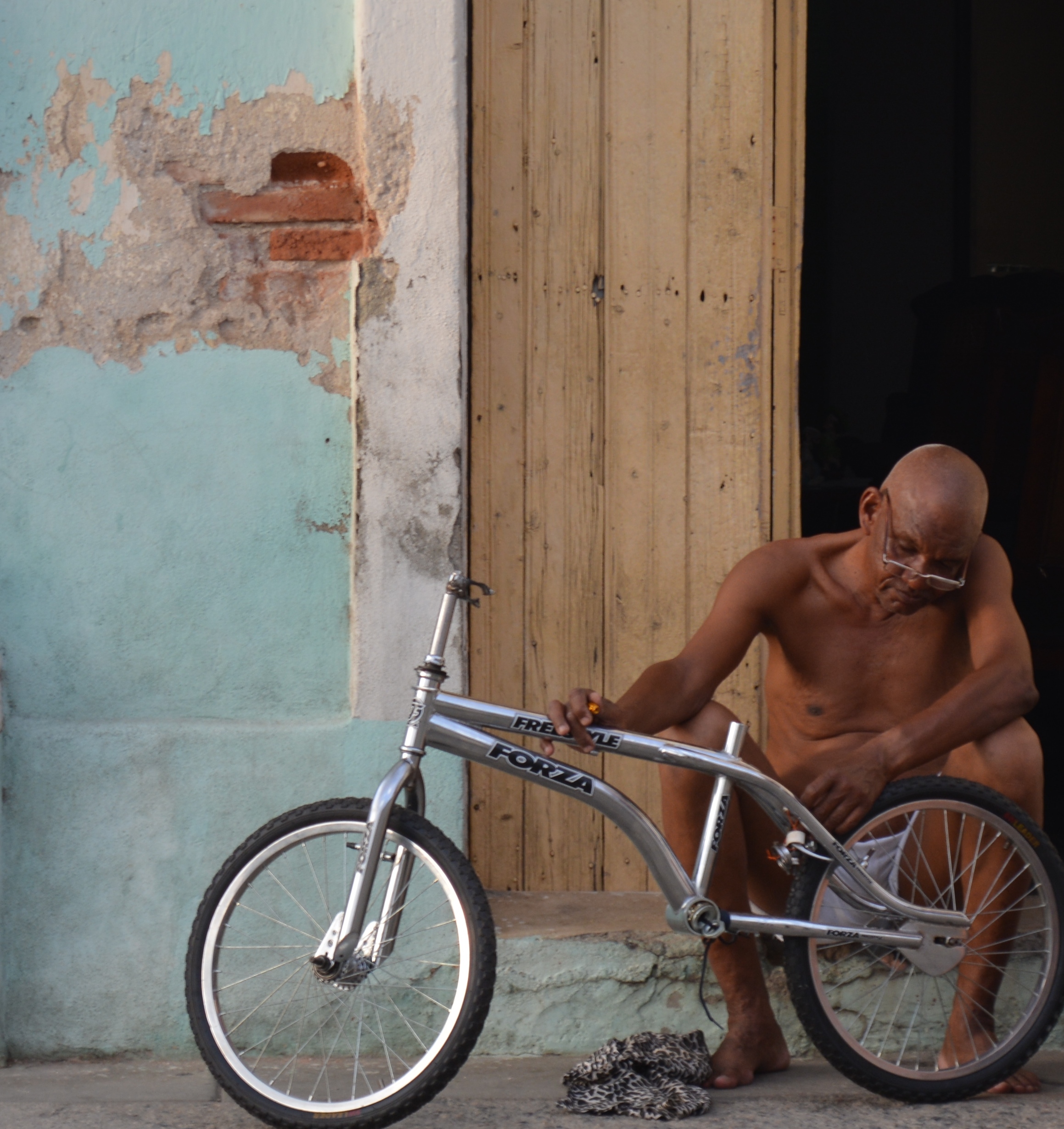
Man and bike

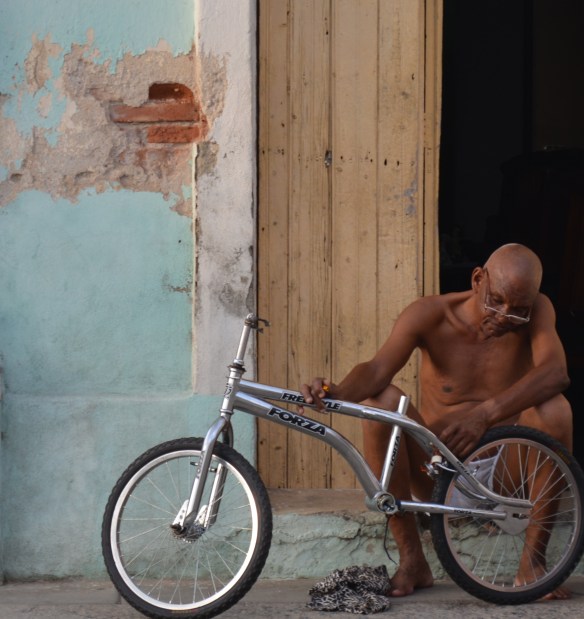
Recycle, refurbish or restore is the name of the game.
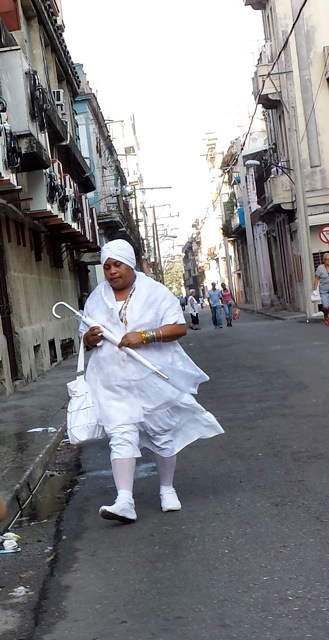
Initiates in the Santería religion are required to wear white clothing for a year, and they always carry a white umbrella.

Initiates in the Santería religion are required to wear white clothing for a year, and they always carry a white umbrella.

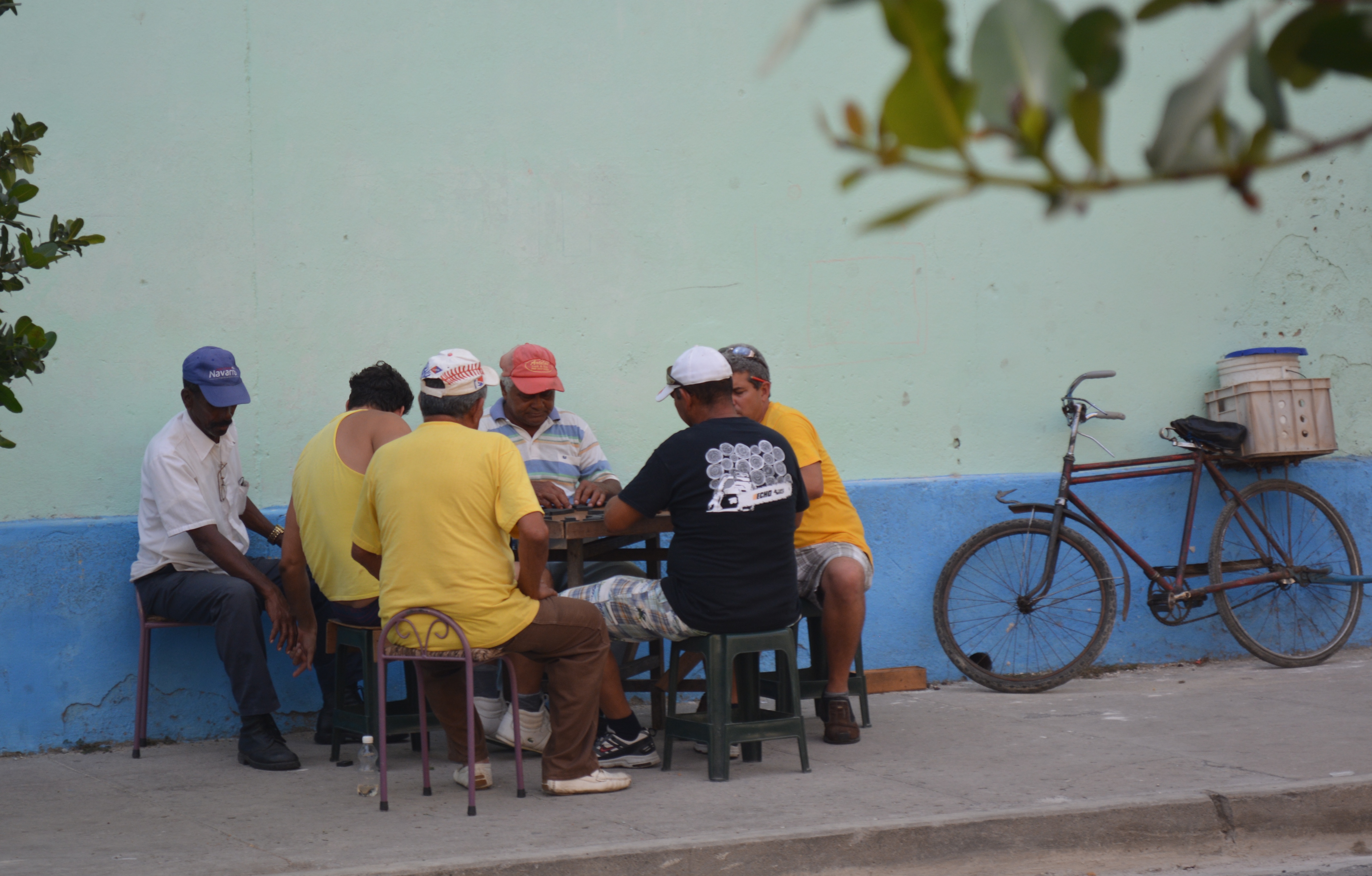
dominoes

Dominoes is a way of life.

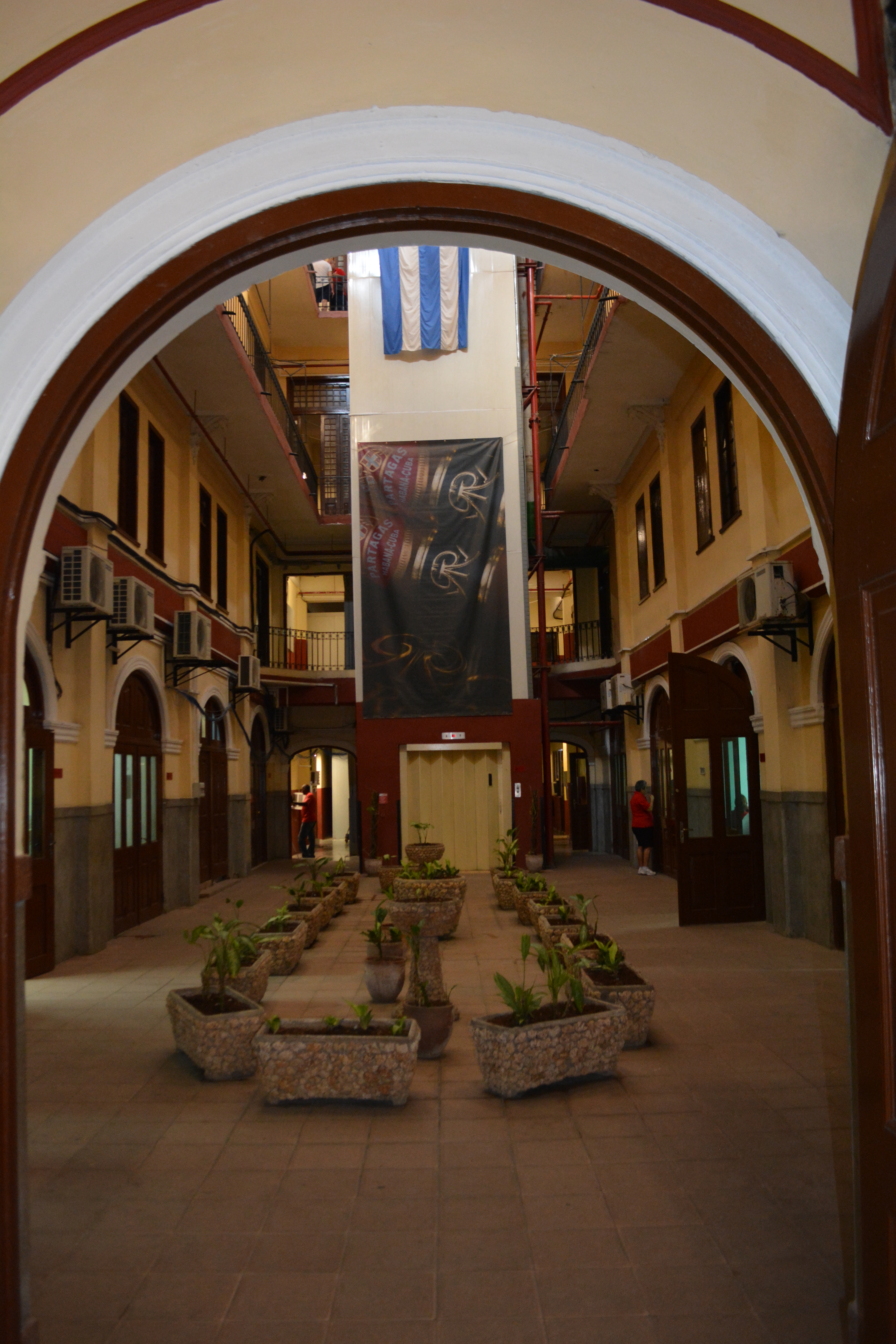
DSC_0469

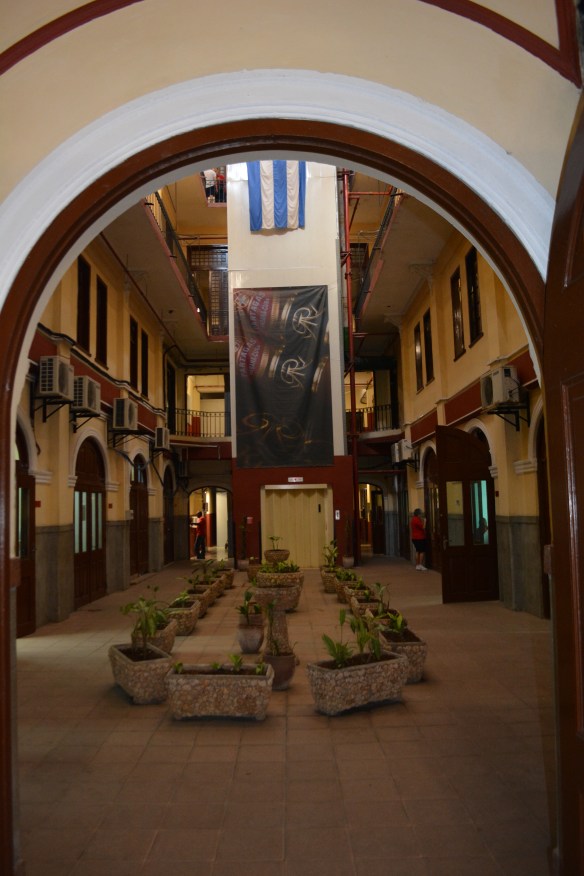
You are not allowed to take photos of the cigar workers, but this is the lobby of one of the many working cigar factories in Havana. Workers train for 9 months to learn how to roll the perfect cigar. Most workers were in their twenties and thirties as older workers develop carpal tunnel from the repetitive motions.
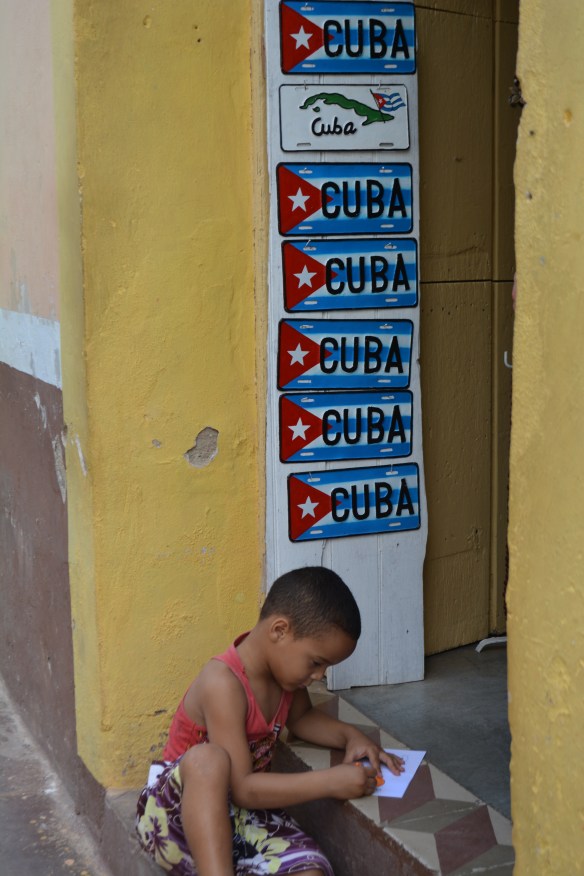
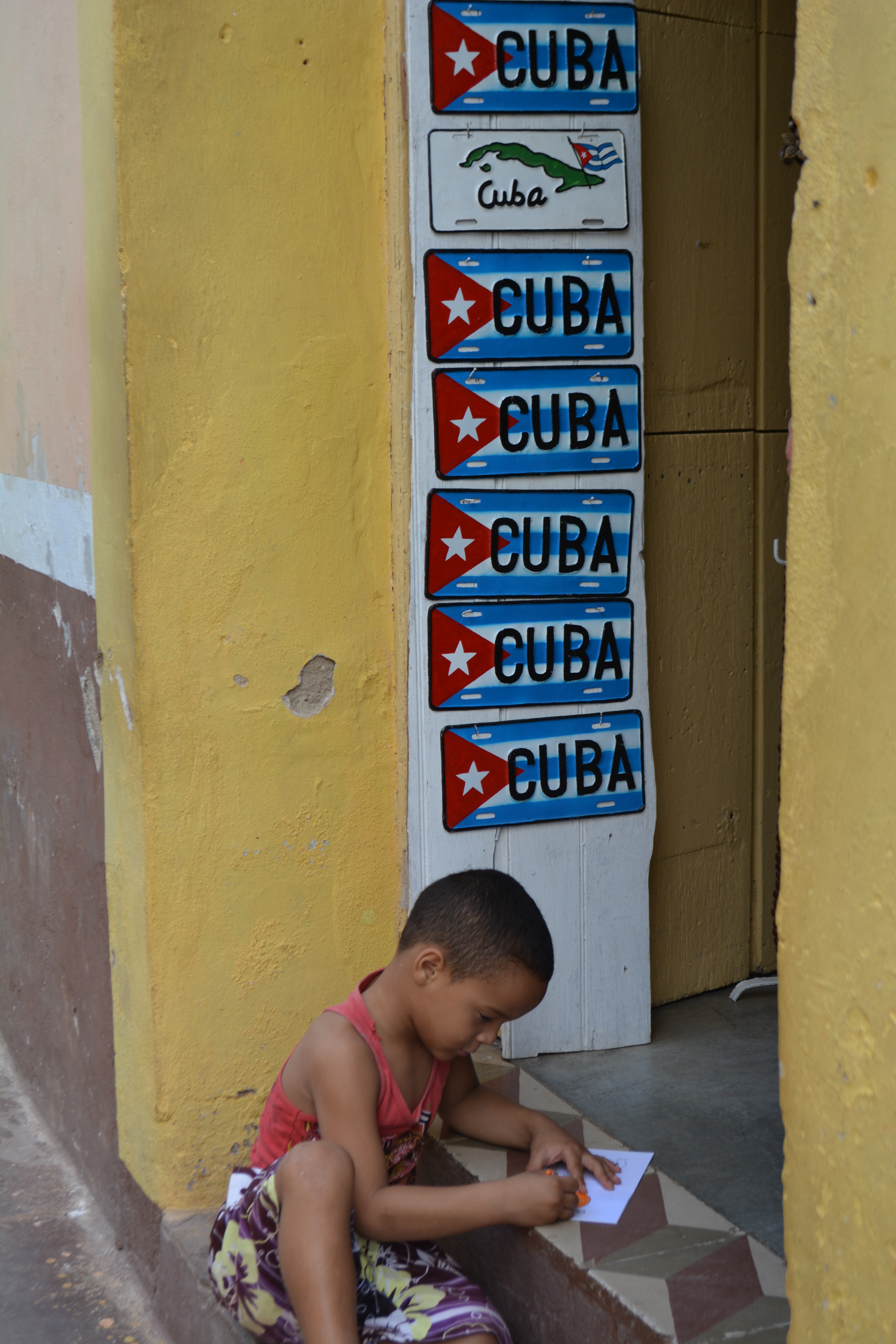
DSC_0361

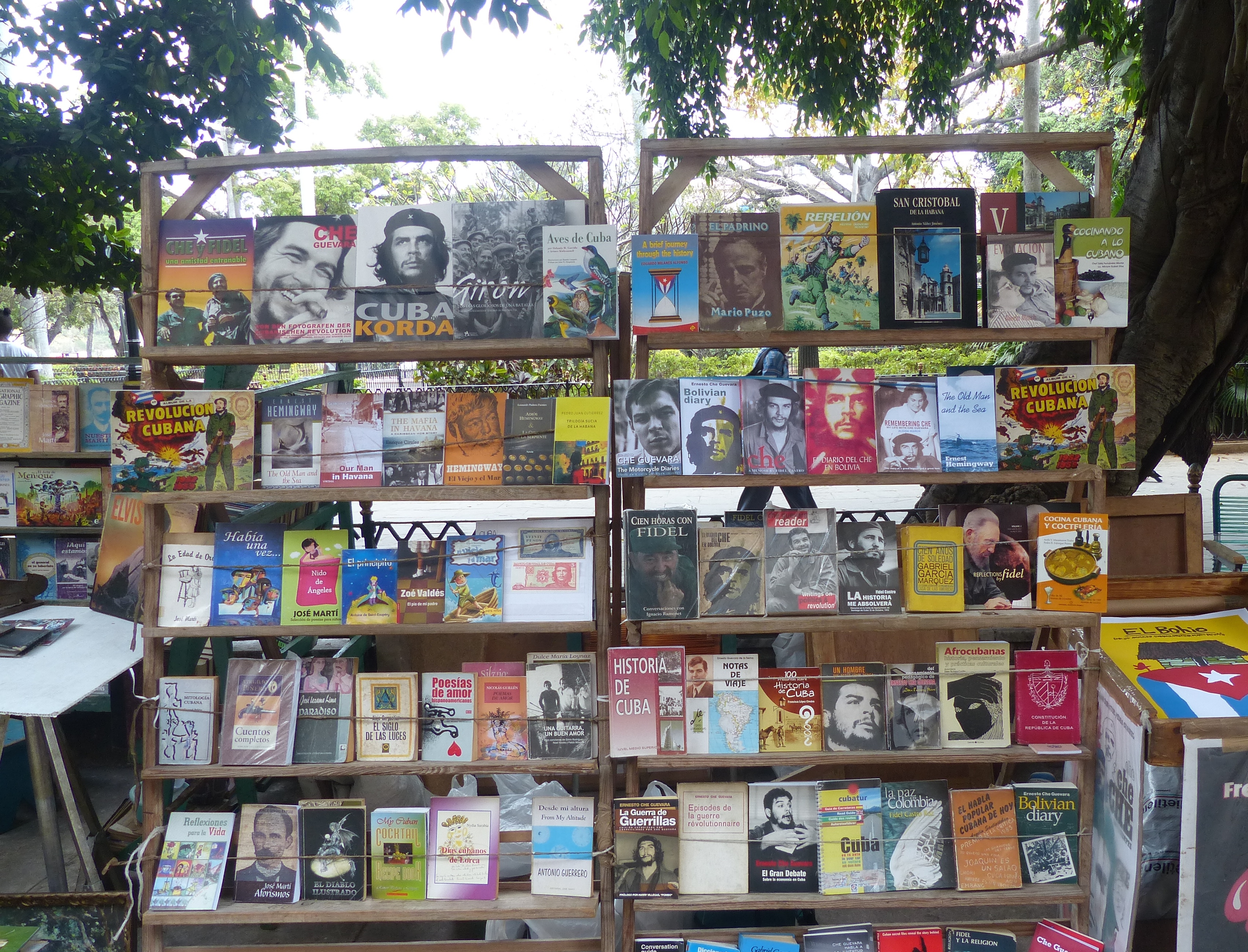
Souvenir shops with pro-Cuba items and images of Che abound.
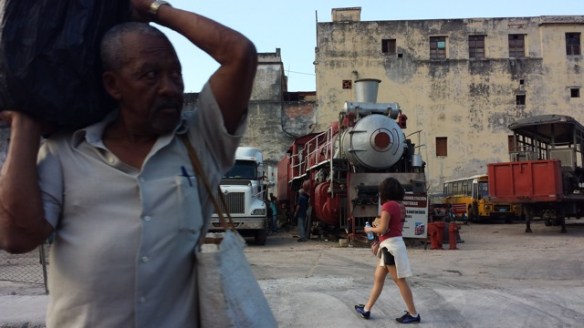
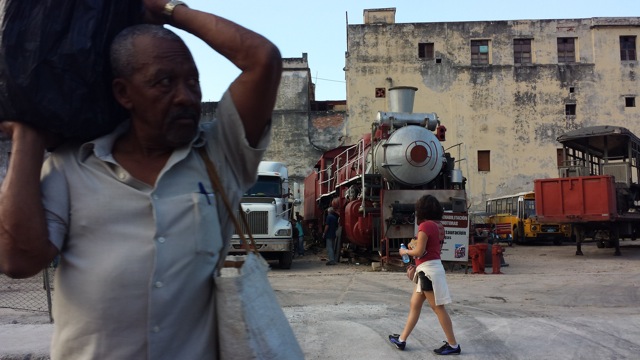
20150305_162359

Just an interesting shot.

pedestrian walkway

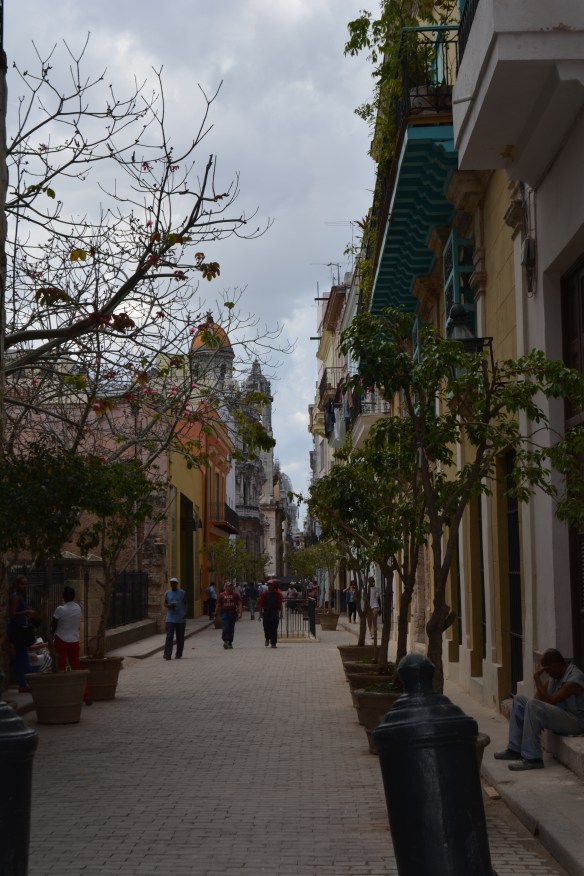
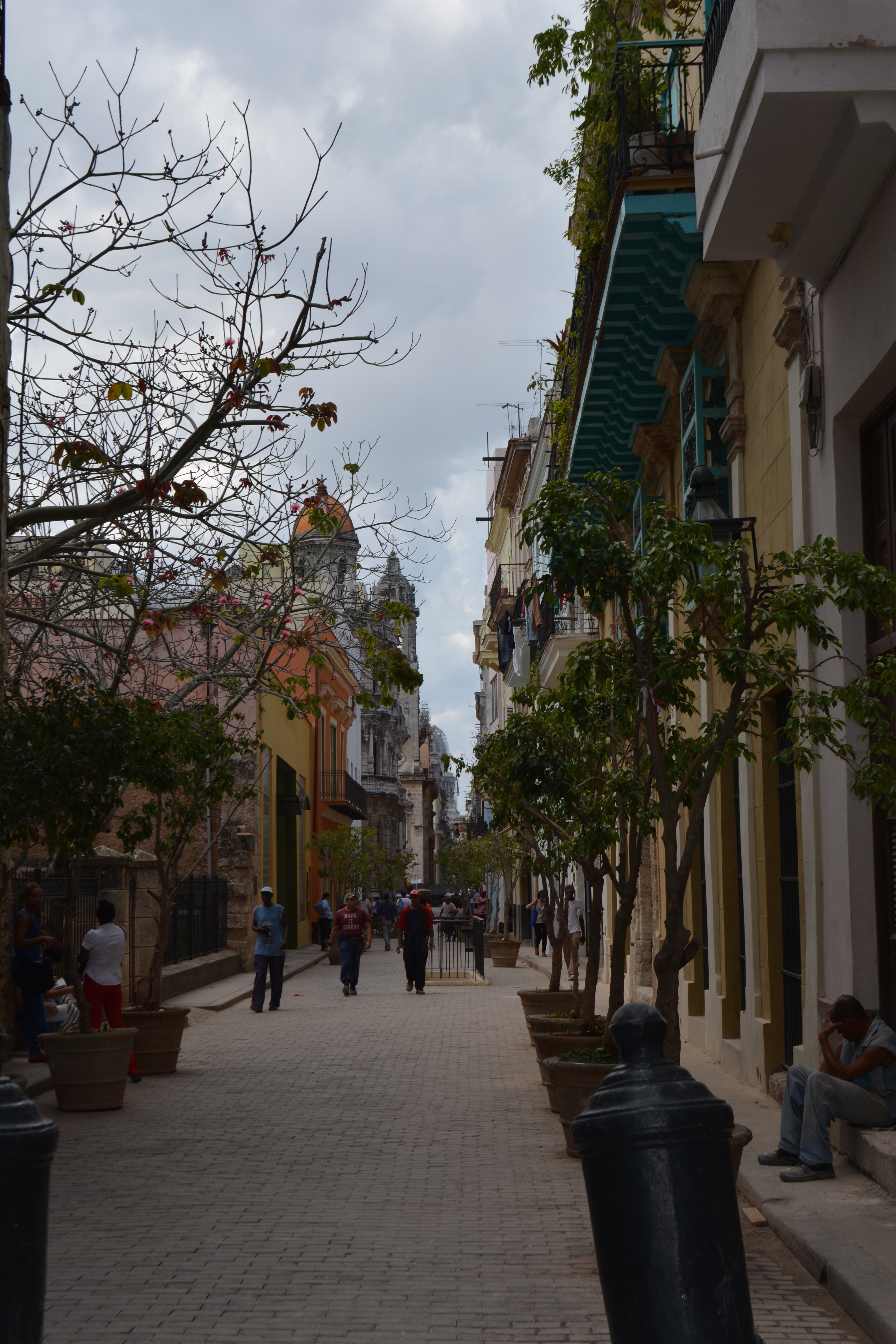
Lovely pedestrian walkway in Havana.

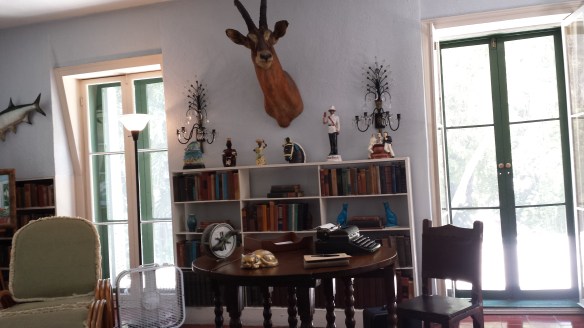
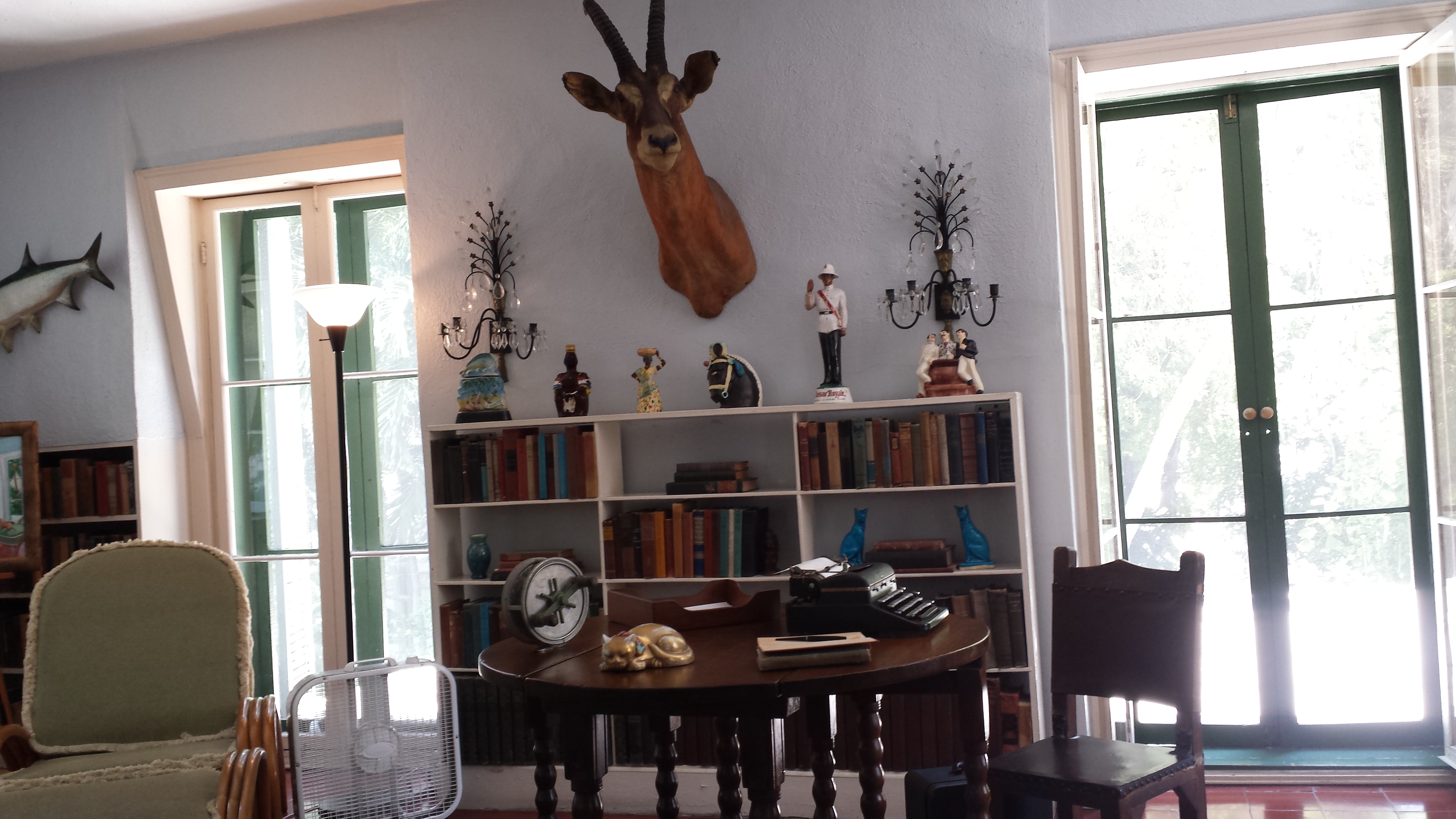
If there is one thing the world seems to agree upon and that is Earnest Hemingway.  His home stays as is the day he left Havana.

If there is one personality the world seems to admire, that is Earnest Hemingway. His home is as the day he left Havana.

There are some 4 star hotels in Cuba’s larger cities that have the same luxuries as those you’d find anywhere else.  But they are completely disconnected from everyday life on the island.  Rich little tourist islands in a sea of poverty.
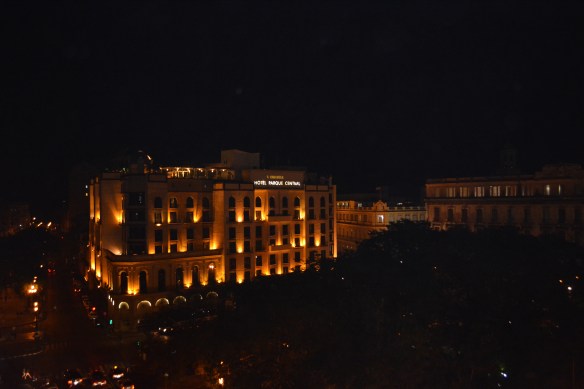
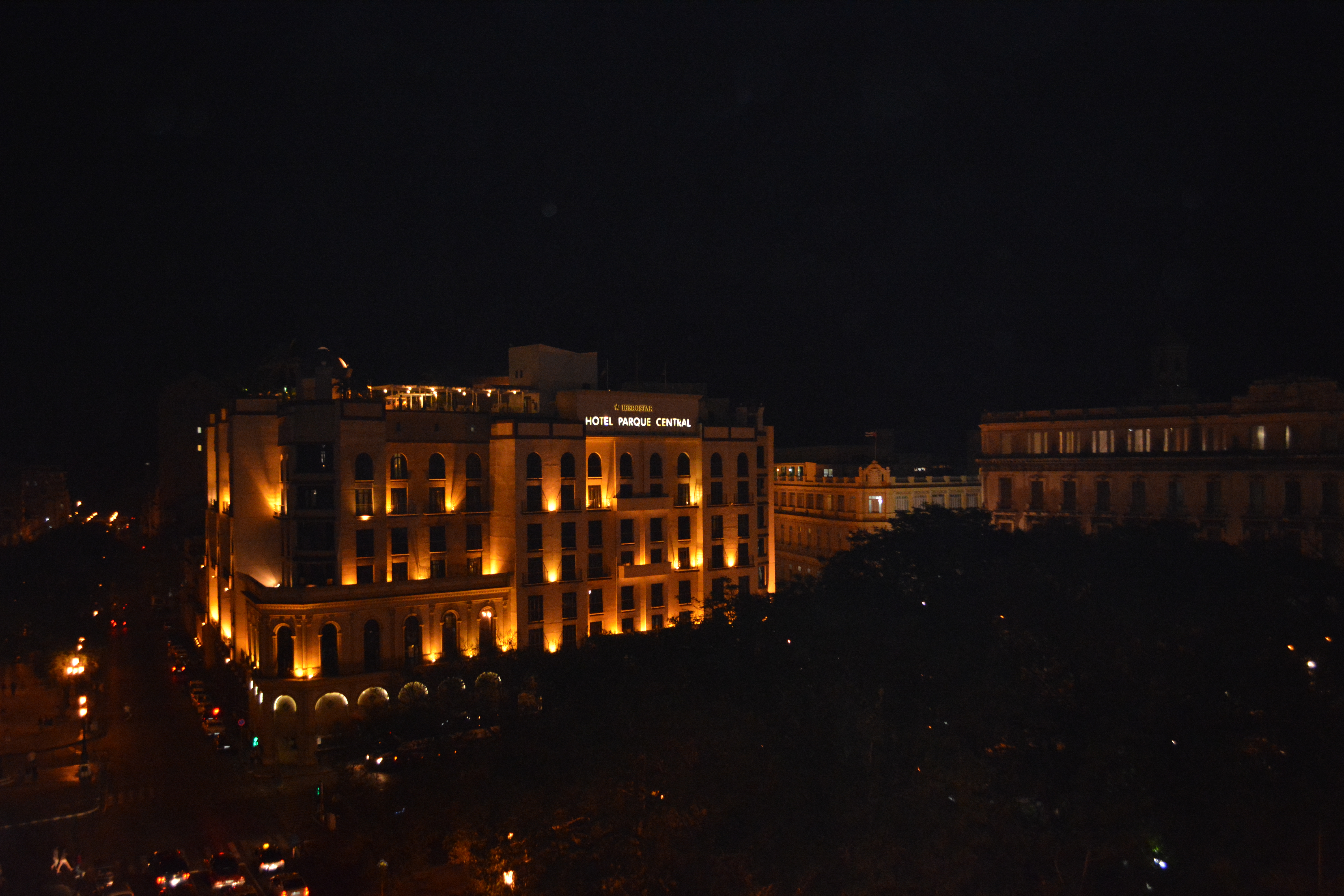
Iberostar Hotel

Iberostar Hotel

For example, we stayed in an Iberostar hotel our first two nights in Havana to acclimate a bit.  They had cable TV, including CNN, BBC, HBO and the other usual channels.  This caused us to be surprised that media consumption in Cuba was not that much different from our own.  Is there anywhere in the world that doesn’t have “The Big Bang Theory” on constantly?   It was only later we learned that these TV channels are limited to international hotels.  For everyday Cubans, the country offers two local TV news channels – both government owned – and one international news channel. Guess where that one is from? … Venezuela.
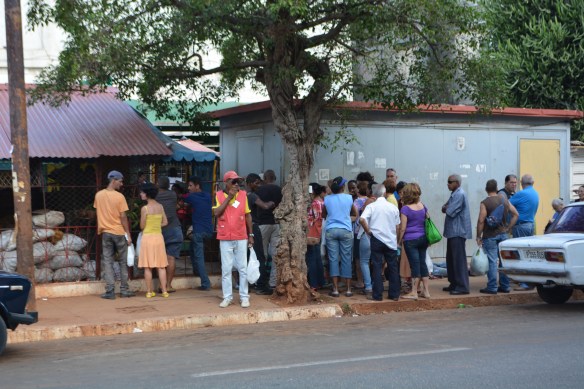
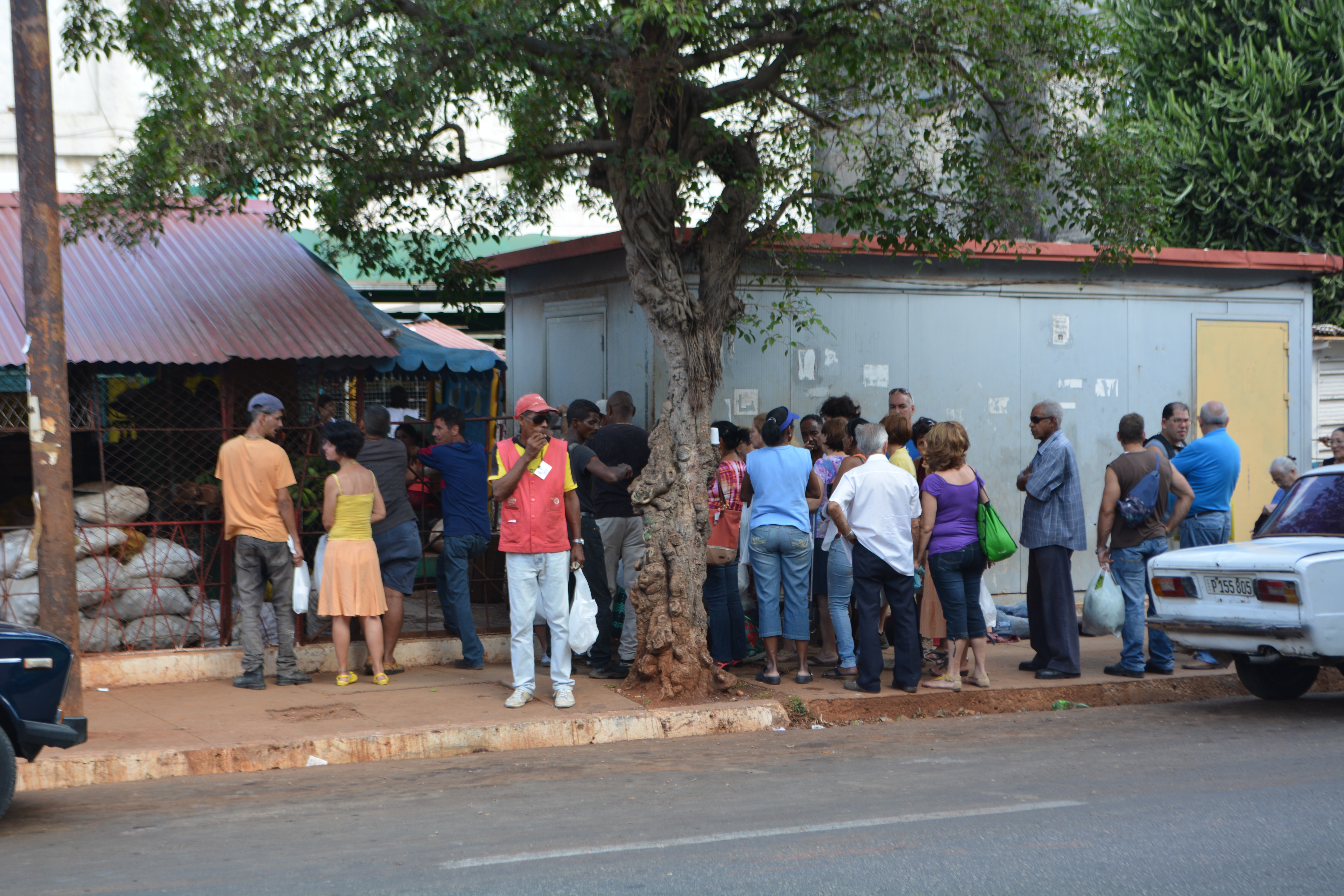
On line for media?  Food? To pay a bill?  Folks waiting on line is commonplace.

On line for media? Food? To pay a bill? Folks waiting on lines is commonplace.

Internet access is virtually non-existent. It exists in a few college areas and certain other designated spots, and is censored, expensive and slow.   But the people are resourceful. They know all the international pop culture references. We found out that this is due to one of the many ingenious black market practices that exist here. There is a service they call “The Package” or “The Terrabyte”. On a weekly basis copies of current popular TV shows, movies, magazines, etc. that have been accessed via satellite are made available to locals in kiosks around the country. Memory sticks and drives are filled a la carte with whatever media the customer desires.   So people in both the cities and countryside knew about “Breaking Bad”, “Game of Thrones” and those ubiquitous Kardashians.
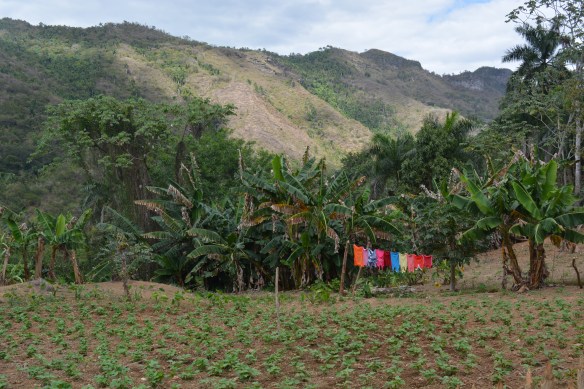
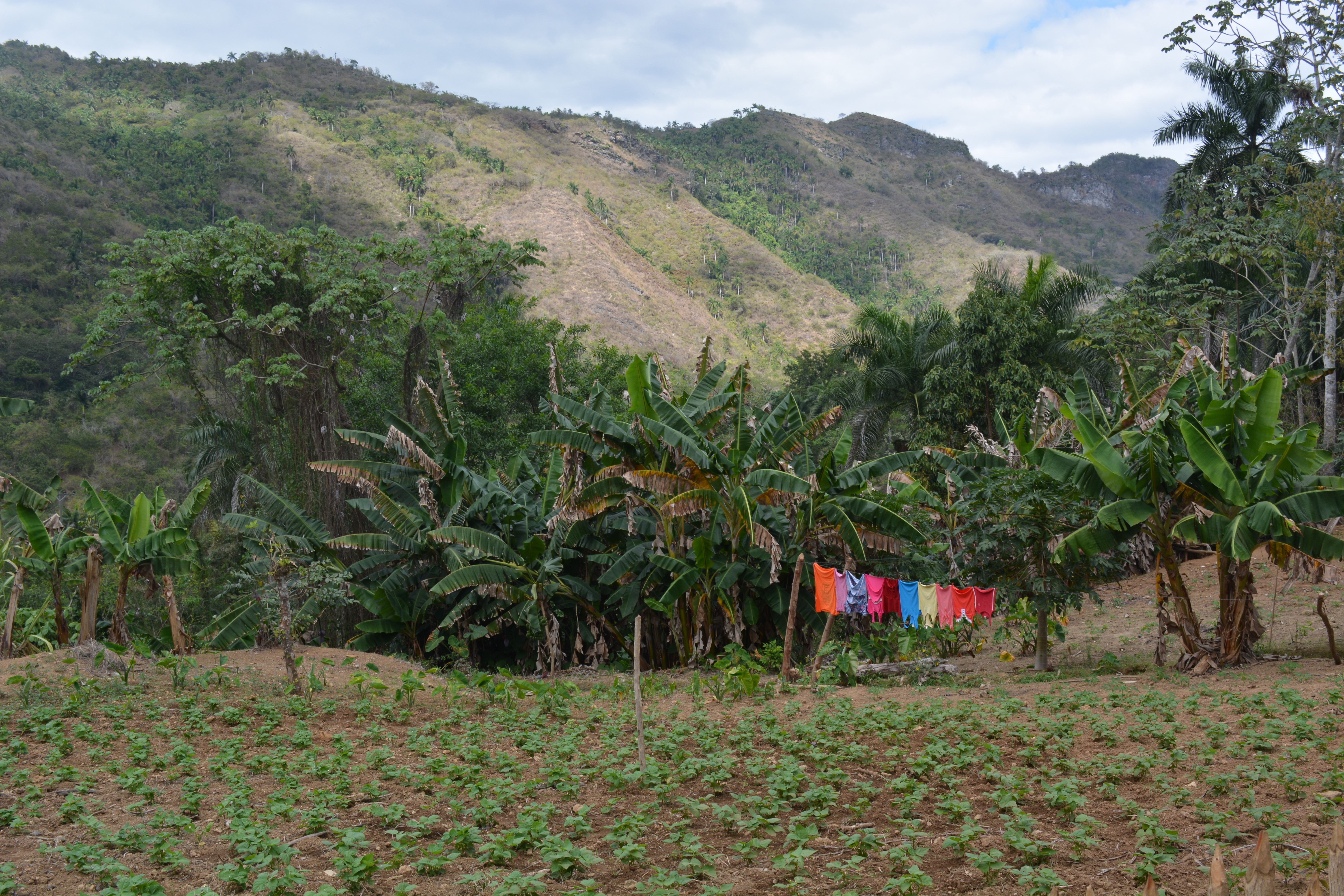
Cuban countryside
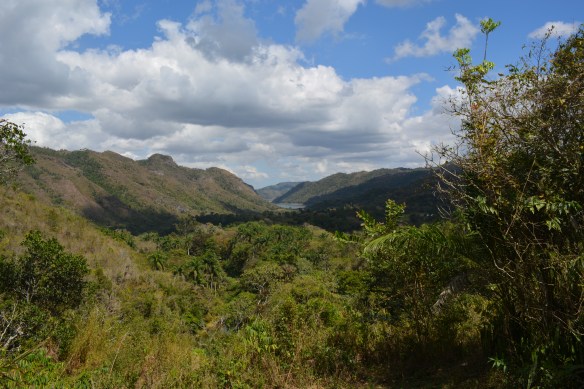
Cuban countryside

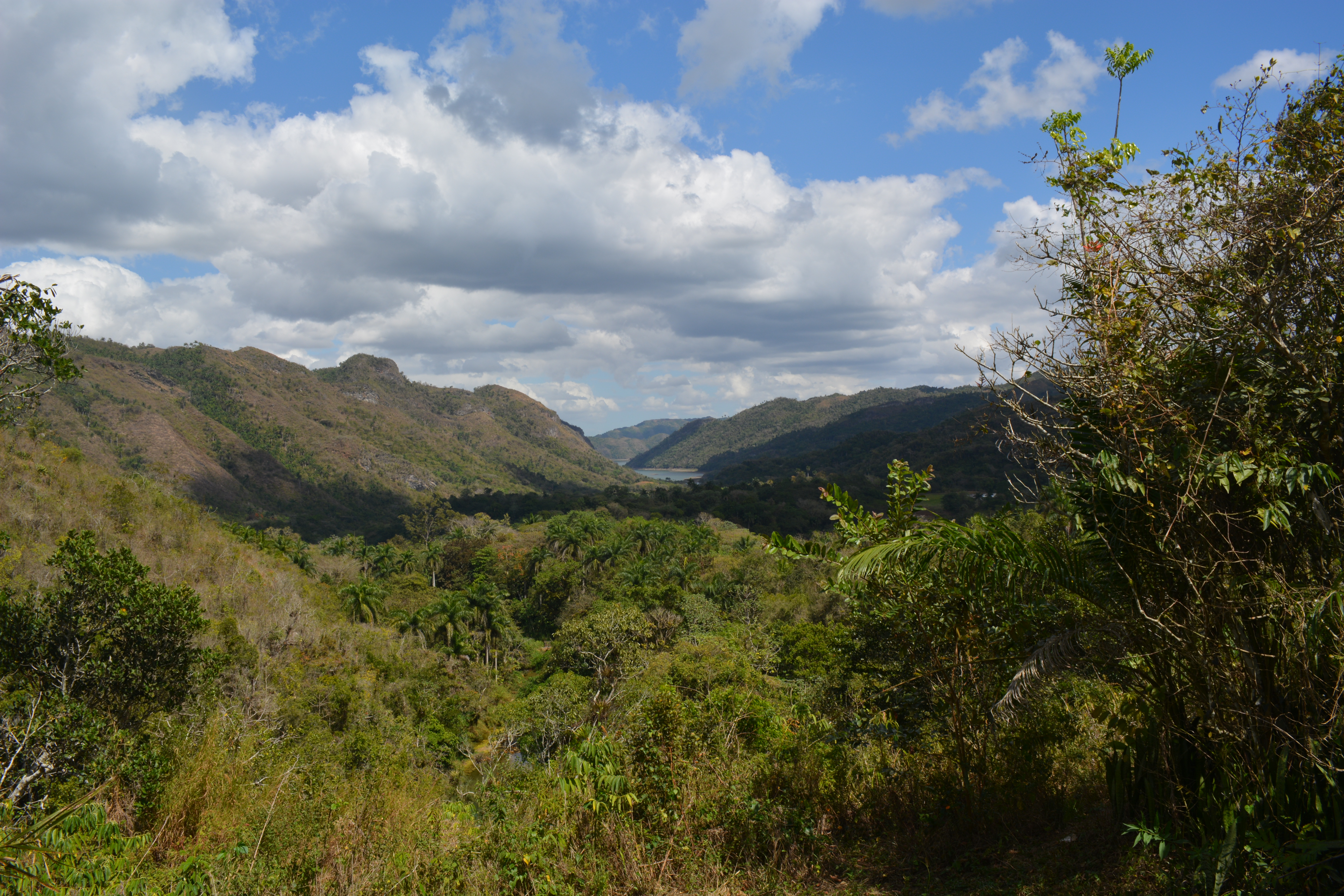
Sierra del Escambray mountains

Sierra del Escambray mountains

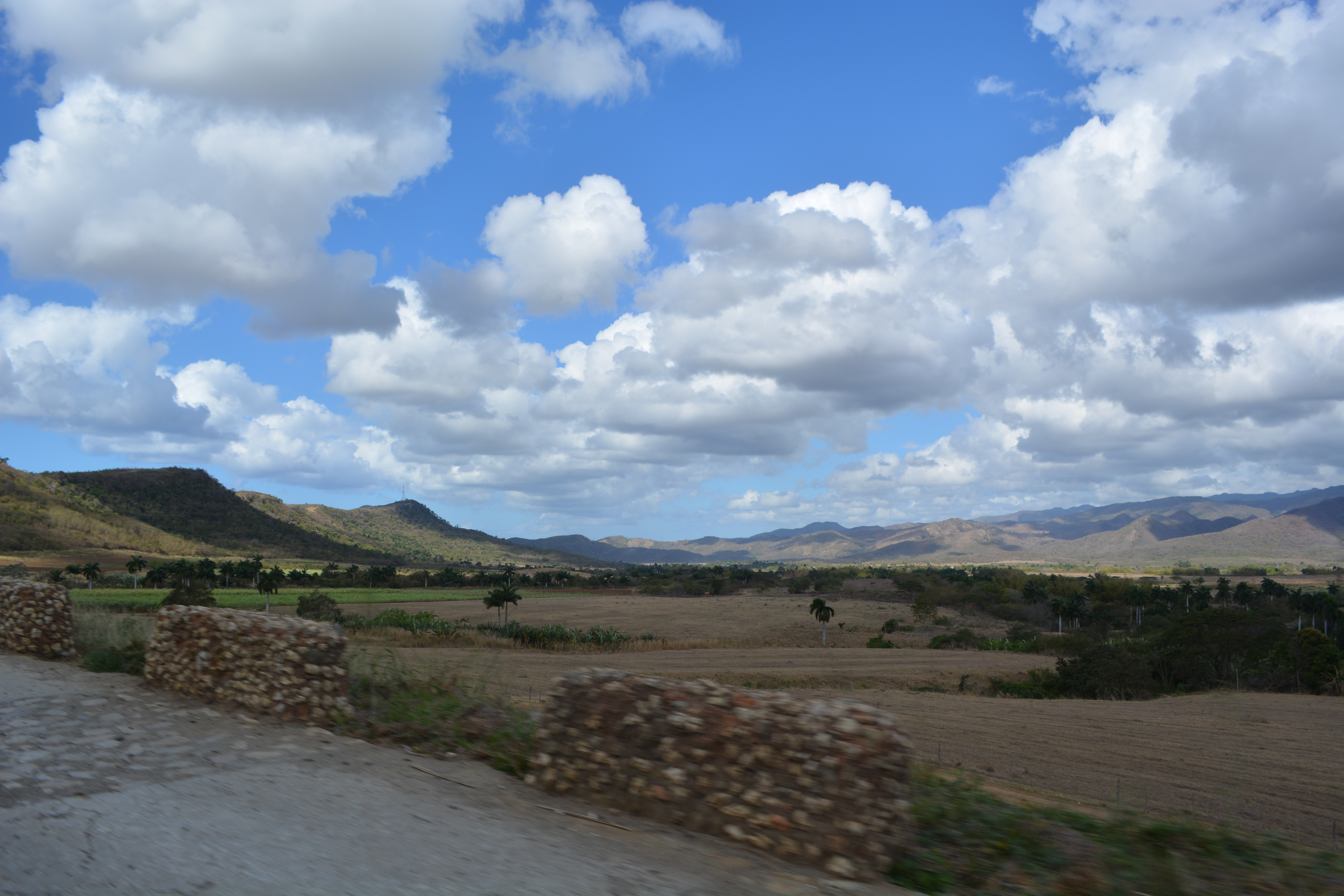
Cuba is a country of contradictions.  The countryside is beautiful and largely undeveloped. But this is mainly due to the lack of investment funds available and red tape for development anywhere.  Refreshingly there is almost no litter along the roads, but we learned this is because everything that can be recycled is recycled.
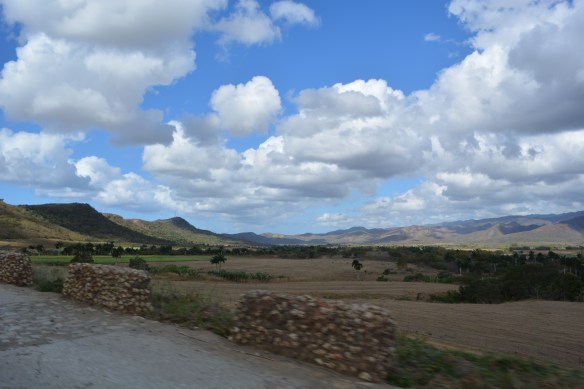
Wide open undeveloped land.

Wide open undeveloped land.

Due to its expense there is very little disposable plastic waste.  Many items are still sold in glass and metal containers.
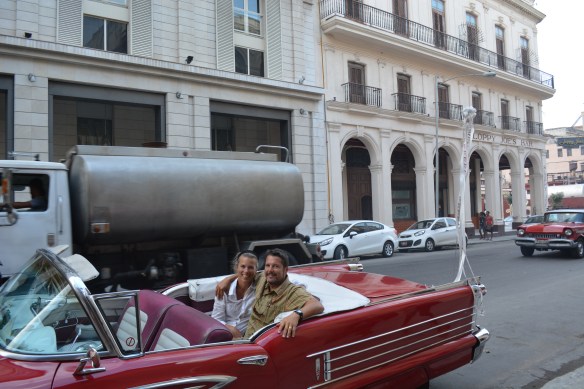
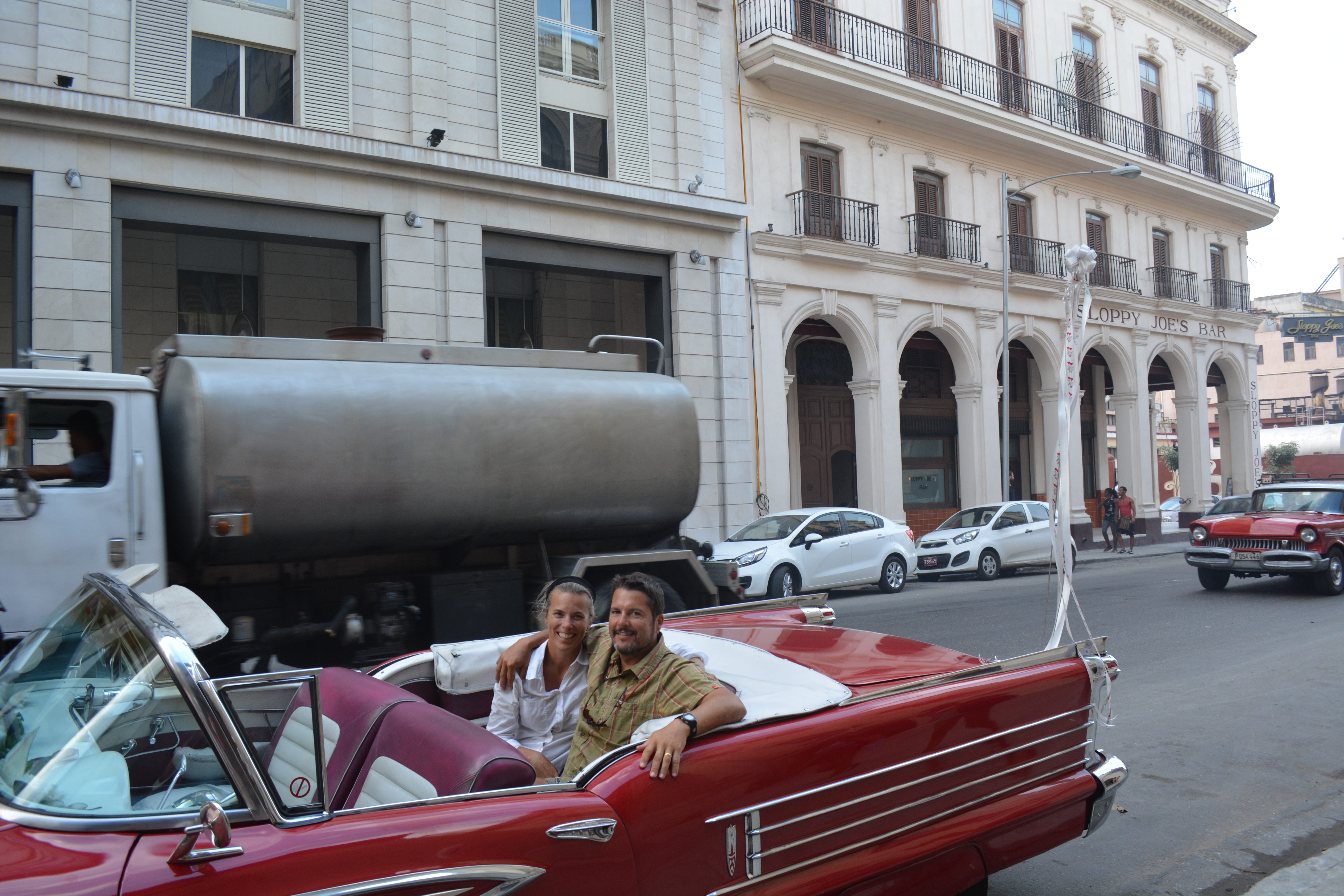
1950s car

Touring Havana in 1950’s convertible

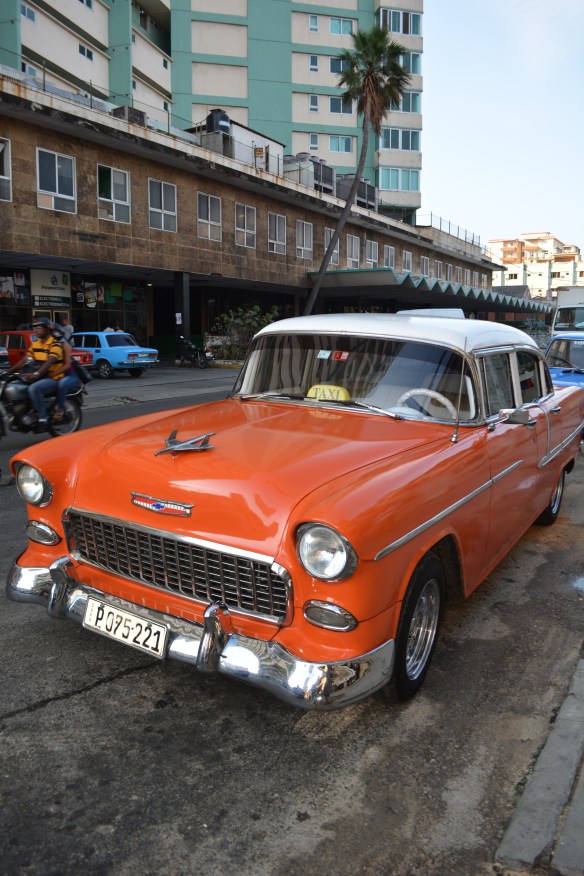
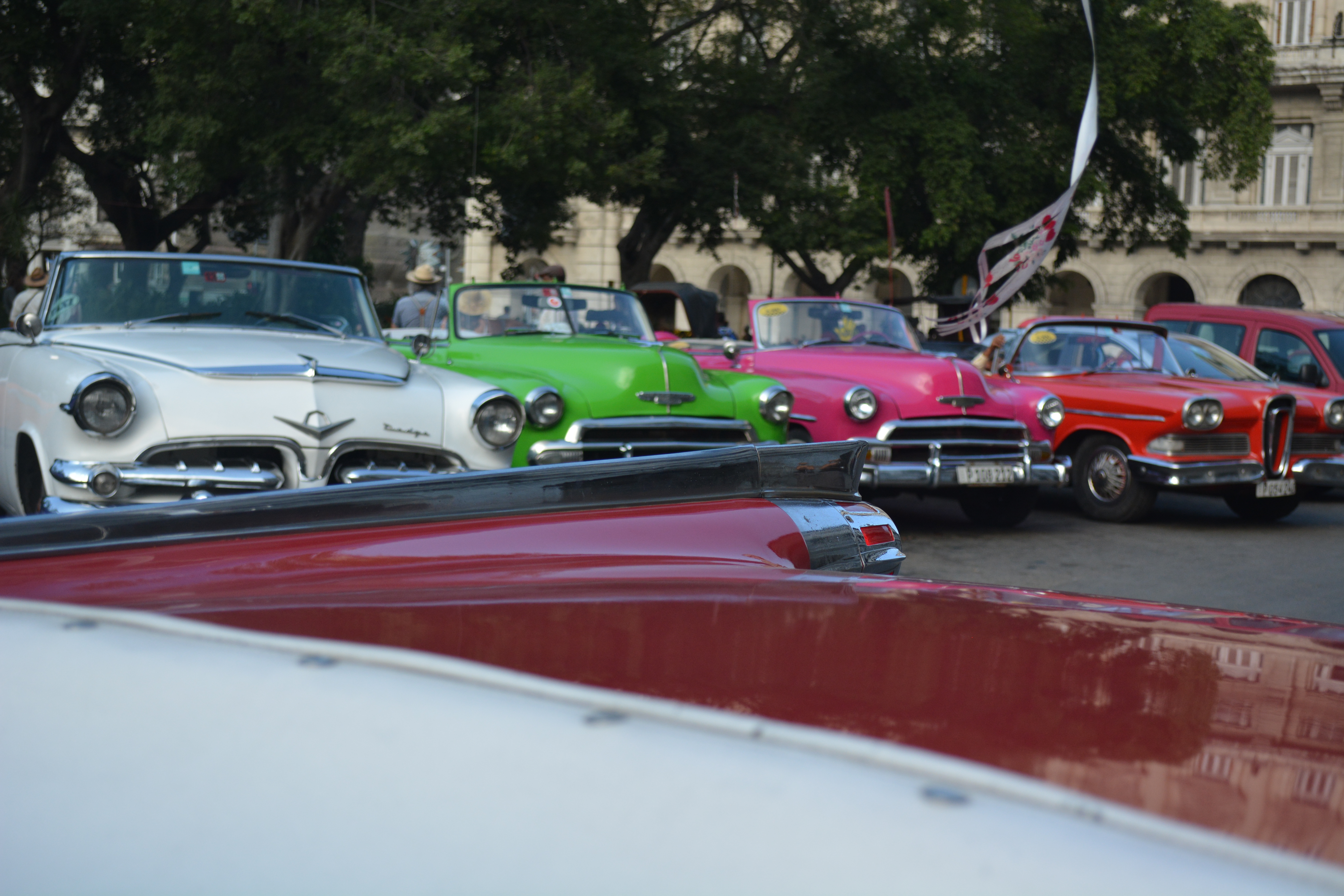
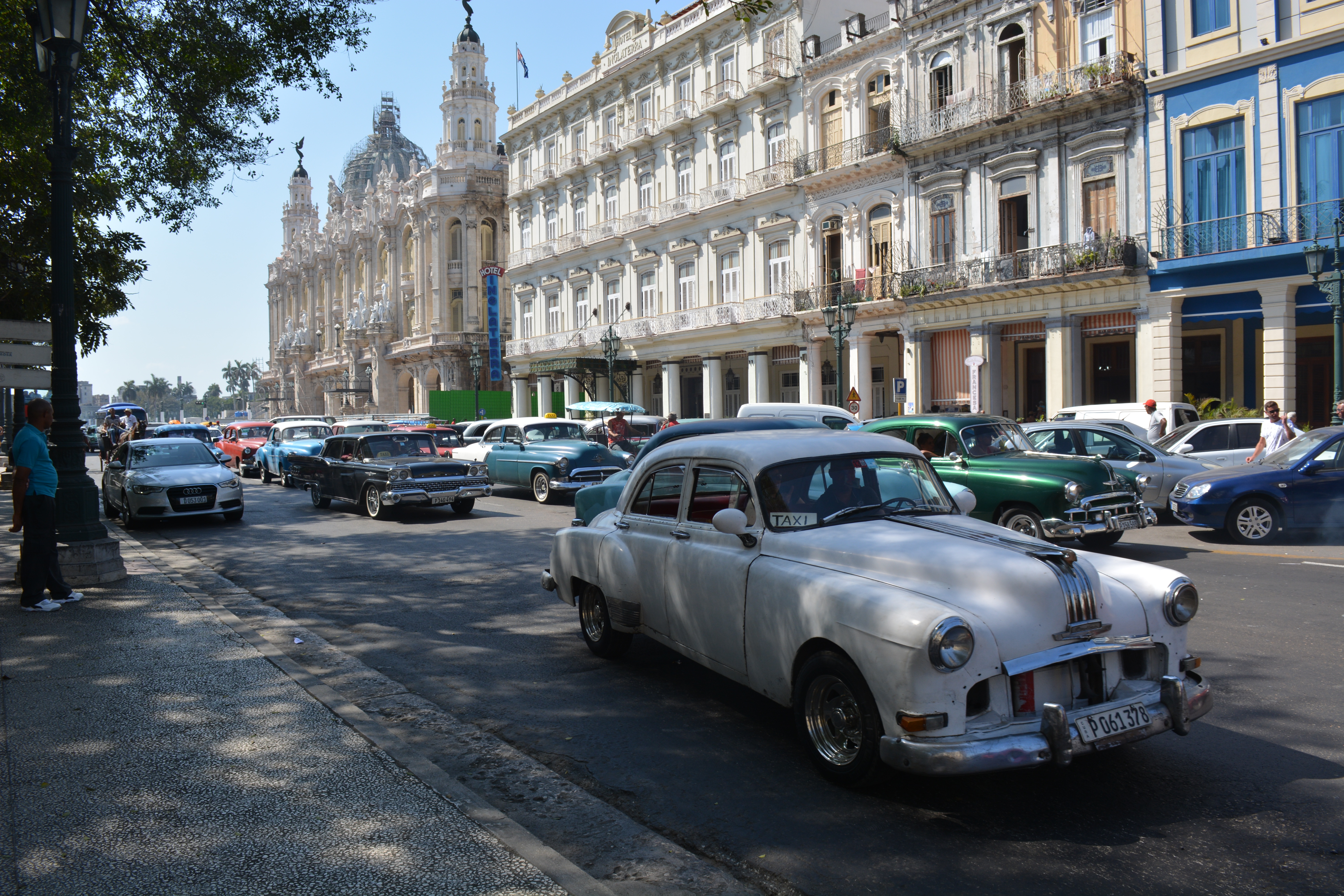
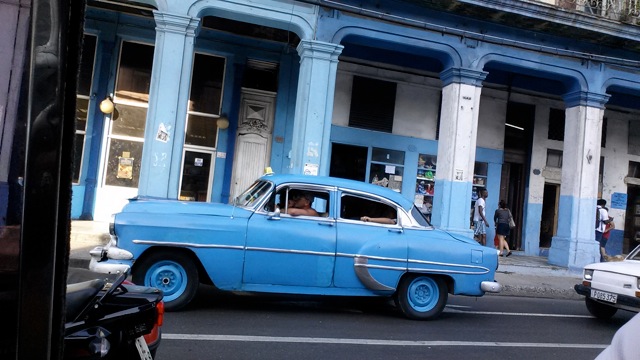
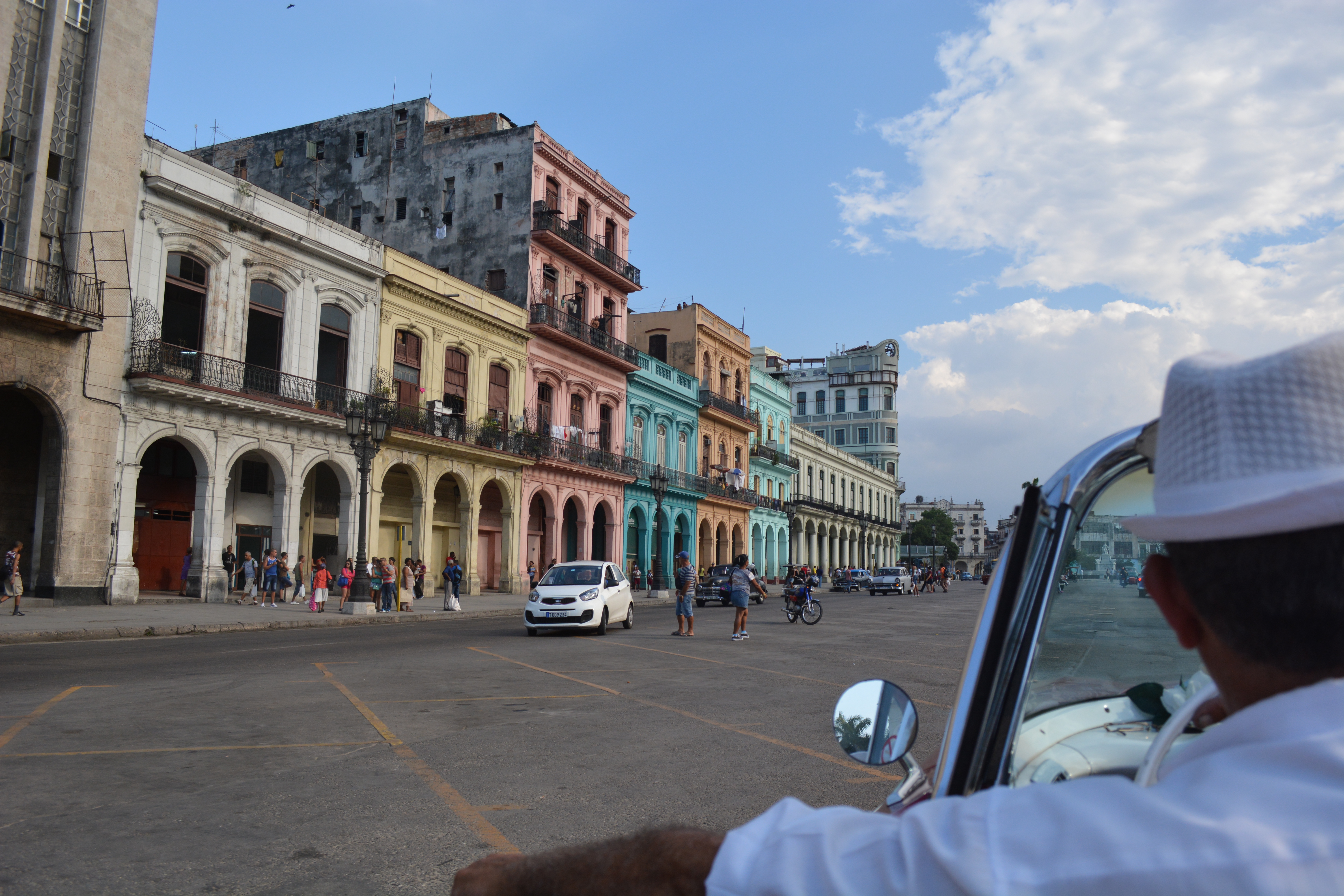
Cubans are pros at making the best of what they have.  Just look at all those old American cars.  Yeah, they are here – lots of them.  They’ve kept these cars running and passed them down from generation to generation for 50 or 60 years.  We assumed they were kind of a tourist gimmick, preserved for some propaganda reason. But there are TONS of them all over the island in varying states of repair, from glistening perfection to hideous, smoking beasts with more bondo than sheet metal.

colorful cars

Taxis lined up.

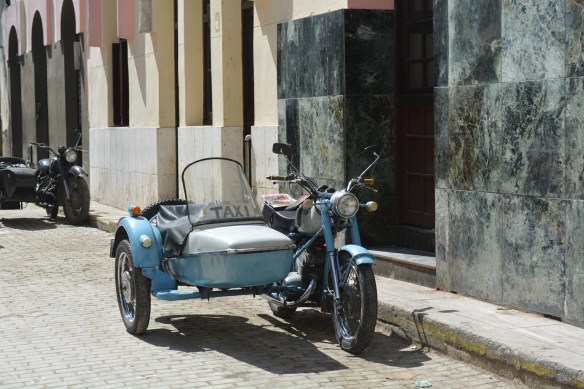
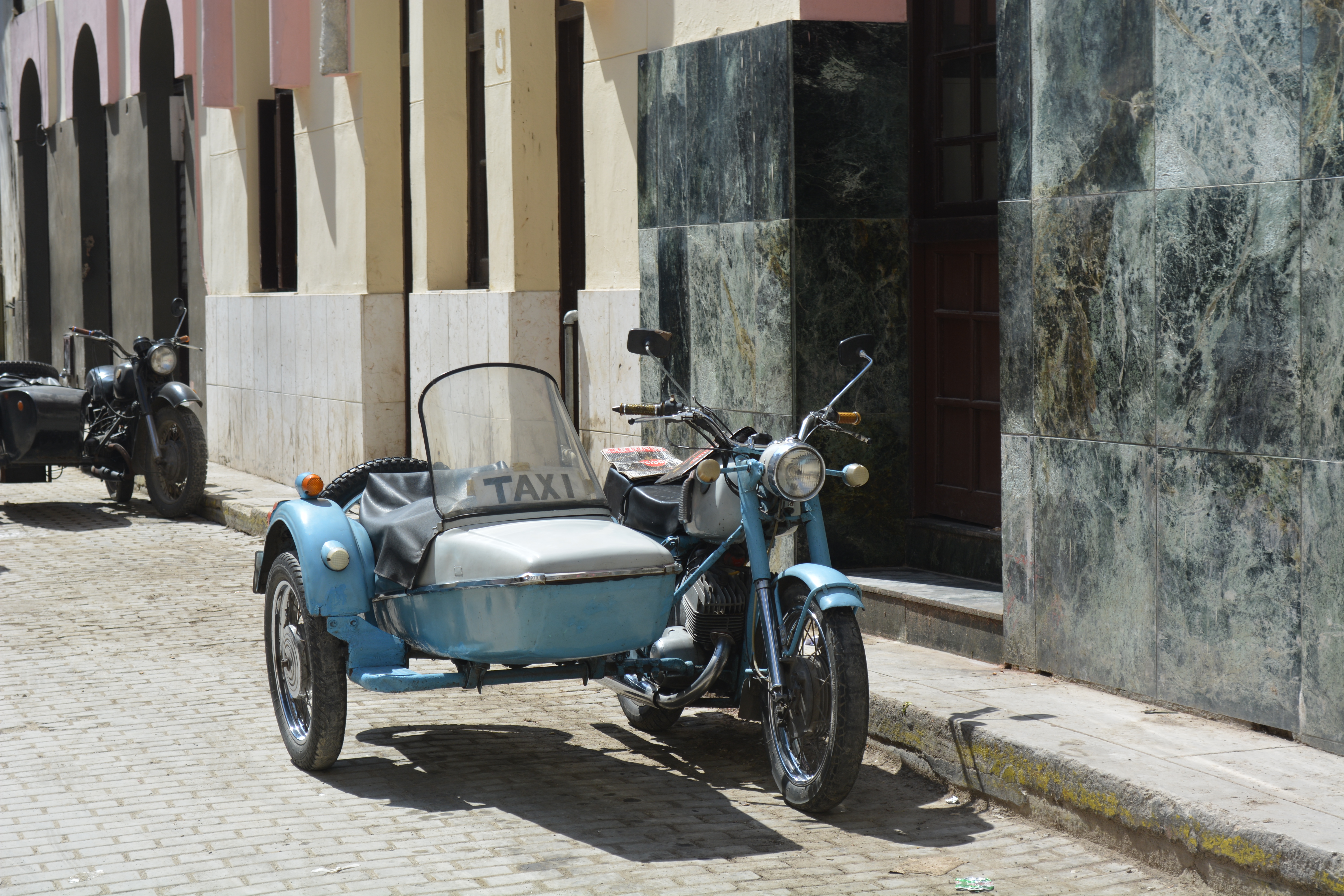
Along with all the classic 1950s American cars are lots of 19? motorcycles with sidecars

Along with all the classic 1950s American cars are lots of old motorcycles, most with sidecars.
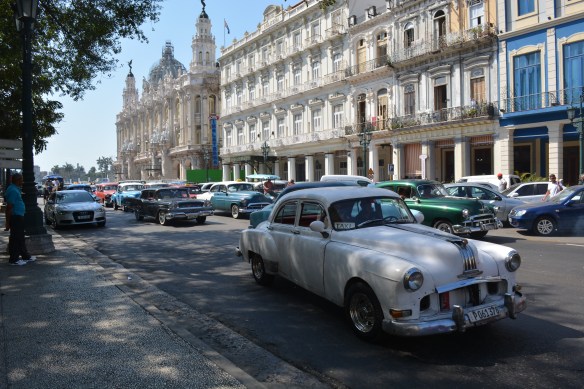
cars in Havana

Cars on Paseo de Marti.

DSC_0460

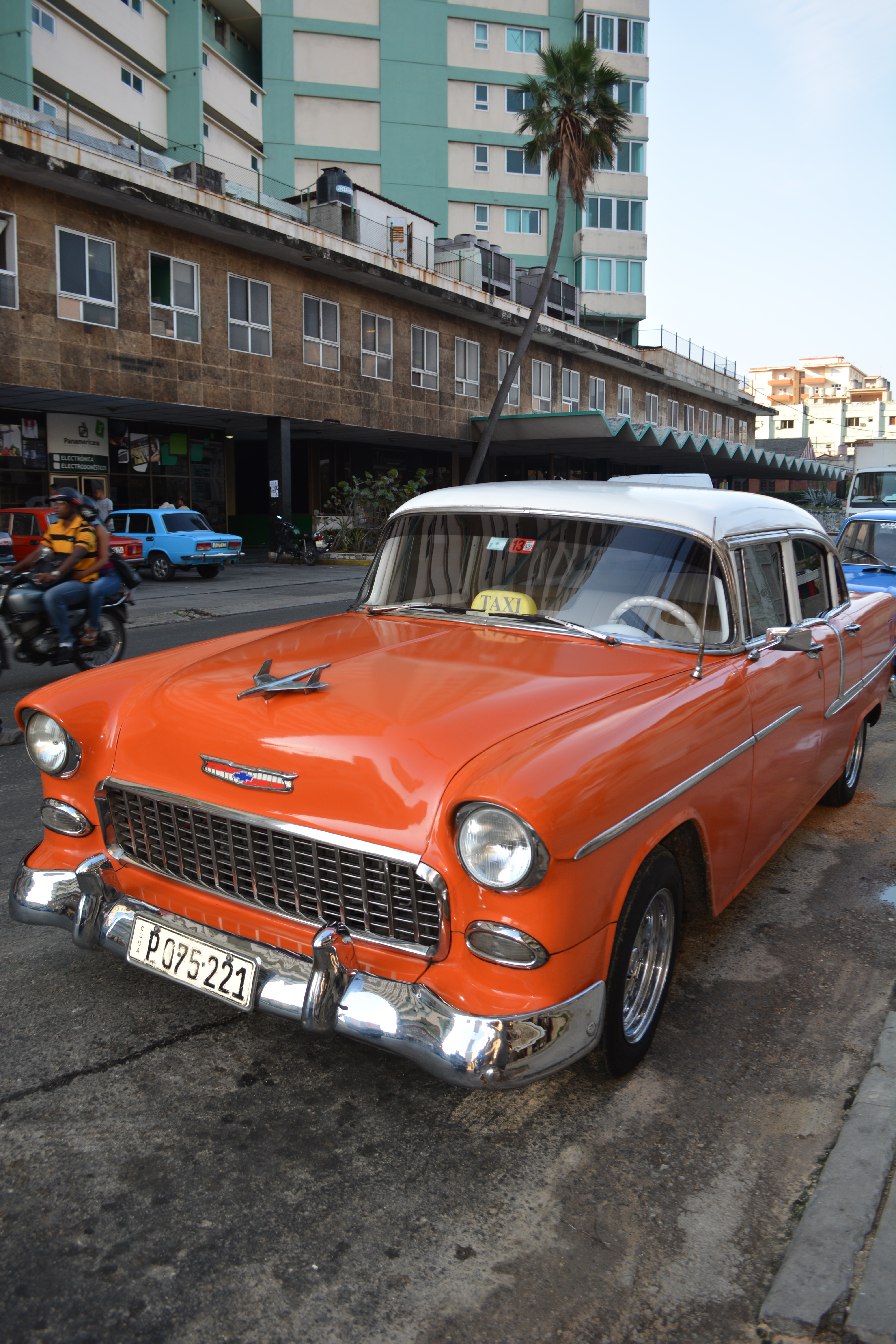
Old Chevy now a taxi. The driver installed his own homebrew air conditioning.

Interestingly, the cars trace the historical ups and downs of Cuba. All those old American cars from the 50’s (none from the 60’s as the revolution happened in ’59 and that is the last model year present) represent the heyday of American involvement with Cuba and their abrupt end in 1959 tracks the end of the US presence here.
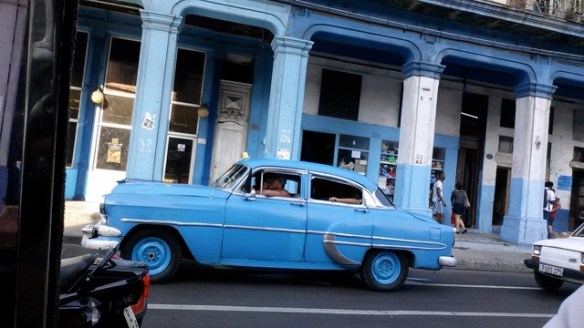
Blue Car

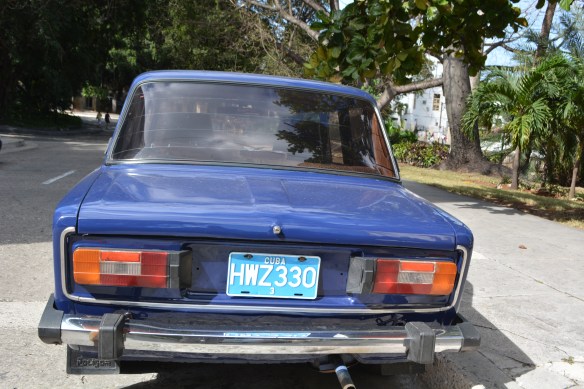
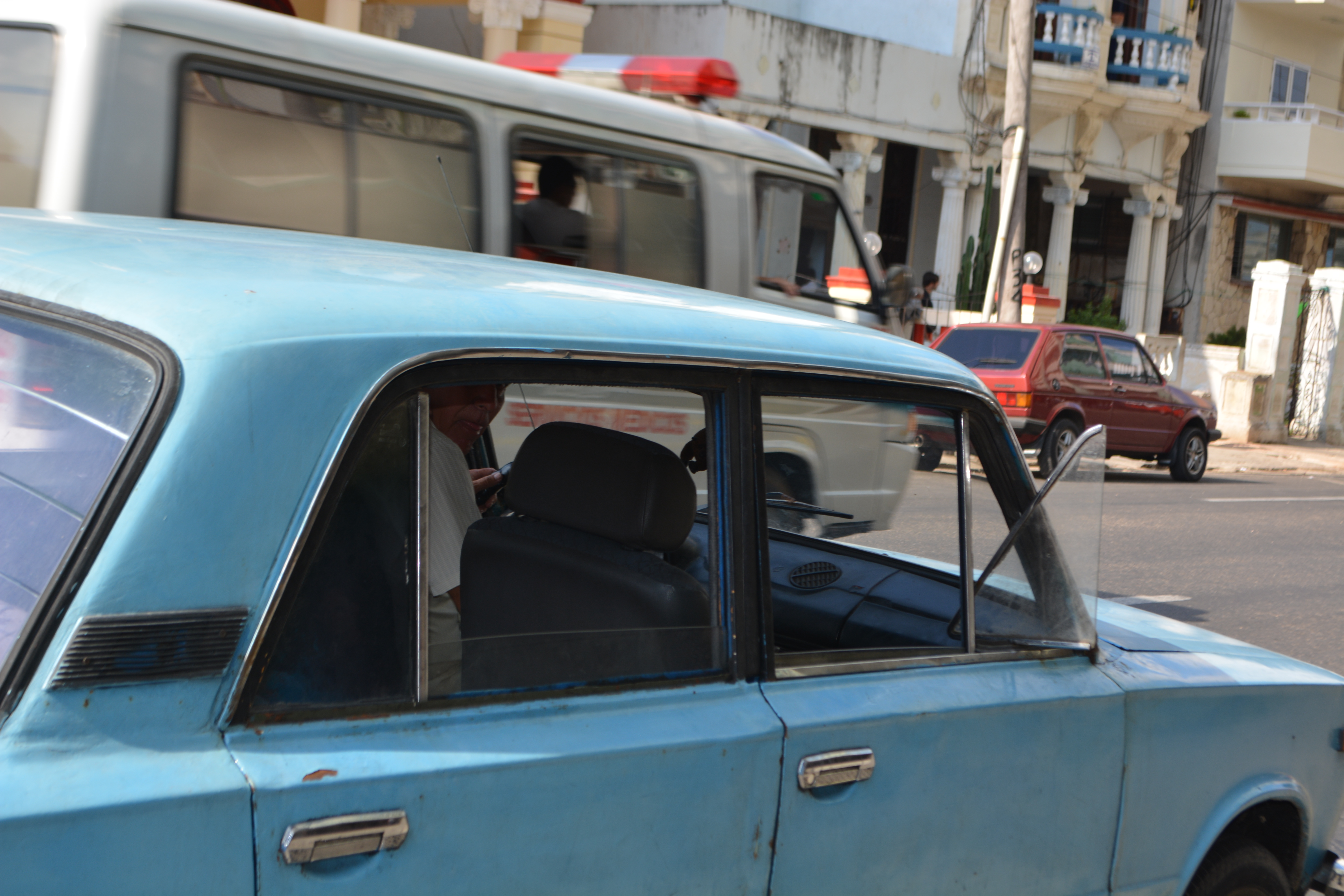
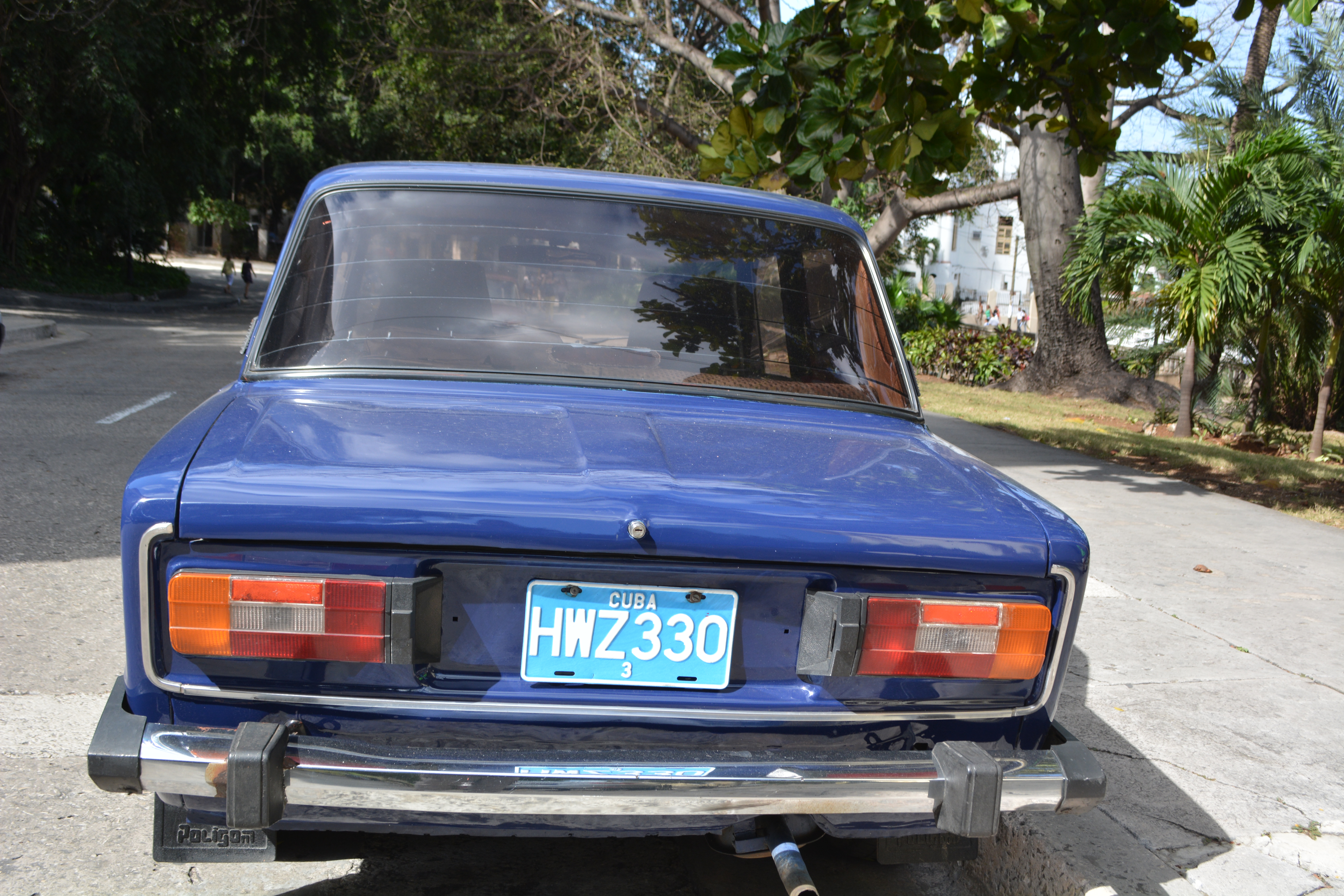
Then there are Russian cars, mostly Ladas; these are from the ‘70’ and ‘80s but they also abruptly disappear in the mid-1980’s when the fall of the Soviet Union caused Russia to drop Cuba like a hot potato.  They did not hold up as well as the old American cars, probably because the Cubans do not value them like those old US warhorses.  The Russian cars are taxis or just old beaters now.

DSC_0457

This is a Lada.

DSC_0555

Ladas look like they are from the 60’s but are really from the 80’s.
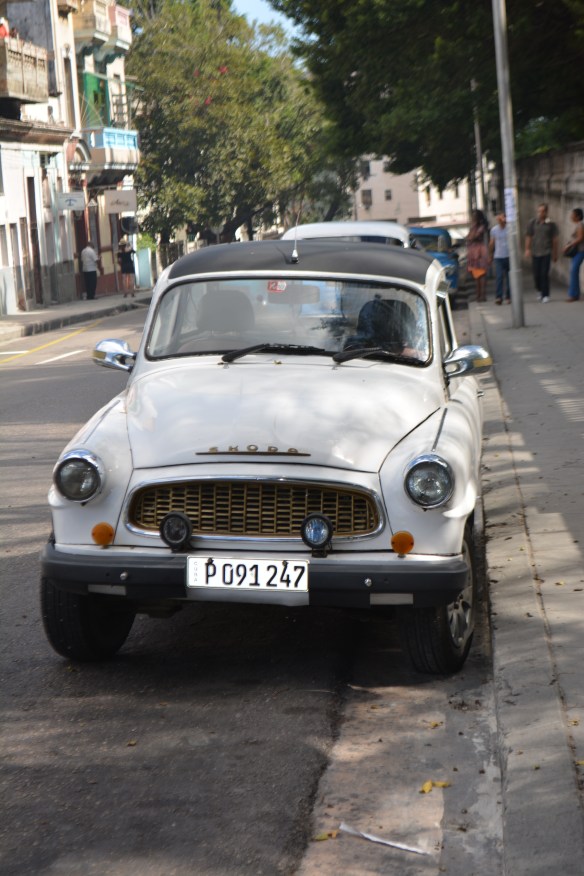
DSC_0558

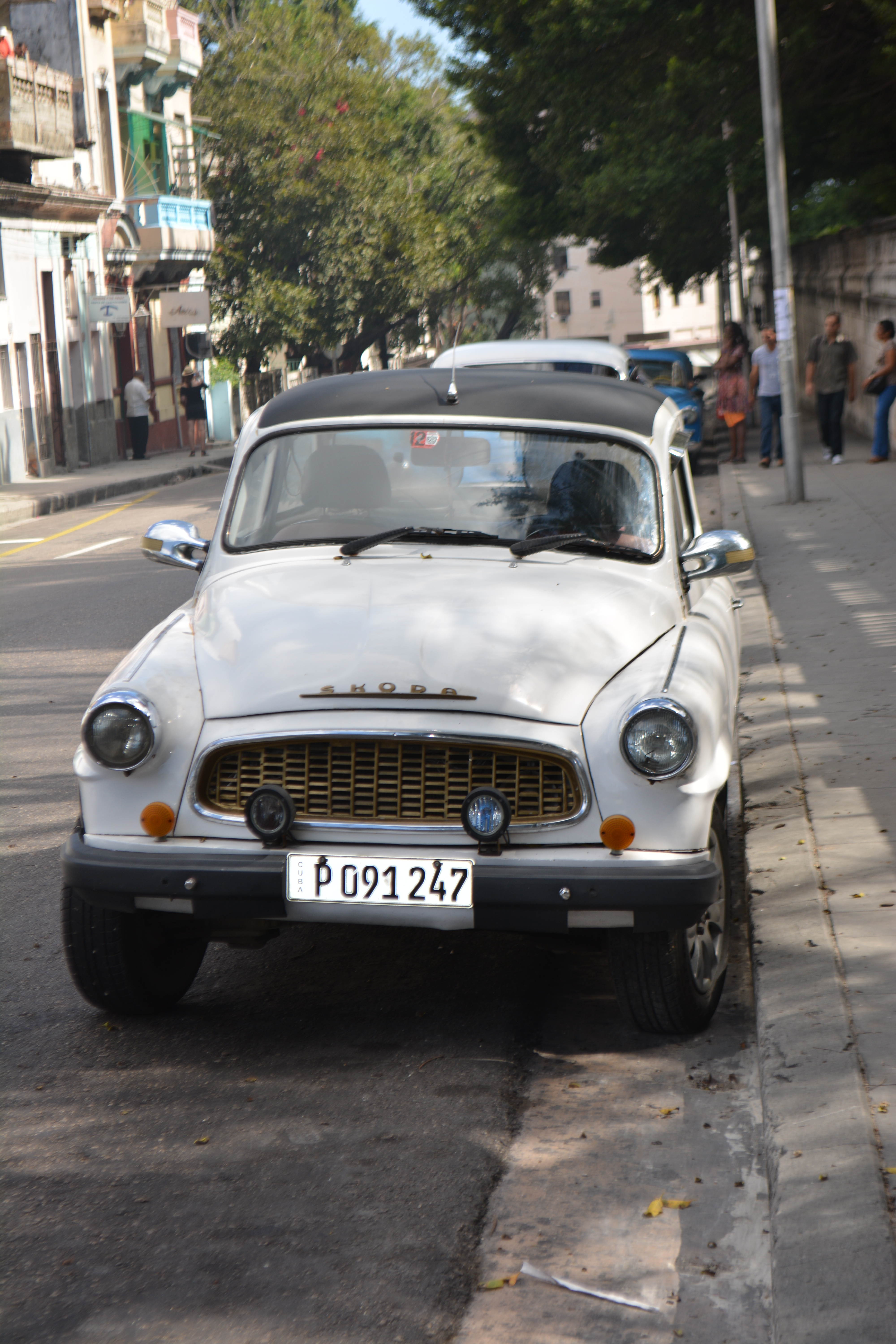
Cool looking Skoda – from Czechoslovakia, when there was a Czechoslovakia.

The exit of the Russians ushered in a decade of extreme hardship for the Cuban people.  We were told horrible stories about people eating potatoes for breakfast, lunch and dinner; going without shoes for an entire year, and other tales of desperation.  And that, too, is evidenced in the Cuban cars – there are generally none from the ’90s to be found anywhere in the country.   Now, there is a steady trickle of unfamiliar Chinese and Korean cars showing up in Cuba, as those countries seek a toehold in this potentially lucrative market.

The people are poor.  I mean, we saw these kids in the city of Cienfuegos playing baseball in the street with a stick as a bat and a rock wrapped in a sock as the ball. This is right out of a Hollywood script.  How we wish we had a bag of baseballs to hand them.
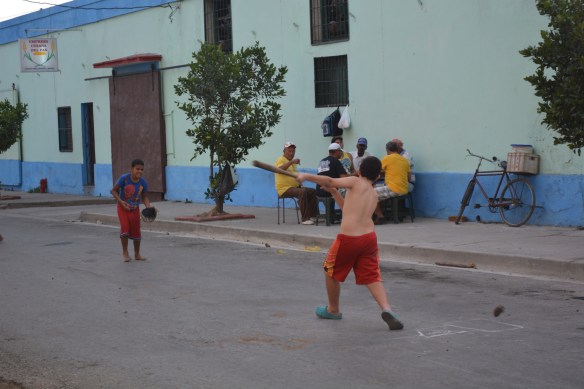
Cienfuegos baseball game.

Cienfuegos baseball game – he missed; that thing behind him is the ball – a rock wrapped in a sock.

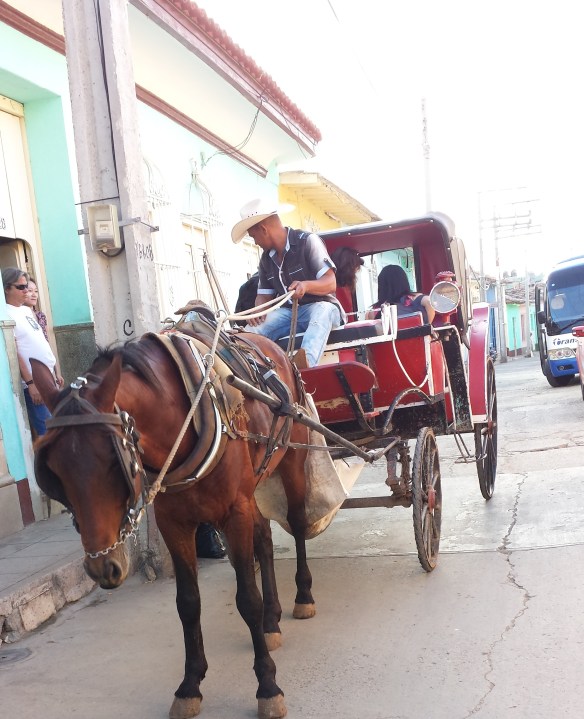
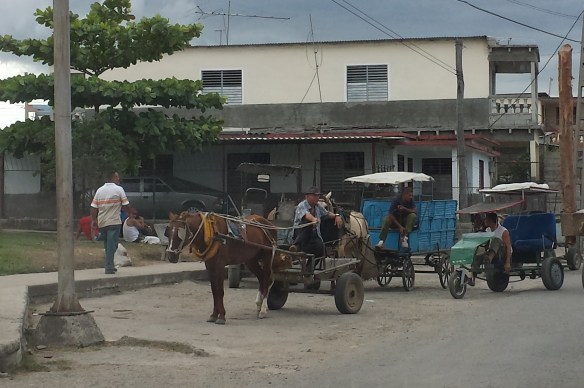
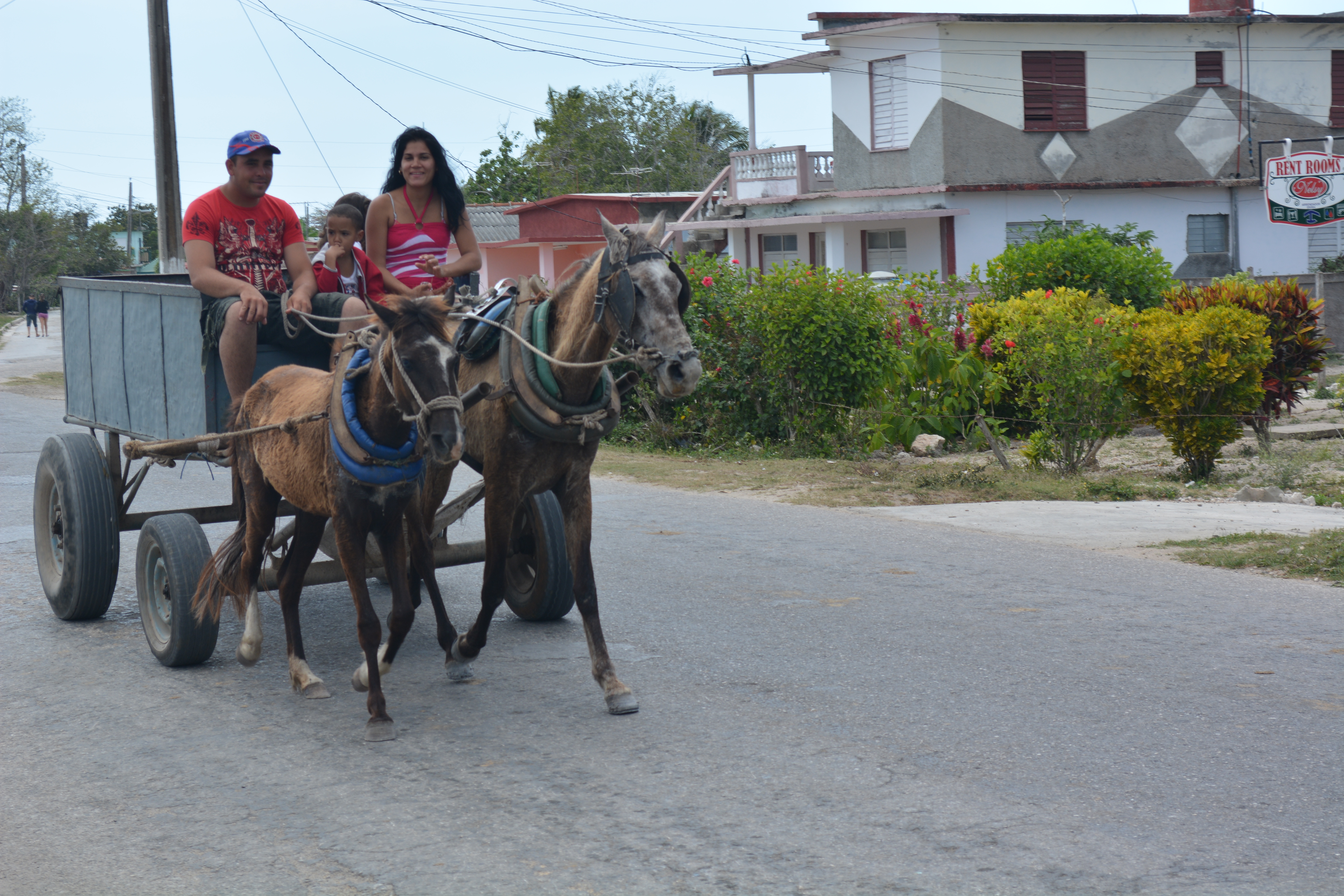
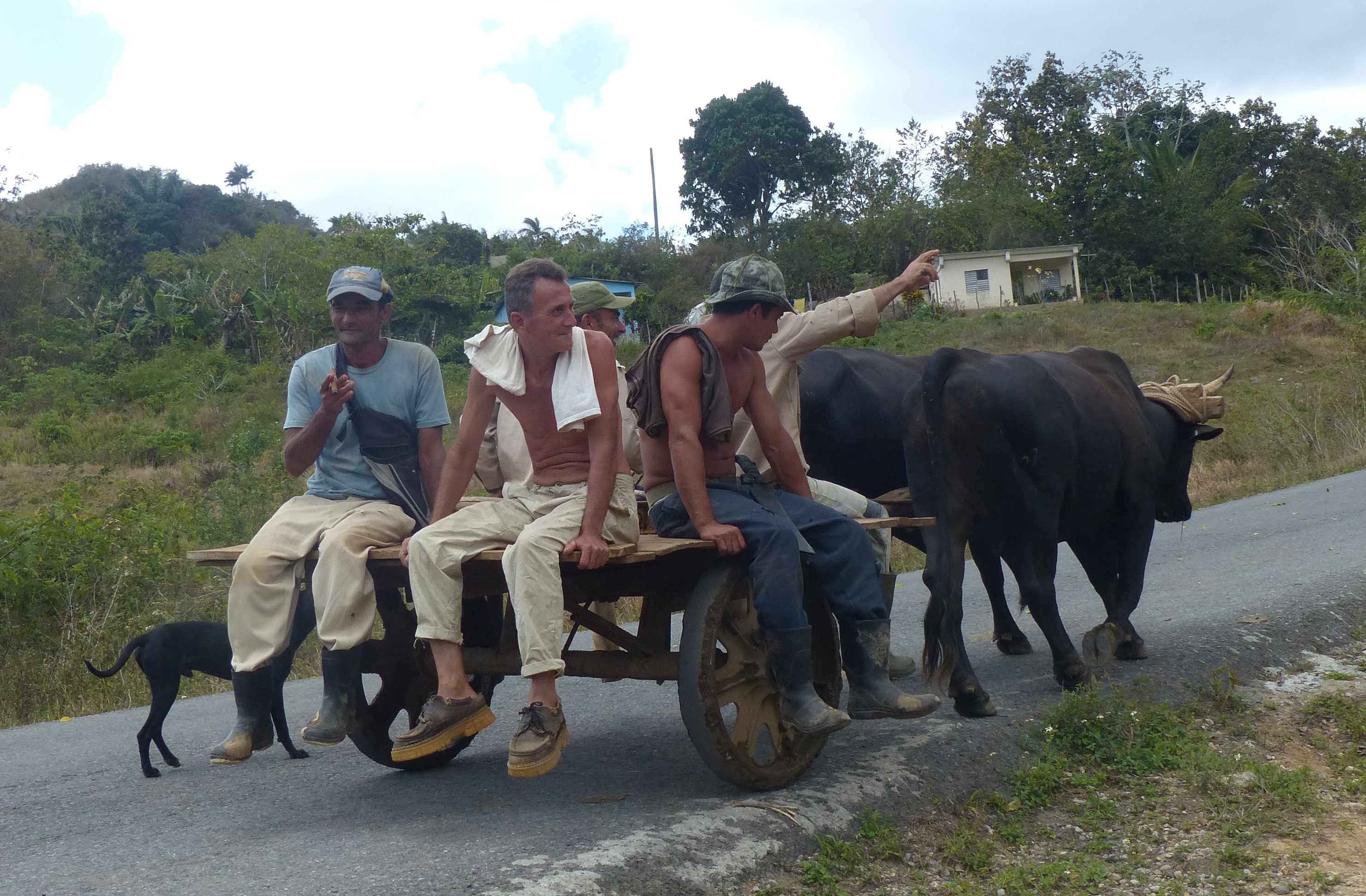
They had to call timeout whenever the “ball” unraveled. But they were having a grand time. In most of the rural villages there were more people getting around by horse and cart or just horse and saddle than by cars or trucks.  Yet you sensed no resentment, envy or covetousness.

Family on horse and cart

Family on horse and cart.

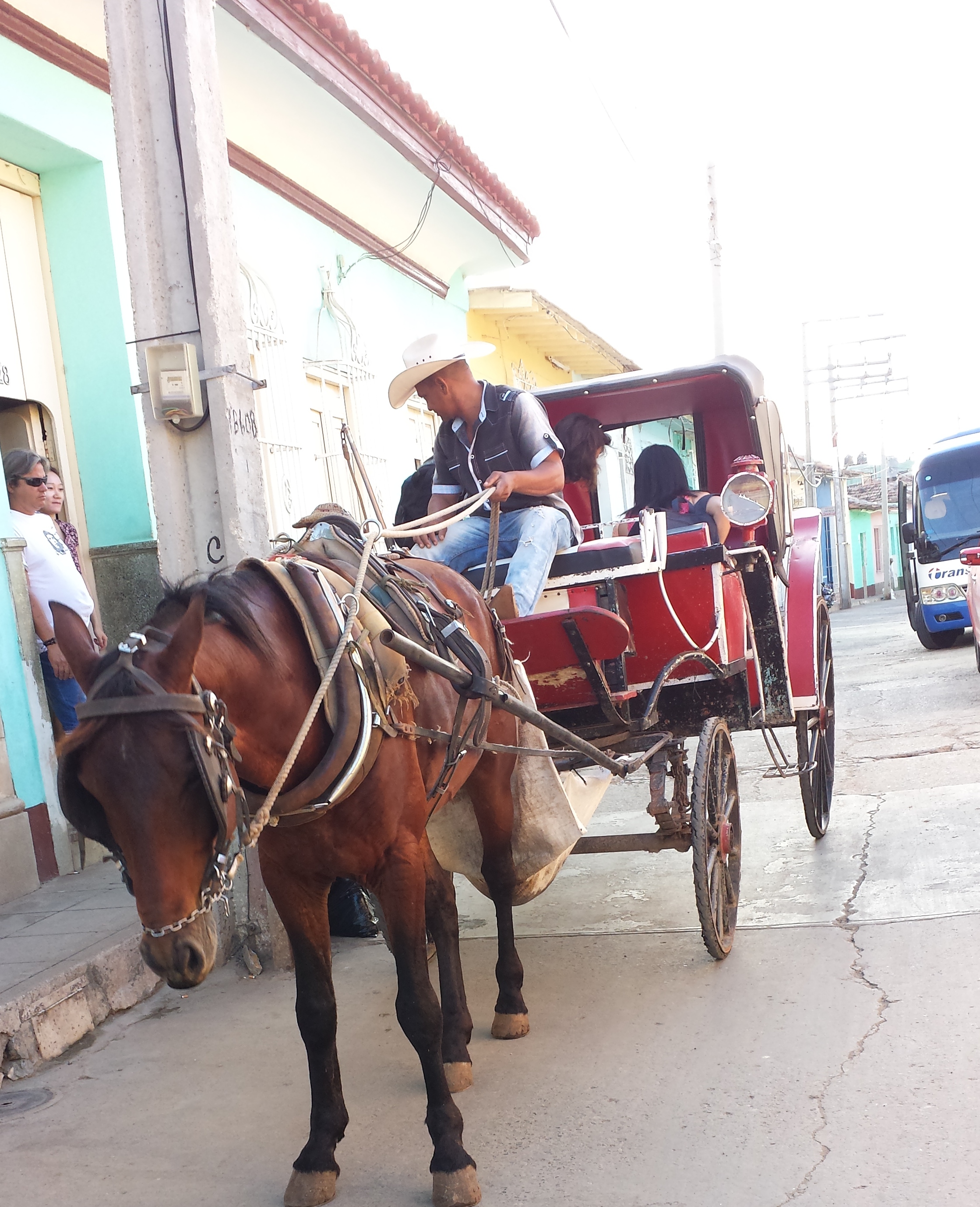
Man on horse and cart

Man on horse and cart.

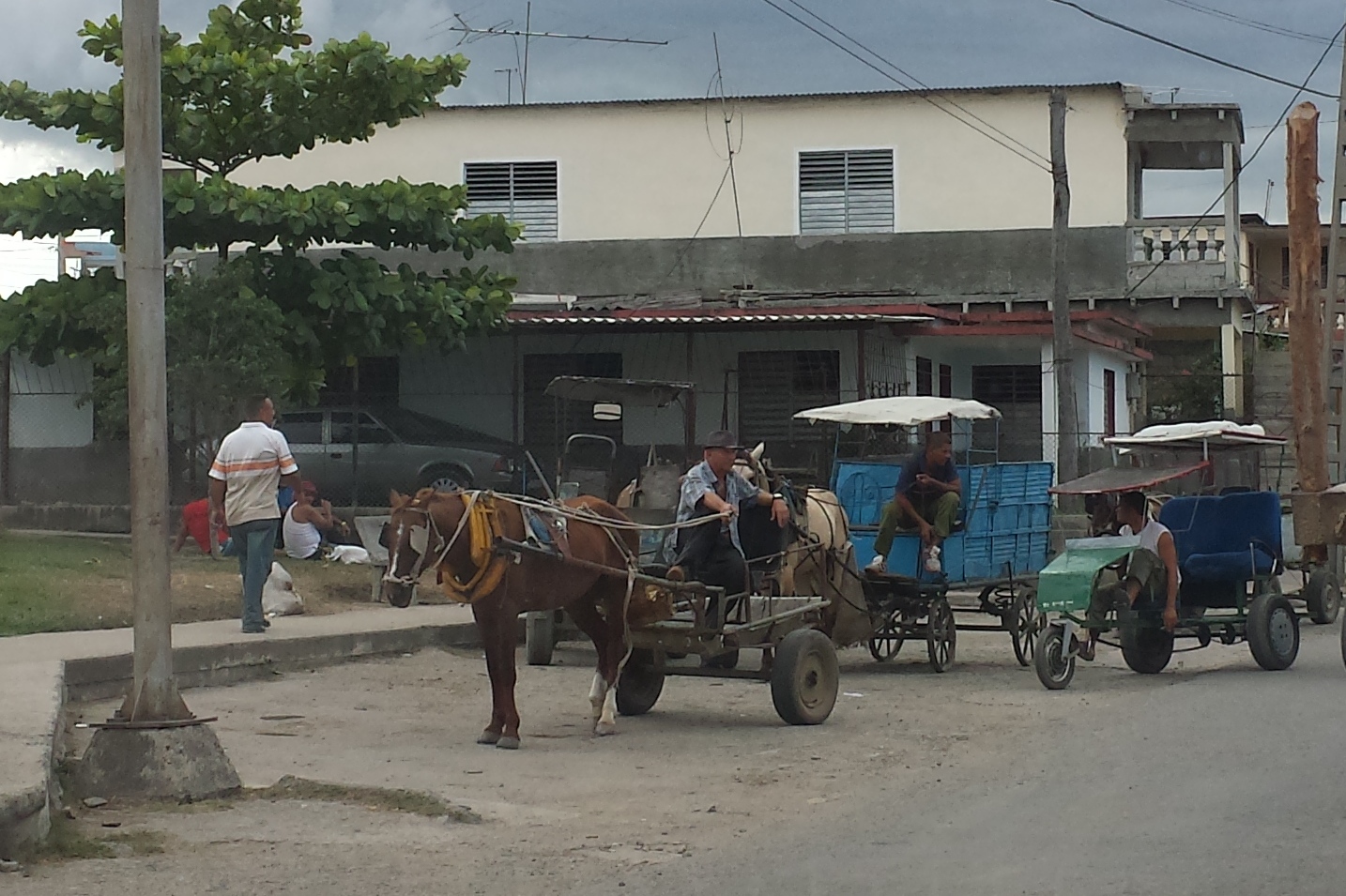
horse and carts

Parking lot.

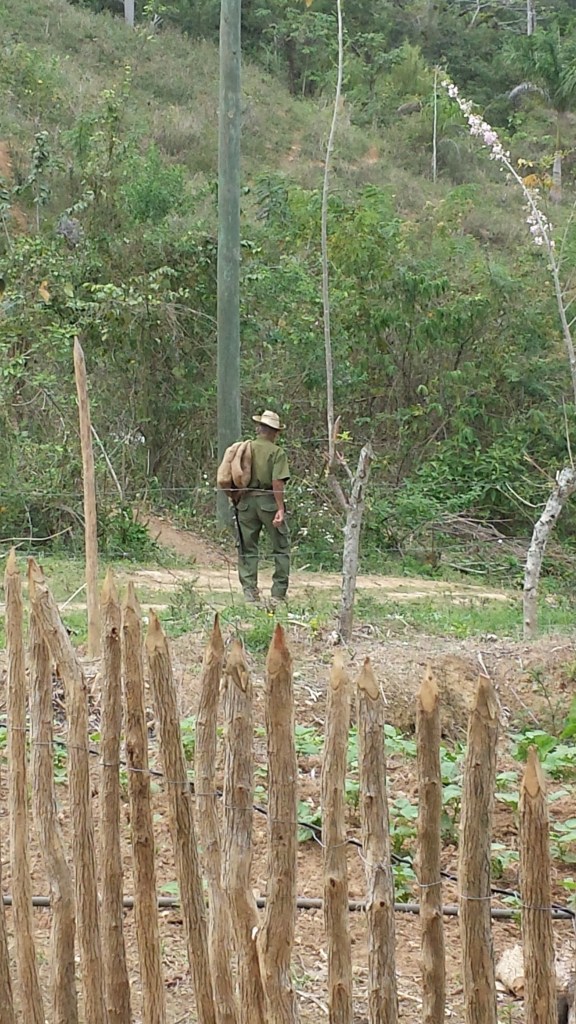
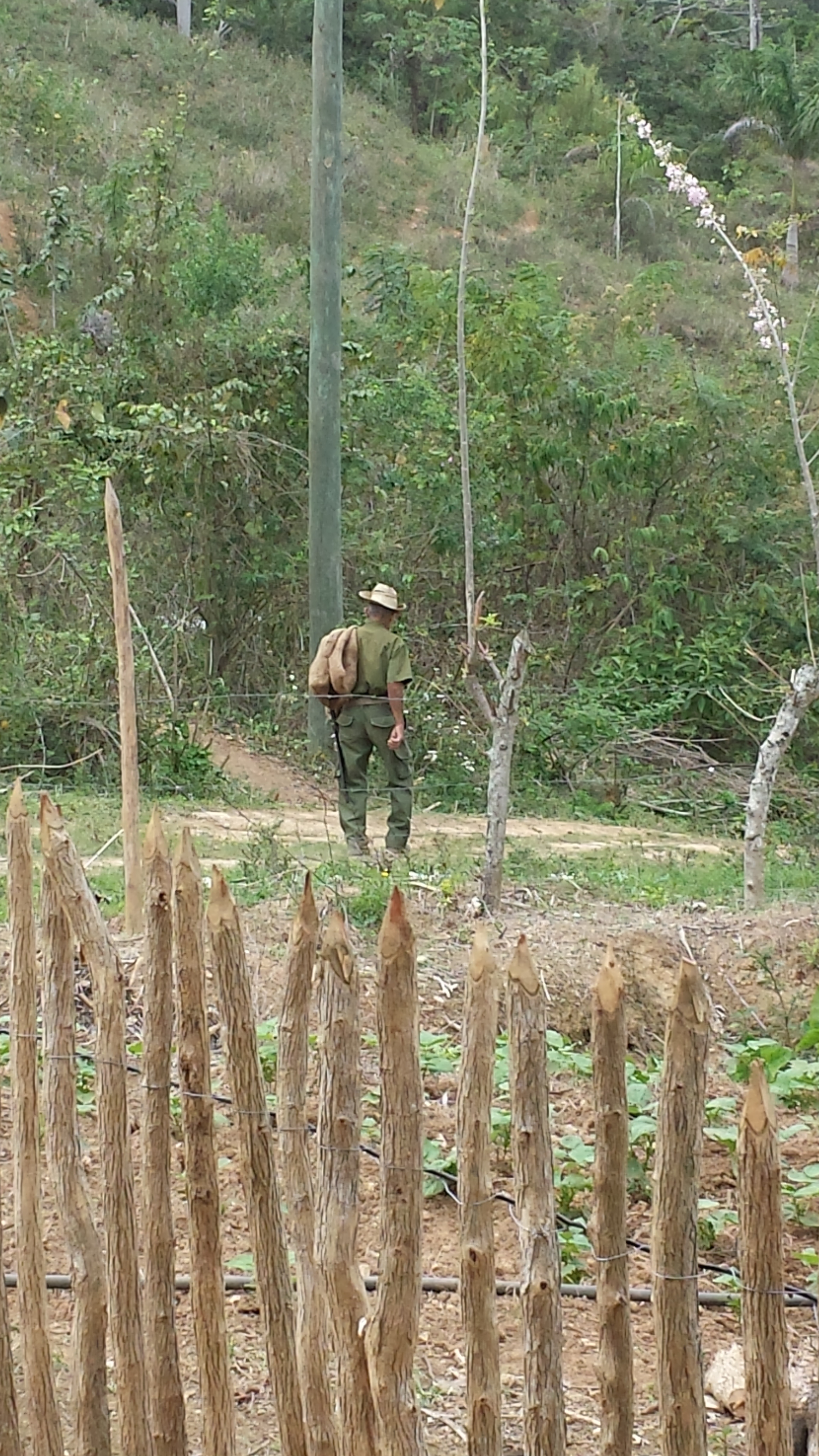
old cuban man

No horse, so he walks.

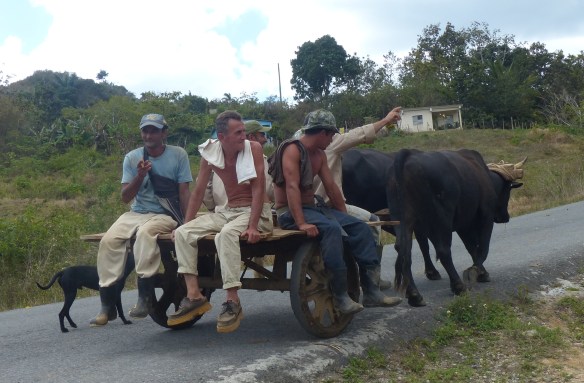
men on cartDespite the hardships caused by US government policies, the people unanimously welcome Americans and are eagerly looking forward to renewed relations. Even though Cuba was a Soviet client state for decades, most people will scoff at Russians and readily align themselves with the US. When Barack Obama first announced thawing relations with Cuba, we, and I think a lot of Americans, thought – “Oh, well that’s a surprise. OK, the sanctions regime didn’t seem to work so lets give this a shot” and then went about our day. In Cuba, despite the government’s cool negotiations with the Americans, it is a day of national celebration for ordinary people, sort of an unsanctioned holiday.   It’s so prominent that it has its own nickname – D17, for December 17 – the day of Obama’s announcement.

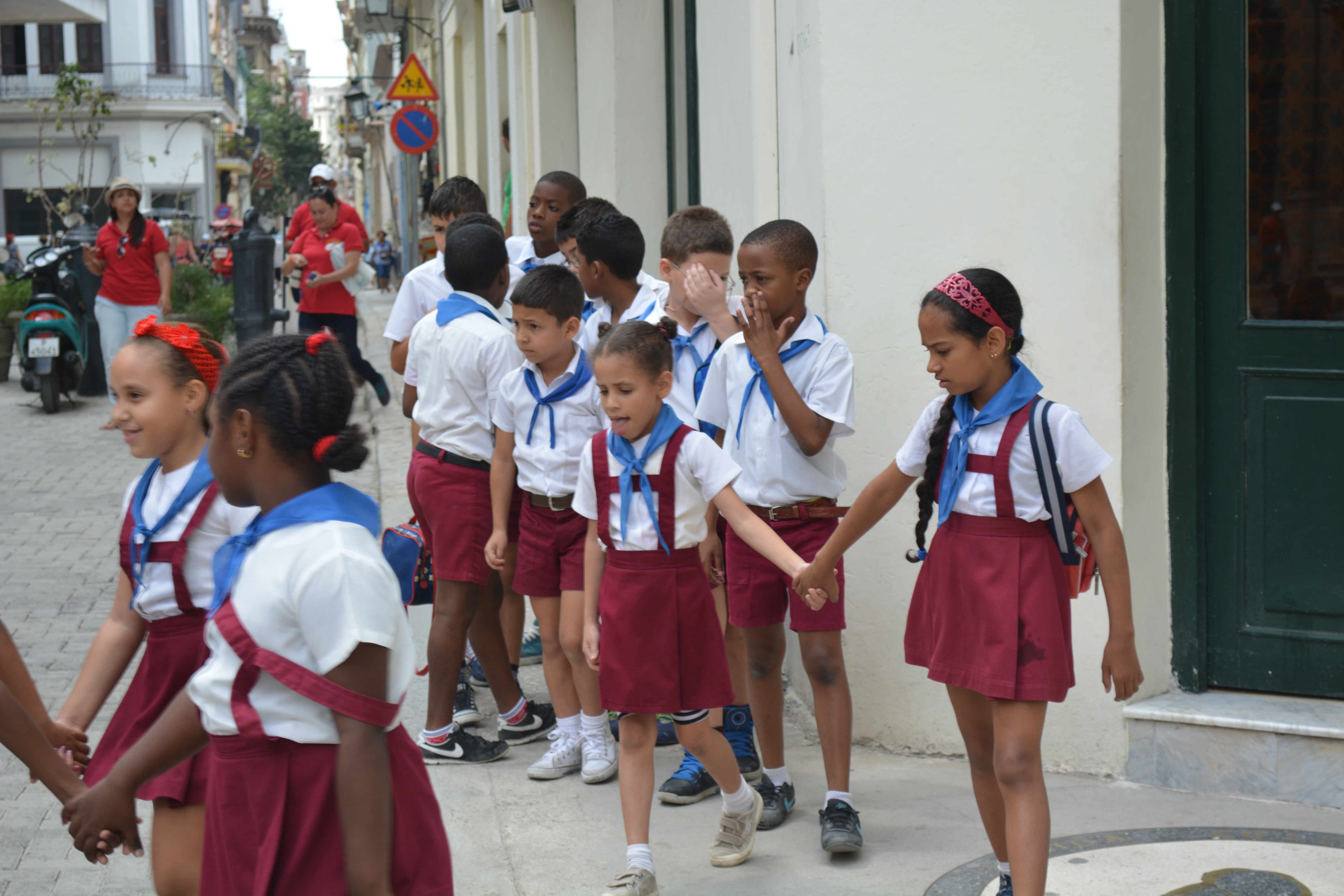
One has to admit that the communist regime in some respects has performed well for its citizens. Free education for all has resulted in an astoundingly high literacy rate. Subsidized healthcare means people are healthy and treated well.   And racism seems to be non-existent.  Although skin shades are as diverse as in the US, it never seems to make the slightest difference.
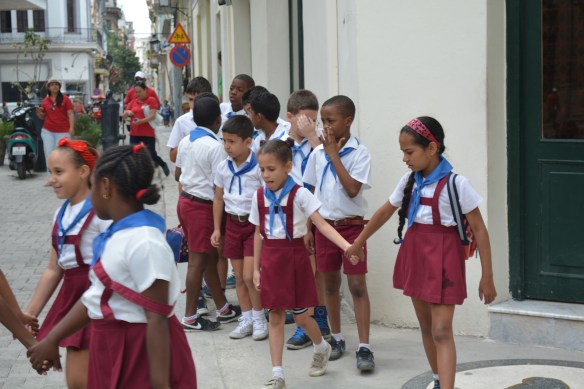
All school children wear uniforms

Everyone is given a free education pre-school to university.
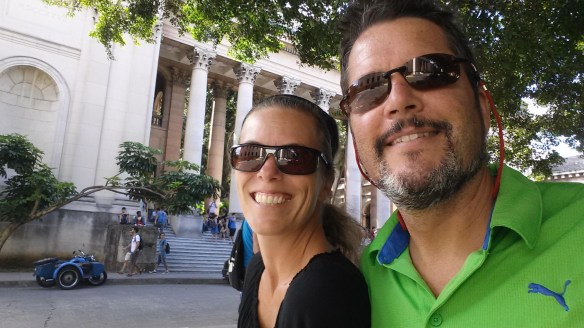
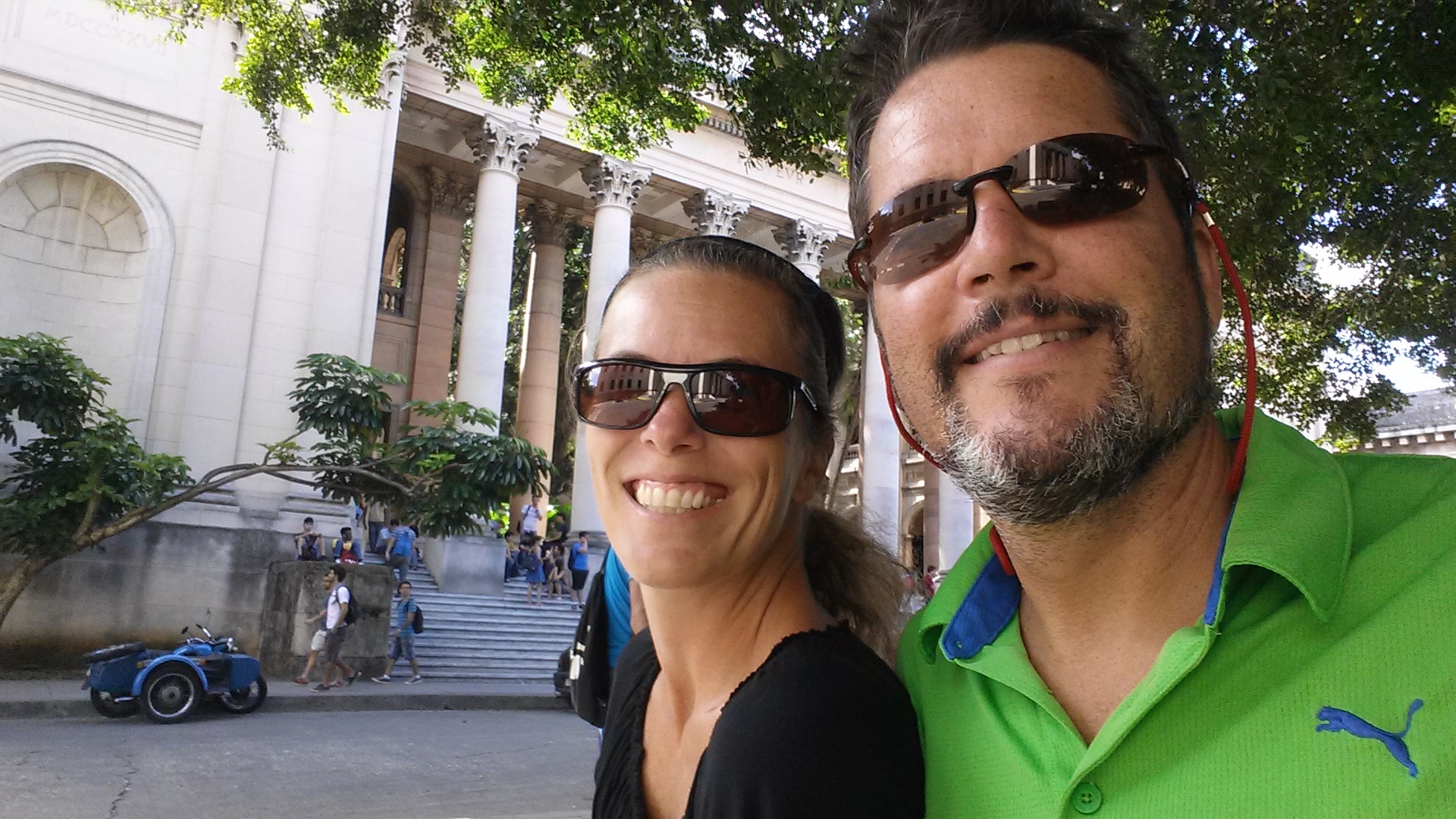
Campus of the University of Havana

Campus of the University of Havana – stunningly beautiful grounds and buildings.

As mentioned above, somehow the population seems in general to be a happy lot despite the fact that they are well aware of their poverty.
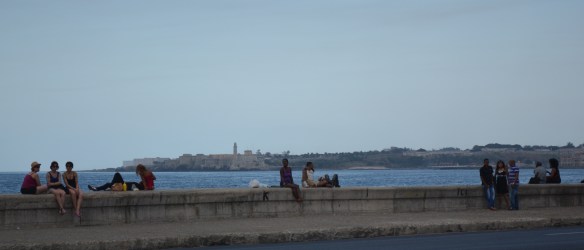
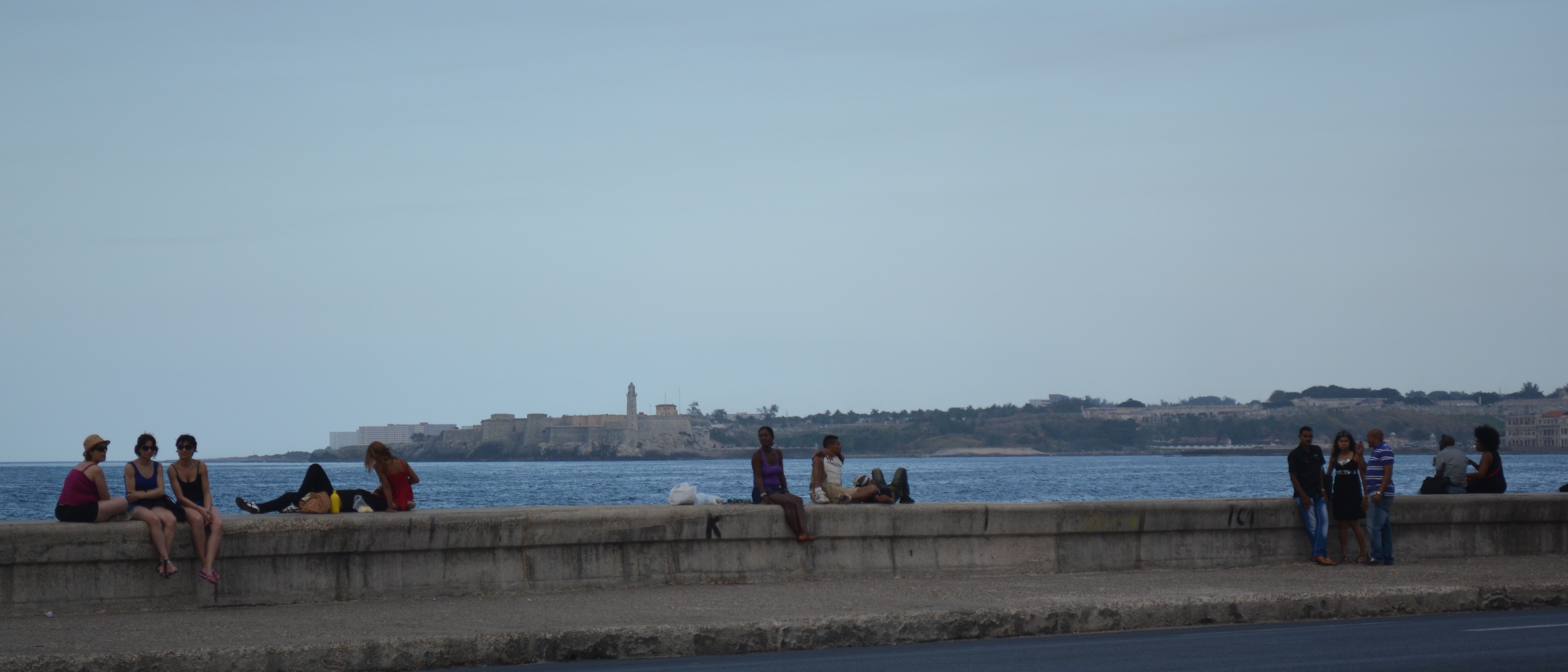
Havana's Malecón is a hang out place for all.

Havana’s Malecón is a free hang out place for all.
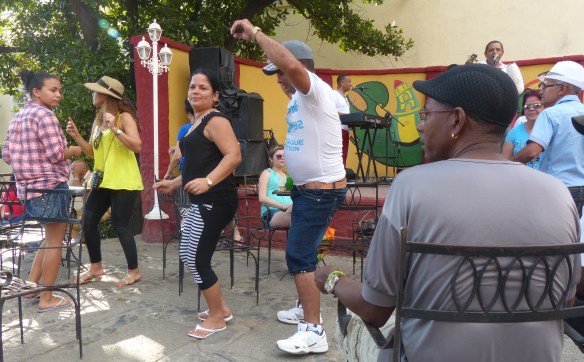
Cubans love to dance.

Cubans love to dance and always welcome everyone to bust a move.

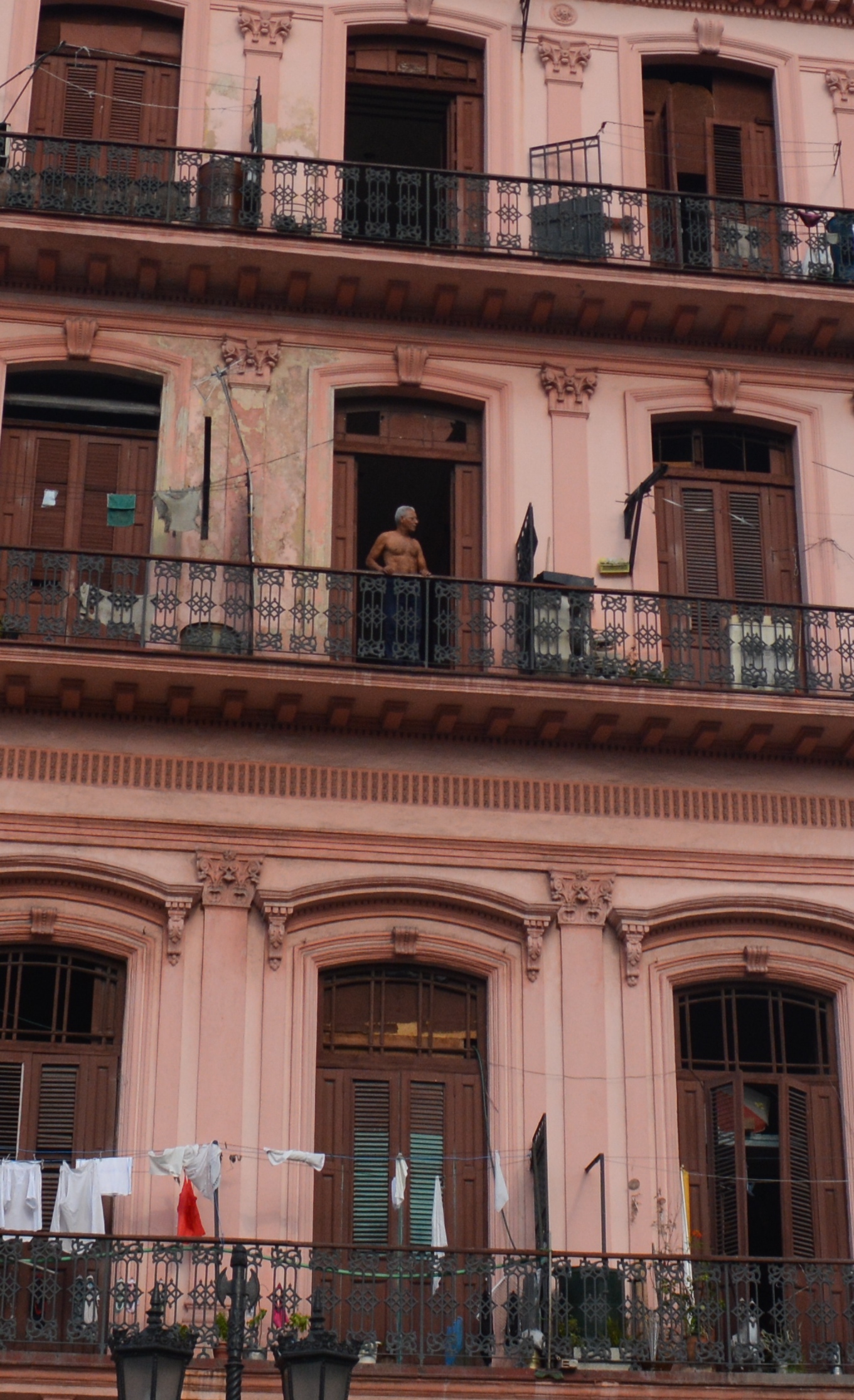
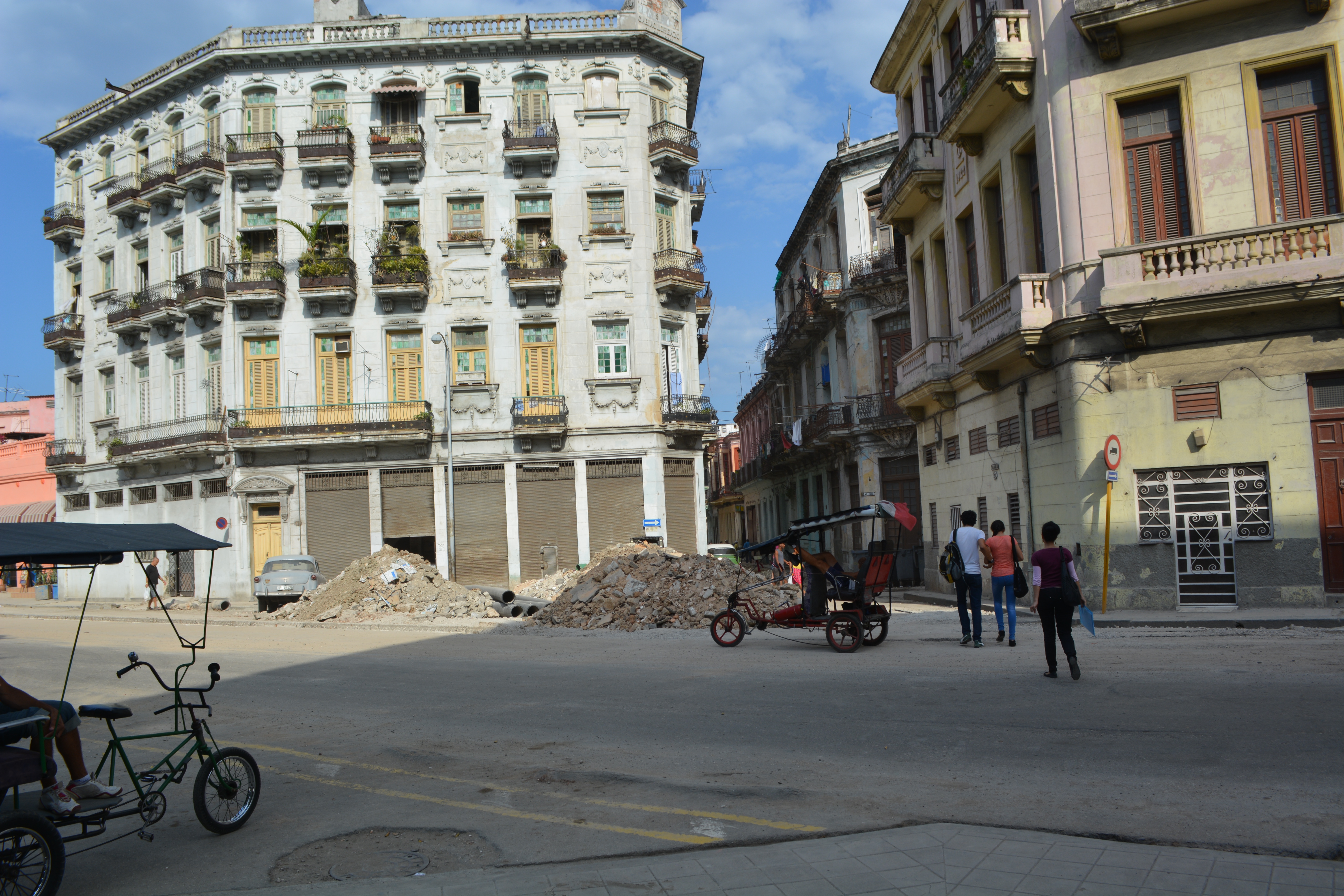
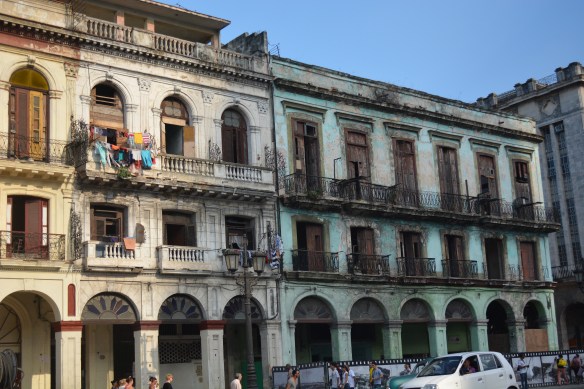
It’s very unlike some other Caribbean countries where tourists seem envied and can be treated badly. Cubans greet each other with hellos and jokes all day long, whether they know each other or not.   However, in other regards, communism has clearly failed its people. man in windowCuba has lagged far behind the rest of the developed world in the past 50 years. This is plain from the obvious longing of the everyday Cubans for some of the comforts of life in the more developed world. Cuba was clearly a thriving country in the first half of the 20th century, evidenced by gorgeous architecture all over Havana and other cities.
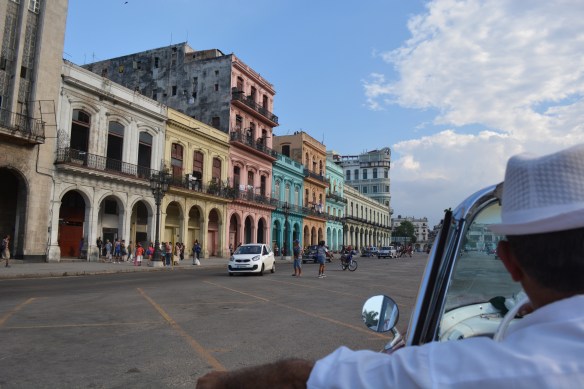
Cruising the streets of Havana

Cruising the streets of Havana.

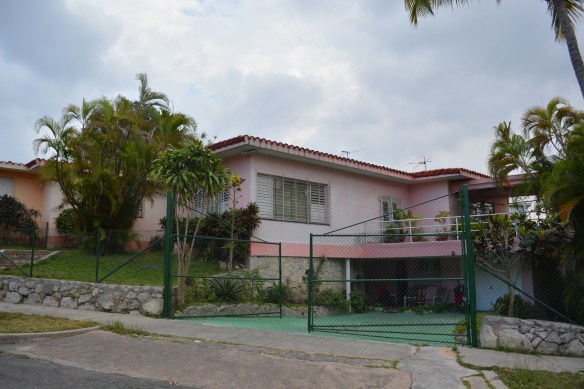
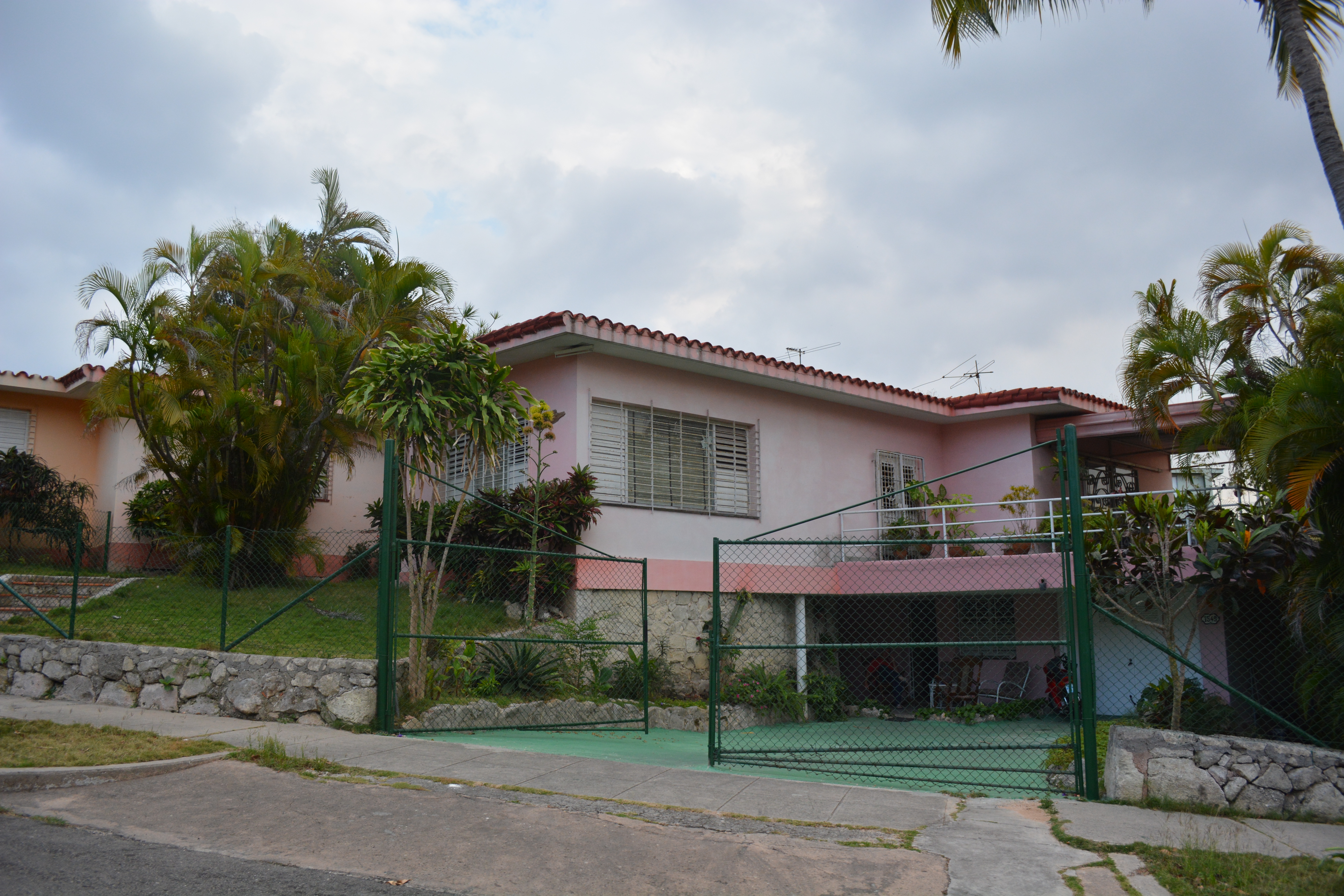
Some homes look like they could be in Miami

Some homes look like they could be in Miami.
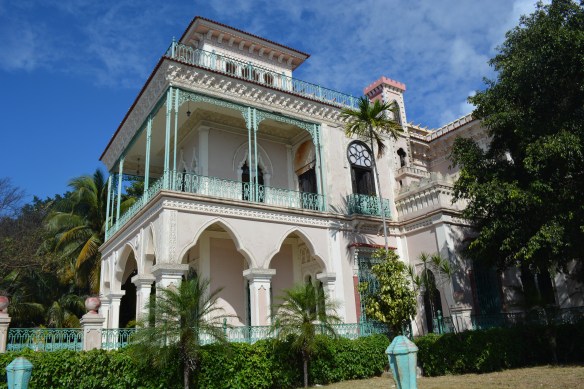
Others look like New Orleans

Others look like New Orleans.

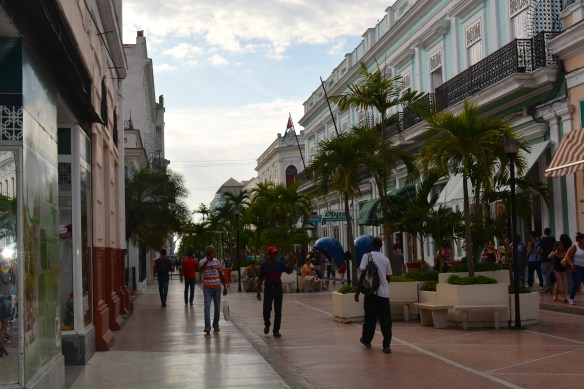
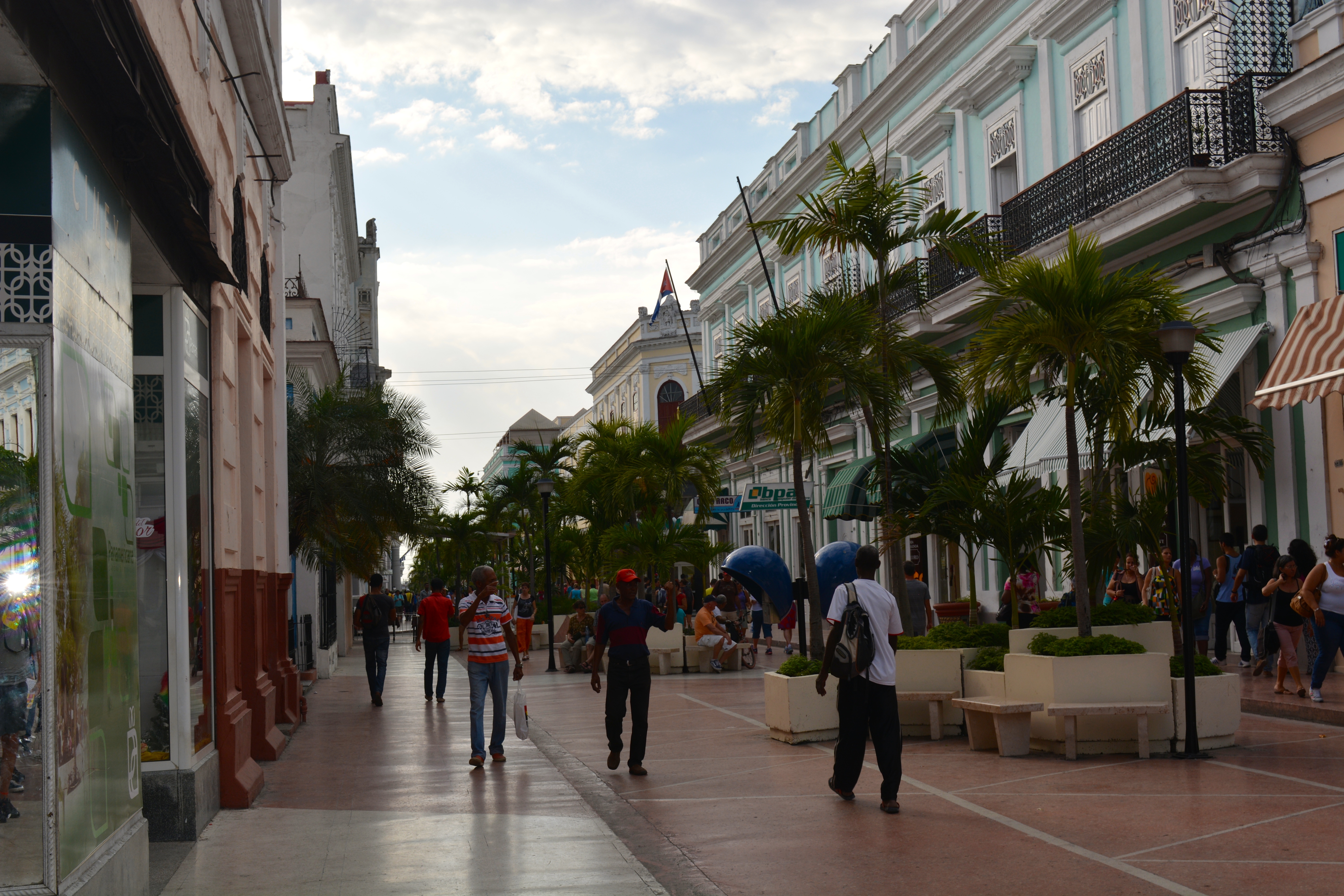
Cienfuegos shopping promenade

Cienfuegos shopping promenade, said to be the Paris of Cuba.
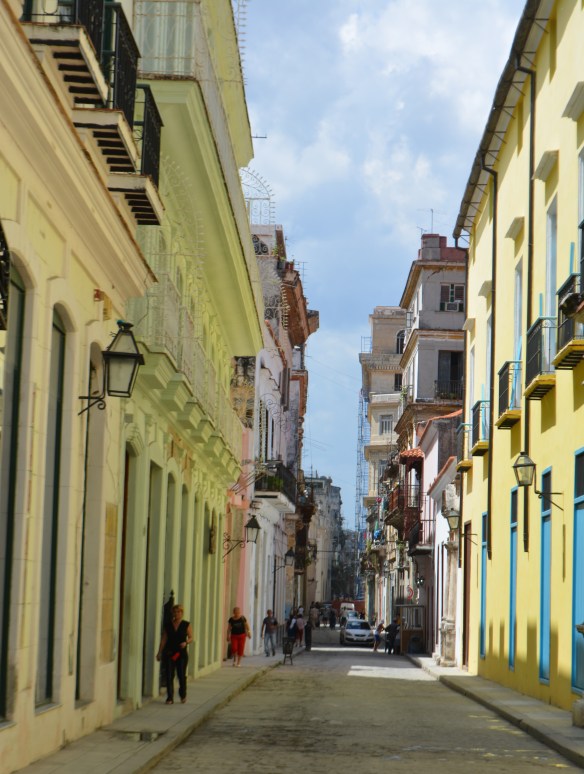
colorful sidestreet

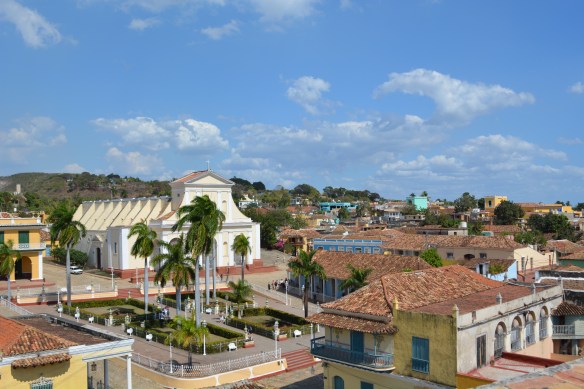
Rooftops of Trinidad

Rooftops of Trinidad

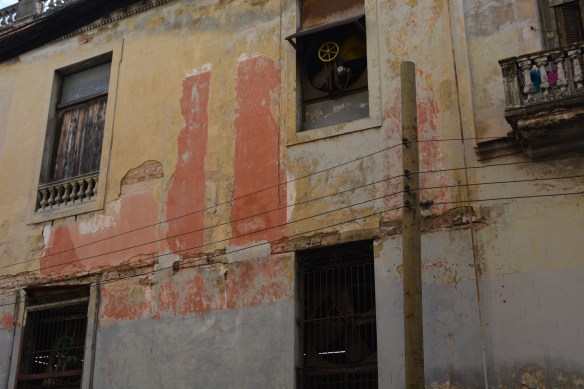
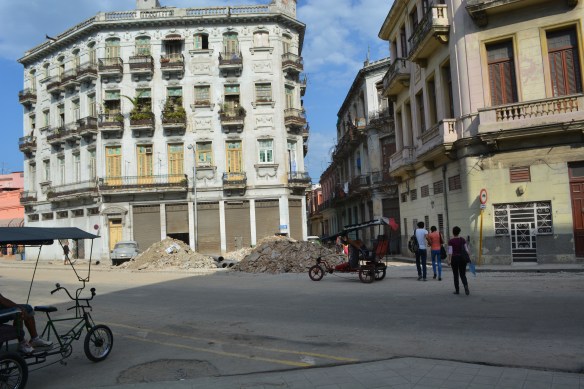
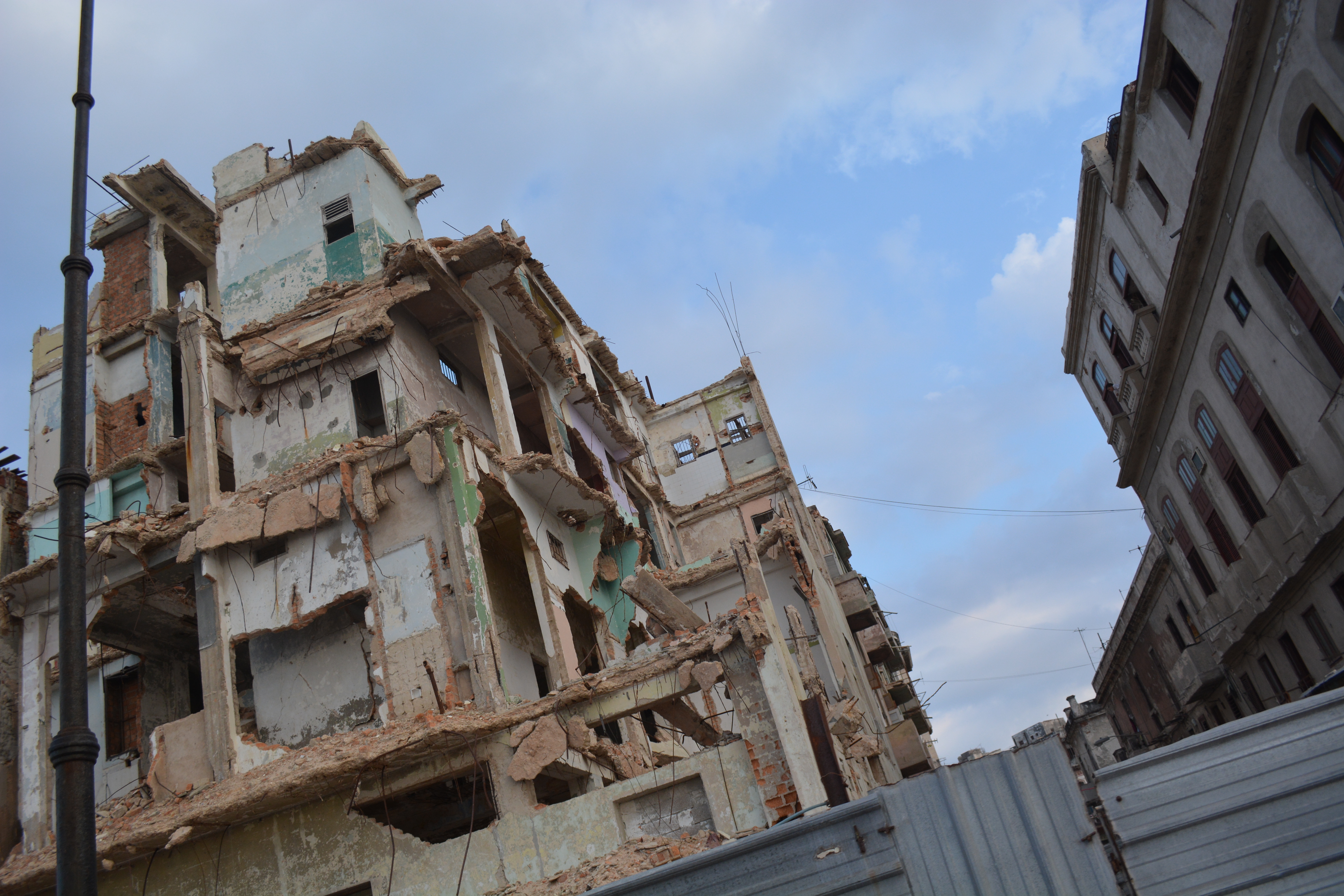
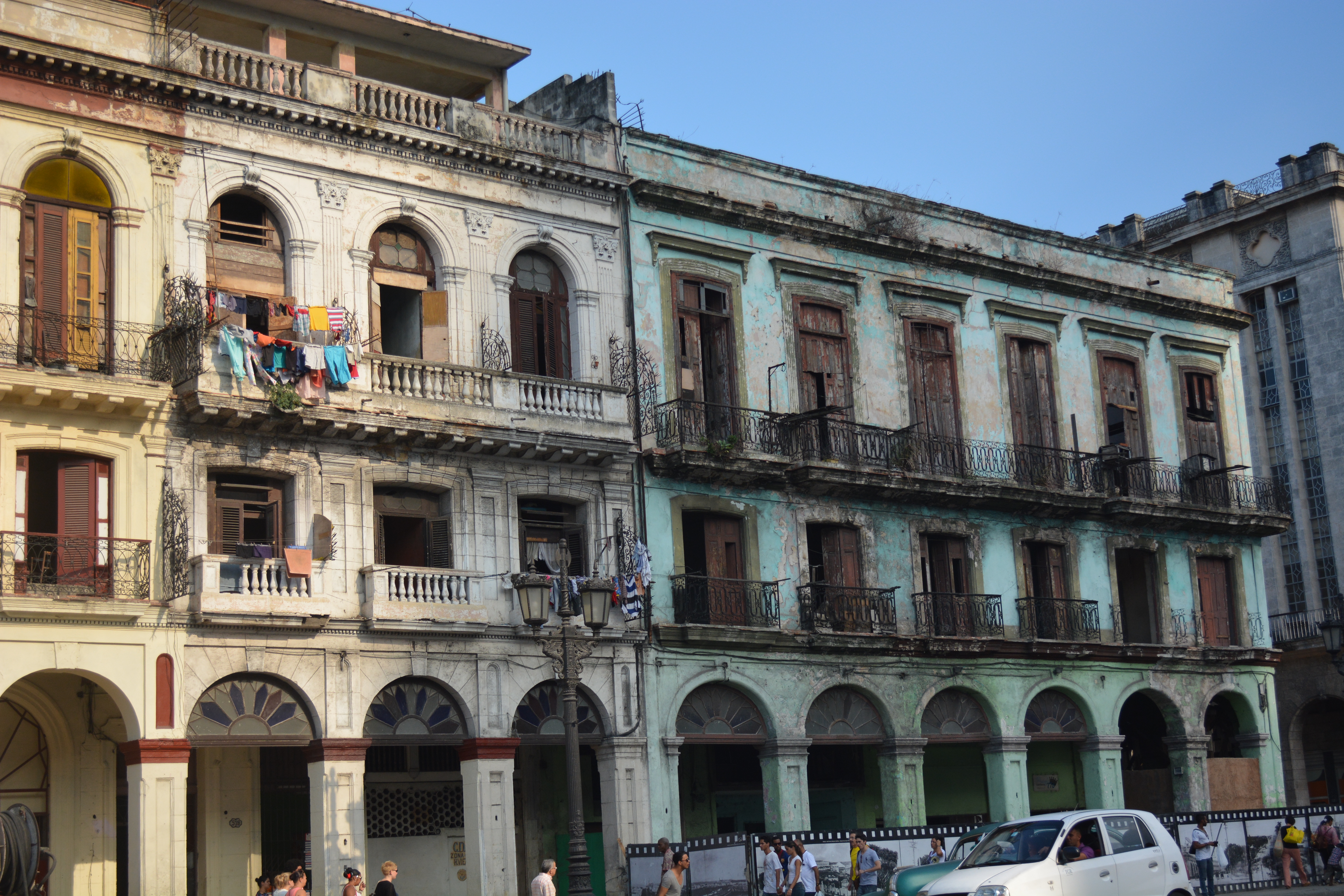
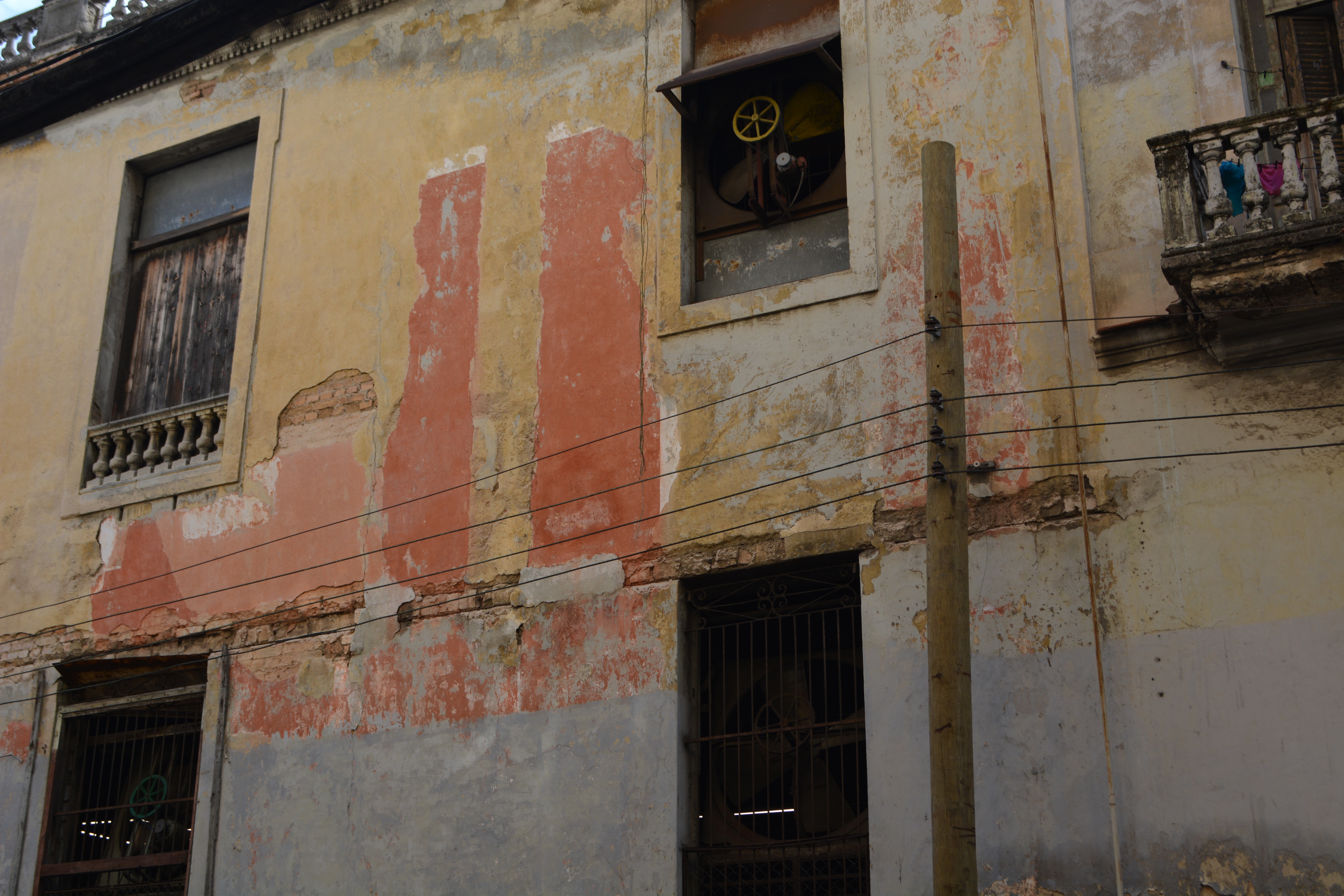
Yet many of these buildings are now crumbling ruins due to neglect from a lack of money to preserve them. And architecture from the period after the revolution (what little there is) is stark, forbidding and cheerless – it reminds one of Soviet buildings from the Cold War era.  There seems to be very little economic progress that occurred after 1959.  Food items are still rationed.  Commerce is tightly controlled and anemic.  The nonchalant acceptance of the lack of basic freedoms, like free speech, freedom of religion, travel and association surprises the Westerner.  Yet there are signs that slow progress is being made.
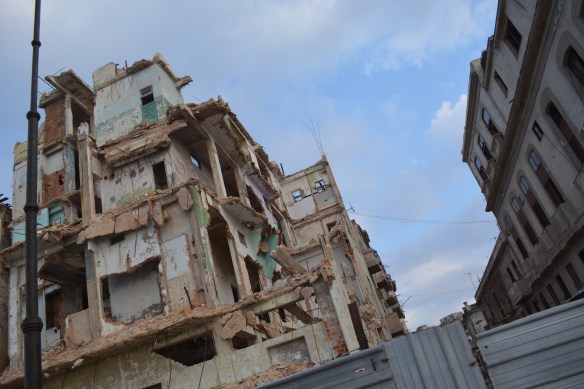
DSC_0169

People live in these crumbling buildings
DSC_0103

patched house torn up street

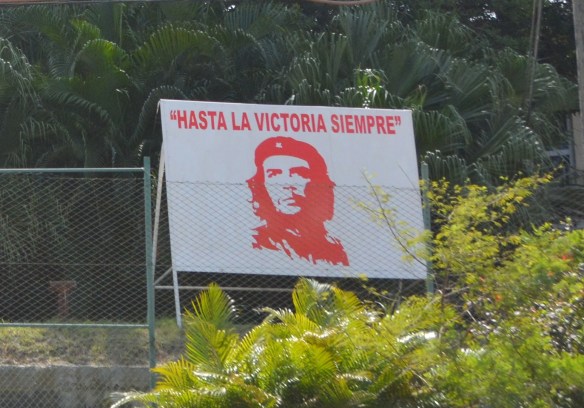
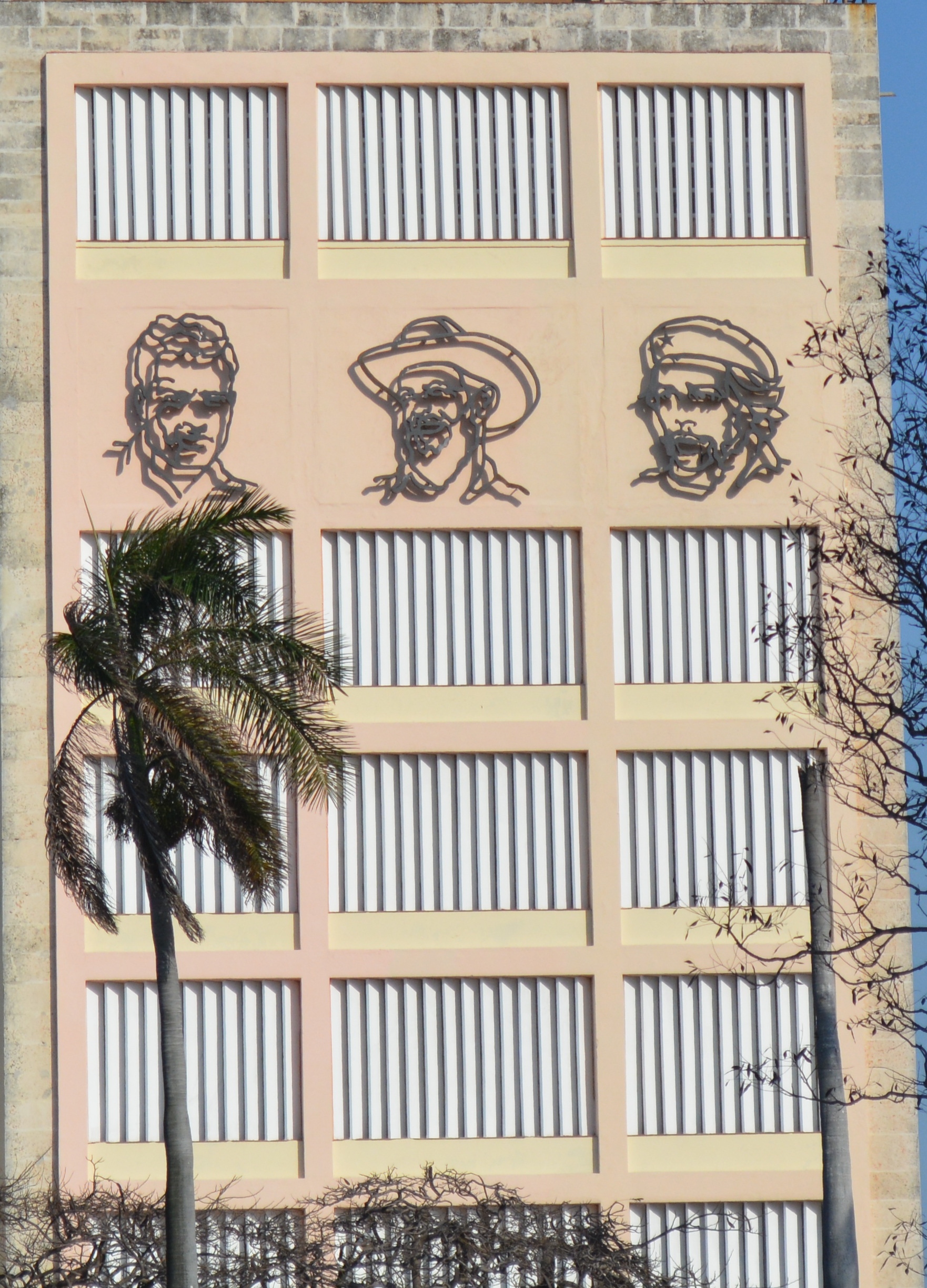
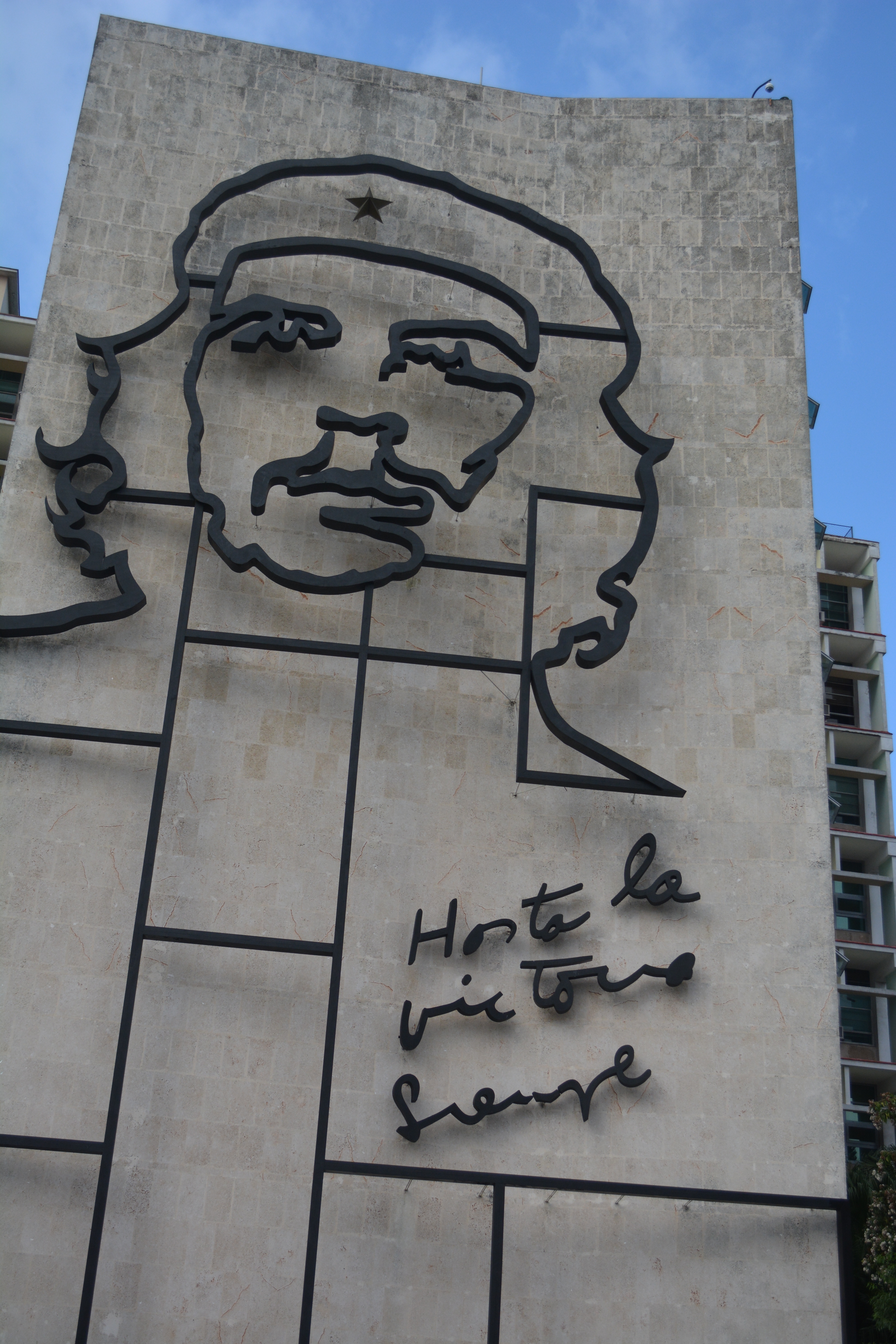
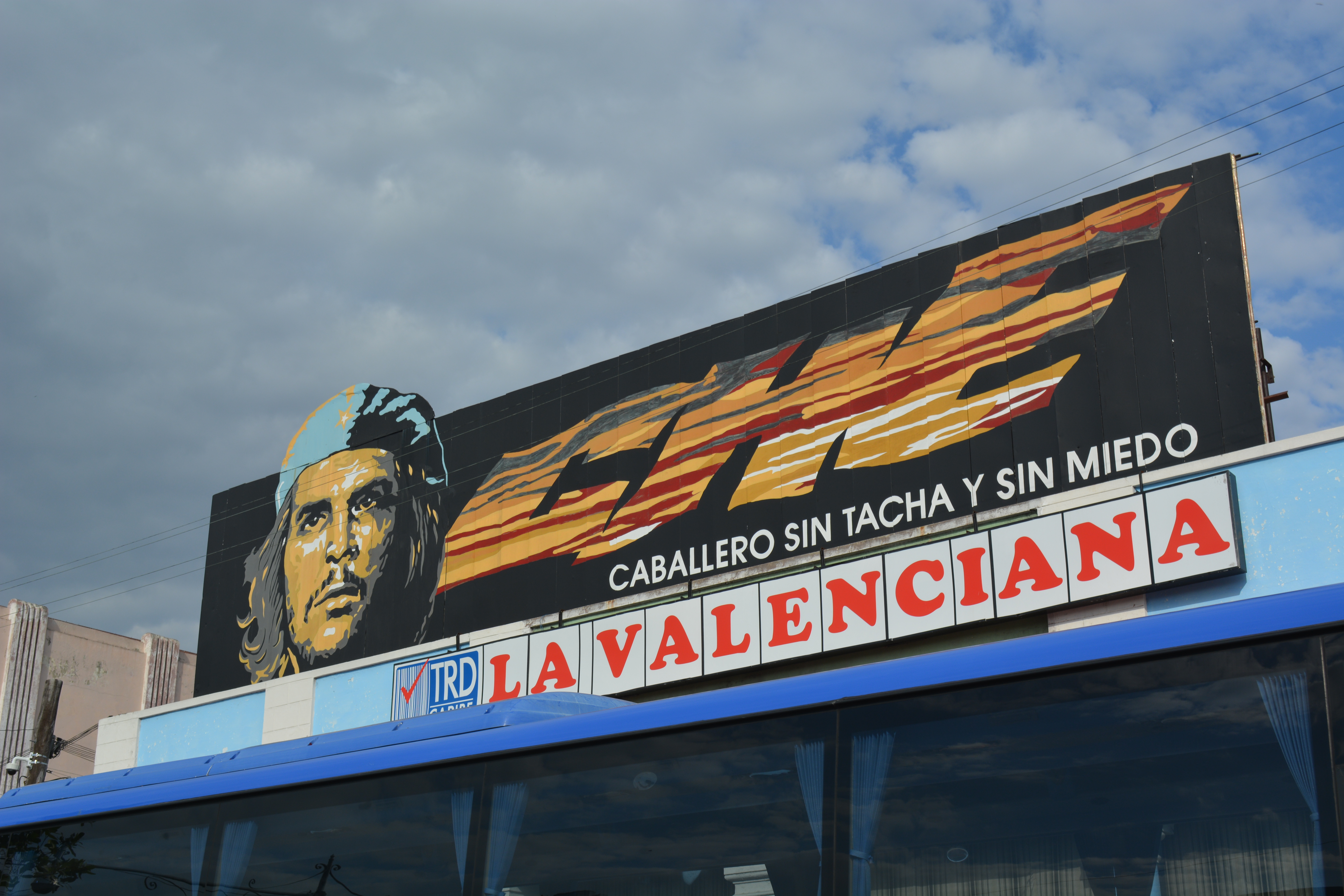
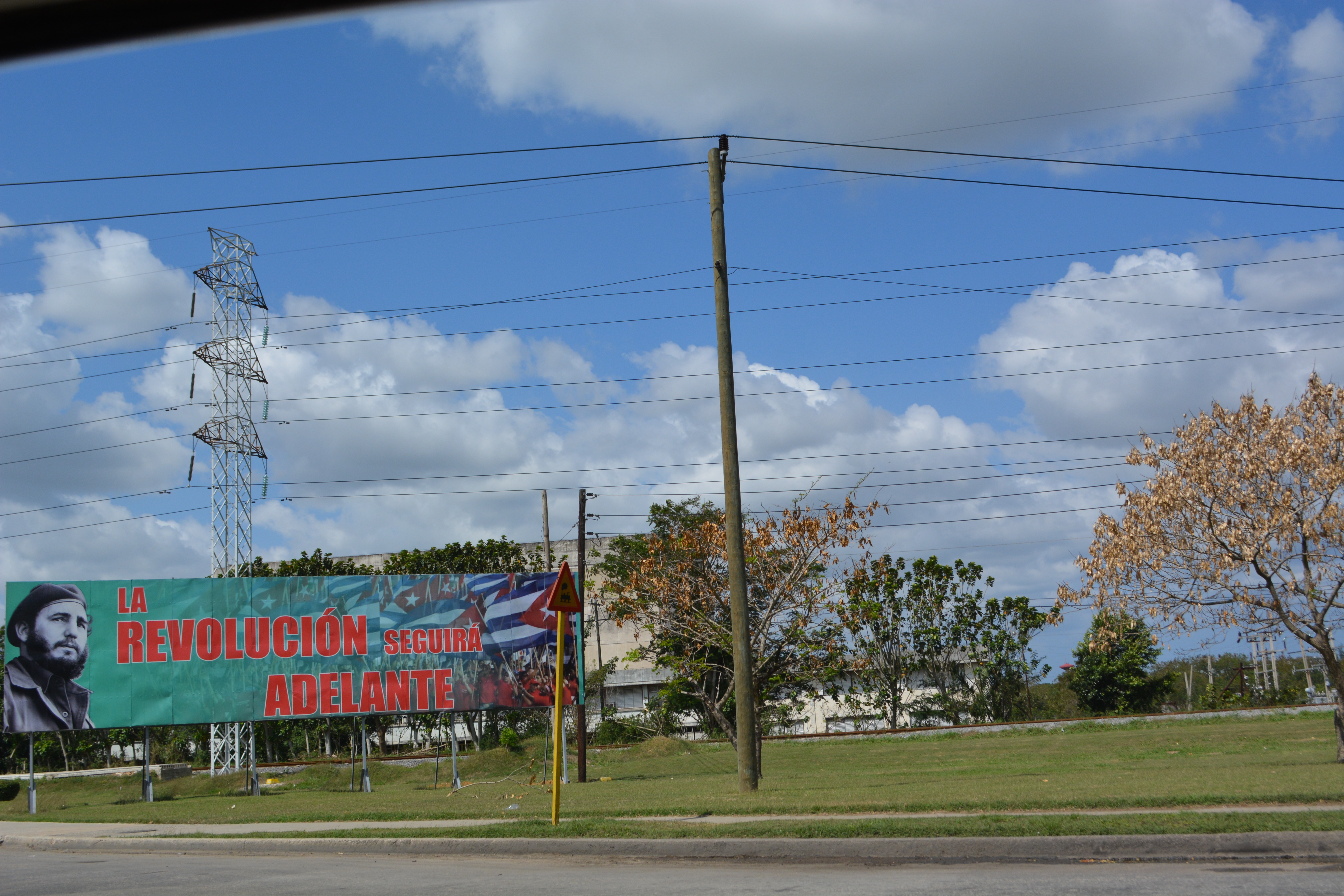
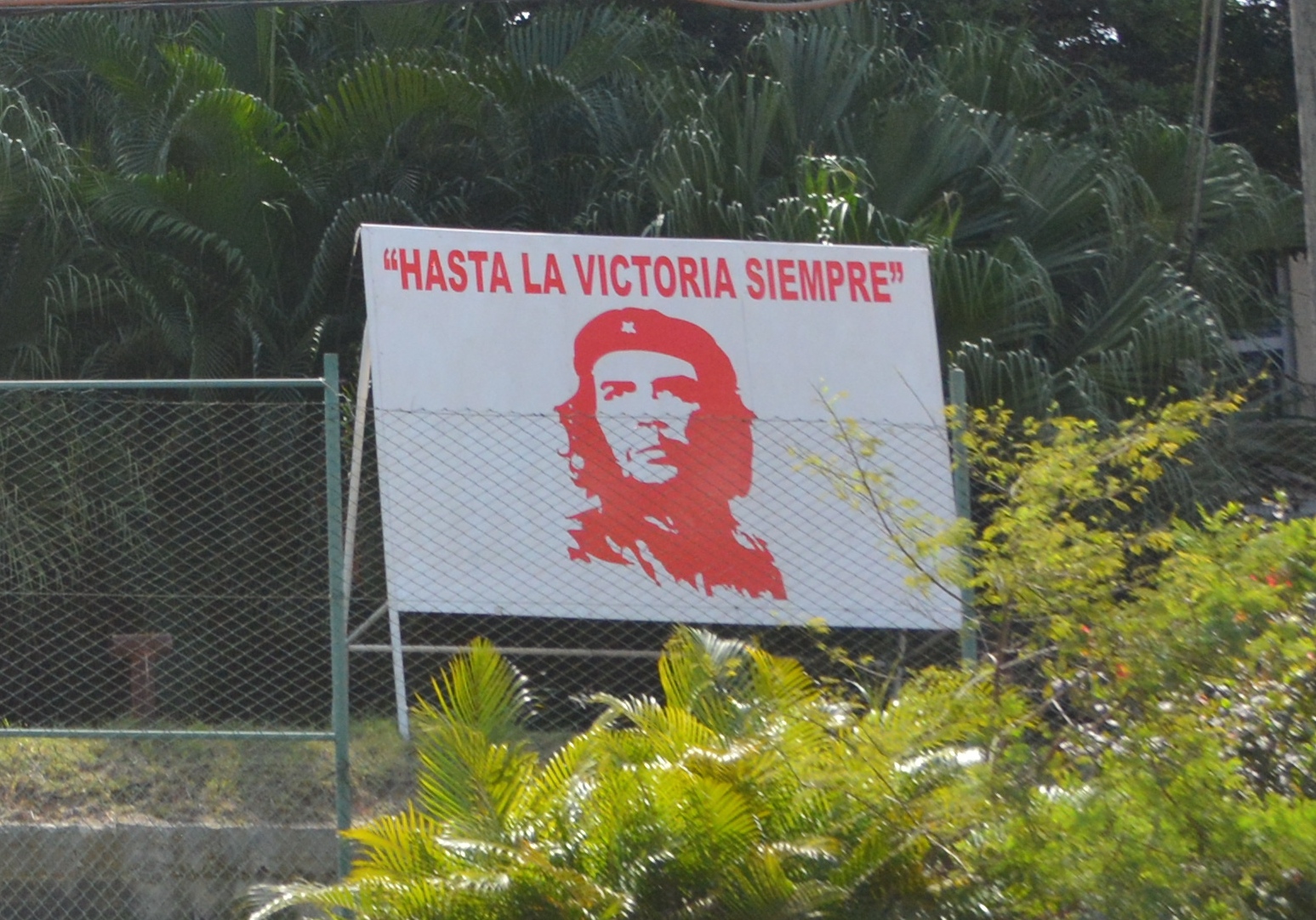
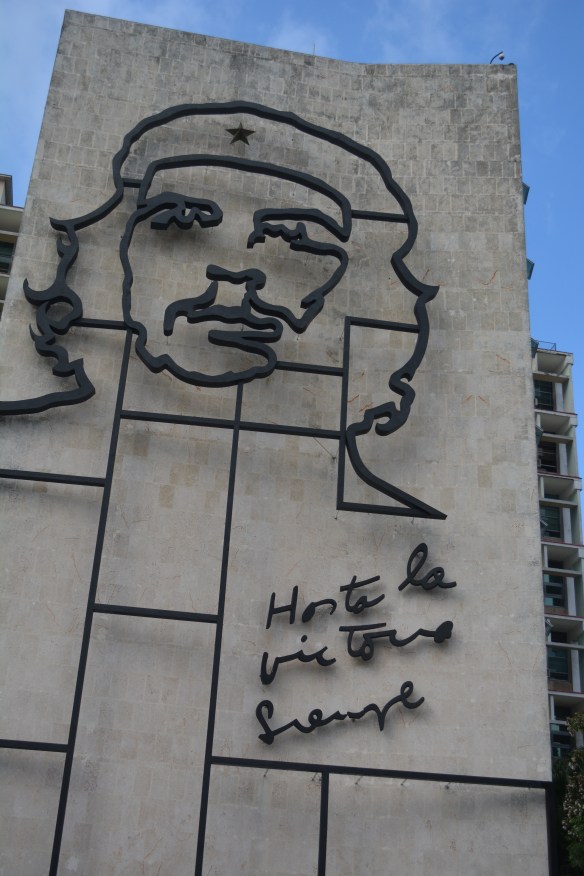
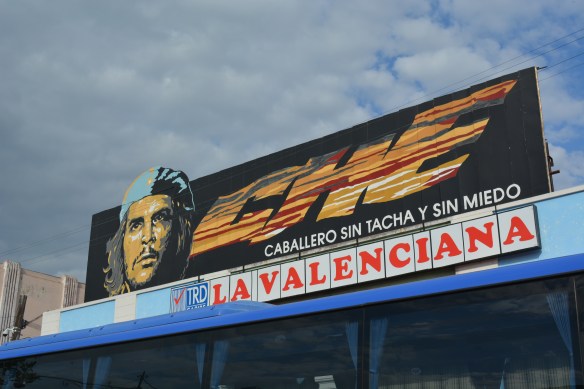
Propaganda.  One of the interesting things about communist countries is the prevalence of propaganda.  It seems so foreign to those of us steeped in commercial advertising (although it is becoming more prevalent at home these days).  There are few if any billboards on the roads of Cuba, but this is only because they are not allowed. The billboards you do see are typically government propaganda praising the heroism of Che Guevara, Fidel Castro, Camilo Cienfuegos and Raoul Castro (in that order – Che is much more popular than Fidel, I guess it is true what they say, “Live fast, die young and leave a good-looking corpse!”).
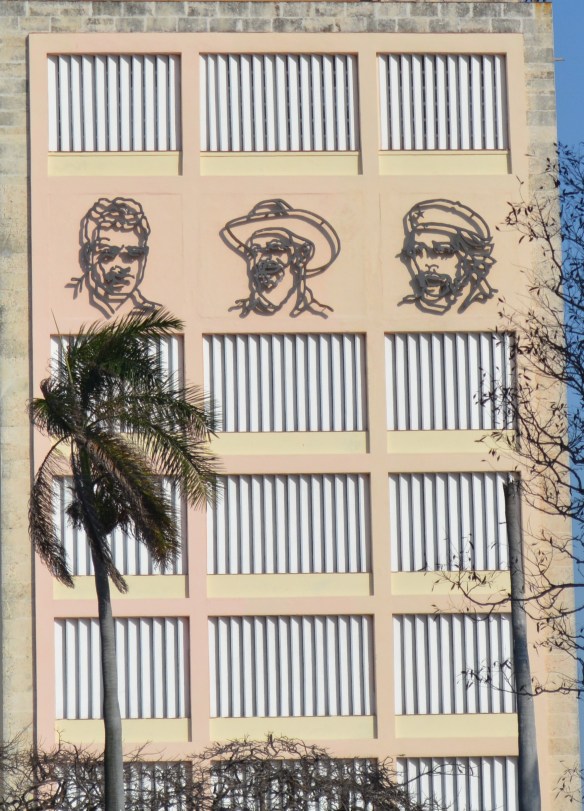
Cienfuegos, Fidel and Che
Cienfuegos, Fidel and Che

Che monument
Che monument

Che billboard

Roughly translated, “Knight without reproach and without fear”.
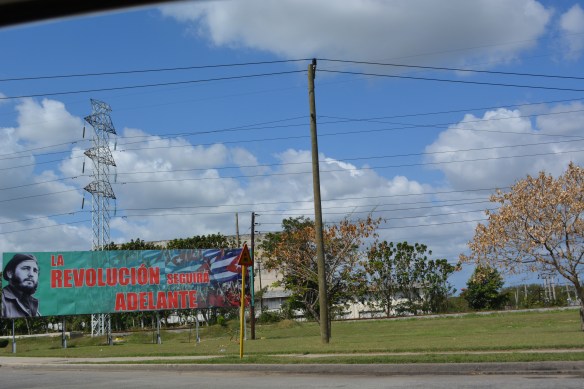
DSC_0705

“The Revolution will move ahead”

DSC_0696

“Socialism or death”

DSC_0698

“Until Victory, Always!”

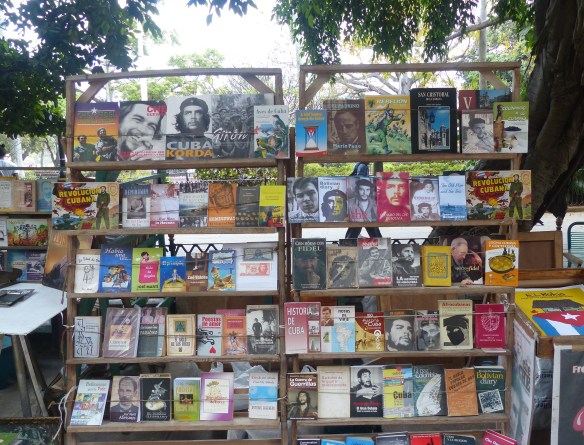
Endless supply of books on Che and the revolution

Endless supply of books on Che and the revolution

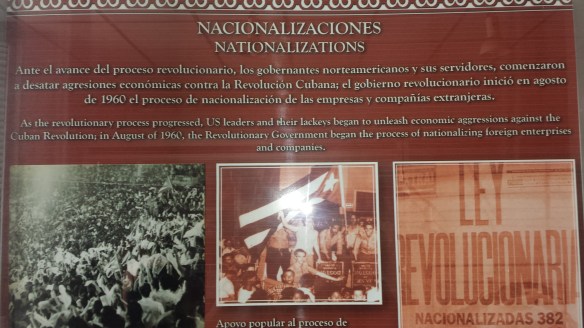
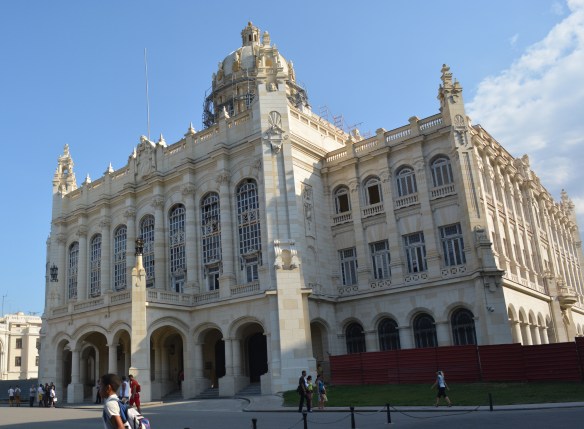
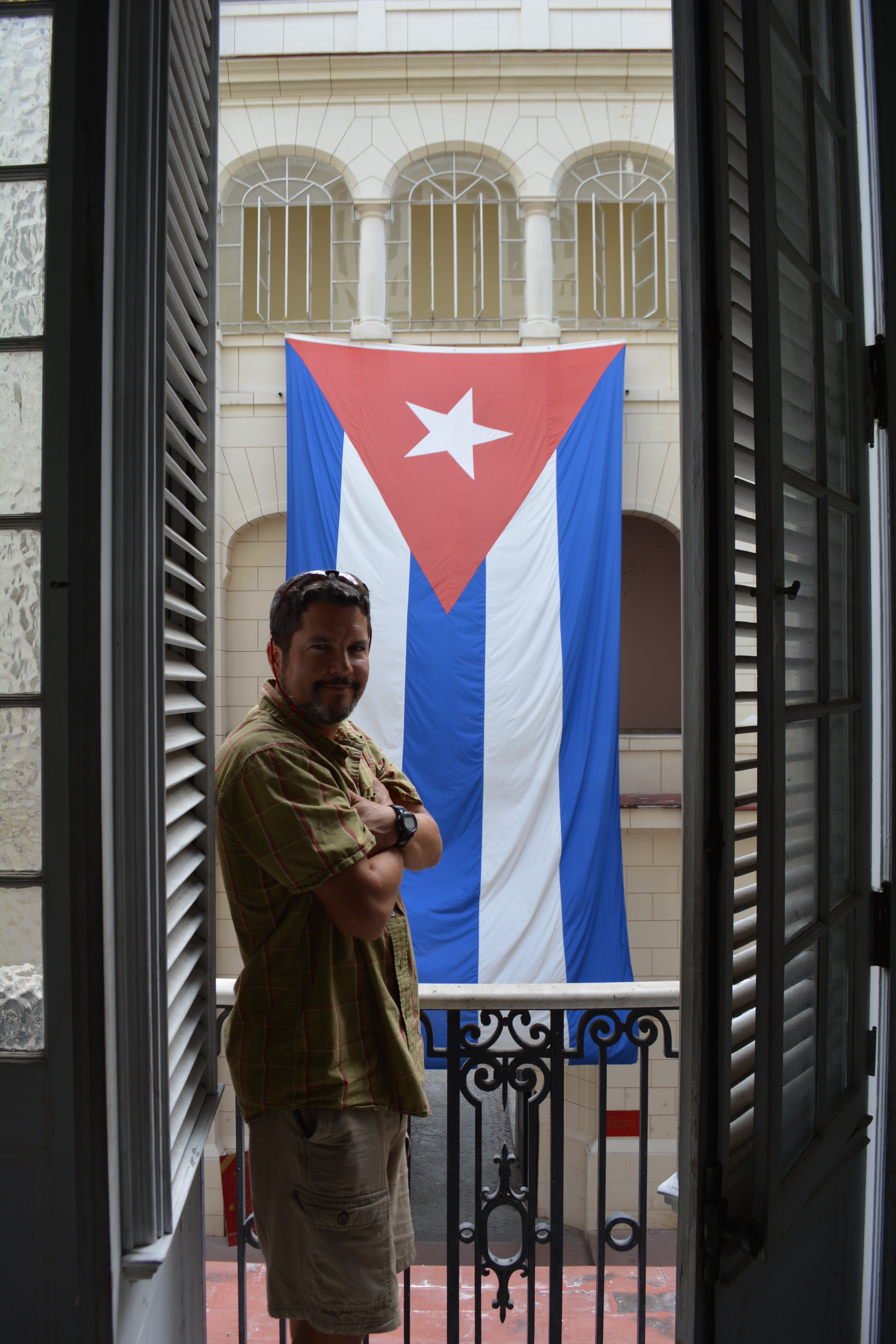
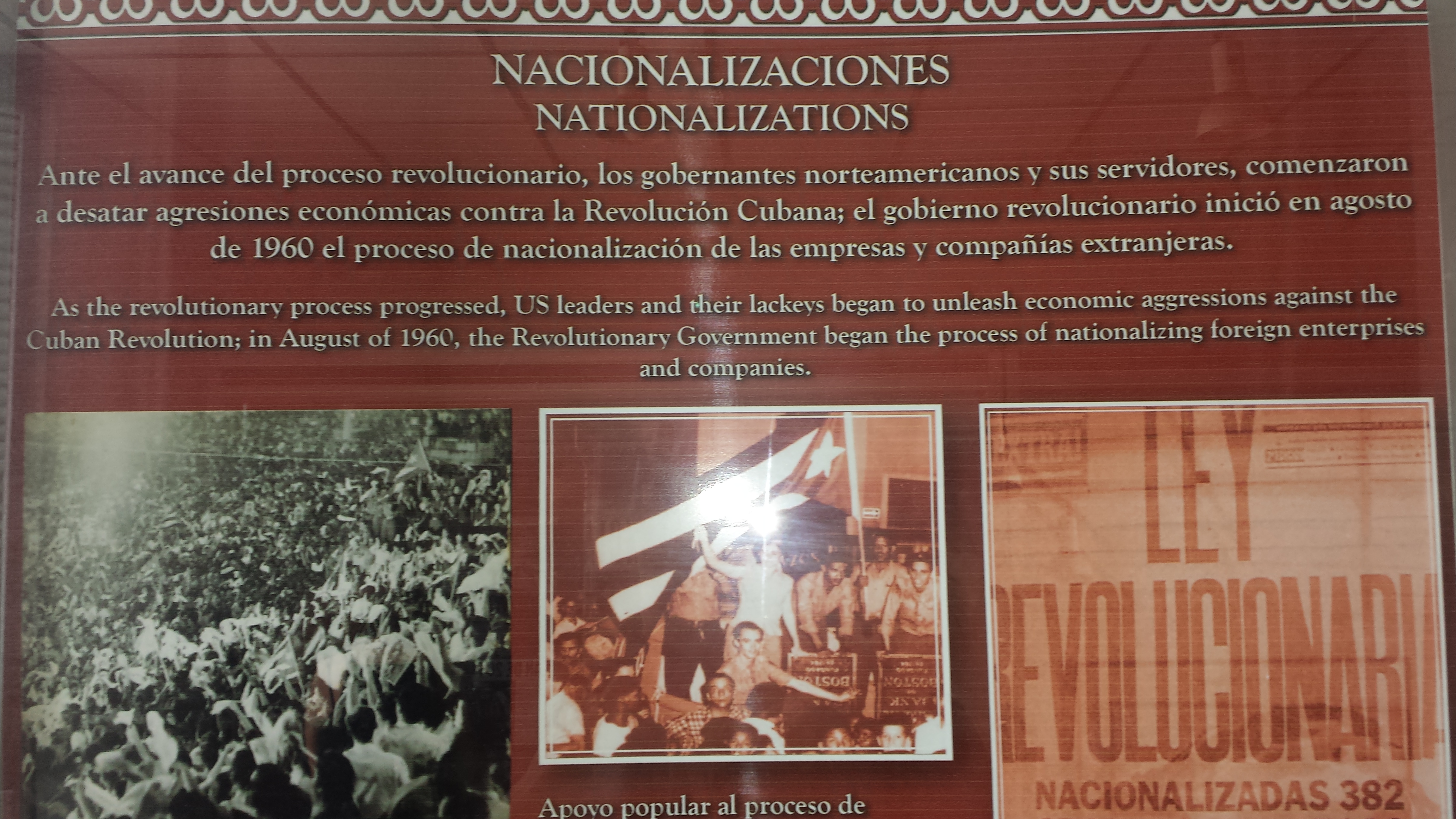
The Museum of the Revolution is a striking example of this.  Its a fascinating collection of artifacts and information about the revolution.  We weren’t aware just how long and hard Fidel and his cohorts toiled to bring about change. Peter Cuban flag
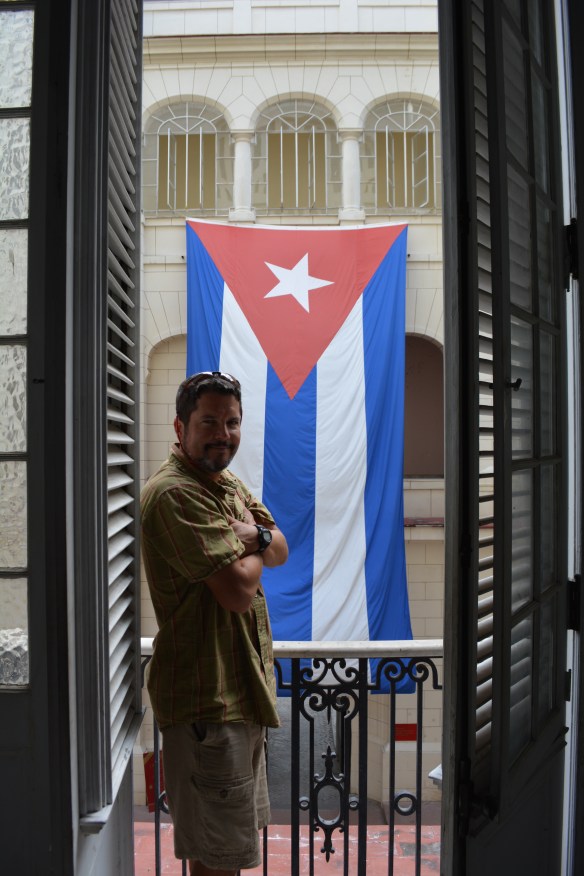
“US leaders and their lackeys” LOL

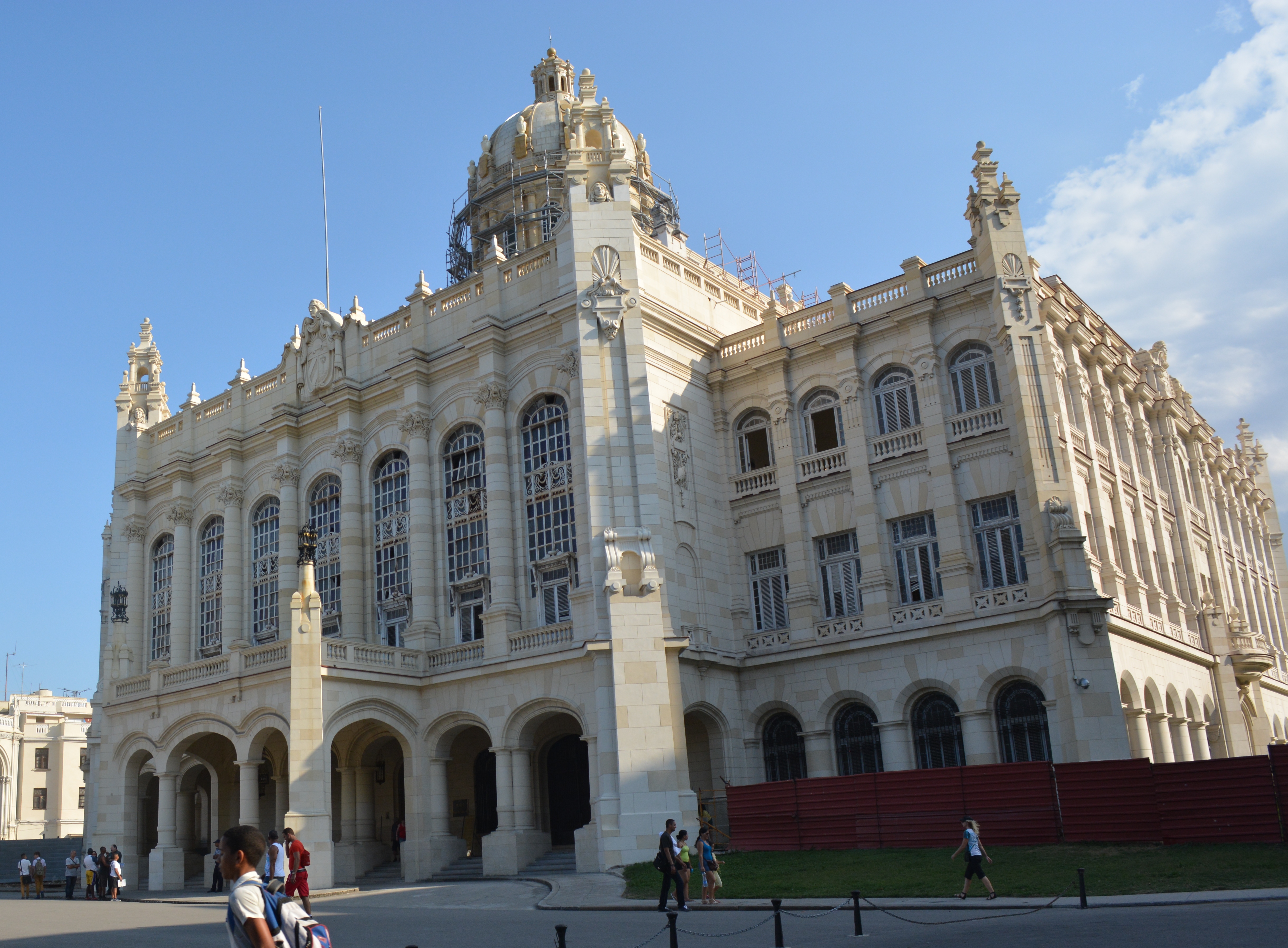
Revolution Museum

Revolution Museum appropriately housed in the former presidential palace.

However, the museum is not sparing in its condemnation of “imperialists aggressors” who conspired to stunt the heroic revolution.

Rincón de los cretinos

Rincón de los cretinos “cretin corner”.

Propaganda is not limited to the players of the revolution though.  Jose Marti, who was a writer and symbol for Cuba’s independence from Spain in the 19th century, is always referred to by the honorific “Our National Hero Jose Marti”, never just Jose Marti.
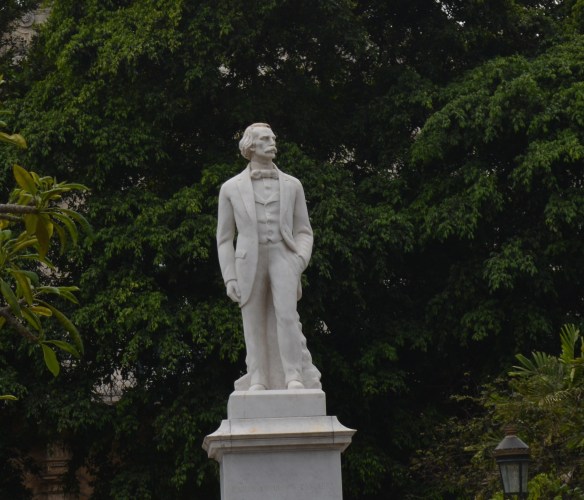
Jose Marti

Cuban National Hero Jose Marti

It sounds so odd but flows so easily from Cubans that you guess it had to be drilled into everyone during schooling.  Anyway, the propaganda is all very amusing but of little importance to Cubans, who seem to want to look forward instead of dwell on the past.  It seems that with the government’s slow weakening, people express their opinions fairly freely (although there is the odd, suspicious look around for eavesdroppers before criticisms are delivered) and the general outlook is to get on with life.  Cubans don’t want to condemn the revolution; they seem to want it to just slide quietly into history.

Don’t they all want to defect?  Not anymore. We would say that the majority of people we spoke to would want to immigrate to the US, but the desire to do so is not so desperate anymore. Most would prefer more economic opportunities in Cuba so they could live a more comfortable life at home.  Cuba has softened its travel restrictions a bit lately and some people are able to go abroad.  However, due to historical restrictions, there are nearly no boats on the water and Cubans have generally lost their maritime heritage.
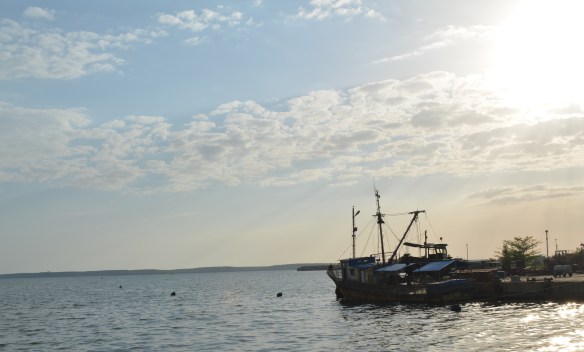
Derelict fishing boat in Cienfuegos harbor

Derelict fishing boat in Cienfuegos harbor.

It’s odd to look out over a beautiful bay and not see boats zipping around because Cubans are still not allowed to own, or even go on, a boat.
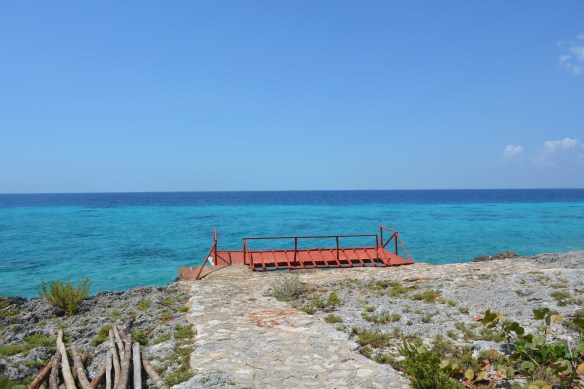
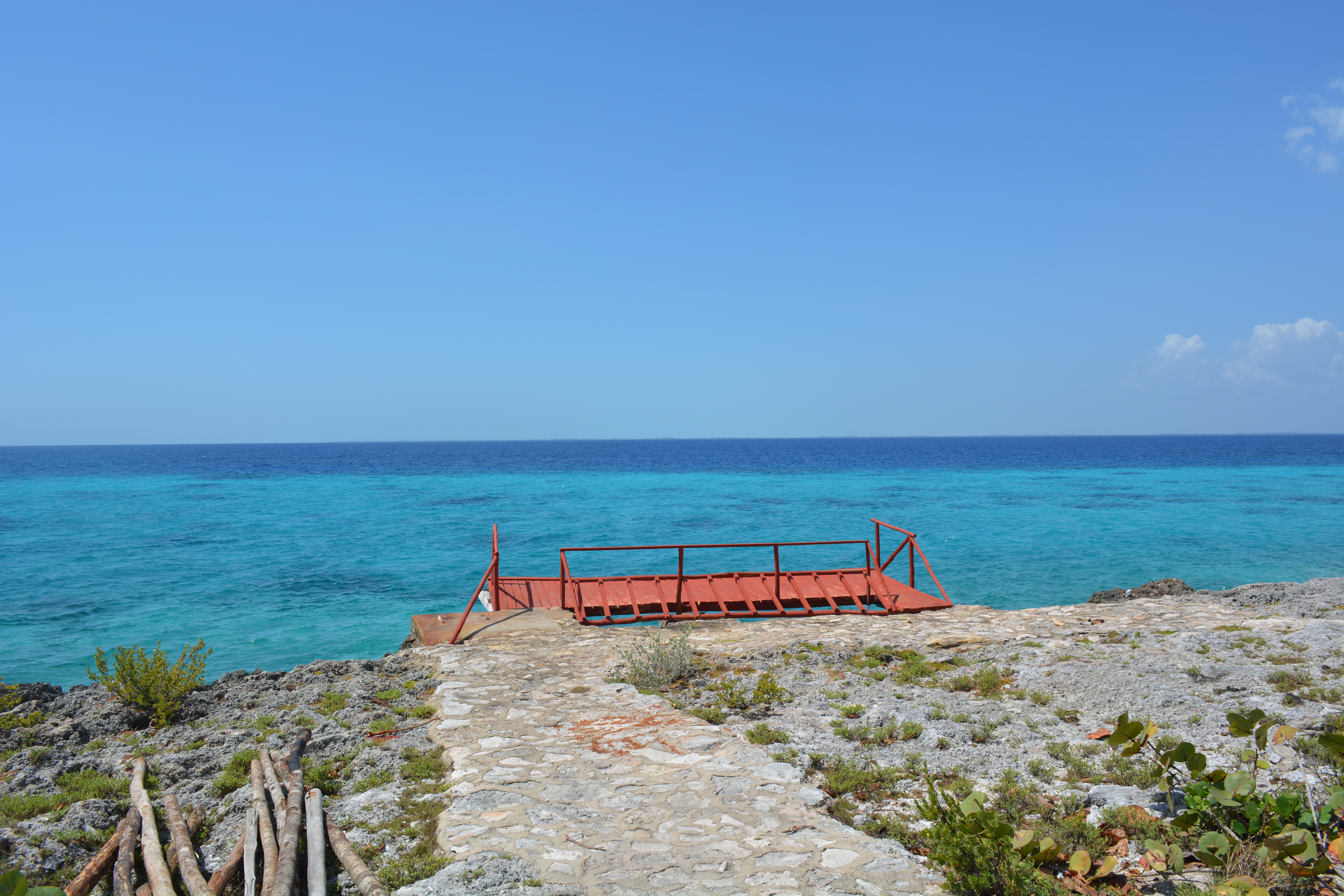
We went diving in the Bay of Pigs,  no dive boats here, just stepped off the end of this dock.

We went diving in “Bahía de Cochinos” or Bay of Pigs, yes that Bay of Pigs. No dive boats here, just stepped off the end of this dock and were met by thousand of fish and pristine coral reef. The most fish we have seen in all the Caribbean.
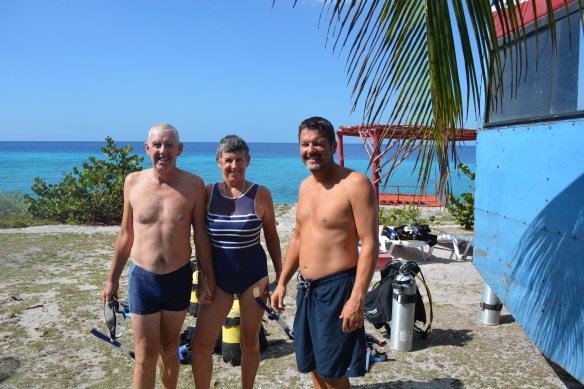
Diving

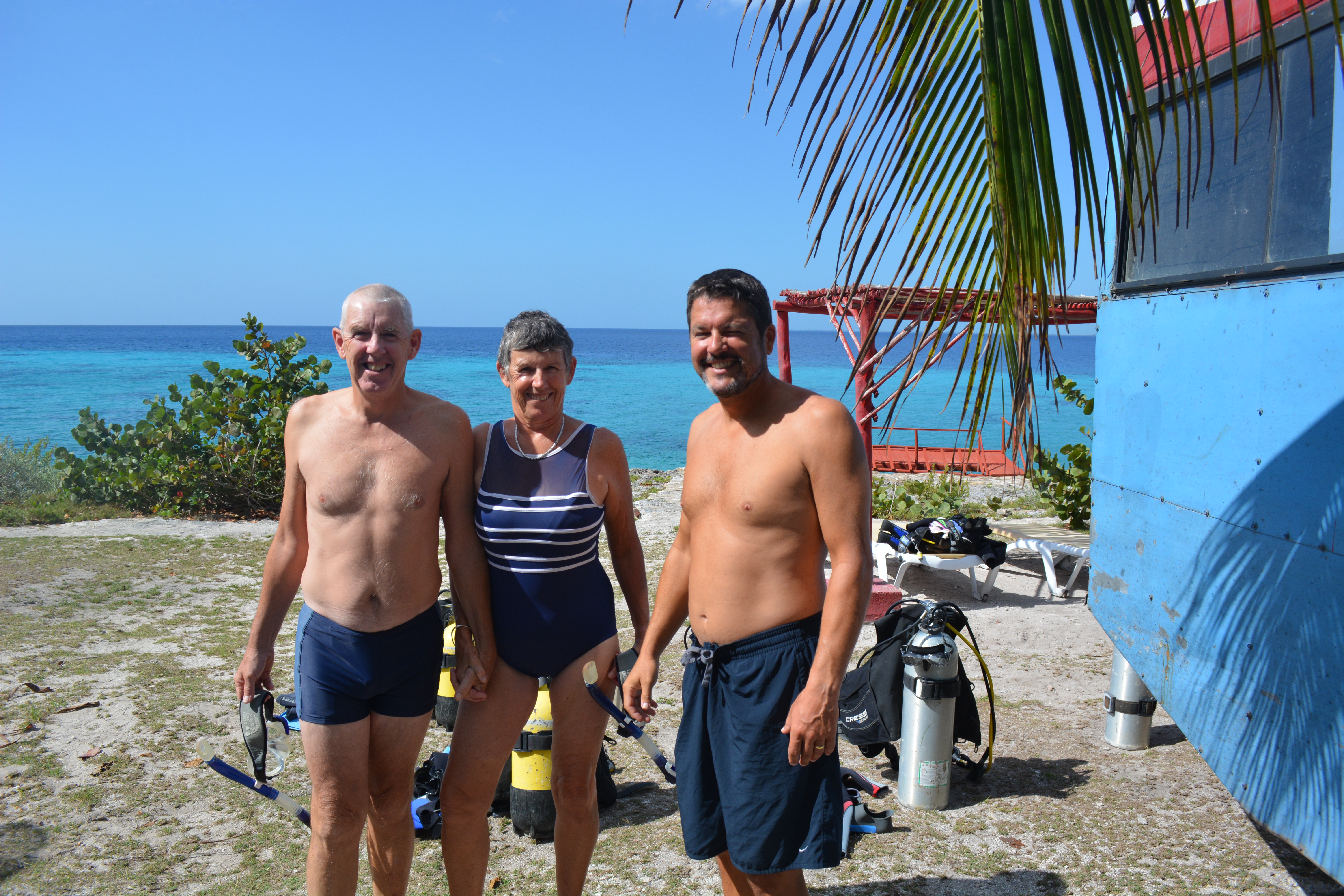
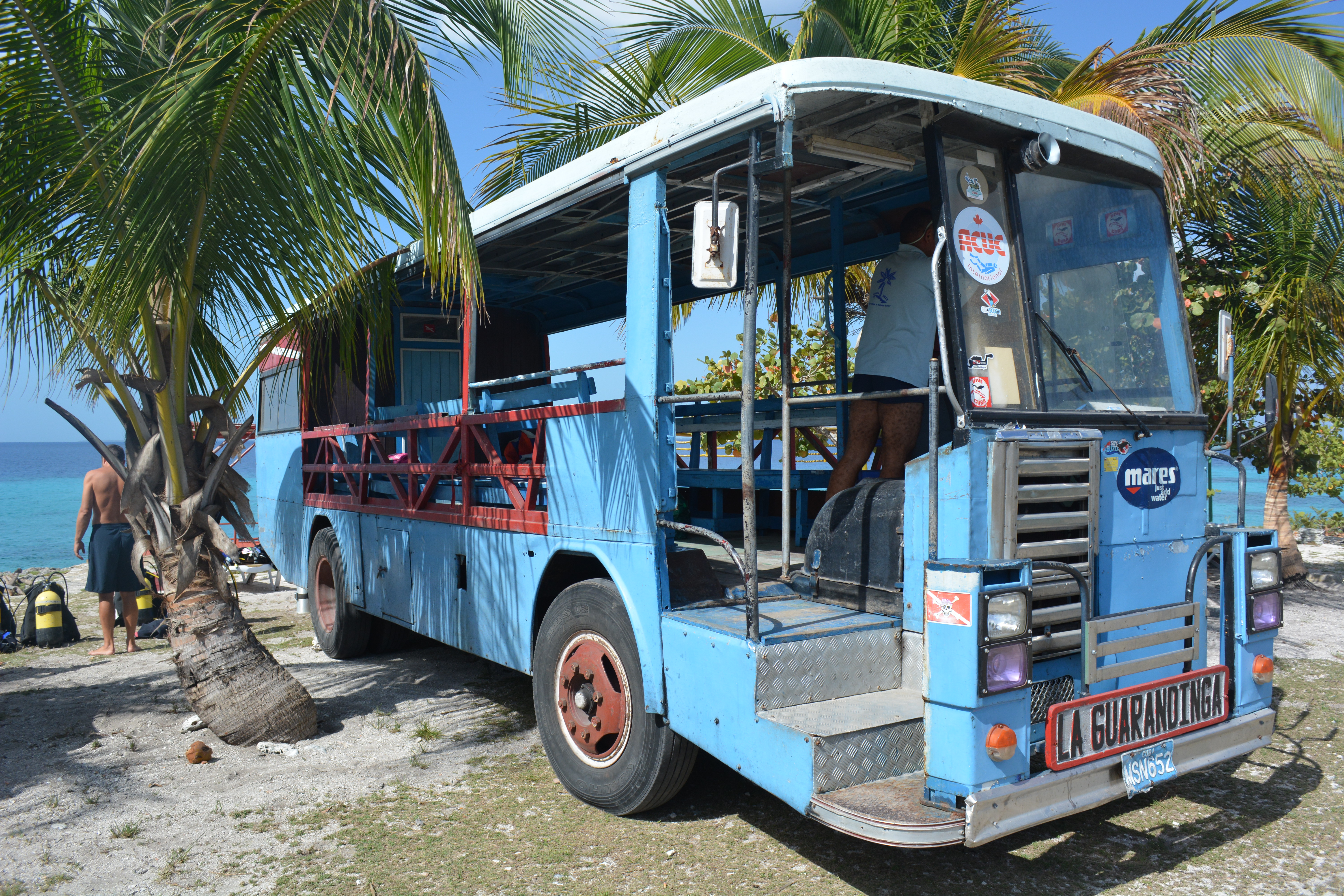
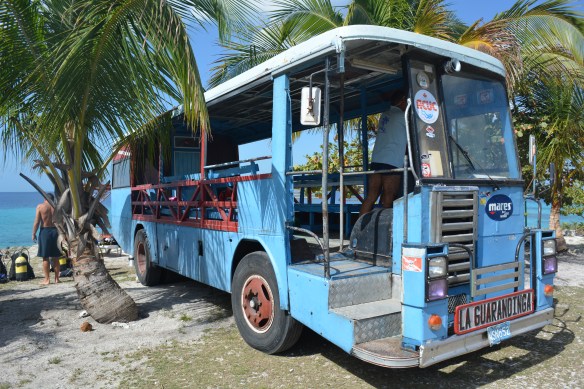
Dive center was a repurposed bus.  Our dive guide was a Cuban special forces commando and one of the best guides we've ever had

Dive center was a repurposed bus. Our dive guide was a Cuban special forces commando and one of the best guides we’ve ever had

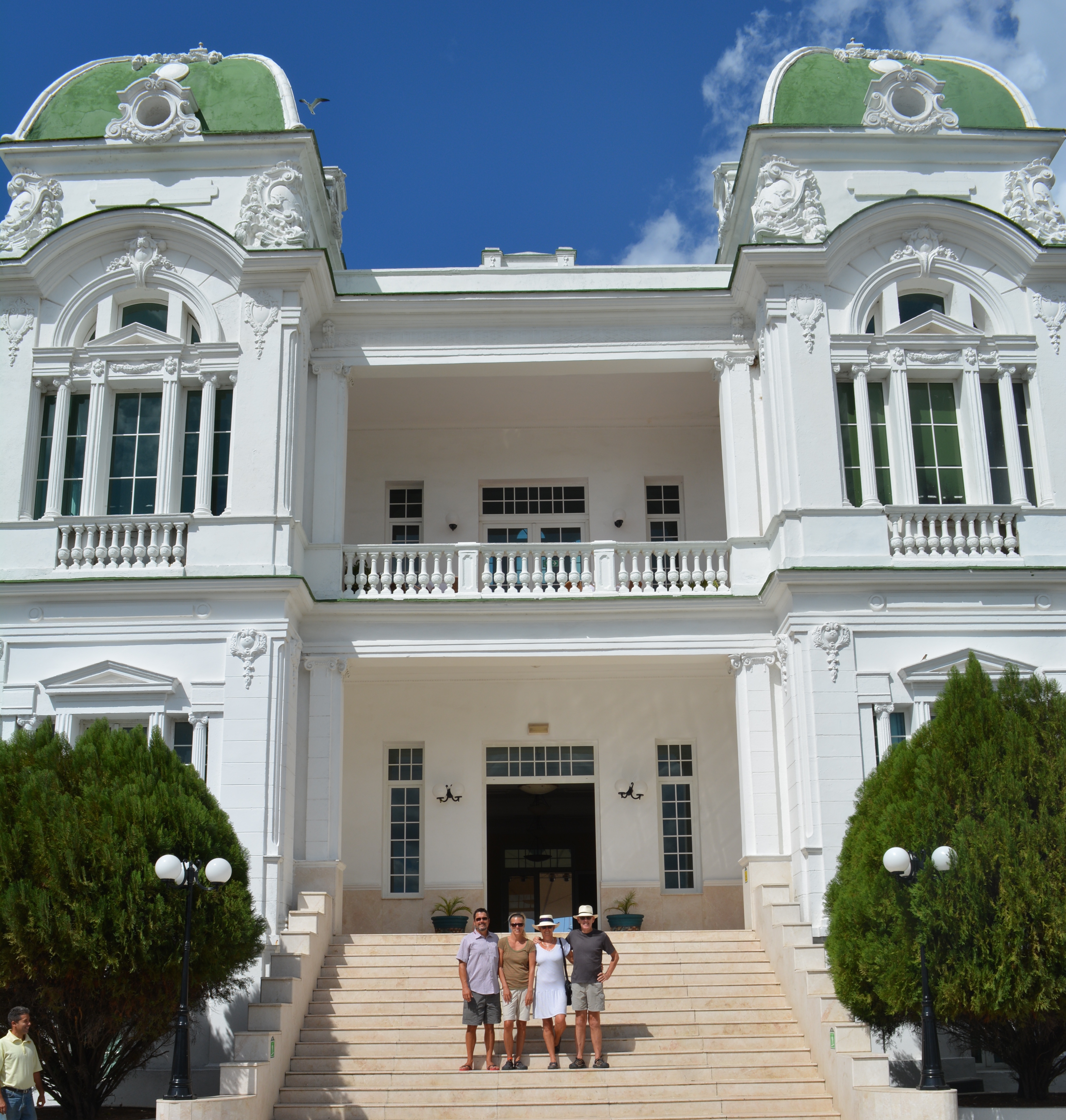
When we visited an old yacht club with foreign boats moored at the dock, our guide stopped at the edge of the dock and said he could go no further. He is not allowed to go anywhere near boats. In fact he said this was the closest he had ever been to a boat in his life.
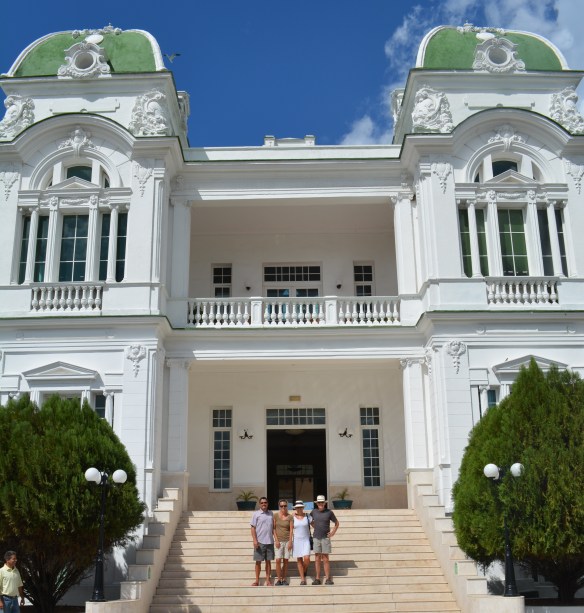
Old Yacht Club
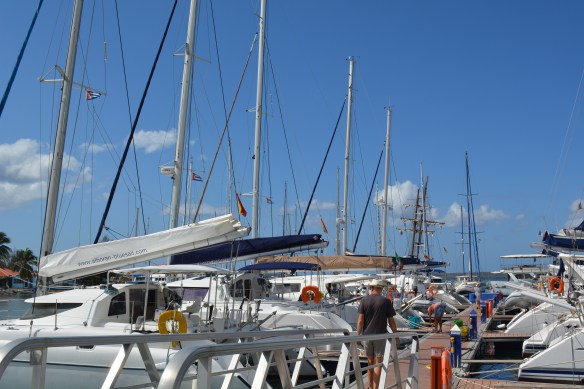
Old Yacht Club

Charter boats for foreign visitors

Charter boats for foreign visitors

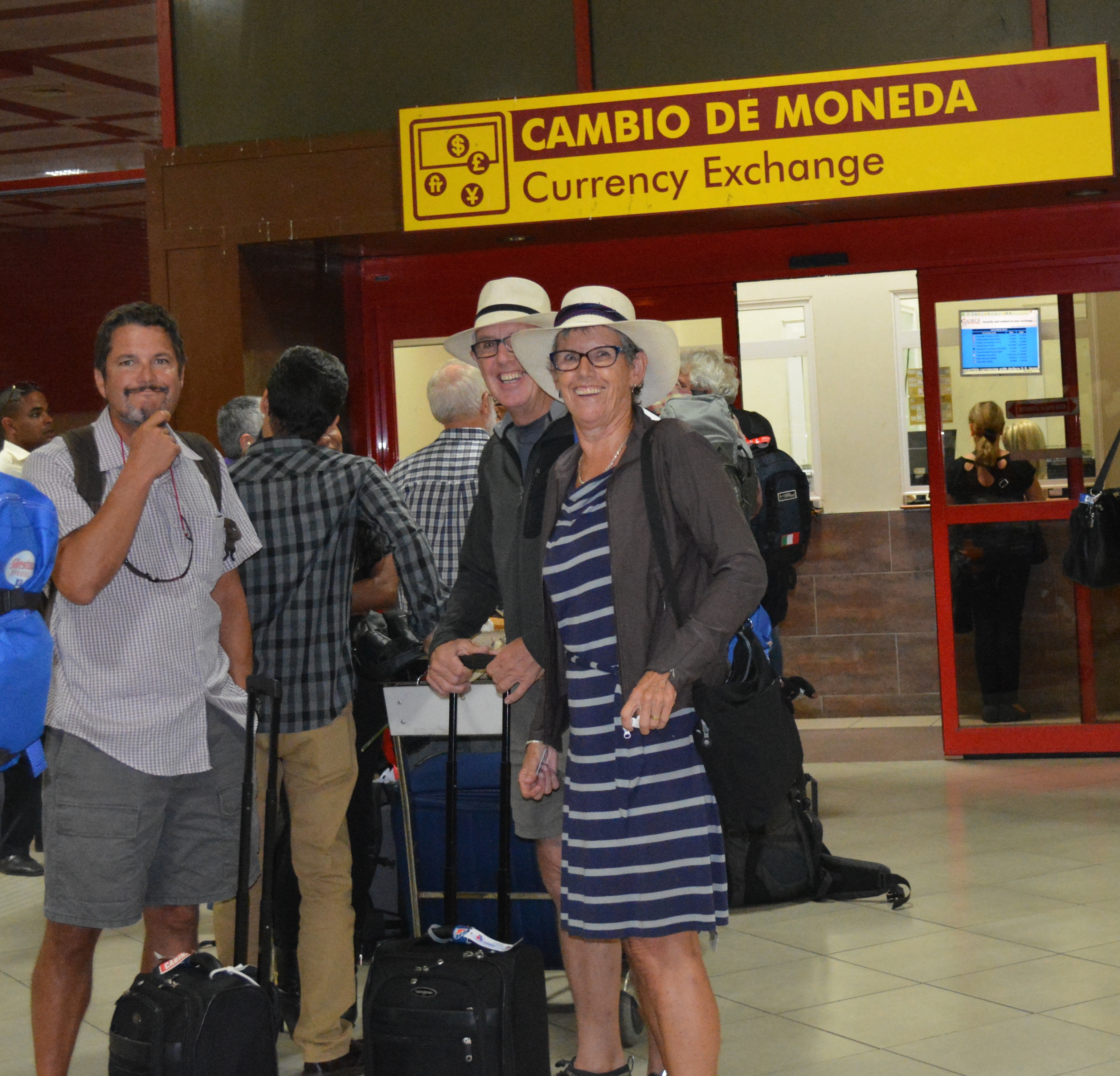
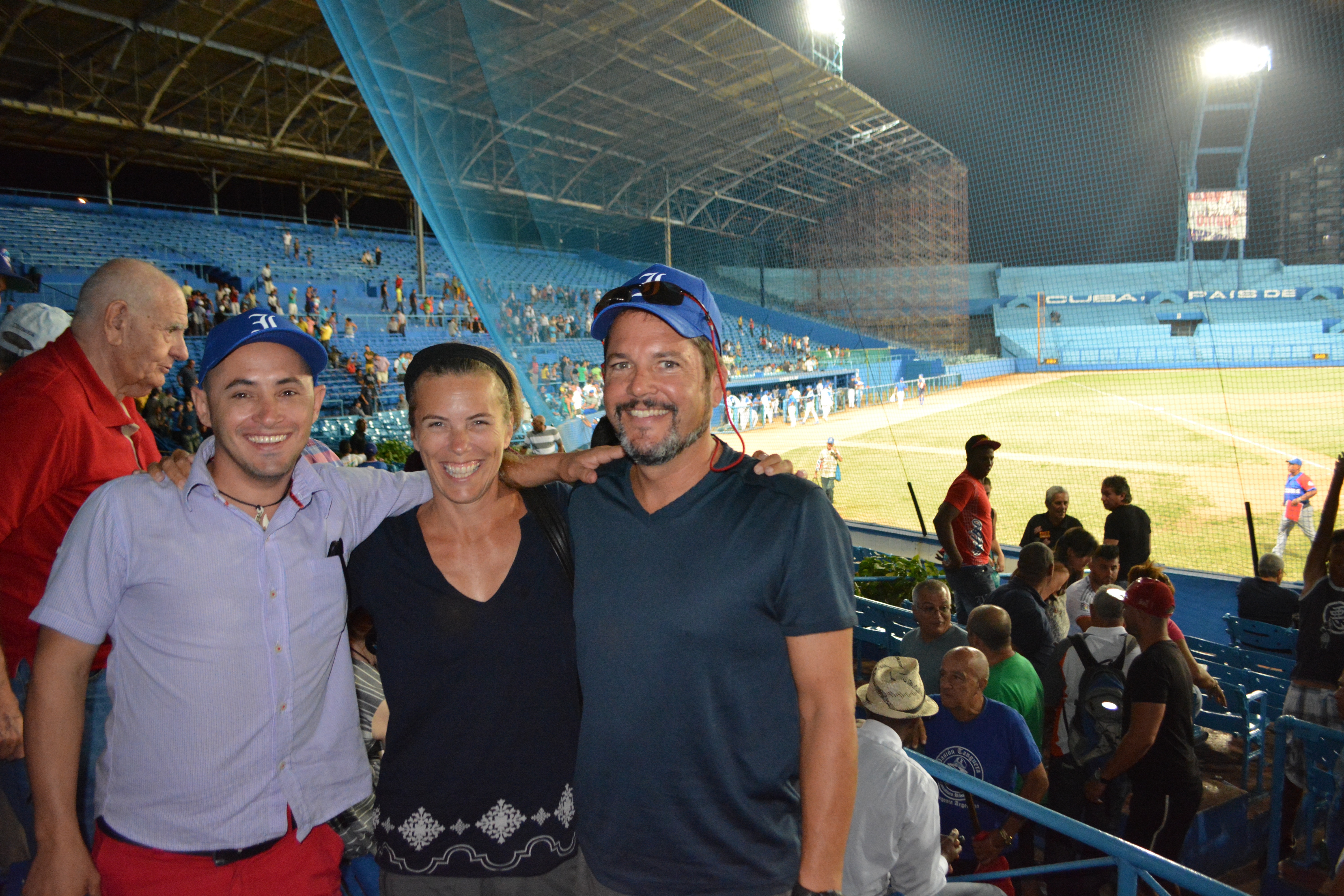
CUCs and CUPs, Paladars and Casa Particulars. They have a strange monetary system where locals use CUP (cuban peso)  and foreigners use CUC (convertible peso). A CUC is worth about 24 CUPs, yet this is not reflected in prices. Cubans pay a lot less for items than a foreigner does.  For example, we went to a baseball game (they are just as fanatic about it as the most die-hard fans in the US), and we paid 3 CUCs for a ticket while our Cuban friend paid 3 CUPs – 24 times less.  (So that is $3 for us and 13¢ for locals – for a playoff game non the less).

We were thrilled to take Olexis' to his first professional baseball game.  The  Havana Industrials  in the playoffs (they lost)

We were thrilled to take Olexis to his first professional baseball game. The Havana Industriales in the playoffs (they lost).

Not everything is priced as 1 CUP to 1 CUC, however, and sometimes there does not seem to be any relationship between the two prices for the same good.

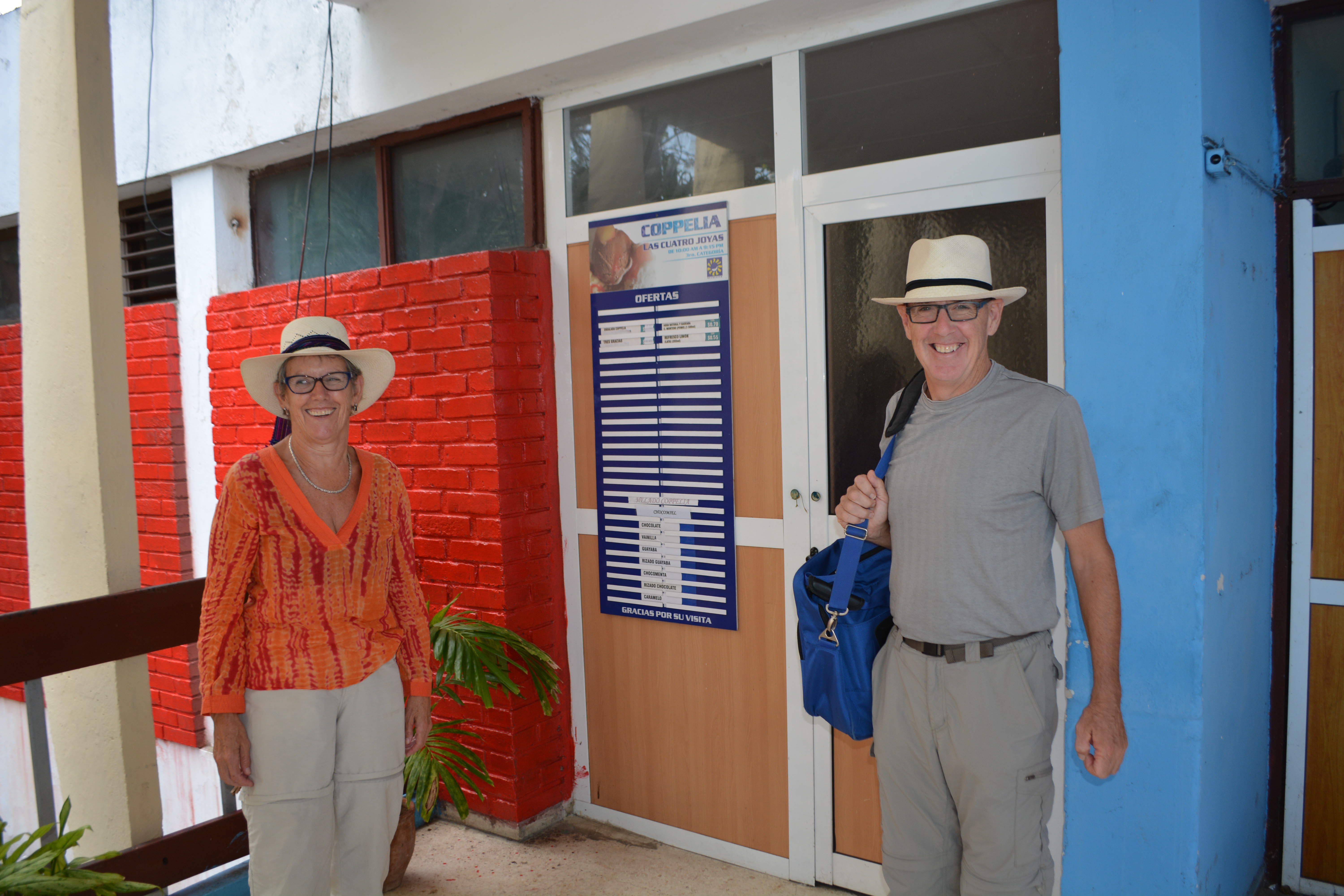
One day we decided to go to Coppelia, Cuba’s famous ice cream parlor.
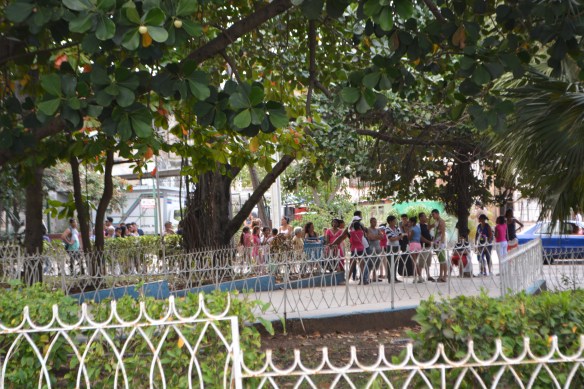
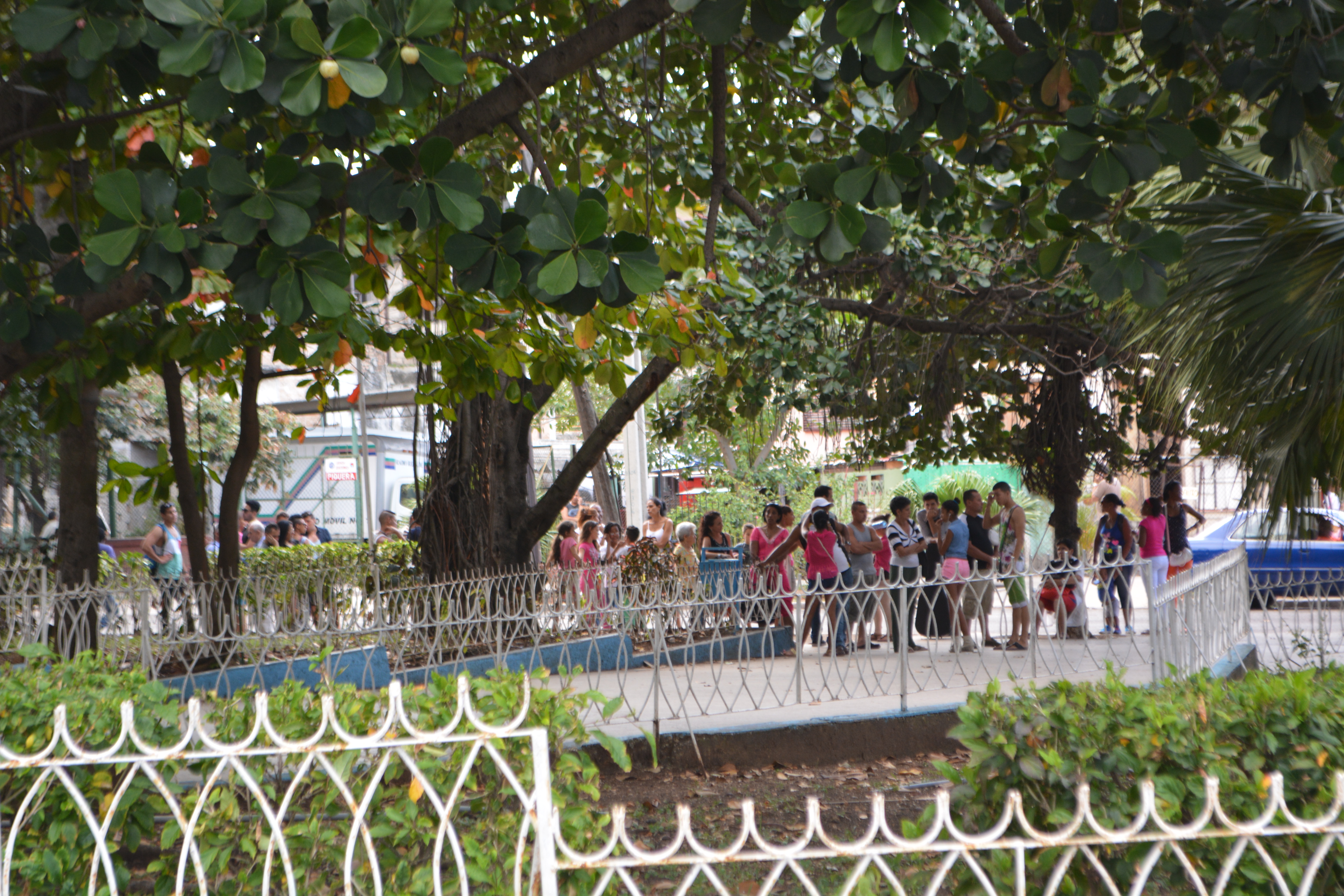
Locals waiting on line for ice cream at Coppelia.

Locals waiting on line for ice cream at Coppelia.

We were told that the lines could be long and were prepared to wait. However, when we got on the line, people from the ice cream store rushed over to us, confirmed that we were not Cubans and immediately took us to a special room for foreigners. We were the only ones in the room and were quickly served while many locals continued to wait on line.
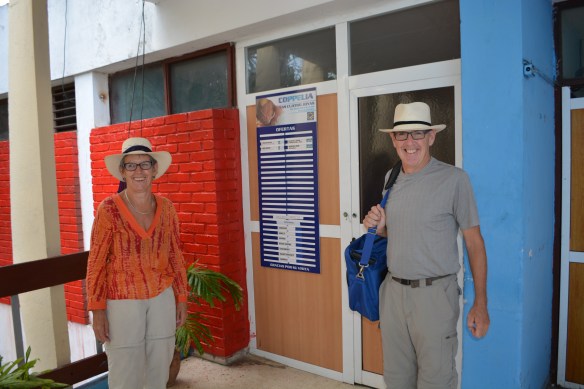
DSC_0525

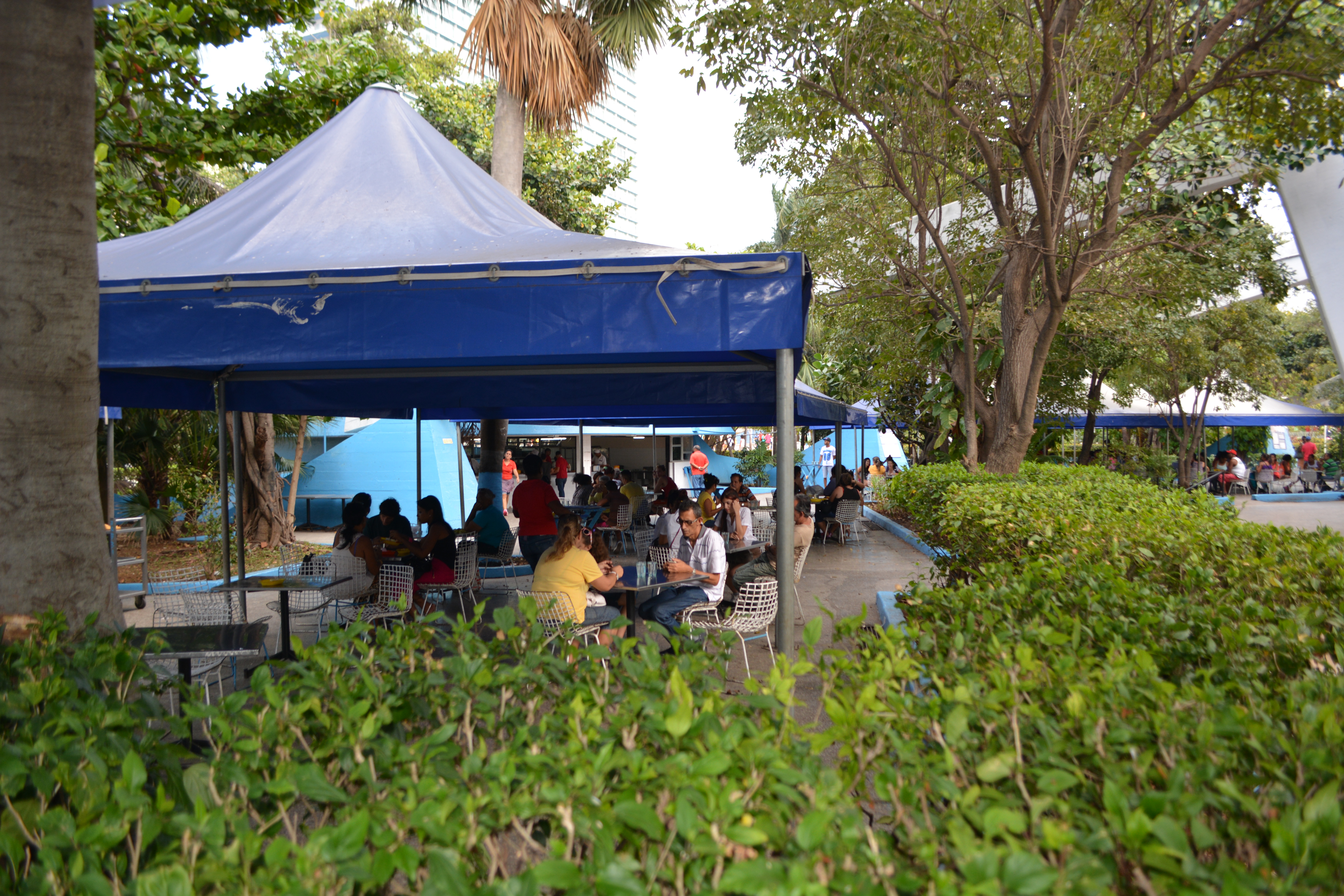
Getting ready for ice cream in exile.
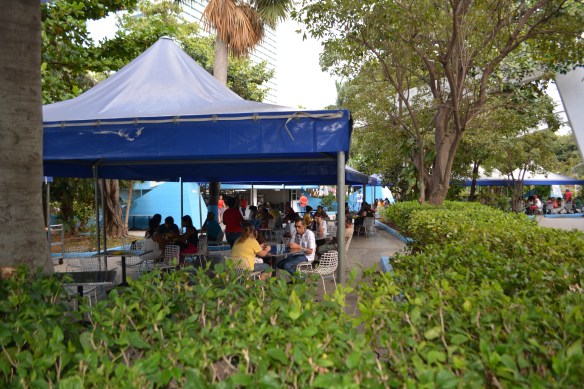
DSC_0530

Coppelia was opened by the Cuban government in 1966 so Cubans could enjoy an ice cream treat.

I am sure our prices were a multiple of what the Cubans paid, but we didn’t care about that. We regretted not being able to enjoy the ice cream among the local crowd.  It was odd to be sequestered in a private room and treated differently than everyone else.
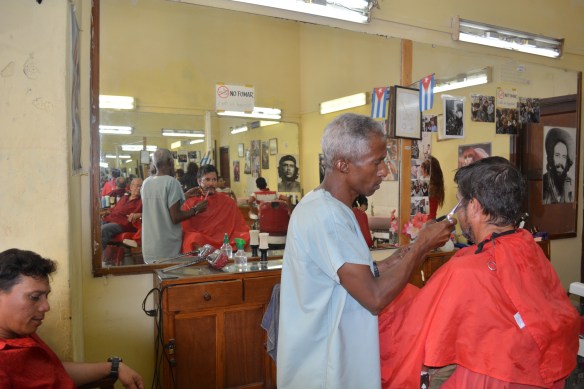
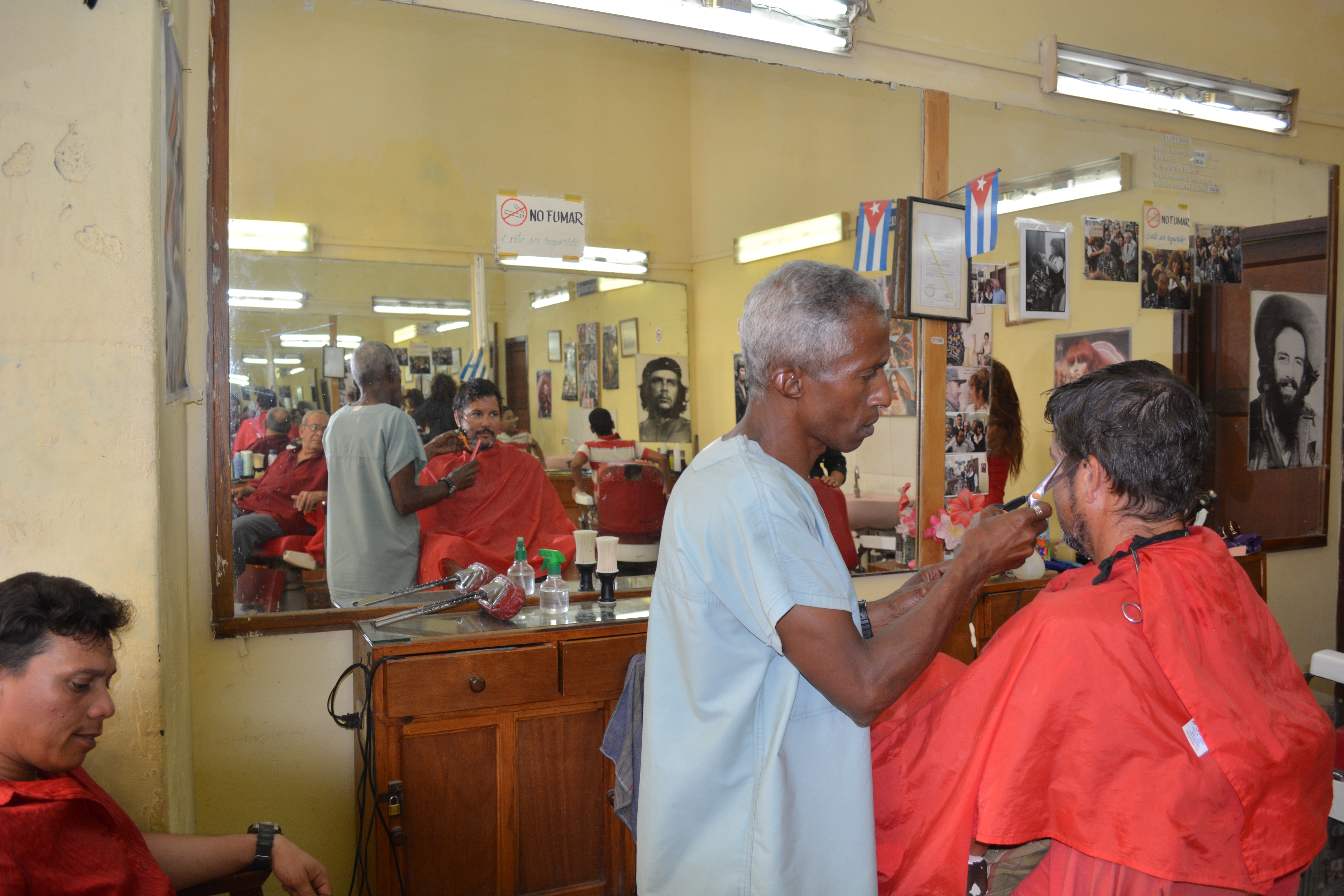
Pete thought he was getting a bargain $8 haircut, but as he walked out noticed the price list for locals as 83¢   LOL

Pete paid $8 for this haircut, but as he walked out noticed the price for locals was 83¢. LOL

Like their money, commercial life in Cuba runs on two tracks.  There are government run hotels, restaurants and shops.  These are usually clean, poorly stocked and bereft of customers.  Then there are private versions of the same (even private businesses have to give 51% profit to the government, except private shops, because those are not legal yet). Casa Particulars are private hotels and inns that started as black market places to stay and have recently been permitted by the government.
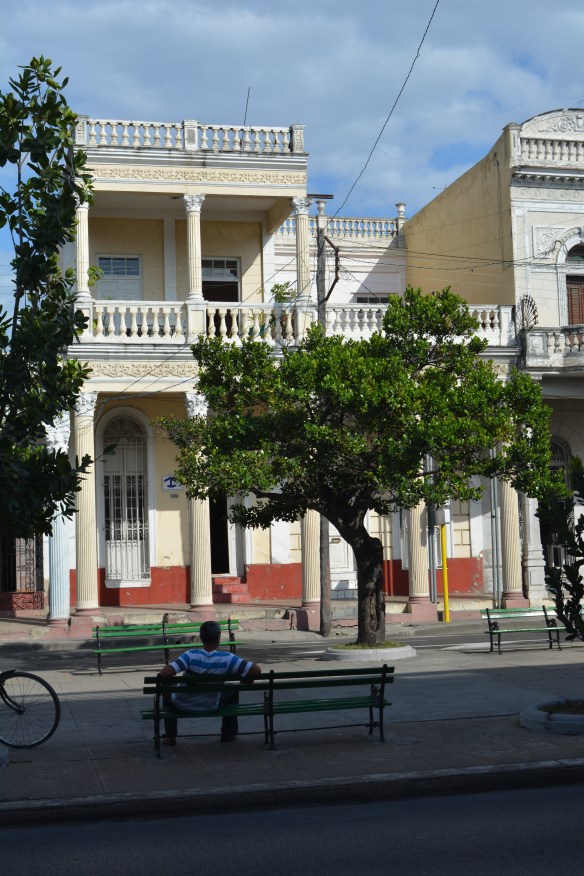
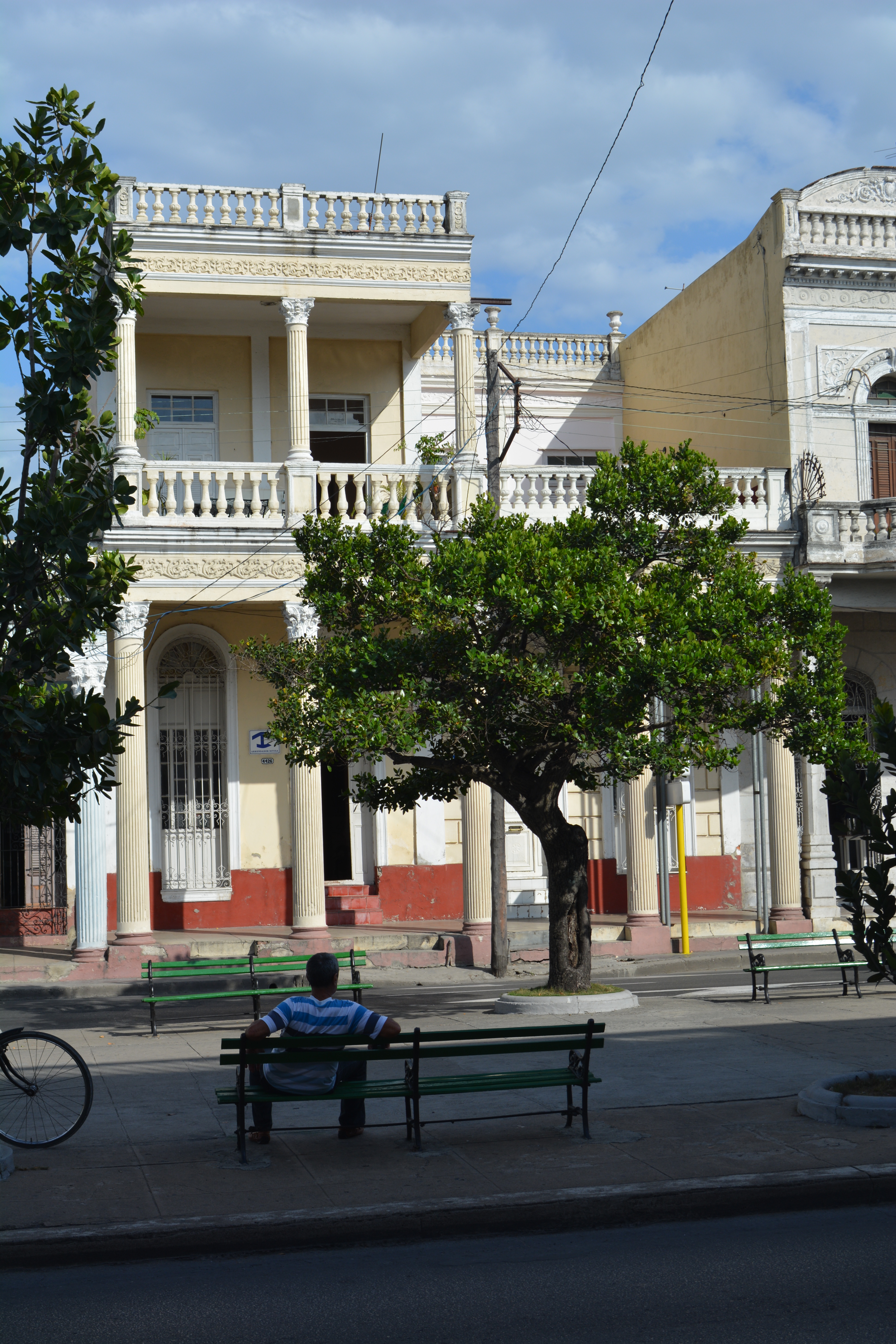
Exterior of Cienfuegos casa particular

Exterior of Cienfuegos casa particular.
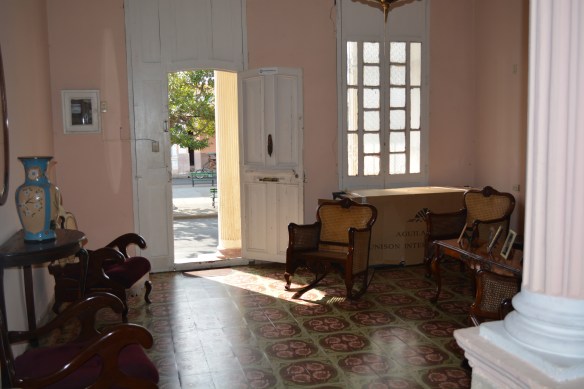
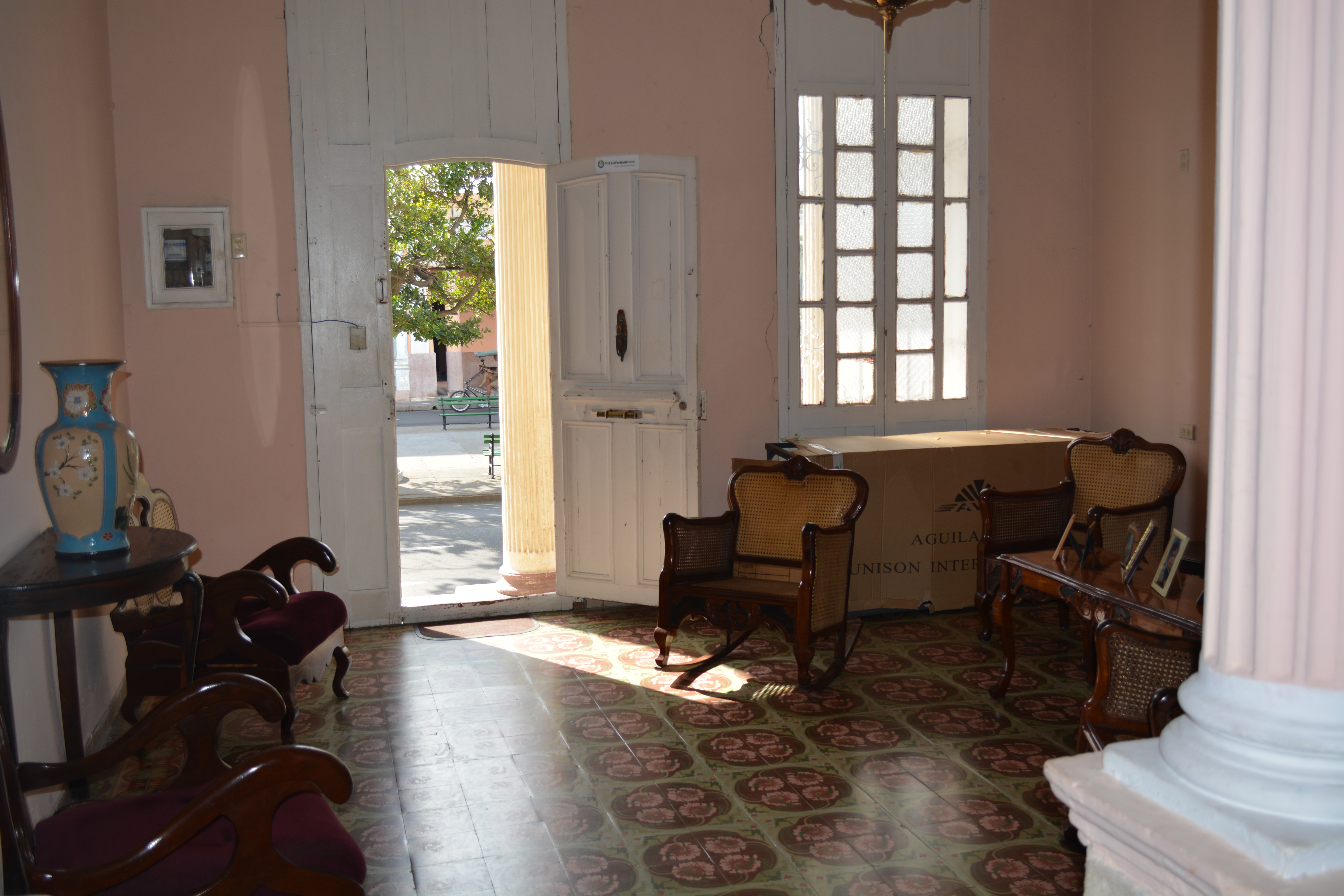
Interior common room of  Cienfuegos casa particular

Interior common room of Cienfuegos casa particular.

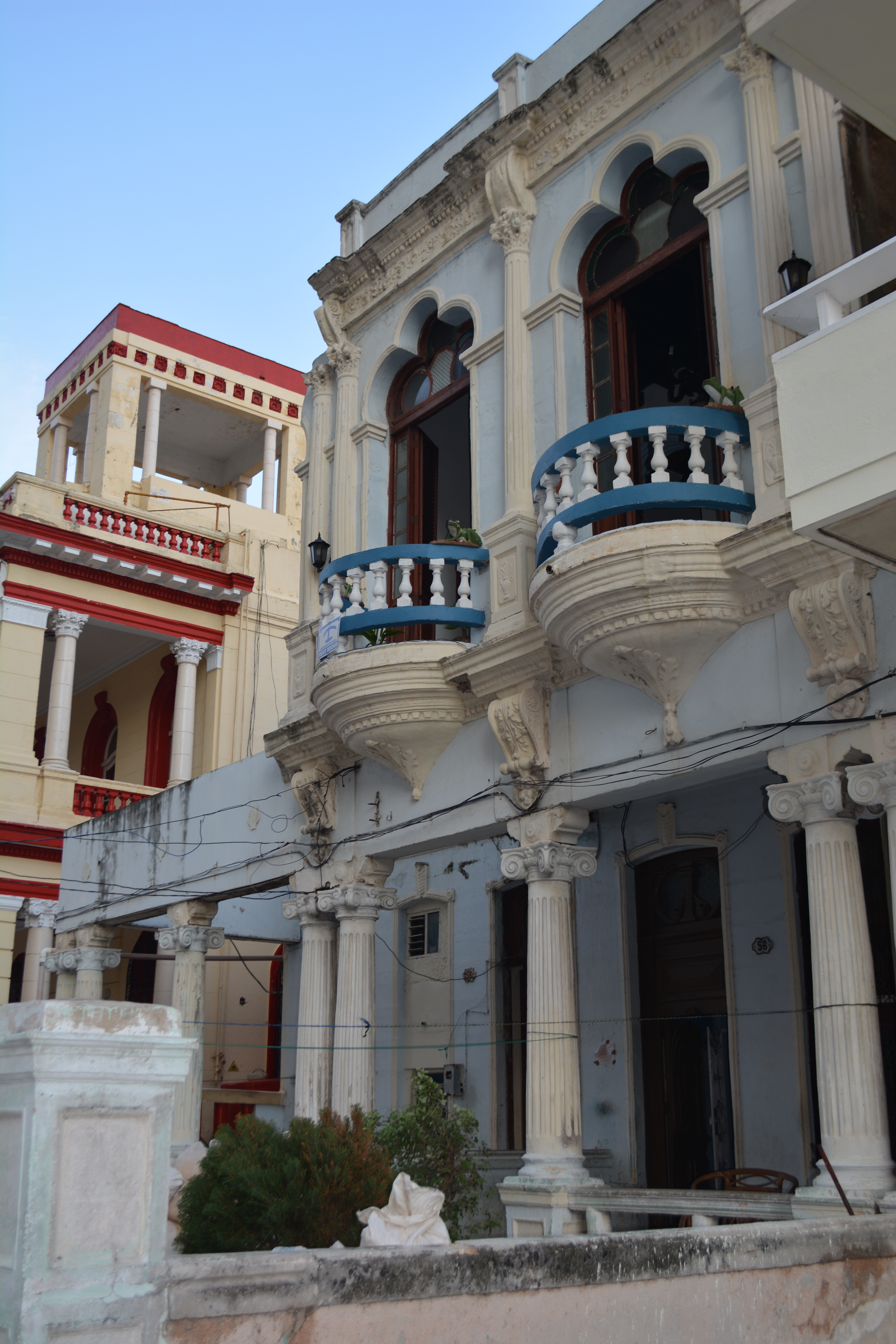
Exterior of Havana casa particular

Exterior of Havana casa particular.

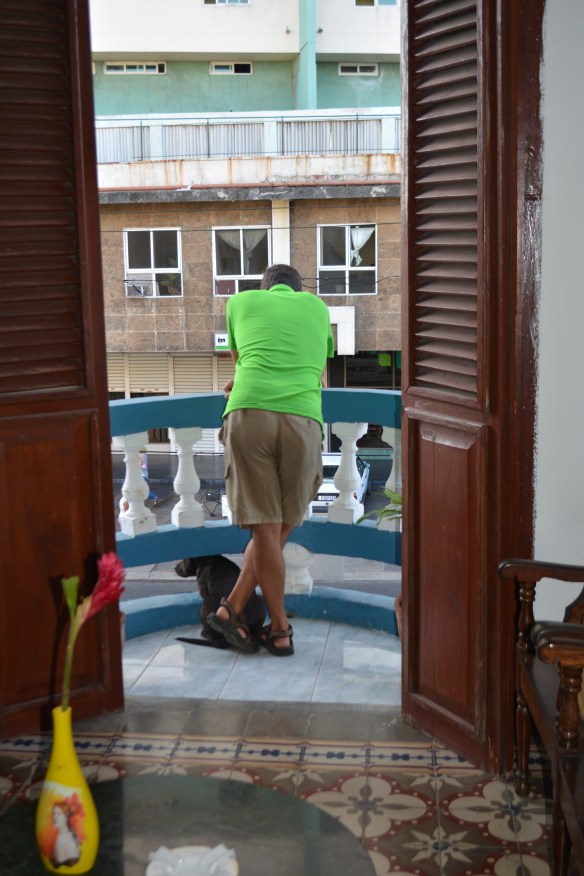
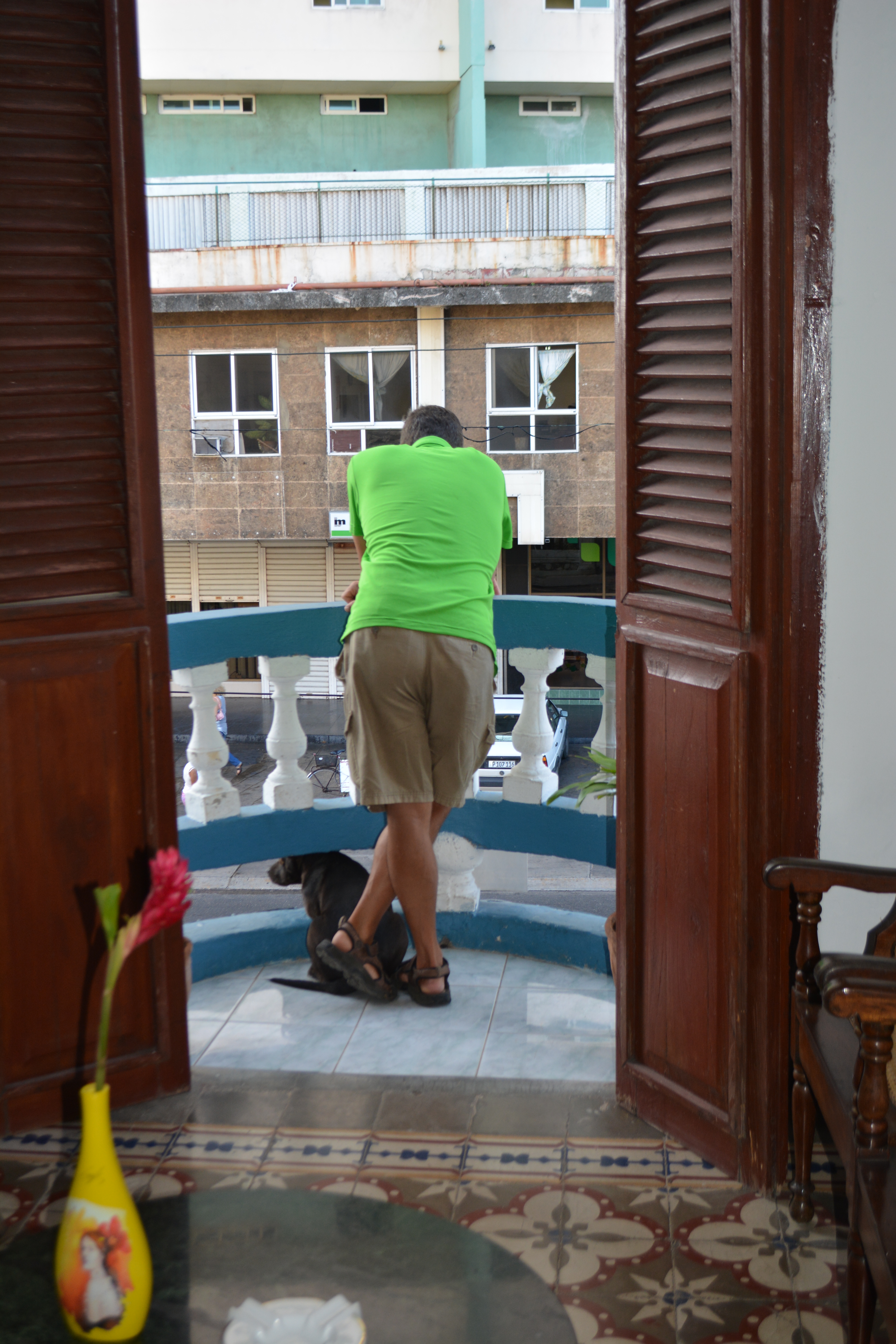
Pete enjoying the view with our casa particular host Skylar

Pete enjoying the view with our casa particular host Skylar.
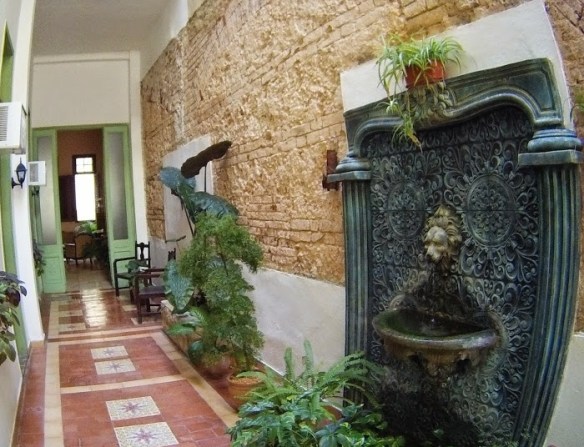
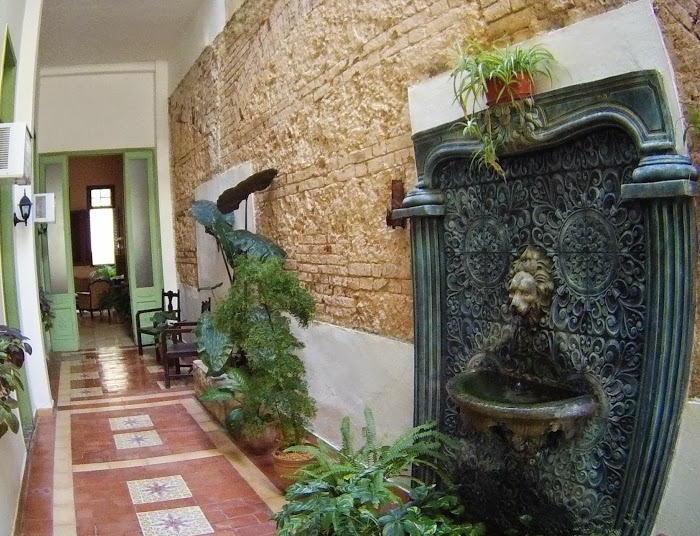
Beautiful corridor to the rooms of Casa Habana

Beautiful corridor to the rooms of Casa Habana.
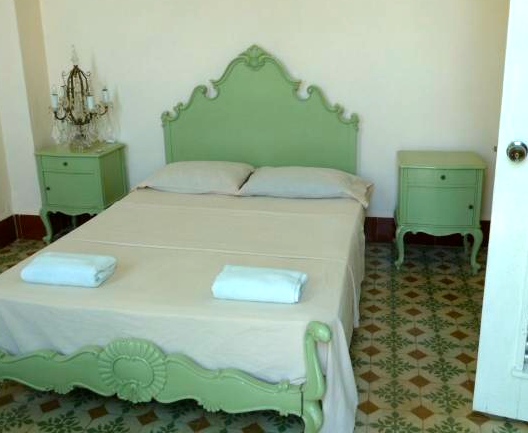
Room at  Casa Habana, just love that old tile

Room at Casa Habana, just love that old tile.
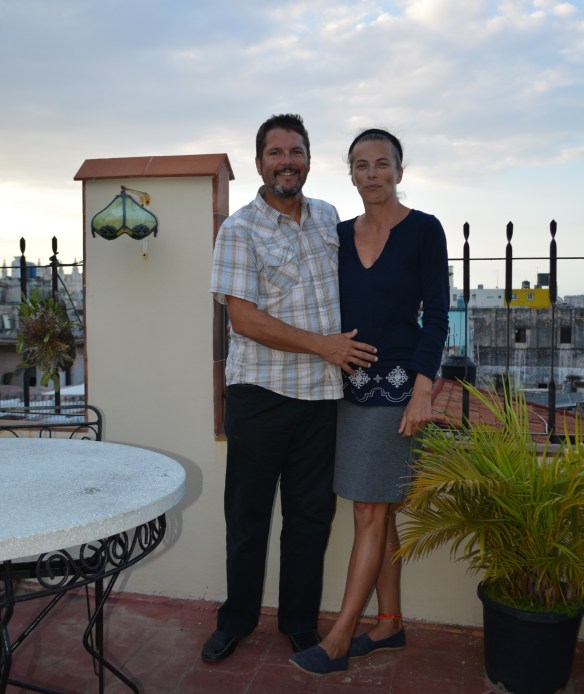
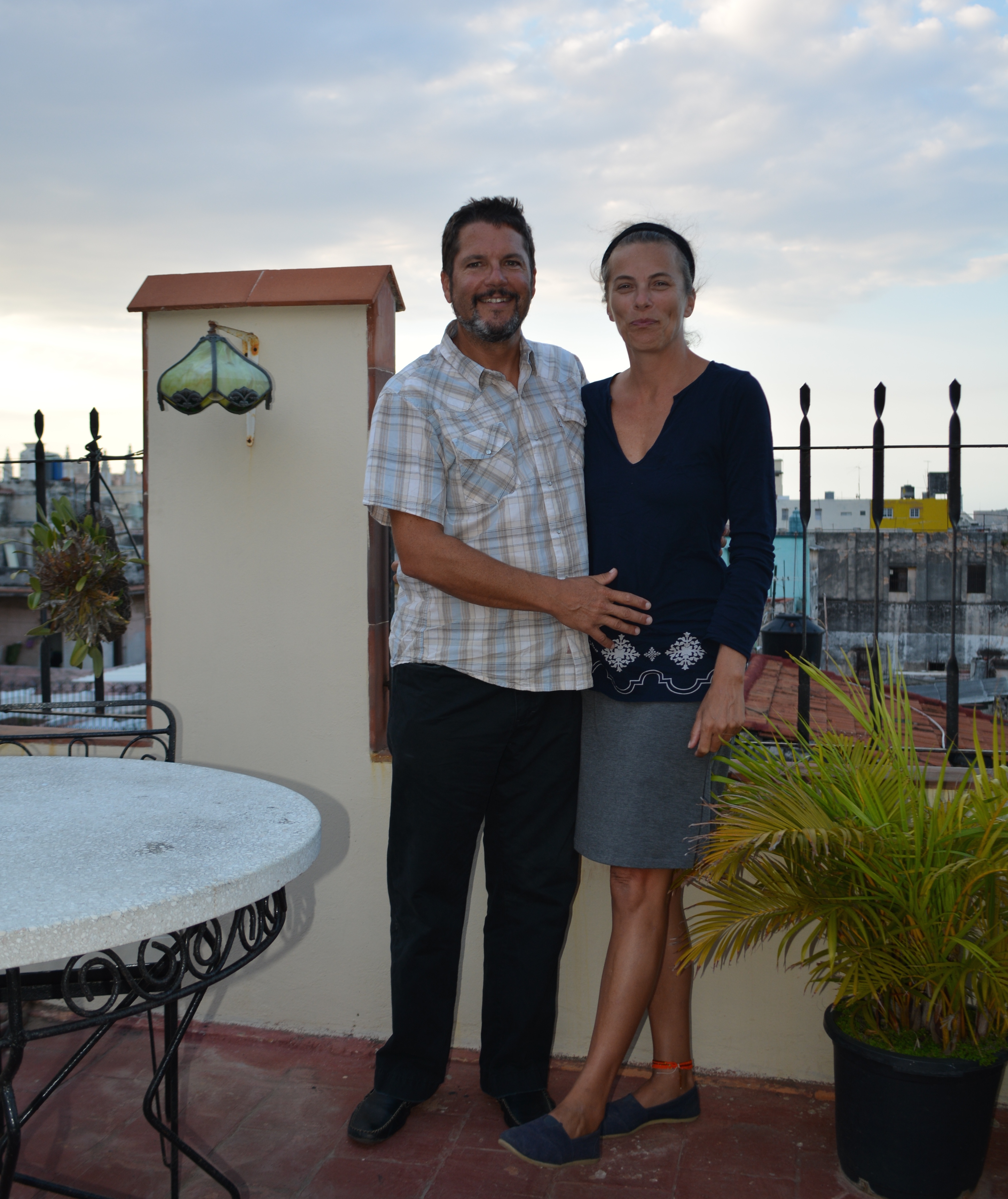
Roof deck

Roof deck “secret bar” at Casa Habana one of our casa particulars.

They run the gamut from Grandma Luisa’s old room in the back of the house to clean, well-run multiple room inns.  They all come with breakfast – oddly always the same breakfast no matter where you are. And can range from luxurious to bring-your-own-toilet-seat.  Its the same with restaurants.
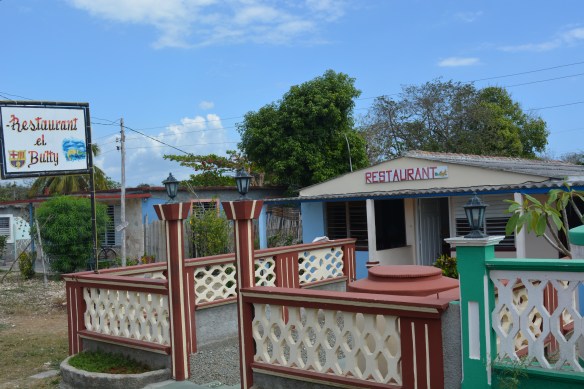
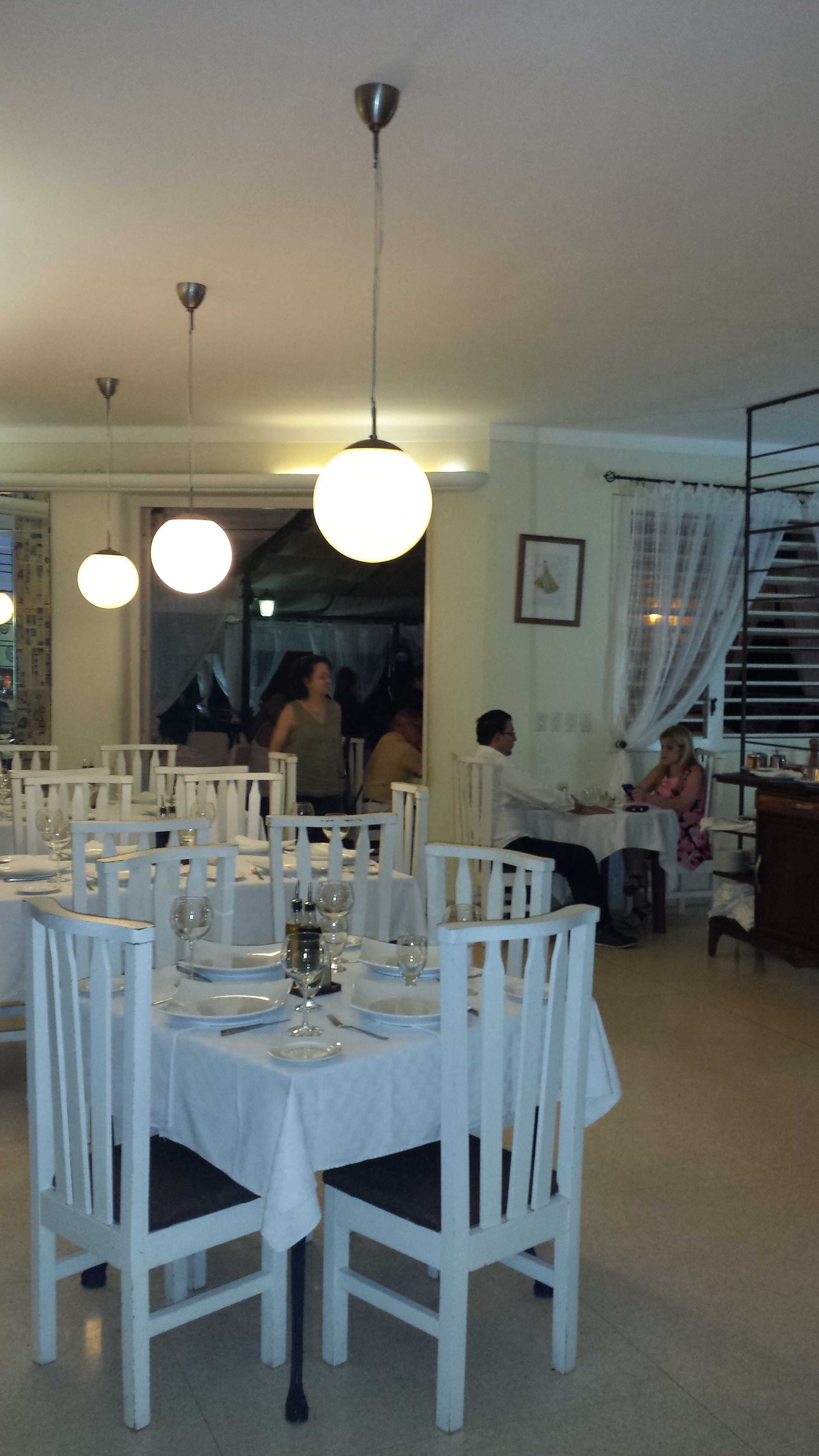
Private restaurant in back of owner's home

Private restaurant in back of owner’s home
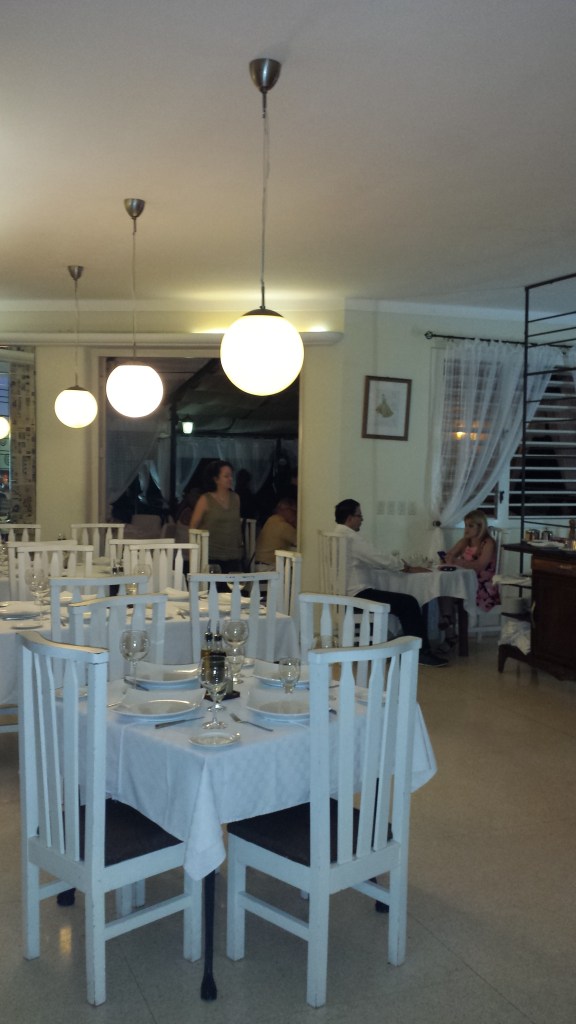
Cafe Laurent

Cafe Laurent in the Vedado neighborhood of Havana
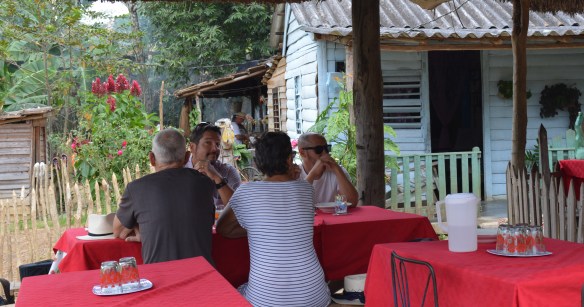
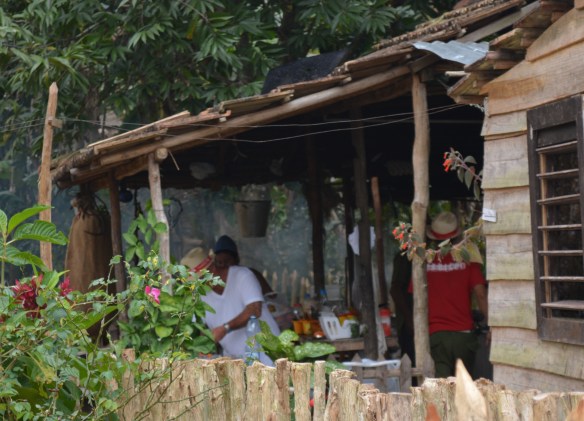
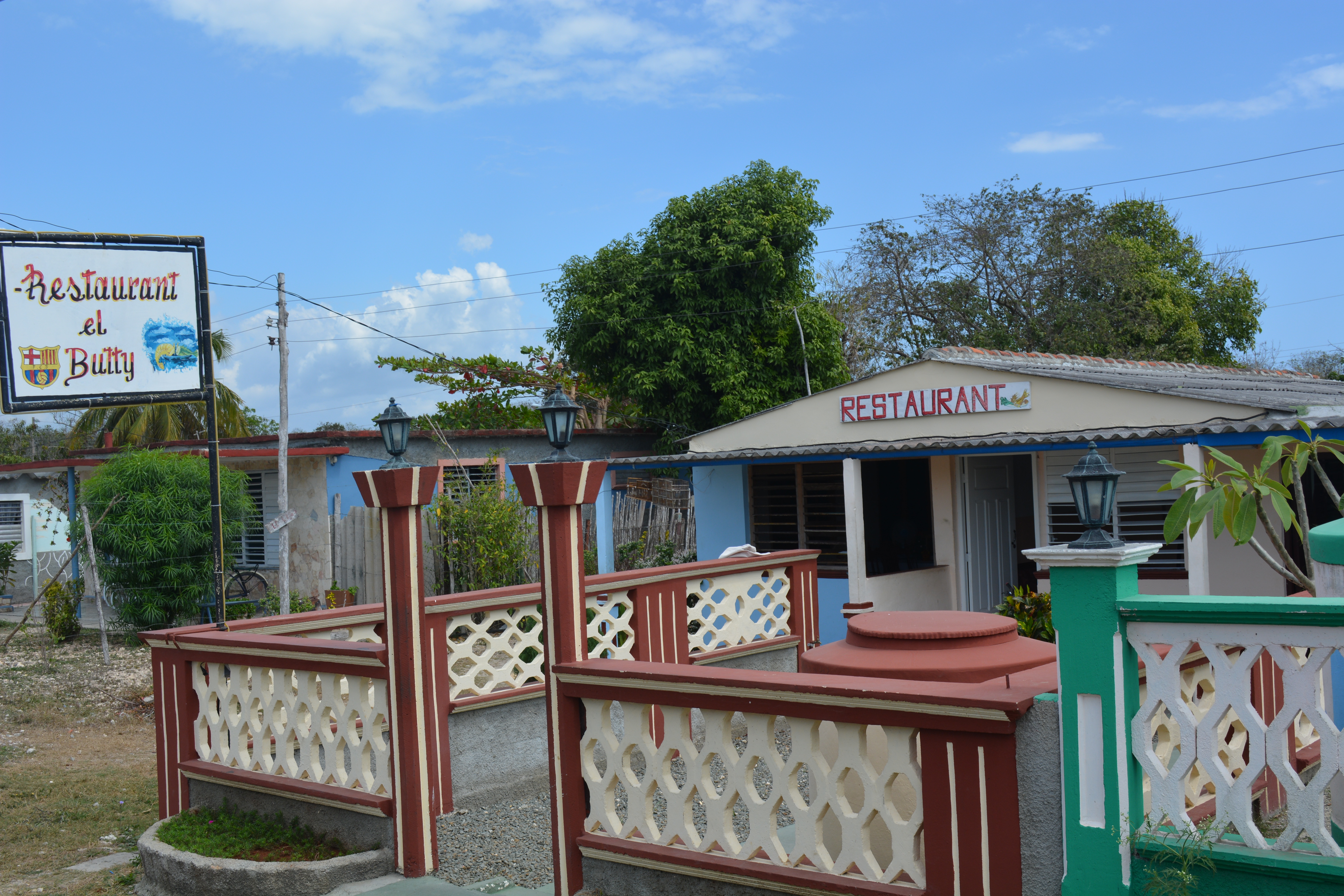
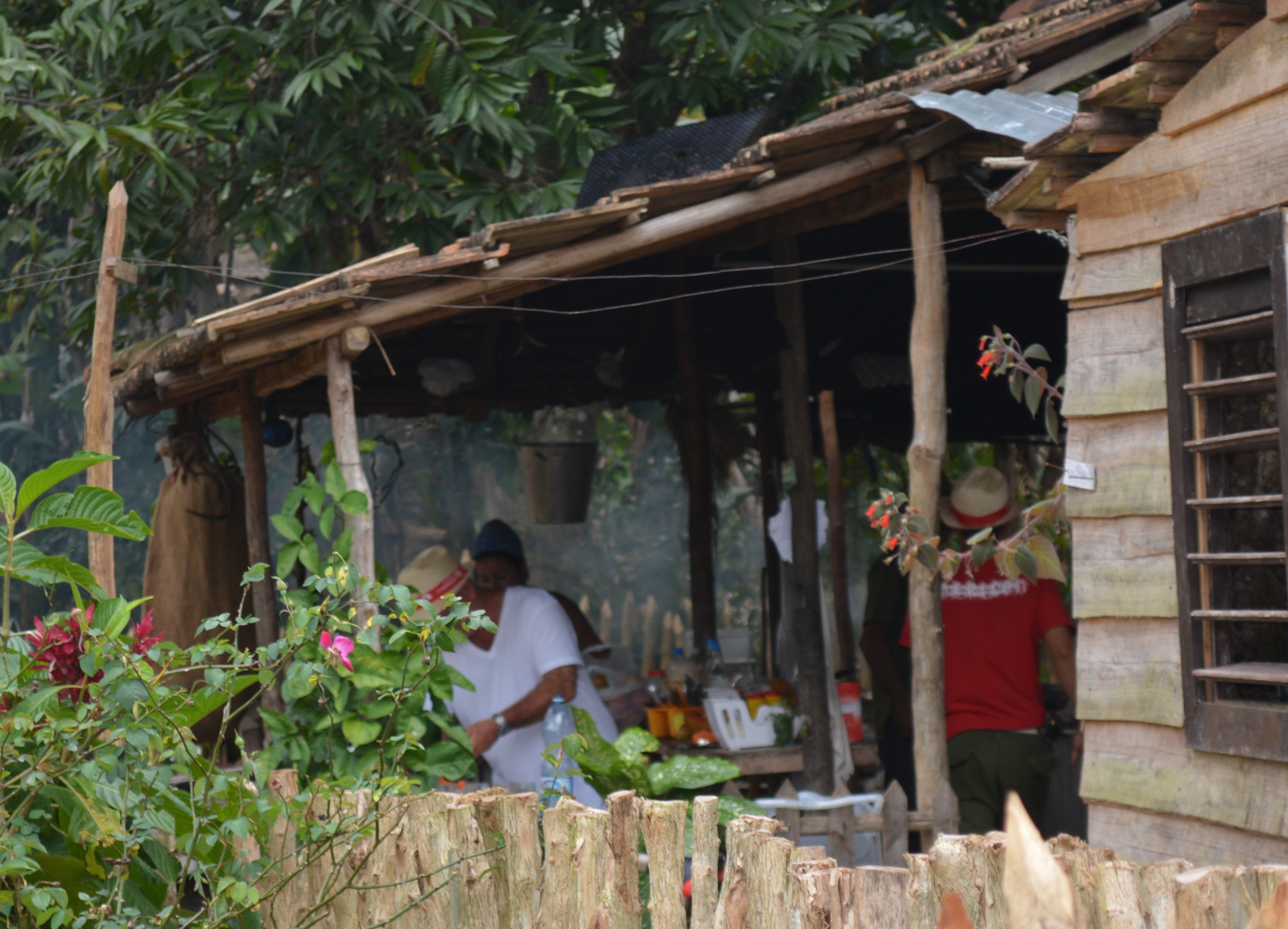
countryside restaurant

countryside paladar

Outdoor kitchen

Outdoor kitchen

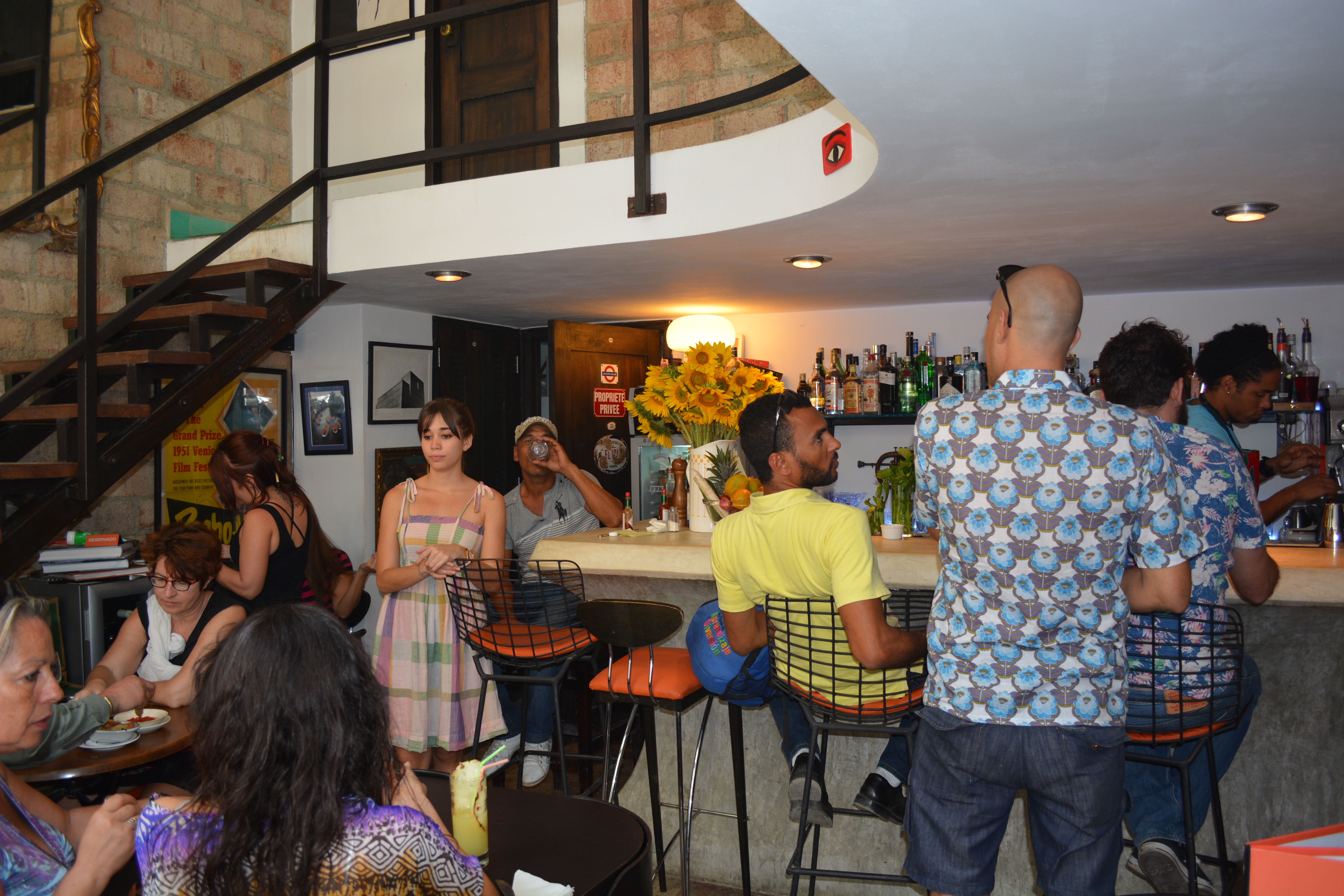
Paladars started as secret private places to buy a meal.  Now they are permitted, and regulated of course, and can be found everywhere.  They range from home cooking in someone’s house to trendy eateries with Cuba’s version of hipsters running around.
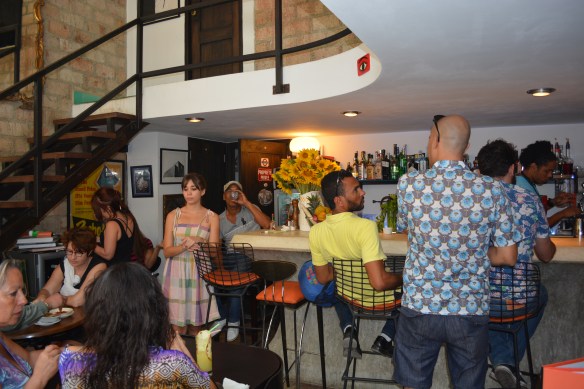
O'Reilly 304 (street address) could easily be in San Francisco

“O’Reilly 304” paladar could easily be in San Francisco

For restaurants, think of the government-run versions as old, expensive big-city eateries that are resting on their laurels and paladars as the new little restaurant that everyone is talking about.  We went to the paladars the majority of the time.  For shops its a little different.  From what we could learn, private shops are not yet permitted and, indeed, are still cracked down upon.  However, there are ration shops where things are quite cheap and people can buy their ration of subsidized egg, milk, bread, etc.  Then there are government-run shops that are not ration shops where people can spend their excess cash for other things.
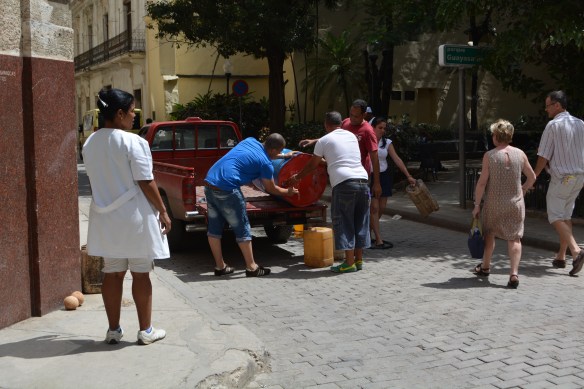
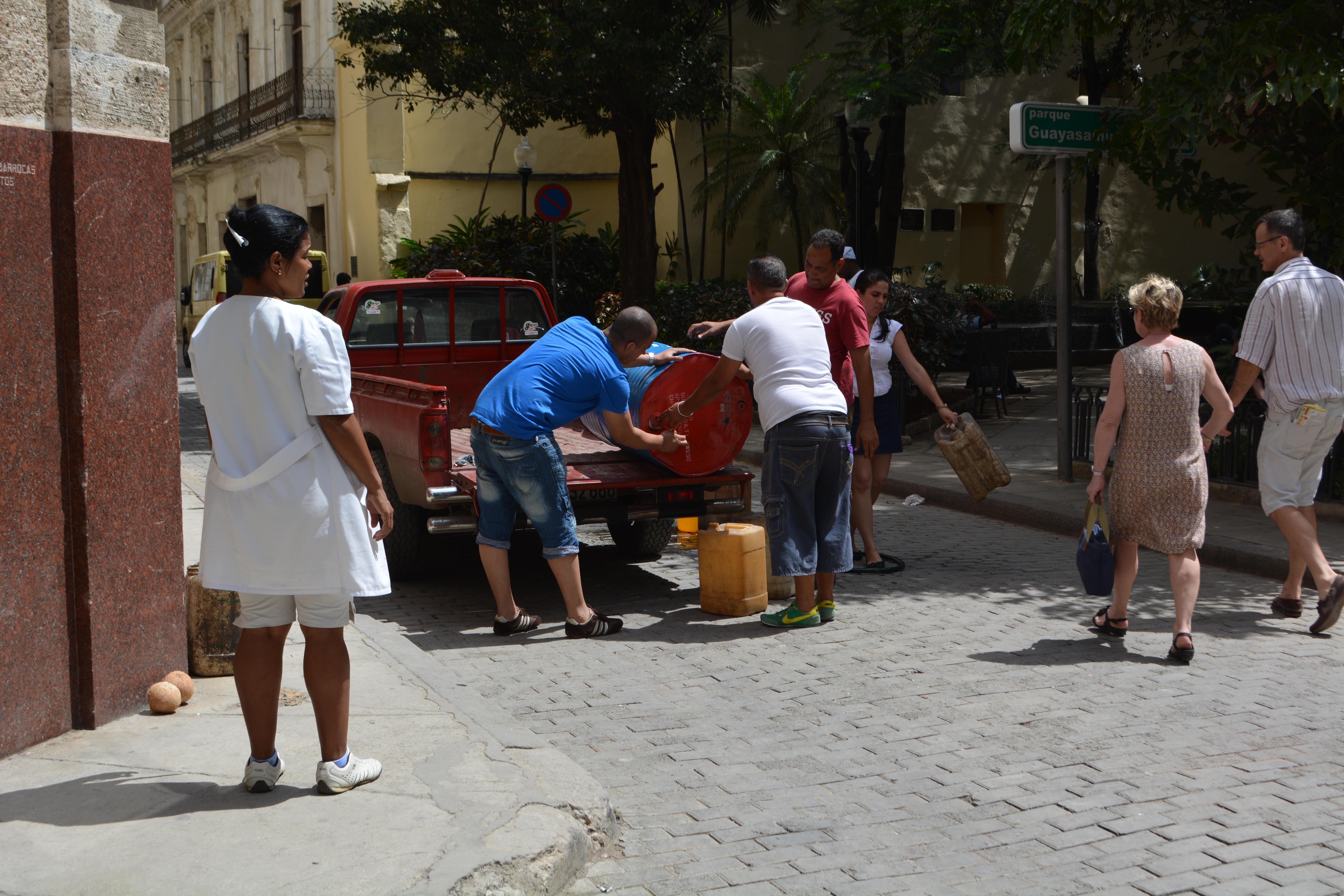
Ummm, I don't think this is a government run gas station

Ummm, I don’t think this is a government run gas station

Finally, there are clandestine shops and black markets where you can get some things that you just must have.  Pete was ushered through a family’s living room, a bedroom, the kitchen where a daughter was peeling beets, and finally to another bedroom to be shown a duffel bag of cigars for sale.  Its all very confusing but shows how ingenuity squeezes through somehow no matter what the government does.
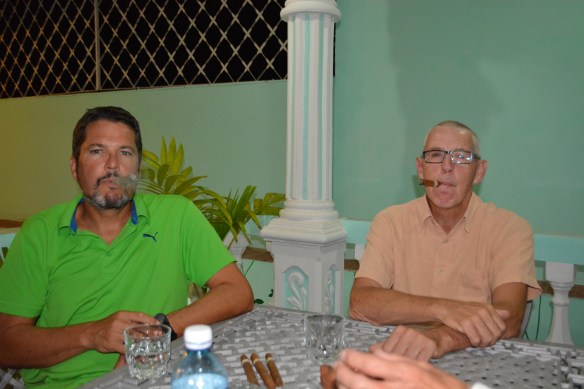
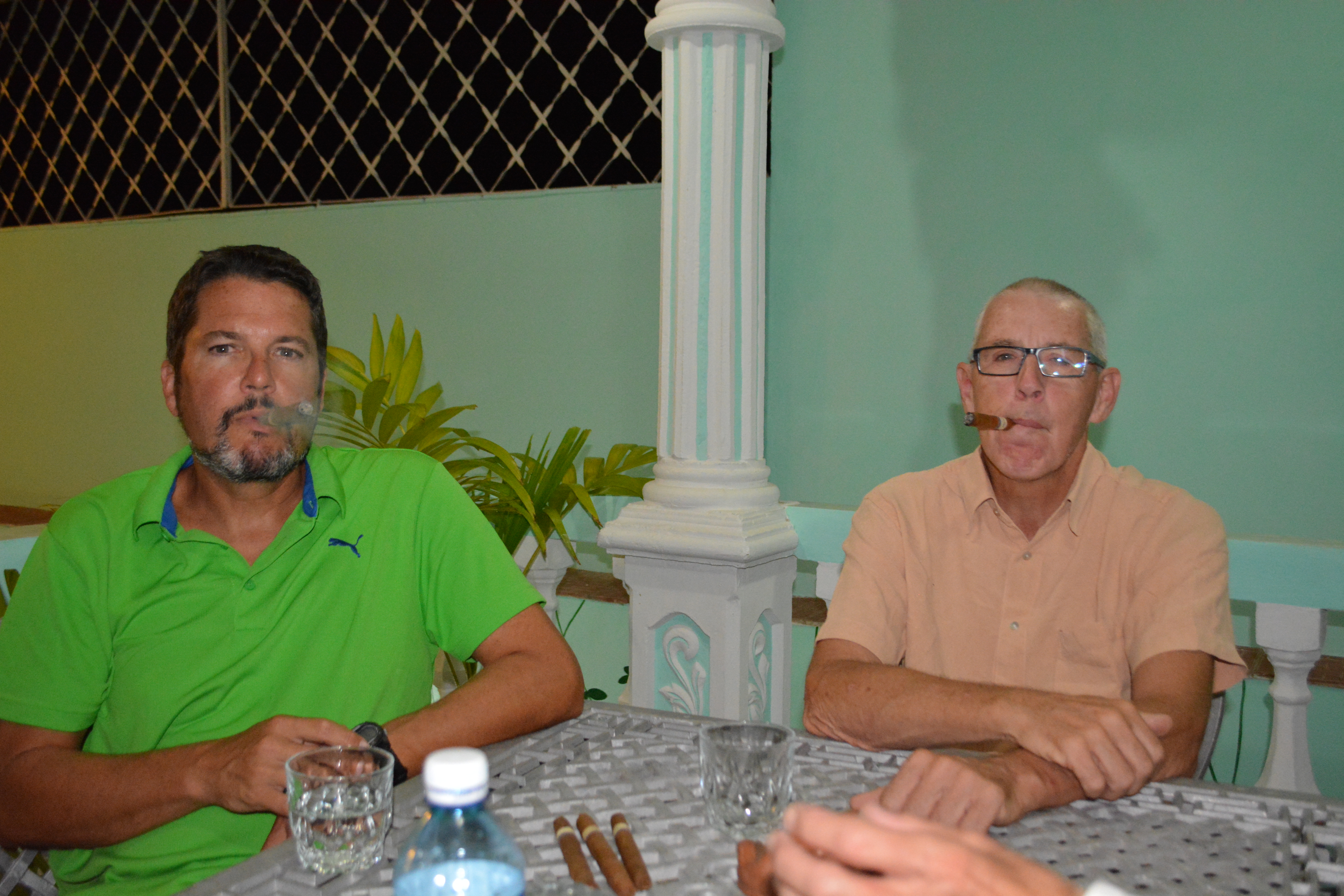
Pete and James enjoying their Cuban cigars

Pete and James enjoying their Cuban cigars

That’s it.  CUBA, we loved it!  With relations with the US thawing at a rapid rate, Cubans have a real task on their hands to grasp the benefits of an improved economy without spoiling the unique and timeless beauty that 50 years of communism have, inadvertently or not, preserved.  Note there is not a single KFC, McDonalds or CVS in any of the pictures we posted.  We hope the country can manage the coming change in a manner that allows people improved lives but that also keeps it that way.  They have a delicate and graceful culture that we can all benefit from.  We have so many photos from our trip. If you’d like to see more click here.
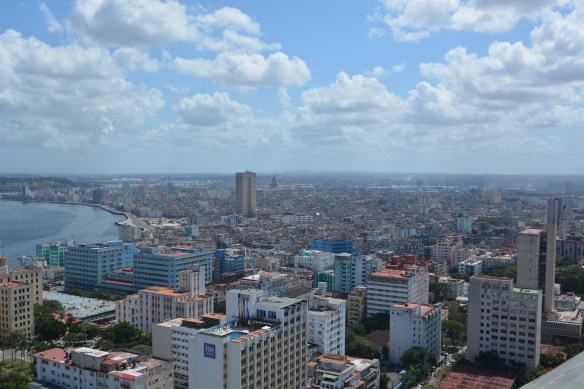
aerial Havana

Here is to a bright future for Cuba.

You say you haven’t seen enough Cuban dog photos? Ok, ok, click here for more.     And thanks Charlotte and James for sharing some of your photos.
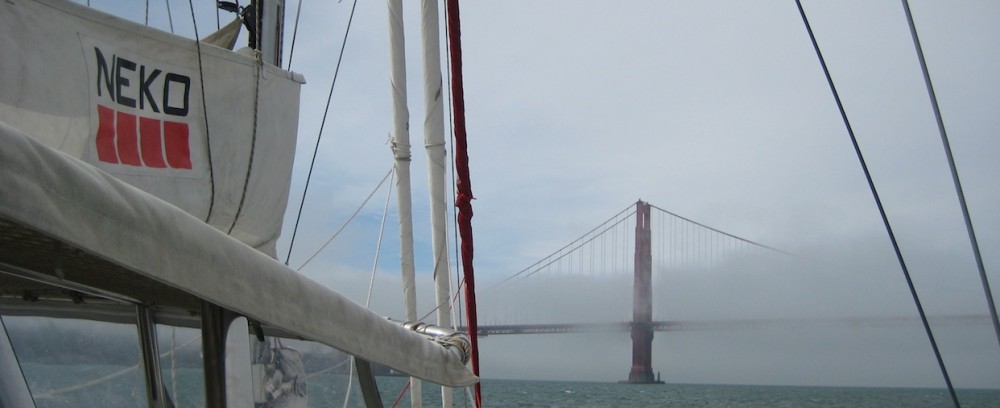
We’re PRO Providencia!

Ok, get your maps out boys and girls because we are about to have a geography lesson.   Before this cruising life, we hadn’t even heard of many of the places we have visited and now we feel like we could at least win the $300 question in the “Where In the World?” category on Jeopardy Latin America.

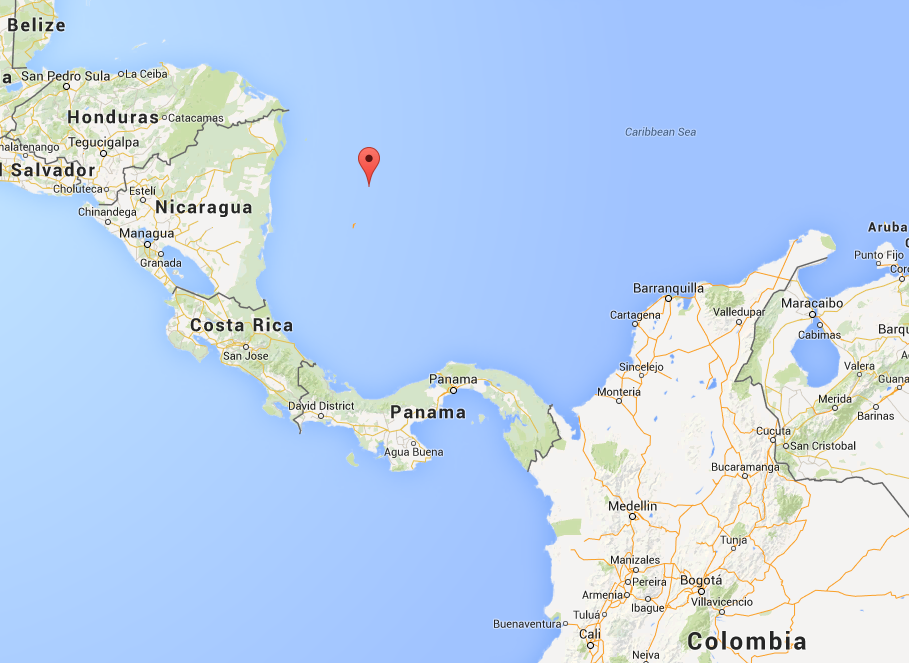
That red marker is Providencia

That red marker is Providencia

Our latest stop was the Colombian island of Providencia.   Near Colombia?  Oh no, my friend it is 380 nautical miles west of Colombia in the middle of the Caribbean Sea.  It is actually closer to Nicaragua (140 nm off that barren coast) and a world away from the all-inclusive tropical resorts found throughout the Caribbean.

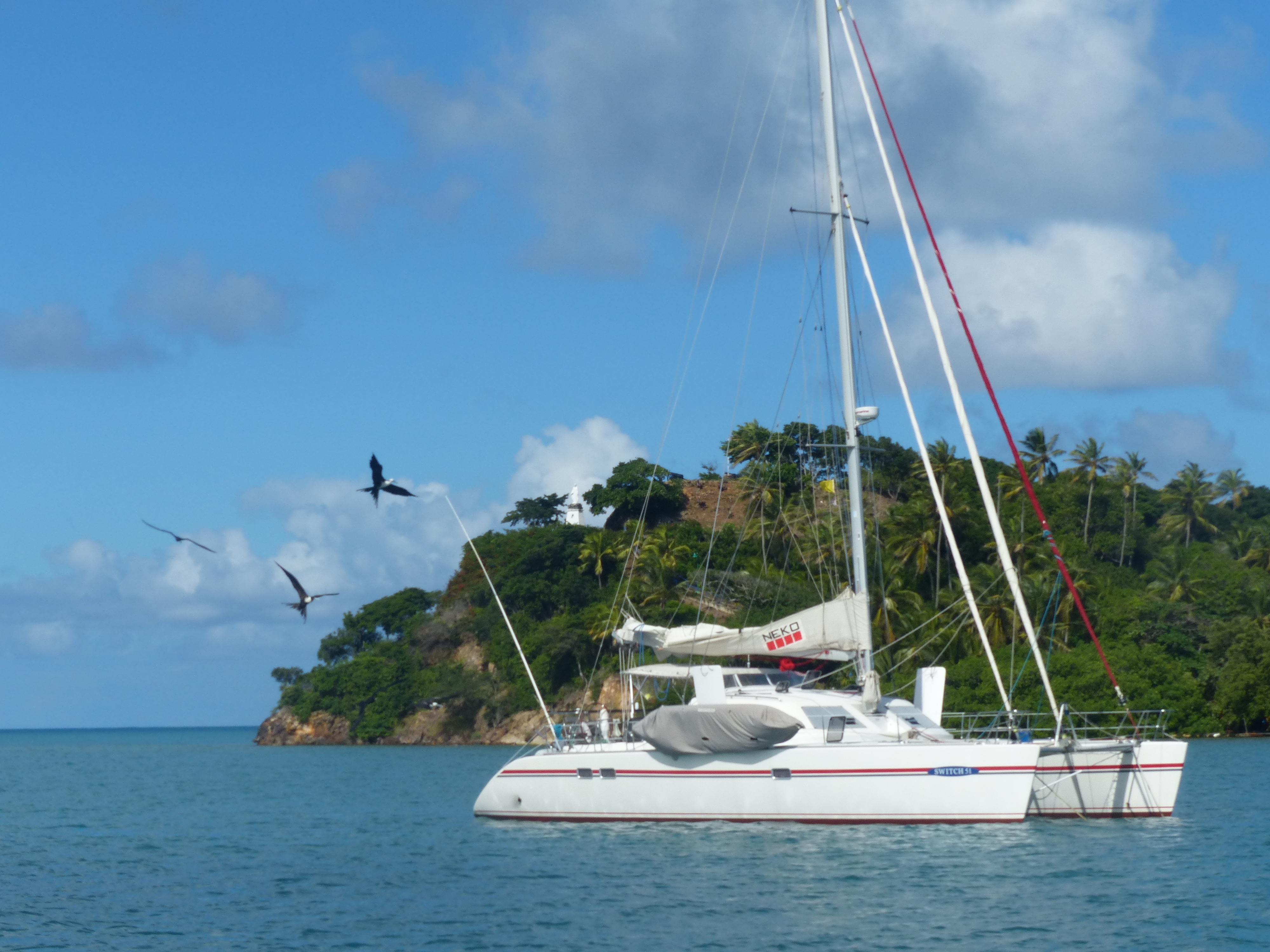
Neko anchored in Providencia

Neko anchored in Providencia with frigates circling

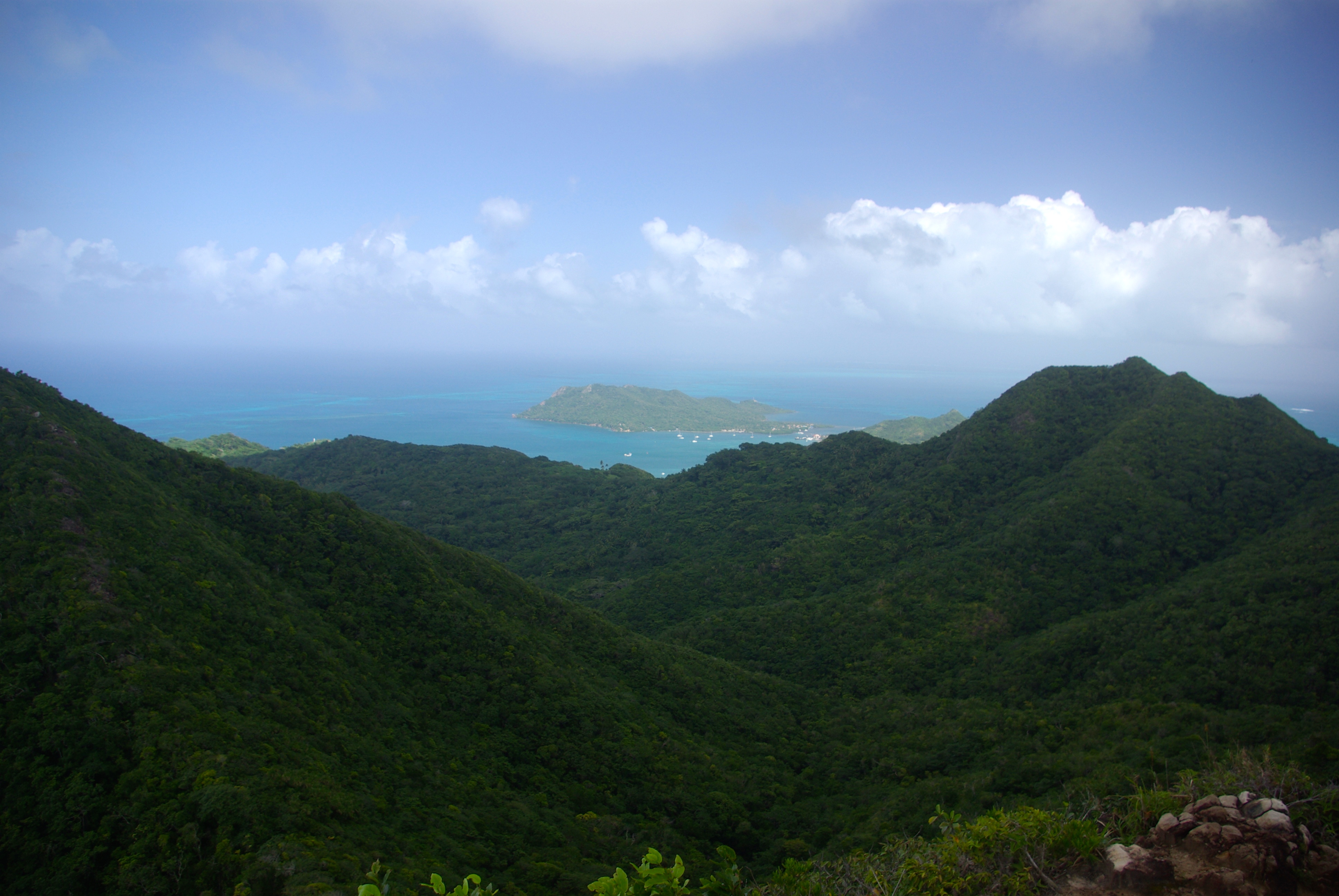
Neko way down there

This fantastic vista was our reward for hiking 360 meters to the top of”The Peak”, the island’s highest point.   One of those white dots out there, probably the one uppermost and furthest left, is Neko.

Tourism is very low-key here and the island is pleasantly geared toward merely sustaining the slow-paced lives of the locals.  This we’ve discovered is the common theme to our favorite stops.
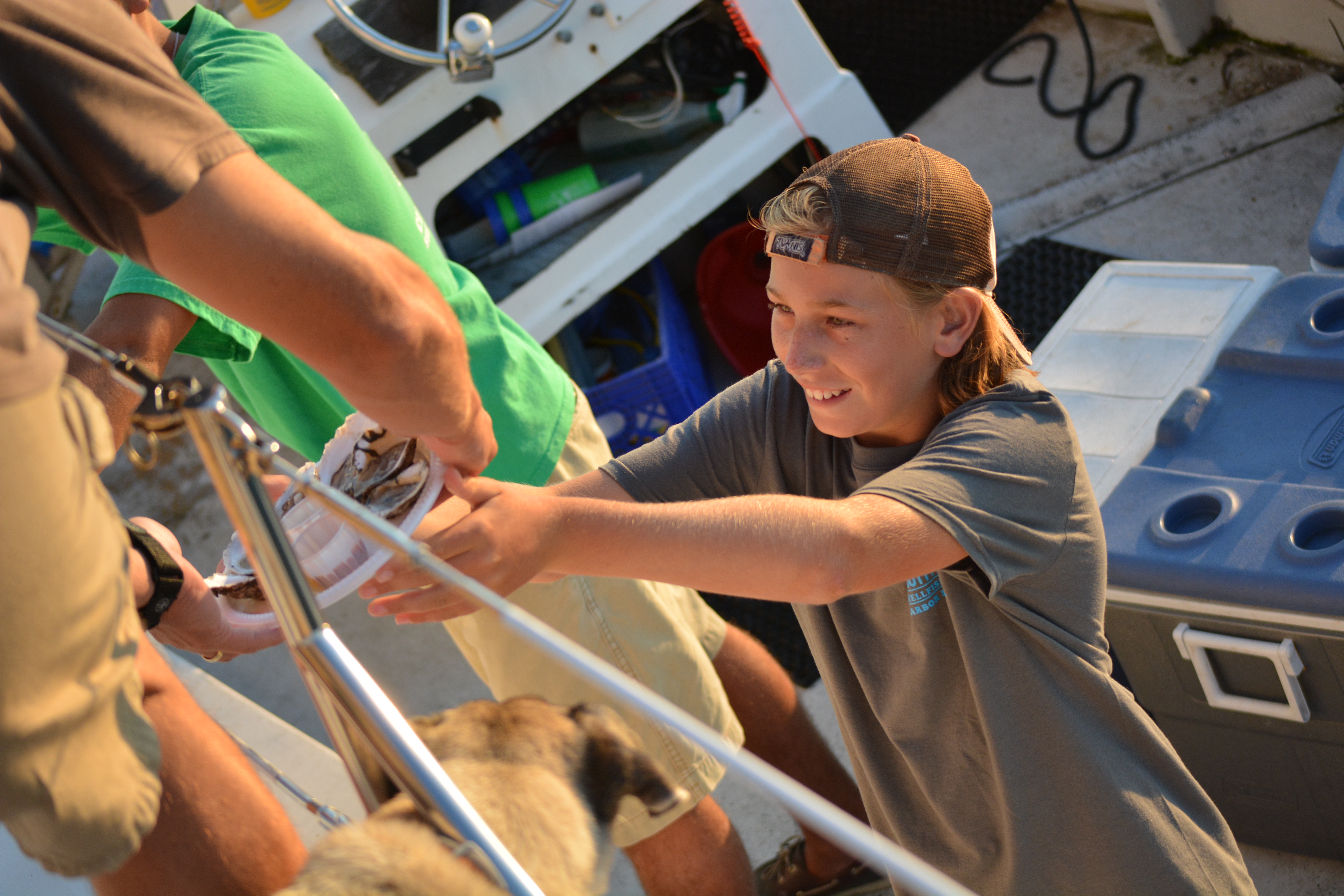
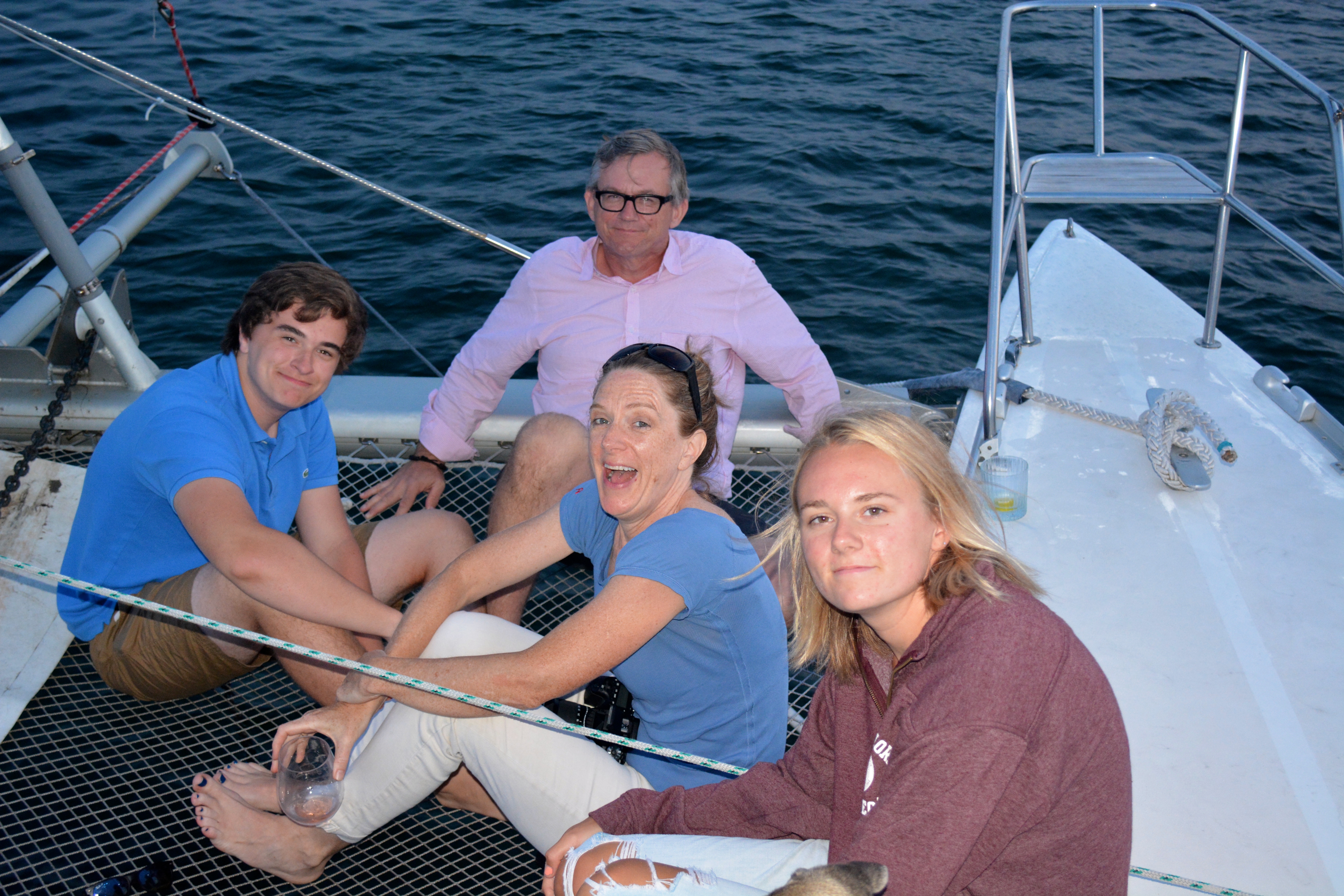
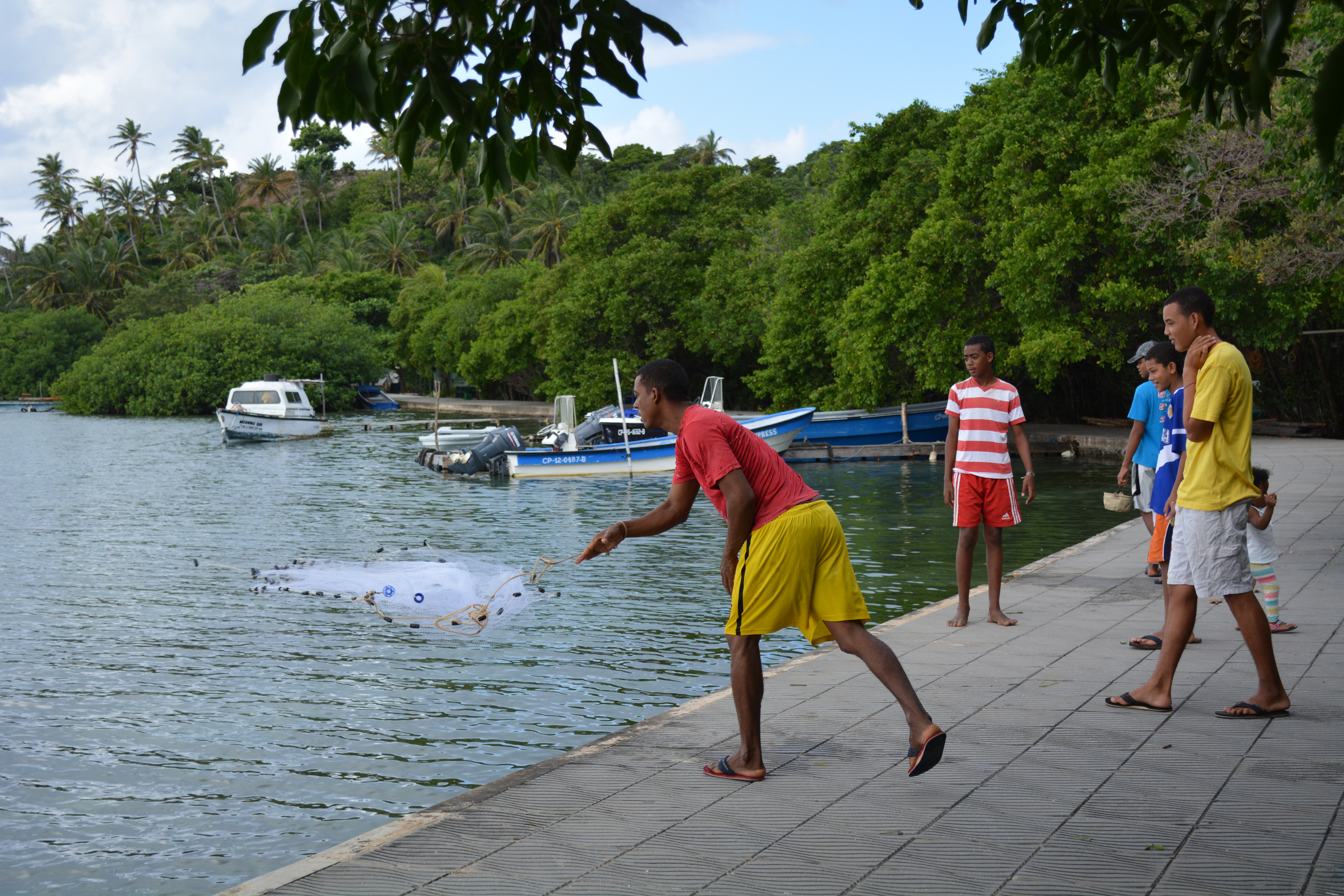
Expert net throwing

Expert net throwing

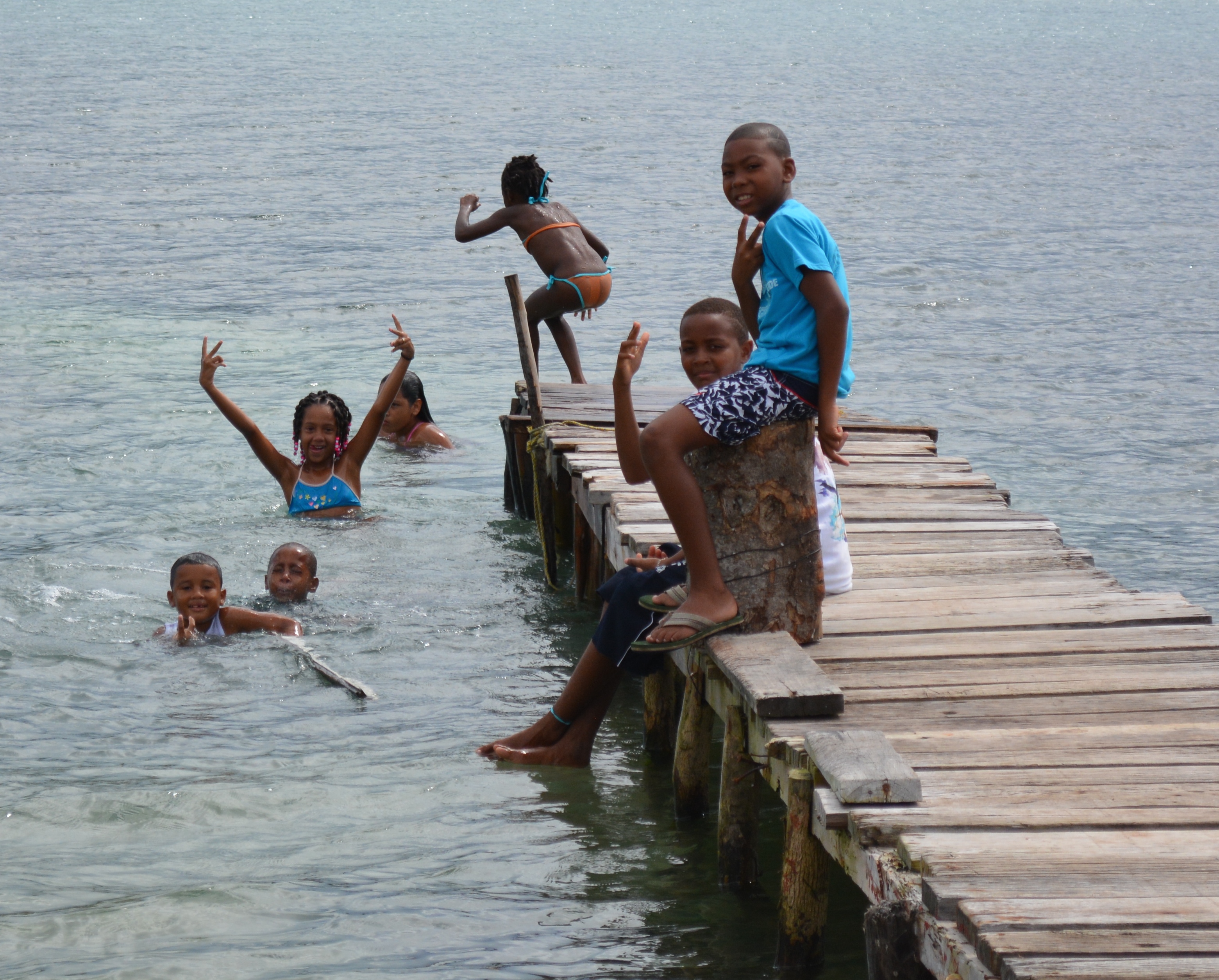
Local children enjoying a swim

Local children enjoying a swim

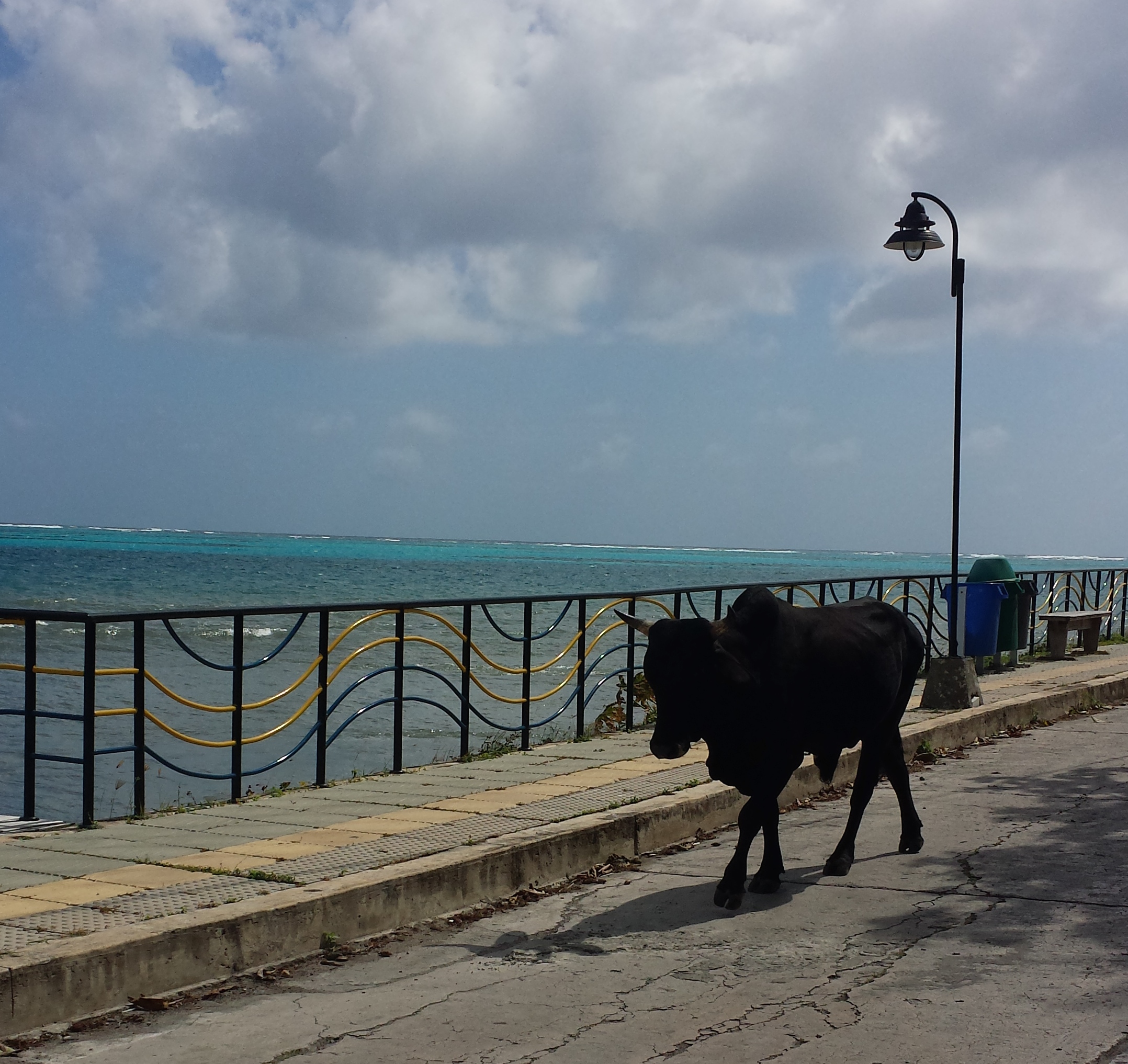
Just out for his morning stroll

Just out for his morning stroll

With a population of just over 5,000 it is small enough where everyone seems to know each other and accordingly there is little crime.  Think of it, if everyone is going to know you did it and you live on an island hundreds of miles from any escape route, what kind of life of crime can you really lead?

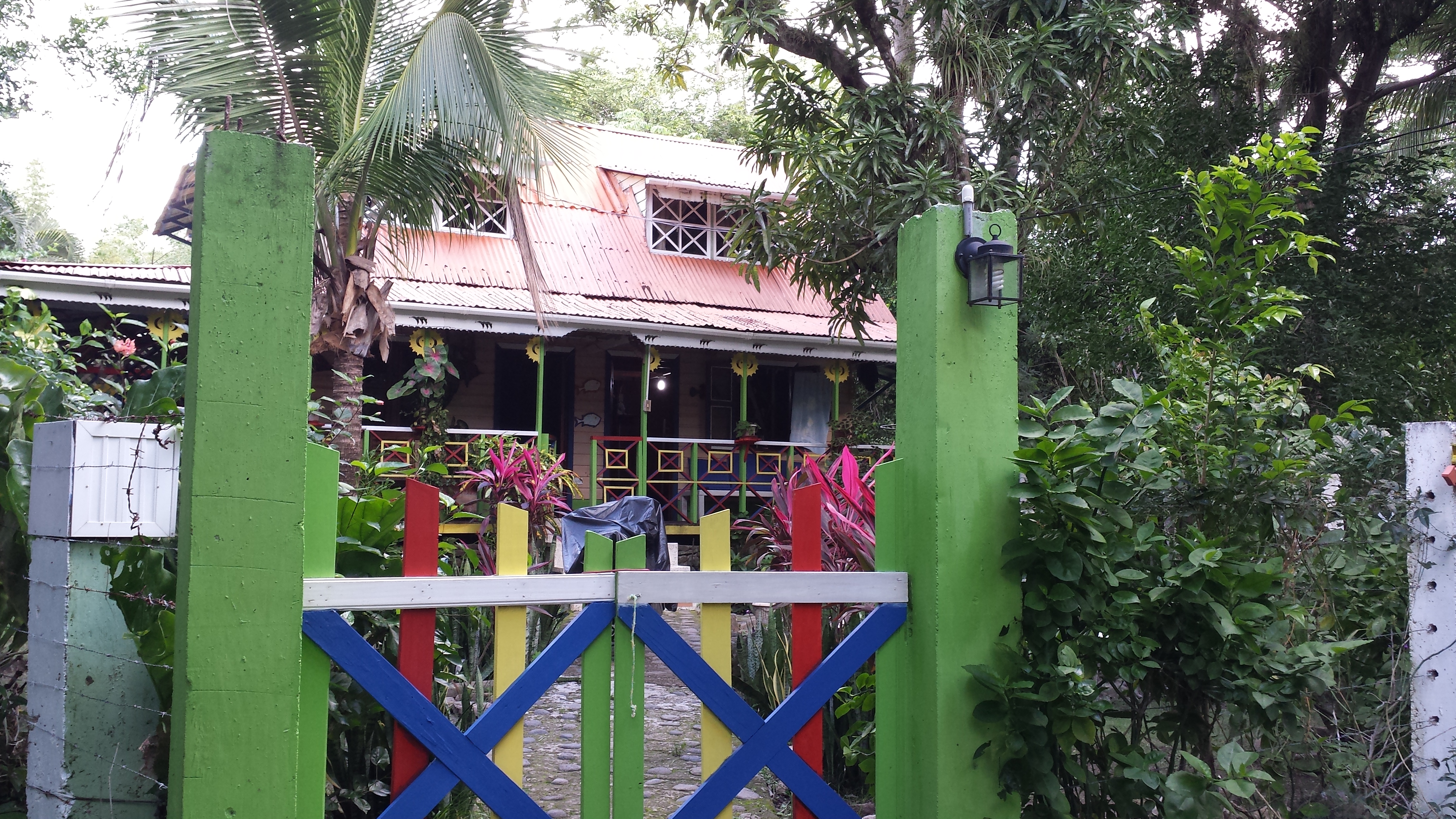
Local house

House in the section of the island called “Bottom House”.

The locals speak Spanish but they seem more akin to Jamaicans than Colombians.  Their preferred mode of communication is a rhythmic patois with more English than Spanish but with words truncated making it very difficult for outsiders to comprehend.  In fact, one of the Mr. Bushes on the island (anonymity protected as certain names dominate on the island – there are more Bushes or Hawkinses than you can count) told us that its purpose was so pure Spanish or English speakers could not understand it.   But its rhythm makes it a delight to hear.   (double click photos to see full size)
There are only a handful of cars and trucks on the island and everyone seems to get around on a scooter, small motor bike or mule (sort of like a 4-wheel ATV).  They are world champions in carrying people and items on bikes – we never saw 5 to a bike, but 4 persons on one scooter is routine.

We arrived a week before Christmas planning to ring in the new year and be on our way, but Mother Nature is a tough travel agent and had a different schedule in mind.

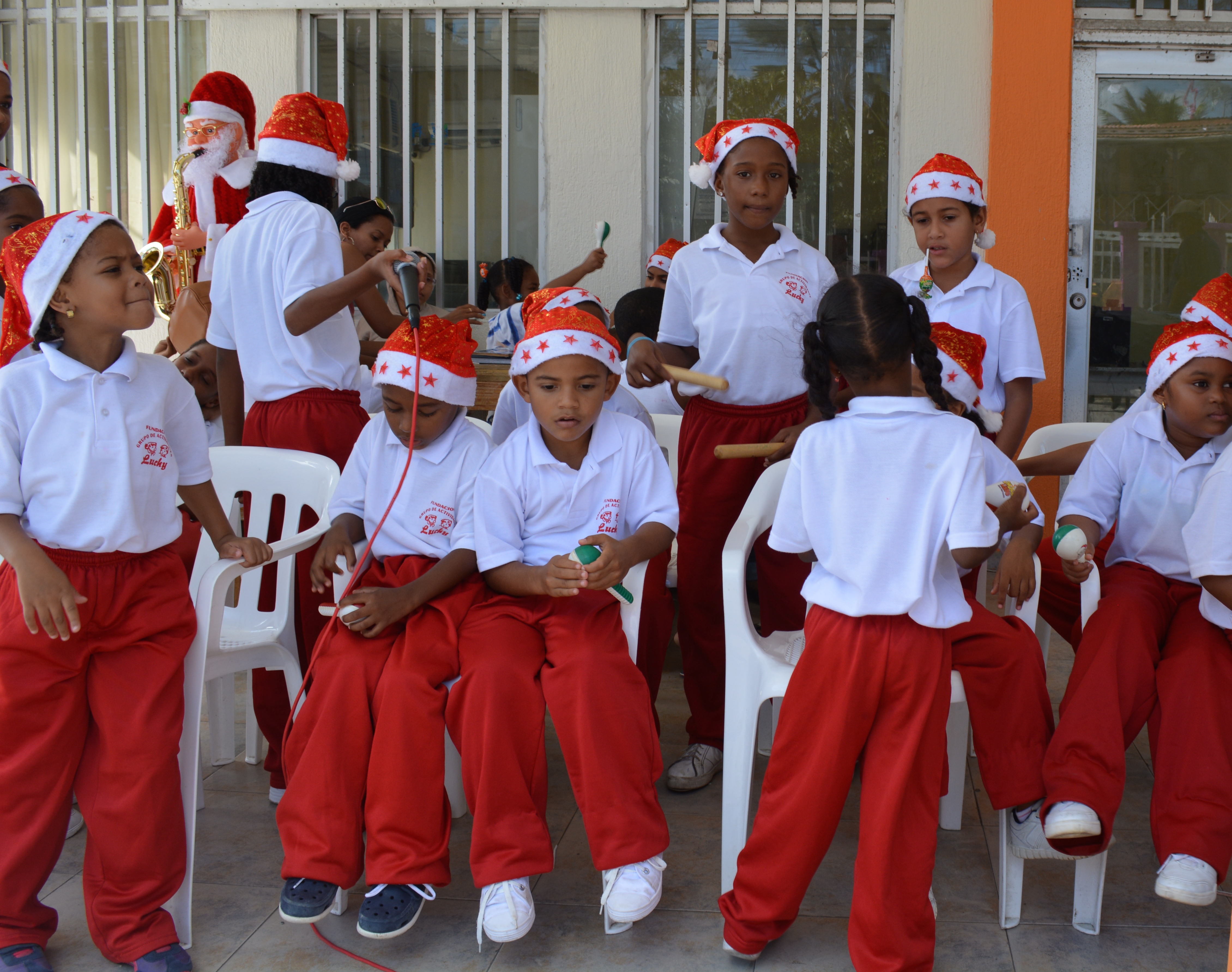
Santa kids

The island started the holiday party the afternoon of Christmas Eve and kept going until well after the new year

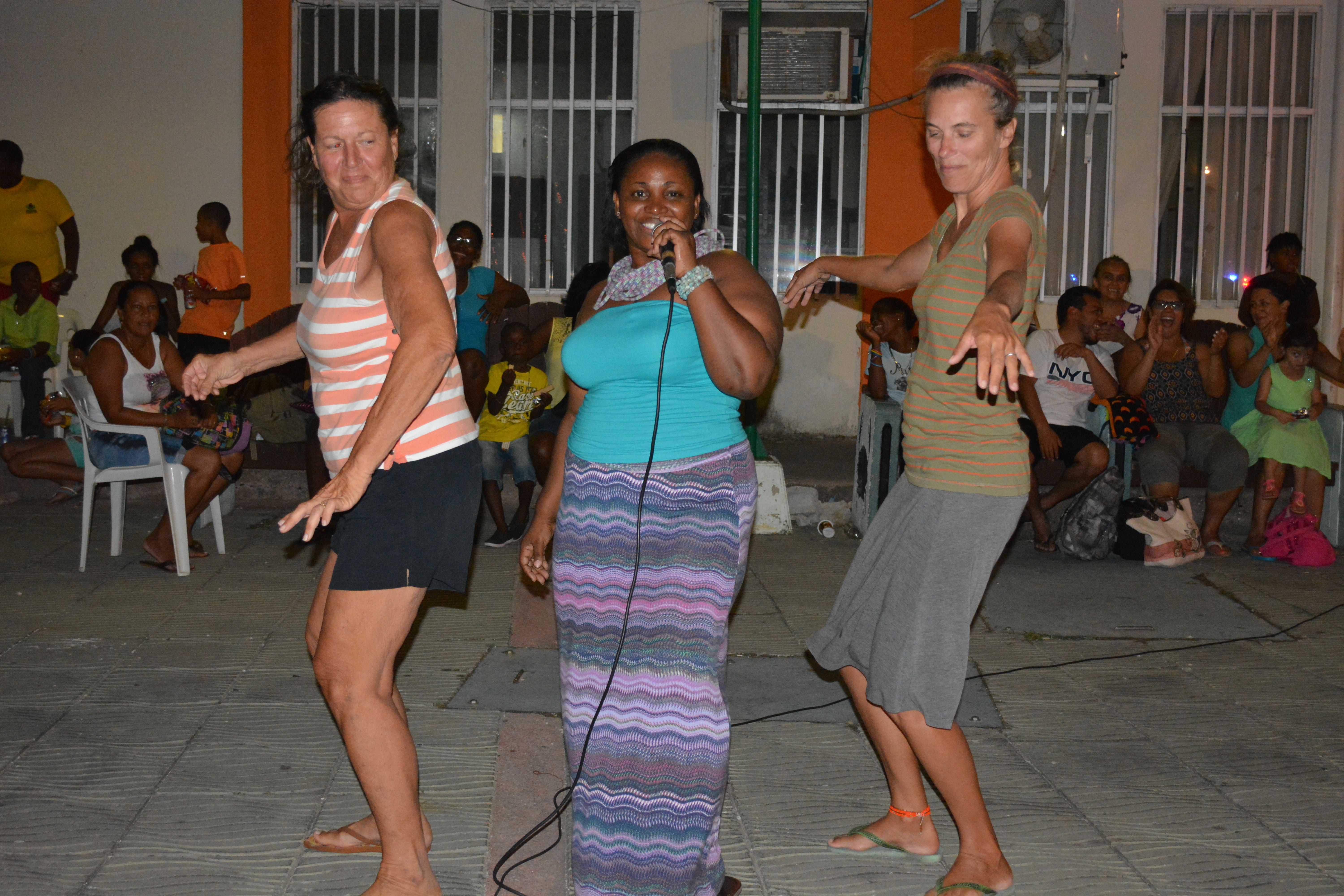
DSC_0098

Susan, Stella and I getting our groove back

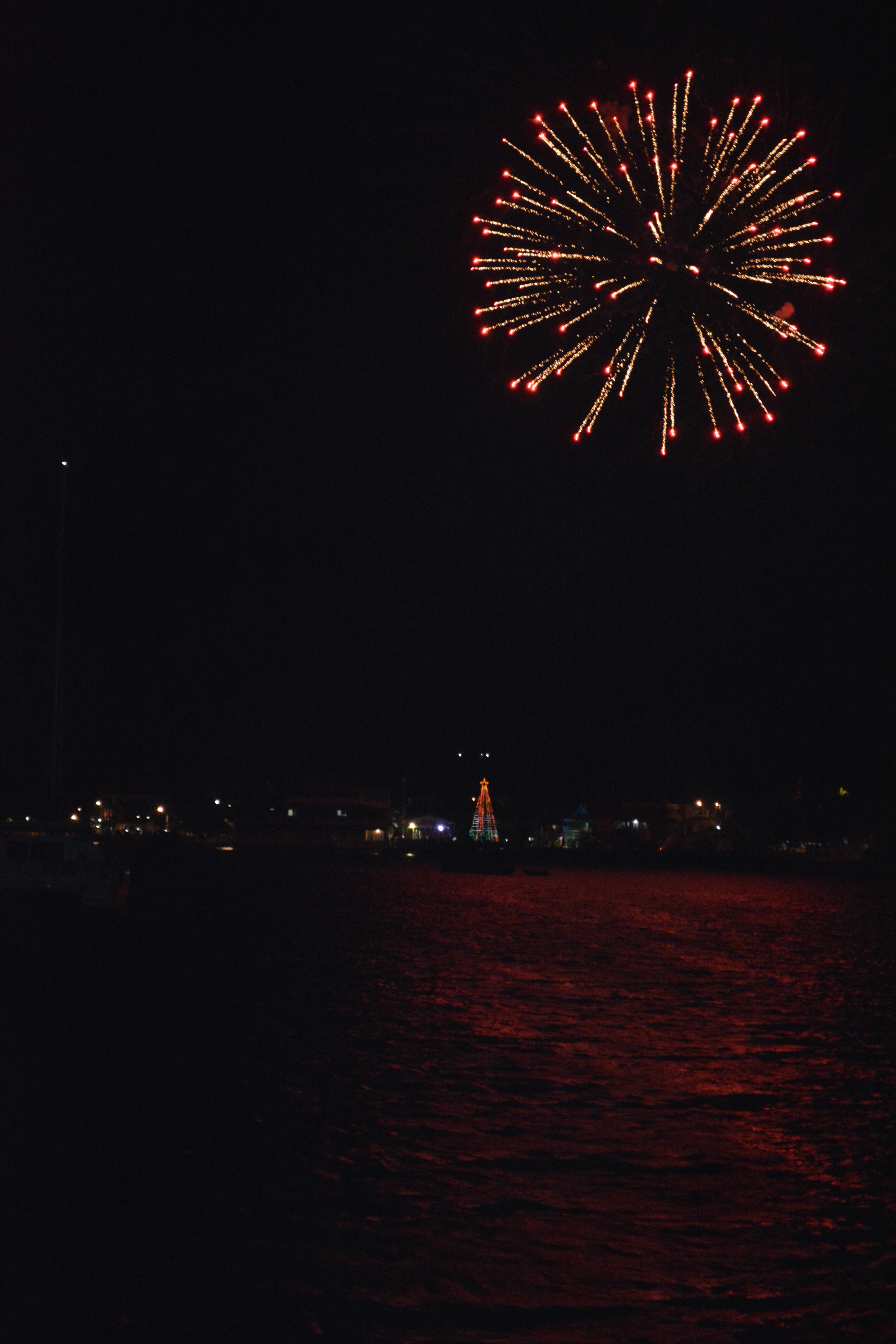
Fireworks

Perfect view from Neko of the Christmas fireworks

Winds were blowing a steady 25-30 knots and seas outside were 10′-15′ so we hunkered down with fellow buddy boaters Pegasus, R&R Kedger, Second Wind and new pals Aphrodite and took to exploring Providencia from its high peeks to below its seas.

Since the island is surrounded by the 3rd largest reef in the world and we had the time, Peter and I took diving lessons and were able to get our open water PADI certificate.     I didn’t think I’d ever do this, but never say never and there I was down 60 feet with the rays, sharks and coral breathing air from a tank.

So after a fabulous month in Providencia, Mother Nature was satisfied we’d properly experienced the island and she calmed the winds and seas down just enough for us to head to the next esoteric locale “we’ll take Guanaja, Honduras for $500, Alex”.

2 Oceans, 1 Day

The Pacific Ocean to the Caribbean in 10 hours – not too bad for a days work.

When preparing for our transit we read a lot and we heard a lot of tales of transits from hell to partying through the locks.  Half the sailors you talk to say you have to hire a Canal agent (someone to do all the admin) and the other half say there is no need, you can do the paperwork yourself.  Some say you won’t make it through in 1 day, it will definitely take 2.  Your boat has to go 8 knots or you’ll bring global shipping to a screeching halt.   And on and on it goes.   So to all our pals who are planning to go through, listen to all the stories, file away all the information, keep your head straight and enjoy the passage.   Because, the truth is that every transit is different and you never know what you are going to get until you do it.  We chose not to use an agent and found it quite straightforward and if you want that information, email us and I’m happy to walk you through the steps.

Path Between the Seas

If you want to know about the history of the Canal, read David McCullough’s excellent “The Path Between the Seas”.

Fortunately the stars aligned just right and we had an awesome (and not the overused, unnecessary “awesome”, I mean “inspiring joyful awe“ “we went through the Panama Canal on our sailboat” awesome) experience.

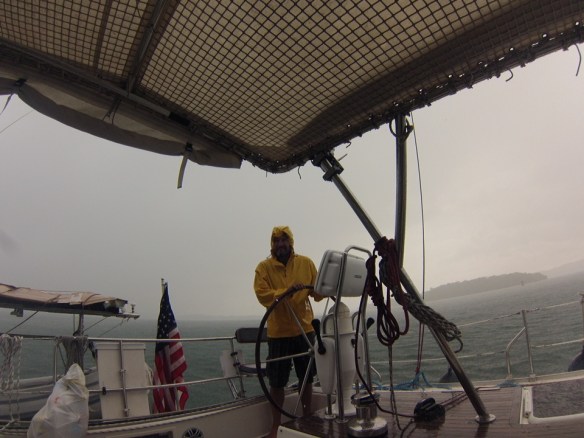
Every boat going through the Canal has to have a Canal advisor onboard to, you guessed it, advise you throughout the trip.   The canal is run like an airport with the signal station acting as air traffic control.  Your advisor is your communications link to central control.  The name of the game for the Canal is the huge cargo ships, that is where the big money is, so a 50’ sailboat is more of a nuisance and they don’t want you slowing down their 24/7 operation.   But their treatment of yachts is professional and efficient.  We were told to pick up our advisor at 8:00 am and after he promptly boarded at 10:00 am (ok, maybe not so efficient, but the canal schedule seems subject to the whim of the gods) we were on our way, with Captain Pete at the helm,

Captain Pete

Captain Pete

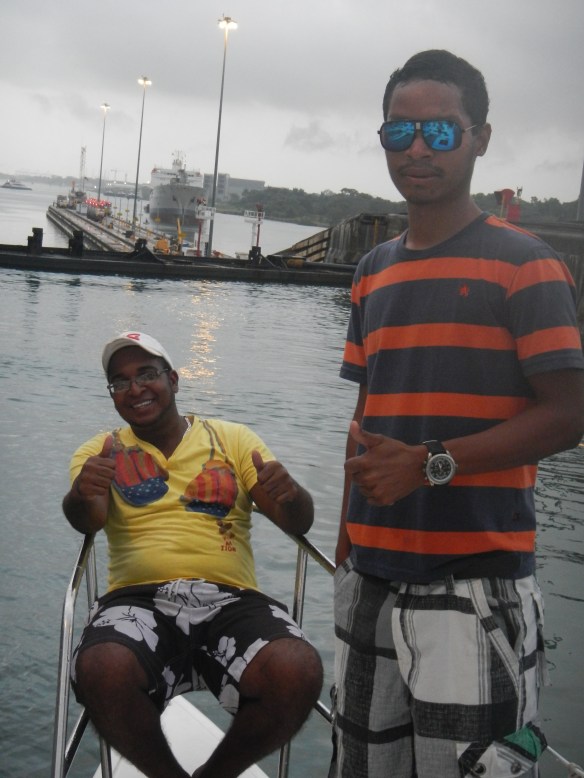
2 experienced hired line handlers Raymond & Marcos,

Raymond & Marcos

Raymond & Marcos, expert line handlers and snappy dressers

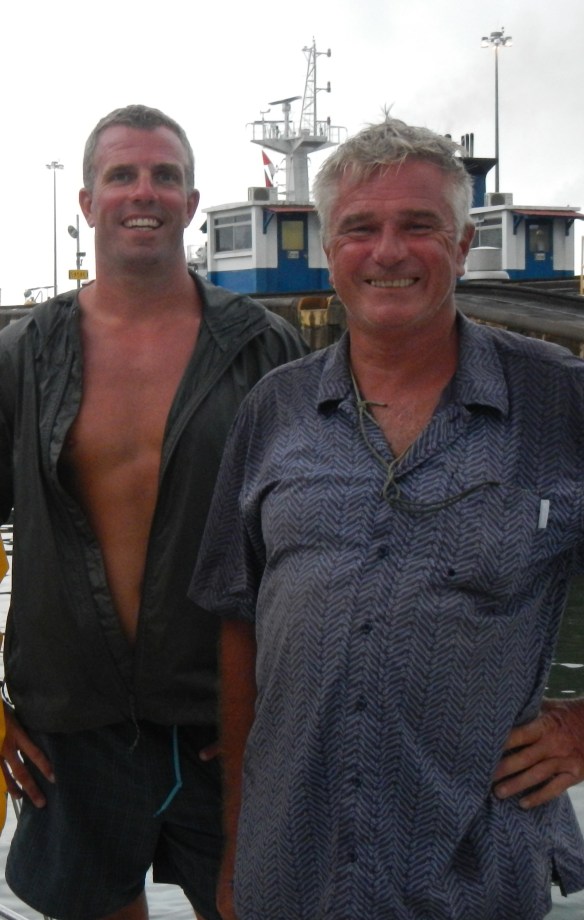
2 volunteer line handlers and sailors, Axel and Stephen ready to work the lines in the locks,

Axel & Stephen

Axel & Stephen, rounded out our international crew of 2 Americans, 3 Panamanians, 1 German, 1 Brit and 1 Belizean dog on our French boat.

me ready to sub in at the helm or lines and feed this motley crew, and Lucy milling about keeping tabs on everyone and making sure no food was sloppily left lying around, we started out.

Lucy on the bow wow wow

Lucy on the bow wow wow

It quickly became clear that our advisor, Astro (his real name), knew his stuff and, importantly, worked seamlessly with the line handlers and was hands on and not just a dictator.  He was a font of knowledge about the Canal and felt like our own personal tour guide.

With Astro our Canal advisor

with Astro our fabulous Canal advisor

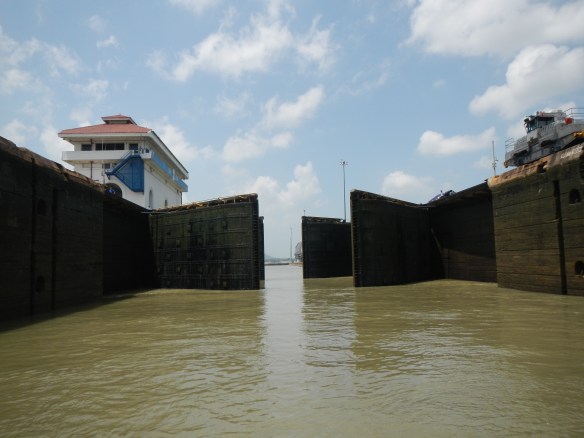
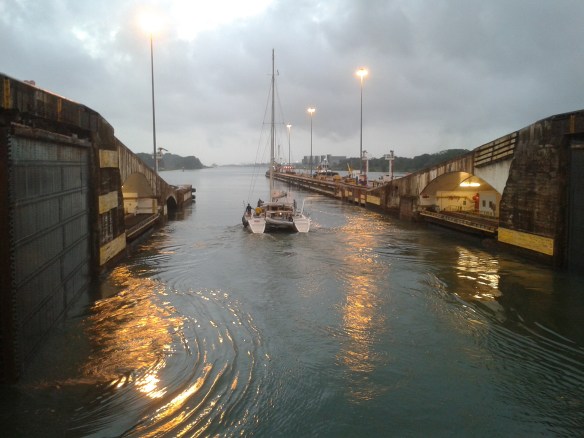
The Canal consists of six locks – 3 to get up into Gatun Lake, which is in the center and was created when they dammed up the Chagres River – and 3 to go back down on the other side.  Each lock is a massive, medieval-seeming concrete tub with giant heavy riveted steel doors that swing open and closed like the entrance to some fortified castle.  They are supreme feats of engineering operating nearly identically to the way they did when first opened exactly 100 years ago.

Lock doors closing

Lock doors closing

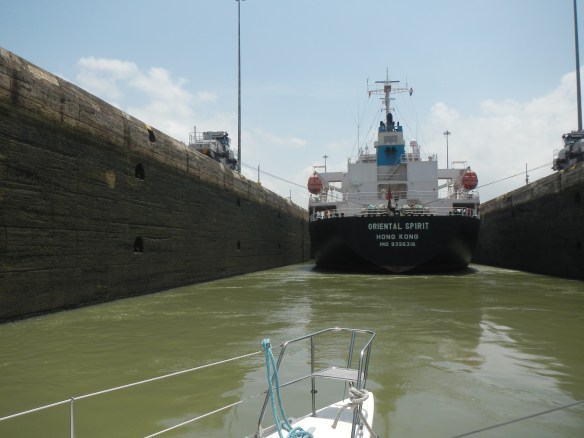
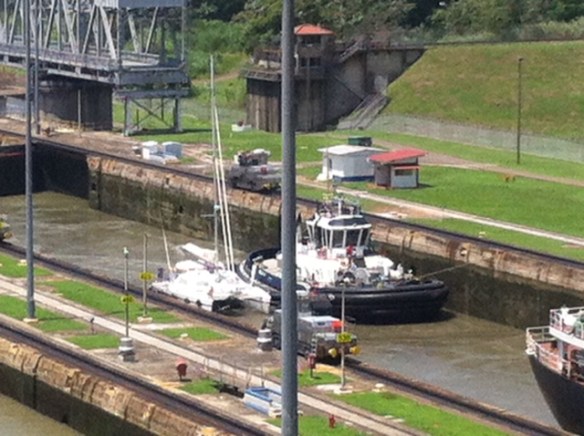
Outside the first of these, we waited for the giant container ship ahead of us to secure to the “mules” (heavy electric trains that hold ships’ lines) before we were ordered in to tie up to the ship’s tugboat, which went in just ahead of us.

Orient Spirit

Oriental Spirit, the cargo ship ahead of us in the locks.  Note the “mules” and the lines running down to keeping it steady.

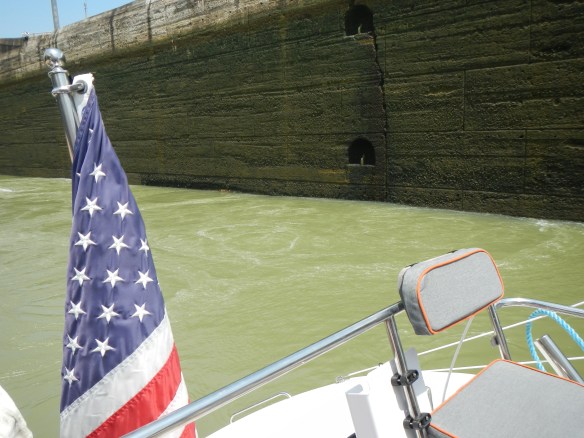
As you approach the lock is empty and the rough walls tower up on each side.  Mystery currents in the lock buffet the boat back and forth and Pete was working the throttles and the wheel to keep the boat off the wall.

Pete worked the hardest of us all

Pete worked the hardest of us all

Boats in the locks have lines going to the top of the locks to hold them in place.  As the water rises, the line handlers on the boat have to quickly and in unison pull the lines in to keep the boat in position.  We had heard horror stories of lines not being handled properly with boats swinging around into the walls or the ship, etc.  In addition to great embarrassment, this can cost money since the canal fines you for causing any delay.

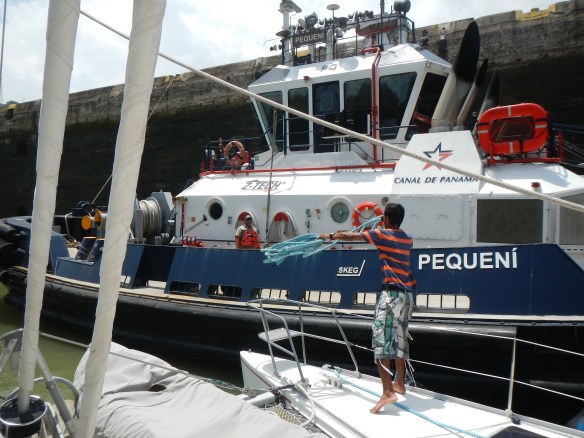
Tying up to tug

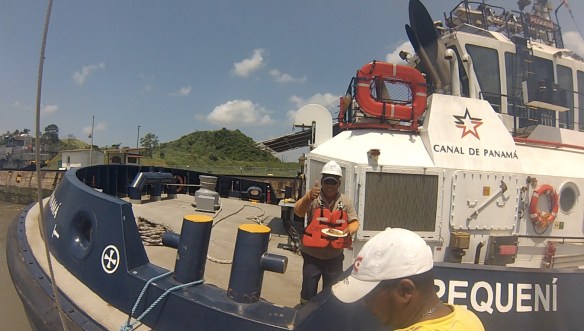
Marcos tossing line to tie to the tug, Pequení, our lock buddy

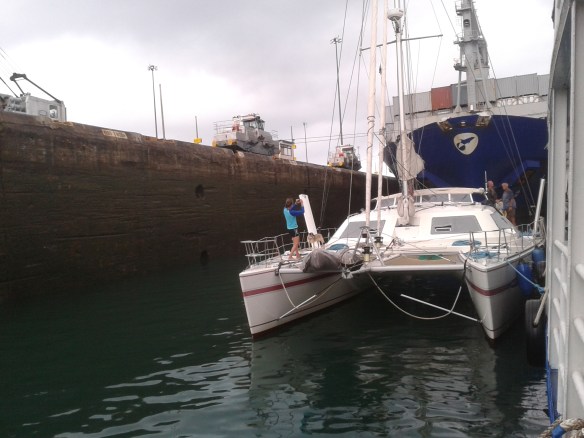
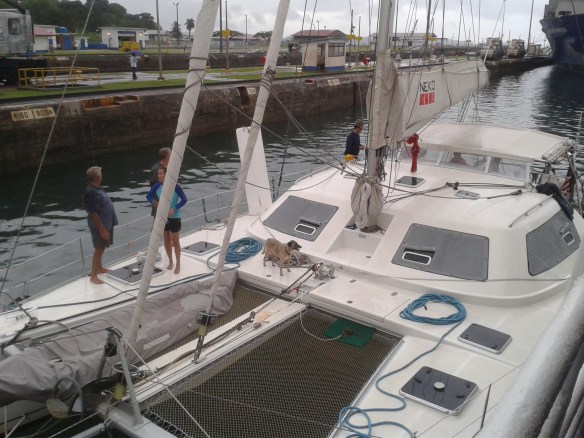
We, however, were lucky in that we tied up next to the tugboat and it handled the lines to go up and down.  All we had to do was tie up to it and hold on tight.  Once all were secure, the locks are flooded and all boats rise up.  The water in the lock becomes an insane cauldron of swirling eddies from the water rushing in through the underwater channels.

Water filling up the locks

Water filling up the locks

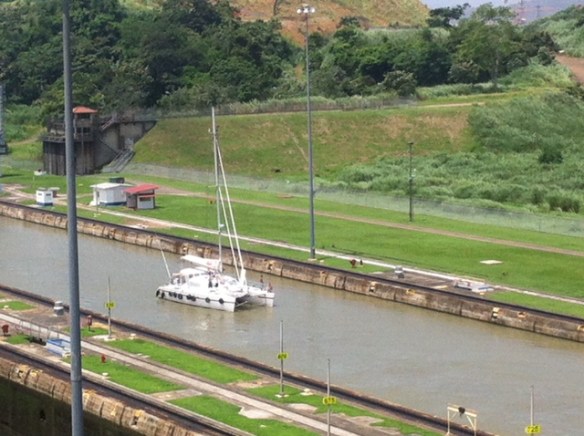
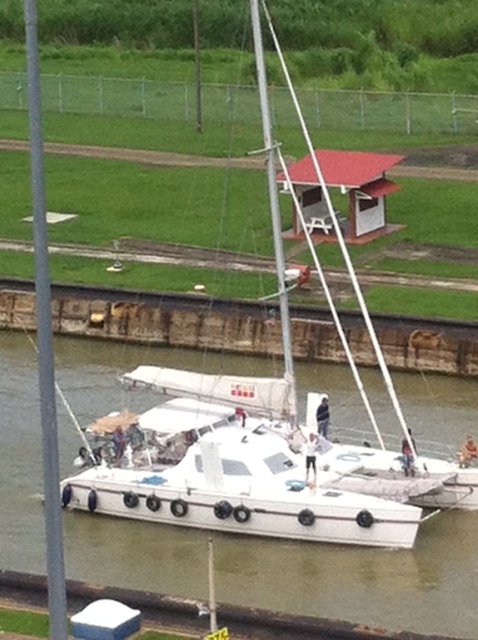
Aerial view of Neko in the locks.  See how the cargo ship dwarfs Neko. (Thanks Angie for the photo)

Aerial view of Neko (lower left) in the locks. See how the cargo ship dwarfs Neko. (Thanks Angie for the photo)

photo

You tie tires to the side of your boat to act as fenders against the walls and other boats

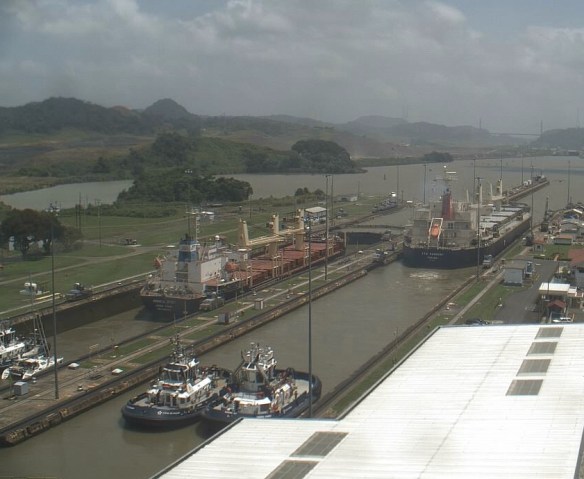
This photo was taken by our friend Holly Scott from the observation platform at Miraflores Locks

This photo was taken by our friend Holly Scott from the observation platform at Miraflores Locks

You can see the tight fight between Neko and our pal Penquin the tug.

You can see the tight fit between Neko and our pal Penquin the tug.

After it’s all over, we simply toss off the lines and proceed to the next lock and do it all over again.   Well, maybe not so simply.  The ship is moving out and to let the tug out we have to move backwards and closer to the wall.  The tug is a small boat of enormous power and when it moves its propwash (water being pushed around by its propellers) can push a yacht around like a bathtub toy.  However, taking the good advice of some other boaters, we befriended the tug crew and gave them a tray of cookies with the unspoken hope that they would pull away from us gently.  And it worked!  They were extreme gentlemen and slowly idled away from us when it was their turn to leave.

Plate of cookies = happy tug boat crew

Plate of cookies = happy tug boat crew

After the three up locks it’s a race through the Gaillard Cut (a narrow channel cut into the rocky hillside that claimed many lives and years of digging during the construction of the Canal) and Gatun Lake to get to the final set of locks in time to make it through in one day.

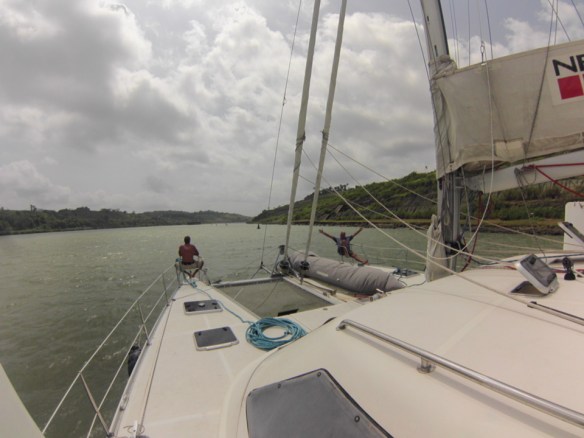
Heading through Lake Gatun

Heading through Lake Gatun

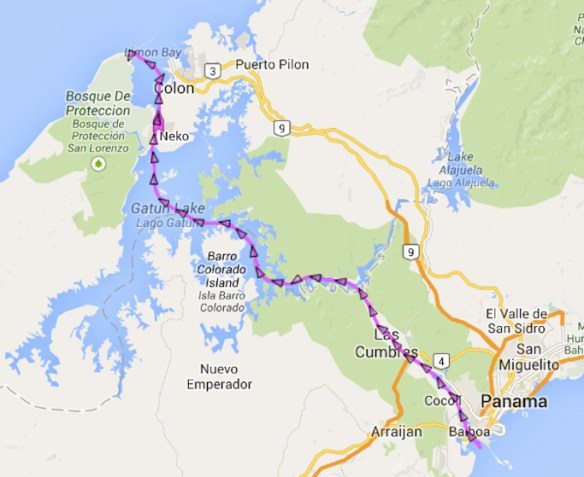
Our GPS track through the Canal

Our GPS track through the Canal and into Gatun Lake

Slow boats are required to take two days and spend a night anchored in the lake.  Due to our late start there was a real chance that we might have to spend a night in the lake.  It might have been fun to do so, but we soldiered on.  Astro kept checking in with mission control and they said proceed, so we put the pedal to the metal and Neko zipped through the lake enjoying its fresh water bath to rinse the salt from her underside.  We saw our lock mate, a large cargo ship, heading to the entrance when we were still about five miles away.  So Pete gave it a full throttle and got to the entrance of the lock just in time to … wait.  The ship had some problem getting secured and we waited outside turning circles in a thundering Panamanian rainstorm while they figured it out.

Neko wasn't the only one who got a fresh water rinse.

Neko wasn’t the only one who got a fresh water rinse.

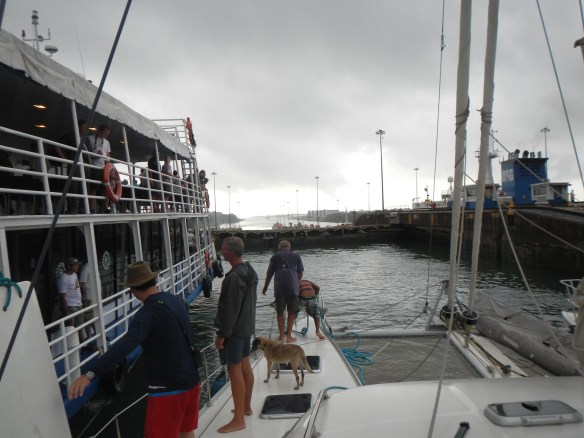
This time we were to tie to a ferry boat that takes passengers through the canal so they can check it off their bucket list.  We were definitely a curiosity to these sightseers and posed for many pictures and answered many questions about our trip.  Lucy was the star of the show.

Pull up to ferry boat in the Gatun Locks

Pulling up to the ferry boat in the Gatun Locks

Neko Gatun

Nerve wracking to have that giant ship just a few feet behind

Neko in Gatun locks

Neko in Gatun locks

After three more locks, this time going down, the last door opened and we at long last got a glimpse of the Caribbean Sea, our goal for so long.  It was a milestone completed and a huge relief to get through unscathed.

Welcome to the Caribbean

Welcome to the Caribbean

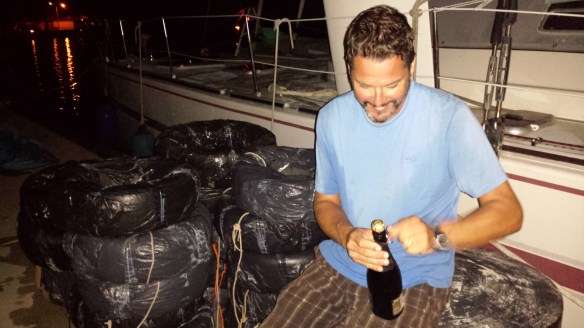
We dropped Astro off and powered into the Shelter Bay Marina in the dark of night for a quick celebration and a well-earned snooze.

Popping the victory champagne

Popping the victory champagne

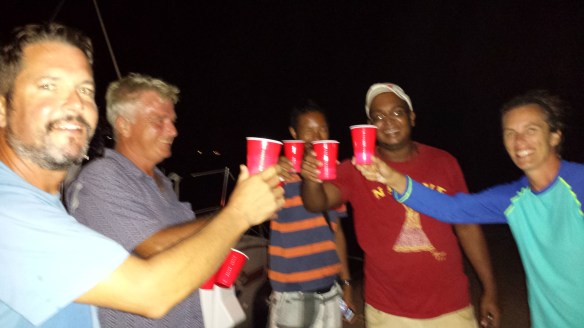
Cheers to our fantastic crew

Cheers to our fantastic crew

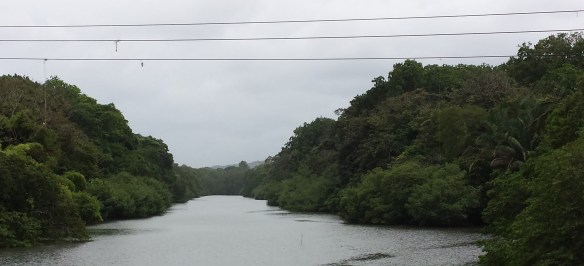
Here is what remains of the initial French effort at a sea-level canal to the extent it was not incorporated into the final design.  Isn’t it cute?

The original French Canal

The original French Canal

As you may know the French first insisted on building a canal at sea level without locks.  This was ultimately their undoing as it proved impossible.  Remember, tides on the Pacific side can reach 18 feet while tides on the Atlantic side are rarely more than 2 feet.  After decades of futile effort, the French finally threw in the towel and Teddy Roosevelt saw an opportunity and took it (not without much controversy, as it involved fomenting a revolution leading to Panama’s secession from Colombia).  It’s really quite impressive that the final canal was built large enough to handle freighters for 100 years.  However, now demands of shipping have rendered the canal insufficient.  Panama is embarking on the construction of a larger parallel set of locks to allow even larger ships to transit.  It is a technological wonder, that will use much, much less precious water than the original canal.  It will use sliding lock doors (like pocket doors) instead of swinging gates.  Here are the lock doors.  They are massive.

New Canal gates

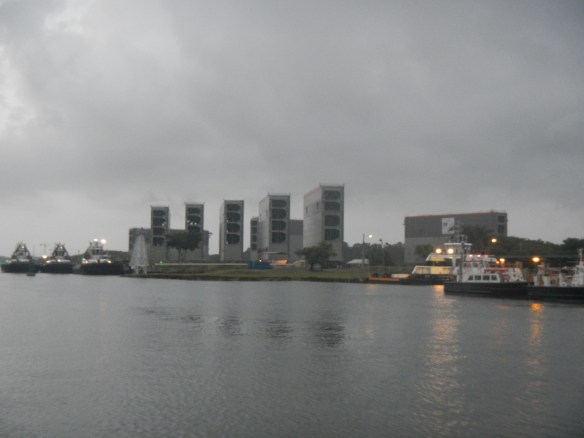
No those aren’t buildings they are the new Canal lock doors

Our Canal transit was twice as nice knowing we had so many family and friends watching us go through via the live web cam and thank you for the photos, videos and moral support.   We loved having you along for one of the best legs of this journey.

Click here to see a video Andre and Tom made of us going through the Miraflores locks.

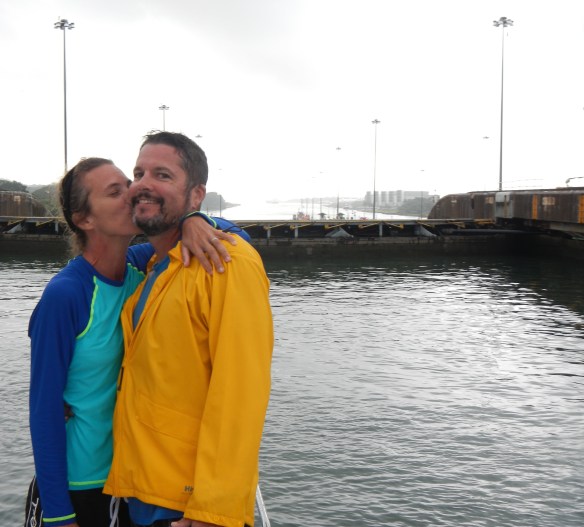
Victory Smooch

Victory Smooch

done and done! (Thanks Rob & Rose)

Done and done!
(Thanks Rob & Rose for the image)

Panama Canal Transit 7/5/14

This Saturday, July 5th is our transit date for the Panama Canal.  If you’d like to see us in action, you can watch on the live web cam.
https://www.pancanal.com/eng/photo/camera-java.html?cam=MirafloresHi

Make sure you click the tab that says “High Resolution Miraflores” (the regular camera is out of service), Then click the magnifying glass icon to enlarge.  The image refreshes every minute so you will see us stagger step through.

Schedules can change throughout the day, but we should be at Miraflores Locks (our first lock) between 9-10am (Central Time)   If possible, I will update on Facebook when we are getting close.   And of course we will wave to the camera.

You will have a second chance to see us in the Gatun Locks later in the day, maybe around 2pm (Central Time).  Again I’ll try to give updates via FB.   You can click on the “Gatun Locks” tab as well as the tab for “High Resolution Gatun” for two different angles.

And if anyone wants to grab a screen shot or two of us from the web cam, we’d love a copy and we will include it in our post about our transit.

Gritty City Golfito

After several lovely stops throughout Costa Rica,

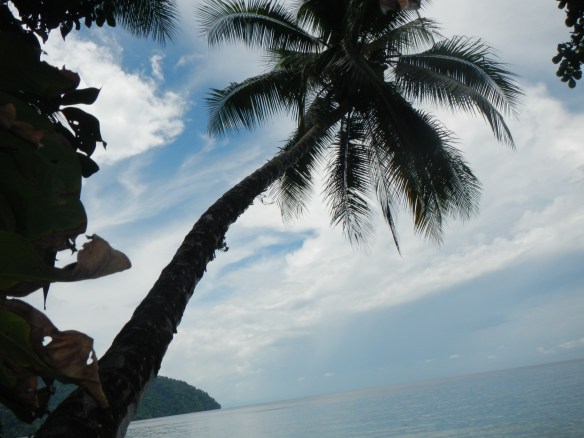
Drake's Bay, Costa Rica

Drake’s Bay, Costa Rica

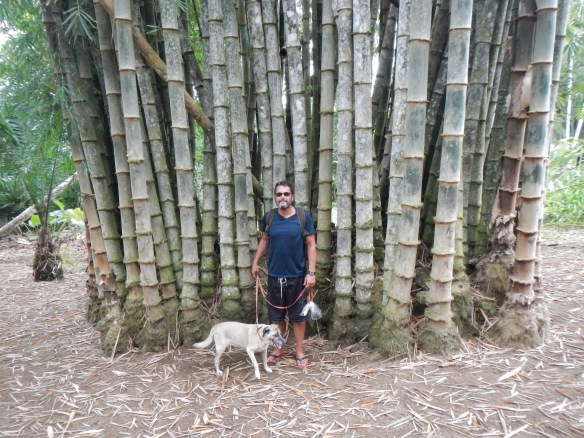
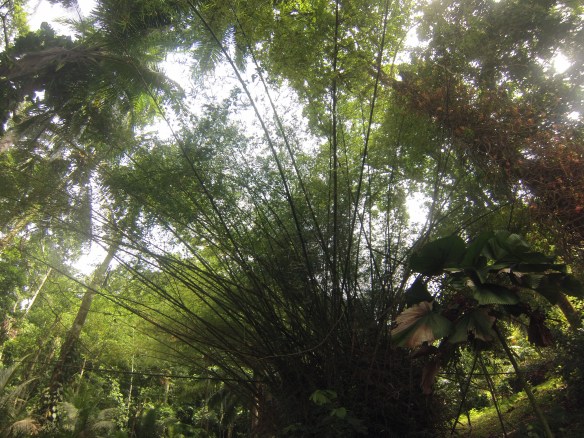
Giant bamboo

Giant bamboo

seeing all types of creatures,

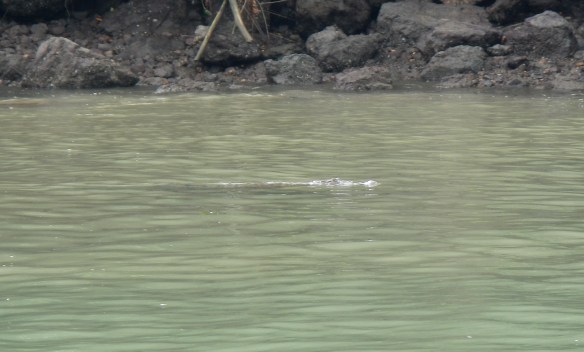
Crocodile swimming by our dinghy

Crocodile swimming by our dinghy

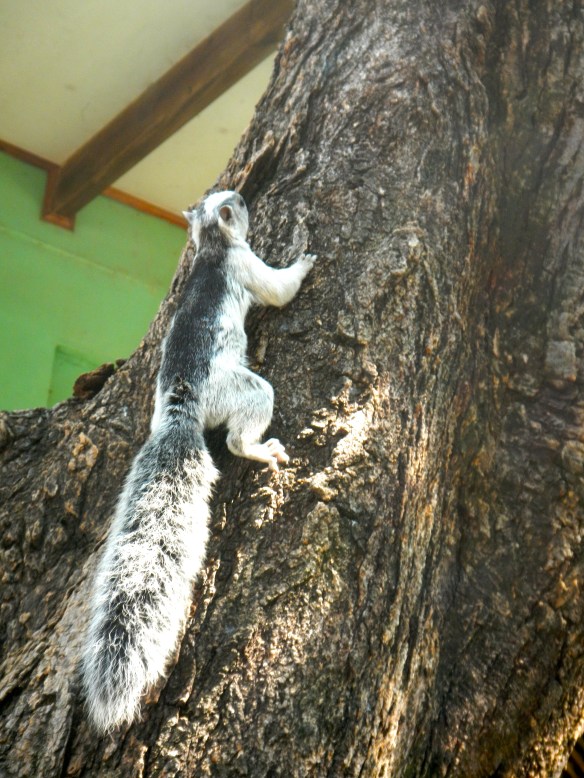
Squirrels with skunk stripes

Squirrels with skunk stripes

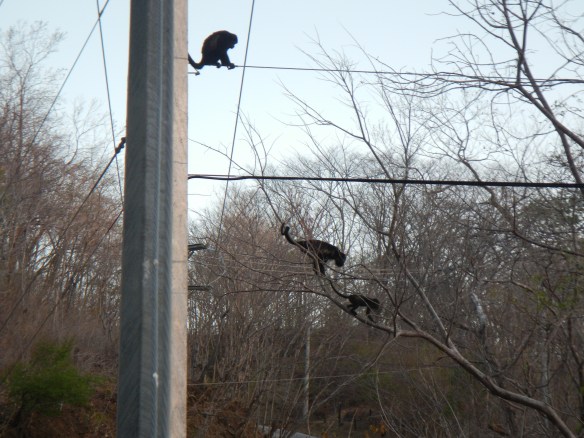
Howler monkeys all over the place

Howler monkeys

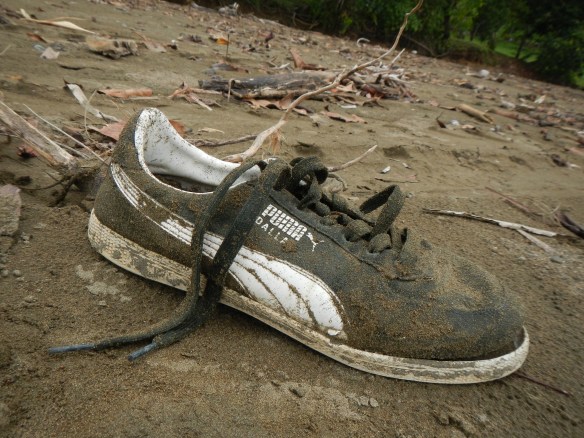
The Costa Rican Puma

The wild Costa Rican Puma

spending too much money (their currency is strikingly beautiful, which is a good thing because you are going to need a lot of it),

Costa Rican Colones currency

Costa Rican Colones currency

and with the rainy season starting in earnest,

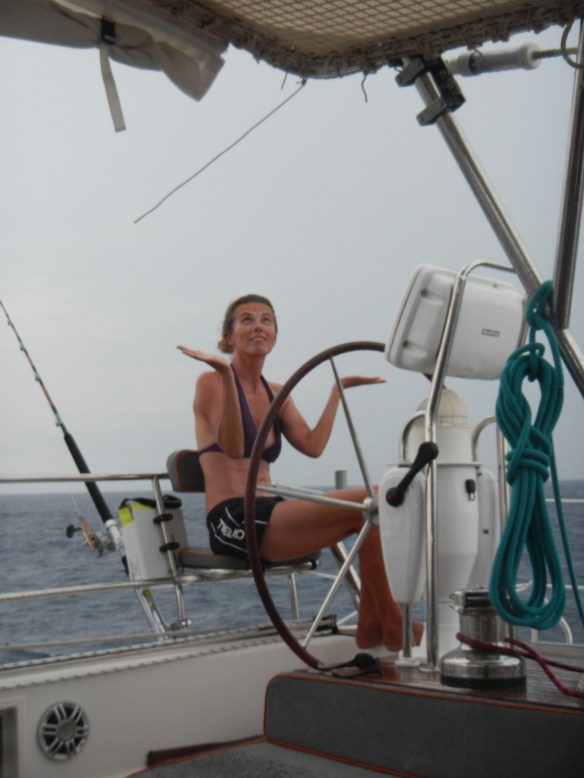
Here comes the rain again

Here comes the rain again

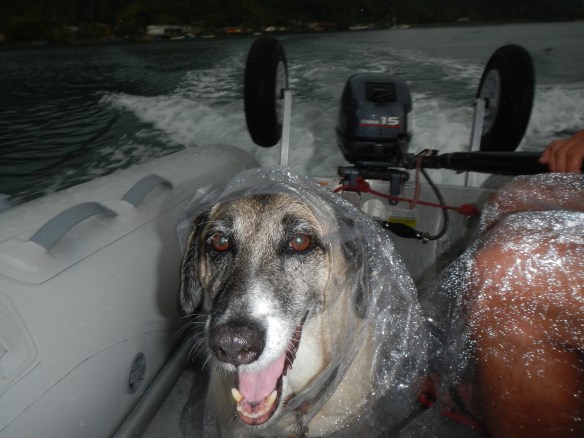
rain gear for all crew members

rain gear for all crew members

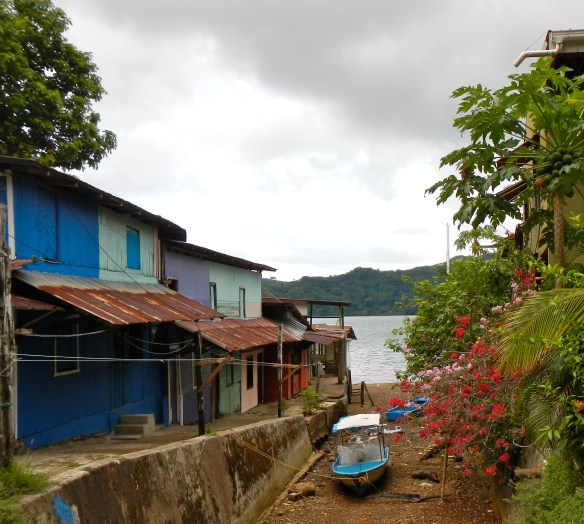
we ready ourselves for our final stop in the country: the town of Golfito, which is not known for its, shall we say, hospitality.   Countless tales of crime from fellow cruisers and locals left us less than excited about going there, but it was necessary, as it is the last port where you can check out of the country.

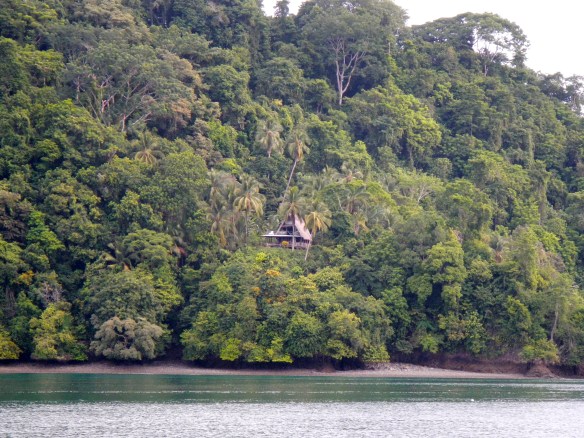
First impression coming into the Golfo Dulce...looks promising

First impression coming into the Golfo Dulce…looks promising

DSCN3033

DSCN3053

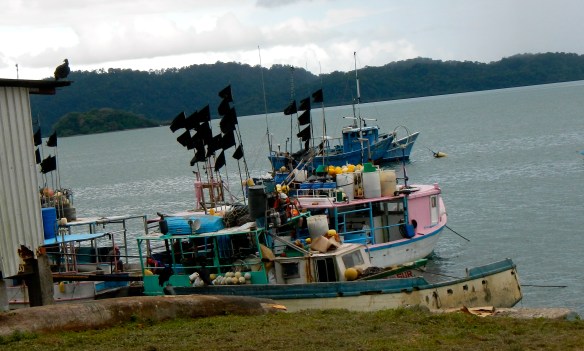
Fishermen use these black flags to mark long lines and nets.   The worst color ever to see against a dark sea.  How about a nice neon orange?

Fishermen use these black flags to mark long lines and nets. The worst color ever to see against a dark sea.  How about a nice neon orange?

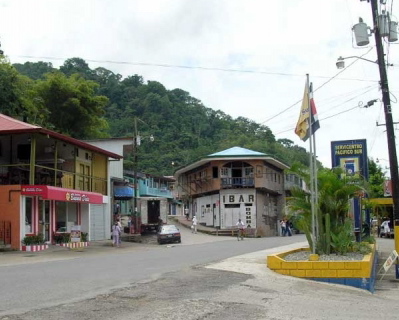
This once thriving town has fallen on hard times since the departure of the United Fruit Company and now depends mainly on a duty-free zone and robbing cruisers (just kidding…I think).   Don’t get me wrong I wouldn’t pick it over a trip to Maui, but for our fellow cruisers you’ll most likely have to be here and it was not as awful as we were led to expect.  The bay is well protected and even with the biblical rains we experienced it was always calm.   And clearing out of the country is easy and only costs $20.


Goflito town

Goflito town

IMG_0350

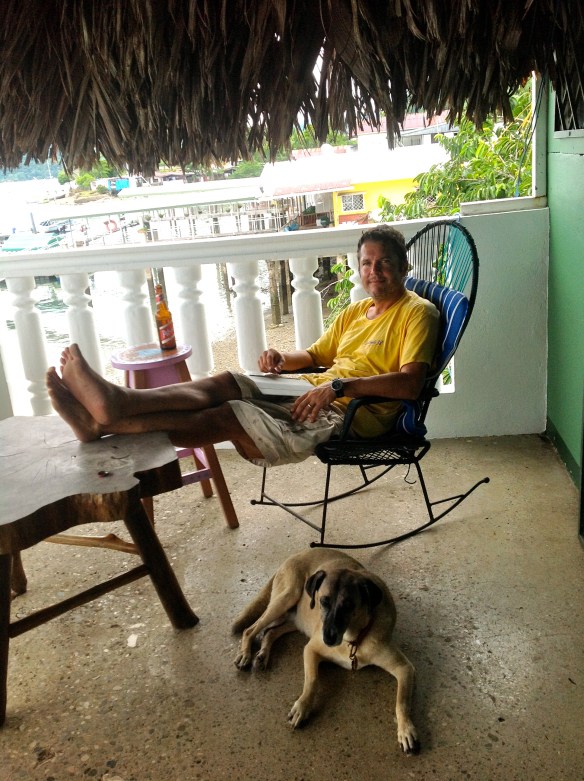
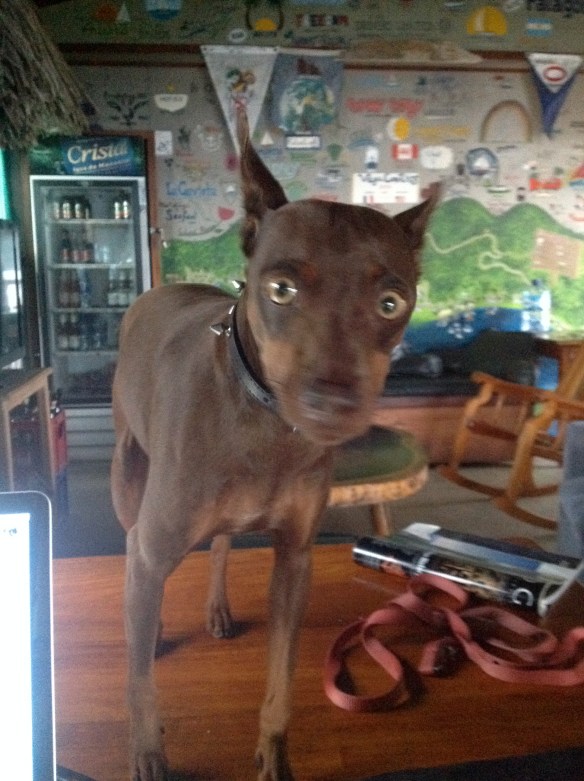
Freshly shaved Captain and his faithful first mutt

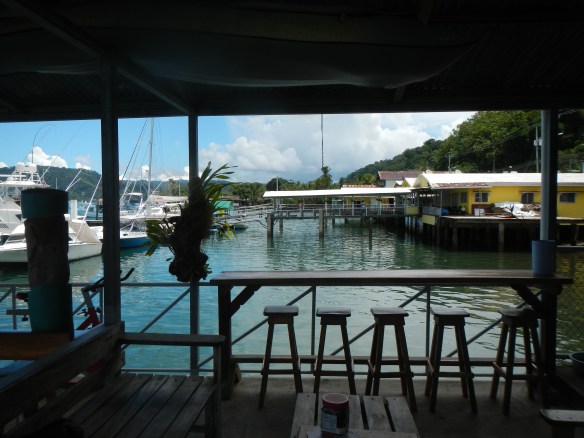
We moored at Land Sea where the owners, ex-cruisers Tim and Katie, and their many pups provided a safe haven and welcomed us, including Lucy.   Land Sea has a few moorings and a wonderfully funky cruiser’s lounge.  For our land-based friends, let me explain what cruisers want in life; good weather, cheap beer, clean laundry, easy land access and free reliable wi-fi.  And we got 4 out of 5 of those things at Land Sea.   The rain was by the buckets everyday.

Land Sea deck

Land Sea deck

IMG_0355

Honor bar at Land Sea

IMG_0356

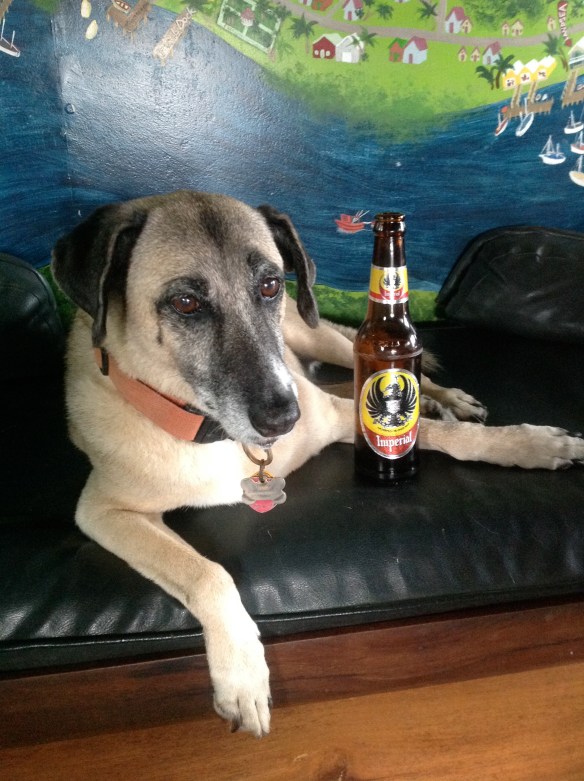
My new buddy Vinny. Tim adopted Vinny from an Italian cargo ship where Vinny was a stow away.

DSCN3048

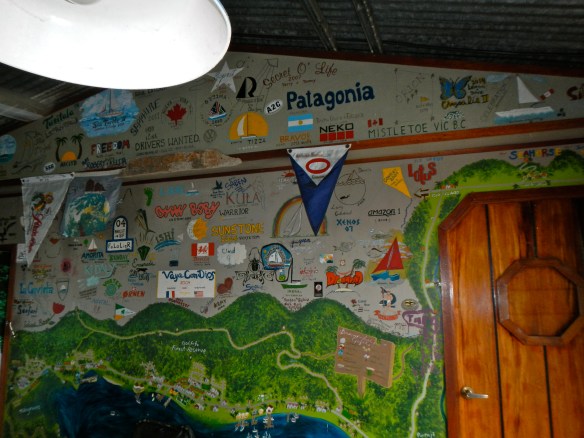
Cruisers leave their mark on the walls of Land Sea. Can you spot Neko?

Here comes another storm

Here comes another storm

Tim regaled us with wild stories from the many years he has lived in Golfito and recommended local restaurants and field trips to fill up the week we were there.

This salty gal celebrated her 46th birthday.

This salty gal celebrated her 46th birthday.

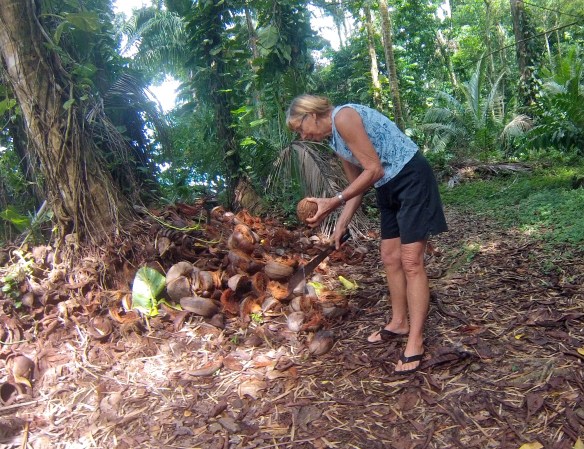
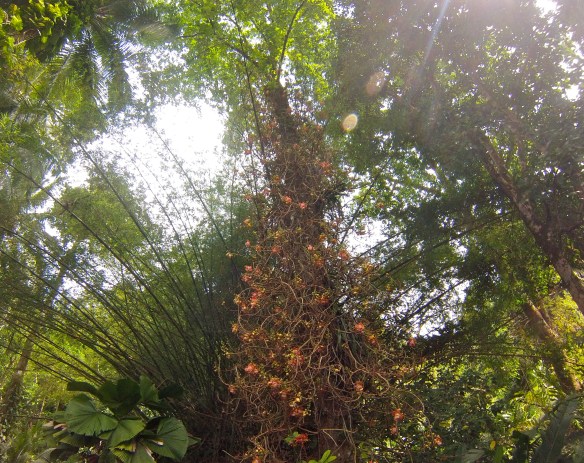
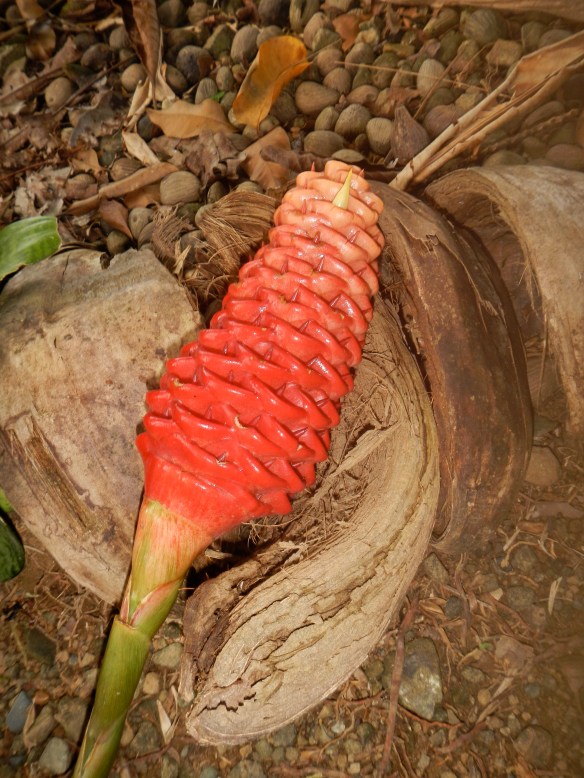
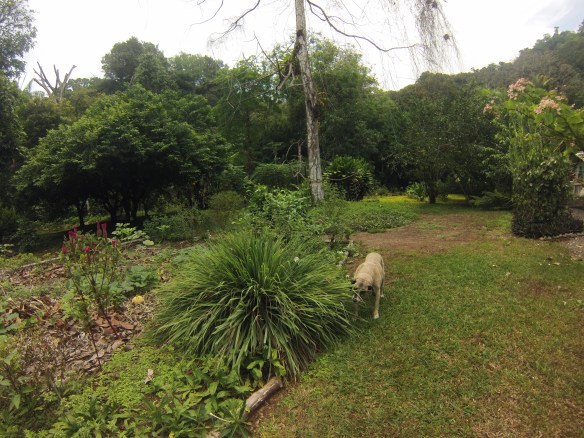
One of our best field trips was to Casa Orquideas, only 5nm but a whole world away from Golfito. These are meticulously maintained gardens owned by an American couple, Ron and Trudy, who have lived here for almost 40 years.  DSCN2990

Trudy, coconut opening expert

Trudy, coconut opening expert

Trudy is the sweet woman who gave us a botanical education, taught us how to open a coconut, and sent us off with many of her home grown fruits and herbs.

DCIM100GOPRO

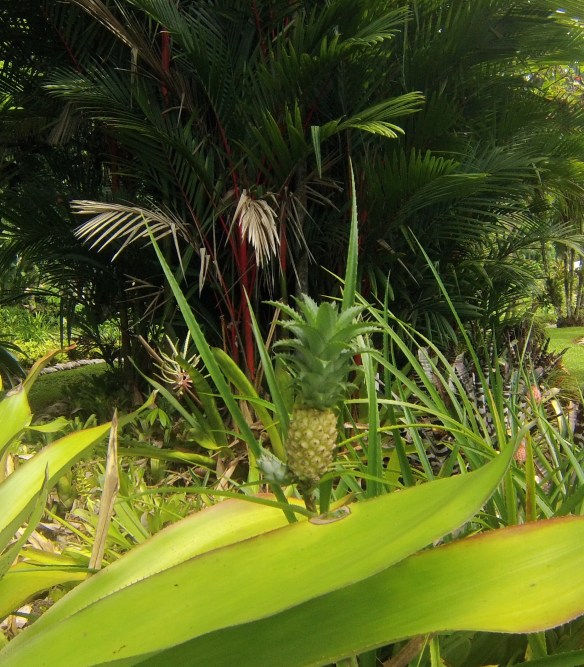
miniature pineapple

miniature pineapple

Shampoo ginger

Shampoo ginger . When you squeeze it a sweet smelling liquid comes out that you can use for shampoo.

DCIM100GOPRO

DCIM100GOPRO

Lucy enjoying some lemon grass

DCIM100GOPRO

Water lilies

DSCN2988 DSCN2971

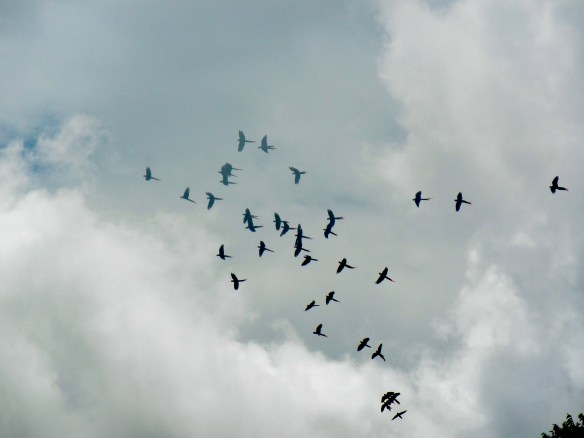
Wild macaws.  Wish the photo showed their brilliant colors

Wild macaws. Wish the photo showed their brilliant colors

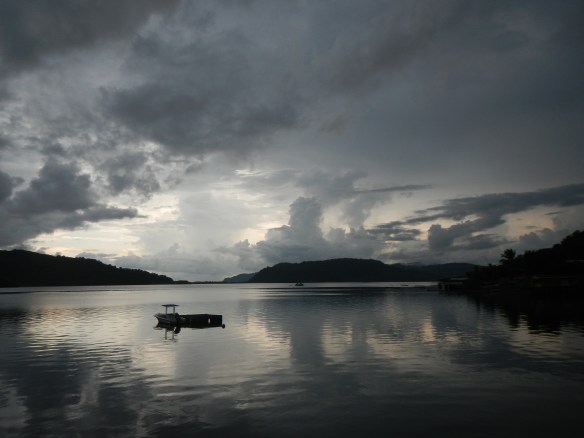
We were just going to go over to this bay for the afternoon, but ended up staying 2 days.  It was a delightfully tranquil spot perfect for kayaking, swimming and dreaming of our next stop – Panama.

DSCN2776

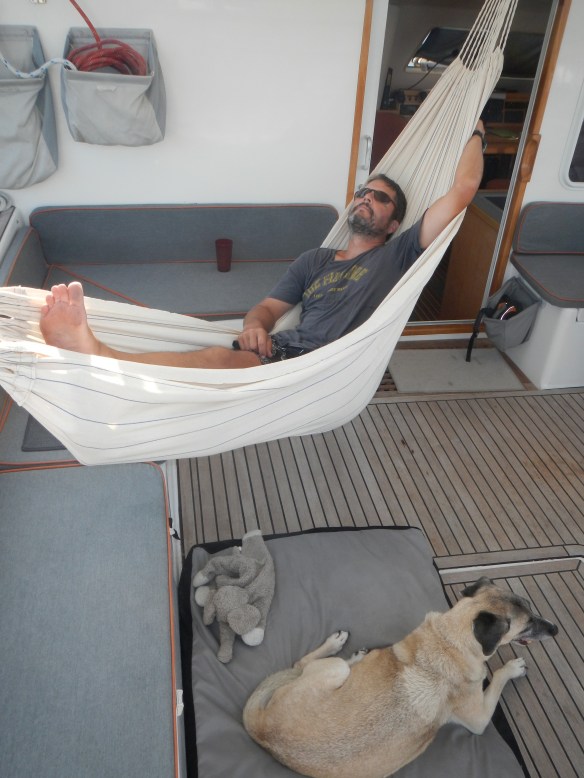
Nappin’ Captain


Technical difficulties

technicaldiff

Our blogging has slowed down because my computer went to the big tech heap in the sky, and of course all our photos were on my computer.  Thankfully I backed up my files (yes, go and back up your computers now) and successfully transferred my photos to Peter’s computer.  Now Peter and I just have to learn to share, “gasp”, one computer.   Who says we aren’t roughing it out here on the high seas 😉